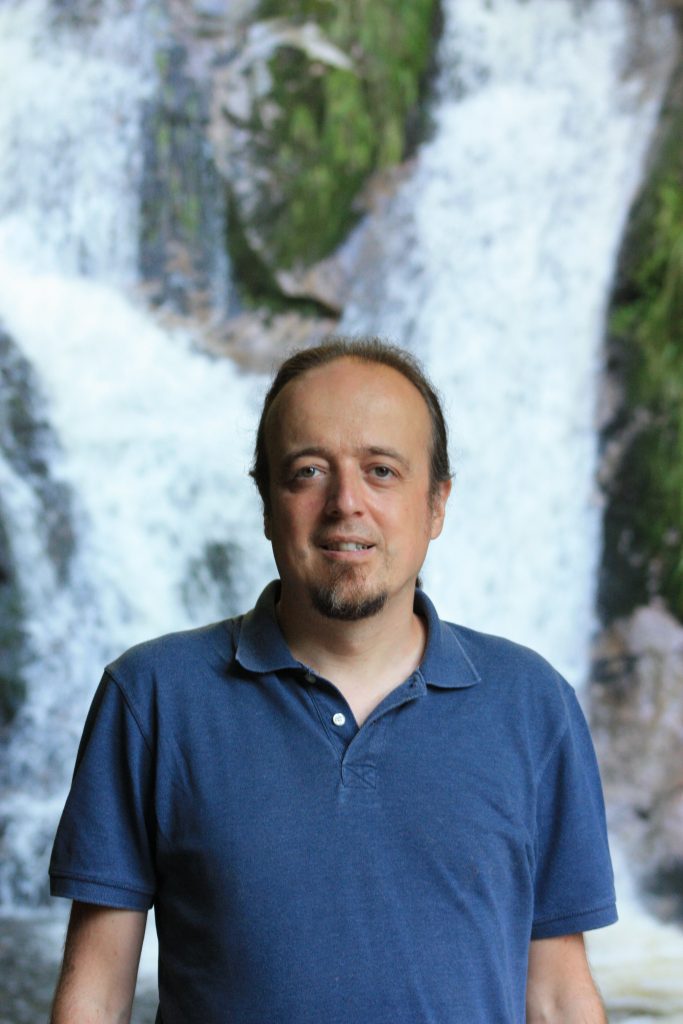
Anish Mukherjee is a Lecturer in the Department of Computer Science. He has held postdoctoral positions at the University of Warwick, University of Warsaw / IDEAS-NCBR, and Charles University in Prague. He earned his Ph.D. from the Chennai Mathematical Institute in India. Ph.D. in Computer Science (Chennai Mathematical Institute) Postdoctoral Experience: Warwick, Warsaw/IDEAS-NCBR, Charles University His research focuses on theoretical computer science, particularly algorithms and complexity theory for dynamic, parallel, and distributed computation. Additional interests include streaming algorithms, graph algorithms, string algorithms, circuit complexity, and exact exponential-time algorithms for NP-hard problems. He has received the TCS Scholarship during his Ph.D. studies. Recent publications examine problems in semi-streaming matchings, network design parameterization, and dynamic query maintenance. Recipient of TCS Scholarship He coordinates the Cyber Security (COMP232) module. His research outputs span conferences like FOCS, ACM SPAA, SIAM, and journals such as the Journal of Computer and System Sciences.
Aiswarya Cyriac is an Associate Professor in the Theoretical Computer Science Group at Chennai Mathematical Institute (CMI), India, with active roles including program committee co-chair for FSTTCS 2025 and ICLA 2025. She is a member of ReLaX, an international research lab established by CNRS (France), fostering cross-border collaboration in foundational computer science. Her office is located at CMI's H1, SIPCOT IT Park campus in Siruseri, Chennai. Educational Background: Ph.D. from École normale supérieure de Cachan, France (2014) Her research specializes in automata theory and its applications to the verification of infinite state systems, concurrent models, and distributed algorithms. She develops formal mathematical frameworks for string constraints with subword ordering, finite state transducers, and treewidth-based verification techniques, addressing decidability and complexity challenges in system analysis. Current projects focus on verification of communicating Datalog programs and string constraint satisfiability. Publication trends (2020-2024) reveal a concentrated effort on verification methodologies for communicating systems, string constraint analysis, and transducer theory. These works consistently appear in premier venues like STACS, ICALP, LICS, and PODS, demonstrating her leadership in automata-theoretic approaches to system verification and formal language applications. Educational Leadership: Ph.D. advising: Soumodev Mal (ongoing, co-advised with Prakash Saivasan), Sahil Mhaskar (ongoing, co-advised with M. Praveen) Master's supervision: Kushal Prakash ("Unbounded Distributed Graph Automata", 2018), Adwitee Roy ("Graph Automata and Tree-Width", 2017) Short internships: Anupa Sunny (NFA learning, 2017), Rao Shrisha Shripathy (weighted automata learning, 2017), Nisarg Patel (finite state models, 2016) She maintains strong institutional ties through the Theoretical Computer Science Group at CMI and ReLaX (CNRS), driving collaborative research on formal verification and automata theory. Her work bridges theoretical foundations with practical applications in database-driven systems and distributed algorithms, supported by consistent conference participation and editorial service.
Dr. Amir Abboud is a Senior Scientist at the Weizmann Institute of Science , Department of Computer Science and Applied Mathematics. His research focuses on the Theory of Computation , particularly in Fine-Grained Complexity , aiming to determine the exact computational complexity of fundamental problems. Additional interests include Graph Theory, Dynamic Data Structures, Pattern Matching, Exact Algorithms, and Distributed Computing. Education: Ph.D. in Computer Science, Stanford University M.Sc. in Computer Science, Technion B.Sc. in Computer Science, University of Haifa (via the "Etgar" program) Research Trends: Amir's work bridges theoretical computer science with practical algorithm design, emphasizing hardness of approximation, circuit complexity, and lower bounds for dynamic problems. His recent publications highlight advancements in Gomory-Hu Tree algorithms, spanner optimality, and distributed complexity. Professional Affiliations: He has served on program committees for top conferences including FOCS, STOC, ICALP, and SODA. Previously affiliated with IBM Almaden Research Center as a Research Staff Member. Contact: Located in Room 106, Jacob Ziskind Building, Weizmann Institute. Email: amir.abboud@weizmann.ac.il , Phone: +972-8-934-3618.
Oren Weimann is a Professor in the Department of Computer Science at the University of Haifa, Faculty of Natural Sciences. His research lies at the intersection of theoretical computer science, algorithm design, and data structures, with a strong focus on planar graphs, combinatorial pattern matching, and fine-grained complexity. He has published extensively in top-tier venues such as STOC, SODA, ICALP, PODC, and ESA. Education: Ph.D., Massachusetts Institute of Technology (MIT), 2005–2009. Advisor: Erik Demaine. Dissertation: "Accelerating Dynamic Programming" Postdoc, Weizmann Institute of Science, 2009–2011. Host: David Peleg M.Sc., University of Haifa, 2004–2005. Advisor: Gad Landau. Dissertation: "Using PQ trees for Comparative Genomics" B.A., Technion – Israel Institute of Technology, 1999–2002 Oren Weimann's research centers on the design and analysis of efficient algorithms, particularly for planar and structured graphs. His work explores fundamental problems such as shortest paths, distance oracles, fault tolerance, edit distance, and pattern matching. He investigates both upper and lower bounds, often pushing the limits of what is computationally feasible under fine-grained complexity assumptions. His contributions include optimal labeling schemes, compressed data structures, and breakthroughs in dynamic and distributed graph algorithms. His recent publications reveal a consistent trend in developing highly efficient algorithms for planar graphs, with a focus on distance computation, fault tolerance, and compression. Keywords across these works include planar graphs, dynamic programming, string matching, and conditional lower bounds, reflecting a deep integration of algorithmic techniques and complexity theory. He frequently collaborates with leading researchers such as Shay Mozes, Paweł Gawrychowski, and Philip Bille. Scientific Awards: Best Paper Award, CPM 2007 Best Paper Award, ICALP 2020 (mentioned in context of work) Oren Weimann has advised numerous PhD and Master’s students, including Yaseen Abd-Elhaleem, Nathan Wallheimer, Aviv Bar-natan, and Shon Feller, whose dissertations have led to publications in major conferences. He has also mentored several postdoctoral researchers such as Shay Golan, Itai Boneh, and Panagiotis Charalampopoulos. His work has been supported by competitive research grants, though specific grant titles are not listed in the text. He has served on the program committees of key conferences including SODA, ICALP, CPM, ESA, and SPIRE, demonstrating active leadership in the theoretical computer science community. He is associated with a vibrant research group focused on algorithms and data structures, likely involving collaboration with students and postdocs on projects related to graph algorithms, string processing, and complexity. While no formal lab name is mentioned, his collaborative output suggests a strong, productive research team at the University of Haifa.
Antonio Chica is an Associate Professor at the Department of Computer Science, Universitat Politècnica de Catalunya (UPC), specializing in geometry processing, real-time rendering, and virtual reality applications. His research focuses on 3D reconstruction, procedural landscape generation, and LiDAR data optimization. Teaching at Terrassa School of Engineering and Barcelona School of Informatics Member of the Modeling, Visualization, Interaction and Virtual Reality Group Key research areas include: Geometry processing techniques for signed distance fields Procedural generation of 3D landscapes and vegetation Game development frameworks and VR training systems Efficient algorithms for massive point cloud rendering His recent publications emphasize Bayesian reconstruction methods, adaptive SDF approximations, and optimized VR training tools. He actively collaborates on LiDAR data calibration, terrain modeling, and cultural heritage visualization projects. Antonio Chica's work integrates advanced graphics algorithms with practical applications in urban modeling, medical training, and historical preservation. He develops open-source tools like MeshPipe to simplify geometry processing workflows.
Fahad Panolan is a Lecturer in the Algorithms and Complexity group at the School of Computing, University of Leeds, UK, a position he has held since August 2023. Prior to this, he was an Assistant Professor in the Department of Computer Science and Engineering at IIT Hyderabad, India, from July 2019 to August 2023. He conducted postdoctoral research at the Department of Informatics, University of Bergen, Norway, between 2016 and 2019. Education: PhD in Theoretical Computer Science, The Institute of Mathematical Sciences, HBNI, Chennai, India (2012–2015) MSc in Theoretical Computer Science, The Institute of Mathematical Sciences, HBNI, Chennai, India (2010–2012) Master of Computer Applications, National Institute of Technology, Calicut, India (2006–2009) BSc in Physics, DGM MES Mampad College, University of Calicut, India (2002–2005) His research lies at the intersection of theoretical computer science and algorithm design, with core interests in Parameterized Algorithms and Complexity , Graph Theory , Approximation Algorithms , and Streaming Algorithms . He has made significant contributions to kernelization, matroid-based techniques, and the development of subexponential-time algorithms for NP-hard graph problems. His work often bridges structural graph theory with algorithmic efficiency, particularly on sparse and geometric graphs. The recent publications show a strong trend in advancing the frontiers of fixed-parameter tractability, including efficient kernelization, approximation schemes for matrix problems, and reconfiguration algorithms. His work frequently appears in top-tier venues such as STOC, SODA, ICALP, and journals like JACM and Algorithmica. Scientific Service: PC Member: WALCOM 2026, IPEC 2023, ESA 2022, IPEC 2021, AAAI 2021 Scientific Coordinator: Parameterized Complexity 201 Workshop Referee for journals including TALG, SIDMA, TCS, Algorithmica, and conferences like STOC, SODA, ICALP, ESA. Fahad Panolan advises PhD students and interns, including Shubhada Suresh Aute and Seshikanth Varma. He has secured research grants through collaborative projects and has delivered invited talks at international workshops and seminars, including Dagstuhl, DIMAP, and Parameterized Complexity workshops. He has taught courses such as Algorithms, Design and Analysis of Algorithms, and Parameterized Algorithms at both University of Leeds and IIT Hyderabad. He is actively involved in the parameterized complexity and algorithms research community, organizing workshops and contributing to the theoretical foundations of efficient computation on hard problems.
Dr. Amir Abboud is a Senior Scientist in the Department of Computer Science and Applied Mathematics at the Weizmann Institute of Science, a leading research institution in Israel. His work is centered on the theory of computation, particularly fine-grained complexity, aiming to establish exact computational complexity bounds for fundamental problems. Research Interests: Amir Abboud's research spans a broad spectrum of theoretical computer science, with a primary focus on Fine-Grained Complexity . He investigates conditional lower bounds based on popular conjectures such as SETH and 3SUM. His work extends to graph algorithms, dynamic data structures, pattern matching, sequence alignment, exact and parameterized algorithms, distributed computing, and circuit complexity. He employs deep connections between parsing, clique problems, edit distance, and spanner constructions to derive new hardness results. Publication Trends: His recent publications, appearing in top venues like FOCS and STOC, reveal a consistent focus on proving conditional lower bounds and developing improved algorithms for graph problems. Themes include subcubic algorithms for Gomory-Hu trees, additive spanners, and the interplay between parsing and clique detection. His work often bridges algorithmic improvements with complexity-theoretic limitations. Scientific Service: Program Committee Member, FOCS 2023 Program Committee Member, ICALP 2023 Program Committee Member, STOC 2023 Program Committee Member, SWAT 2022 Program Committee Member, SODA 2022 Program Committee Member, SOSA 2022 Program Committee Member, ESA 2020 Program Committee Member, CPM 2020 Program Committee Member, IPEC 2019 Program Committee Member, STOC 2019 Program Committee Member, FOCS 2018 Program Committee Member, CPM 2016 Advising and Grants: While the text does not list any formal students or advisees, Dr. Abboud leads significant research in theoretical computer science and collaborates with top researchers worldwide. His publication record and program committee roles indicate a well-funded and influential research trajectory, likely supported by institutional and national research grants, though specific grants are not mentioned. Labs and Research Groups: Dr. Abboud is affiliated with the theoretical computer science group at the Weizmann Institute of Science. He also organizes a Course on Fine-Grained Complexity and is part of a research group focused on algorithms and complexity, as indicated by the website structure.
Amir Abboud is a Senior Scientist (equivalent to Associate Professor) in the Department of Computer Science and Applied Mathematics at the Weizmann Institute of Science, where his research centers on theoretical computer science with primary focus on fine-grained complexity. This field investigates exact computational complexity of fundamental problems to establish tight upper and lower bounds. His educational credentials include: Ph.D. from Stanford University M.Sc. from the Technion B.Sc. from the University of Haifa (via the "Etgar" program) Abboud's research spans graph theory and algorithms, dynamic data structures, pattern matching, sequence alignment, exact algorithms, parameterized complexity, distributed computing, and circuit complexity. His work bridges theoretical insights with practical algorithmic advancements, particularly in understanding computational limits within polynomial time. Analysis of his publications (2014-2022) reveals consistent focus on fine-grained complexity applications to graph algorithms and dynamic problems. Key contributions include breakthroughs in Gomory-Hu tree computation, hardness of approximation frameworks, and conditional lower bounds for dynamic data structures. His research demonstrates how conjectures about fundamental problems (e.g., SETH, 3SUM) propagate to diverse computational domains. Scientific awards: No specific prizes, fellowships, or medals are documented in the source material. Advising and grants: The provided text contains no information regarding graduate students supervised, postdoctoral mentoring, or research funding received. Labs and teams: No details about laboratory leadership, research groups, or collaborative teams are mentioned in the available documentation.
Amy Brunner is an Associate Professor at Virginia Tech's Department of Forest Resources and Environmental Conservation within the College of Natural Resources and Environment. Her research focuses on the genomics of tree development, particularly in Populus species, exploring molecular mechanisms underlying tree maturation, flowering, and adaptation to environmental stimuli. She holds a B.S. from the College of Wooster (1982), an M.S. from Vanderbilt University (1984), and a Ph.D. from Oregon State University (1998). Her work integrates functional genomics, transgenic approaches, and comparative genomics to study root/shoot architecture, epigenetic regulation, and signaling pathways. Notable contributions include identifying key genes in flowering transitions and developing genetic tools for tree improvement. Awards include the Outstanding Teaching and Mentoring Award from Oregon State University (2005). Brunner's publications span over three decades, with recent emphasis on CRISPR-based gene editing and the interplay between stress responses and secondary cell wall development. She actively collaborates on international initiatives like the Populus genome project and advises on regulatory frameworks for transgenic trees.
Nathan Williams is an Associate Professor in the Department of Mathematical Sciences at the University of Texas at Dallas (UTD), tenured since 2024. He holds a Ph.D. from the University of Minnesota (2013) and completed postdoctoral research at LaCIM (Université du Québec à Montréal) and the University of California, Santa Barbara. His research focuses on algebraic combinatorics, particularly in reflection groups, braid groups, and Catalan combinatorics. Key contributions include work on noncrossing Catalan structures, dynamical algebraic combinatorics, and bijections in plane partitions. He has received UTD’s Outstanding Teaching Award (2020) and completed the ACUE Effective College Instruction program (2021). Williams has advised numerous students, including Ph.D. and honors thesis candidates, and serves on UTD’s website/computer committee and K-12 outreach initiatives. His recent grants include Simons Foundation and NSF proposals targeting combinatorial tools and braid varieties. Education: Ph.D. in Mathematics (2013, UMN), B.A. in Mathematics (2008, Carleton College) Research Interests: Coxeter groups, noncrossing partitions, combinatorial representation theory Teaching contributions include 33 courses at UTD, with a focus on discrete mathematics and graduate combinatorics. He organizes workshops like BIRS’s Dynamical Algebraic Combinatorics and co-edits the Annals of Combinatorics .
Tomasz Kociumaka is a Professor and Group Leader in the Algorithms and Complexity Department at the Max Planck Institute for Informatics in Saarbrücken, Germany. He previously served as a Research Scientist at INSAIT in Sofia, Bulgaria (2024-2025), and as a Postdoctoral Researcher at the Max Planck Institute for Informatics (2022-2024). His academic journey includes postdoctoral positions at the University of California, Berkeley (2020-2022) and Bar-Ilan University, Israel (2019-2020). Dr. Kociumaka received his PhD in Computer Science from the University of Warsaw in 2019, with a thesis titled Efficient Data Structures for Internal Queries in Texts under the supervision of Professor Wojciech Rytter. He also completed both his BSc and MSc in Computer Science at the University of Warsaw between 2009 and 2014. His research focuses on string algorithms , particularly sequence similarity measures , approximate pattern matching , lossless data compression , and text indexing data structures . He approaches string problems from multiple perspectives including fine-grained complexity, dynamic algorithms, streaming, sketching, sublinear algorithms, and quantum computing. His work bridges theoretical computer science with practical applications in text processing and bioinformatics. Analysis of his recent publications reveals a strong emphasis on edit distance algorithms, pattern matching techniques, and data compression methods. His work demonstrates increasing sophistication in handling complex string problems with optimal time and space complexity, with growing interest in quantum computing applications for string processing. Presburger Award (2025) Cor Baayen Award (2021) Witold Lipski Prize (2018) Dr. Kociumaka serves on program committees for major theoretical computer science conferences including STOC, FOCS, SODA, and ICALP. He is also on the editorial board of Information Processing Letters and served as a guest editor for a special issue of SIAM Journal on Computing related to STOC 2024. His professional activities demonstrate significant leadership in the theoretical computer science community, particularly in the subfield of string algorithms and combinatorial pattern matching.
Jiri Kosinka is an Associate Professor at the University of Groningen , affiliated with both the Faculty of Science and Engineering and the Faculty of Medical Sciences/UMCG . His work bridges Scientific Visualization and Computer Graphics with Robotics and Image-Guided Surgery . Research spans computational geometry, medical visualization, and fluid dynamics Key contributions in subdivision surfaces, distance transforms, and point cloud processing Recent publications focus on 3D surgical planning , turbulent flow simulations , and medical image analysis . His work integrates deep learning techniques for geometry processing and virtual reality applications in medical education. Notable collaborations include interdisciplinary projects with UMCG and Siemens . Awards and grants are not explicitly listed in the provided data.
Gabriele Puppis is an Associate Professor at the Department of Mathematics, Computer Science, and Physics of Udine University since 2022. Previously, he held a tenure-track position at the same university (2019-2022) and was a tenured CNRS researcher at LaBRI, Bordeaux (2012-2019). He completed postdoctoral research at Oxford University (2009-2012) and Udine University (2006-2008). His academic journey began with a PhD in Computer Science at Udine University (2002-2006). Education: PhD in Computer Science, Udine University (2006) Research Interests: Logics and formal languages String transducers and automata theory XML schema validation and database repairability Interval temporal logic and spatial reasoning Higher-order query languages Academic Contributions: His work focuses on the decidability and complexity of problems in automata theory, particularly for finite-valued transducers and their equivalence. He has advanced understanding of bounded repairability for tree and word languages, dynamic data structures for timed automata, and resynchronizability in transducer models. His recent publications explore decomposition theorems for streaming string transducers and their equivalence to two-way models. Teaching and Leadership: He teaches courses in Distributed Systems, Algorithms and Data Structures, and Verification techniques in AI and Cybersecurity. He has organized events like the GandALF 2023 summer school and participated in workshops on unambiguity in automata theory and regular cost functions.
Matthew T. Clay is a Professor and Chair of the Department of Mathematical Sciences at the University of Arkansas, Fayetteville. He holds a PhD in Mathematics from the University of Utah (2006) and has held academic positions at Allegheny College and the University of Oklahoma before joining the University of Arkansas in 2012. His research focuses on Geometric Group Theory , particularly on automorphisms of free groups, mapping class groups, and group actions on trees. He has organized conferences such as the Redbud Topology Conference and co-edited the book *Office Hours with a Geometric Group Theorist* (Princeton University Press, 2017). His work bridges geometric, algebraic, and dynamical perspectives in group theory. Key honors include NSF grants, a Simons Foundation Collaboration Grant, and the University of Utah’s Outstanding Graduate Student Award. He has advised three doctoral students and contributed to software tools for geometric group theory, such as *sage-train-track* and *bsscl*. Clay’s outreach includes organizing the G3 conference and co-hosting the *Running* section of his webpage, reflecting his passion for ultrarunning and its intersection with problem-solving resilience in mathematics.
Ramon Ferrer-i-Cancho is an Associate Professor in the Department of Computer Science at the Universitat Politècnica de Catalunya (UPC), affiliated with the Barcelona School of Informatics (FIB). He leads the Complexity & Quantitative Linguistics Lab and is part of the LQMC research group (Quantitative, Mathematical, and Computational Linguistics). His research focuses on quantitative linguistics, mathematical models of language structure, and computational methods to analyze linguistic universals like Zipf’s law and syntactic dependency distances. Education: PhD in Computer Science from UPC (2003), with a thesis on 'Language: universals, principles and origins.' Editorial Roles: Section editor of Encyclopedia of Language and Linguistics (3rd edition), editorial board member of Glottometrics, Journal of Quantitative Linguistics, and Lingua. Research Interests: Quantitative analysis of syntactic structures, language evolution, cognitive constraints in grammar, and cross-species communication patterns (e.g., chimpanzees, dolphins). He applies principles from complexity science, information theory, and optimization to linguistic problems. Notable Achievements: Recipient of the Joan Lluís Vives Prize (2003) for popular science communication, Barcelona City Research Prize (2003), and UPC’s Best PhD Thesis award (2003-2004). Authored influential papers on dependency distance minimization and Zipfian laws, with over 200 indexed publications. Teaching & Mentorship: Advised Master’s theses on dolphin communication, syntactic dependency distances, and data mining applications. Active in the Master in Innovation and Research in Informatics (MIRI), clarifying academic requirements like SIRI seminar credits. Outreach: Authored popular science books, including Lingüística quantitativa i lleis lingüístiques , and featured in media like National Geographic and Scientific American for bridging linguistics with biology and physics.