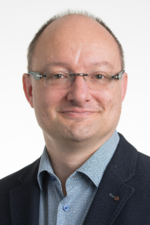
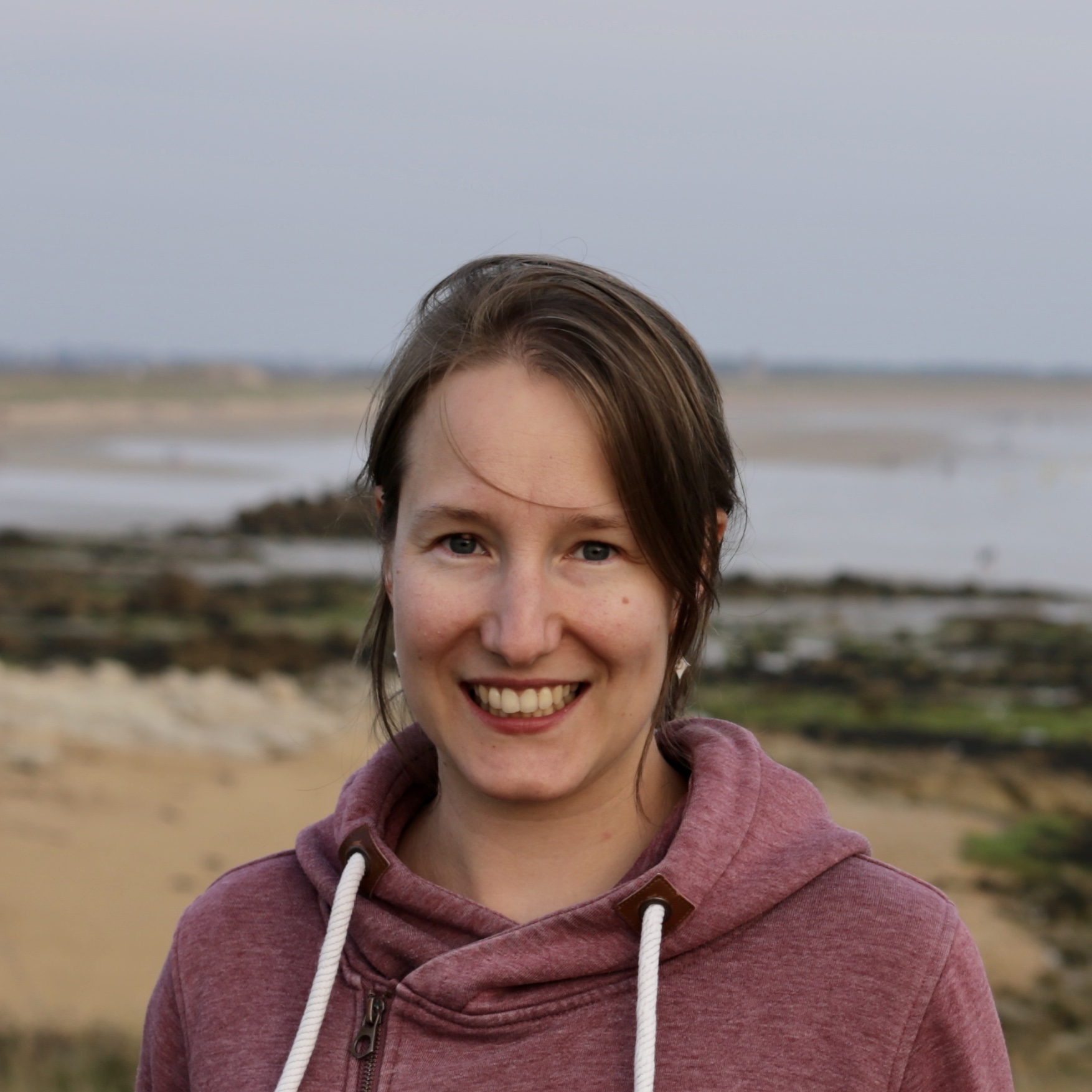
Prof. Sebastian Rudolph is a Professor of Computational Logic at the Institute for Artificial Intelligence , Faculty of Computer Science , TU Dresden. Since 2021, he has been an Affiliate Member of the Faculty of Mathematics. His research spans theoretical and applied artificial intelligence, focusing on Knowledge Representation and Reasoning through formalisms like Description Logics, Existential Rules, and Formal Concept Analysis, with applications in Semantic Technologies. 2017 : ERC Consolidator Grant for decidability principles in logic-based knowledge representation 2006-2013 : Postdoctoral researcher, project leader, and Privatdozent at KIT's Institute AIFB 2011 : Habilitation at KIT Earlier : PhD in Algebra and teaching qualification in mathematics, physics, and computer science at TU Dresden His recent publications address decidability of logical reasoning, non-monotonic extensions in formal concept analysis, standpoint logics, and multiagent systems. He supervises the DeciGUT and KIMEDS projects, and is involved in the SECAI and ScaDS.AI centers. Teaching activities include courses on Theoretical Computer Science, Existential Rules, and Formal Concept Analysis.
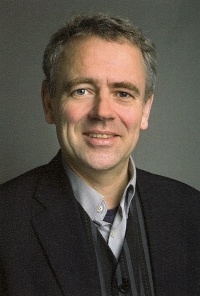
Manfred Droste is a Professor at the Institute of Computer Science of the University of Leipzig, where he leads the Research Group on Automata and Formal Languages. He serves as Director of the Graduate Centre Mathematics, Computer Science and Natural Sciences and is Vice-speaker of the DFG-Research Training Group Quantitative Logics and Automata. His academic career spans decades of research and leadership in theoretical computer science and algebra. Prof. Droste's research focuses on theoretical computer science, particularly automata theory, logic, algebraic models for concurrent systems, and domain theory. In algebra, his interests include model theory, automorphism groups, and ordered algebraic structures. His work bridges theoretical foundations with practical applications in formal language theory and quantitative systems. His extensive publication record demonstrates a consistent focus on weighted automata, formal languages, and their logical characterizations. Over the years, his research has evolved to address increasingly complex quantitative models, with recent work focusing on weighted complexity classes, weighted linear dynamic logic, and decidability boundaries for weighted automata. Prof. Droste has received significant recognition including election to Academia Europaea, an honorary doctorate from Immanuel Kant Baltic Federal University, and fellowship in the Asia-Pacific Artificial Intelligence Association. These honors reflect his substantial contributions to theoretical computer science. He has supervised numerous PhD students including Dietrich Kuske, Paolo Boldi, and Karin Quaas, many of whom have become prominent researchers. His extensive grant portfolio includes multiple DFG projects on weighted automata and international collaborations through DAAD funding. Prof. Droste leads a vibrant research team including Andrea Hesse, Karin Quaas, Erik Paul, and others. He has organized the international workshop series "Weighted Automata: Theory and Applications" since 2002, fostering global collaboration in this specialized field.
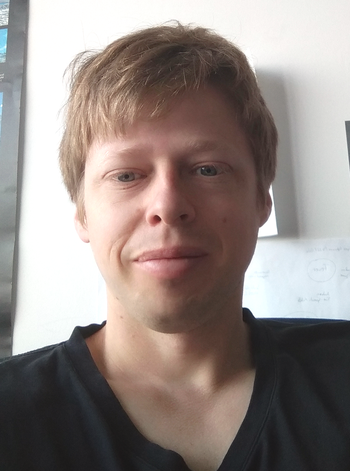
Jens Michaelis is a Professor at the Faculty of Linguistics and Literary Studies, Bielefeld University, specializing in Computational Linguistics, Text Technology, and Linguistic Creativity. He serves as Deputy Head of the Department of Linguistics, Clinical Linguistics, Text Technology and Computational Linguistics, and provides academic advising for Computational Linguistics programs. His office is located at UHG U5-231, with contact details including telephone +49 521 106-6915 and email jens.michaelis@uni-bielefeld.de . Maintaining active research roles, he leads project B01 'Coercion as a creative mechanism in compositional interpretation' within the SFB 1646: Linguistic Creativity in Communication. His teaching responsibilities span modules like 23-CL-BaCL2.1 Selected methodological aspects 23-CL-BaCL5 Advanced Module 23-CL-BaCL6 Project Module 23-LIN-Ma3.1 Basics of Computational Linguistics 23-MeWi-HM3a_a Mathematical-linguistic language modeling across both undergraduate and graduate programs. His scholarly work focuses on formal grammar properties, syntactic mechanisms, and computational modeling of language. As an ordinary member of the Faculty Conference and Habilitation Committee, he contributes to academic governance while maintaining an extensive publication record in mathematical linguistics, minimalist grammars, and formal language theory.
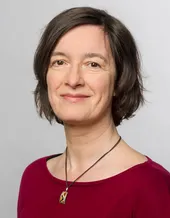
Sven Schewe is a Professor in the Department of Computer Science at the University of Liverpool, affiliated with the School of Electrical Engineering, Electronics and Computer Science. He leads the AI Section and is a founding member and former leader of the Verification Group. He also has secondary affiliations with the Algorithms, Complexity Theory and Optimisation Group and the Institute for Risk and Uncertainty. Research Interests: His research centers on automata theory and game theory, particularly their applications in the verification and synthesis of reactive and safety-critical systems. He investigates infinite-duration games, automata over infinite words and trees, and develops algorithms and tools for automated verification, synthesis, and learning of optimal control strategies. His work extends to reinforcement learning with formal guarantees, cyber-physical systems, and AI safety. Recent Research Trends: His recent publications demonstrate a strong integration of formal methods with machine learning, particularly in adversarial training, neural network robustness, and model-free reinforcement learning under omega-regular objectives. He also applies formal reasoning to interdisciplinary domains such as chemical space exploration and materials science. Scientific Awards: Finalist for the ERCIM Cor Baayen Award 2010 Dr. Eduard Martin Preis 2009 GI Dissertation Award 2008 Advising and Grants: He actively supervises numerous PhD students and postdoctoral researchers. He is Principal Investigator (PI) or Co-Investigator (CI) on multiple major grants, including EPSRC Programme Grants, Royal Society Fellowships, and Horizon Europe projects. His funded research spans topics such as game theory, verification, synthesis, reinforcement learning, and risk analysis. He has hosted visiting researchers and collaborated internationally with institutions in Germany, France, India, Taiwan, and the US. Labs and Teams: He co-founded and led the Verification Group and previously led the AI Section at the University of Liverpool. These groups focus on formal methods, automata, games, and their applications in AI and safety-critical systems.
Christof Löding is an Adjunct Professor at the Department of Logic and Theory of Discrete Systems (Computer Science 7) at RWTH Aachen University. His research focuses on automata theory, formal verification, and logical foundations of computer science, with significant contributions to Büchi automata, tree automata, and stochastic games. Academic affiliation: RWTH Aachen University, Germany Research areas: Automata theory, Formal methods, Game theory, Logic in computer science Contact: loeding@informatik.rwth-aachen.de His recent work spans deterministic parity automata construction, finite-valued transducers, and algorithmic solutions for infinite games. Publications emphasize theoretical foundations and practical applications in program verification and XML processing. Articles analyze automata learning, uniformization problems, and lookahead degrees in infinite games, showing interconnections between automata theory and formal verification.
Nathanaël Fijalkow is a Researcher at CNRS in LaBRI (Bordeaux) and a Research Fellow at The Alan Turing Institute in London. His primary research fields include games , machine learning , automata theory , and dynamical systems , with a focus on synthesizing programs from logical specifications and probabilistic models. Research Interests span program synthesis (programming by example), controller synthesis (temporal logic specifications), games on graphs (parity/mean payoff games), probabilistic automata (bounded ambiguity), and invariants for linear dynamical systems. He bridges formal methods with machine learning through projects like DeepSynth . Scientific Contributions include: Undecidability results for probabilistic automata Advances in parity game algorithms (quasi-polynomial lower bounds) Foundations of probabilistic modal logics Efficient synthesis techniques using SMT solvers and distributional learning Supervision involves guiding postdocs and PhD students such as Guillaume Lagarde, Antonio Casares, and Pierre Ohlmann. He has secured grants like the Momentum DeepSynth project (2019-2021) , aiming to merge formal methods with ML for program synthesis.
Christof Löding , currently an Adjunct Professor at the Lehrstuhl für Logik und Theorie diskreter Systeme (Informatik 7) department of RWTH Aachen University , is a leading researcher in Automata Theory , Formal Verification , and Logic in Computer Science . His work bridges theoretical foundations with practical applications in software verification, automata minimization, and game theory. Research Interests include automata theory, formal verification, logic, tree automata, game theory, and computational models. Publications span topics like Finite-valued Streaming String Transducers , Deterministic Parity Automata , and Stochastic Game Strategies . Collaborations with researchers like Emmanuel Filiot , Sarah Winter , and León Bohn highlight his contributions to automata and verification. Email : loeding@informatik.rwth-aachen.de He has actively published in venues such as ICALP , LICS , and STACS , focusing on deterministic automata, transducers, and logic-based computational systems. His work on Hyperlogic for Strategies in Stochastic Games (2025) and Minimal History-Deterministic Automata (2025) showcases his ongoing influence in formal methods and automata theory.
Prof. Dr. Fabian Fassnacht holds the Professorship for Remote Sensing and Geoinformatics at the Institute of Geographical Sciences, Freie Universität Berlin. His research focuses on applying remote sensing technologies to understand ecological patterns and processes in vegetation ecosystems, particularly forest systems and urban trees. He specializes in developing workflows for quantifying forest attributes and creating synthetic remote sensing data to improve ecological understanding and monitoring. Education: PhD in Forestry Sciences (University of Freiburg, 2010-2014) Key Projects: FORZA (forest decline analysis), INSANE (spatial forest products), ErWiN (wildfire dynamics), SYSSIFOSS (synthetic forest data), SaMovar (invasive species monitoring) Research Focus: Multi-scale vegetation monitoring, 3D forest modeling, upscaling ecological processes, and wildfire risk assessment using LiDAR and UAV technologies His work addresses critical challenges in remote sensing applications across diverse ecosystems, including semi-arid forests and temperate woodlands. He has coordinated numerous research initiatives funded by BMBF, DAAD, DFG, and other international agencies. Current efforts involve integrating deep learning with traditional remote sensing methods to enhance forest inventory models and ecological assessments.
Anca Muscholl is a Professor at the University of Bordeaux and holds the Hans Fischer Senior Fellowship at the Technical University of Munich (TUM-IAS). She leads the Formal Methods group at the Bordeaux Laboratory for Computer Science Research (LABRI). Her research focuses on foundational aspects of formal verification, automata theory, logics, concurrent systems, and database foundations. She has held academic positions at the University of Paris 7 and has been recognized with prestigious awards, including the Silver Medal from CNRS (2010) and membership in the Institut Universitaire de France (2007–2012). Education: Master’s from Technical University of Munich (TUM), PhD from University of Stuttgart (1994), and habilitation at the same institution. She has contributed to editorial roles for journals like Information Processing Letters and Discrete Mathematics & Theoretical Computer Science , and serves on the council of the European Association for Theoretical Computer Science (EATCS). Her work emphasizes automated controller synthesis for distributed systems and formal methods in concurrency. Notable achievements include advancements in distributed synthesis, temporal logic, and verification of reactive systems. She actively participates in organizing major conferences like ICALP and steering committees for theoretical computer science initiatives. Awards: Silver Medal (CNRS 2010), Junior Member of IUF (2007–2012), Best Paper Awards (PODS 2006, ETAPS 2001). Professional Roles: Editor for TheoretiCS , member of EATCS council, and leader of the Formal Methods group at LABRI. Research Themes: Formal verification, automata theory, concurrency, distributed systems, database logics.
Dr. Gerhard Schellhorn is a Senior Researcher at the Institute for Software & Systems Engineering, part of the Faculty of Applied Computer Science at the University of Augsburg. He collaborates extensively with Prof. Dr. Wolfgang Reif, the institute's director, and has maintained an active research career spanning multiple decades with continuous publications from 1994 through 2025. His research focuses on: Logic Calculi and Algebraic Specification Program Logics and Abstract State Machines Modular specification of concurrent systems with temporal logic and IO-Automata Interactive Verification and Proof Automation Refinement techniques including Data Refinement, ASM Refinement, Linearizability, and Opacity Dr. Schellhorn's recent work (2018-2025) demonstrates a consistent progression from theoretical foundations to practical applications in system verification. His publications reveal a strong emphasis on verifying concurrent and persistent systems, particularly file systems (Flashix), data structures (red-black trees), and memory models. A significant portion of his work utilizes the KIV verification system, which he has helped develop and apply to complex real-world systems. His research shows increasing relevance to modern computing challenges involving crash safety, persistent memory, and concurrent data structures. He has established extensive collaborations with researchers including Stefan Bodenmüller, Wolfgang Reif, Brijesh Dongol, Heike Wehrheim, and John Derrick, indicating his strong integration within the international formal methods community. Dr. Schellhorn also contributes to education at the University of Augsburg through courses in Software Engineering, Compiler Construction, Introduction to Robotics, and Formal Methods in Software Engineering.
Fabio Mogavero is an Associate Professor in Theoretical Computer Science at the Department of Electrical Engineering and Information Technology, Università degli Studi di Napoli Federico II. His research spans formal specification, verification, and synthesis of systems, with a strong focus on logics, automata, games, and database theory. Ph.D. in Computer Science, Università degli Studi di Napoli Federico II, 2011 M.Eng. in Computer Science Engineering, Università degli Studi di Napoli Federico II, 2007 B.Eng. in Computer Science Engineering, Università degli Studi di Napoli Federico II, 2005 His primary research interests include formal verification, temporal and strategic logics, automata over infinite structures, decidability, and database theory—particularly bag semantics. He has made significant contributions to the theory of parity and mean-payoff games, strategy logic, and SHACL/RDF validation. His recent work explores fragments of first-order and monadic second-order logic, and he actively publishes in top venues such as LICS, ICALP, and IJCAI. The most recent articles highlight a sustained focus on logical characterizations (e.g., automata-theoretic models for temporal logics), game-solving algorithms, and foundational database theory, especially around SHACL and multiset semantics. His work bridges theoretical computer science with practical formal methods. Scientific Awards and Recognition: Erdös number at most 3 (via Erdös → J.H. Spencer → M.Y. Vardi → F. Mogavero) Fabio Mogavero has served on the program committees of major conferences including IJCAI, AAMAS, ECAI, and LICS. He has co-edited proceedings for the Strategic Reasoning (SR) and OVERLAY workshops. He has collaborated with leading researchers such as Moshe Y. Vardi, Orna Kupferman, and Michael Benedikt. He has held postdoctoral and teaching positions at the University of Oxford and Università di Verona. He is actively involved in the theoretical computer science community through conference organization and editorial work. He maintains research collaborations across Europe and the U.S. and continues to contribute to foundational and applied aspects of logic in computer science.
Erik Paul is a faculty member at Universität Leipzig's Faculty of Mathematics and Computer Science, affiliated with the Institute of Computer Science and the Automaten und Sprachen (Automata and Languages) research group. His primary academic rank is Lecturer, where he teaches courses such as Automata Theory, Logic and Model Theory, and Semantics of Programming Languages. Paul's research focuses on theoretical computer science with specialization in Automata Theory, Formal Languages, and Weighted Automata. His work explores decidability problems, tree automata, and logical characterizations of computational models, with significant contributions to the understanding of sequentiality and ambiguity in max-plus automata. His publications demonstrate a consistent focus on automata theory and formal methods, with recent work addressing weighted HOM problems and sequentiality in finitely ambiguous systems. The research spans foundational theory, algorithmic decidability, and applications in formal verification. Scientific Awards: ICALP 2020 Best Student Paper Track B Paul actively contributes to academic service through seminar organization and thesis supervision within the Automata and Languages research group.
Sarah Winter is a tenured Associate Professor (Maîtresse de Conférences) at Université Paris Cité and a member of the Automata and Applications team at IRIF (Institut de Recherche en Informatique Fondamentale). Previously, she was a postdoctoral researcher at Université libre de Bruxelles (2019–2023) in the Formal Methods and Verification group, and she completed her PhD in Computer Science at RWTH Aachen University under Christof Löding (2014–2018). Doctoral Degree: Computer Science, RWTH Aachen University, 2018 Master’s Degree: Computer Science, RWTH Aachen University, 2013 Bachelor’s Degree: Computer Science, RWTH Aachen University, 2011 Her research lies at the intersection of theoretical computer science, logic, and automata theory. She focuses on transducer synthesis, formal verification, streaming string transducers, delay games, and hyperproperties. Her work explores the computability and definability of functions and relations over infinite words and trees, often using logical and automata-theoretic frameworks. She investigates how systems can be synthesized from specifications, especially under constraints like delay or partial observability. Her recent publications, appearing in top-tier journals and conferences such as LMCS, TheoretiCS, LICS, and ICALP, show a consistent trend toward formal models of computation involving transducers, games with delay, and logical synthesis. Keywords across her work include reactive synthesis, automata on infinite structures, function uniformization, and model checking for hyperlogics. Her collaborations with researchers like Martin Zimmermann and Emmanuel Filiot reflect a strong network in European formal methods. Best Student Paper Award, MFCS 2018 Sarah Winter has advised students at the Master’s and PhD levels, as evidenced by her own academic lineage and supervision roles in publications, though no explicit list of advisees is provided. She has not mentioned specific grants, but her postdoctoral and faculty positions suggest funding support. She is actively involved in the theoretical computer science community, giving talks at international venues and workshops. She is a core member of the Automata and Applications team at IRIF, contributing to research on automata theory and its applications in verification and programming languages. Her work forms part of a broader effort to develop rigorous foundations for computing systems.
Yu-Fang Chen is a research professor at Academia Sinica, Taiwan, active across premier programming-languages venues such as PLDI, POPL, OOPSLA, SAS, APLAS and VMCAI. His work sits at the intersection of program verification , automata theory and constraint solving , with recent emphasis on quantum-circuit verification and string-number constraint solving . Research interests revolve around rigorous methods to ensure software reliability: developing novel automata models (level-synchronized tree automata, position-constrained string automata), building practical solvers that blend length, substring and numeric constraints, and extending automated reasoning to the quantum domain. His papers consistently introduce new decision procedures, learning algorithms and tool-chains that improve the scalability of static analysis and formal verification. Between 2017 and 2025 he (co-)authored more than a dozen peer-reviewed papers and served on over thirty program committees, including steering and organization chair roles for VMCAI 2026 and SAS 2023 . No doctoral students or funded-grant details are disclosed in the supplied sources.
Marcelo Arenas is a Professor at the Department of Computer Science and the Institute for Mathematical and Computational Engineering at the Pontifical Catholic University of Chile. He is a Fellow of the Association for Computing Machinery (ACM), former director of the Millennium Institute for Foundational Research on Data, and co-founder of the Center for Semantic Web Research. His Ph.D. in Computer Science was obtained from the University of Toronto in 2005. Research interests include data management , applications of logic in computer science , and Semantic Web technologies. He has published extensively on topics such as SPARQL query complexity , graph database systems , and incomplete database theory , with notable works like MillenniumDB and Foundations of Data Exchange . Scientific accolades: 2016 SWSA Ten-Year Award for "Semantics and Complexity of SPARQL" IBM Ph.D. Fellowship (2004) Nine Best Paper Awards across PODS, ISWC, ICDT, ESWC, WWW, and NeurIPS His work on approximate counting algorithms (e.g., FPRAS for #NFA) and explainable AI frameworks has influenced database theory, while serving on program committees for ICDT 2015, ISWC 2015, and PODS 2018 demonstrates leadership in the field. Current projects focus on probabilistic explanations for decision trees and temporal regular path queries in knowledge graphs.