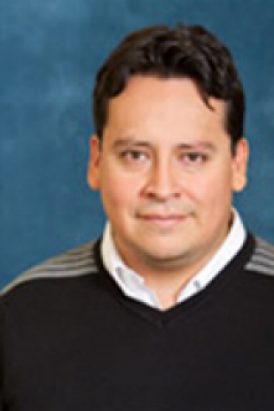
Filiberto Barajas-López is an Associate Professor at the University of Washington Seattle's College of Education, specializing in Learning Sciences & Human Development. As Director of Indigenous Education Initiatives and the Native Education Certificate Program, he advances Indigenous resurgence through research and teaching, focusing on equity in mathematics education for marginalized communities. Ph.D. in Education from UCLA (2009) M.A. in Secondary Mathematics Education from Claremont Graduate University (2001) B.A. in Mathematics and Politics from Occidental College (1999) His research examines: Equity studies in mathematics education Immigrant schooling experiences Indigenous methodologies and pedagogy Family knowledge integration in learning Publications demonstrate expertise in: Rehumanizing mathematics education Family-school-community partnerships Indigenous STEAM programs Equitable pedagogical frameworks Mathematics identity development Language and learning intersections Scientific honors include: 2013 Henry T. Trueba Award NSF DiME Fellowship UW Technology Teaching Fellow META Scholarship recipient He teaches courses on: Mathematics equity pedagogy Race and social justice in education Indigenous pedagogies Secondary math teaching methods
Kate M. Lesciotto, JD, PhD, D-ABFA is an Assistant Professor at the Center for Anatomical Sciences , affiliated with the College of Biomedical and Translational Sciences at UNT Health in Fort Worth, TX. Her work bridges forensic anthropology, biomechanics, and legal systems, focusing on skeletal analysis, trauma interpretation, and the Daubert standard's impact on forensic science. Education PhD in Anthropology, Pennsylvania State University (2020) MS in Forensic and Biological Anthropology, Mercyhurst University (2015) Juris Doctor (JD), Washington University in St. Louis (2009) BS in Biological Science and Zoology, Colorado State University (2004) Her research centers on forensic anthropology , with three primary areas: (1) sex estimation from skeletal remains using metric/morphological data and statistical models; (2) biomechanics of skeletal trauma via experimental bending models and medical imaging; and (3) the intersection of forensic anthropology and legal systems , particularly Daubert standard admissibility criteria. Recent projects include NSF/National Institute of Justice-funded software development for sex estimation and collaborations on cranial bone development studies. Dr. Lesciotto's publications reflect expertise in forensic identification , methodological validation , and science communication . She has contributed to software tools, biomechanical protocols, and educational outreach initiatives like March Mammal Madness. Her 2021-2025 work demonstrates consistent focus on improving forensic accuracy, legal standards, and developmental imaging techniques. Scientific Awards ABFA Board-Certified Forensic Anthropologist (2023) As a practicing forensic anthropologist, she consults for Texas counties and trains law enforcement. At UNT Health, she directs Graduate Structural Anatomy (PHAN 5301) and teaches gross anatomy to medical, physical therapy, and physician assistant students. Her work integrates biomedical research , legal analysis , and pedagogical innovation , reflecting interdisciplinary expertise in forensic science.
Sinead O'Keeffe is a Research Fellow at the University of Limerick in the Faculty of Science and Engineering , specifically within the Department of Electronic and Computer Engineering . Her research bridges the technical domain of optical fiber sensor development with critical applications in radiation therapy and sports medicine. Primary Research Themes Medical radiation dosimetry using optical fiber sensors Brachytherapy dose monitoring systems Sports injury prevention in Gaelic football and running Mental health literacy in rural farming communities Key Technical Contributions Development of scintillation-based dosimeters Characterization of perfluorinated polymer fibers 3D printed sensor systems for clinical and rehabilitation applications Interdisciplinary Applications Prostate cancer radiotherapy dose measurement Mental health intervention programs for athletes Work-family conflict analysis in Irish farming Email: sinead.okeeffe@ul.ie
Dr. Tekalign Ayalew Mengiste is an Assistant Professor and senior researcher at the College of Social Sciences, Addis Ababa University, and an affiliated researcher at Stockholm University's Department of Social Anthropology. He holds a PhD in Social Anthropology with specialization in Transnational Migration from Stockholm University, Sweden, and a BA in History from Addis Ababa University. His research focuses on migrant preparatory training and circular migration dynamics between Ethiopia and Gulf States, funded by the Swedish Research Council. This project examines formalized vocational training programs for low-skilled labor migrants, policy transfers from countries like the Philippines, and the evolving infrastructure of labor deployment in Ethiopia. He also investigates pandemic impacts like mass deportations during the global health crisis. Migrant Smuggling as Community Protection Climate Mobility and Legal Pluralism Gender Dimensions in Migration Governance Indigenous Conflict Resolution Mechanisms Dr. Mengiste has supervised numerous PhD, MA, and BA students while teaching courses on forced migration, conflict management, and research methods. His consultancy work spans IDP management, trauma healing, and migration governance for Ethiopian ministries, IGAD, IOM, and the African Union. Fieldwork spans East Africa, Europe, and the Middle East.
Sabine Harrer is a Senior Lecturer at the Department of Game Design , Uppsala University, Campus Gotland. Contact: sabine.harrer@speldesign.uu.se , Tel: 073-461 81 74. Research Interests Harrer specializes in critical game design , focusing on ethics , queer theory , and decolonial studies . Key areas include: Transgender allyship in game systems Racial bias in European game studies Colonial narratives in board games Intimate game design and player vulnerability Indigenous heritage preservation through games Anti-racist and decolonial game methodologies Publications & Collaborations Harrer's work spans 15+ years, addressing game ethics , cultural representation , and critical pedagogy . Notable collaborations include the Sami Game Jam and critiques of games like Assassin's Creed: Origins and Afrikan Tähti . Labs & Teams Active in the Sami Game Jam , Harrer explores collaborative game design for cultural sustainability and Indigenous storytelling.
Sara J. Knight is a Researcher in the Department of Internal Medicine at the University of Utah School of Medicine, with a focus on genomic medicine, cancer survivorship, and patient-centered decision-making. Her work bridges clinical research with public health, emphasizing health equity, shared decision-making, and quality-of-life outcomes. PhD in Clinical Psychology from Southern Illinois University Carbondale MA in Clinical Psychology from Southern Illinois University Carbondale BA in Psychology from University of Maryland Her research spans genomics and personalized medicine , particularly in underserved populations, and health experiences of veterans with chronic illnesses. She investigates patient preferences , medical decision-making in oncology, and implementation science for genomic sequencing in clinical settings. Recent publications highlight her work on long-term impacts of pandemics , utility of genomic testing , and health disparities in surgical outcomes . She contributes extensively to the CSER Consortium and SouthSeq initiatives, focusing on diverse patient populations. Her methodological expertise includes qualitative analysis , instrument development for measuring genomic utility, and cohort studies assessing interventions like Enhanced Recovery After Surgery (ERAS) pathways.
Marcia G. Ory is a Regents & Distinguished Professor in the Department of Environmental and Occupational Health at Texas A&M University, driving transformative research in aging, chronic disease management, and implementation science. Her work bridges public health theory with community-based interventions to improve health outcomes for vulnerable populations, particularly older adults and caregivers. Education: BA in Sociology/Psychology, University of Texas at Austin MA in Sociology/Human Development, Indiana University Bloomington PhD in Family Studies (Sociology)/Human Development, Purdue University MPH in Chronic Disease Epidemiology, Johns Hopkins Bloomberg School of Public Health Research Focus: Dr. Ory pioneers evidence-based approaches to aging and health promotion, with groundbreaking work in dementia caregiving, diabetes self-management, and opioid crisis response. Her signature integration of health technology empowers patients through digital platforms like GamePlan4Care, while her implementation science expertise translates research into real-world community programs. She champions health equity through rural-focused initiatives addressing disparities in chronic disease management and access to care. Publication Trends: Recent work (2023-2025) reveals three dominant trajectories: (1) Digital health innovations for dementia caregivers and diabetes management; (2) Multi-ancestry genomic analyses of Alzheimer’s risk; (3) Policy-focused studies on opioid surveillance and transportation equity. Her research consistently leverages large-scale data (commercial insurance, national surveys) to expose urban-rural disparities while developing scalable interventions for vulnerable aging populations. Awards & Recognition: Fellow of four national academies (Behavioral Medicine Research, Health Behavior, Gerontology, Behavioral Medicine) World’s Top 2% Scientist (Stanford 2021-2023), Top 1000 Social Sciences Researcher (Research.com) APHA Philip G. Weiler Lifetime Achievement Award, Healthcare Leadership Council Redefining American Healthcare Award Distinguished Alumna/Scholar (Purdue), Distinguished Mentor (Gerontological Society) Mentoring & Leadership: As a nationally recognized mentor (TAMU Women’s Faculty Network Award), she cultivates next-generation researchers through doctoral seminars in implementation science. Her federally funded grants consistently emphasize community engagement, translating findings into evidence-based programs like the LIVE WELL Initiative that serve 50,000+ older adults annually. She directs major NIH-supported dementia caregiving studies while advising federal agencies on aging policy. Research Ecosystem: Dr. Ory leads the Center for Community Health and Aging, coordinating interdisciplinary teams across public health, gerontology, and data science. Her collaborations span the Texas A&M System, Johns Hopkins, and international partners in Ukraine and Australia, with recent projects developing virtual reality interventions for depression and autonomous vehicle interfaces for cognitively impaired older adults.
Joowon Park is Associate Professor of Anthropology and Chair of the Anthropology Department at Skidmore College, where he also directs the Asian Studies Program. His research and teaching integrate political anthropology, migration studies, and Korean studies, with particular attention to violence, refugee resettlement, and humanitarian governance. Education: Ph.D. in Anthropology, American University M.A. in Anthropology, American University B.A., DePauw University Research Interests: Park’s scholarship centers on the intersections of violence, migration, and state power. He examines how North Korean migrants navigate resettlement in South Korea and beyond, highlighting the gendered, classed, and racialized dimensions of humanitarian intervention. His ethnographic work reveals the invisible forms of violence embedded in resettlement policies, family reunions, and transnational kinship practices. Publication Trends: Across his peer-reviewed articles and 2022 monograph Belonging in a House Divided , Park consistently foregrounds ethnographic accounts of North Korean defectors to critique both state and humanitarian regimes. Sub-themes include transnational mothering, remittance economies, and the politics of reconciliation in divided Korea. Grants & Awards: ASIANetwork Freeman Student-Faculty Fellowship Grant (2023) AAS Northeast Asia Council Research Travel Grant (2019) NSF Doctoral Dissertation Research Improvement Grant (2013) Wenner-Gren Foundation Dissertation Fieldwork Grant (2013) Social Science Research Council Korean Studies Dissertation Workshop Fellow (2014) Explorers Club Washington Group Exploration and Field Research Grant (2012) Robyn Rafferty Mathias Grant for International Research (2011, 2012) Teaching & Advising: Park offers courses ranging from introductory cultural anthropology to specialized seminars on power and violence, migration and diaspora, and Korean popular culture. His classes are cross-listed with Asian Studies and International Affairs, reflecting his interdisciplinary orientation. While specific student names are not provided, he mentors majors through Skidmore’s honors program and supervises collaborative research funded by external grants. Labs & Institutional Service: As Department Chair he oversees curriculum development, faculty searches, and the Skidmore Archaeological Collection. He coordinates the Asian Studies Program’s events and curriculum, fostering campus-wide engagement with East Asian scholarship.
Natalie J Tedford, MD, MSPH, is a Clinical Assistant Professor (CHS) at the University of Wisconsin–Madison's School of Medicine and Public Health, jointly appointed in the Department of Emergency Medicine and Pediatrics. She leads the pediatric emergency team at American Family Children's Hospital, specializing in trauma, infections, and acute illness management for children and adolescents. Education: Undergraduate : Texas A&M University Graduate : MSc in Public Health (Health Promotion), London School of Hygiene & Tropical Medicine Medical School : McGovern Medical School at UTHealth Residency : Pediatrics, University of Wisconsin Hospitals and Clinics (Pediatric Global Health Track) Fellowship : Pediatric Emergency Medicine/Global Health, University of Utah/Primary Children’s Hospital Research Focus: Dr. Tedford investigates social emergency medicine, health equity, and community-based interventions. Her work emphasizes reducing disparities through screening for unmet social needs (e.g., housing, food insecurity) in emergency settings. She also explores global health, simulation training, and prehospital care integration. Publication Trends: Her recent articles (2022–2025) cluster around social care in pediatric emergency contexts, including toolkits for resource referral, racial/ethnic disparities in care, and community partnerships. Secondary themes include febrile infant management and toxicology case studies. Grants & Leadership: She collaborates on an NIH grant examining how community services impact health outcomes and barriers to care. As Director for Medical Student Research, she mentors emerging scholars. Clinical & Team Leadership: Dr. Tedford oversees clinical operations at American Family Children's Hospital's Pediatric Emergency Department, emphasizing family-centered care and innovative solutions for complex cases.
Dr. Yusuf Ransome serves as an Associate Professor of Public Health in the Social and Behavioral Sciences department at Yale School of Public Health. He is the Founder and Director of the Society, Connectedness and Health (SOCAH) Lab, where he leads innovative research at the intersection of social connectedness, contemplative practices, and digital technology to address complex public health challenges. His work focuses on creating sustainable pathways to health, wealth, and prosperity for historically underserved communities both in the United States and globally. Dr. Ransome's research integrates social connectedness, contemplative practices, and digital technology to address complex public health challenges. His current priority research areas include: building social connectedness to buffer mental health and improve community resilience; strengthening faith-based infrastructure to improve community health and economic well-being; developing interventions that integrate contemplative practices, belief systems, and artificial intelligence to strengthen well-being; and leveraging the science of strengths through portable technologies to optimize well-being. His methodologies combine advanced quantitative survey analysis, in-depth qualitative research through interviews and focus groups, geospatial data science applications, and artificial intelligence tools for public health solutions. His research has been featured in top-tier public health journals including the American Journal of Public Health and Social Science & Medicine. Dr. Ransome's commitment to accessibility ensures his findings reach beyond academia through community engagement events, digital storytelling initiatives, and practical well-being products that empower communities to thrive. His work demonstrates clear trends across social determinants of health, HIV prevention, mental health, and the role of religion and spirituality in public health, with increasing emphasis on commercial determinants of health and advanced methodological approaches. Public Voices Fellowship with Yale and The OpEd Project (2024) Office of Health Equity Research (OHER) Award (2023) Dr. Ransome brings extensive academic training to his work, including an Alonzo Smythe Yerby Postdoctoral Fellowship from Harvard T.H. Chan School of Public Health, a DrPH in Public Health from Columbia University Mailman School of Public Health, an MPH in Health Behavior & Health Education from the University of Michigan School of Public Health, and a BS in Business Management and Science from Brooklyn College. His work addresses critical social determinants of health through innovative research-to-practice frameworks, providing actionable insights for policymakers, community organizations, faith-based institutions, government entities, and healthcare systems. The SOCAH Lab, which he directs, employs a multidisciplinary team that applies advanced research methodologies to real-world public health challenges.
Kaveh Khoshnood is an Associate Professor of Epidemiology (Microbial Diseases) at the Yale School of Public Health, where he serves as Director of Undergraduate Studies and Faculty Director for the Humanitarian Research Lab. He is Program Co-Director of the Global Health Ethics Program at the Yale Institute for Global Health and an executive committee member at the Yale Council on Middle East Studies. Dr. Khoshnood's academic affiliations span multiple departments and organizations including: Epidemiology of Microbial Diseases (Primary Appointment) School of Nursing (Secondary Appointment) African Studies Center for Interdisciplinary Research on AIDS Climate Change and Health Formative Childhood and Peace Building GEOHealth-MENA program Global Health Studies Yale Center for Asylum Medicine Yale Institute for Global Health Trained as an infectious disease epidemiologist with over three decades of experience, Dr. Khoshnood specializes in HIV prevention research among people who use drugs and other at-risk populations. His research interests encompass epidemiology and prevention of HIV/AIDS, research ethics, and humanitarian health, with particular focus on health and human rights, international relations, and ethical dilemmas involving vulnerable populations. His work spans multiple continents, with active research and mentoring in China, Lebanon, and Bhutan. Dr. Khoshnood's recent scholarly output demonstrates significant contributions to understanding healthcare delivery in conflict zones, with emphasis on Ukraine, Syria, and Yemen. His work combines epidemiological methods with human rights documentation, producing actionable evidence for humanitarian response. Through the Humanitarian Research Lab, he has pioneered methodologies for documenting war crimes against healthcare infrastructure and exposed Russia's program of coerced adoption of Ukrainian children. Among his notable recognitions are the Teacher of the Year Award from the Yale School of Public Health and the Surgeon General's Certificate of Appreciation. Dr. Khoshnood has served as a consultant for the Office of AIDS Research at the National Institute on Drug Abuse, extending his impact on national health policy. As Faculty Director of the Humanitarian Research Lab, Dr. Khoshnood oversees a team that analyzes open source and remote sensing data, including satellite imagery and social media information, to document humanitarian crises and support operational response. The Lab maintains rigorous chain-of-custody procedures for data preservation to support accountability mechanisms. Their real-time analyses provide critical support to partners delivering healthcare in conflict settings worldwide.
Dr. Anthony McGarry is a Senior Teaching Fellow in Biomedical Engineering at the University of Strathclyde's Faculty of Engineering. With over 50 research outputs spanning two decades, his work focuses on prosthetics, orthotics, biomechanics, and rehabilitation engineering. His research has significantly contributed to understanding prosthetic socket design, gait analysis, measurement reliability, and physical activity in amputees. His research interests encompass a wide range of topics including prosthetics and orthotics, biomechanics, gait analysis, CAD/CAM systems, measurement reliability, physical activity in amputees, rehabilitation engineering, lower limb amputation, microprocessor prosthetics, and 3D printing applications. His work often bridges clinical practice with engineering solutions, focusing on improving patient outcomes through technological innovation. Dr. McGarry's recent publications (2023-2025) demonstrate continued innovation in the field, with work on 3D-printed cranial helmets, vision-based motion capture for gait analysis, and service quality assessment in prosthetics and orthotics. His research shows a consistent trend toward improving measurement techniques, enhancing prosthetic design, and understanding patient experiences. His scientific achievements include: Converge Challenge Competition runner up (2024) PCAD Prosthetic CAD shape capture in a weight bearing environment award (2022) FIA Foundation Research Award Dr. McGarry has been actively involved in research projects including the PCAD project (2023-2025) focusing on prosthetic CAD shape capture in weight-bearing environments, and has supervised three research students. His work on the reliability of measurement systems, particularly goniometers and activity monitors, has been widely cited and has influenced clinical practice. His research group at Strathclyde focuses on developing innovative solutions for prosthetic and orthotic challenges, with particular emphasis on measurement systems, CAD/CAM applications, and patient-centered outcomes. Current projects are exploring how weight-bearing environments affect prosthetic socket design and how emerging technologies can improve clinical outcomes.
Scott Rettberg is a Professor of Digital Culture at the University of Bergen's Department of Linguistic, Literary and Aesthetic Studies. He leads the Center for Digital Narrative and has directed major projects like ELMCIP, funded by the Ford and Rockefeller Foundations. Contact: scott.rettberg@uib.no. Research Focus: Electronic literature, AI-generated narratives, digital humanities infrastructure. Recent Work: Explores AI writing practices, pandemic-themed digital art, and cyborg authorship models. His publications analyze intersections between generative algorithms and literary form, with a strong emphasis on digital ethics and pedagogy. Awards include the Robert Coover Award (2016) and N. Katherine Hayles Award (2019). Key Contributions: Co-founder, Electronic Literature Organization Director, ELMCIP Electronic Literature Knowledge Base Author, Electronic Literature (Polity, 2018)
Dr. Wynnetta Wimberley is a clinically trained Womanist pastoral theologian and Assistant Teaching Professor of Practical Theology at Wake Forest University. She serves as Faculty Director for the Thriving Congregations Initiative and founded HULDAH Consulting, specializing in clergy care, counseling, and spiritual leadership development. Education: Doctor of Theology (Emory University), Master of Divinity and Master of Theology (Princeton Theological Seminary), Bachelor of Arts in Social Work (Kean University) Her research focuses on mental health in African American clergy, particularly depression stemming from the 'cultural sacramentalization' of Black preachers in Protestant traditions. She has contributed to studies on trauma response in sexual assault survivors, pediatric bioethics, and health disparities in Hepatitis-C and HIV infections among underserved populations. Scientific contributions include: Merck postdoctoral fellowship in bioethics Landmark book: Depression in African American Clergy (Palgrave, 2016) As an ordained American Baptist minister, she combines clinical counseling expertise with theological insight. Her work addresses systemic issues in pastoral mental health, trust dynamics in African American communities, and spiritual care frameworks.
Rafael Meza is an Associate Professor in the Department of Epidemiology at the University of Michigan. He holds additional roles as Honorary Professor at the Mexico National Institute of Public Health (INSP), Coordinating Principal Investigator of the Cancer Intervention and Surveillance Modeling Network (CISNET) lung group, and core member of the Cancer Prevention and Control Program at the University of Michigan Comprehensive Cancer Center (UMCCC). He also collaborates with the UM Tobacco Research Network (UMTRN) and the Caswell Diabetes Institute. Education: BSc in Applied Mathematics from Instituto Tecnologico Autonomo de Mexico (ITAM) (2000), PhD in Applied Mathematics from the University of Washington (2006). Postdoctoral fellowships at the Fred Hutchinson Cancer Research Center (2008–2010) and the University of British Columbia Centre for Disease Control (2010–2013). Research focuses on the intersection of epidemiology, biostatistics, and biomathematics, with emphasis on cancer risk assessment, mathematical modeling of disease dynamics, and public health policy design. Key projects include evaluating lung cancer screening strategies, modeling tobacco control policies, and diabetes prevention strategies in Mexico. He develops mechanistic models of carcinogenesis and infectious disease impacts on cancer etiology. Notable contributions include work on lung cancer screening cost-effectiveness, the impact of smoking cessation interventions, and policy frameworks for tobacco regulation. His research has been supported by NIH grants, including projects on lung cancer control policies, health equity in tobacco regulation, and precision screening strategies. Awards and roles include leadership in CISNET, involvement in the PROSPR initiative for precision lung cancer screening, and contributions to the Cancer Center Support Grant at the University of Michigan. He advises on global health initiatives, such as the Canadian Lung Outcomes in Vaping Users (CLOUD) study and the Tobacco Control Policy Tool.