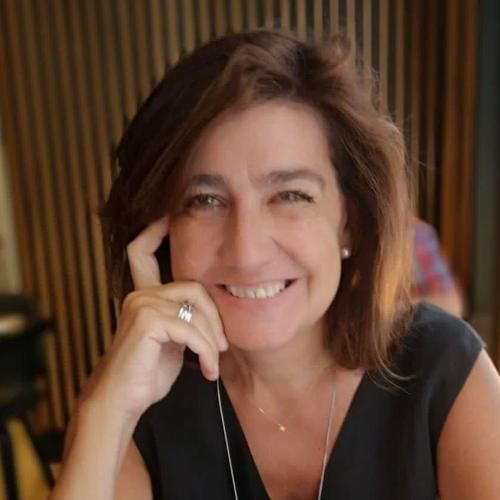
Marina Romeo Delgado is a Full Professor at the Department of Social Psychology and Quantitative Psychology, University of Barcelona. She directs the UB-ADECCO Chair for Labour Integration of People with Disabilities and leads the Consolidated Teaching Innovation Group GIDC-CAV. As Internal Coordinator of the Erasmus Mundus Work, Organizational and Personal Psychology (WOP-P) Master's program, she collaborates with universities in Bologna, Coimbra, and Valencia. She also coordinates the Interuniversity Doctorate in Psychology of Communication and Change. Her research focuses on psychosocial risks, organizational communication, and employee well-being with emphasis on disability inclusion in workplaces. She has led projects like 'Implementing Sustainable Development Goals (SDGs) in Psychology and Education Programs' (2022-2024) and 'Realizing Potential of EU Staff Mobility' (2016-2019). Awarded EuroPsy Specialist certification in Work and Organisational Psychology, she has authored over 20 peer-reviewed articles on telework motivation, job crafting effects, and disability employment policies. Her work bridges academic research with practical interventions through international collaborations and institutional initiatives.
Päivi Häkkinen is a **Professor and Vice Director** at the **Finnish Institute for Educational Research (FIER)**, part of the University of Jyväskylä. Her research focuses on technology-enhanced learning, particularly in collaborative problem-solving, computer-supported collaborative learning (CSCL), and the integration of virtual/augmented reality in education. She leads projects like the EDUCA Flagship for future education and LearnDigi , exploring digitalization in learning. Research Interests: She investigates ICT integration in education, learning analytics, and the cognitive and social dynamics of collaborative learning. Her work emphasizes remote collaboration mechanisms, digital tools for assessment, and AI-driven educational innovation. Key Projects: EDUCA Flagship: Addresses future education challenges through interdisciplinary research. LearnDigi: Examines technology’s role in knowledge construction and digitalization impacts. METEOR: Enhances transversal skills for early career researchers via teamwork methodologies. Recent Work Trends: Her publications analyze joint attention in remote collaboration, AI-human partnerships in education, and neural bases of problem-solving. She emphasizes practical applications for teachers and educators. Labs/Teams: Active in FIER and LearnDigi, focusing on collaborative learning design and technology evaluation.
Alessandro Di Vita is an Associate Professor at the Department of Psychological, Pedagogical, Physical Exercise and Training Sciences, School of Medicine and Surgery, Università degli Studi di Palermo (UNIPA). His work centers on educational psychology, career orientation, and pedagogical methodologies for adolescents and university students. Research Interests: Expressive writing for life planning, self-efficacy development, performance anxiety management, peer tutoring, and intercultural education. Key Projects: «Telemaco» (remote peer tutoring), «FOrCe» (career guidance interventions), and «FOrP» (school-university transition). Collaborations: Worked with international institutions like Universidad Austral (Argentina) and Universidad de Estudios de Palermo (Italy). His publications from 2007–2025 reflect a consistent focus on adolescent relationships, educational reform, and digital pedagogy. He has contributed to validation studies for psychological scales like the Worry Emotionality-Junior (WE-J) and developed methodologies such as «SeCo» for post-diploma decision-making. Alessandro also emphasizes Student Voice in educational processes, promoting active participation and resource utilization. Recent works include international comparative studies on peer tutoring and training programs for secondary school teachers.
Alexander Kaiser serves as Associate Professor and Head of the Department of Knowledge Management at the Vienna University of Economics and Business (WU Wien). With over two decades of academic experience since his appointment in March 2000, he has established himself as a leading figure in knowledge management, organizational learning, and strategic vision development. His position as Head of Department and Deputy Director demonstrates his significant institutional leadership within the university. Dr. Kaiser completed his education at the University of Vienna, where he studied business informatics. He earned his doctorate with distinction from the Vienna University of Economics and Business, followed by his habilitation in Business Administration and Business Informatics in December 1999, which was awarded the prestigious Cardinal Innitzer Promotion Prize and Senator Wilhelm Wilfling Promotion Prize . His academic journey reflects a strong foundation in both business administration and information systems. His research focuses on the intersection of knowledge management, organizational learning, and spiritual dimensions of professional work. Kaiser has pioneered approaches to spiritual knowledge management, exploring how individuals and organizations can develop toward their 'best version' through meaningful knowledge processes. His work on vision development as a knowledge-creating process has significantly contributed to strategic management literature. He investigates how organizations can identify hidden needs, develop sustainable visions, and implement learning processes that incorporate future-oriented thinking, with recent work examining the connection between spirituality, calling, and knowledge management. Over his prolific career, Kaiser has published 91 scholarly works spanning from 1988 to 2025, with a noticeable acceleration in output since 2010. His publication pattern reveals a clear evolution from technical business informatics topics toward more holistic approaches integrating knowledge management with organizational psychology, spirituality, and sustainability. Recent publications (2023-2025) demonstrate his growing focus on wisdom, AI, and the integration of rational and non-rational knowledge in business contexts. Cardinal Innitzer Promotion Prize Senator Wilhelm Wilfling Promotion Prize Beyond his academic work, Professor Kaiser maintains strong practical connections through his role as founder and managing director of WaVe - Center for Growth and Change. His professional training as a systemic coach complements his academic research, creating a unique bridge between theoretical knowledge management frameworks and practical organizational applications. He has developed innovative methodologies like the 'Theory Wave' for sustainable vision development and tools for assessing transversal professional competences that have been implemented in both academic and business settings. As department head, Kaiser leads a research team focused on advancing knowledge management theory while maintaining strong connections to practical applications. The department hosts symposium series that foster interdisciplinary dialogue between academia and practice, reflecting Kaiser's commitment to ensuring knowledge management research remains relevant to real-world organizational challenges.
Giovanni Camanni is an Associate Professor at the Department of Chemical and Geological Sciences, University of Modena and Reggio Emilia. His work focuses on structural geology, fault mechanics, and seismic hazard assessment, with extensive research in fault segmentation, reactivation processes, and 3D geological modeling. Research Interests: Structural geology, tectonic inheritance, fault kinematics, petrophysical reservoir characterization, and volcano-tectonic processes. Teaching: Courses on Seismic Sources and Microzonation , Structural Geology and Tectonics , and Geological Survey , covering advanced fault mapping, displacement analysis, and field methodologies. Techniques: Utilizes 3D seismic reflection data, photogrammetry, unsupervised learning algorithms (DBSCAN/OPTICS), and U-Pb dating for fault and reservoir studies. Applications: Findings contribute to seismic risk mitigation, fluid flow prediction in fractured reservoirs, and urban subsidence management, particularly in southern Italy and Taiwan. Recent Publications (2020-2025): Advanced understanding of fault zone architecture in dolostones, displacement transfer mechanisms in relay zones, Wilson cycle fault reactivation, and multidisciplinary approaches to ground deformation studies.
Albert Fornells Herrera serves as Professor and Vice Dean of Academic Planning at IQS School of Management, Ramon Llull University, where he also leads the Department of Mathematics and Data Analytics. With an academic career spanning since 2003, he has held significant leadership roles in academic management, research coordination, and teaching quality improvement across multiple universities. His research centers on data science, AI-based decision support systems, and disruptive technologies addressing societal challenges. Current work focuses on improving cancer patients' quality of life through data analytics solutions, with applications in breast cancer, melanoma, and leukemia. His interdisciplinary approach spans education, tourism, and sustainability, demonstrating how data literacy drives real-world solutions. Dr. Fornells' publication portfolio shows strong emphasis on hospitality technology adoption, student competency development, and tourism impact analysis. His recent work reflects commitment to practical applications of data science across sectors, with publications appearing in high-impact journals in artificial intelligence, education, and tourism fields. ADAMIQS research group recognized as emerging group by Generalitat of Catalonia (SGR 2022) He has supervised five completed doctoral theses (three in AI, two in skills development) and currently mentors three PhD candidates working on leukemia patient quality of life and food packaging defect detection. His grant portfolio includes ALL-TARGET precision medicine trial (2024-2029), EcoHarmony project (2024-2027), and multiple tourism technology initiatives funded by Ramon Llull University and public entities. As a research leader, he founded the ADAMIQS (Applied Data Analytics and Maths IQS) group and transformed the Department of Quantitative Methods into the current Department of Mathematics and Data Analytics. He previously created the Department of Tourism and its research group at HTSI-URL (2018) and contributed to establishing the Tourism Tech cluster promoted by ACCIÓ (Generalitat de Catalunya).
Josep Solà Santesmases is a Researcher at the Department of Physical Activity and Sport Sciences and Sports Management, Faculty of Psychology, Educational Sciences and Sports Blanquerna, Universitat Ramon Llull. His research focuses on physical education, sport psychology, and the intersection of education and sports in secondary and higher education contexts. He has contributed to projects such as engAGE (intergenerational intervention using immersive technology), PROMISE (support for women in basketball), and SAFE (health and physical activity initiatives). His work examines topics like agility trends in adolescents, service-learning practices in vulnerable populations, and curriculum design for physical education. Collaborations include studies on muscle rehabilitation and tactical analysis in sports. He has published extensively in peer-reviewed journals, with a focus on applying scientific methods to improve educational and athletic outcomes. Notable projects include leading studies on dual career management for high-level athletes and analyzing the transversality of educational content in physical education curricula. His research often bridges practical applications with theoretical frameworks in sports science and pedagogy.
Sonia Martín Gómez serves as Professor of Business Organization at CEU San Pablo University, where she directs the Master's Program in Circular Economy and Sustainable Development and oversees the University's Values and Leadership program. Her academic leadership spans business management, sustainability education, and educational innovation. Education Background PhD in Economic and Business Sciences, CEU San Pablo University (1996) Licentiate in Economic and Business Sciences, Complutense University of Madrid MBA, Institute of Business Administration (IAE) of Extremadura Her research focuses on circular economy implementation, transversal competency development, and innovative teaching methodologies. She has pioneered work on AI integration in higher education, analyzing both its technological potential and social adoption barriers across different regions. Her scholarship bridges academic theory with practical business applications, particularly in sustainability contexts. Her publications reveal consistent exploration of workforce readiness, with emphasis on transversal competencies that bridge technical knowledge and professional adaptability. Recent work examines how esports economies model emerging digital labor markets. Awards and Recognition Research Six-Year Accreditation (Sexenio de Investigación) She actively contributes to educational innovation through the ECOCEU YouTube channel and develops pedagogical materials for major publishers including Pearson, Paraninfo, and Pirámide. Her leadership extends to curriculum development for sustainability-focused academic programs and industry partnerships.
M. Mercedes Martinez Torres is a Professor at the University of Barcelona’s Department of Cognition, Development and Educational Psychology within the Faculty of Psychology. She holds roles as Psychology Degree Final Project Coordinator and Vice-Dean of Organization and External Relations. Her academic training includes a Psychology Degree (1988) and PhD in Teaching (1993), both from the University of Barcelona. Her research focuses on intelligence, giftedness, talent development, and university teaching innovation. Notable contributions include studies on transversal competence development through teaching strategies, university-level communication competencies, and interventions for students with high intellectual abilities. She has coordinated grants like the 'Information competence in the degree of Psychology' (2015-2021) and 'Reverse Classroom (Team Based Learning)' (2020-2021). Her publications emphasize pedagogical tools for academic writing, citation practices, and curricular innovation. As a supervisor, she has guided master’s and undergraduate theses on topics like creative skills in education and academic performance predictors. Her work bridges psychological theory with practical educational methodologies.
Azucena Barahona Mora is an Assistant Professor at the Universidad Complutense de Madrid's Department of English Studies, Linguistics and Literature. Her research focuses on language pedagogy, ICT integration, sociolinguistics, and bilingualism. With 2 years of PhD supervision experience, she welcomes proposals in areas such as English for Specific Purposes and discourse analysis. Her work emphasizes innovative teaching methodologies, digital tools like ChatGPT and the Metaverse, and cultural aspects in language learning. She has explored topics ranging from dialectal influences in educational discourse to gamification in language classrooms. Barahona Mora's publications often bridge technology and pedagogy, addressing challenges in language teaching innovation and cross-cultural communication. Her CV is available at UCM's website .
María Cristina Iglesias Chaves is an Adjunct Professor at the Universidad Pontificia de Salamanca , affiliated with the College of Education and working within the Department of Music . She is a member of the NEYLA research group (Neuroesthetics, Education, and Artistic Languages). Her research focuses on Neuroaesthetics , Artistic Education , and Cognitive Development , with particular emphasis on cultural awareness, transversal competencies in higher education, and cognitive flexibility. Recent publications explore intersections between art, education, and 21st-century heritage. Her work includes evaluations of educational models in the European Higher Education Area and cognitive training programs to reduce interference in controlled processes. No scientific awards or student advisement records are explicitly mentioned.
Dr. Seán Lacey is a Lecturer in the Department of Mathematics at Munster Technological University (MTU), previously at Cork Institute of Technology (CIT). He holds a BSc in Mathematical Sciences & Computing (2003) and a PhD in Applied Mathematics (2008) from the University of Limerick. His roles include serving as Chair of the Research & Innovation Committee (2016–2020) and Chair of the Department of Mathematics Research Committee at MTU/CI. He has collaborated extensively with APC Microbiome Ireland, UCC, and other institutions, focusing on statistical analysis in clinical trials, real-world data studies, and sports science. Dr. Lacey has designed and delivered over 70 Continuing Professional Development (CPD) workshops and contributed to the development of Data Science and Analytics programs at MTU. He currently supervises two postgraduate students and has authored/co-authored over 30 peer-reviewed publications. His research interests span statistical methodologies, educational technology, and interdisciplinary applications in medicine, agriculture, and sports. His academic service includes membership in MTU Academic Council (2013–2020), National Forum Research Ethics Committee (2019–2021), and leadership in projects like QUARTILES and SUCCEED. Key collaborations include work on fundamental motor skills in children, pandemic impacts on healthcare, and agricultural pest management.
Laura Heidi Linnea Niemi is a Lecturer in the Department of Education at the University of Helsinki, focusing on mathematics education and teacher training. She has been actively involved in blended learning programs and transversal competencies development since 2021. Doctor of Philosophy (Educational Sciences), University of Helsinki (2022) Master of Education (Classroom Teacher), University of Helsinki (2013) Bachelor of Education (Preschool Teacher), University of Helsinki (2011) Her research investigates: Mathematics motivation and talent identification in early childhood education Teacher candidates' pedagogical competence development Blended learning models for future-oriented education Recent publications highlight her work on: Digital-physical hybrid pedagogical frameworks Transversal skill cultivation in teacher education Motivational dynamics in primary mathematics instruction She contributes to academic discourse through peer reviews for journals like European Journal of Psychology of Education and participates in national conferences on early childhood education reform.
Leslie K Rydberg, MD is an Associate Professor in the Department of Physical Medicine and Rehabilitation at the Feinberg School of Medicine, Northwestern University. She serves as the Monika and Henry Betts Medical Student Education Chair and Associate Residency Program Director, with clinical practice based at Shirley Ryan AbilityLab and Northwestern Memorial Hospital in Chicago. Education: MD from Northwestern University Feinberg School of Medicine (2005) Residency at Northwestern University, McGaw Medical Center (Rehabilitation Institute of Chicago) (2009) Board Certified in Physical Medicine & Rehabilitation by the American Board of Physical Medicine and Rehabilitation Dr. Rydberg specializes in General Rehabilitation (cancer, medically complex, post-transplant, and cardiac rehabilitation) and Neuro Rehabilitation (nontraumatic spinal cord injury, neuromuscular disorders, multiple sclerosis, transverse myelitis, Guillain Barre syndrome, peripheral neuropathy). Her expertise includes electrodiagnostics and nerve problems, with deep commitment to Medical Education innovation. She directs medical student clerkships where students learn functional patient-centered rehabilitation approaches. Her 2025 publications reveal dual research thrusts: advancing PM&R medical education through mastery learning frameworks and resident teaching perspectives, alongside developing multidisciplinary Long COVID rehabilitation protocols. This work bridges clinical practice with pedagogical innovation, emphasizing ableism-aware curricula and competency-based training. Scientific Awards: Mentor of the Year, Department of Physical Medicine and Rehabililtation (2024) John X. Thomas, Jr. Best Teachers of Feinberg Award (2018) Feinberg Academcy of Medical Educators (2017) Teacher of the Year Award, Department of Physical Medicine and Rehabililtation (2017) As Medical Student Education Chair and Associate Residency Program Director, Dr. Rydberg shapes Feinberg's educational strategy while mentoring trainees. Her national leadership includes chairing the Association of Academic Physiatrists' Medical Student Educators Council and Education Committee, driving curriculum standardization across PM&R programs. She actively participates in Medical Education Day workshops advancing teaching excellence. Based at Shirley Ryan AbilityLab's 19th Floor, she collaborates with multidisciplinary teams treating complex rehabilitation cases. Her work integrates clinical care, education leadership, and guideline development for conditions like Long COVID, reflecting the AbilityLab's mission to transform rehabilitation through research and innovation.
Agnès Costerg is a Professor at the Faculty of Education of Université de Sherbrooke , Canada. Her research focuses on language acquisition, learning difficulties, orthographic awareness, and literacy development, particularly in early childhood and primary education. Ph.D. in Psychology (2019) and Ph.D. in Education Sciences (2018) from Université de Strasbourg I and Université de Montréal Current roles: Full Professor (2023-) and former Adjunct Professor (2018-2023), Université de Sherbrooke Her work examines lexical boundaries, orthographic representations, and interventions for students with developmental language disorders (TDL), dyslexia, and coordination difficulties. Recent studies highlight oral-to-written transitions and metalinguistic skills. Key grants: $225,000 (2023-2026), $180,000 (2017-2026), $44,826 (2023-2026) from institutional and Quebec research funds Key awards: Prix Jeanne-Grégoire (2018-2019), multiple excellence and mobility grants from Université de Montréal