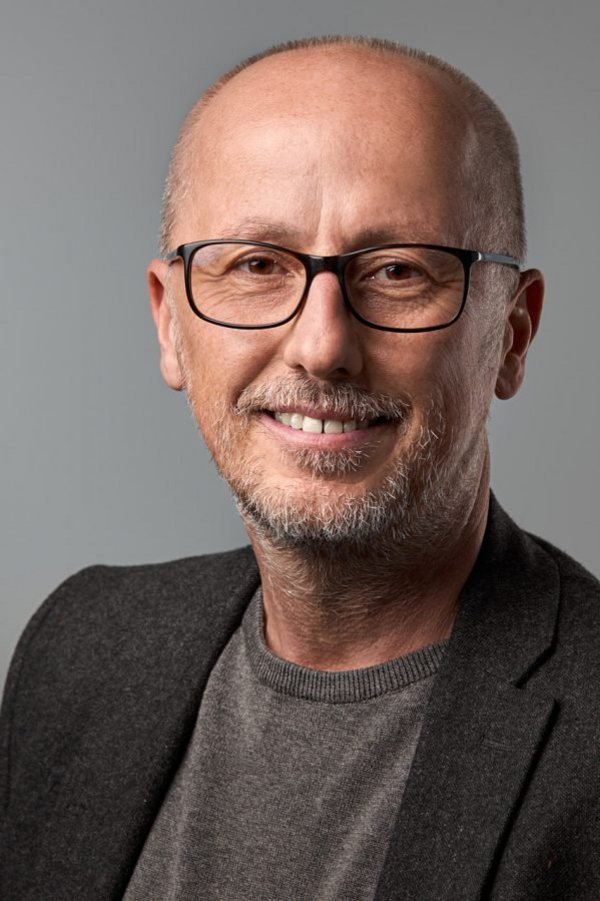
Prof. Thomas Mussenbrock is a Full Professor (W3) of Applied Electrodynamics and Plasma Technology at Ruhr University Bochum, leading the Applied Electrodynamics and Plasma Technology department within the Faculty of Electrical Engineering and Information Technology. He holds a PhD from Ruhr University Bochum (2004) and habilitation (2009), previously serving as a professor at Brandenburg University of Technology (2016-2020). His research focuses on low-temperature plasmas, nanoelectronics, and plasma modeling, with applications in material processing and energy systems. Education: Bachelor's (1995) Bielefeld University of Applied Sciences Master's (1999) Ruhr University Bochum PhD (2004) Ruhr University Bochum Habilitation (2009) Ruhr University Bochum His research interests include plasma dynamics in atmospheric pressure jets, memristive devices for neuromorphic computing, and energy-efficient plasma processes. Recent work emphasizes CO₂ conversion via plasma jets, electron dynamics in capacitive discharges, and scalable plasma modeling techniques. He collaborates on projects like the TopING doctoral program and plasma catalysis initiatives. Publications span journals and conferences, with a focus on experimental and computational plasma physics. He advises on graduate studies and chairs faculty committees at Ruhr University Bochum.
Tarmo Lipping is a Professor in the Department of Computer Science and Engineering at the Faculty of Information Technology and Electrical Engineering, University of Oulu. His work bridges computing sciences with biomedical engineering, environmental modelling, and data-driven societal applications. Doctor of Science (Technology), Information Technology – Awarded 14 Feb 2001 Master of Science (Technology), Information Technology – Awarded 10 Sept 1993 His research focuses on electroencephalography (EEG) , mental workload assessment , depth of anesthesia monitoring , and machine learning applications in healthcare and human-computer interaction. He also contributes to environmental informatics , particularly in land uplift modelling and radionuclide transport , aligning with UN Sustainable Development Goals. Recent publications highlight trends in transformer networks for EEG analysis , wearable HCI systems , data-driven food safety , and participatory municipal governance . His work integrates deep learning, signal processing, and real-world deployment. Scientific awards include: CIMO opettajavaihto (2017) Lipping has supervised numerous master’s students and served as an examiner in diverse topics including data vault modelling , telecom revenue estimation , and EEG hyperscanning . He has evaluated funding applications, acted as a journal reviewer (65 times), and contributed to editorial work. His activities reflect strong engagement in academic service and interdisciplinary research mentorship. He has contributed datasets on Fennoscandian land uplift , lake isolation , and archaeological shorelines to PANGAEA, supporting open science in geosciences and environmental history.
Kristin Y. Pettersen is a Professor at the Norwegian University of Science and Technology (NTNU) in the Department of Engineering Cybernetics, Faculty of Information Technology and Electrical Engineering. She holds a PhD and MSc in Engineering Cybernetics from NTNU and serves as an Adjunct Professor at the Norwegian Defence Research Establishment (FFI). She co-founded and led Eelume AS as its first CEO. PhD in Engineering Cybernetics, NTNU MSc in Engineering Cybernetics, NTNU Her research focuses on nonlinear control theory, motion control of mechanical systems, and marine robotics. Key areas include autonomous vehicles, underactuated systems, and cooperative control. Her recent work involves snake robotics, vehicle-manipulator systems, and safety-critical control algorithms. Her publications demonstrate trends in marine robotics , nonlinear control systems , autonomous navigation , formation control , and adaptive algorithms . Emerging topics include energy-shaping control , extremum-seeking optimization , and task-priority frameworks for complex robotic systems. 2025: Norwegian Academy of Science and Letters (DNVA) 2020: ERC Advanced Grant 2017: IEEE Fellow 2016-2021: Board member, Eelume AS 2013-2023: Key scientist, NTNU AMOS She has supervised 30 PhD graduates and currently mentors 16 PhD candidates. Her grants include ERC PoC UR4energy (€150k), ERC AdG CRÈME (€2.5M), and CAROS (NOK 45M) for subsea autonomy. She leads teams at NTNU's Applied Underwater Robotics Laboratory and contributes to the Cluster of Excellence IntCDC.
Annette R. Grilli is a Research Professor in the Department of Ocean Engineering at the University of Rhode Island , focusing on ocean renewable energy and coastal hazard assessment. Her work integrates numerical modeling and statistical analysis to study extreme events like tsunamis and storms. Ph.D. in Climatology, University of Delaware (2000) M.S. in Oceanography, University of Liege (1984) B.S. in Geography & Education, University of Liege (1983) Her research spans offshore wind farm siting optimization , tsunami propagation modeling , and coastal erosion dynamics . Recent publications highlight applications of phase-resolving wave models and machine learning to coastal resilience and marine renewable energy systems. Grants include collaborations with NOAA , Department of Energy , and NSF , focusing on coastal hazard visualization , tsunami detection algorithms , and design elevation mapping under climate change scenarios. She contributes to digitalCommons@URI with over 100 publications in Ocean Engineering and Civil Engineering domains.
Hao Yang is an Assistant Professor in the Department of Civil and Systems Engineering at Johns Hopkins University, with dual affiliations at the Johns Hopkins Data Science and AI Institute and the Johns Hopkins Institute for Assured Autonomy. His research develops Trustworthy Machine Learning methods to enhance urban mobility systems, focusing on traffic safety, equity, and sustainability through ethical AI and human-machine cooperative systems. Yang earned dual bachelor's degrees in Electrical and Computer Engineering from Beijing University of Posts and Telecommunications and the University of London, followed by a Ph.D. in Civil Engineering (Transportation) from the University of Washington. His educational background bridges telecommunications, electrical engineering, and transportation systems. His research integrates spatio-temporal modeling, assured autonomous systems, and multimodal representation learning to address transportation equity and safety. Key projects include edge-AI-powered traffic surveillance, real-time crash identification, and cooperative signal assistance for vulnerable road users. His work emphasizes ethical AI deployment in cyber-physical infrastructure to create sustainable urban mobility solutions. Recent publications reveal a strategic shift toward large language models and multimodal AI for transportation challenges, with strong emphasis on explainability, reliability, and equity in traffic crash prediction, flow forecasting, and autonomous driving systems. This evolution demonstrates his commitment to adapting cutting-edge AI for real-world transportation problems. Yang's scientific contributions have earned significant recognition: Michael Kyte Outstanding Student of the Year Award (2022) High-Value Research Award from AASHTO (2022) Best Paper Award from TRB Information Systems Committee (2023) Best and Outstanding Dissertation Awards (2024) IEEE DTPI Outstanding Paper Award (2022) TRANSFOR22 Data Competition 2nd place (2022) ASCE Bridges Photo Contest First Place (2021) He actively mentors graduate researchers and seeks 2-3 PhD students for Fall 2025 to advance trustworthy AI in transportation. His research is supported by NSF, USDOT, and AASHTO grants including the Real-Time Truck Parking Information System project that received the High-Value Research Award. Current work focuses on edge-AI for traffic safety and multimodal data integration. Yang leads research within Johns Hopkins' Data Science and AI Institute and Institute for Assured Autonomy, collaborating with Transportation Research Board committees. His lab develops real-time perception systems using edge computing and representation learning, with active projects on non-motorized user safety and equitable traffic management for people with disabilities.
Prof. Ady Arie is a Professor of Electrical Engineering at Tel Aviv University, where he serves as the Head of the Tel Aviv University Center for Light-Matter Interaction and holds the Marko and Lucie Chaoul Chair in Nano-Photonics. He has been a faculty member at the Iby and Aladar Fleischman Faculty of Engineering since 1993, previously serving as Head of the School of Electrical Engineering (2013-2017) and Vice Dean of Research (2011-2013). His educational background includes: B.Sc. in Mathematics and Physics from Hebrew University of Jerusalem (1983) M.Sc. in Physics from Tel-Aviv University (1986) Ph.D. in Engineering from Tel-Aviv University (1992) Prof. Arie's research spans multiple frontiers of optics and photonics. His work in nonlinear optics focuses on advanced frequency conversion techniques and shaping of light parameters using nonlinear photonic crystals. In quantum optics , he develops quantum light sources based on spontaneous parametric down conversion and explores applications in quantum sensing and communication. His plasmonics research investigates manipulation of surface plasmon polaritons on metal surfaces. In electron optics , he studies electron-matter-light interactions and techniques for sculpting electron wave functions. His lab also explores hydrodynamics through quantum simulations with water waves, creating analogies to quantum mechanical phenomena. Analysis of Prof. Arie's recent publications (2023-2025) reveals a strong focus on quantum technologies, particularly in quantum light generation, quantum sensing, and quantum information processing. His work increasingly integrates concepts from nonlinear optics, electron microscopy, and quantum physics, with growing emphasis on practical applications in quantum communication and computation. The research shows sophisticated manipulation of light-matter interactions across multiple platforms including nonlinear photonic crystals, plasmonic structures, and electron beams. Prof. Arie has received significant recognition for his work: Kadar Foundation Award for Excellence in Research (2016) Fellow of the Optical Society of America Editorial roles including Topical Editor of Optics Letters (2008-2014) and Associate Editor of Optica (since 2018) Prof. Arie leads the Nonlinear Optics and Wave Propagation Laboratory at Tel Aviv University, where his team investigates diverse wave phenomena from light frequency conversion to electron beam manipulation. He has served as chair of the national steering committee of the Israeli Planning and Budgeting Committee on Quantum Science and Technology. His research has been supported by various grants enabling the development of novel optical technologies and quantum systems. While specific grant details aren't provided in the text, his extensive publication record and leadership positions suggest substantial research funding. Prof. Arie's laboratory focuses on the intersection of classical and quantum wave phenomena. The lab investigates light manipulation through nonlinear optical processes, plasmonic structures, and electron microscopy techniques. Current research directions include quantum light generation, electron-photon interactions, and hydrodynamic analogs to quantum systems. The lab appears well-equipped for advanced optical experimentation with capabilities spanning visible to infrared wavelengths, nonlinear crystal engineering, and electron beam characterization.
Angela Sasic Kalagasidis is a Professor and Department Head at Chalmers University of Technology , leading the Building Physics research group. She serves as a board member of the Moisture Center at Lund University of Technology , contributing to interdisciplinary research in building science. Building Physics Heat and Mass Transfer Energy Efficiency Moisture Safety Indoor VOC Emissions Climate Change Adaptation Her recent publications focus on aerogel-based materials for insulation, urban heat island mitigation , and thermal energy storage systems . Key methodologies include CFD simulations , field testing , and life cycle assessment frameworks . Research trends show emphasis on: Advanced computational tools for hygrothermal analysis Integration of phase change materials in building systems Climate resilience in building envelopes Optimization of ventilation and moisture control
Tyler Simko is an Assistant Professor of Political Science at the University of Michigan, specializing in US state and local politics, political geography, and computational social science. His research focuses on understanding and addressing inequality in American public policy through innovative methodological approaches. Education: Ph.D. in Government, Harvard University (2024) A.B. in Politics, Princeton University Simko's research examines state and local politics in the United States with particular focus on political geography and subnational policymaking. His active research agendas include legislative redistricting ("gerrymandering"), local public meetings, school segregation, affordable housing, and data privacy. Methodologically, he develops new techniques in computational social science and machine learning to evaluate subnational inequality and how it can be reduced. His work regularly involves partnerships with federal, state, and local officials to improve the design of public policy. His recent publications demonstrate a strong focus on applying computational methods to address real-world policy challenges, particularly in school desegregation, redistricting, and local government transparency. His research often leverages large-scale data collection efforts, such as LocalView (the largest database of local government meetings in the US), to analyze patterns of political behavior and policy outcomes across different jurisdictions. Awards and Recognition: APSA 2024-25 Best Paper in Education Politics and Policy Award APSA 2024-25 Best Paper in Urban and Local Politics, Honorable Mention MPSA 2024 Robert H. Durr Award for "the best paper applying quantitative methods to a substantive problem" Derek C. Bok Award for Excellence in Graduate Student Teaching of Undergraduates (2023) Simko teaches graduate and undergraduate courses in American Politics and Political Methodology at the University of Michigan. His teaching experience spans multiple institutions, including Harvard University and Princeton University. He has designed innovative courses on US Local Policymaking, data science, and computational social science. As a Data Scientist at the Office of Evaluation Sciences, he partners with federal, state, and local officials to improve program design and reduce administrative burdens. He is a co-PI of the Algorithm-Assisted Redistricting Methodology (ALARM) Project and co-creator of LocalView, the largest audio, video, and text database of local government meetings in the United States. These projects represent significant contributions to the field of computational social science and provide valuable resources for researchers studying local governance and policy-making.
Deg-Hyo Bae is a Professor in the Department of Civil and Environmental Engineering at Sejong University, serving since 2001, and concurrently holds the position of University President since 2018. His academic career spans leadership roles including Assistant/Associate Professor at Changwon National University (1996-2001), Senior Researcher at Yonsei University (1994-1996), and Researcher at the US Department of Agriculture-ARS (1992-1994). His research focuses on critical water security challenges through advanced hydrological modeling and climate impact assessment. His academic credentials include a Ph.D. (1992) and M.S. (1989) from the University of Iowa, and a B.S. from Yonsei University (1983). These qualifications form the foundation for his interdisciplinary expertise bridging civil engineering, atmospheric science, and environmental informatics. Professor Bae's research program centers on atmosphere-surface interactions, climate-driven hydrological extremes, and real-time prediction systems. His work integrates radar meteorology, GIS analytics, and climate modeling to develop operational tools for flood forecasting, drought monitoring, and transboundary water management. Major achievements include the Global Water Bank system and coupled atmosphere-urban flood models, directly supporting UN Sustainable Development Goals for clean water and climate action. Recent publications (2024-2025) reveal a strategic shift toward AI-enhanced hydrology, combining Bayesian uncertainty quantification with deep learning for streamflow prediction. His work increasingly addresses climate change impacts on extreme events in vulnerable regions like Burundi while exploring teleconnection mechanisms such as ENSO-ozone interactions through CMIP6 frameworks. Professional activities include media coverage of Sejong University's research impact (2021-2022) and international collaborations with Slovak presidential advisors. While specific grant details and student advising records aren't documented in the source material, his 111 publications and h-index of 25 demonstrate significant scholarly influence in water resources engineering.
Ergin Tönük serves as an Associate Professor in the Mechanical Engineering Department at Middle East Technical University (METU) in Ankara, Turkey. With a career deeply rooted at METU where he earned all his degrees, he maintains an active research profile with office B-319 and contact details tonuk@metu.edu.tr and +90 312 210 5293. His academic credentials include: Bachelor's Degree (B.Sc.) from METU, 1990 Master's Degree (M.Sc.) from METU, 1992 Ph.D. from METU, 1998 Professor Tönük's research spans Pneumatic Tires, Finite Element Analysis, Mechanism Synthesis, Soft Tissue Biomechanics, and Railway Vehicles. His biomechanics work focuses on computational modeling of biological systems including joint mechanics, tissue behavior, and medical device development. Tire and railway research leverages his mechanical engineering expertise for transportation applications, while his mechanism design studies address complex kinematic problems. Analysis of his 2016-2025 publications reveals a strong biomedical trajectory with emphasis on orthopedic applications. Key themes include hand/knee joint modeling, tissue engineering scaffolds, gait/posture analysis systems, and viscoelastic material characterization. His methodological signature combines finite element analysis with experimental validation, particularly in soft tissue mechanics and surgical simulation. While specific advising records and grant details aren't provided, his 70+ publications indicate substantial graduate mentorship and research funding acquisition. His work aligns with biomechanics and computational mechanics groups within METU's Mechanical Engineering Department, though dedicated laboratory facilities aren't specified in available sources.
Asha Weinstein Agrawal is a Professor at the School of Planning, Policy, and Environmental Studies within San Jose State University's College of Social Sciences. Her work centers on transportation planning and policy with a focus on sustainability and equity, actively engaging policymakers and communities to address contemporary mobility challenges through evidence-based solutions. Professor Agrawal's research spans transportation revenue systems, equity implications in mobility access, sustainable transportation frameworks, travel behavior analysis, survey methodology innovation, and historical transportation policy evolution. She investigates how planning tools can promote environmentally friendly travel and improve accessibility for disadvantaged populations, with current projects examining electric vehicle impacts on transportation funding, transit safety for vulnerable users, and community engagement in open streets initiatives. Analysis of her recent publications reveals dominant themes in transportation funding alternatives—particularly mileage-based user fees and zero-emission vehicle revenue impacts—and equity-focused studies on transit safety, workforce diversity, and accessibility for older adults and low-income communities. Her work consistently bridges academic research with real-world policy applications through rigorous survey methodologies and multi-stakeholder engagement. Scientific Awards: No specific awards are documented in the provided materials. Advising and Professional Engagement: Professor Agrawal regularly presents findings to federal and state decision-makers including U.S. Senate committees, the California Transportation Commission, and local transportation authorities. She serves on key advisory bodies such as the Metropolitan Transportation Commission's Regional Means-Based Transit Fare Pricing Study committee, Santa Clara County Traffic Safe Communities Network, and Valley Transportation Authority's Pedestrian Access Task Force. Her research has been supported through multiple policy-relevant projects with transportation agencies across California and nationally.
Deepa Camenga, MD, MHS, FAAP is an Associate Professor of Emergency Medicine at Yale School of Medicine with secondary appointments in Chronic Disease Epidemiology and General Pediatrics. She serves as the Associate Director of Pediatric Programs for the Yale Program in Addiction Medicine, where she leads clinical, educational, and policy efforts to improve healthcare for children impacted by substance use. As a board-certified physician in pediatrics and addiction medicine, Dr. Camenga specializes in adolescent addiction and is one of the few clinicians in Connecticut who prescribes medication treatment for adolescents with opioid use disorder. Dr. Camenga's educational background includes: BA from Yale University (2000) MD from University of Rochester School of Medicine & Dentistry (2005) Residency at University of Rochester Golisano Children Hospital (2008) Chief Resident at Children's Strong Hospital, Rochester (2009) Postdoctoral Fellowship and MHS in Health Services Research through the Robert Wood Johnson Foundation Clinical Scholars Program at Yale (2012) Dr. Camenga's research focuses on reducing the morbidity and mortality associated with adolescent substance use and substance use disorders. Her work specifically aims to improve identification and treatment of drug and tobacco use in healthcare settings, with a particular interest in developing technology-enhanced interventions to reduce substance use among adolescents and young adults. She employs both quantitative and qualitative methodologies to examine adolescent substance use patterns, cessation motivations, and the effectiveness of interventions in clinical and community settings. Her research has significant implications for public health policy and clinical practice guidelines related to youth substance use. Dr. Camenga's recent publications demonstrate a strong focus on adolescent vaping behaviors, impaired driving among youth, and digital interventions for substance use prevention. Her work spans multiple methodologies including longitudinal studies, system dynamics modeling, and mixed-methods approaches. Key themes in her research include the impact of flavored products on youth nicotine dependence, the social and environmental factors influencing risky behaviors, and the development of evidence-based approaches to substance use prevention and treatment for adolescents. Dr. Camenga is actively involved in national professional organizations and committees: Member of the American Academy of Pediatrics Committee on Substance Use and Prevention (since 2016) Member of the American Academy of Pediatrics Meeting Planning and Participation Committee (since 2018) Former Committee Member of the Academic Pediatric Association (2013-2015) Dr. Camenga has developed several innovative clinical programs, including a school-based health center tele-consult program and an inpatient adolescent addiction medicine consult service. She treats adolescents and young adults at the APT Foundation and leads an addiction medicine tele-consult service for local school-based health centers. Her work extends to the Yale DrivSim Lab, where she collaborates on studies examining the neurocognitive aspects of risky driving and substance use among youth. Dr. Camenga also chairs the American Academy of Pediatrics Committee on Substance Use and Prevention, positioning her as a national expert in pediatric addiction medicine.
Prof. Dr. Marek Basler is an Associate Professor of Infection Biology at the Biozentrum, University of Basel , leading a research group focused on the Type VI Secretion System (T6SS) in bacterial pathogens. His work bridges structural biology, molecular microbiology, and computational analysis to unravel the mechanisms of this contractile nanomachine. PhD in Microbiology (2007, Institute of Microbiology, CAS, Prague) Postdoctoral Fellow (2007–2013, Harvard Medical School) Assistant Professor (2013–2018) and Associate Professor (since 2018) at Biozentrum His research explores the structure, assembly, and therapeutic potential of the T6SS, a critical virulence factor in pathogens like Pseudomonas aeruginosa . Key themes include bacterial defense strategies , intermicrobial competition , and host-pathogen interactions . Recent projects highlight T6SS roles in antibiotic resistance and horizontal gene transfer . The most recent publications (2025–2024) reveal novel insights into T6SS activation by environmental stress , toxin diversity , and host cell targeting . Trends span microbial ecology , nanomachine dynamics , and computational modeling of bacterial interactions. Scientific Awards : EMBO Membership (2023) ERC Consolidator Grant (2019) EMBO Gold Medal (2018) Friedrich Miescher Award (2018) EMBO Young Investigator (2015) His lab (Basler Lab) utilizes state-of-the-art microscopy , biochemical techniques , and live-cell simulations (e.g., BacFighT6 ). Collaborations span institutions like Harvard Medical School and NCCR-AntiResist , with future work targeting antibacterial therapies .
Adriano Jorge Cardoso Moreira is an Associate Professor with Habilitation at the Department of Information Systems, School of Engineering, Universidade do Minho, Portugal. He is also a Senior Researcher at the Algoritmi Research Centre and Scientific Coordinator of the Urban and Mobile Computing department at Centro de Computação Gráfica. His research focuses on indoor positioning , mobile and context-aware computing , urban computing , and simulation of wireless networks . Research Interests : Indoor Positioning, Mobile Computing, Urban Mobility, Sensor Networks, Wi-Fi and UWB Localization, Smart Cities. Leadership : Coordinated the Computer Communications and Pervasive Media Group (2008-2016), Scientific Committee member (Director of MAP-tele PhD program in multiple terms), and leads the Master in Telecommunications and Informatics since 2021. Publications : Over 100 papers, including IEEE Transactions and Sensors journal articles, with an h-index of 23 and 2136 citations. Awards : First and second prizes in EvAAL-ETRI Indoor Localization Competitions (2015, 2016, 2017).
Maria Leonilde Rocha Varela is an Associate Professor with Habilitation at the School of Engineering, University of Minho, Portugal, where she also serves as a Senior Researcher at the Algoritmi Research Centre. She has been an integrated member of the Algoritmi Research Centre since 2012 and works in the Department of Production and Systems. Dr. Varela earned her degree in Production Engineering from the University of Minho in 1994, completed a Master's in Computer Integrated Production at DPS-UMinho in 1999, and received her Ph.D. in Production and Systems from the University of Minho in 2007. Her primary research focuses on Manufacturing Management, particularly Production Planning, Control and Optimization, and Collaborative Paradigms, Networks and Decision Making Models. She maintains extensive international collaborations with institutions worldwide including the National Institute of Industrial Engineering, VSB-Technick Univerzita Ostrava, University of Belgrade, and others. Her research spans Web Applications and Services for supporting Engineering and Production Management, with increasing emphasis on Artificial Intelligence, Robotic Process Automation, and Industry 4.0/5.0 applications. She has made significant contributions to scheduling algorithms, optimization techniques, and decision support systems for manufacturing environments. Analysis of her recent publications reveals a strong trend toward integrating Artificial Intelligence with traditional manufacturing processes, particularly in Robotic Process Automation applications. Her research increasingly focuses on sustainable manufacturing practices, with numerous publications addressing energy efficiency, environmental sustainability, and resource optimization. There is a clear emphasis on multi-objective optimization approaches to solve complex manufacturing problems, particularly in distributed job shop scheduling. Her work demonstrates an evolution from traditional production planning methods to more advanced AI-driven approaches for Industry 4.0 and 5.0 environments. Dr. Varela has held significant academic leadership roles, currently serving as the director of the master's course in Engineering and Quality Management at DPS-UMinho. She previously coordinated the industrial management and systems subgroup from 2012 to 2021 and was part of the steering committee for the master's course in systems engineering between 2016 and 2019. She has successfully supervised more than 70 MSc projects, with over 15 currently ongoing, focusing on Production and Systems Engineering. Her supervision encompasses collaborative management models, traditional decision approaches, and web-based platforms incorporating AI techniques. She coordinates research projects including 2 concluded Ph.D. projects and 6 ongoing ones. She collaborates as a research member in several R&D projects with national and international industrial enterprises and institutions, and in international Erasmus projects. Dr. Varela is an active participant in the academic community, serving on editorial boards of several international journals and as a member of organizing and scientific committees for numerous international conferences. She is a member of several prestigious research networks including the Euro Working Group of Decision Support Systems (EWG-DSS), Institute of Electrical and Electronics Engineers (IEEE), Industrial Engineering Network, and the Institute of Industrial and Systems Engineers (IISE).