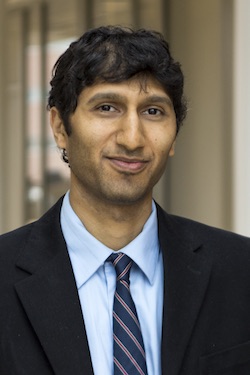
Gabor Simonovits is an Associate Professor in the Department of Political Science at Central European University (CEU), with affiliate roles in the Undergraduate Studies and the Doctoral School of Political Science, Public Policy, and International Relations. He holds a PhD in Politics from New York University (2018), an MA in Politics from Stanford University, an MA in Economics from CEU (2011), and a BA in Applied Economics from Corvinus University. His research bridges substantive and methodological inquiry in public opinion studies, focusing on attitudes toward public policies in the U.S., inter-group prejudice in Hungary, and quantitative methods addressing researcher incentives in experimental studies. Simonovits teaches courses on research methods and political behavior at CEU. His work appears in top journals such as Science, the American Political Science Review, and the American Journal of Political Science. He has conducted field experiments on discrimination in housing and ride-sharing platforms, analyzed federalism and abortion law dynamics post-Dobbs, and explored communication strategies in political scandals. His methodological contributions address publication bias and experimental design transparency. Notable collaborations include interventions to reduce anti-Roma discrimination in Hungary’s rental market and studies on democratic erosion’s psychological underpinnings. Simonovits has organized departmental seminars on topics ranging from substance use regulation to electoral autocracy campaigning. His research emphasizes bridging empirical rigor with real-world policy implications, particularly in contexts of democratic backsliding and social inequality.
Allan Hanbury is a Full Professor for Data Intelligence at the Faculty of Informatics, TU Wien, and a faculty member at the Complexity Science Hub Vienna. He leads the Data Science Research Unit and serves as the Faculty Representative for financial affairs and internationalization. He holds a PhD in Applied Mathematics from Mines ParisTech and a Habilitation in Practical Informatics from TU Wien. PhD in Applied Mathematics, Mines ParisTech, 2002 Habilitation in Practical Informatics, TU Wien, 2008 Bachelor’s and Master’s in Physics and Applied Mathematics, University of Cape Town His research focuses on information retrieval, data mining, natural language processing, and information extraction, with applications in healthcare, legal, and patent domains. He has coordinated major EU projects including Khresmoi, VISCERAL, KConnect, and DoSSIER, the latter training 15 PhD students. He is co-founder of contextflow, a spin-off commercializing radiology search technology. His recent publications (2024–2022) highlight a strong trend in systematic literature review automation, neural re-ranking, large language models, and domain-specific information extraction. Key themes include improving citation screening, patient-trial matching, evaluation metrics, and dataset creation for offensive language and legal text. His work combines technical innovation with real-world impact in medical, legal, and scientific communication contexts. Allan Hanbury has received no explicitly mentioned scientific awards in the provided text. He actively supervises numerous PhD and master’s students and leads large research projects such as DoSSIER, Transparent Automated Content Moderation, and PLFDoc, funded by FWF, WWTF, and EU. His group develops tools for evidence synthesis, clinical data extraction, and legal document analysis. He also contributes to AI and data strategy in Austria and Europe. He leads the Data Science Research Unit at TU Wien and is involved in multiple interdisciplinary projects including BRISE (building regulation analysis), CDL-RecSys, and TACo, focusing on legal and scientific document processing. His work bridges academia and industry through spin-offs like contextflow and collaborations with Deutsche Telekom, Siemens, and FMA.
Peter Doshi is an associate professor in the Department of Practice, Sciences, and Health Outcomes Research at the University of Maryland School of Pharmacy and a senior editor at The BMJ . His work bridges academia and public health policy, focusing on clinical trial transparency, drug approval processes, and the integrity of biomedical evidence. Education: A.B. in Anthropology, Brown University A.M. in East Asian Studies, Harvard University Ph.D. in History, Anthropology, and Science, Technology and Society, MIT Fellowship in Comparative Effectiveness Research, Johns Hopkins University His research interests include clinical trial transparency , evidence-based medicine , vaccine policy , and pharmaceutical regulation . He has extensively analyzed the use of regulatory data in systematic reviews, particularly in influenza antivirals and COVID-19 vaccines. His work challenges assumptions about drug efficacy and calls for greater access to raw clinical trial data. Doshi's recent publications reveal a strong trend toward analyzing methodological flaws in vaccine trials, regulatory oversight, and bias in observational studies. He consistently advocates for transparency and scientific rigor in public health decision-making. Scientific Awards: New Investigator Award, American Association of Colleges of Pharmacy (2015) Included in The Wired 'Smart List' (2013) Doshi leads the RIAT Support Center (Restoring Invisible and Abandoned Trials), funded by the Laura and John Arnold Foundation, which aims to correct the scientific record by promoting accurate and complete trial reporting. He has received grants from PCORI, Cochrane, NIHR, and CIHR. He has served on advisory panels for the European Medicines Agency and presented to the Institute of Medicine. He frequently contributes to public discourse through op-eds in The New York Times , The BMJ , and testimony before regulatory bodies.
Karin S. Thorburn is a Professor of Finance at the Norwegian School of Economics (NHH) and holds research affiliations with the Centre for Economic Policy Research (CEPR) and the European Corporate Governance Institute (ECGI) . Her work spans corporate finance, bankruptcy, and governance topics.
André Inácio is a Lecturer at Lusófona University , with a focus on public law, criminology, and urban security. He holds a Bachelor's degree in Right, a Higher Education Diploma in 2nd Degree Studies in Public Law, and postgraduate qualifications in Economic and European Criminal Law and Criminology. Research Interests: Public Law, Criminology, Corruption Prevention, Urban Security, Predictive Modeling, Migration Studies Publications: Explores intersections between law, security, and predictive analytics in peer-reviewed journals and book chapters.
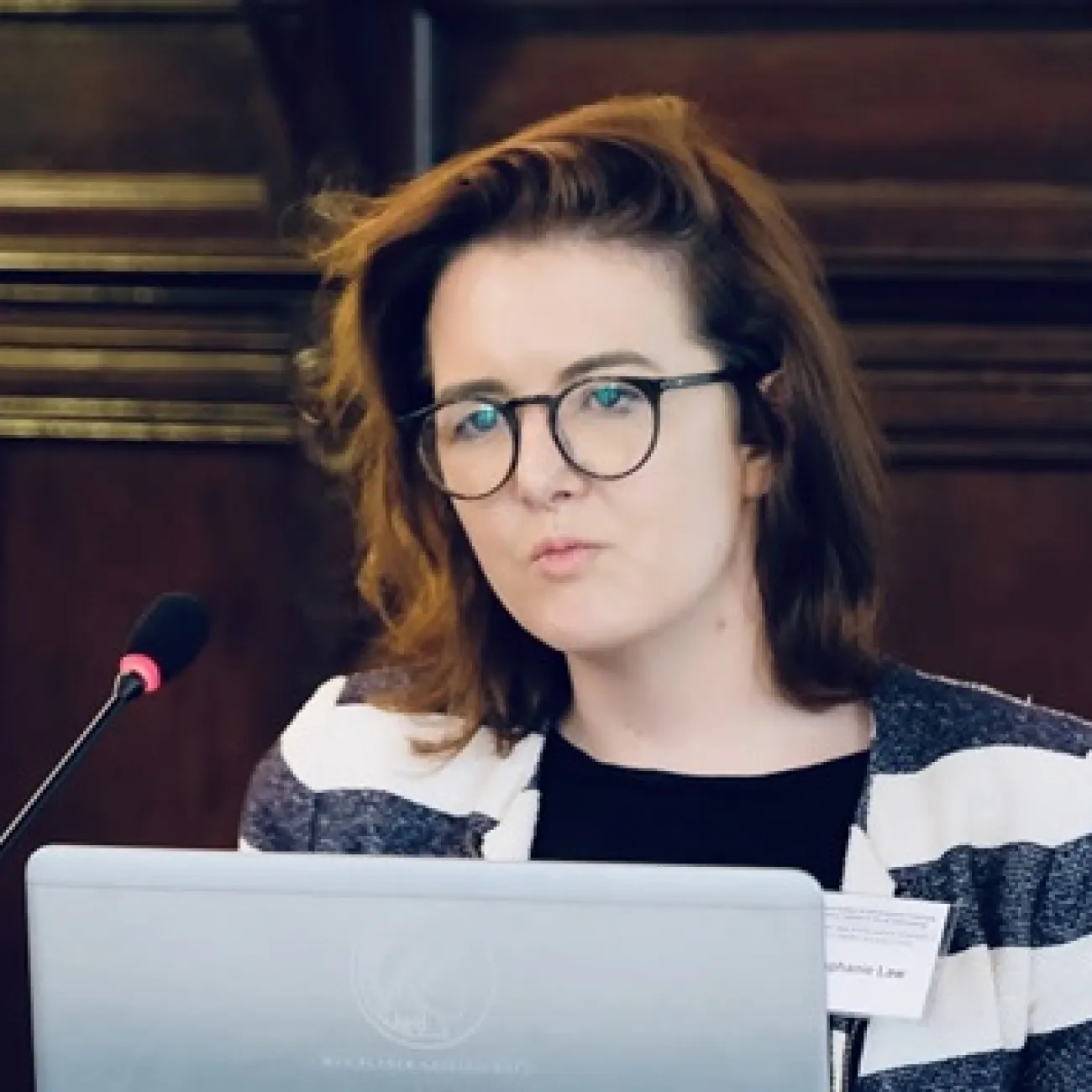
Stephanie Law is an Associate Professor at the Southampton Law School , specializing in European Union Law , Consumer Protection , Private International Law , and Digital Policy . She holds a Ph.D. from the European University Institute (2014), an LL.M. from the University of Edinburgh (2010), and an LL.B. from the University of Glasgow (2009). Her research focuses on EU law and fundamental rights , with specific projects on cross-border enforcement of consumer protection , GDPR explanations , and AI bias mitigation . She leads the Cross-Border Enforcement Initiative and participates in the EU-funded NoBias project on AI fairness. Stephanie has coordinated high-impact research for the European Commission (2015–2019) and the Luxembourg Ministry of Consumer Protection (2019–2021). Her publications span EU law , private international law , and digital governance , emphasizing procedural justice and transnational regulation. She supervises Ph.D. candidates in law and serves on the editorial board of Global Constitutionalism . External roles include membership in the UNCTAD Working Group on Consumer Protection and the Academic Research Panel of Blackstone Chambers .
Professor Christine (Tini) Mathies serves as Pro Vice-Chancellor, Education at UNSW Sydney. With 18 years at UNSW Business School in roles including Senior Deputy Dean and Associate Dean, she is a recognized leader in marketing education innovation. Current strategic leadership roles Extensive academic background Recognized for educational transformation Her research focuses on services marketing with emphasis on technology integration, consumer psychology, and service experience optimization. Key areas include frontline service robots, humor in service delivery, and consumer decision-making frameworks. Recent publications demonstrate trends in service robotics , humor applications , and crowdsourcing dynamics . These works span 2014-2025 with interdisciplinary connections to psychology, technology, and business strategy. 2023 ASCILITE Innovation Award 2021 QS/Wharton Reimagine Education Award 2011 Australasian Marketing Journal Best Paper Educational leadership includes co-leading UNSW's Assessment and Feedback transformation, with focus on equitable higher education pathways . Her teaching innovations emphasize student-centered approaches and curriculum modernization.
Susanne Lloyd-Jones is a Cyber Security CRC Post-Doctoral Fellow at the UNSW Allens Hub for Technology, Law and Innovation, affiliated with the School of Law, Society & Criminology. Her research focuses on cyber security law, critical infrastructure regulation, national security frameworks, and the legal implications of quantum computing. She holds a PhD (UNSW), LLM (UNSW), and multiple legal qualifications, with significant experience across academia, government (e.g., Australian Communications and Media Authority), and industry (e.g., Foxtel). Her work bridges public law, regulatory theory, and political economy to address challenges in national security obligations of regulated industries. Key projects include analyzing regulatory overlap in cloud services and developing quantum-resilient legal frameworks. She has contributed to high-profile submissions on Australia’s cyber security strategy and critical infrastructure protection. Recent engagements include presentations at CyberCon 2022, PlatGov 2023, and RUMLAE’s Digital Resilience Conference. Publications span cyber security policy, quantum computing governance, and telecommunications regulation. She is writing a book on national security regulation in Australia’s communications sector and actively collaborates with institutions like the Centre for Media Transition at UTS.
Géraldine Pflieger is a Full Professor of Urban and Environmental Policies at the University of Geneva, affiliated with the Department of Political Science and International Relations within the Faculty of Social Sciences. Since 2017, she has directed the Institute of Environmental Sciences and co-directed the UNESCO Chair in Hydropolitics since 2015 with Christian Bréthaut. She serves as a science representative in Swiss climate negotiations at COP since 2020. Research Interests include climate policies, water governance, urban governance under environmental challenges, and infrastructure sustainability. Her work bridges international climate frameworks with localized implementation, focusing on transboundary water management and the socio-political dimensions of urban policy. Article Trends reveal a sustained focus on water governance (8/15), climate policy (7/15), and urban systems (6/15). Key methodologies include comparative case studies, historical institutional analysis, and stakeholder engagement frameworks across semi-arid regions, European cities, and transboundary basins. Awards : Water International Best Paper 2022 Award Doctoral Mentorship encompasses current advisees like Gaélane Wolff (2024) and Laura Turley (2023), plus former students including Kari de Pryck (2018), Emilie Dupuits (2017), and Sébastien Lambelet (2019). She leads research projects GOUVRHÔNE (Rhône transboundary governance), InfraGouv (urban water infrastructure), and POWURB (power dynamics in Swiss cities).
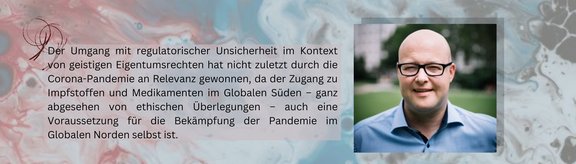
Leonhard Dobusch is a full Professor of Business Administration with a focus on Organization at the University of Innsbruck's Faculty of Business and Management, specifically within the Institute for Organisation and Learning. He has held this position since February 2016, after serving as a Junior Professor at Freie Universität Berlin from 2012-2016. Professor Dobusch maintains active international collaborations with researchers at institutions including ETH Zurich, University of Oxford, University of Zurich, and University of Duisburg-Essen. University of Innsbruck: Professor of Business Administration (since 2016) Freie Universität Berlin: Junior Professor of Management (2012-2016) Freie Universität Berlin: Postdoc at Chair for Inter-Organizational Cooperation (2009-2012) Stanford Law School: Research Fellow at Center for Internet & Society (2008) Max Planck Institute for Social Research: Postdoc Fellow (2008-2009) Professor Dobusch's research centers on three interconnected areas that challenge conventional organizational thinking. His work on organizational openness examines how principles like open source software, open science, and open innovation manifest in practice, revealing how formal openness often leads to unintended exclusion. His second research stream investigates alternatives to intellectual property rights in regulatory uncertain environments, particularly in pharmaceutical innovation where he studies approaches to vaccine development beyond traditional patent systems. Thirdly, he develops the concept of 'organisationality' to redefine how we understand organization in increasingly fluid social systems. His research has significant implications for companies, public administrations, and scientific institutions navigating the challenges of openness, regulatory uncertainty, and new organizational forms in the digital age. Professor Dobusch's publication record demonstrates consistent high-impact contributions to organizational studies, with articles appearing in top journals including Organization Studies, Journal of Management Studies, and Long Range Planning. His work shows a clear trajectory from studying open source software adoption in city administrations (his doctoral research) to broader questions about organizational forms, openness, and intellectual property in complex systems. 2025: Best Reviewer Award of the Journal Organization Theory 2025: Prof of the Year Award in Rhetoric and Didactics 2022: Best Paper Award of the Strategy Practice Interest Group 2020: Ideas Worth Teaching Award by Aspen Institute for 'Organizing in Times of Crisis' 2020: LehrePlus!-Preis der Universität Innsbruck 2016: LehrePlus!-Preis for 'Open Organizations and Organizing Openness' course Professor Dobusch actively integrates his research into teaching, exemplified by his award-winning wiki-based course 'Open Organizations and Organizing Openness' and the collaborative online course series 'Organizing in Times of Crisis', which received international recognition. He currently leads a three-year DFG/FWF-funded research project 'Organising Creativity under Regulatory Uncertainty: Alternative Approaches to Intellectual Property' with Professor Sigrid Quack. Within professional networks, he serves as Chair of the Executive Board of the Interest Group 'Strategizing Activities and Practices' at the Academy of Management and regularly leads sub-themes at the European Group of Organization Studies Colloquium on Organizational Openness. Professor Dobusch contributes to several research communities through his blogs 'osconjunction.net' and 'governancexborders.com', and participates in the Momentum-Kongress that connects academic research with social and political practice. His work bridges theoretical innovation with practical relevance, particularly in how organizations can navigate the tensions between openness and closure, formal regulation and creative adaptation.
Michelle Alarcon is an Associate Professor of Management at Hawaii Pacific University’s (HPU) College of Business, Department of Business. She holds a J.D. from Loyola Law School and an M.B.A. from Pepperdine University, alongside a Bachelor of Science in Mathematics. Education Bachelor of Science in Mathematics M.B.A. from Pepperdine University Juris Doctor from Loyola Law School, Los Angeles Her research and teaching focus on employment and labor law, business ethics, human resource management, national origin discrimination, and workers’ compensation. Her scholarly work includes analyzing deceptive advertising, organizational culture ethics, and community impacts of tourism development. Notable presentations include studies at international conferences in London (2015), Munich (2014), and Vietnam (2014). She received the Best Paper Award for her work on the Federal Trade Commission Act. Scientific Awards Best Paper Award for 'Framework For Change In The Federal Trade Commission Act, Section 5' Michelle has held leadership roles at HPU, including MBA Director (2010–2012) and Program Chair of Management (2007–2008). She served as an advisor for the SHRM-Lokahi HPU RIO student association and participated in university planning committees.
Ben Wagner is a leading academic in digital rights and technology governance, holding multiple prestigious positions: University Professor of Human Rights & Technology at IT:U, Director of the AI Futures Lab on Rights and Justice at TU Delft, and Professor of Media, Technology and Society at Inholland University of Applied Sciences. He leads the Digital Rights Research Team (DRRT) and co-founded the Sustainable Media Lab (SML) in The Hague, contributing to bridging research and education. He is also a visiting researcher at Oxford University's Human Centred Computing Group and serves on the advisory board of the journal Patterns . Inholland University of Applied Sciences – Professor, Media, Technology & Society (since 2021) TU Delft – Director, AI Futures Lab on Rights and Justice IT:U – University Professor, Human Rights & Technology European University Viadrina – Founding Director, Center for Internet & Human Rights Vienna University of Economics – Director, Sustainable Computing Lab ENISA – Advisory Group Member Ben Wagner earned his PhD in Political and Social Sciences from the European University Institute in Florence in 2013, with a dissertation on freedom of expression and online content regulation. He has held research positions at Cambridge University, University of Pennsylvania, Technical University of Berlin, and European University Viadrina. His research centers on digital rights, AI governance, freedom of expression online, and the societal impact of technology. He investigates how digital infrastructures shape human rights and advocates for sustainable, accountable systems. His work spans legal, technical, and social dimensions, focusing on public sector data practices, content moderation, ethical AI, and digital inclusion. He actively promotes citizen control over technological change and interdisciplinary collaboration. The recent publications reflect a strong focus on the ethical and governance challenges of AI and data science, digital rights frameworks, and platform accountability. Themes include the gap between policy and practice in public data use, global AI ethics, content governance on social media, and co-designing digital rights labels. His work emphasizes systemic accountability, hybrid digital-physical spaces, and embedding rights into technological design. Ben Wagner is an expert advisor to the European Parliament, European Commission, OSCE, Council of Europe, and UNESCO. He is a member of the policy advisory board for ECHOES (European Cloud for Heritage OpEn Science) and contributes to high-impact publications and international discourse. His research is widely covered in global media including CNN, The Guardian, Bloomberg TV, Der Spiegel, ORF, and SWR2. He advises on and contributes to major research initiatives such as ReSocial and fabricated. He is involved in developing a new Master’s program in Data-Driven Business at Inholland and leads efforts to integrate digital rights into education and innovation. His inaugural lecture, 'The Ground Beneath our Feet,' highlights the instability of digital infrastructures and the urgent need to embed digital rights at their core. Ben co-founded the Digital Rights Research Team and the Sustainable Media Lab at Inholland, fostering collaboration across faculties and sectors. These labs focus on creating a digitally responsible society through interdisciplinary research in design, policy, and technology. The AI Futures Lab at TU Delft explores justice-oriented futures for AI, while his work at IT:U advances human rights in digital contexts.
Stephen G. Ryan is the Vincent C. Ross Professor of Accounting at the Leonard N. Stern School of Business, New York University. He has been a faculty member at Stern since 1990 and is actively engaged in teaching and research in accounting, financial reporting, and valuation. His work focuses on financial institutions, financial instruments, and regulatory standards. Research Interests: Accounting Measurement Accounting-Based Valuation and Risk Assessment Financial Reporting by Financial Institutions Financial Instruments Disclosure Empirical Studies in Banking and Debt Contracting His recent publications reflect a strong focus on regulatory accounting standards (e.g., CECL, FAS 166/167), transparency in financial reporting, and the economic consequences of accounting policy. These works appear in top-tier journals such as The Accounting Review , Journal of Accounting Research , and Management Science , demonstrating sustained scholarly impact. Awards & Appointments: American Accounting Association Financial Accounting and Reporting Section Best Paper Prize (2011) The Accounting Review Emerald Management Reviews Citation of Excellence (2009) Accounting Horizons Co-winner Best Paper Prize (2006, 2004) Professor Ryan has held significant editorial roles, including Editor of the Review of Accounting Studies (2006–2011) and Guest Editor for the Journal of Accounting Research (2015–2018). He has served on advisory councils for the Financial Accounting Standards Board and the Federal Reserve Bank of New York. He teaches undergraduate, MBA, MS, and PhD courses, including a doctoral seminar on banking and debt contracting, indicating active student mentorship. He is affiliated with major regulatory bodies such as FASB, IASB, PCAOB, SEC, and standards like IFRS and GAAP. His expertise spans accounting, finance, IPOs, and real estate/housing sectors.
Dr. Norita Mohd Nasir is a Lecturer in Accounting and Deputy Director of Undergraduate Studies at the School of Business, Monash University Malaysia. She is actively involved in research, teaching, and academic leadership, with a strong focus on sustainability and financial reporting. Her work aligns with the United Nations Sustainable Development Goals, particularly in education and environmental sustainability. Doctor of Philosophy in Management, Monash University Masters in Accounting & Financial Management, University of Essex Dr. Nasir's research centers on environmental sustainability , education sustainability , and financial reporting , with a unique emphasis on Islamic perspectives in corporate environmentalism. She has published extensively on sustainability in business, Shariah-compliant environmental practices, and sustainable finance. Her work bridges religious ethics with modern corporate responsibility, offering innovative insights into green accounting and ethical leadership. Her recent publications and projects reflect a strong trend toward sustainable finance , anti-corruption initiatives , and tax policy reforms , particularly in the Malaysian context. She explores how theological principles can translate into practical sustainability frameworks and how educational approaches can foster environmental consciousness. Her research is interdisciplinary, combining accounting, theology, public policy, and environmental science. Fellow member of CPA Australia (FCPA) Member of the Malaysian Institute of Accountants (CA) Active participant in the Women in Business committee of CPA Australia (Malaysia) Dr. Nasir serves as a chief investigator on multiple research projects, including initiatives on sustainable finance, anti-corruption, and taxpayer behavior during the pandemic. She is actively involved in public engagement, editorial work, and academic events. She teaches core financial accounting courses (ACW1120, ACW2120, ACW3120) and is committed to innovative teaching methods that enhance student engagement and job readiness. She is also a mentor and advisor to PhD students, contributing to the next generation of accounting scholars. She is a key contributor to the Monash Climate-Resilient Infrastructure Research Hub and participates in various sustainability-focused networks and training programs. Her work emphasizes collaboration across disciplines and institutions to promote ethical, sustainable, and inclusive business practices.
Patricia L. Bellia is the William J. and Dorothy K. O'Neill Professor of Law at the University of Notre Dame Law School. She joined the faculty in 2000 and has also served as a visiting professor at the University of Virginia Law School. Her expertise spans constitutional law, administrative law, cyberlaw, electronic surveillance, and copyright law. Bellia earned her A.B. summa cum laude from Harvard University in 1991, followed by a legal clerkship at the U.S. Supreme Court and Department of Justice tenure. She co-authored a leading cyberlaw casebook and has published extensively on internet law and separation of powers. Her research focuses on surveillance law, privacy, and executive power. Notable works include analyses of national security disclosures, Fourth Amendment protections for stored emails, and legislative frameworks for information privacy. Bellia also chairs the University’s Faculty Board on Athletics, overseeing academic integrity in intercollegiate athletics and serving as Notre Dame’s faculty athletics representative to the NCAA. Her advisory roles and contributions to legal education highlight her commitment to bridging theoretical and practical legal challenges in digital governance. Bellia’s scholarship frequently intersects with emerging technologies, emphasizing the evolving nature of legal doctrine in response to cyber-era complexities.