Prof. Dr. Daniel Leese is a full professor of History and Politics of Modern China at the University of Freiburg's Institute of Sinology. He specializes in 20th-century Chinese history, focusing on the Communist Party's legacy and transitional justice. Current research includes a dual biography of Chiang Kai-shek and Mao Zedong, and analysis of PRC information systems. Education: PhD in International History (2006, International University Bremen). Academic roles include ERC grant leadership (2014-2019) and FRIAS Senior Fellowship (2018-2019). Awards include Carl Friedrich von Siemens Fellowship (2022/2023). Key publications: Maos langer Schatten (2021) Justice After Mao (2023) Chinesisches Denken der Gegenwart (2023) Research emphasizes Mao's political impact, historical justice mechanisms, and institutional memory. Maintains a digital archive of Mao-era documents (maoistlegacy.de).
Deval Desai serves as Reader in International Economic Law at the University of Edinburgh's Edinburgh Law School, a position he has held since 2020 after serving as Lecturer from 2020-2023. His academic career includes research positions at Harvard Law School and the Geneva Graduate Institute. Dr. Desai also brings extensive practical experience from a decade working with the World Bank on rule of law and governance in sub-Saharan Africa, as well as advising the United Nations on rule of law issues. Dr. Desai's educational background includes an MA in History and French Literature from Oxford University, followed by legal training at City University/BPP Law School (PGDipL and PGDipLP), and advanced law degrees (LLM and SJD) from Harvard Law School. At Harvard, he held prestigious fellowships including the Byse Fellowship, Program on Negotiation Next Generation Fellowship, and Institute for Global Law and Policy Fellowship. MA (Oxon), History and French Literature PGDipL, PGDipLP, City University/BPP Law School LLM, Harvard Law School SJD, Harvard Law School Dr. Desai's research centers on law and development, administrative law and regulation, theories of the state, and patterns of knowledge and authority across the Global North and South. His work examines institutional reform processes, particularly how expertise and knowledge operate within rule of law initiatives. His interdisciplinary approach draws from legal and social theory, development studies, international relations, and performance studies, as evidenced in his monograph Expert Ignorance (Cambridge University Press). His recent work focuses on fiscal sociology, administrative law in the Global South, and the politics of social welfare provision. Dr. Desai's publications span leading journals in law, political science, and development studies, revealing a consistent focus on the intersections between legal institutions, governance, and development. His work demonstrates increasing engagement with comparative methodologies and critical perspectives on knowledge production in global governance. Recent articles show particular attention to fiscal policy, welfare systems, and responses to global crises like the Covid-19 pandemic, with comparative studies between India and European contexts. Dame Muriel Spark Medal (2024, Royal Society of Edinburgh) Chancellor's 'Rising Star' Award (2023, University of Edinburgh) Member of the Young Academy of Scotland Fellow of the Royal Society of Arts Fellow of the Young Academy of Europe Dr. Desai has secured significant research funding from diverse international sources, including a £2.1 million Swiss National Science Foundation Sinergia grant titled 'Reversing the Gaze: Towards Post-Comparative Area Studies' where he serves as PI. He also leads projects funded by the British Academy, University of Edinburgh's Big Ideas Accelerator, Scottish Funding Council, and Foreign, Commonwealth, and Development Office. His commitment to mentoring is evident through his recognition with the Susan Manning Award for Inspiring Mentor and his leadership in establishing programs like the Global Scholars' Academy at the Geneva Graduate Institute and the Global Justice summer school at CEU. As editor-in-chief of the Cambridge University Press book series 'Elements in Legal Theory and the Global South' and serving on multiple editorial boards, Dr. Desai plays a significant role in shaping scholarly discourse. His current research projects examine 'loss' in legal institutions guiding transitional processes, constitutional implications of fiscal arrangements in fragile contexts, and social welfare provision in India and Italy.
Marcela Echeverri Muñoz is an Associate Professor in the Department of History at Yale University, affiliated with the Faculty of Arts and Sciences. Her scholarship bridges history, anthropology, and political theory, with a focus on Latin America, the Atlantic World, and the Spanish Empire. She is recognized for her interdisciplinary approach to understanding political subjectivities, state formation, and social transformation during the Age of Revolutions. PhD in Latin American and Caribbean History, New York University, 2008 MA in History of the Hispanic World, Fundación MAPFRE-Tavera and CSIC, Madrid, 2006 MA in Social and Political Theory, The New School for Social Research, 2001 BA in Anthropology, Universidad de los Andes, Bogotá, 1997 Her research centers on the interplay of race, gender, law, and political theory in colonial and 19th-century Latin America. She investigates how enslaved and Indigenous peoples navigated imperial and republican transitions, particularly through royalist affiliations. Her work challenges peripheral narratives of Spanish America in Atlantic slavery studies, positioning the region as a central site of abolitionist and constitutional experimentation. The trends in her recent publications reveal a sustained focus on slavery, abolition, and political transformation in the Spanish American mainland. She analyzes how anti-slavery movements were intertwined with republicanism, citizenship, and state formation, especially in Gran Colombia. Her scholarship spans legal history, Atlantic processes, and transimperial dynamics, often highlighting marginalized voices in revolutionary contexts. She frequently contributes to major reference works and edited volumes on Atlantic revolutions and Latin American independence. Her scientific awards and fellowships reflect her standing in the field: James Alexander Robertson Prize Michael Jiménez Prize Bolton-Johnson Prize Honorable Mention Yale Heyman Prize for Outstanding Scholarly Publication Alexander von Humboldt Research Fellowship MacMillan Research Fellow, Yale Mellon Residential Fellow, CUNY NEH Summer Institute Participant, Johns Hopkins Fellowships from John Carter Brown Library, CSIC, Fundación Mapfre, and Instituto Colombiano de Antropología e Historia Echeverri has secured significant research grants from Harvard’s Atlantic History Seminar, CUNY Research Foundation, and Yale. She has co-edited special issues on Gran Colombian history and Spanish American abolition, and led key academic initiatives including the Race and Slavery in the Atlantic World Working Group and the Early Modern Empires Workshop at Yale. Though student advising is not explicitly detailed, her role as a senior scholar implies mentorship of graduate students. She is affiliated with several research networks and has been a visiting scholar at institutions such as Freie Universität Berlin. Her ongoing book project on Gran Colombian slavery underscores her commitment to redefining the hemispheric significance of Latin American abolition. She remains an active contributor to both scholarly and pedagogical conversations in Atlantic and Latin American history.
Lance Freeman is the Penn Integrates Knowledge (PIK) Professor of City and Regional Planning and Sociology at the University of Pennsylvania's School of Arts & Sciences. His research focuses on neighborhood dynamics, gentrification, urban poverty, housing policy, and the interplay between the built environment and public health. He holds a Ph.D. in City and Regional Planning from the University of North Carolina at Chapel Hill (1997), an MRP in Regional Planning (1991), and a B.S. in Business Administration from SUNY Buffalo (1987). Prior to academia, he worked at Mathematica Policy Research and as a City Planner at the New York City Housing Authority. Freeman teaches courses on urban planning theory, quantitative methods, and community development at Columbia University and the University of Delaware. His research interests include understanding neighborhood change, leveraging social media and technology for urban analysis, and promoting equitable urban development. Key publications include There Goes the Hood: Views of Gentrification from the Ground Up (2006), A Haven and a Hell: The Ghetto in Black America (2019), and co-authored Planning and Control of Land Development (2020). He has contributed to debates on inclusionary zoning, racial equity planning, and the impacts of urban policies on marginalized communities. Freeman's work intersects urban sociology, policy analysis, and spatial demography. His recent studies explore gentrification migration patterns, the role of social media in neighborhood change, and historical segregation dynamics. He advocates for evidence-based planning to address urban inequality and spatial injustice.
WooChul Jung is an Associate Professor at the Department of Materials Science and Engineering, Seoul National University (SNU), previously holding the same role at the Korea Advanced Institute of Science and Technology (KAIST) from 2018 to 2024. His research focuses on energy conversion and storage materials, particularly solid oxide fuel cells, electrolyzers, and catalytic systems involving ionic solids and gas interfaces. Ph.D. in Materials Science & Engineering from MIT (2010) B.S. in Materials Science & Engineering from SNU (2004) Research Interests: Investigating reactions at ionic solid-gas interfaces to enhance catalytic kinetics for fuel cells, electrolyzers, and sensors. Key areas include surface science, electrochemistry, and nano-fabrication. Scientific Contributions: His recent work emphasizes fluorine doping for stable bismuth oxide electrolytes, Ca substitution in LaCoO3 for oxygen evolution, and exsolution strategies for durable nanocatalysts. Publications highlight multidisciplinary approaches combining experimental and computational methods.
Pawan Adhikari is a Professor of Accounting at Essex Business School, University of Essex , where he serves as Director of Impact and Enterprise and Director of Essex Accounting Centre . He is an Associate Editor of the Journal of Public Budgeting, Accounting and Financial Management and a Executive Board Member of the Comparative International Governmental Accounting Research Network (CIGAR) . Previously, he led accounting reforms at Nepal’s Accounting and Auditing Standards Board and lectured at Nord University, Norway. PhD, Nord University Business School Fellow of the Higher Education Academy His research focuses on public sector accounting in developing countries, particularly accounting reforms , public value creation , and climate accountability . He explores how accrual accounting and participatory budgeting can enhance transparency in South Asian and African contexts. His work has influenced policy-making in Nepal and is recognized with the 2023 Best International Research Impact award by the University of Essex. Recent publications analyze wellbeing economies (2025), NGO accountability in disasters (2024), and climate budgeting (2023). He collaborates with institutions like the World Bank , European Commission , and British Academy , focusing on projects related to financial resilience , circular economy , and health sector accountability . Supervising 8 current PhD students, his advisees have produced work on topics like accrual accounting in Bangladesh and NGO accountability in Palestine . World Bank/PEFA Research Award African Accounting and Financial Association (AAFA) Award ESRC IIA Impact Fund GCRF and SeNSS Grants 2019 Best Postgraduate Supervisor (Essex)
Thomas Piketty is a Professor of Economics and Economic History at the École des Hautes Études en Sciences Sociales (EHESS) and the Paris School of Economics. He is co-director of the World Inequality Lab and the World Inequality Database, and a leading scholar on economic inequality and historical political economy. Born on May 7, 1971, in Clichy, France. PhD in Economics from EHESS and LSE (1990–1993). Professor at MIT (1993–1995), Research Fellow at CNRS (1995–2000), and Director of Studies at EHESS since 2000. His research focuses on the interplay between economic development, wealth distribution, and political institutions. Key works include Capital in the 21st Century (2014), Capital and Ideology (2020), and A Brief History of Equality (2022). Piketty has pioneered methods to measure long-term inequality using historical data. Publications span articles in top journals like the Quarterly Journal of Economics, Journal of Political Economy, and American Economic Review. His work emphasizes fiscal policies, wealth taxation, and global inequality trends. He co-founded the World Inequality Database (WID.world) to track income and wealth disparities worldwide. Distinctions include the Yrjö Jahnsson Prize (2013), CNRS Bronze Medal (2001), and Best Young Economist Award (2002). He has advised governments and contributed to policy debates on tax reform, climate justice, and European democratization.
Lyubov Zhyznomirska is an Associate Professor of Political Science at Saint Mary's University, specializing in European studies, migration governance, and democratization processes. She holds a PhD in Political Science from the University of Alberta (2012), with a focus on EU migration cooperation with Eastern neighbors. Her current research examines the reception of war-displaced Ukrainians in Canada, the UK, and Germany. She has held a Jean Monnet Post-Doctoral Fellowship and is active in research networks such as the European Community Studies Association-Canada and the Migration Research Network. Teaching focuses on comparative politics, European Union politics, and migration studies. Recent SSHRC-funded projects include studies on Ukrainian refugee integration in Nova Scotia and the impact of temporary status on newcomer youth. Awards include the Jean Monnet Post-Doctoral Fellowship (2011-2012). Research interests include forced displacement, post-war societies, and EU-Ukraine-Russia dynamics. She co-edited The Routledge Handbook of the Politics of Migration in Europe (2019) and publishes in journals such as Comparative European Politics . Professional roles include Treasurer of ECSA-Canada (2021-2024) and President of the Atlantic Provinces Political Science Association (2022-2023).
Dr. Charilaos Nikolaidis is a Senior Lecturer at Essex Law School, University of Essex, specializing in international human rights law and the intersection of law and literature. He received his LLB from City, University of London, LLM in International Business Law from University College London, and PhD in Law from King's College London. His research focuses on international human rights law, particularly the theory and implementation of the right to equality, and the relationship between law and literature. Nikolaidis has published extensively on equality jurisprudence, comparative human rights law, and democratic challenges in European contexts. Nikolaidis's publications demonstrate consistent focus on human rights jurisprudence, particularly equality and non-discrimination within European legal frameworks. His work spans theoretical explorations of legal equality, comparative analyses of European and US privacy rights, and practical examinations of democratic challenges in Greece and beyond.
Prof. Dr. Taner Akbay is a faculty member at Yeditepe University, Faculty of Engineering , Department of Materials Science and Nanotechnology Engineering. He has held academic positions at institutions including Kyushu University, Oita University, and Imperial College London. Education: PhD in Materials Engineering (1993, Imperial College London); Master’s (1989) and Bachelor’s (1986) degrees from Middle East Technical University. His research spans Materials Engineering , Metallurgy , and Solid Oxide Fuel Cells (SOFCs) , with a focus on oxide ion conductivity, laser surface treatment, and phase transformations. Recent work explores photocatalysis , anion intercalation , and CO2 reduction using computational and experimental approaches. Key article trends include SOFC optimization (2004–2009), strain effects on catalysts (2015–2020), and dual-carbon battery technology (2016–2020). His work bridges fundamental metallurgy and advanced energy materials . Scientific Awards: Postdoctoral Research Sponsorship Award (EPSRC, UK) JSPS Fellowship (Japan) Daiwa Adrian Prize (2016, UK) PhD Studentship at Imperial College (European Commission) He has supervised multiple PhD and Master’s theses, including projects on dual-carbon batteries , microwave absorption nanocomposites , and rare earth recovery . Administrative roles include Head of Department (2020–2021). Non-University Experience: Worked with Mitsubishi Materials Corporation (2001), Çolakoğlu Metalurji (2010), and National Research Council Canada (2009).
Barry Naughton is the So Kwan Lok Chair of Chinese International Affairs at the School of Global Policy and Strategy (GPS), University of California, San Diego, where he has been a faculty member since 1988 and was appointed to his named professorship in 1998. As a globally recognized authority on China's economic transformation, his work bridges academic rigor and policy relevance through decades of analysis of market reforms, industrial development, and international economic relations. His academic foundation includes: Ph.D. in Economics from Yale University (1986) M.A. in International Relations from Yale University (1979) B.A. in Chinese Language and Literature from the University of Washington (1975) Naughton's research centers on China's transition from planned to market economy, with emphasis on industrial restructuring, foreign trade dynamics, and regional development disparities. His scholarship uniquely connects historical analysis of reform milestones with contemporary policy challenges, particularly examining how state-market interactions shape technological advancement and global economic integration. This dual focus on institutional evolution and sectoral transformation has established him as a critical interpreter of China's development model for both academic and policy audiences. Analysis of his 2020-2024 publications reveals a decisive shift toward examining China's industrial policy architecture and state capitalism mechanisms. Key thematic clusters include the conceptualization of 'Grand Steerage' in state-economy relations, the restructuring of science-technology systems, and the sectoral implementation of industrial policies. These works collectively document China's evolving governance approach—from market liberalization to targeted state direction—while analyzing implications for global trade and innovation ecosystems. His scholarly recognition includes: Ohira Memorial Prize for 'Growing Out of the Plan: Chinese Economic Reform, 1978-1993' (1996) Administrative leadership has been integral to Naughton's career, serving as Associate Dean of GPS (1992-1995, 2001-2003) and Chair of UCSD's Chinese Studies Program (1998-2000). His policy engagement extends through the Research Grants Council of Hong Kong (1998-2003) and U.S. academic committees on Chinese studies. Current research examines regional growth patterns and foreign investment linkages while completing a new edition of his seminal textbook 'The Chinese Economy: Transitions and Growth,' which remains the field's authoritative reference. Though not leading a formal laboratory, Naughton shapes discourse through China Leadership Monitor's quarterly economic assessments and collaborative networks like the edited volume 'State Capitalism, Institutional Adaptation and the Chinese Miracle' (2015), which mobilized leading scholars to analyze China's institutional innovation within global capitalism.
Jonathan Levine is a Professor of Urban and Regional Planning at the University of Michigan's Taubman College of Architecture and Urban Planning, where he has been faculty since 1991. His work focuses on transportation planning, housing and equitable development, and land use and environmental planning, with a particular emphasis on shifting from mobility-based to accessibility-based planning paradigms. Levine's educational background includes: Ph.D. in City and Regional Planning from the University of California, Berkeley M.C.P. in City and Regional Planning from the University of California, Berkeley M.S. in Engineering (Civil Engineering-Transportation focus) from the University of California, Berkeley B.S. in Political Economy of Natural Resources from the University of California, Berkeley His research centers on the potential and rationales for policy reform in transportation and land use. Levine argues that a shift in the transportation and land-use planning paradigm from a mobility to an accessibility basis is compelled by transportation theory and would be transformative to planning practices. His current work includes sponsored projects and the book "From Mobility to Accessibility: Transforming Urban Transportation and Land-Use Planning" (Cornell University Press, 2019), co-authored with Joe Grengs and Louis Merlin. He previously authored "Zoned Out: Regulation, Markets, and Choices in Transportation and Metropolitan Land Use" (Resources for the Future, 2006), which argued for policy reform based on expanding households' effective range of choices. Levine's recent publications demonstrate a clear trend toward accessibility-based evaluation of transportation systems and land-use planning. His articles explore topics such as comparing bus rapid transit and light rail, project-level accessibility analysis, overcoming the last-mile problem, and the effects of automated transit systems. His work consistently challenges traditional transportation planning paradigms and advocates for approaches that prioritize access to destinations rather than mere mobility. Levine's contributions to the field have been recognized with several prestigious awards: 2010 Chester Rapkin Award for best paper in the Journal of Planning Education and Research 2011 Residential Fellowship at the Rockefeller Foundation Center in Bellagio, Italy 2001 Excellence in Urban Policy Scholarship Award from the Association of Collegiate Schools of Planning and U.S. Department of Housing and Urban Development 1996 Best of Association of Collegiate Schools of Planning Award Levine has led significant research projects including Implementation of Accessibility-Based Evaluation for Transportation and Land-Use Planning funded by NEXTRANS, Sustainable Transportation for a 3rd Century addressing the last mile problem, and Accessibility Evaluation from Laboratory to Practice. His teaching portfolio includes Transportation and Land-Use Planning, Public Economics for Urban Planning, Research Design, and the MUP Capstone studio, where he guides students through real-world planning challenges. As a thought leader in urban planning, Levine regularly contributes to public discourse on zoning policies, housing diversity, and transportation planning. He has been featured in numerous media outlets discussing how land use policies impact sustainability, affordability, and racial justice, emphasizing that "zoning is behind all of it, and is not only the cause, but exacerbates it." His insights on the historical role of single-family zoning in perpetuating racial segregation have been particularly influential in contemporary housing policy debates.
Dr. Jillianne Code is an Associate Professor at the University of British Columbia's Faculty of Education, Department of Curriculum & Pedagogy, directing the ALIVE Research Lab. Her work focuses on learner agency, educational technologies, and social media's impact on student success. Specializes in immersive virtual environments for assessment Researches self-regulated learning and formative feedback Investigates health education through digital interventions Her recent publications examine pandemic-era educational transitions, digital literacy in teacher training, and cognitive tools in virtual reality. She has received Outstanding Paper Awards for her work on immersive assessment. Dr. Code leads research projects on learning analytics, student engagement in digital spaces, and technology education sustainability. Her work bridges educational theory with practical interventions through digital badges, mobile health applications, and 3D learning environments.
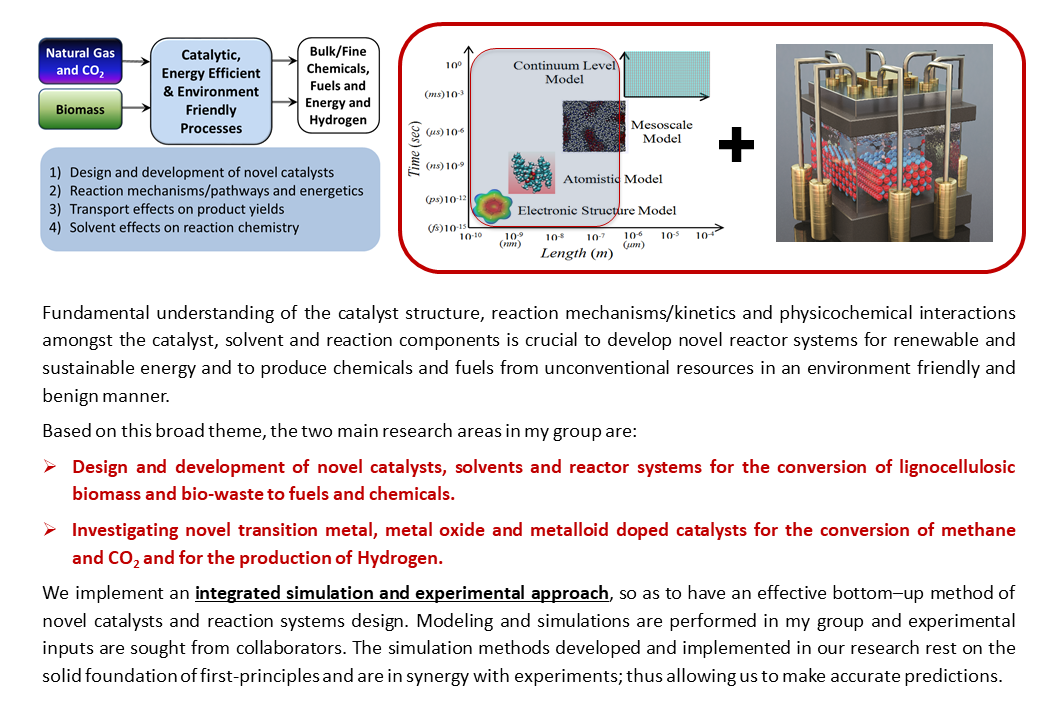
Dr. Samir H. Mushrif is a Professor in the Department of Chemical and Materials Engineering at the University of Alberta . Prior to this role, he served as faculty at the School of Chemical and Biomedical Engineering at Nanyang Technological University (NTU), Singapore . He holds a PhD in Chemical Engineering from McGill University and completed postdoctoral research at the University of Delaware, USA . Education : PhD (Chemical Engineering, McGill University), Postdoc (University of Delaware) His research focuses on computational catalysis , molecular modeling , and reaction engineering for biomass conversion and CO2 reduction . He develops novel catalysts, solvents, and reactor systems using integrated quantum mechanical and classical molecular simulations , synergized with experimental data to enable sustainable energy and chemical production . Recent publications highlight trends in condensed phase chemistry for biomass reactions, machine learning applications in solvent configuration prediction, and mechanistic studies of lignin-carbohydrate complex deconstruction. His work bridges methane activation on metal oxides, hydrodeoxygenation of bio-oil compounds, and polymerization pathways in lignin structures. Scientific Awards include: NSERC Doctoral and Post-doctoral Fellowships Discovery International Award 2017 (Australian Research Council) NANYANG EDUCATION AWARD 2016 (Singapore) SCBE Teaching Excellence Awards (Silver 2015, Gold 2016) Bharat Gaurav (Pride of India) Award 2014 Dr. Mushrif's NSERC Discovery Grant (2018), CFI John R. Evans Leaders Fund Grant (2022), and AcRF Tier-2 Grant (Singapore, 2015) have advanced his work. Current PhD and Master's students include José Carlos Velasco Calderón , Arul Mozhi Devan Padmanathan , and Sagar Bathla , among others. The CARES Lab (Catalysis Research for Sustainability) under his leadership combines ab initio molecular dynamics , machine learning potentials , and Density Functional Theory to design materials for renewable energy . Collaborations span institutions in France , Canada , India , and the UK .
Terrence Chapman is a Professor of Government at the University of Texas at Austin, affiliated with the Robert S. Strauss Center for International Security and Law, Center for European Studies, and Clements Center on History Strategy, and Statecraft. His research focuses on international organizations, conflict resolution, and political economy frameworks. Key research areas include: International institutional legitimacy Global regulatory regimes Public opinion in international affairs Conflict management mechanisms Formal modeling of diplomatic interactions Recent scholarly trends reveal expertise in climate governance negotiations, digital surveillance politics, and regulatory effectiveness. His work spans theoretical modeling and empirical analysis of international collaboration dynamics. Scientific recognition includes: 2011-2012 APSA Conflict Processes Section Book Award Teaching portfolio covers: Science Fiction and Politics International Organization and Law Research Methods in International Politics Previously served as associate/senior editor for International Studies Quarterly .