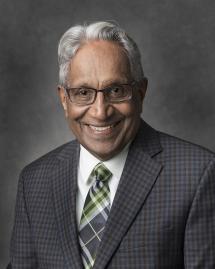
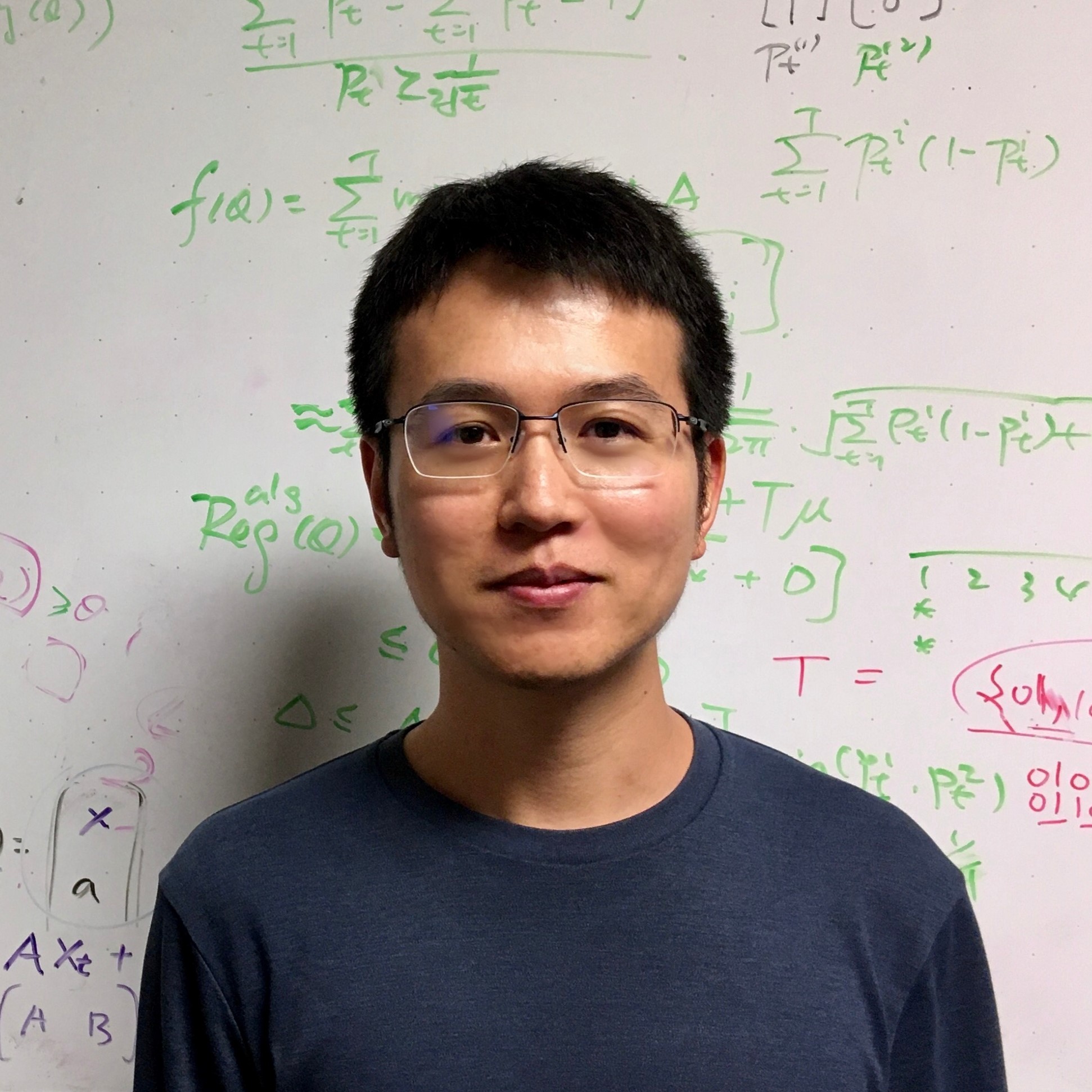
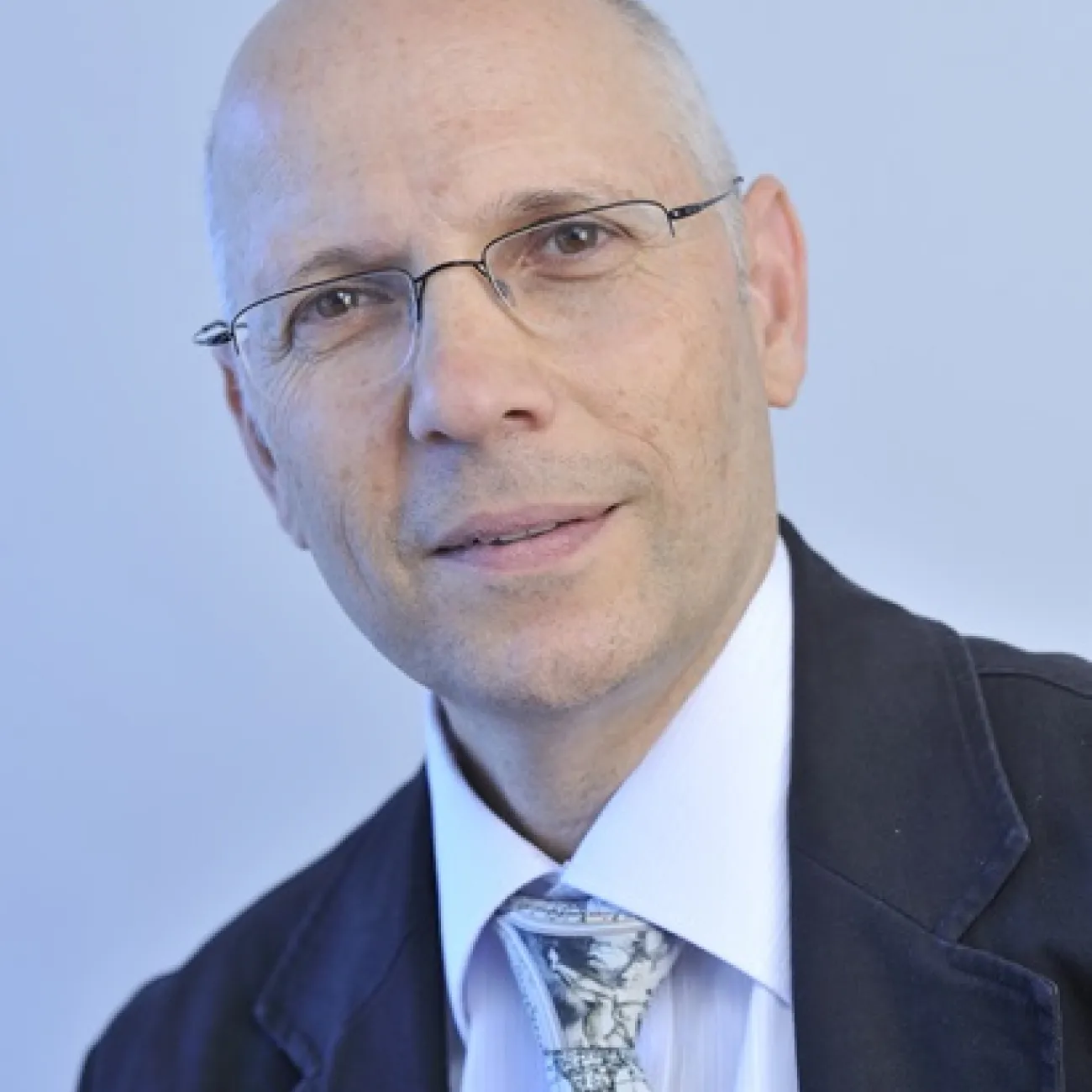
Professor Doraiswami Ramkrishna is the Harry Creighton Peffer Distinguished Professor of Chemical Engineering at Purdue University's Davidson School of Chemical Engineering. His research focuses on applying mathematical methods to chemical and biochemical systems, including population balance modeling, stochastic processes, and cybernetic frameworks for metabolic networks. His work spans crystallization processes, cancer chemotherapy modeling, and personalized medicine. Education: B.S. from the University of Bombay (1960), Ph.D. from the University of Minnesota (1965). He joined Purdue in 1976 after faculty roles at Indian institutions. His awards include membership in the U.S. and Indian National Academies of Engineering, the AIChE Wilhelm and Thomas Baron Awards, and the 2021 William H. Walker Award for Chemical Engineering Literature. Research Interests: Cybernetic modeling of biological systems, population balances in particulate systems, stochastic modeling of rare events, and mathematical approaches to cancer treatment optimization. His group collaborates on projects involving metabolic networks, drug resistance mechanisms, and personalized hydroxyurea therapy for sickle cell disease. Awards: Over 30 honors including the 2021 Walker Award, NAE membership, and Platinum Award from Mumbai University. Advising: Mentored numerous graduate students and research associates, with notable work on lipid metabolism, chemotherapy-induced neuropathy, and crystallization dynamics. Labs/Teams: Leads the Ramkrishna Research Group, collaborating internationally on projects like cancer care engineering and metabolic engineering of bioethanol production.
Haipeng Luo is an Associate Professor at the Thomas Lord Department of Computer Science, University of Southern California, holding the IBM Early Career Chair. He previously worked as a Postdoctoral Researcher at Microsoft Research, NYC, and has held visiting roles at Google and Amazon. His research focuses on developing practical machine learning algorithms with strong theoretical guarantees, particularly in online learning, bandit problems, reinforcement learning, and game theory. PhD in Computer Science, Princeton University (2011–2016) BSc in Computer Science, Peking University (2007–2011) His work spans adversarial and stochastic environments, addressing challenges in reinforcement learning, game dynamics, calibration, and omniprediction. Recent publications highlight advancements in regret minimization, game equilibrium computation, and robust optimization frameworks. Key contributions include algorithms for zero-sum games, bandit problems with feedback graphs, and theoretical analyses of convergence properties in multi-agent systems. Scientific accolades include Best Paper Awards at COLT 2021, COLT 2018, NeurIPS 2015, and ICML 2015. He has received prestigious grants such as the NSF CAREER Award (2020), Google Faculty Research Award (2020), and NSF CRII Award (2018). His students have secured academic and industry positions, and he actively teaches graduate courses in machine learning and online optimization.
Vernet Lasrado is a Lecturer at the University of Central Florida (UCF), affiliated with the Department of Industrial Engineering and Management Systems (IEMS) within the College of Engineering and Computer Science. His primary research focuses on manufacturing systems optimization, technology transfer, and economic policy analysis related to building codes. He holds a Ph.D. in Industrial Engineering and Management Systems from UCF. Education: PhD in Industrial Engineering and Management Systems, University of Central Florida (2000s). Research interests include operations research applications in facility layout design, conveyor system optimization, semiconductor manufacturing automation, and policy impacts of building regulations. His work bridges theoretical models (e.g., queueing theory, genetic algorithms) with real-world industrial challenges. Recent studies examine university incubator effectiveness and economic consequences of delayed building code implementations. His publications span topics from material handling system design to phase transition simulation methods. Notable contributions address closed-loop conveyor optimization using genetic algorithms and crossover placement strategies in semiconductor fabs. No awards or grants are listed in the provided materials.
Yehuda Baruch is Professor of Management at Southampton Business School, University of Southampton, UK, and Affiliated Professor at Audencia, Nantes France. With over 175 refereed papers, six books, and approximately 50 book chapters, his scholarly impact is substantial with over 30,000 Google Scholar citations and an H-index of 84. Baruch earned his DSc from Technion, Israel, and completed postdoctoral work at City University and London Business School. His academic journey includes significant leadership roles such as Vice-president Research of the European Academy of Management (2016-2019), Associate Editor of Human Resource Management, and Editor of multiple prestigious journals. He is currently Dean of the Peer Review College at the British Academy of Management and Consulting Editor for the Journal of International Business Studies. Professor Baruch's research centers on Human Resource Management and Organizational Studies, with particular emphasis on career development and global HRM practices. His work explores how geographical location impacts career success, career ecosystems in higher education, future workplace scenarios, and the integration of AI in HRM. He has made significant contributions to understanding working from home dynamics following the pandemic and has examined gender-based discrimination across cultural contexts in the UK and Pakistan. His recent publications reveal a strong methodological rigor combined with theoretical innovation, particularly in sampling strategies and career ecosystem frameworks. Baruch's work consistently bridges academic theory with practical organizational applications across global business environments, demonstrating exceptional interdisciplinary reach. Fellow of the Academy of Social Sciences Fellow of the British Academy of Management Cooper Medal for Outstanding Contribution and Leadership (2020) Top 50 globally in business & management studies Top 2% of global highly cited scholars Hughes Lifetime Scholar Award (2024) Professor Baruch has supervised 28 PhD students (7 current, 21 completed), with 14 holding academic positions internationally across multiple continents. His research has attracted substantial funding totaling £1,171,000, including significant grants from UKRI (ESRC) for pandemic-related working from home research and from the UK Art Council for entrepreneurial careers of artists. He has served on editorial boards for 14 major journals and held multiple leadership positions in professional associations. Baruch is actively involved in multiple research centers at Southampton including the Centre for Inclusive and Sustainable Entrepreneurship and Innovation, Centre for Research on Work and Organisations, and Centre for Democratic Futures. His collaborative research spans international boundaries, connecting scholars across continents to address contemporary organizational challenges in an increasingly globalized business environment.
Jason R. Green is a Professor in the Department of Chemistry at the University of Massachusetts Boston. With a PhD from Purdue University (2007) and postdoctoral experience at the Universities of Chicago, Cambridge, and Northwestern University, his research bridges theoretical chemistry, physics, and data science to explore nonequilibrium systems. His work focuses on transforming chemical energy into dynamically functional materials through interdisciplinary approaches. Education: B.S., Case Western Reserve University (cum laude, 2002) Ph.D., Purdue University (2007) with NASA Graduate Fellowship NSF Postdoctoral Fellow at University of Chicago and University of Cambridge Research Interests: Theoretical chemical physics Nonequilibrium statistical mechanics Data science applications in chemical systems His recent publications analyze electrochemical material dynamics (ACS Nano 2024), chemically driven self-assembly (Chemical Science 2024), and thermodynamic speed limits across disciplines (Nature Physics 2020, Physical Review X 2022). He has received prestigious fellowships including NASA's Graduate Student Researchers Program and NSF Postdoctoral Fellowship. The Green Research Group at UMB applies theory, computation, and data science to understand energy transformation in synthetic and biological materials.
Prof. Dr. Thomas Franosch is a Full Professor of Theoretical Physics at the Universität Innsbruck, Department of Theoretical Physics. His research focuses on transport phenomena in complex systems, including crowded and disordered media, active matter, non-equilibrium systems, and the glass transition. He leads the Bio and Nano Physics research group and has held academic positions at institutions such as Friedrich-Alexander-Universität Erlangen-Nürnberg and Ludwig-Maximilians Universität München. His career includes a PhD from TU München (1996) and postdoctoral research at Harvard University (1998-2000). He has contributed extensively to understanding dynamics in confined colloidal systems, mode-coupling theories for glass transitions, and active particle dynamics. His work bridges theoretical frameworks with applications in soft matter and biophysics. Research interests emphasize time-dependent nonlinear response, anomalous transport, and the interplay between geometry and dynamics in confined environments. Recent publications explore light-induced caging effects in colloids, Anderson localization in fluctuating media, and stochastic dynamics of active particles. Publications span over two decades, with a focus on theoretical models explaining complex fluid behavior. Notable contributions include studies on confined hard-sphere fluids, Lorentz gas models, and active matter systems. His work frequently employs advanced simulation techniques and mode-coupling theory to analyze non-equilibrium phenomena.
Jason Swanson is an Associate Professor in the Department of Mathematics at the University of Central Florida, specializing in stochastic processes and probability theory. His research encompasses stochastic differential equations, fractional Brownian motion, and the foundations of probability. Recent work includes developing the iterated Dirichlet process for Bayesian inference and extending representations for row-exchangeable arrays. He maintains an active research program connecting mathematical logic with probability theory. Teaching responsibilities include graduate courses in Measure and Probability (MAA 6238) and undergraduate probability (MAP 4113). His lecture notes on measure-theoretic probability are publicly available.
Magnus Nord is an Associate Professor in the Department of Physics, Faculty of Natural Sciences at Norwegian University of Science and Technology (NTNU). His research focuses on advanced electron microscopy techniques and computational tools for materials characterization. Research Interests : Scanning Transmission Electron Microscopy (4D-STEM), Open Source Scientific Software Development (Python), Big Data Processing, Magnetic/Electric Field Imaging, Structural Characterization using Higher Order Laue Zones. Publications span cutting-edge applications in functional materials, nanomagnets, and perovskite thin films, with emphasis on machine learning and precession-enhanced imaging. Key keywords include Materials Science , Electron Microscopy , and Computational Imaging . Software Development : Lead developer of Atomap and pyxem , contributing to HyperSpy and merlin_interface for electron microscopy data analysis. Current Research Funding : InCoMa (Research Council of Norway) IMPRESS (Horizon EU Program)
Professor Titus Sebastiaan van Erp is affiliated with the Department of Chemistry at the Norwegian University of Science and Technology (NTNU), where he has worked since 2016. His research focuses on advancing molecular simulation techniques to study complex biological and industrial processes without approximations, particularly through path sampling methods for rare events. 2016 – Present: Professor, NTNU 2012 – 2016: Associate Professor, NTNU 2006: Centre-of-Excellence Fellow, Leuven 2004: Marie Curie Fellow His research develops innovative methodologies like RETIS and REPPTIS to enhance simulation accuracy and expand accessible time/system scales. He has supervised students in DNA denaturation, electron transfer reactions, and protein folding studies. Recent publications analyze NaCl dissociation, ABL-imatinib kinetics, and permeation mechanisms. His work involves Python-based PyRETIS software development and collaborations across computational chemistry, biophysics, and materials science. 2025: NaCl Dissociation via Predictive Power Path Sampling 2025: RETIS/REPPTIS for Biomolecular Kinetics 2024: PyRETIS 3 for Boundary-Free Rare Events Scientific recognitions include: Centre-of-Excellence Fellowship (2006) Marie Curie Fellowship (2004) He has advised multiple students in masters theses on molecular simulation, including projects on DNA unwinding, electron transfer, and protein folding. His lab integrates algorithm development with applications in chemical reactions, biomolecular systems, and nanoscale materials.
Christoph Dellago is a full Professor of Computational Physics at the Faculty of Physics of the University of Vienna, where he has been a faculty member since 2003. He currently serves as Director of the Erwin Schrödinger Institute for Mathematics and Physics, Head of the Computational and Soft Matter Physics Group, and Project lead of EuroCC Austria - National Competence Centre for Supercomputing. Previously, he served as Dean of the Faculty of Physics (2009-2012) and Coordinator of the Doctoral College Advanced Functional Materials (DCAFM). Full Professor, Faculty of Physics, University of Vienna (2003-present) Director, Erwin Schrödinger Institute for Mathematics and Physics (2017-present) Head, Computational Physics and Soft Matter Group (2024-present) Coordinator, Doctoral College Advanced Functional Materials (DCAFM) Austrian Representative, Council of CECAM Dellago received his PhD in Physics from the University of Vienna in 1996, followed by postdoctoral research at UC Berkeley as a Schrödinger Fellow of the Austrian Science Foundation. His research focuses on developing computational methods to study rare events in condensed matter systems, particularly transition path sampling methodology for simulating nucleation, chemical reactions, and biomolecular reorganizations. He has pioneered the application of machine learning to molecular structure recognition and potential energy surfaces. Recent work examines self-assembly of nanocrystals, biopolymer folding, aqueous interfaces, phase separation in alloys, thermo-polarization, cavitation, and freezing phenomena. Analysis of Dellago's recent publications (2023-2025) reveals a strong emphasis on machine learning applications in computational physics, particularly neural network potentials for simulating water interfaces, crystal defects, and phase transitions. His work bridges traditional statistical mechanics with modern computational techniques, creating powerful tools for studying complex dynamical processes that occur on timescales far beyond conventional molecular dynamics simulations. The publications demonstrate increasing integration of machine learning with rare event sampling methods, reflecting the cutting-edge direction of computational statistical mechanics. Förderpreis der Stiftung Futura zur Förderung junger Südtiroler im Ausland (1997) The Raymond and Beverly Sackler Prize in the Physical Sciences (2005) UNIVIE Teaching Award of the University of Vienna (2014) Dellago leads an active research group with multiple PhD students and postdocs, focusing on computational statistical mechanics. His group develops trajectory-based sampling methods and machine learning approaches for molecular simulation. He has secured significant funding through EuroCC Austria and various research platforms including the Research Platform Accelerating Photoreaction Discovery and the Research Platform Erwin Schrödinger International Institute for Mathematics and Physics. His research has been supported by numerous grants enabling advanced computational infrastructure for high-performance simulations. The Dellago Group operates within the Computational and Soft Matter Physics division at the University of Vienna, with strong connections to the Research Network Data Science. The group collaborates extensively with international research institutions and maintains close ties with the Erwin Schrödinger Institute, which Dellago directs. Their research environment combines theoretical physics, computational chemistry, and machine learning expertise to tackle fundamental questions in condensed matter physics and soft matter systems.
Greg Bodwin is an Assistant Professor in the Department of Computer Science and Engineering at the University of Michigan, College of Engineering. His research focuses on theoretical computer science, particularly in algorithms, graph theory, and fault-tolerant network design. He emphasizes mentoring PhD students through structured weekly meetings, aiming for them to identify their research niche and produce peer-reviewed publications. His advising style evolves as students progress, transitioning from guided problem-setting to encouraging independent research direction. Research expectations include active participation in conferences (with travel funding) and maintaining productivity through flexible work arrangements. Authorship follows alphabetical convention in CS Theory. Students may occasionally serve as Graduate Student Instructors, contingent on funding. Bodwin encourages internships, though uncommon in theory-focused roles, and vacation time with advance notice near submission deadlines. Key research areas include spanners, fault-tolerant networks, shortest path algorithms, and graph sparsification. Over 30 publications since 2011 reflect his contributions to these fields. Funding and grants are tied to his research projects, though specifics are not detailed here.
Maxime Ferreira Da Costa is an Associate Professor at CentraleSupélec, Université Paris-Saclay, affiliated with the Laboratory of Signals and Systems (L2S). His research focuses on theoretical and algorithmic foundations of data science, particularly in inverse problems, structured signal processing, and physical layer security. Key research areas include super-resolution, system calibration, and privacy-enhancing communication schemes. He holds a Ph.D. from Imperial College London (2018), and previously worked at USC and Carnegie Mellon University. Notable achievements include an ANR Young Researcher Grant (2023) for projects on data science and physical layer security. He actively contributes to conferences and workshops, with recent presentations at Institut Henri Poincaré and Université Paris-Saclay. Education: Ph.D. in Electrical Engineering, Imperial College London (2018) M.Sc. Electrical Engineering, Imperial College London (2012) Engineer Diploma, CentraleSupélec (2012) Research interests span continuous inverse problems, off-the-grid methods, wireless security, and sensing systems. Current projects explore goal-oriented resource allocation, fake path injection for privacy, and preconditioned optimization techniques. His work bridges signal processing theory with practical applications in imaging, telecommunications, and sensing.
Katherine Newhall is a Professor in the Department of Mathematics at the University of North Carolina at Chapel Hill, where she maintains an active research program in stochastic modeling and dynamical systems. Her office is located in Phillips Hall 308, and she can be reached at knewhall@unc.edu. She serves as a member at large of the GSNP (Group on Statistical and Nonlinear Physics) board, a position she assumed in April 2024. Dr. Newhall earned her educational credentials from Rensselaer Polytechnic Institute, including a B.S. in Applied Physics and Applied Mathematics (2004), an M.S. in Mechanical Engineering (2006) with thesis entitled 'Turbulent Boundary Layers: A look at Skin Friction, Pressure Gradient and Surface Roughness,' and a Ph.D. in Mathematics (2011) with dissertation 'Synchrony in Stochastically-Driven Neuronal Network Models.' Following her doctoral work, she completed postdoctoral research at New York University's Courant Institute of Mathematical Sciences from 2011 to 2014. Her research focuses on developing new tools for analyzing large and infinite dimensional stochastic systems to understand large-scale and long-time dynamics of physical and biological systems. Rather than relying on traditional Fokker-Planck formulations that become intractable with increasing complexity, her work builds on concepts of statistical mechanics to create macroscopic descriptions from individual unit statistics. This approach extends the usefulness of energy landscapes even in non-gradient systems, enabling explanations of experimentally observable phenomena while exposing fundamental mechanisms responsible for system behavior. Her work spans applications from granular materials and chromosome dynamics to biological systems and metamaterials. Dr. Newhall's publications demonstrate consistent advancement in stochastic modeling techniques, with recent work (2023-2025) focusing on hyperuniformity in biological structures, energy landscape sampling methods, and the role of weak transient interactions in biological systems. Her research shows a clear trajectory from fundamental mathematical developments toward increasingly sophisticated biological applications. Outstanding Referee of the Physical Review journals (2019) NSF grant DMS-1816394 DMREF grant ($2M NSF Grant to Revolutionize Materials, 2023) Member at large of the GSNP board (2024) Dr. Newhall has successfully mentored numerous PhD students to completion, including Anna Coletti (2024), Daftari (2023), Moakler (2021), Ben Walker (2021), and Yuan Gao (2019). Her research is consistently supported by competitive grants, most notably the $2M NSF DMREF grant awarded in 2023. She maintains active collaborations across disciplines, particularly in applying mathematical techniques to biological problems such as chromatin organization and organ transplantation risk assessment. Her laboratory work focuses on developing computational methods for analyzing complex stochastic systems, with particular emphasis on the hydra string method for exploring high-dimensional potential energy surfaces. The research group maintains strong connections with both theoretical and experimental collaborators working on granular materials, chromosome dynamics, and biological systems.
David Asher Levin is an Associate Professor in the Department of Mathematics at the University of Oregon. He has been with the university since September 2005, progressing from Assistant Professor to his current position as Associate Professor. His academic home is within the mathematics department, where he conducts research and teaches courses in probability theory and stochastic processes. Levin received his Ph.D. in Statistics from the University of California, Berkeley in 1999, following an M.A. in Statistics from the same institution in 1995. He earned his undergraduate degree, a B.S. in Mathematics with General Honors, from the University of Chicago in 1993. His research focuses on probability theory and stochastic processes, particularly Markov chains and mixing times. Levin has made significant contributions to understanding the rate of convergence of Markov chains to their stationary distributions. His work bridges theoretical mathematics with applications in statistical physics, theoretical computer science, and combinatorics. He has developed and refined important techniques for estimating convergence times, including coupling methods, strong stationary times, and spectral analysis. Levin's publication record is highlighted by his influential textbook "Markov Chains and Mixing Times," first published in 2008 and updated in a second edition in 2017, co-authored with Yuval Peres and Elizabeth Wilmer. This work has become a standard reference in the field. His research spans theoretical foundations as well as practical applications in areas including card shuffling, the Ising model from statistical physics, and random walks on networks. Among his honors, Levin received the Dora Garabaldi Fellowship from the University of California in 1994, and was elected to Phi Beta Kappa and Sigma Xi in 1993. He has organized significant academic events, including an AMS Short Course on Markov Chains and Mixing Times in January 2010. Levin maintains active research collaborations and has connections to interdisciplinary work through the Microbial Ecology and Theory of Animals Center for Systems Biology at the University of Oregon. His work continues to influence both theoretical developments and practical applications of Markov chain theory across multiple scientific disciplines.
Li Han is Professor of Computer Science at Clark University's Becker School of Design and Technology, where she also directs the Data Science program. She holds a Ph.D. from Texas A&M University and M.S./B.S. degrees from Xi'an Jiaotong University. Her research spans computational protein studies, data science, and robotics, with current focus on protein dynamics and allosteric mechanisms. Her publications demonstrate consistent focus on computational approaches to biological systems, particularly protein dynamics, folding mechanisms, and conformation analysis. Recent work (2022) examines allosteric pathways in ubiquitin ligases using advanced simulation techniques. Methodological contributions include dimensionality reduction for protein conformation spaces and novel algorithms for molecular simulation. She teaches diverse courses including Introduction to Data Science, Algorithms, and Robotics, and advises student computing organizations. Her research has received funding from NSF and NIH.