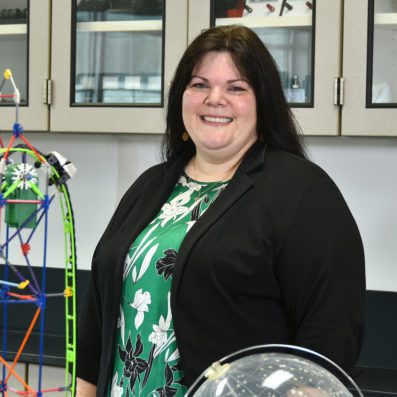
Adam Lark is an Associate Professor in the Physics Department at Hamilton College. He serves as Director of the Observatory, Laboratory Director, and Head Technician of the Science Center Shop. Education: Ph.D. in Physics Education (University of Toledo), M.S. and B.S. in Physics (Bowling Green State University) Research Interests: Focus on exoplanet detection via photometry using telescopes at Peters Observatory and discovery-based learning in physics laboratories . His work bridges observational astronomy and pedagogical innovation. Publications & Research Trends: Recent articles span exoplanet light curve analysis, Kepler-90 planetary dynamics, and TESS follow-up spectroscopy. Earlier work emphasizes creative science education for undergraduates. Scientific Awards & Grants: Creative Arts and Technology Grant (2024) Wellin Museum Grant (2022) Dean’s Pedagogical Development Award (2022) Society of Physics Notable Chapter Award (2020, 2021, 2022, 2023, 2025) Donald W. Bowman Undergraduate Physics Research Award (2005) Teaching & Grants: Directed grants for innovative educational tools and museum collaborations. Teaches courses like Observational Astrophysics, Astronomy, and Introductory Physics Laboratory. Trains Learning Assistants to enhance peer-led instruction.
Quirin Krabichler is a Research Fellow at the Central Institute of Mental Health, Mannheim, affiliated with Heidelberg University's Medical Faculty within the Department of Neuropeptide Research in Psychiatry, where he investigates neural mechanisms of social behavior and affective states. His academic background includes a PhD in Comparative Neuroscience (summa cum laude) alongside M.Sc. and B.Sc. degrees in Biology. Dr. Krabichler's research centers on oxytocinergic modulation of the midbrain periaqueductal gray (PAG), employing optogenetics, chemogenetics, and in vivo calcium imaging to map neural connectivity and behavioral functions. He actively collaborates on projects exploring oxytocinergic and vasopressinergic brain circuits, with expertise spanning stereotactic injections, behavioral analysis, and fiber photometry. His work bridges molecular neuroendocrinology with complex social behavior paradigms. Publication trends reveal a transition from foundational avian visual system neuroanatomy to contemporary focus on oxytocin-mediated social neuroscience, highlighting methodological evolution toward circuit-level interrogation of neuromodulatory systems. Key recognition includes: Walter Benjamin Position by the German Research Foundation (DFG) As a DFG-funded postdoctoral researcher, he drives experimental projects using cutting-edge neuromodulation techniques without formal advising responsibilities. His technical proficiency in opto-/chemogenetics and neural circuit mapping supports collaborative grant initiatives within the institute's psychiatric neuroscience framework. He operates within the Neuropeptide Research in Psychiatry team at the Central Institute of Mental Health, utilizing specialized laboratories for behavioral phenotyping and neural activity recording.
Philip Muirhead is an Associate Professor at Boston University's Department of Astronomy within the College of Arts and Sciences. He serves as Director of the Perkins Telescope Observatory and leads the Boston University Low-Mass Star Group . His research focuses on exoplanets , low-mass stars , and astronomical instrumentation . Education : B.Sc. from University of Michigan, M.Sc./Ph.D. from Cornell University Research Interests include: Exosatellite detection around L/T dwarfs ( PINES Project ) Characterizing planetary systems around M dwarf stars Studying variability mechanisms in substellar objects Analyzing eclipsing binary systems for stellar evolution Developing infrared instrumentation for transit surveys The PINES project (NASA-funded) uses the Perkins Telescope's Mimir camera to search for transiting satellites around ~400 L/T dwarfs, exploring extreme planet/moon formation environments. His work combines astrophysical research with accessibility initiatives like inclusive solar eclipse outreach for deaf communities. Collaborators : American Museum of Natural History, University of Washington, UC San Diego
Dr. Sijing Shen is an Associate Professor at the Institute of Theoretical Astrophysics, University of Oslo . She specializes in numerical simulations of galaxy formation and evolution, focusing on interactions between galaxies and the intergalactic medium, galactic winds, and the physics of the interstellar medium. PhD in Astrophysics (McMaster University, 2010) Postdoctoral Fellow (University of California, Santa Cruz, 2010-2014) Research Associate (University of Cambridge, 2014-2016) Associate Professor (University of Oslo, 2017-present) Her research employs high-performance computing and numerical magnetohydrodynamics to model the co-evolution of supermassive black holes and galaxies, the origins of galactic magnetic fields, and observational signatures of high-redshift galaxies. She develops and utilizes massively parallel magneto-hydrodynamic codes to create virtual universes for comparison with observational data. Recent publications highlight her work on dwarf galaxies, circumgalactic medium physics, and spectral diagnostics for next-generation telescopes like AtLAST. Key themes include feedback mechanisms, dark matter interactions, and computational methods in astrophysics. Young Research Talents Grant, Research Council of Norway Shen supervises 2 PhD students and 1 postdoctoral fellow. Her work bridges theoretical modeling with observational predictions, particularly in galaxy formation and evolution processes.
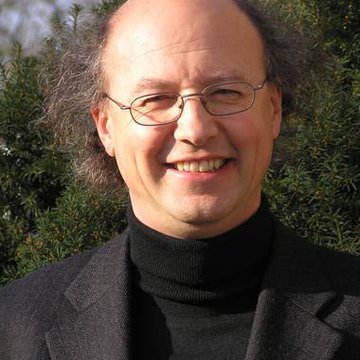
Prof. Dr. Klaus Strassmeier is a Professor at the Leibniz Institute for Astrophysics Potsdam (AIP), based in office HH/104 with contact details +49 331 7499 295 and kstrassmeier@aip.de. His work centers on the Stellar Physics and Exoplanets department, specifically the Stellar Activity research group, focusing on observational studies of stellar magnetic phenomena. His research spans: Stellar Activity and starspot dynamics through multi-decade photometric campaigns Doppler imaging for stellar surface mapping Stellar dynamos and magnetic braking mechanisms Exoplanet atmosphere characterization via high-resolution spectroscopy Instrumentation development for telescopes like PEPSI Analysis of his 2024-2025 publications reveals consistent emphasis on long-term stellar activity monitoring (e.g., 40-year XX Trianguli study), chaotic dynamo behavior, and exoplanet atmosphere investigations. His work leverages the PLATO mission framework and advanced spectroscopic techniques, often involving international collaborations through AIP's High-resolution Spectroscopy and Polarimetry group. No scientific awards are documented in available materials. Prof. Strassmeier actively contributes to telescope robotics projects and instrumentation development while mentoring students through the University of Potsdam Astrophysics Network. His grant-funded research includes PLATO mission participation and long-term stellar monitoring programs, with future work targeting dynamo theory refinement and exoplanet atmosphere modeling. He leads the Stellar Activity group within AIP's research ecosystem, utilizing facilities like the Einstein Tower and Great Refractor observatories.
Prof Suzanne Aigrain is a Professor of Astrophysics at the University of Oxford and a Fellow of All Souls College. Previously, she was a Lecturer at the University of Exeter and a PPARC Postdoctoral Fellow at the Institute of Astronomy in Cambridge. Her research focuses on exoplanet detection and characterization using transit and radial velocity methods, stellar activity impacts on exoplanet studies, and Bayesian data analysis. She leads the PLATO mission's data analysis efforts and is a key member of the Terra Hunting Experiment (THE), which will use the HARPS3 spectrograph to search for nearby Earth-like planets. Her work includes pioneering Gaussian Process regression techniques to analyze exoplanet datasets and mitigate stellar activity effects. She is Principal Investigator of the European Research Council-funded 'GPRV' project and receives UKRI/STFC funding for TESS and PLATO missions. Research interests include exoplanets, stellar activity, and advanced data analysis methods. She has contributed to space missions like CoRoT, Kepler, K2, TESS, and PLATO (launching 2026). Her recent work emphasizes developing algorithms to handle activity noise in RV data and simulating PLATO mission outcomes. She also promotes citizen science and best practices in data analysis. Key collaborations include the Stars & Planets @ Oxford research group and involvement with the Terra Hunting Experiment. Her research has advanced methods for detecting small planets and characterizing their properties using high-precision photometry and spectroscopy.
Sara Seager is the Class of 1941 Professor of Planetary Science, Professor of Physics, and Professor of Aeronautics and Astronautics at the Massachusetts Institute of Technology. She is a pioneer in the field of exoplanets, known for her groundbreaking research on exoplanet atmospheres and the search for signs of life. She has held leadership roles in several major space missions including serving as Deputy Science Director for NASA's TESS mission, Principal Investigator for the ASTERIA CubeSat, and leading the Starshade Rendezvous Mission concept. Her educational background includes: BSc in Math and Physics Specialist Program from the University of Toronto PhD in Astronomy from Harvard University Professor Seager's research focuses on theoretical models of exoplanet atmospheres and interiors, with the ultimate goal of finding and identifying another Earth. Her work has introduced many foundational concepts to the field, including the first description of exoplanet transmission spectra that led to the first detection of an exoplanet atmosphere. She is known for her maxim: 'For exoplanets, anything is possible under the laws of physics and chemistry.' Her research spans hot Jupiters, super-Earths, habitable zone planets, and the search for biosignature gases in exoplanet atmospheres. Analysis of Professor Seager's publications reveals a clear evolution in her research focus. Early work established foundational theories for exoplanet atmospheres, particularly for hot Jupiters. This was followed by pioneering work on super-Earth characterization and atmospheric retrieval techniques. More recent publications focus on habitability, biosignatures, and innovative methods for constraining exoplanet properties. Her work consistently bridges theoretical modeling with observational constraints, contributing to multiple subfields including atmospheric chemistry, planetary interiors, and mission concepts for future space telescopes. Professor Seager has received numerous prestigious awards recognizing her contributions to astronomy and planetary science: 2024 Kavli Prize in Astrophysics 2013 MacArthur Fellowship 2021 Magellanic Premium Medal 2021 Royal Canadian Geographical Society Gold Medal 2020 Officer of the Order of Canada 2015 National Academy of Sciences Member 2012 Raymond and Beverly Sackler Prize in the Physical Sciences As an advisor, Professor Seager has mentored numerous students who have gone on to make significant contributions in the field, including Eliza Miller-Ricci, N. Madhusudhan, Bjoern Benneke, Julien de Wit, and Renyu Hu. Her research has been supported by multiple NASA missions including TESS (Transiting Exoplanet Survey Satellite), ASTERIA (a CubeSat mission), and development work on the Starshade Rendezvous Mission concept. She has also directed mission concept studies for Venus exploration, including the Venus Morning Star Missions. Professor Seager leads research groups focused on exoplanet characterization at MIT, with connections to NASA missions and international collaborations. She has been instrumental in organizing major scientific meetings, including 'The Next 40 Years of Exoplanets' which brought together leading scientists to discuss the future direction of the field. Her work spans theoretical modeling, data analysis, and mission concept development, making her one of the most influential figures in modern exoplanet research.
Dr Martin Galpin serves as Lecturer, Director of Studies, and Associate Head of Department (Teaching) in the Department of Chemistry at the University of Oxford, concurrently holding a Supernumerary Fellowship at University College. His career demonstrates continuous progression within Oxford since 2001, reflecting deep institutional integration and academic leadership. His educational foundation includes an MChem and DPhil in Chemistry from the University of Oxford, completed at Balliol College under Professor David Logan's supervision. This was followed by postdoctoral research in the Logan group and a Junior Research Fellowship at Worcester College (2006-2010) before his 2011 appointment as Departmental Lecturer. Galpin's research centers on condensed matter theory , with specialized expertise in strongly-correlated electron systems and quantum many-body phenomena . His methodology integrates theoretical framework development with advanced numerical techniques including the Numerical Renormalization Group and Continuous-Time Quantum Monte Carlo. Current investigations span nanoscale quantum transport in molecular devices, electronic properties of heavy fermion compounds, and collaborative interdisciplinary projects across the chemistry department. Publication analysis reveals a strategic research evolution: early work (2005-2016) established foundational contributions to Kondo physics and quantum impurity models, while recent output (2017-2022) demonstrates significant expansion into biophysical applications through mass photometry development for protein interaction analysis and diabetes diagnostics. This transition reflects deliberate interdisciplinary collaboration while maintaining core theoretical strengths. Scientific awards: No honors, prizes, or fellowships are documented in available sources. As Director of Studies, Galpin oversees comprehensive academic guidance for chemistry students, though specific advisee records and grant funding details remain undisclosed. His leadership extends to curriculum development and teaching strategy as Associate Head of Department (Teaching). The Galpin Group drives theoretical and computational research in condensed matter physics, increasingly bridging physical and life sciences through methodological innovations in quantitative analysis of complex systems.
Melanie L. Good is a Teaching Associate Professor and Co-Director of Undergraduate Studies in the Department of Physics & Astronomy at the University of Pittsburgh. Her work bridges physics education research and astrophysics, focusing on student learning experiences and exoplanet detection. She co-founded the undergraduate-led Survey of Transiting Extrasolar Planets (STEPUP) group. Her research explores mindfulness interventions in physics classrooms, pseudoscience literacy among non-science majors, and student problem-solving approaches. She has advised undergraduate researchers including Colin Henchy, Brennon Paik, and Alexi Zukas. Her outreach activities include public lectures on UFO narratives and media commentary on scientific topics. Dr. Good's astrophysics work involved exoplanet transit detection using the Keeler telescope at Allegheny Observatory, contributing to discoveries like HD 80606b. She holds a PhD from the University of Pittsburgh and maintains an active presence in physics education innovation.
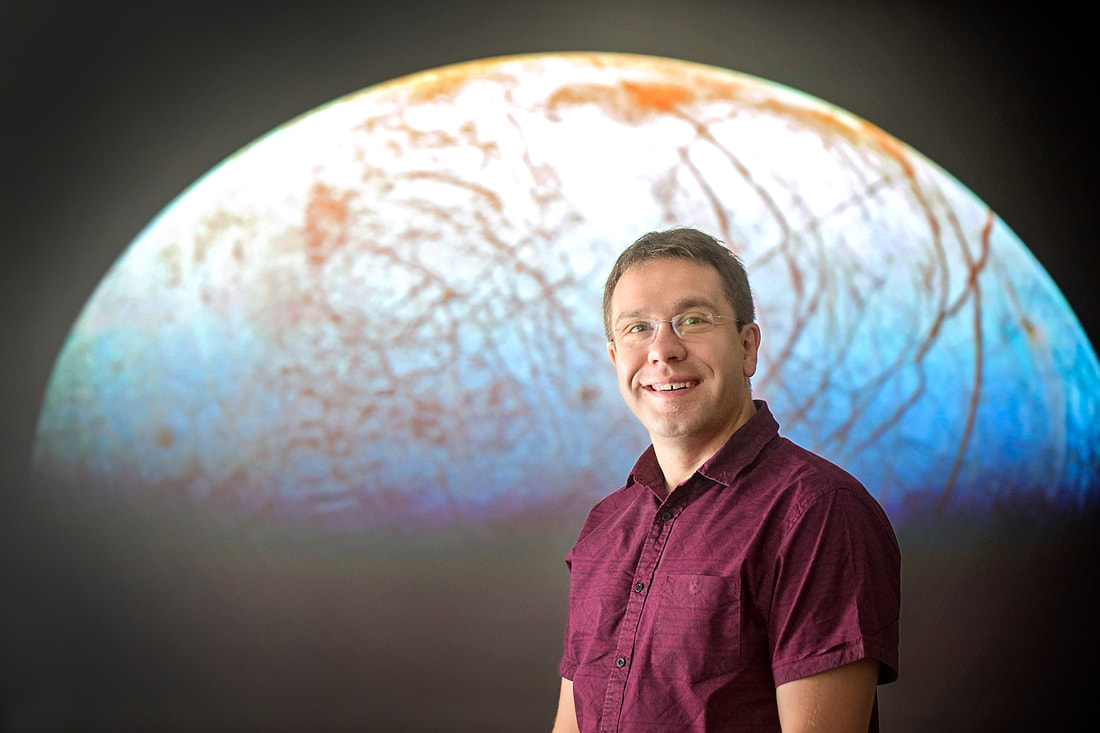
Prof. Nicolas Thomas is a Professor of Experimental Physics at the University of Bern, leading the planetary remote-sensing group at the Physikalisches Institut. His work focuses on dynamic phenomena on solar system bodies, particularly comets and icy worlds. He has been a key figure in major space missions like Rosetta (OSIRIS instrument), BepiColombo (BELA altimeter), and ExoMars (CaSSIS camera). Thomas holds a DPhil from the University of York (1986) and has held positions at the Max-Planck-Institut für Aeronomie and ESA. He has received numerous awards, including the Zel'dovich Award (1992) and NASA Group Achievement Awards. His research spans planetary surface processes, remote sensing techniques, and mission leadership. Notable contributions include analyzing comet Halley data from ESA’s Giotto mission and leading the CaSSIS camera on ExoMars. Thomas has also contributed to proposals like IVO (Io Volcano Observer) and is active in the International Academy of Astronautics. His group uses multi-wavelength imaging and numerical modeling to study Mars, Mercury, comets, and the Jupiter system. Scientific achievements include discoveries of chloride deposits on Mars, surface changes through CaSSIS observations, and leadership in over 200 peer-reviewed publications. He has advised multiple missions and served in COSPAR leadership roles, emphasizing interdisciplinary planetary science.
Jonti Horner is a Professor of Astrophysics at the University of Southern Queensland (UniSQ), affiliated with the School of Mathematics, Physics and Computing and the Centre for Astrophysics . He is a leading researcher in astrobiology, exoplanets, and solar system evolution , with significant contributions to the MINERVA-Australis project and the GALAH survey. He holds a PhD from the University of Oxford and has held postdoctoral positions across the UK, Switzerland, and Australia. Research Interests: His work spans: Orbital dynamics of solar system small bodies (asteroids, comets) Exoplanet detection and characterization Planetary habitability and system architecture Astrocladistics and dynamical modeling Science communication and public outreach Recent Research Trends: His latest publications focus on transiting exoplanets discovered via TESS and ground-based follow-up, including mini-Neptunes, hot Jupiters, and super-Earths. He frequently collaborates on large-scale surveys like GALAH to refine stellar parameters for planet host stars, and investigates the role of stellar evolution and system architecture in planetary dynamics and habitability. Supervision & Collaboration: He supervises multiple PhD and Master’s students and is involved in international collaborations including MINERVA-Australis, TESS, and CHEOPS. He is a Fellow of the Astronomical Society of Australia and an active member of the Astrobiology Society of Britain. Science Communication: Horner is a prolific science writer, contributing regularly to The Conversation , and engages in media interviews, public talks, and educational outreach, including annual meteor shower calendars.
Hubert Klahr is an apl. Prof. (Associate Professor) and Research Group Leader at the Max Planck Institute for Astronomy in Heidelberg, Germany. He leads multiple research groups focused on Planet Formation and Exoplanets, Star Formation, and the Theory of Planet and Star Formation within the Department of Planet and Star Formation. His research centers on computational physics applied to the formation of the solar system and exoplanets, with particular emphasis on turbulence in protoplanetary disks. Klahr employs multidimensional self-gravitating magneto hydro dynamical simulations of turbulent gas and embedded particles using massive parallel computers to investigate fundamental questions about solar system formation, star formation processes, and the role of turbulence in planet formation. His specific research interests include determining how Earth came to life, how massive and small stars form, the nature of turbulence in planet formation, the initial mass function of planets, planetary formation distances from stars, and the prevalence of Earth-sized planets in habitable zones. His recent publications (2024-2025) focus on advanced computational modeling of protoplanetary disks, planet-disk interactions, radiation hydrodynamics, and planetesimal formation mechanisms. Key research themes include vertical shear instability, three-temperature radiation hydrodynamics, spiral arm formation in disks, and dust evolution in protoplanetary environments. Prof. Klahr has engaged with the public through lectures such as 'Lucy: Eine Reise zu den Fossilien unseres Sonnensystems' (Lucy: A Journey to the Fossils of Our Solar System), where he discussed the Lucy mission to Trojan asteroids that serve as relics of the early solar system.
Dr. Ben Burningham serves as Associate Professor in the Research Centre for Astrophysics Research (CAR) within the School of Physics, Engineering & Computer Science at the University of Hertfordshire. His primary affiliation is with the Department of Physics, Astronomy and Mathematics where he leads cutting-edge research in substellar objects. His research focuses on brown dwarfs as critical bridges between stellar and planetary physics. Specializing in objects straddling the T/Y transition, he investigates atmospheric phenomena including clouds, weather systems, aurorae, and chemical composition using advanced observational techniques. His work leverages major facilities like the James Webb Space Telescope to probe substellar atmospheres down to planetary temperatures. Recent publications demonstrate a strong emphasis on JWST-driven atmospheric characterization, spectral retrieval methods for cloudy brown dwarfs, and chemical abundance studies in cold substellar objects. His research output shows consistent focus on infrared observations of L/T dwarfs and their connection to exoplanet science. As Principal Investigator, he leads multiple significant projects including Cloudbusting with JWST (2023-2026) characterizing aerosols in substellar atmospheres, and Cloud busting with JWST (2021-2026) studying exoplanet atmospheres. Earlier projects include retrieval analysis of brown dwarfs and direct imaging of planetary-mass objects. Within the Research Centre for Astrophysics Research, Burningham collaborates extensively on UKIDSS infrared sky surveys and Gaia ultracool dwarf studies, maintaining strong connections with international observatories and research teams focused on substellar and exoplanetary science.
Dr. Heather Rave serves as an associate professor of physics at St. Thomas Aquinas College, where she has taught undergraduate courses including General Physics I/II, Astronomy, and Applied Calculus since 2006. Her educational qualifications include: B.S. in Natural Science (Physics specialization) and B.S. in Mathematics from St. Thomas Aquinas College (1998) M.S. in Astrophysics from Rensselaer Polytechnic Institute (2001) Ed.D. in Science Education (Astrophysics specialization) from Rutgers University (2018) Her research demonstrates a clear evolution from observational astrophysics to physics education scholarship. Early work focused on galactic structure, dwarf galaxies, and BL Lacertae objects using data from the Sloan Digital Sky Survey and multi-wavelength observations. Since 2012, her publications emphasize pedagogical approaches to astrophysics education, particularly conceptual understanding and assessment alignment. Publication trends reveal a strategic shift from astrophysical data analysis (1997-2003) toward educational research (2012-2018), with her doctoral dissertation establishing her focus on mathematical sophistication in astrophysics education. No scientific awards were documented in the available information. Dr. Rave's professional trajectory includes a Post-Master's research position at Drexel University (2002-2004) before transitioning to full-time teaching. No details regarding grant funding or student advising relationships were provided in the source materials.
Professor Isabelle Baraffe is a leading astrophysicist at the University of Exeter, specializing in stellar and planetary physics, with particular focus on low-mass stars, brown dwarfs, and exoplanet atmospheres. She has held a Chair in Astrophysics since 2010 and previously served as Professor at CRAL (France) and Associate Professor at École Normale Supérieure de Lyon. PhD in Astrophysics (University of Paris VII and Göttingen) 2010: Joined Exeter's Astrophysics Group 2010-2020: Led the Astrophysics Group Her research develops self-consistent evolutionary models for substellar objects, integrating atmosphere boundary conditions to study cooling and contraction processes. She pioneered non-equilibrium chemistry in exoplanet atmospheres and accretion-driven stellar evolution models. Recent publications focus on ATMO 2020 models (Teff=200-3000K, log(g)=2.5-5.5), BHAC15 evolutionary tracks, and GAIA photometric calibrations . Her work addresses cloud formation , magnetic accretion , and disk-star interaction mechanisms. Scientific Recognition : 2024: Fred Hoyle Medal and Prize 2023: Lodewijk Woltjer Lecture 2020: Viktor Ambartsumian International Science Prize 2019: Exeter Research Excellence Award Grants include ERC Advanced Grants (2012, 2018) and STFC grants (2012, 2018, 2024). She leads the ATMO collaboration, providing open-access evolutionary models .




.jpeg)