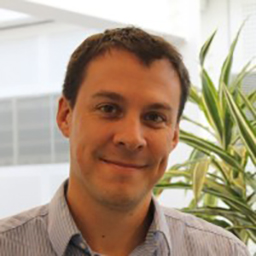
Sverre Steen is a Professor and Head of the Department of Marine Technology at the Norwegian University of Science and Technology (NTNU). He leads the Kongsberg Maritime University Technology Centre focused on 'Ship Performance and Cyber-physical Systems' and is a member of the standing committee for the Symposium of Marine Propulsors. His research emphasizes ship propulsion, hydrodynamics, and big data analysis of in-service vessel performance. Key interests include seakeeping, high-speed marine vehicles, and model testing techniques. Steen teaches TMR 4217 Hydrodynamics of High-Speed Marine Vehicles , covering cavitation, experimental hydrodynamics, and propulsion systems. He collaborates internationally on projects like the Norwegian Ocean Technology Centre. His recent work explores wave-energy extraction via hydrofoil vessels, resistance modeling for fast ferries, and propulsion efficiency in real sea states. He has contributed to global shipping emission models (MariTEAM) and reliability analysis of structural components under vibration. Steen's publications span propulsion in waves, engine-propeller dynamics, and data-driven methods for ship performance monitoring. His applied research bridges experimental testing and computational modeling to address challenges in sustainable maritime transport and operational safety.
Veysel Murat İstemihan Genç is a Professor in the Department of Electrical Engineering at Istanbul Technical University (ITU), College of Engineering. His research is centered on modern power systems, with a focus on transient stability, cybersecurity, and integration of renewable energy sources. He actively leads multiple research projects and supervises graduate students in advanced power system technologies. Research Interests: His work spans key areas including transient stability assessment, machine learning applications in power systems, cyber-attack detection in AGC systems, and dynamic security evaluation under high renewable penetration. He employs cutting-edge techniques such as ensemble learning, deep neural networks, and hybrid optimization algorithms. Publication Trends: Recent publications (2023–2025) highlight a strong trend toward integrating AI and machine learning for real-time transient stability prediction, cybersecurity in distributed energy systems, and performance optimization of solar and wind-integrated grids. His work frequently addresses challenges in low-inertia systems and false data injection attacks. Scientific Projects: Strengthened Machine Learning-Based Dynamic Security Evaluation for Transient Stability under False Data Injection Attacks (BAP, 2025) Analysis and Control Methods for Stability of Large-Scale Low-Inertia Power Systems (BAP, 2023–2024) Dynamics Security Evaluation of Renewable-Rich and Cyber-Attacked Power Systems (BAP, 2022–2024) Risk-Based Stability Assessment and Corrective Control Methods in Power Systems (BAP, 2019–2022) Wide-Area Monitoring Protection and Control System Design Using Advanced Signal Processing and Machine Learning (TÜBİTAK, 2018–2020) Advising and Grants: He is the principal investigator (PI) on multiple funded research projects from BAP and TÜBİTAK, indicating strong grant acquisition and leadership. His supervision of 27 ongoing theses reflects an active role in mentoring graduate students in electrical engineering and power systems. Labs and Teams: While specific lab names are not mentioned, his projects suggest leadership in a research group focused on smart grid technologies, AI-enabled power system security, and renewable integration at Istanbul Technical University.
Dr. Eleodor Nichita is an Associate Professor in the Department of Energy and Nuclear Engineering at the University of Ontario Institute of Technology (UOIT), part of the Faculty of Engineering and Applied Science. He holds a PhD in Nuclear Engineering from Georgia Institute of Technology (USA) and additional degrees from McMaster University and the University of Bucharest. His research focuses on neutron transport, reactor kinetics, advanced nuclear reactor design, and radionuclide production. He teaches a wide range of courses including reactor physics, neutron detectors, and medical imaging applications of radiation. Education: PhD in Nuclear Engineering, Georgia Institute of Technology, United States MS in Health Physics, Georgia Institute of Technology MS in Medical Physics, McMaster University BS in Engineering Physics, University of Bucharest, Romania Research interests emphasize mathematical modeling for nuclear systems, neutronic design of advanced reactors, and production of medical isotopes like Mo-99. His work addresses reactor safety, lattice homogenization techniques, and SCWR (supercritical water-cooled reactor) dynamics. Over 50 peer-reviewed papers and book chapters reflect his contributions to CANDU reactor analysis, PHWR fuel bundle design, and educational innovations in nuclear engineering. Advising and grants: While specific student names are not listed, his extensive teaching portfolio (including graduate-level reactor physics courses) indicates active mentoring. Research grants likely support his work on reactor kinetics and SCWR technology. Lab affiliations: His research is conducted through the Energy Systems and Nuclear Science Research Centre (ERC) at UOIT, focusing on numerical methods and experimental validation for reactor analysis.
William Sulis is an Associate Clinical Professor in the Department of Psychiatry and an Associate Member of the Department of Psychology at McMaster University, where he also directs the Collective Intelligence Lab (CILab). With a unique interdisciplinary background spanning mathematics, physics, and psychiatry, Dr. Sulis bridges the gap between theoretical science and clinical practice. His educational journey is exceptionally diverse: B.Sc. (Hon) in Mathematics with minor in Theoretical Physics, Carleton University (1976) M.D., University of Western Ontario (1980) M.A. in Mathematics, University of Western Ontario (1984) Ph.D. in Mathematics, University of Western Ontario (1989) FRCPC in Psychiatry (1984) Ph.D. in Theoretical Physics, University of Waterloo (2014) CRCPC in Geriatric Psychiatry (2015) Dr. Sulis's research explores the intersection of complex systems theory with psychological and psychiatric phenomena. His work on Collective Intelligence investigates how group dynamics emerge from individual interactions, while his research on Temperament and Psychobiology examines the continuum between normal personality variations and mental illness. He has made significant contributions to understanding Synchronization in Complex Systems and developed the concept of Transient Induced Global Response Synchronization (TIGoRS) , which has implications for neural coding and information processing. His theoretical work extends to Quantum Foundations and Process Algebra Theory , where he proposes novel approaches to quantum mechanics. Analysis of his recent publications reveals a consistent thread connecting complex systems theory with psychological and psychiatric applications. His work increasingly focuses on bridging the gap between temperament theory and clinical psychiatry, using mathematical and computational approaches to understand mental illness. Simultaneously, he continues to develop theoretical frameworks in quantum physics through process algebra models, demonstrating remarkable interdisciplinary range. Dr. Sulis has received several prestigious awards including The Governor General's Medal for having the highest overall grade point average in his graduating class, the Henry Marshall Tory Scholarship, and multiple Harry Stevenson Southam Scholarships. Throughout his career, Dr. Sulis has mentored numerous students across disciplines, supervising research projects spanning collective intelligence, semantic space modeling, network dynamics, and temperament studies. His Collective Intelligence Lab has served as a hub for interdisciplinary research connecting computer science, psychology, and psychiatry. Dr. Sulis has also been actively involved in professional organizations, serving as President of The Society for Chaos Theory in Psychology and the Life Sciences (1996-1998) and holding editorial positions for several journals including "Dynamical Psychology" and "Nonlinear Dynamics in Psychology and the Life Sciences." As Director of the Collective Intelligence Lab at McMaster University, Dr. Sulis fosters research exploring how complex adaptive systems can model cognitive and social phenomena. The lab serves as an intellectual nexus where mathematics, computer science, psychology, and psychiatry converge to address fundamental questions about intelligence, both individual and collective.
Carsten Rott is a Professor in the Department of Physics & Astronomy at the University of Utah and holds the Jack W. Keuffel Memorial Chair until December 2025. His academic journey began with a Ph.D. in Physics from Purdue University (2004), preceded by undergraduate studies at the Universität Hannover. Rott has held academic positions at institutions including The Ohio State University (CCAPP Senior Fellow 2009-2013), Penn State University (postdoc 2005-2008), and Sungkyunkwan University in South Korea (Assistant Professor 2013-2017, Associate Professor 2017-2025). He has been a member of the IceCube Neutrino Telescope collaboration since 2005 and serves on committees like the IceCube-Gen2 Coordination Committee and JSNS2 Speakers Board. His research spans Particle Physics , Neutrino Astronomy , and Dark Matter Detection . Key projects include analyzing IceCube data for sterile neutrino signatures, studying cosmic-ray anisotropy, and investigating terrestrial gamma-ray flashes. Notable achievements include the Bruno Rossi Prize (2021) for high-energy astrophysics contributions. Rott's work involves multimessenger observations (neutrinos, gamma-rays, radio signals) and detector calibration innovations, such as those for the JSNS2 experiment. Recent publications focus on atmospheric neutrino oscillation parameters, TGF spectroscopy, and dark matter constraints. He employs machine learning techniques (CNNs) for event reconstruction and leads initiatives like the IceCube Master Class for student engagement. Grants include funding for IceCube upgrades (2024-2026) and Hyper-Kamiokande collaborations (2023-2026). As department chair since 2023, Rott continues to bridge experimental particle physics with astrophysical discoveries.
Bertan Bakkaloglu is the On Semiconductor Professor in the School of Electrical, Computer and Energy Engineering at Arizona State University (ASU), where he has been since 2004. Prior to ASU, he worked at Texas Instruments focusing on analog, mixed-signal, and RF SoC development for communication transceivers. His research expertise spans RF and mixed-signal IC design, wireless/wireline communication systems, and broadband communication systems. Education: Ph.D. in Electrical Engineering, Oregon State University (1995) M.S.C. in Electrical Engineering, University of Houston (1992) Research Interests: RF and mixed-signal integrated circuits Power management ICs (including LDO regulators and DC-DC converters) High-efficiency power delivery systems Radiation-hardened electronics for space applications MEMS-based sensor systems Biomedical circuits for implantable devices Grants & Collaborations: Over 40+ funded research projects with institutions like NASA/JPL, BAE Systems, and NSF, focusing on power electronics, space systems, and biomedical applications Key projects include radiation-hardened converters, self-calibrating DACs, and implantable medical device circuits Industry partnerships with Texas Instruments, Space Micro, and FLIR Professional Activities: Technical committee member for IEEE Radio Frequency Integrated Circuits Conference Founding chair of IEEE Solid-State Circuits Society Phoenix Chapter
Scott England is a Professor in the Department of Aerospace and Ocean Engineering at the College of Engineering, Virginia Polytechnic Institute and State University. He serves as the Project Scientist for NASA’s Ionospheric Connection Explorer (ICON), Co-Investigator for Global-scale Observations of the Limb and Disk (GOLD), and Participating Scientist for Mars Atmosphere and Volatile Evolution (MAVEN). Education PhD, University of Leicester (UK), 2005 MPhys First Class Honors, University of Leicester (UK), 2001 England’s research focuses on planetary atmosphere-space environment interactions, particularly gravity waves, atmospheric tides, and ionosphere-thermosphere coupling on Earth and Mars. His work integrates NASA mission data (ICON, GOLD, MAVEN) with numerical modeling to study thermal dynamics, wind systems, and solar flare impacts. Recent publications highlight his expertise in thermospheric gravity wave science, planetary wave-induced ionospheric variability, and Mars atmosphere studies using EMUS and IUVS instruments. Articles span topics like Seasonal variability of DE3/DE2 tides , Transient Martian hot oxygen corona , and Shock-induced plasma dynamics . Scientific Honors 2020 Dean's Award for Teaching Excellence 2016 RHG Exceptional Achievement for Mars Science As a professional leader, England served as Thermospheric Lead for the 2019 Planetary Mission Concept Studies Program and on the National Academy of Sciences Decadal Survey panel. He manages Virginia Tech’s participation in the Virginia Space Grant Consortium and has contributed to high-performance computing committees.
Mark Jenkinson is a Professor of NeuroImaging at the University of Oxford's Nuffield Department of Clinical Neurosciences and also holds positions at the University of Adelaide's Australian Institute for Machine Learning and the South Australian Health and Medical Research Institute (SAHMRI). He heads the Structural Modelling and Analysis Group at the FMRIB Centre, where his research focuses on multimodal population modeling and structural brain segmentation. Education: DPhil in Robotics Research (University of Oxford, 1999) BSc (Hons I) in Mathematical Physics (University of Adelaide, 1994) BE (Hons I) in Electrical and Electronic Engineering (University of Adelaide, 1993) Professor Jenkinson's research spans two major themes: multimodal modeling of populations to describe disease processes and apply to individual patient diagnoses, and structural segmentation and analysis of brain anatomy and pathology, particularly focusing on sub-cortical structures and lesions. His work integrates advanced computational methods with neuroimaging to develop tools for understanding neurological disorders. As the developer of key components of the FMRIB Software Library (FSL), he has significantly contributed to standard neuroimaging analysis pipelines used worldwide. His recent publications demonstrate a strong focus on deep learning applications in neuroimaging, uncertainty quantification in medical AI, and advanced segmentation techniques. There's a clear trend toward developing more robust, anatomically plausible models that preserve topological structures while improving diagnostic capabilities for conditions like multiple sclerosis, Huntington's, and Parkinson's diseases. Scientific Awards: Highly Cited Researcher (Clarivate Analytics 2018-2021, Thomson Reuters 2014-2016) ISMRM Outstanding Teacher Award (2009, 2014) Teaching Excellence Award, University of Oxford (2012) David Phillips Fellowship from BBSRC (2005-2010) Professor Jenkinson has supervised over 25 doctoral students whose work spans brain segmentation, connectivity analysis, and clinical applications of neuroimaging. His research is supported by significant grants including the Medical Research Future Fund (AU$2m), Wellcome Trust Centre for Integrative Neuroimaging (£11m), and NIH Human Connectome Project (US$30m), reflecting the high impact and translational potential of his work. As head of the Structural Modelling and Analysis Group at FMRIB, Jenkinson leads a team developing the FSL (FMRIB Software Library), one of the most widely used neuroimaging analysis packages globally. His group collaborates extensively with clinical researchers on applications ranging from multiple sclerosis to traumatic brain injury, translating computational advances into clinical practice.
Professor Chongmin Song is a faculty member at the University of New South Wales (UNSW), affiliated with the School of Civil and Environmental Engineering. His academic rank is Professor, and he specializes in computational mechanics with a focus on innovative numerical methods. He holds a BE and ME from Tsinghua University and a DEng from the University of Tokyo. His research explores computational mechanics, fracture analysis, wave propagation, and soil-structure interactions. Key methodologies include the Scaled Boundary Finite Element Method (SBFEM), image-based modeling, and dynamic simulations of infrastructure systems. He leads significant ARC-funded projects like 'A scaled boundary framework for nonlinear dynamic analysis of structures' (DP250100955) and 'Developing sustainable graded porous cementitious structures' (LP240100123), totaling over $1M in recent grants. Recent publications emphasize adaptive modeling techniques, multiphysics simulations, and high-performance computing applications. Trends include topology optimization for structural dynamics, phase-field fracture modeling for brittle materials, and GPU-accelerated elastodynamics. His work integrates computational efficiency with real-world engineering challenges, particularly in geomechanics and material failure analysis. Professor Song collaborates extensively on projects involving computational fracture mechanics and maintains laboratories focused on numerical simulation advancements. Future work targets scalable algorithms for 3D crack propagation and multiphysics coupling in infrastructure systems.
Robert M. Weikle, II is a Professor in the Charles L. Brown Department of Electrical and Computer Engineering at the University of Virginia, with a courtesy appointment in the Department of Physics. He earned his B.S. from Rice University (1986), M.S. (1987), and Ph.D. (1992) in Electrical Engineering from Caltech, followed by postdoctoral work at Chalmers University of Technology (1992). His research focuses on millimeter-wave and terahertz electronics , applied electromagnetics, integrated antennas, low-noise sensors, and heterogeneous integration of compound semiconductors. His work bridges electronics and photonics for spectrum access, with applications in astronomy, spectroscopy, and metrology. He has published extensively on micromachined silicon substrates, superconducting materials, and emerging technologies. Scientific Awards: IEEE Microwave Prize (1993) David A. Harrison III Award (1999) University of Virginia All-University Outstanding Teaching Award (2000) Edlich-Henderson Innovator of the Year (2016) Fulbright Scholar (2001) As Chief Technology Officer and co-founder of Dominion Microprobes, Inc., he commercializes micromachined wafer probes for high-frequency metrology. His lab, located in E220 Thornton Hall and the Jesse W. Beams Physics Building, has produced 15+ recent publications on submillimeter-wave devices, THz probes, and calibration techniques.
Dr. Alvin J. K. Chua is an Assistant Professor at the National University of Singapore (NUS) under the NUS Presidential Young Professorship. He holds a joint appointment in the Department of Mathematics and a courtesy appointment in the Department of Statistics and Data Science. His research focuses on gravitational-wave astronomy , particularly extreme mass ratio inspirals (EMRIs) as key sources for the LISA mission. He develops computational and statistical methods for modeling GW sources and analyzing detector data, with recent work on machine learning and Bayesian inference techniques. His selected publications highlight advancements in modeling beyond-vacuum-GR effects in EMRIs non-local parameter degeneracies rapid relativistic waveform generation neural networks for GW inference statistical sampling on manifolds These works span gravitational-wave astrophysics , computational relativity , and applied statistics . Scientific recognition includes the NUS Presidential Young Professorship. He collaborates with the LISA Consortium and the North American Nanohertz Observatory for Gravitational Waves (NANOGrav).
Dr Paul Henshall is a Senior Lecturer in Mechanical Engineering at Oxford Brookes University, affiliated with the School of Engineering, Computing and Mathematics. His work bridges advanced thermal systems, renewable energy, and mathematical modelling, with a strong focus on sustainable technologies. His research interests include: Mathematical modelling of renewable energy systems Second-life battery energy storage Thermal management of battery packs Lithium-ion cell characterization Advanced solar thermal systems Thermochemical energy storage The analysis of his recent publications (2018–2025) reveals a consistent focus on energy storage and solar thermal technologies. His work emphasizes computational modelling, experimental validation, and sustainability assessment, particularly in second-life batteries and high-efficiency solar collectors. Key themes include battery degradation prediction, thermal stress analysis, and the integration of renewable systems in buildings and industry. Professional recognitions include: Chartered Physicist (CPhys) Member of the Institute of Physics (MInstP) Fellow of the Higher Education Academy (FHEA) Member of the Institute of Physics Energy Group Committee Paul supervises MEng and PhD students, including Dr. Farhad Salek, whose thesis focused on second-life battery systems. He teaches core modules in engineering mathematics, numerical methods, and computational modelling. He is involved with the Centre for Batteries, Electric Vehicles and Electronics and the Architectural Engineering Research Group, contributing to interdisciplinary research in sustainable energy systems.
Professor John D. Cressler is a tenured faculty member at the Georgia Institute of Technology, holding a position within the School of Electrical and Computer Engineering in the College of Engineering. His research focuses on cutting-edge semiconductor technologies, particularly silicon-germanium heterojunction bipolar transistors (SiGe HBTs) for mixed-signal applications spanning RF, microwave, mm-wave, analog, and digital domains. His research interests center on atomic-scale bandgap engineering for next-generation semiconductor devices, with emphasis on SiGe HBT technology development, radiation-hardened circuits for space applications, cryogenic electronics, and device-circuit interactions. His team explores fundamental device theory, broadband noise analysis, profile optimization, 2-D/3-D simulation, compact modeling, and radiation effects. Current projects include Europa-surface mission electronics, D-band/sub-THz systems, and radiation-tolerant receiver designs. Analysis of his 15 most recent publications (2024-2025) reveals a dominant focus on radiation-hardened electronics for space applications (40% of works), millimeter-wave circuit design (30%), and SiGe HBT reliability optimization (30%). Key trends include Europa mission electronics development, D-band/sub-THz circuit innovation, and advanced radiation mitigation techniques using SiGe BiCMOS technology. Professor Cressler teaches multiple courses including ECE 3040 (Microelectronic Circuits), ECE 3450 (Semiconductor Devices), ECE 6444 (Silicon-Based Heterostructure Devices and Circuits), and the interdisciplinary IAC 2002 course on Science, Engineering and Religion. His research is supported by industrial collaborations and Georgia Tech facilities including the Georgia Electronic Design Center (GEDC), NanoTECH, and C-STAR.
Professor Dragan Jovcic is the Chair in Engineering at the University of Aberdeen's School of Engineering , where he has been a faculty member since 2004 and a full professor since 2012. Concurrently he serves as Director of the Aberdeen HVDC Research Centre , a role he has held since 2015. Education: PhD in Electrical Engineering, University of Auckland, 1999 Diploma Engineer in Control Systems, University of Belgrade, 1993 Postgraduate Certificate in University Teaching, University of Ulster, 2003 Research Interests: Professor Jovcic’s research centres on high-power electronics and HVDC transmission systems , with particular emphasis on the development of DC transmission grids that will enable large-scale integration of offshore wind energy . His work spans DC/DC converters , DC circuit breakers , modular multilevel converters (MMC) , flexible AC transmission systems (FACTS) , and advanced power system modelling and control . The overarching goal is to underpin the transition from fossil-fuel generation to renewable-dominated power systems, especially in the North Sea and European contexts. Publication Trends: Recent publications (2020-2023) reveal a strong focus on DC protection technologies —notably circuit breakers and energy absorbers—and on modelling methodologies for HVDC grids and offshore wind integration. The works address both theoretical advances (phasor and state-space models) and experimental validation (kV-level prototypes), reflecting a balanced portfolio of fundamental research and practical demonstration. Scientific Awards & Recognition: IEEE Fellow (2021) IEEE PES Distinguished Lecturer (since 2015) IET Fellow (2019) and Chartered Engineer (2018) Research Funding & Supervision: With over £5.5 million in external research income, Professor Jovcic is principal investigator or work-package leader on numerous EU Horizon Europe and EPSRC projects. He has supervised 9 PhDs to completion and is currently mentoring 2 PhD students and 2 post-doctoral fellows . Major grants include the €35 million PROMOTioN project on multiterminal DC networks and the €4 million MoWiLife project on wide-bandgap power electronics. Laboratory & Facilities: The Aberdeen HVDC Research Centre hosts a 0.9 kV DC grid demonstrator , 30 kW thyristor- and IGBT-based DC/DC converters , and 5 kV, 2 kA DC circuit breaker test benches , providing a world-class platform for experimental research and student training.
Dr. Yar Muhammad is a Principal Lecturer in Computer Science at the University of Hertfordshire's School of Physics, Engineering & Computer Science. His research develops Brain-Computer Interface applications using AI/ML techniques for healthcare. He holds a PhD in ICT (Tallinn University of Technology) and dual master's degrees. Research Leadership: Supervised PhD students: Nimra Memon (fault-tolerance in web services), Dmytro Zabolotnii (agent behavior prediction), Mahir Gulzar (context-aware modeling) Accepts self-funded PhD candidates in BCI/AI applications Awards: Young Investigator Award (Springer/IFMBE, 2014) Best Paper Award Runner-up (26th ISSC 2015) Professional Recognition: Fellow of Higher Education Academy IEEE Senior Member Editorial board member for multiple journals