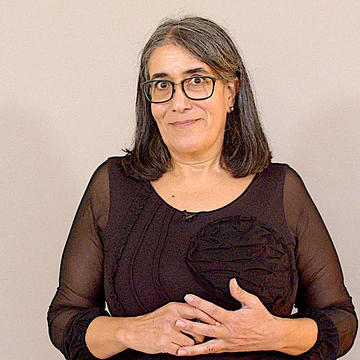
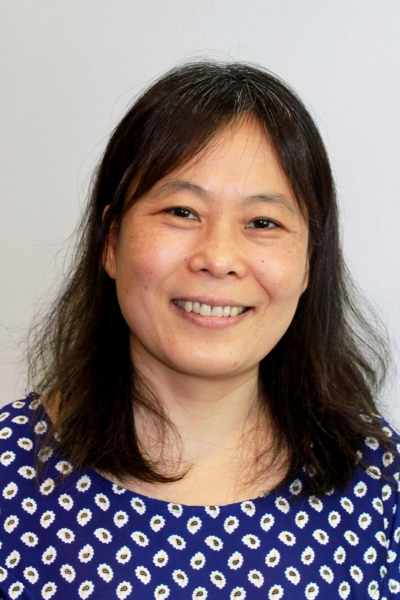
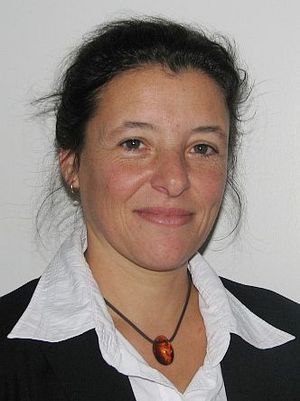
Esko Kauppinen is a Professor in the Department of Applied Physics at Aalto University (T304 division). He leads the NanoMaterials research group and maintains a full researcher profile at Aalto University Research Portal . His work spans nanotechnology, materials science, and applied physics, with recent publications focusing on carbon nanotube applications and advanced energy materials. Key research areas include: Nanomaterials Engineering Carbon Nanotubes and Hybrids Perovskite Solar Cells 2D Materials and Heterostructures Environmental and Gas Sensing Technologies Recent publications (2024-2025) demonstrate expertise in nanomaterials for energy conversion, optoelectronics, and industrial sensing. Notable journals include Advanced Materials , ACS Catalysis , and Nanoscale . Scientific honors include: UNESCO Nanoscience Award (2018) Lee Hsun Research Award (2010) Nanotech Finland Award (2010) Walter A. Mueller Memorial Award (2001) Membership in Finnish Academy of Science and Letters His research group develops innovative nanomaterial solutions for photovoltaics, energy storage, and environmental monitoring systems.
Maria Isabel Simões Catarino is an Assistant Professor in the Department of Physics at the Faculty of Science and Technology, Universidade NOVA de Lisboa (FCT/UNL). She maintains active research affiliations with LIBPhys-UNL and previously worked with CeFITec – Centro de Física e Investigação Tecnológica. Her academic credentials include: Licentiate in Physics Engineering from FCT/UNL (1991) PhD in Physical Engineering from FCT/UNL (2002) with dissertation on "Cryogenics: Specific Heat and Pulsed Tubes" Dr. Catarino's research program spans cryogenic engineering, thermal management, and energy integration systems with significant contributions to superconducting applications. Her work bridges theoretical cryogenic principles with practical engineering solutions across multiple domains: Development of fault current limiters using high-temperature superconductors Thermodynamic optimization of LNG regasification processes Energy recovery systems using cryogenic exergy Eco-innovation in industrial cleaning processes Renewable energy integration and grid stability solutions Recent publications (2022-2025) reveal an expanding research scope that maintains her core expertise in cryogenics while addressing contemporary energy challenges. Her work increasingly focuses on practical implementations of superconducting technologies in power systems and sustainable energy solutions, with growing emphasis on renewable integration and environmental applications. Research metrics indicate substantial scholarly impact with 392 citations and an h-index of 11 according to Scopus data. Dr. Catarino leads significant research initiatives including: "Transforming Losses Calculation in High Temperature Superconducting Power Systems" (tLOSS, PTDC/EEI-EEE/32508/2017, 2018-2022) COST Action CA19108 "High-temperature SuperConductivity for Accelerating the Energy Transition" (Hi-SCALE, 2020-2024) Her experimental work centers on cryogenic measurement techniques, superconducting device characterization, and thermal management systems, with applications ranging from power grid protection to sustainable industrial processes and renewable energy integration.
Matthew Friday is a Professor of Critical Studies and Graduate Coordinator in the Art Department at State University of New York at New Paltz . His work bridges contemporary art, ecology, and critical theory through research-based projects exploring urban ecology, watershed remediation, and interspecies relations.
Frank Biermann is a Professor of Global Sustainability Governance at Utrecht University’s Copernicus Institute of Sustainable Development, Faculty of Geosciences. He is a leading scholar in global institutions for sustainability, with over 28,000 citations and an H-index of 81. Expertise in Earth System Governance, Climate Policy, International Relations, Anthropocene Founder of the Earth System Governance Project, a transdisciplinary network of over 500 scholars Current €2.5M research program on SDG steering effects via ERC Advanced Grant His 200+ peer-reviewed articles and 20 books, including The Political Impact of the Sustainable Development Goals (2022) and Anthropocene Encounters (2019), focus on institutional complexity, global justice, and fragmented governance architectures. Recent works examine solar geoengineering ethics, trade union sustainability integration, and decolonizing academic publishing. Scientific awards include the 2024 Volvo Environment Prize, 2021 Distinguished Scholar Award (ISA), and 2019 Ecological Society of America’s Innovations in Sustainability Science Award. He chairs the Earth System Governance Foundation and serves on multiple advisory committees, including the Stockholm Environment Institute’s science board.
Karin Fröhlich is a Project Employee in the Department of Computer Science at Aalto University , College of Engineering. She specializes in citizen-centric technology solutions for marginalized communities and e-governance systems in developing countries. Research Focus: ICT for Development (ICT4D) Smart City Implementation in African and Baltic contexts Community Empowerment through Digital Tools Public Value Management in e-Governance Energy Access via Solar-PV Systems Recent Publications analyze mobile governance adoption factors, citizen-centric e-government models, and cross-country comparisons of smart city initiatives in Estonia and Namibia.
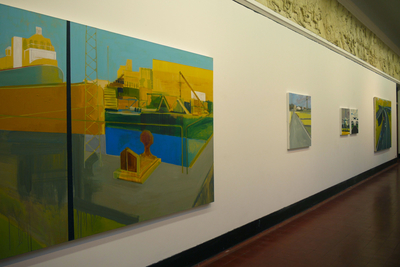
Marianne Greated is a faculty researcher at The Glasgow School of Art, School of Fine Art, Department of Painting & Printmaking. Her academic practice bridges landscape painting, environmental art, and innovative pedagogical frameworks with a focus on compassionate assessment practices. She holds a PhD evidenced by her 2014 exhibition presenting doctoral research outputs. PhD in Fine Art (completed prior to 2014) Her research centers on landscape as both subject and pedagogical tool, examining industrial environments, Scottish art history, and interdisciplinary connections between visual art and sound studies. Recent work emphasizes compassionate feedback systems to reduce inequity in art education, developed through the QAA Collaborative Enhancement Project. Her scholarship reveals consistent engagement with environmental sustainability, historical analysis of women artists, and sensory perception in artistic practice. Greated's publication trajectory shows increasing focus on educational frameworks since 2020, while maintaining strong connections to landscape painting and Scottish art history. Her collaborative projects with institutions like UAL demonstrate commitment to systemic change in art education assessment practices. Through initiatives like the Practising Landscape seminar series and international symposia, Greated fosters collaborative knowledge exchange across academic and artistic communities. Her work with the QAA project establishes frameworks for compassionate assessment that prioritize student belonging while maintaining academic rigor. Active in both studio practice and academic research, Greated maintains dual engagement with creative production (exhibited internationally across China, India, Belarus, and UK venues) and scholarly contributions to art education discourse. Her current projects indicate continued development of compassionate pedagogy models and deeper exploration of landscape representation.
Alex Minetto is a Fixed-Term Tenure-Track Assistant Professor at the Department of Electronics and Telecommunications (DET), Politecnico di Torino. He teaches courses such as Satellite Navigation Signal Exploitation and Numerical Estimation Methods across various Engineering programs. Research interests include Bayesian inference, GNSS signal processing, and deep-space navigation. Key research lines involve designing Bayesian filters, lunar orbiter GNSS applications, and RFI threat monitoring. His 2025-2024 publications focus on GNSS for cislunar navigation, solar storm impacts, and inter-orbiter synchronization. Supervised PhD students include Lorenzo Sciacca, Luca Morichi, and Anais Delepaut. He contributes to projects like INSPIRE and collaborates with NavSAS research group.
Professor Hong Wang (University of North Texas) is a synthetic organic chemist focusing on π-extended porphyrins and asymmetric catalysis. She holds a PhD in Organic Chemistry from UC Davis and previously served at Miami University and Beijing Science and Technology University. Education: PhD (UC Davis, 2003), M.S. and B.S. (Shandong University, China) Positions: Lecturer (1993-1997), Postdoctoral Fellow (Stanford, 2003-2005; Scripps, 2005-2007), Assistant/Associate Professor (Miami University, 2007-2016), Associate Professor with Tenure (UNT, 2016-2019), Professor (UNT, 2019-present) Research Areas: Synthesis of π-extended porphyrins for photophysical and optoelectronic applications Asymmetric catalysis via enamine-metal Lewis acid cooperative systems 1D/2D conjugated organic materials for solar cells and sensors Scientific Awards: NSF Career Award (2011-2016) Royal Society of Chemistry Emerging Investigator (2011) Best Teacher Scholar (UNT, 2020) Best Service Award (UNT College of Science, 2019) Recent Publications: Highlighted work includes 2024 studies on aromatic heterocycle-fused porphyrins and 2023 investigations into platinum porphyrin-fullerene charge separation systems. Lab Members: Current students include Ting Han (β-functionalized benzoporphyrins), Jacob Arvidson (acene-fused porphyrins), and emerging researchers like Saad Shaikh and Spenser Washburn. Former students like Jacqkis Davis (Laticrete) and Austen Moss (UNT Lecturer) transitioned to industry and academia. Grants & Collaborations: Recipient of DOE-BES awards for porphyrin-based solar-cell projects and NSF support for cooperative catalysis research.
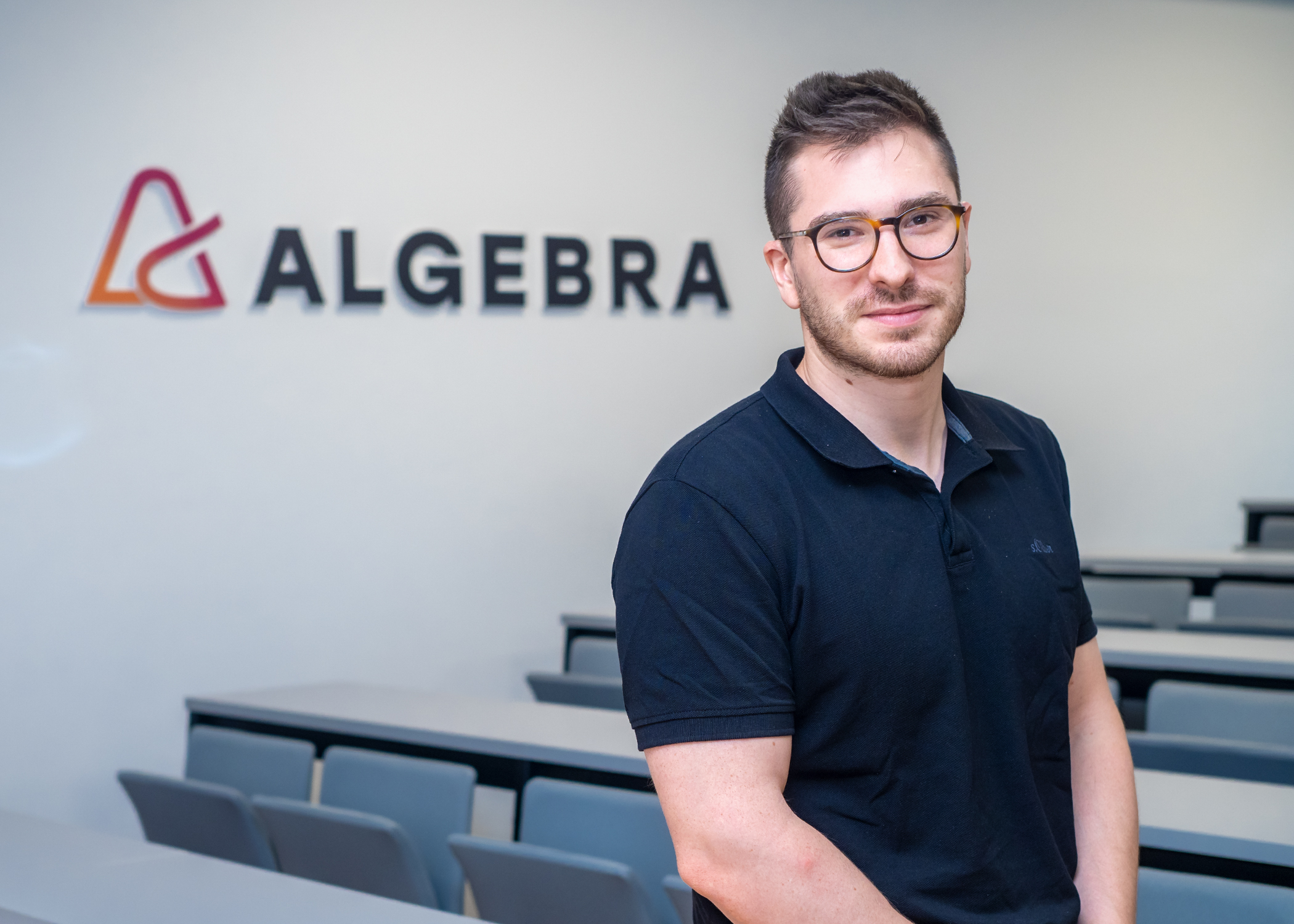
Mateo Sokač, PhD, serves as Assistant Professor at Algebra University, bringing expertise from his Health Science doctorate at Aarhus University Hospital and multidisciplinary background spanning bioinformatics, genomics, and information technology. His academic foundation includes a Master's in Bioinformatics and Bachelor's in Information Technology from RIT Croatia, complemented by internationally recognized certifications in AI, machine learning, and genomic engineering. His educational qualifications: PhD in Health Science, Aarhus University Hospital, Aarhus, Denmark Master's in Bioinformatics, Aarhus University Hospital, Aarhus, Denmark Bachelor's in Information Technology, RIT Croatia, Zagreb Dr. Sokač's research pioneers the integration of cancer evolution analysis with personalized medicine development, employing cutting-edge computational approaches to transform public health standards. His work uniquely bridges genomic engineering, artificial intelligence, and clinical oncology to address complex challenges in tumor heterogeneity and therapeutic resistance. This multidisciplinary focus has generated significant publications in high-impact journals, particularly in cancer vaccine development and genomic biomarker discovery. Analysis of his 2023-2025 publications reveals dominant themes in computational oncology (73% of works), with strong emphasis on AI-driven cancer vaccine development, multi-omics integration for personalized therapy, and environmental health applications. His research consistently employs advanced techniques like graph neural networks, non-negative matrix factorization, and foundation models across diverse domains from marine microbiology to lung adenocarcinoma grading. Professional development highlights: Dozen+ international certifications in AI, machine learning, and genomic engineering Specialized training in DNA sequencing and genomic engineering Certifications acquired from domestic and foreign institutions While specific advising details remain undisclosed, his publication record indicates extensive collaboration on large-scale cancer genomics projects including TRACERx and international consortia. His work on ctDNA analysis and immune cell profiling suggests involvement in major grants related to cancer evolution and immunotherapy response prediction. Current research trajectories point toward developing integrated platforms for real-time cancer monitoring and personalized treatment adaptation. Dr. Sokač leads innovative projects at the intersection of computational biology and clinical oncology, notably developing frameworks like ANORAK for histopathological analysis and BRAINS for neuroimaging applications. His environmental monitoring initiatives using solar gliders and drone technology demonstrate commitment to cross-domain applications of data science, contributing to Algebra University's research ecosystem through interdisciplinary collaboration.
Prof. Dr. Petra Schweizer-Ries is a Professor at Bochum University of Applied Sciences since 2011, focusing on sustainability from a social science perspective. She previously held academic positions at Saarland University, Otto-von-Guericke University Magdeburg, and the Fraunhofer Institute for Solar Energy Systems. Habilitation : Environmental Psychology, Otto-von-Guericke University Magdeburg (2009) Doctorate : Psychology (Dr. phil.), Ruprecht Karls University of Heidelberg (1997) Studies : Psychology Diploma, Albert Ludwigs University of Freiburg (1986–1992) Her research bridges transformative sustainability science and environmental psychology , emphasizing participatory evaluation methods, human-technology interactions, and sustainable energy communities. She explores energy transitions in mountain regions, solar power adoption, and behavioral changes related to shared resources. Recent publications highlight living lab approaches , energy-saving experiments , and sustainable university development . Her work spans urban mobility patterns , public acceptance of biomass plants , and community energy projects , reflecting interdisciplinary engagement with environmental challenges. International Association for People-Environment Studies (IAPS) German Society for Psychology (DGPs) – Sections for Environmental Psychology and Organizational Psychology German Solar Energy Society (DGS) International Solar Energy Society (ISES) Prof. Schweizer-Ries leads the Environmental Psychology Research Group at the Center for Social World Research and Method Development. She has contributed to energy efficiency competitions and participated in global dialogues on sustainability sciences.
Andrew Youdin is a Professor in the Department of Astronomy and an Astronomer at Steward Observatory, University of Arizona. He earned his Ph.D. from the University of California, Berkeley, in 2003. His research focuses on Theoretical Astrophysics, Planet Formation, Exoplanets (statistics, dynamics, and atmospheres), Accretion Disks, Kuiper Belt objects, and Hydrodynamics and Turbulence. He has made significant contributions to understanding planetesimal formation via mechanisms like the streaming instability , which has transformed modern theories of planetary system formation. Theoretical Astrophysics Planet Formation Exoplanets Accretion Disks Kuiper Belt objects Hydrodynamics and Turbulence His publications span topics such as metallicity-driven planetesimal formation, gravitational instability in giant planet formation, exoplanet census methods, and disk dynamics. He employs analytic derivations, statistical analysis, and numerical simulations in his work. Contact: youdin@arizona.edu | Office: N418, 933 N. Cherry Ave., Tucson, AZ 85721-0065 | Phone: (520) 626-4731.
Zhu Weihong is a Professor and Doctoral Supervisor at the School of Chemistry and Molecular Engineering , East China University of Science and Technology. He was elected as an Academician of the Chinese Academy of Sciences (CAS) in 2023 and currently serves as Vice President of ECUST and Director of the Institute of Fine Chemicals . His research focuses on photosensitive chemical products engineering with functional chromophores, including fluorescent sensors, photochromism, and hole-transporting materials for solar cells. Bachelor (1992) - Nanjing Normal University Master (1995) - Nankai University PhD (1999) - ECUST Postdoctoral (2001-2003) - National Institute of Advanced Industrial Science and Technology (AIST), Japan His recent work explores stability enhancement mechanisms for organic dyes, enantiospecific transformation in metallacages, and innovative preparation methods for near-infrared fluorescent probes. His 380+ SCI papers span journals like Science, Nature, JACS, and Angew. Chem., with an H-index of 89 and 25,000+ citations . Scientific Awards : National Natural Science Award (Second Prize, 2019, First Finisher) Shanghai Science and Technology Progress Award (First Prize, 2020) Shanghai Natural Science Award (First Prize, 2017) NSFC Distinguished Young Scholar (2013) Cheung Kong Distinguished Professor (2015) Thousand Talents Program (2016) He holds 45 Chinese invention patents (38 authorized) and leads projects funded by National Key R&D Programs and the National Natural Science Foundation . His team develops Flash Nanoprecipitation Process (FNP) for nanoscale photosensitive dye preparation and explores chiral 3D recognition in anti-counterfeiting applications.
Brent Wolfe, Professor at the Faculty of Science , Wilfrid Laurier University , specializes in northern hydroecology with a focus on lake hydrology , isotope tracers , and climate change impacts in boreal-tundra regions. He leads research collaborations with Indigenous communities, governments, and industries to address water resource challenges in remote Canadian landscapes. PhD in Earth Sciences, University of Waterloo (1997) MSc in Geological Sciences, University of Manitoba (1993) His work integrates paleolimnology and contemporary hydrology to track long-term ( centuries to millennia ) hydroecological changes using lake sediment cores and water isotope tracers . Recent projects examine thermokarst lake dynamics, Arctic climate sensitivity, and industrial contamination in oil sands regions. Key publication themes include climate-driven hydrological shifts , permafrost thaw impacts , and metal contamination monitoring . His research has produced over 20+ peer-reviewed articles in the past decade, with a focus on Peace-Athabasca Delta , Old Crow Flats , and Hudson Bay Lowlands . Natural Sciences and Engineering Research Council Northern Research Chair Program in Northern Hydroecology (2002-2012) He partners with northern First Nations , government agencies , and industry stakeholders to develop water stewardship frameworks. His lab employs advanced analytical techniques for paleoenvironmental reconstructions and contaminant tracking.
Christopher Joseph Carmona del Jesus serves as a University Professor in the Department of Computer Science at the University of Jaén, Spain, affiliated with the Andalusian Interuniversity Institute for Data Science and Computational Intelligence and leading the Intelligent Systems and Data Mining research group. His work bridges theoretical computational intelligence with practical applications across diverse domains. His academic credentials include: PhD in Computer Science, University of Jaén (2011) Master's in Computer Science, University of Jaén (2007) Dr. Carmona specializes in Data Science, Big Data, and Subgroup Discovery using evolutionary fuzzy systems for descriptive rule extraction. His research particularly emphasizes Supervised Descriptive Rule Discovery and Emerging Patterns in dynamic data streaming environments, developing algorithms that balance interpretability with predictive power for real-world datasets. Recent work extends these methods to healthcare diagnostics and renewable energy forecasting. Analysis of his 15 most recent publications (2022-2025) reveals a strong focus on data streaming algorithms (60% of works), explainable AI systems (30%), and cross-domain applications in healthcare (20%) and cybersecurity (15%). Key technical contributions include evolutionary fuzzy frameworks for multiclustering, federated descriptive rule extraction, and spiking neural networks for energy-efficient computing. No scientific awards are documented in the provided materials. While his research leadership is evident through the Intelligent Systems and Data Mining group, specific details regarding student supervision or grant funding are not included in the available information. His methodological innovations in subgroup discovery and data streaming continue to drive practical implementations through tools like SDRDPy and the Clustering R library. He actively contributes to the Andalusian Interuniversity Institute for Data Science and Computational Intelligence, fostering collaborations that integrate computational intelligence with domain-specific challenges in energy, healthcare, and education.
Dr. Firdaus Muhammad Sukki is an Associate Professor at Edinburgh Napier University's School of Computing Engineering and the Built Environment, specializing in renewable energy systems, solar cell technology, and smart grid development. With a strong research portfolio spanning photovoltaics, wind energy, and sustainable development applications, he contributes significantly to the university's Transport Research Innovation Centre. His research interests focus on renewable energy technologies , particularly dye-sensitized solar cells using natural materials like fungal dyes, smart grid integration , and wind turbine structural modeling . His work addresses critical sustainability challenges through innovative approaches to energy harvesting, storage, and distribution systems. His research group explores the intersection of bio-based materials and energy conversion technologies, with particular emphasis on sustainable solutions for developing regions. Dr. Muhammad Sukki's recent publications demonstrate a clear trend toward natural and sustainable materials for energy applications , with significant work on mushroom-based dyes for solar cells and agrivoltaic systems. His research spans both theoretical modeling and practical implementation, with projects addressing energy solutions for Sub-Saharan Africa and Scotland. The breadth of his work connects fundamental materials science with real-world energy challenges. As a research supervisor, he serves as second supervisor for PhD candidates including Magnus Bichan working on structural modeling of electrical generators for offshore renewable energy and Abubakar Suleiman researching solar energy systems in Nigeria. His current projects include "Accelerating Transformative Technology for Sustainable Clean Energy Development" funded by the Department for Science, Innovation & Technology (£359,983) and "Fungal Innovations for Synergy of Zero Hunger and Affordable Energy" funded by the Royal Society of Edinburgh (£65,000). His work connects with the Transport Research Innovation Centre and focuses on sustainable energy solutions that address climate change challenges while promoting economic development in both developed and developing contexts. His interdisciplinary approach bridges engineering, environmental science, and sustainable development goals.