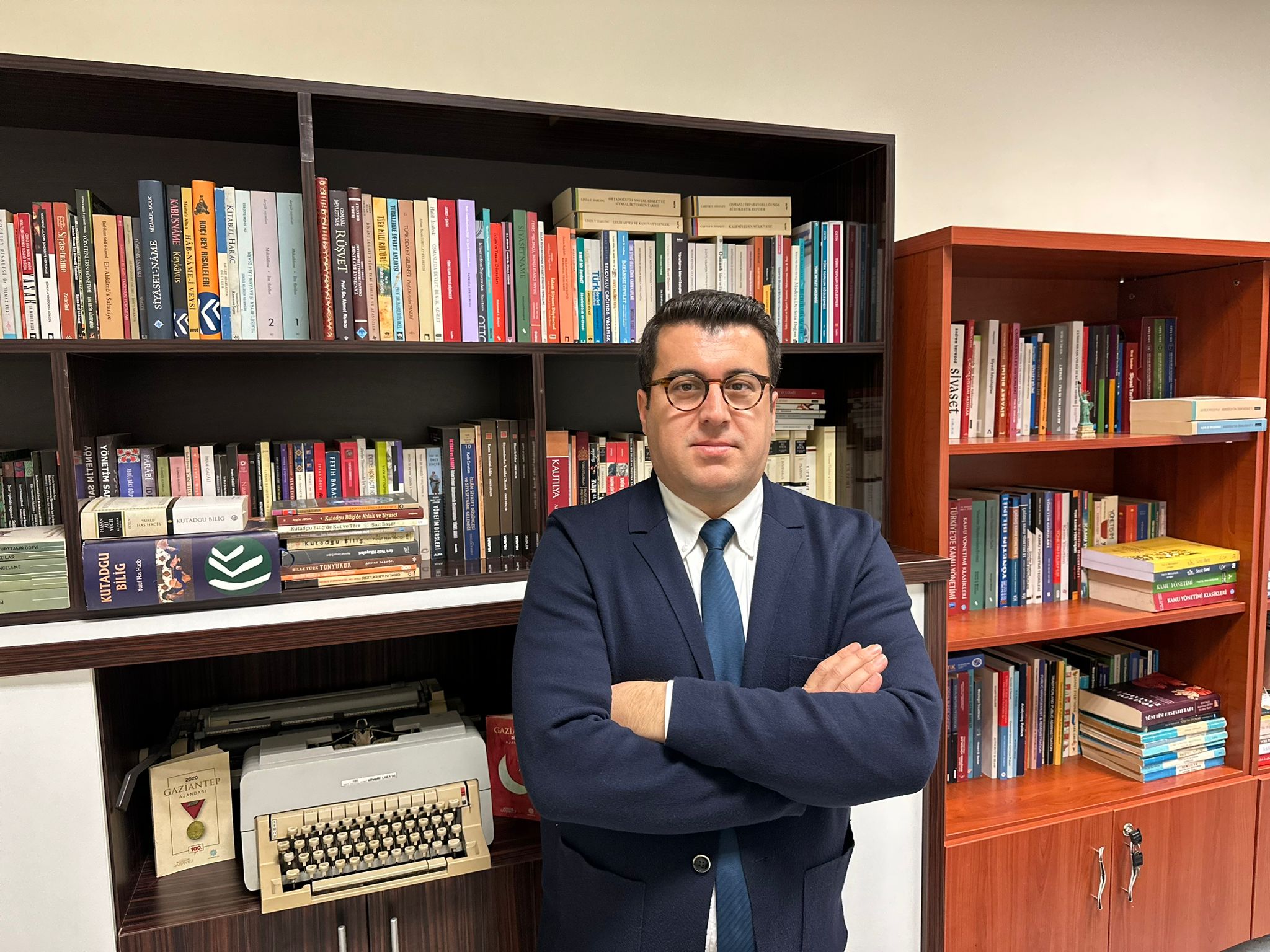
Namık Kemal Öztürk is a Professor at Muğla Sıtkı Koçman University's Faculty of Economics and Administrative Sciences, Department of Public Administration. With a career spanning over three decades, he has established himself as a prominent scholar in Turkish public administration and political science. His academic journey began with a Bachelor's degree from Istanbul University's Faculty of Political Sciences, followed by Master's and Doctoral degrees from Dokuz Eylül University's Institute of Social Sciences in Public Administration. Professor Öztürk's research interests encompass Public Administration, Bureaucracy Studies, Ethics in Public Administration, Turkish Government System, Presidential System, and Local Governance. His scholarly work demonstrates a consistent focus on the intersection of political theory and public administration practice, with particular attention to Turkish institutional contexts. His recent publications reflect evolving interests in digital governance, blockchain technology applications in public service, and contemporary challenges in the presidential system. Analysis of his publication record shows a clear trajectory from traditional public administration topics toward more contemporary governance challenges. His early work focused on ethical values in public administration decisions and bureaucratic reforms, while his recent scholarship addresses digital transformation, presidential systems, and multi-stakeholder governance. This evolution reflects both personal academic development and broader shifts in the field of public administration globally. Among his notable achievements are multiple awards in Total Quality Management article competitions, including recognition from Kalder and TÜSİAD. His scholarly impact is evident through numerous citations of his work, particularly in areas related to public sector performance measurement, bureaucratic ethics, and Turkish constitutional governance. Professor Öztürk has supervised numerous graduate students across diverse topics in public administration, from municipal strategic planning to supply chain management in the public sector. His teaching portfolio includes courses in State Theory, Management Theory, Constitutional Law, and Bureaucracy, reflecting his broad expertise across political science and public administration disciplines.