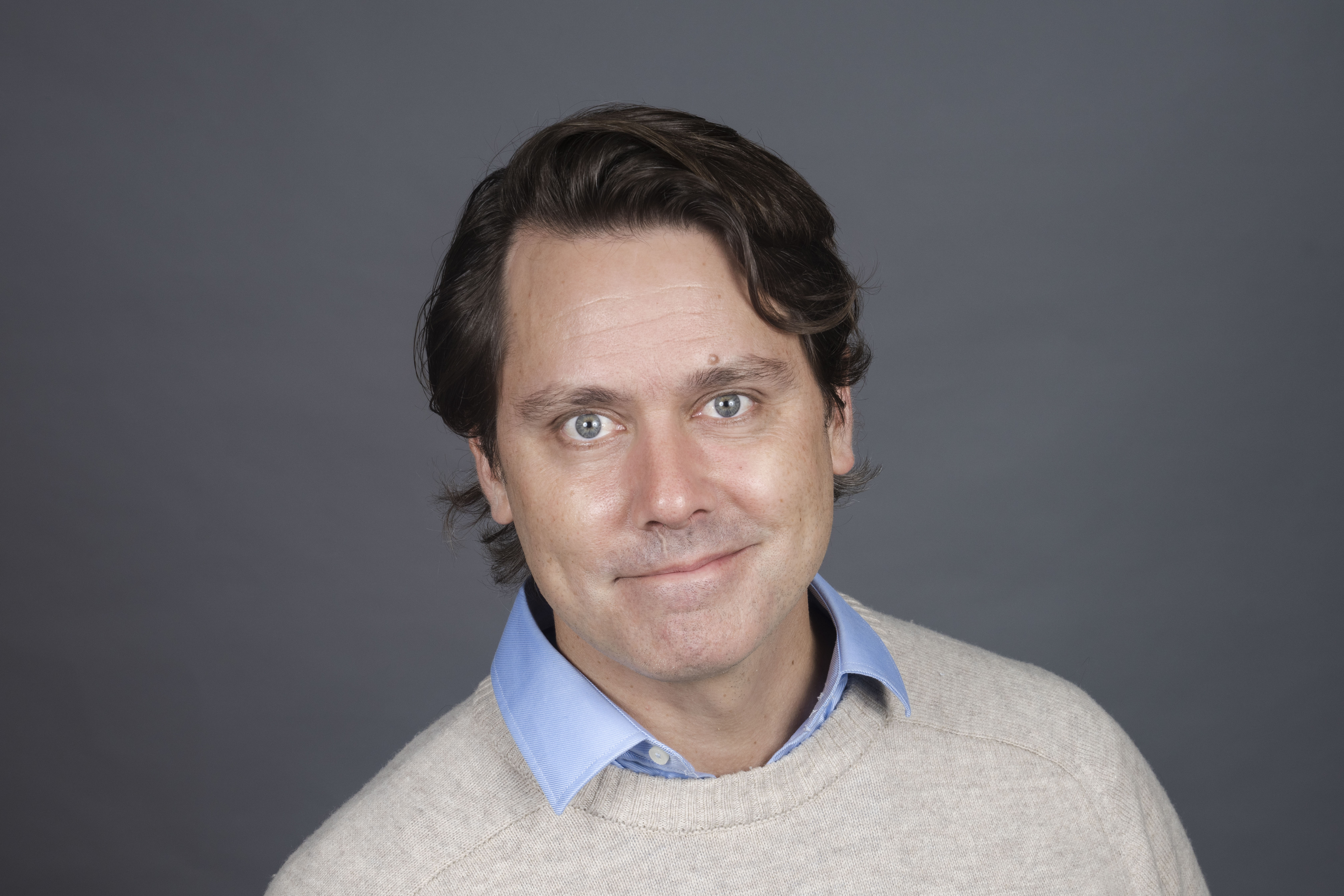
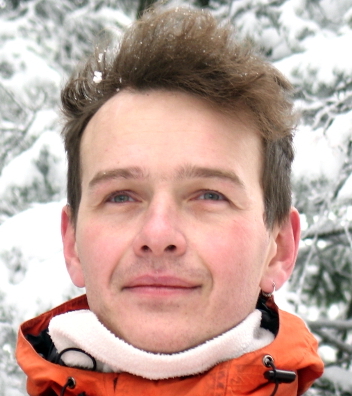
Maj Schian Nielsen is a Senior Research Librarian at the University Library of the University of Agder. Her work focuses on multilingualism, crosslinguistic awareness, and German language pedagogy. She is affiliated with the research groups 'Media and Communication Studies' and 'Multilingualism in Society and Education (MUSE).' University of Agder Research Groups: Media and Communication Studies, MUSE Her research explores how multilingual awareness can enhance grammar instruction in German third-language (L3) teacher education programs across Denmark and Norway. Recent publications analyze curriculum structures, educational materials, and the integration of generative AI tools like ChatGPT in multilingual education contexts. Scientific output trends reveal a focus on: Cross-linguistic pedagogy L3 German acquisition Grammar teaching methodologies AI applications in language learning Teacher training for multilingual classrooms Systemic Functional Linguistics (SFL) frameworks She has not been publicly recognized with scientific awards listed in the available data.
Habib Ullah is an Associate Professor in Data Science at the Norwegian University of Life Sciences (NMBU), Norway, where he conducts research at the intersection of computer vision and machine learning. He is affiliated with the Institute of Data Science under the Faculty of Science and Technology. He has previously held academic positions at COMSATS University Islamabad, Pakistan, and the University of Ha'il, Saudi Arabia, and served as a postdoctoral researcher at The Arctic University of Norway. Educational Background: PhD in Information and Communication Technology (Computer Vision), University of Trento, Italy (2011–2015) MSc in Electronics and Computer Engineering, Hanyang University, South Korea (2007–2009) BSc in Computer Systems Engineering, NWFP University of Engineering and Technology, Pakistan (2002–2006) Habib Ullah's research is primarily focused on computer vision and machine learning, with applications in aquaculture, agriculture, and human behavior analysis. He investigates underwater fish feeding sounds using audio classification, develops zero-shot learning models for recognizing unseen classes, and applies deep learning to detect stress in salmon via skin dot patterns. He also explores AI-driven controlled environment agriculture, leveraging sensors and automation for optimal crop growth. His work emphasizes practical AI solutions for real-world challenges in environmental and biological domains. The recent publications highlight a strong trend in leveraging deep learning for zero-shot and semi-supervised learning, particularly in computer vision tasks such as sea ice classification, crowd anomaly detection, and agricultural monitoring. His research spans remote sensing, biomedical signal processing, and human activity recognition, demonstrating interdisciplinary versatility. The keywords reflect a focus on robust feature representation, knowledge transfer, and model generalization. Scientific Awards and Funding: Industrial PhD grant 'Advancing Controlled Environment Agriculture AI' from The Research Council of Norway (Project number 354125, 2 million NOK, 2024) Team member (Coordinator-Participant) in the Battery Cell Assembly Twin (BatCAT) project funded by Horizon Europe (7 mEuro, 2023–2027) Development of an AI-Based Image Analysis System for Monitoring Plant Status (Funding: 1.8 mNOK, starting 2025) Habib Ullah actively supervises PhD projects and contributes to academic service through editorial and organizational roles. He has served as an Associate Editor for IEEE Access, Guest Editor for MDPI Remote Sensing, and Editor of the Springer book Machine Learning Techniques and Sensor Applications for Human Emotion, Activity Recognition, and Support (ML-SHEARS) . He has also been a Track Chair and Program Committee Member for several international conferences, reflecting his leadership in the academic community. His research is supported by significant grants and collaborative projects, indicating strong institutional and international engagement. He is involved in multiple research teams and projects, including the BatCAT project on battery manufacturing and AI applications in controlled environment agriculture with RIFT LABS AS. His lab work integrates deep learning, sensor fusion, and data analytics for environmental and biological monitoring systems.
Jon Atle Gulla is a Professor at NTNU and Director of the Norwegian Research Centre for AI Innovation (NorwAI). He holds academic leadership roles, including former Head of the Department of Computer Science and Informatics at NTNU. His expertise spans Semantics, Language Technology, Recommender Systems, and AI-driven innovation. He has nearly 150 international publications and advised over 100 students across MSc, PhD, and postdoctoral levels. Education: MSc in Computer Science (1988), PhD in Computer Science (1993) from Norwegian Institute of Technology (NTH) MSc in Linguistics (1995), University of Trondheim MSc in Management (Sloan fellowship, 2003), London Business School Research interests focus on Semantics and Language Technology applied to Recommender Systems, Information Retrieval, and Text Analysis. He explores AI-based innovations in digitalization and entrepreneurship, advising industry on AI adoption and commercialization. Notable projects include Big Data collaborations with DNB, RecTech for news recommendation, and Trondheim Analytica analyzing political texts/social media. Publications emphasize AI applications in news recommendation, political text analysis, and Scandinavian language models. His work addresses ethical AI, copyright implications, and cross-lingual NLP challenges. Awards: Member of the Royal Norwegian Society of Arts and Sciences. Advising/grants: Supervised 30 PhD students and 70 MSc students. Involved in startups like Fast Search & Transfer (acquired by Microsoft) and Mito.ai/Strise.ai. Active in reviewing for journals like Data & Knowledge Engineering and conferences like ACL. Labs/teams: Leads NorwAI, co-founder of INRA and NOBIDS workshops. Collaborates with industry and academia on AI-driven solutions.
Swati Aggarwal is a Professor in Artificial Intelligence at the Faculty of Logistics, Molde University College (HiMolde). Her research focuses on AI applications in healthcare, ethics, cognitive development, and neural networks. She holds a PhD in Neutrosophic Neural Networks, a Master's in Information Technology, and a Bachelor's in Computer Science and Engineering. Previously, she was a Marie Curie Postdoc Fellow at NTNU, working on AI models for cognitive assessment in infants (AIM_COACH project). Research Interests - AI in Health/Medicine - Ethics in AI and Societal Impact - EEG/BCI for Cognitive Assessment - Machine Learning and Deep Learning Publications Her recent work spans AI ethics, BCI applications, adversarial attacks, and healthcare diagnostics. Notable contributions include EEG-based infant perceptual monitoring (2025) and malaria detection via EfficientNet (2023). She also explores cross-lingual adversarial robustness and blockchain in hospitality systems. Labs/Teams - ABC-AI: Applied, Basic, and Conscientious AI Group - Virtual Technologies and Learning Research Group
Erik Velldal is a Professor in the Language Technology Group (LTG) at the Section for Machine Learning , Department of Informatics, University of Oslo . With over 25 years of experience in machine learning and natural language processing (NLP), he leads the SANT project focused on sentiment analysis and contributes to major research initiatives including MediaFutures , NorwAI , and Integreat (Norwegian Center for AI Research). His work bridges linguistic theory and computational methods, emphasizing semantic modeling and uncertainty detection. Research interests include sentiment analysis , language modeling , event extraction , and machine learning applications to NLP. Recent publications address cross-domain sentiment classification , generative event analysis , and multilingual model adaptation . He co-developed the Norwegian Review Corpus (NoReC) and Norwegian Anaphora Resolution Corpus (NARC) , foundational resources for Norwegian NLP. His projects often involve collaboration with international institutions, reflected in publications at venues like ACL, COLING, and EMNLP. Current efforts focus on entity-level sentiment analysis , diagnostic datasets for Norwegian , and evaluating compositional generalization in language models. No public record of scientific awards or part-time appointments exists.
Nadia Shardt is an Associate Professor in the Department of Chemical Engineering at the Norwegian University of Science and Technology (NTNU). Her research focuses on interfacial thermodynamics, particularly in systems with nanoscale curvature, with applications spanning atmospheric science, biomedical cryopreservation, and industrial process optimization. She contributes to teaching courses such as TKP4580 - Chemical Engineering Specialization Project and KP3100 - Chemical Engineering . PhD in Chemical Engineering (University of Alberta, 2019) BSc in Chemical Engineering (University of Alberta, 2015) Postdoctoral researcher at ETH Zurich (2020-2022) Her work addresses fundamental challenges in phase behavior under curvature constraints, combining microfluidic experimentation , Gibbsian thermodynamic modeling , and machine learning techniques to study systems like CO 2 storage media, cloud microphysics, and food emulsions. Recent publications emphasize surface tension modeling for complex multi-component systems and cryoprotectant loading efficiency. Scientific awards include the ETH Postdoctoral Fellowship Natural Sciences and Engineering Research Council of Canada (NSERC) Postdoctoral Fellowship Outstanding Academic Fellows Programme 2024-2028
Anders Åkerman is a Professor in the Department of Economics and Finance at the UiS School of Business and Law, University of Stavanger. He is an active researcher in applied economics with a focus on labor, trade, technology, and environmental policy. His research interests span applied microeconomics , international trade , labor economics , and environmental economics . He investigates how technological change, market structure, and global shocks affect firms, workers, and policy outcomes. His work often combines empirical methods with policy relevance. The recent articles reflect a strong trend in analyzing digital transformation (e.g., broadband and trade), environmental impacts of trade and production , and economic resilience during crises such as the pandemic. His publications appear in leading journals like the Quarterly Journal of Economics and American Economic Journal: Applied Economics . He has contributed to public discourse through op-eds in Dagens Nyheter and Svenska Dagbladet , and has been involved in policy commissions like Sweden's Coronakommissionen. He regularly presents research at seminars and international conferences, including the Nordic International Trade Seminar and Stockholm Institute of Transition Economics. Anders Åkerman has advised or collaborated with several researchers and policy experts, including Torsten Persson, Magne Mogstad, and Karolina Ekholm. While formal student advisees are not listed, his collaborative work suggests active mentorship and team leadership. He is affiliated with research networks and institutes such as IFN (Research Institute of Industrial Economics) and participates in interdisciplinary teams focused on economic policy and transition. His upcoming work continues to explore the intersection of technology, environment, and labor markets.
Professor Anne Burmeister is a full Professor of Organizational Behavior at the University of Cologne, Faculty of Management, Economics, and Social Sciences. She specializes in knowledge transfer, age diversity, inclusion, and interpersonal dynamics in workplaces. Her research bridges organizational psychology with practical applications in aging and diverse teams. Education: PhD in Psychology (summa cum laude), Leuphana University of Lueneburg (2016) MSc in Management and Organizational Analysis, Warwick Business School (2011) BSc in Business Psychology, Leuphana University of Lueneburg (2010) Research Interests: Her work focuses on work and aging, age diversity, inclusion, knowledge transfer, and workplace friendships. She investigates how social interactions influence productivity and organizational health, particularly in multigenerational environments. Recent Trends: Recent publications analyze DEI initiative responses, knowledge sharing dynamics, and interventions for aging workforces. Themes include cognitive load theory, intergenerational collaboration, and ambivalent employee reactions to diversity policies. Scientific Recognition: Awarded 40 leading HR minds 2025 by HR magazine Contact: Email: burmeister@wiso.uni-koeln.de Phone: +49 221-470-5887
Andrei Kutuzov is an Associate Professor in the Language Technology Group (LTG) within the Department of Informatics at the University of Oslo. He serves as the Norwegian on-site manager of the High-Performance Language Technology (HPLT) project and has made significant contributions to computational linguistics and natural language processing. His research primarily focuses on computational linguistics and natural language processing, with specialized expertise in semantic change detection, diachronically aware language models, distributional semantics, and large language models. Kutuzov has been instrumental in developing Norwegian language resources including NorBERT, NorELMo models, and the very large-scale NORA.LLM generative models. He created WebVectors, a web service for exploring neural distribution models for Norwegian and English texts. Analysis of his recent publications reveals a strong focus on semantic change modeling, multilingual dataset development, and Norwegian language technology. His work spans from theoretical linguistic analysis to practical applications in language modeling, with significant emphasis on low-resource and Nordic languages. Kutuzov's research demonstrates a consistent trajectory toward improving language models' understanding of semantic evolution and developing robust evaluation frameworks for Norwegian language processing. Norwegian Artificial Intelligence Research Consortium (NORA) award as Distinguished Early Career Researcher (2022) Kutuzov teaches several advanced courses including IN5550 - Neural Methods in Natural Language Processing (2019-2025) and IN3050 - Introduction to Artificial Intelligence and Machine Learning (2024-2025). He has received research funding through the HPLT project which focuses on developing high-performance language technologies. His laboratory work centers around the Language Technology Group at UiO, where he collaborates on developing Norwegian language resources and models, with particular emphasis on diachronic semantic analysis and multilingual capabilities.
Alf Steinar Sætre is a Professor of Innovation and Strategy at the Norwegian University of Science and Technology (NTNU), Department of Industrial Economics and Technology Management. He leads the Norwegian Research School in Innovation's Program (NORSi-PIMS), collaborating with institutions like Harvard Business School and INSEAD. His research focuses on innovation management, ambiguity in innovation processes, organizational adaptation, and sustainable business models. Education: MSc in Economics and Business Administration from the Norwegian School of Economics, Bergen PhD in Organizational Communication from the University of Texas at Austin (Fulbright Scholar) Research Interests: Management of ambiguity in innovation Innovation project termination Organizational learning and adaptation Sustainability integration in business models His work bridges theory and practice, emphasizing strategic problem formulation and psychological ownership in innovation. Teaching & Awards: Recipient of Indøk's Lecturer of the Year (2018) Teaches Innovation Management (TIØ4180) and Engaged Scholarship (ØK8101) Outreach: Leads the PIMS Executive Forum, connecting executives with innovation scholars. Authored books like Communication in Organizations and contributed to global research networks.
Professor Mohan Lal Kolhe is a distinguished academic at the University of Agder , serving as a Full Professor in Smart Grid and Renewable Energy within the Faculty of Engineering and Science and the Department of Engineering Sciences . With over three decades of international academic experience, he has held positions at prestigious institutions including University College London, University of Dundee, and Hydrogen Research Institute in Canada. His career spans technical innovation, policy development (e.g., as a member of South Australia’s Renewable Energy Board), and extensive research leadership in sustainable energy systems. Research Leadership : Focus on Smart Grid integration, Electric Vehicles, Hydrogen Energy, Solar/Wind Systems, and Techno-Economic Energy Analysis. Global Recognition : Listed in the top 2% of scientists worldwide (2020-2023) by Stanford University, with 10 publications averaging 200+ citations. Recent publications emphasize advanced optimization techniques for renewable integration, EV charging infrastructure, hydrogen production, and power system stability. His work has secured competitive funding from entities like the Norwegian Research Council and EU programs. Awards and Expert Roles : Top 2% Global Scientist (Stanford, 2020-2023) Highly Cited Researcher (Top 10 publications, 200+ avg. citations) Expert evaluator for European Commission, Royal Society London, EPSRC, and Cyprus Research Foundation He actively contributes to international conferences as keynote speaker and editorial board member, with leadership roles in research groups like Autonomous and Cyber-Physical Systems and Energy Systems .
Tatiana Aleksandrovna Iakovleva is a Professor of Entrepreneurship Studies at the University of Stavanger (UiS), affiliated with the UiS School of Business and the Department of Innovation, Management and Marketing. She is actively engaged in research on responsible innovation, digital health, user involvement, and entrepreneurship. Her research interests include responsible innovation, digital health, user engagement in innovation, living labs, open innovation, stakeholder involvement, healthcare innovation, social innovation, and regional development. She explores how innovation can be conducted ethically and inclusively, particularly in public and healthcare sectors. Her recent publications (2020–2025) reveal a strong focus on responsible innovation in digital health, user empowerment, and collaborative innovation spaces such as living labs. Themes include stakeholder inclusion, boundary innovation spaces, patient engagement, and the role of universities in regional development. Her work spans interdisciplinary fields, combining insights from management, public health, innovation studies, and social sciences. She has collaborated extensively with researchers such as Elin Merethe Oftedal, John Bessant, Raj Kumar Thapa, and others, contributing to high-impact journals and international conferences like ISPIM and Routledge handbooks. She advises students and researchers in entrepreneurship and innovation, though specific names are not listed in the provided text. She is involved in projects related to digital health innovation, responsible research, and university-industry collaboration. She is associated with the Norwegian Smart Care Lab and participates in participatory research involving service users and professionals in mental health care. Her work emphasizes inclusive and responsible approaches to innovation, particularly in public service contexts.
Pierluigi Salvo Rossi is a Professor at the Department of Electronic Systems , Norwegian University of Science and Technology ( NTNU ), with additional roles as Deputy Head of Department (since 2021) and Deputy Manager at the Center for Green Shift in the Built Environment (since 2022). He also serves as a part-time Research Scientist at SINTEF Energy's Gas Technology department. Education: Ph.D. in Computer Engineering, University of Naples “Federico II”, Italy (2005) Dr.Eng. (cum laude) in Telecommunications Engineering, University of Naples “Federico II”, Italy (2002) Research Interests span Wireless Communications , Digital Twins , Machine Learning , and Statistical Signal Processing , focusing on applications like Industrial IoT , Fault Detection , and Energy Systems . His recent Publications highlight trends in Federated Learning , Graph Signal Processing , and Multi-Sensor Anomaly Detection across domains from Natural Gas Pipelines to Subsea Leakages . Scientific Awards include: Exemplary Senior Editor, IEEE Communications Letters (2018) Department Ambassador, NTNU (2016) IEEE Senior Member (since 2011) Professional Roles encompass editorial leadership (e.g., IEEE Sensors Journal) and conference organization (e.g., General Chair for IEEE Sensor Array and Multichannel Signal Processing Workshop, 2022). He leads major funded research projects like PREFERENCE (RCN, 2023-2027) and AUTOSHIP (RCN, 2020-2028).
Shao-Fang Wen is an Associate Professor at the Department of Information Security and Communication Technology, Faculty of Information Technology and Electrical Engineering, Norwegian University of Science and Technology (NTNU). Their work focuses on integrating artificial intelligence with cybersecurity, secure software development, and socio-technical systems. Research Interests: Artificial Intelligence and Cybersecurity Secure Software Development Semantic Web and Ontology Socio-Technical Systems System Security Assurance Publications and Contributions: Shao-Fang Wen has contributed significantly to developing frameworks for AI security assurance, quantitative security evaluation models (e.g., SAEOn metamodel), and contextualized learning systems for software security. Their work spans journal articles, conference papers, and book chapters, emphasizing ontology-based approaches and open source community dynamics. Teaching: IIKG2001 - Software Security
Torgeir Welo is a Professor at the Department of Mechanical and Industrial Engineering , Norwegian University of Science and Technology (NTNU) . He specializes in metal forming , particularly aluminum alloy structures , with a focus on plastic bending behavior , dimensional stability , and 3D forming technologies . His research also encompasses Lean Product Development , emphasizing knowledge reuse and maximizing customer value in automotive and aerospace applications. Key Research Areas : Metal Forming, Aluminum Processing, Springback Control, Lean Development, Additive Manufacturing, Material Substitution Teaching : Courses on Aluminum Technology , Metal Forming Analysis , and Machine Element Design Publications (15 most recent): Focus on springback monitoring , charge weld evolution , flexible forming , machine learning applications , and circular economy frameworks in metal manufacturing.