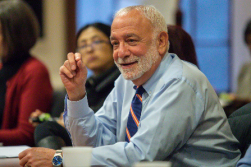
Professor Christhina Candido is Director of the Sustainable and Healthy Environments (SHE) Lab at the University of Melbourne's Melbourne School of Design. As a WELL Faculty member, she collaborates with GBCA, NABERS, and IWBI on building performance standards. Her research examines the intersection of building design, occupant experience, and environmental performance, with focus areas including: Post-occupancy evaluation methodologies Indoor environmental quality metrics Climate-responsive design in tropical/subtropical regions Wellbeing-certified workplaces Recent work analyzes post-pandemic work patterns, biophilic design effectiveness, and adoption challenges of WELL Building Standards. Her projects provide evidence-based frameworks for creating sustainable, healthy built environments.
Professor Lucy Kimbell is Professor of Contemporary Design Practices at Central Saint Martins, University of the Arts London, where she convenes the Policy Futures Studio. She is Co-Director of the Sustainable Transitions through Democratic Design Doctoral Network funded by the EU Marie Curie programme and serves as Visiting Professor at University of Ulster and Honorary Adjunct Professor at RMIT University. Her work bridges design practice, public policy, and social innovation across multiple international contexts. Professor Kimbell's educational background includes a PhD in Design from Lancaster University (2013), an MA in Computing in Art and Design from Middlesex University (1996), and a B. Engineering in Design and Appropriate Technology from the University of Warwick (1989). Her academic journey reflects a consistent integration of technical, creative, and social perspectives. Kimbell's research focuses on service design, social design, and design for policy, with increasing emphasis on sustainable transitions and democratic innovation. She explores how design methods can address complex societal challenges, particularly through transdisciplinary approaches that connect creative practice with public policy contexts. Her work examines the role of design in government, professional services, and community settings, with particular attention to AI readiness in professional service firms and antimicrobial resistance policy in India. She has pioneered frameworks for measuring design's social and environmental value, notably through the Design Value framework developed with the Design Council. Her recent publications demonstrate a clear trajectory toward understanding design's role in public policy, sustainable transitions, and democratic innovation. The research shows increasing integration of practice-based research methods with policy development, emphasizing transdisciplinary collaboration and the application of design thinking to complex societal challenges. There's a notable focus on developing frameworks for measuring design's social and environmental value and advancing democratic innovation through design practice. Notable recognitions include: AHRC Research Fellow in Policy Lab in the Cabinet Office (2014-15) Principal research fellow at University of Brighton (2013-15) Clark Fellow in Design Leadership at Said Business School, University of Oxford (2005-10) Professor Kimbell supervises transdisciplinary PhD research connecting design with public policy, with six completions to date including four UAL-KCL joint studentships. She examines PhDs internationally and serves on the supervisory board for the PhD in Service Design for Public Sector at Sapienza University, Rome. Her grant portfolio includes major projects funded by EU Marie Curie, AHRC, ESRC, and Creative Europe, totaling millions in research funding for design-led approaches to societal challenges, including the Sustainable Transitions through Democratic Design Doctoral Network (2024-28) and the AHRC Design & Policy Research Network (2022-23). She previously directed UAL's Social Design Institute (2019-2022), which brought together university expertise in design for society through capacity building, joint research, publications, and public events. Her collaborative work extends to knowledge exchange projects with Design Council, Department of Work and Pensions, Northern Ireland Social Care Council, and Bite Back 2030, demonstrating her commitment to applying design thinking to real-world policy and social challenges.
Prof. Dr. Christian Erik Pohl is an Adjunct Professor at ETH Zurich's Department of Environmental Systems Science and Head of the Institute for Environmental Decisions (IED) and the Transdisciplinarity Lab (TdLab). His research focuses on advancing transdisciplinary approaches to address complex environmental and societal challenges, emphasizing sustainable development. He holds a doctorate and habilitation in environmental science from the University of Bern. Key roles include membership in the Swiss National Science Foundation’s NRP 82 steering committee and the scientific advisory board of td-net. His contributions include seminal works like Principles for Designing Transdisciplinary Research and the Handbook of Transdisciplinary Research , fostering global collaboration in sustainability science. Awards include the KITE Award (2020) for teaching excellence and the Swiss-academies award (2015). He co-leads the TdLab, advancing methods for integrating academic and societal knowledge to tackle issues like biodiversity, water management, and climate change. His courses include 'Tackling Environmental Problems' and 'Transdisciplinary Research: Challenges of Interdisciplinarity and Stakeholder Engagement,' reflecting his commitment to education in sustainability science.
Lourdes Ortega is a Professor in the Department of Linguistics at Georgetown University and serves as Faculty Director of Georgetown’s Initiative for Multilingual Studies. Her work focuses on multilingualism beyond childhood, equitable language education, and decolonial epistemologies. She mentors students at undergraduate, master’s, and doctoral levels. Former positions include roles at University of Hawai‘i at Mānoa (2004-2012), Northern Arizona University (2002-2004), and Georgia State University (2000-2002). Education: Ph.D. and M.A. from University of Hawai‘i at Mānoa. Her research investigates how multilingualism develops in non-native contexts, advocating for social justice and equity in language education. Key contributions include her award-winning 2000 meta-analysis in Language Learning , the textbook Understanding Second Language Acquisition (2009), and co-editing The Cambridge Handbook of Bilingualism (2019). Recent work addresses under-studied languages like Arabic and Urdu in U.S. K-12 education, emphasizing decolonial and Indigenous frameworks. She has published extensively in top journals such as Applied Linguistics , Studies in Second Language Acquisition , and World Englishes . Awards: Gerald M. Mara Faculty Mentoring Award (2016, 2020), Pimsleur Award (2001), and 2023 recognition as a top 2% cited researcher. She advises 22 doctoral students and has secured grants supporting multilingual education research. Leads Georgetown’s Initiative for Multilingual Studies, co-chairs the Harmonious Bilingualism Network (HaBilNet), and edits Language Learning . Served as President of the American Association for Applied Linguistics (2023-2024). Her work bridges theory and practice, prioritizing cura personalis (care for the individual) in mentoring and advocating for multilingual well-being.
Dr. Ali Kassem is a Lecturer in Sociology and Anthropology at the National University of Singapore (NUS), Faculty of Arts and Social Sciences. His academic work spans multiple disciplines, focusing on decolonial approaches to understanding power dynamics, knowledge production, and social formations across the Arab-majority world and beyond. Dr. Kassem received his PhD from the School of Law, Politics, and Sociology at the University of Sussex. He completed postdoctoral research at the Institute for Advanced Studies at the University of Edinburgh and was an early career fellow with the Arab Council for Social Sciences funded by the Carnegie Corporation of New York. His academic journey includes teaching and research positions at Ludwig-Maximillian University in Munich, EHESS in Paris, American University of Beirut, and Lebanese American University. Dr. Kassem's research examines contemporary coloniality across questions of power and knowledge. His work spans anti-Muslim racism within Arab-majority contexts, transformations in Islamic educational institutions, dehumanization of Syrian refugees, and urban transformations in Lebanon. His transdisciplinary approach engages ethnic and racial studies, sociology of religion, social psychology, migration studies, and urban studies, working alongside anticolonial thinkers including Frantz Fanon, Ali Shariati, and James Baldwin. His recent publications reveal a strong focus on decolonial theory applied to education, urban studies, and Islamic contexts. Dr. Kassem's work consistently challenges Eurocentric frameworks while exploring alternatives emerging from the Global South. His research demonstrates particular attention to Lebanon and the eastern Mediterranean region as sites for theorizing global coloniality. Dr. Kassem has authored the book "Islamophobia and Global Coloniality: the Lived Erasure of Visibly Muslim Women in Lebanon" (Bloomsbury Academic, February 2023) and is currently editing "Decoloniality and Arabo-Islamicate Worlds" (Bristol University Press, 2025). His scholarly contributions appear in journals including Ethnic and Racial Studies, Globalizations, Contemporary Religion, and Review of Middle East Studies.
Pamela Burnard is a Professor of Arts, Creativities and Educations at the University of Cambridge, UK. She also holds adjunct professorships at the University of Sydney, Western Sydney University, University of Foggia, and Instituto Katarina Gurska. A Fellow of prestigious organizations like the Royal Society of Arts and Chartered College of Teaching, she specializes in creativity research across arts, education, and interdisciplinary fields. Her qualifications include a PhD from the University of Reading and degrees in Music Performance and Education from institutions like the University of Melbourne and Indiana University. Research & Education : Burnard's work focuses on creativities theories, STEAM education, urban musics, and posthumanist approaches. She has supervised over 30 doctoral students and contributed to global projects like the Global Institute of Creative Thinking and the CUMIN network. Her research explores transdisciplinary practices, digital technologies, and policy impacts on education. Publications & Awards : Author/co-author of 20+ books and 120+ articles, she has published in journals like Thinking Skills and Creativity and Music Education Research . Awards include the Hugh Childers' Prize for her DipEd and fellowships in leading academic societies. Advisory Roles : She advises the REF Sub-Panel SP33 and serves on editorial boards for journals like Journal of Thinking Skills and Creativity . Her collaborations span universities globally, emphasizing creative pedagogies and inclusive education. Labs & Teams : Leads the Arts and Creativities Research Group (A&CRG) at Cambridge and contributes to networks like CRiCLE and NRICH. Her work bridges academia, industry, and communities to advance creative practices in education.
Malgorzata Blicharska is a Senior Lecturer in Sustainable Development at Uppsala University, affiliated with the Department of Geosciences and the Institute for Research on Conflicts of Interest in Sustainable Social Transformation. Her work spans multiple research domains focused on sustainable natural resource management and policy implementation. Dr. Blicharska's research focuses on sustainable development with expertise in ecosystem services, biodiversity conservation, climate change governance, and the Water-Energy-Food-Ecosystem (WEFE) nexus. She integrates social science perspectives with environmental management, examining policy implementation and stakeholder engagement in conservation initiatives. Her work includes extensive research on urban ponds, recreational fisheries, and nature-based solutions, particularly focusing on ponds and wetlands as key components of sustainable landscape management. Her recent publications reveal a strong emphasis on transdisciplinary approaches to environmental challenges, with growing focus on nature-based solutions, drought vulnerability in forested regions, and governance aspects of implementing the WEFE nexus concept. Her work increasingly addresses justice dimensions in environmental management and stakeholder engagement in policy implementation. LANDPATHS: Swedish Environmental Protection Agency-funded program on multifunctional landscapes (coordinator) PONDERFUL: Horizon 2020 project on pond biodiversity and ecosystem services (WP lead) NEXOGENESIS: Horizon 2020 project on WEFE nexus policy integration (WP lead) Wet-Kit: Swedish Environmental Protection Agency project on wetland optimization PUDDLE-JUMP: Formas-funded project on small artificial waterbodies
Kees Dorst is a Professor of Transdisciplinary Innovation at the TD School of the University of Technology Sydney. He bridges philosophical understandings of design with practical applications, focusing on tackling complex societal challenges through designerly thinking. His research develops methodologies for strategic transformation and networked problem-solving in public sectors. Professor of Transdisciplinary Innovation, UTS Director, Designing Out Crime Research Centre International keynote speaker and advisor on design thinking Research Interests Dorst specializes in: Transdisciplinary innovation for societal challenges Design thinking and co-evolutionary processes Reframing complex problems in public policy Design cognition and metacognition Urban environment design for safety Recent Research Trends show increasing focus on: Hypercomplex problem-solving frameworks Strategic transformation through design Cognitive models in design processes Public sector innovation methodologies Teaching & Leadership includes: Bachelor of Creative Intelligence and Innovation Master of Creative Intelligence and Strategic Innovation Founding the Designing Out Crime Research Centre International design research symposium leadership
Joan Iverson Nassauer is a Professor at the University of Michigan School for Environment and Sustainability (SEAS), specializing in Landscape Architecture. Her research bridges ecological design with cultural sustainability, focusing on human interactions with urban biodiversity and stormwater management at scales ranging from neighborhoods to continents. She has led Landscape and Urban Planning as Co-Editor-in-Chief from 2014-2021, elevating it to the top-ranked urban studies journal. Her work has earned recognition through Fellowships in the American Society of Landscape Architects and Council of Educators in Landscape Architecture, alongside Distinguished Scholar status from the International Association of Landscape Ecology. Her research emphasizes Transdisciplinary scenario-building for rural and urban landscapes Integrating community perceptions into ecological design Advancing policy through design innovation in agricultural and suburban environments Quantifying cultural sustainability through aesthetic and functional assessments Developing green infrastructure solutions for legacy cities and the Great Lakes region Key themes in her recent publications include stormwater management aesthetics, nature-based solutions for urban sustainability, and design methodologies for enhancing ecosystem services in human-dominated landscapes. Scientific awards include Fellow of the American Society of Landscape Architects (1992) Fellow of the Council of Educators in Landscape Architecture (2007) Distinguished Practitioner of Landscape Ecology (1998) IALE Distinguished Scholar (2007) 2023 Lifetime Achievement Award in Landscape Architecture Grants and collaborations highlight her NSF-funded projects on neighborhood greening, smart stormwater systems, and Detroit's green infrastructure initiatives. She leads the Landscape Ecology, Perception, and Design Lab , fostering partnerships between designers, ecologists, and local communities to advance sustainable landscape futures.
Dr. Giulia Celentano is a Senior Scientific Assistant and Humanitarian Research Fellow at ETH Zurich's Department of Civil, Environmental and Geomatic Engineering (D-BAUG), affiliated with the Institute of Construction and Infrastructure Management (IBI). She holds a PhD in Sustainable Construction from ETH Zurich and has academic roles including lecturer in courses at D-BAUG and D-ARCH, as well as visiting professorships at Politecnico di Milano and ETSAM in Madrid. Her research focuses on humanitarian engineering, post-disaster reconstruction, and sustainable construction in conflict-affected and informal urban settings. She leads projects with organizations like the ICRC, UN-HABITAT, and UNHCR, emphasizing field-based, impact-oriented strategies. Education includes a Bachelor's and Master's in Architecture from Politecnico di Milano, a short course in Shelter and Settlements from IFRC/Oxford Brookes, and guest research at MIT ReAct. Current initiatives include coordinating the MOOC on Regenerative Materials (launching 2025) and developing tools like the ETH-ICRC Sustainable Construction Tool. Her work spans case studies in the MENA region, Sub-Saharan Africa, and Southeast Asia, addressing challenges in informal settlements and resilient health infrastructure.
Prof. Dr. Daniel J. Lang is a leading academic at Karlsruhe Institute of Technology (KIT), where he serves as Professor for Designing Real-World Laboratory Research and Head of the Research Group "Designing Real-World Laboratory Research" at ITAS. He also holds the UNESCO Chair in Higher Education for Sustainable Development at Leuphana University of Lüneburg. His career spans key roles including Dean of the Faculty of Sustainability at Leuphana University (2012-2016) and leadership positions in multiple research projects. Current affiliations: KIT (2022-present), Leuphana University (2010-2022) Research focus: Real-world laboratories, transdisciplinary research, sustainability transformations, knowledge integration, and urban mobility systems His work connects academic research with practical sustainability challenges, particularly in mobility (TRAMIGO, ADMoS-Future), digitalization (LinkLab), and societal transformation. He has developed frameworks for evaluating socio-technical experiments and co-designed tools for policy implementation. Scientific contributions include establishing transdisciplinary methodologies and contextual analysis frameworks. Recent projects examine equity in automated mobility (CulturalRoad), knowledge transfer in real-world labs, and sustainability transitions in SMEs (TRANSFORM). His 15 most recent publications address topics like socio-technical experiments, equity metrics, and cross-case learning. Key awards: UNESCO Chair in Higher Education for Sustainable Development Advising: Supervised Beecroft, R.'s 2020 dissertation on real-world labs
Julia Kurz is a Researcher at TU Dortmund University's Department of Sociology of Science and Technology, Faculty of Social Sciences. She leads the 'Visually Integrated Clinical Collaboration' project within the Collaborative Research Center (SFB) Media of Cooperation. Her work spans healthcare informatics, educational research, and disability studies. Education: M.A. in Sociology from the University of Siegen (2011), with prior studies at Philipps-University Marburg. Professional experience includes research roles at the University of Siegen (2012–2023) and support work with disabled populations (since 2001). Research focuses on information workflows in hospitals, collaborative data practices, and participatory technology design. Recent talks address topics like disempowerment in participation frameworks and challenges in transdisciplinary research. Her publications explore medical visualization tools, mentoring impacts, and role-playing pedagogy. Award recognition details are not explicitly listed, but her grants include SFB funding for the Media of Cooperation project. Advising activity is not documented here. She contributes to seminars on competence, knowledge theory, and educational innovation.
Dr. Ronald P. Strauss serves as the Adams Distinguished Professor at the University of North Carolina at Chapel Hill in the Adams School of Dentistry, with additional appointments as Professor of Social Medicine in the School of Medicine and Clinical Professor of Epidemiology in the Gillings School of Global Public Health. He concurrently holds the position of Chief Global Officer for the Adams School of Dentistry and is an active member of the UNC Craniofacial Center Team. His academic credentials include: BA in Biology from Queens College New York DMD from the University of Pennsylvania PhD in Sociology from the University of Pennsylvania Dr. Strauss's research examines the social dimensions of chronic health conditions, with specialized focus on craniofacial differences and HIV/AIDS. His interdisciplinary approach integrates clinical practice, sociological theory, ethical frameworks, and health policy analysis to address stigma, healthcare access barriers, prenatal diagnosis implications, and community engagement strategies. Methodologically, he employs qualitative ethnography and survey research to investigate psychosocial impacts. His scholarly output demonstrates consistent thematic focus across decades, with recent publications revealing intensified examination of structural determinants of health, intersectional disparities in craniofacial care, and innovative community-based HIV/AIDS interventions. Key patterns include transdisciplinary collaboration, emphasis on patient-centered outcomes, and critical analysis of systemic inequities in healthcare delivery. Dr. Strauss directs the campus-wide HIV/AIDS Course annually since 1987 and teaches Social and Health Systems to medical students. As Faculty Director of the CFAR Office of Community Engagement and lead of the Thorp Faculty Engaged Scholars Program, he mentors faculty in community-engaged scholarship while maintaining active clinical and research supervision. He maintains leadership within the UNC Craniofacial Center Team and has conducted international fieldwork across five countries, reflecting his commitment to global health equity through partnerships in Brazil, Israel, Thailand, Moldova, and China.
Gamze Z. Dane is a tenured Assistant Professor at the Department of Built Environment of Eindhoven University of Technology (TU/e), affiliated with EAISI Mobility and EAISI Health. She leads the Digital City Program (2020-2024) and specializes in decision-support systems, GIS, urban informatics, and data analytics for sustainable urban development. Her research integrates citizens into urban decision-making using digital tools like VR twins and data-driven approaches. Education: PhD in Urban Planning, MSc in Geographical Information Systems (GIS) and Decision Making. Research Interests: Focuses on human-environment interaction, transdisciplinary urban projects, and the impact of digitalization on cities. She develops tools for public participation and uses big data to analyze citizen behavior and urban experiences. Projects: Principal Investigator for EU/national projects involving cities like Eindhoven, Bologna, and Lisbon. Notable projects include UBeX Urban Behavior eXtended reality lab (2024-2026) and ROCK (2017-2020). Awards: Cuperusprijs 2020 (2nd place for student thesis) Drivers of Change Exhibition 2021 ISPRS International Journal Cover Story (2020) Teaching & Innovation: Coordinates courses like Smart Cities and Urban Redevelopment. Developed online teaching materials using VR, drones, and mobile apps. Guest lectures at Istanbul Technical University and visiting scholar at National University of Singapore. Labs & Networks: Leads the UBeX lab exploring immersive technologies for urban analysis. Active in academic networks including Urban Planning journals and international conferences.
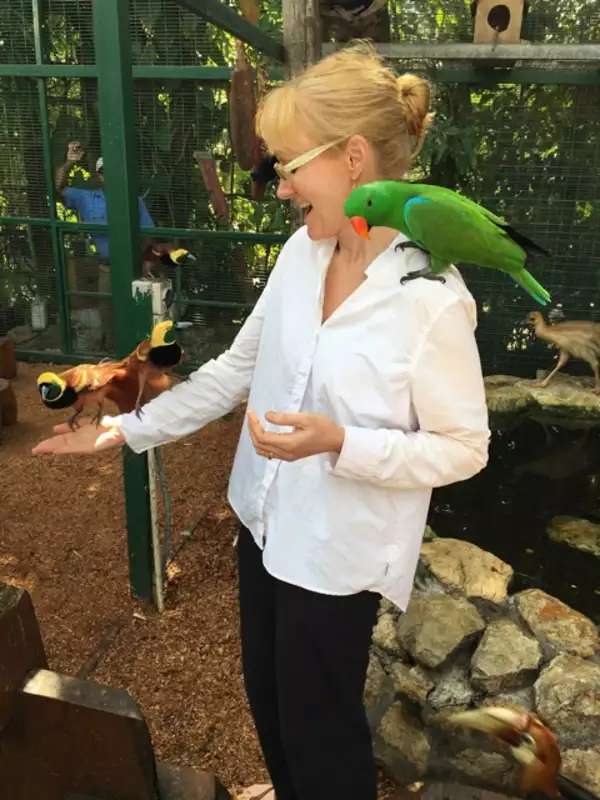
Paige West is The Claire Tow Professor of Anthropology at Barnard College and a faculty member at Columbia University. She directs Columbia's Climate School Transdisciplinary Research Lab. Her work focuses on environmental conservation, Indigenous sovereignty in Melanesia, and climate change adaptation. She earned her Ph.D. in cultural and environmental anthropology from Rutgers University, with earlier degrees from Wofford College and the University of Georgia. Dr. West has conducted over 100 months of fieldwork in Papua New Guinea, collaborating with Indigenous communities to revitalize socio-ecological systems. Her research bridges anthropology with political ecology, examining linkages between environmental policy and international development. Key interests include Indigenous knowledge systems, conservation inequities, and commodity cultures. Director: Columbia University Climate School Transdisciplinary Research Lab Co-founder: PNG Institute of Biological Research and Roviana Solwara Skul Anthropological Director: Ailan Awareness NGO Award-winning author of three books, she founded the journal *Environment and Society: Advances in Research*. Her 2016 book *Dispossession and the Environment* won the Columbia University Distinguished Book Award. Current projects include a Guggenheim-funded book on climate change and kinship. Notable recognitions include Guggenheim Fellowship, Phi Beta Kappa Lecturer (2017-2018), and designation as one of 2021's 50 people changing the world by The Explorers Club. Her work integrates academic research with applied conservation initiatives, emphasizing Indigenous-led methodologies.