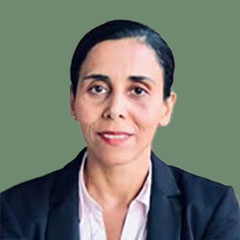
Nidhi Rastogi is an Assistant Professor at the Department of Software Engineering within the Golisano College of Computing and Information Sciences (GCCIS) at Rochester Institute of Technology (RIT). She leads the AI4Sec Research Lab, which focuses on data-driven AI solutions for cybersecurity, emphasizing interpretability and practical applications. Her research interests span Cyber Threat Intelligence, Artificial Intelligence, Graph Analytics, and Healthcare Analytics. Education: Ph.D. in Computer Science (2018), Rensselaer Polytechnic Institute M.S. in Computer Science (2008), University of Cincinnati Bachelor of Information Technology (2003), University of Delhi Research Interests: Transdisciplinary work in cybersecurity, AI, heterogeneous networks, and graph analytics. She develops systems for threat intelligence, explainable AI, and security monitoring. Notable projects include the CyNER library for cybersecurity NER, TINKER framework for open-source CTI, and personal health knowledge graphs. Awards & Mentoring: Students advised include Le Nguyen (1st place at UPSTAT23), Tanvirul Alam (IEEE SP Travel Grant), and Dipkamal Bhusal. Recent recognitions include program committee roles for ACM CCS'24 and ACSAC'24. Labs & Collaborations: The AI4Sec Lab collaborates with federal agencies, national labs, and enterprises. Current projects address autonomous vehicle security, healthcare analytics, and systemic cyberattack detection using graph-based methods.
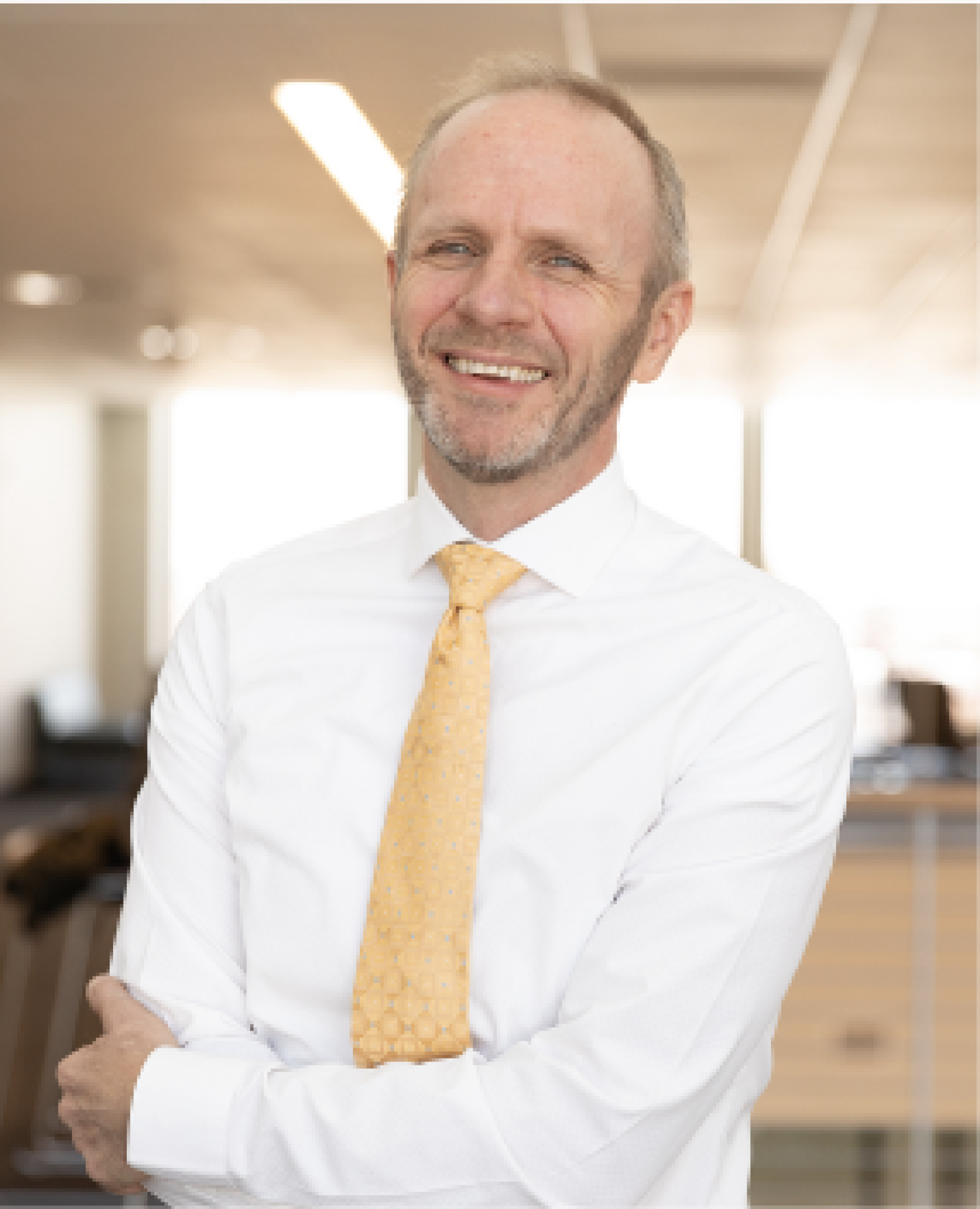
Dr Alasdair B R Stewart is a Lecturer in Social and Public Policy at the University of Glasgow's School of Social and Political Sciences. He holds dual roles as a Research Fellow and Data Lead at the GCRF Centre for Sustainable, Healthy and Learning Cities and Neighbourhoods (SHLC), and Co-Investigator for a Health Foundation-funded project examining welfare conditionality's impact on mental health. His research focuses on how large-scale social processes shape inequality, with particular attention to homelessness, welfare systems, and open-source research tools like PythiaQDA. Affiliations: GCRF SHLC, University of Glasgow's School of Social and Political Sciences Education: Not explicitly stated in provided text Stewart’s work bridges post-philosophical sociology with empirical research, critiquing proprietary qualitative analysis software and advocating for open science. His projects frequently address the intersection of welfare policies, mental health, and social security. He co-developed PythiaQDA, an open-source QDA tool designed to democratize qualitative research. His recent articles analyze Universal Credit's impact on mental health claimants, punitive welfare sanctions, and EU migrant welfare rights. Key findings emphasize systemic invalidation of mental health struggles within welfare systems and the need for policy reforms. Grants & Funding: Health Foundation, GCRF, Joseph Rowntree Foundation Supervision: Advises student Faith Ougham Stewart is actively involved in the Theory Reading Group at the University of Glasgow, exploring themes like 'The Body and Emotions' through transdisciplinary lenses. He also maintains blogs ( Constellations ) for open academic discourse.
Professor Peta Mitchell is a leading scholar in digital media and geographies at Queensland University of Technology (QUT), where she holds a Professorship in the School of Communication and the Digital Media Research Centre (DMRC). She leads the Urban Media and Digital Geographies Research Group and serves as Director of Research Training for QUT's Faculty of Creative Industries, Education, and Social Justice. In 2023, Professor Mitchell was appointed to serve a three-year term on the Australian Research Council's College of Experts, recognizing her significant contributions to research in digital media and geographies. Professor Mitchell earned her Doctor of Philosophy from the University of Queensland. Her academic journey has established her as a prominent voice in the interdisciplinary field bridging geography, media studies, and digital culture. She has received prestigious fellowships including a Vice Chancellor's Research Fellowship from QUT (2014-2018) and a visiting fellowship from the Institute for Advanced Studies in the Humanities at the University of Edinburgh (2009). Professor Mitchell's research explores the complex connections among space, place, society, and the digital. Her work focuses on digital and media geographies, everyday digital and data cultures, digital inclusion, and network contagion. She has made significant contributions to understanding how digital technologies reshape our relationship with space and place, particularly in urban environments. Her research examines how location-aware technologies influence social dynamics, cultural practices, and power relations, with particular attention to issues of inclusion, privacy, and justice in digital contexts. Professor Mitchell has investigated how digital media practices shape experiences of belonging, particularly among marginalized communities, and how geospatial data is produced, circulated, and contested in contemporary society. Her extensive publication record reveals a trajectory of increasingly interdisciplinary work that bridges humanities, social sciences, and spatial sciences. Recent publications show a growing focus on the intersection of digital technologies with environmental concerns, multispecies justice, and urban governance. Professor Mitchell's work has evolved to address emerging challenges related to generative AI, smart city technologies, and the ethical implications of location-aware applications. Her research consistently engages with questions of power, equity, and social justice in digital spaces, making significant contributions to both theoretical frameworks and practical applications in the field. Vice Chancellor's Research Fellowship, Queensland University of Technology (2014-2018) Faculty research fellowship, Centre for Critical and Cultural Studies, University of Queensland Visiting fellowship, Institute for Advanced Studies in the Humanities (IASH), University of Edinburgh (2009) Professor Mitchell has successfully supervised numerous doctoral students whose research explores diverse aspects of digital media and geographies. Her current and former students have investigated topics including smart urban governance, digital privacy, diaspora media practices, digital inclusion, and the cultural dimensions of location-based technologies. She has secured substantial research funding through competitive grants, including multiple ARC Discovery and Linkage Projects. Her current projects include "Generative AI and the Future of Academic Writing and Publishing" (2025-2028) and "Promoting Low-Income Parents' Digital Media Literacies" (2025-2028), demonstrating her ongoing commitment to addressing pressing contemporary issues at the intersection of technology, society, and space. As leader of the Urban Media and Digital Geographies Research Group within QUT's Digital Media Research Centre, Professor Mitchell fosters interdisciplinary collaboration among researchers examining how digital technologies reshape urban spaces and social relations. Her research group brings together scholars from geography, communication, design, computer science, and the humanities to investigate the spatial dimensions of digital culture. The group's work has particular relevance for understanding the implications of smart city technologies, location-aware applications, and digital inclusion initiatives in contemporary urban contexts.
Prof. Pia Fricker is an Associate Professor and Vice Head of the Department of Architecture at Aalto University's School of Arts, Design and Architecture in Finland. She holds the Professorship of Computational Methodologies in Landscape Architecture and Urbanism, directing the Urban Studies and Planning Programme. Her research integrates urban design, landscape architecture, and digital design culture, focusing on data-driven methods, immersive environments, and adaptive urban development. Collaborations include ETH Zurich, Singapore University of Technology and Design, and Hafencity University Hamburg. Key projects include the Metaversity and Future Smart Cities initiatives. Fricker has led over 80 publications and exhibitions globally, including at the Venice Biennale and National Design Centre Singapore. She is an editorial board member for the Journal of Digital Landscape Architecture and peer reviewer for multiple journals. Awards include the Digital Landscape Architecture Award (2018) and DLA Scientific Merit Award (2021). Her teaching emphasizes computational pedagogy and digital innovation in design education. Education: PhD in Architecture (ETH Zurich, 2021) Postgraduate in Didactics (ETH Zurich, 2011) MAS in Computer Aided Architectural Design (ETH Zurich, 2003) MSc Arch in Urban Design & Landscape Architecture (Technical University of Karlsruhe, 2001) Research Interests: Computational design, parametric modeling, mixed reality, climate-adaptive ecosystems, generative AI, and sustainable urban development. Her work bridges emerging technologies with ecological and urban challenges, emphasizing interdisciplinary collaboration. Grants & Projects: Metaversity (2023–2025, Principal Investigator) Future Smart Cities Sasakawa (2023–2024, Principal Investigator) ABRA (2020–2023, Project Member) Awards: DLA Awards (2018, 2021) DLA Review Committee Awards (2020–2022) Exhibition Recognitions (Venice Biennale, National Design Centre Singapore) Labs/Teams: Leads the Urban Studies and Planning Programme and collaborates with interdisciplinary teams on projects like the RAILCORRIDOR Singapore initiative. Active in digital twin development and AI-driven design tools.
Eric Coatanea is a Professor at Tampere University, affiliated with the Automation Technology and Mechanical Engineering department within the Faculty of Engineering and Natural Sciences. His research focuses on manufacturing systems, causal graph networks, multi-disciplinary optimization, and AI integration in engineering design. He holds a BSc from University of West Brittany (1990), MSc from INSA Toulouse (1993), and teaching certification from Ecole Normale Supérieure (1994). Research interests include modeling manufacturing systems, additive manufacturing (e.g., Directed Energy Deposition), causal graphs for decision-making, and systems engineering. Notable awards include the Chevalier des Palmes Académiques (2018) and Marie-Curie Fellowship (2006–2008). Recent publications emphasize optimization algorithms combining AI (e.g., L-ANN-GWO), viscosity effects in 3D printing, and causal graph applications in MDO. His work bridges theoretical frameworks with practical engineering challenges, focusing on early design synthesis and sustainable manufacturing. Commitments include editorial roles (Journal of Integrated Design & Process Science), NSERC Canada advisory, and board memberships (Dynavio Cooperative Oy, Selko Oy). Current projects include LILIAM, ÄVE, and DIGITBrain initiatives.
Renee Crawford is an Associate Professor at Monash University’s School of Curriculum Teaching & Inclusive Education . With a career spanning higher education and secondary music teaching, she advocates for technology-integrated pedagogy and curriculum innovation. Her work bridges music education, teacher development, and sociological perspectives on educational inclusion.
Dr. Dave Murray-Rust is an Associate Professor in Human-Algorithm Interaction Design at TU Delft's Faculty of Industrial Design Engineering. He explores the intersection of humans, data, and AI through design research, focusing on ethical AI systems and sociotechnical interactions. His work bridges computer science, design theory, and digital sociology, addressing challenges like algorithmic fairness and human-AI collaboration. He leads initiatives such as the AI Futures Lab and Data-Centric Design Lab, advancing methods for leveraging behavioral data in design processes. His research emphasizes experiential AI frameworks, metaphors for designers, and the legibility of AI systems. He has been honored with awards including Best alt.HRI 2024 and a CHI 2023 Best Paper Award for contributions to fairness perceptions in algorithmic decision-making. Murray-Rust teaches courses like the Speculative Design Studio and collaborates on projects like DCODE (Designing the Future of AI) and the BrightSky Project. His work extends to public engagement through installations like GeoPact and explorations of blockchain's societal impact. He holds an Honorary Fellowship at the University of Edinburgh.
Nancy B. Kurland serves as the Clair R. McCollough Professor of Business Administration at Franklin & Marshall College, where she has taught since 2010 after previous appointments at California State University-Northridge, Pepperdine University, and the University of Southern California. Her academic leadership focuses on integrating sustainability and social responsibility into business education through innovative curriculum development and community engagement. Her educational foundation includes: BA in Political Science from Penn State MBAs from Cornell University and Catholic University of Leuven, Belgium Doctorate in Management from University of Pittsburgh, Katz Graduate School of Business Professor Kurland's research pioneers the integration of ecological sustainability into business curricula while examining organizational forms that reconcile profit with purpose. She investigates community socio-emotional wealth in Lancaster County farming communities, benefit corporation governance models, and the tensions within 'buy local' movements regarding ethical consumption. Her work bridges theoretical frameworks with practical applications in supply chain sustainability and crisis management, emphasizing how organizations can drive social good through structural innovation and community partnerships. Analysis of her recent publications reveals a strategic shift toward hybrid organizational models and pandemic-responsive business-society dynamics. She has developed comprehensive typologies for sustainability education while exploring mission alignment in social enterprises and the evolution of benefit corporations as vehicles for systemic change. Her research consistently connects classroom innovation with real-world impact through community-engaged scholarship. Her scientific recognition includes: Best Paper Awards (2023, 2021, 2015) Kevin E. Ruble Fellowship in Conscious Capitalism (2017) Professor Kurland actively mentors students through close classroom relationships and community-based learning initiatives. She co-founded F&M's Center for Sustained Engagement with Lancaster and CSUN's Institute for Sustainability, creating platforms for student-faculty collaboration on local food systems, farming preservation, and sustainability networks. Her grant work focuses on developing interdisciplinary approaches to campus sustainability and ethical consumption. She leads the Center for Sustained Engagement with Lancaster, which connects F&M students with Lancaster County communities through sustainability projects, farming preservation research, and local food system development. Her work with the Institute for Sustainability at CSUN established foundational frameworks for campus-wide sustainability integration, demonstrating her commitment to translating academic research into community impact.
Ajita Rattani is an Assistant Professor in the Department of Computer Science and Engineering at the University of North Texas, affiliated with Discovery Park. Her research focuses on biometrics, AI fairness, deepfake detection, and machine learning applications in health and security. She holds a Ph.D. in Computer Science and Engineering, with expertise in facial recognition, ocular biometrics, and multimodal authentication systems. Research Interests: Her work addresses algorithmic fairness in facial attribute classification, robustness of biometric systems against adversarial attacks, and developing lightweight models for on-device authentication. She also explores applications of machine learning in health informatics, such as BMI prediction from facial images and analyzing social determinants of health. Publications Trends: Recent work emphasizes bias mitigation in AI systems (e.g., gender/racial fairness), deepfake detection through fusion of audio-visual cues, and advancing ocular biometric recognition under challenging conditions. Notable contributions include frameworks like CodeIT for data-efficient deepfake detection and PatchBMI-Net for lightweight BMI prediction. Advising & Grants: Leads research projects funded by NSF SaTC grants (e.g., probing fairness in ocular biometrics). Active in organizing competitions like VISOB 2.0 for mobile ocular biometrics evaluation. Her lab develops practical solutions for real-world challenges in biometrics and AI ethics. Labs/Teams: Involved in interdisciplinary teams addressing transdisciplinary collaboration challenges and applying AI to disaster detection (wildfires, droughts) using satellite and sensor data fusion.
Marius Korsnes is an Associate Professor at the Department of Interdisciplinary Cultural Studies, Faculty of Humanities, Norwegian University of Science and Technology (NTNU). He leads the ERC-funded 'MidWay' project on sufficiency in meat and milk consumption in China and co-leads the NFR INTPART project 'Sociomaterial Transformations in Norway and East Asia (SoMaT)'. He is actively involved in the MEATigation, COJUST, and GreenBlack projects, and previously led research in the FME NTRANS center on deep decarbonization. His work bridges energy, sustainability, and socio-cultural transitions with a strong focus on Norway and China. BA in International Studies, University of Oslo (2009) BA in History, University of Oslo (2011) M.Phil. in Culture, Environment and Sustainability, University of Oslo (2012) PhD in Technology, Innovation and Culture, NTNU (2015) His research centers on sustainability transitions , energy use , renewable energy systems , consumer practices , and sufficiency , particularly in the context of China and Norway. He explores how socio-material practices shape energy and food systems, with attention to justice, inclusion, and policy implications. His work integrates Technology, Innovation and Society (TIS) perspectives and public engagement. His recent publications (2022–2025) reflect a strong trend in energy citizenship , meat and dairy consumption , prosumerism , and sufficiency . These articles analyze low-income energy practices, policy injustices, and cultural dynamics in food and energy transitions. The research is interdisciplinary, combining social science, environmental studies, and policy analysis. ERC Starting Grant (MidWay project) Member, Academy for Young Researchers (AYF) NTNU Star Program Korsnes has advised Master’s students and contributes to transdisciplinary research, including using improvisational theatre for collaborative research. He has been involved in major research centers like FME ZEN and FME CenSES, and his work emphasizes public engagement and societal impact. His projects often involve international collaboration, especially between Norway and East Asia.
Kai R. Larsen is a Professor at the Organizational Leadership and Information Analytics division within the Leeds School of Business , University of Colorado Boulder . He holds courtesy faculty appointments in the Department of Information Science at the College of Media, Communication and Information , serves as a Research Advisor to Gallup , and is a Fellow of the Institute of Behavioral Science . Education: Ph.D., Information Science, University at Albany, SUNY Candidatus Magisterii (Software Engineering), The National College for Teachers of Commerce, Norway Adjunkt (Education), The National College for Teachers of Commerce, Norway Diplomkandidat, NHI College of Computer Science, Norway His research focuses on Information Systems , particularly addressing the Jingle Fallacy and developing the Semantic Theory of Survey Response . He leads the Federally Supported Human Behavior Project , creating transdisciplinary frameworks using Large Language Models and Natural Language Processing to predict human behaviors across technology utilization, investor decisions, voter behaviors, and cancer prevention. His scientific awards include INFORMS ISS Design Science Award (2019) Best Prototype Award at WITS (2019) Herbert A. Simon Award (2020) David B. Balkin Innovative Teaching Award (2023) Kolb Teaching Award (2022) National Institutes of Health $355,000 Grant (2022-2023) Larsen's grant funding and mentorship achievements include NIH grant for stress ontology research Outstanding Faculty Mentor Award (2021-2022) Technology Challenge Award (2016) He also maintains the Theories Used in IS Wiki and developed the TheoryOn award-winning ontology-based search engine used by thousands.
Niall Kirkwood is the Charles Eliot Professor of Landscape Architecture at Harvard University's Graduate School of Design (GSD), where he has been a faculty member since 1991. He holds concurrent roles as Deputy Editor-in-Chief of Landscape Architecture Journal and is affiliated with institutions worldwide, including Tsinghua University and Chulalongkorn University. His research focuses on post-industrial landscape regeneration, brownfield remediation, and climate-resilient urban design. Education: BArch from University of Manchester (UK), MLA from University of Pennsylvania (USA), and honorary doctorates from Harvard and University of Ulster (2009). Research interests emphasize innovative technologies for polluted land remediation, environmental justice, and the intersection of design with ecological systems. Notable projects include the Tar Creek Superfund Site regeneration, DMZ reclamation in Korea, and brownfield revitalization in Mumbai. Publications include influential works like Principles of Brownfield Regeneration (2010) and PHYTO: Site Remediation and Landscape Design (2015). Awards include AAAS membership (2024) and FASLA fellowship (2009). Teaching spans design studios addressing global challenges like Bangkok's climate resilience and Ireland's urban transformation. He led GSD's Academic Affairs as Associate Dean (2019-2024) and founded the Center for Brownfield Research at Tsinghua University. Labs/Initiatives: Co-founded the Center for Brownfield Research (Tsinghua), directed the Center for Environment and Technology (GSD 1997-2017), and collaborates with the Harvard Global Health Institute.
Benjamin William Cashore is the Li Ka Shing Professor in Public Management and Director of the Institute for Environment and Sustainability (IES) at the National University of Singapore's Lee Kuan Yew School of Public Policy. Previously, he spent 18 years at Yale University as a professor of environmental governance and political science, where he directed the Governance, Environment and Markets (GEM) initiative and the Yale International Fox Fellows exchange program from 2014-2019. PhD from University of Toronto Postdoctoral research at Harvard University and University of British Columbia Former policy advisor to the leader of the Canadian New Democratic Party Expertise spans Southeast Asia, North America, Latin America and Europe Cashore specializes in global and multi-level environmental governance, comparative public policy and administration, and transnational business regulation/corporate social responsibility. His research focuses on climate policy, biodiversity conservation/land use change, and sustainable environmental management of forests and related agricultural sectors. Theoretically, he examines the legitimacy requirements of non-state market driven (NSMD) global governance, the influence of economic globalization on domestic environmental policies, and anticipatory policy design for addressing 'super wicked' environmental problems. His work integrates around developing multi-stakeholder policy learning processes and nurturing multiple step policy pathways. His recent scholarship demonstrates consistent engagement with climate change governance, forest policy, and the intersections between private regulation and public policy. Cashore's publications reveal a strong focus on identifying effective governance mechanisms for addressing complex environmental challenges through both state and non-state approaches. Author of two influential books: 'Global Environmental Forest Policies: An International Comparison' (2010) and 'Governing Through Markets: Forest Certification and the Emergence of Non-State Authority' (2004) Extensive publication record in top journals across political science, environmental policy, and governance fields Cashore has developed significant expertise in designing stakeholder learning dialogues and identifying policy pathways for addressing complex environmental governance challenges. His work bridges theoretical insights with practical policy applications across multiple continents and governance contexts.
Steven Watson is an Associate Professor at the Faculty of Education , University of Cambridge, with a Visiting Professor role at the Department of Sociology, Faculty of Croatian Studies, University of Zagreb. He co-founded the Cambridge Global Knowledge Nexus , is an Associate of the Digital Education Futures Initiative (DEFI), and a Fellow at Wolfson College. His research bridges engineering, social sciences, philosophy, and technology to address complex educational and societal challenges. Watson's work focuses on generative AI in education , using autopoietic ontology to develop frameworks for AI literacy, ethics, and integration. He advises UK policymakers on AI implementation and explores educational inclusion, cultural systems, and the sociology of technology. His presentations span global events, including the World Economic Forum and Tsinghua University. Recent publications emphasize AI's societal impact , transdisciplinary methodologies , and ethical frameworks for AI in education. His articles appear in journals like Systems Research and Behavioral Science and European Educational Research Journal , with a focus on autopoietic systems, educational equity, and technological evolution.
Mikael Johansson is a Professor in the Department of Psychology at Lund University, where he leads research on the cognitive and neural bases of memory and cognitive control. His academic appointments include membership in eSSENCE: The e-Science Collaboration, LAMiNATE (Language Acquisition, Multilingualism, and Teaching), LU Profile Area: Proactive Ageing, and LU Profile Area: Natural and Artificial Cognition. With 159 research outputs and leadership in 18 projects (8 active), he maintains a prominent position in cognitive neuroscience research. His research focuses on the neural mechanisms of memory using behavioral, electrophysiological (EEG/ERP), and functional magnetic resonance imaging (fMRI) methods. Key interests include interactions between memory systems, formation and retrieval of episodic memories, emotion regulation and emotional memory, mechanisms underlying incidental and intentional forgetting, and the relationship between eye-movements, mental imagery and memory. His work has significant implications for understanding memory functions in psychiatric conditions such as depression and post-traumatic stress disorder. Analyzing his extensive publication record spanning from 2012-2025 reveals a consistent focus on memory mechanisms with increasing integration of eye-tracking methodologies and clinical applications. His research demonstrates an evolving trajectory from basic memory processes toward understanding memory in real-world contexts and clinical populations, with recent work emphasizing the role of eye movements in memory construction and the neural dynamics of memory integration. Mikael Johansson serves as a member of The Swedish National Committee for Psychological Sciences at the Royal Swedish Academy of Sciences since 2011 and has received significant research funding including from The Bank of Sweden Tercentenary Foundation, Swedish Research Council, and Stiftelsen Marcus och Amalia Wallenbergs Minnesfond. His current major projects include TEAM: Transdisciplinary Approaches to Learning, Acquisition, Multilingualism (2024-2029), Tracking cognitive change as a function of normal ageing and different types of degenerative disease, and How the brain constructs the present and reconstructs the past via sequences of eye movements. He leads the Lund Memory Lab where his team investigates how the brain constructs and maintains coherent episodic memories through eye movements. His research group actively collaborates with international partners across multiple disciplines, bridging cognitive psychology, neuroscience, and clinical applications. The lab's work has gained significant attention, with several publications being highlighted in news outlets and academic discussions.