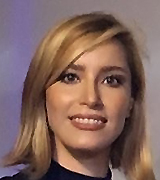
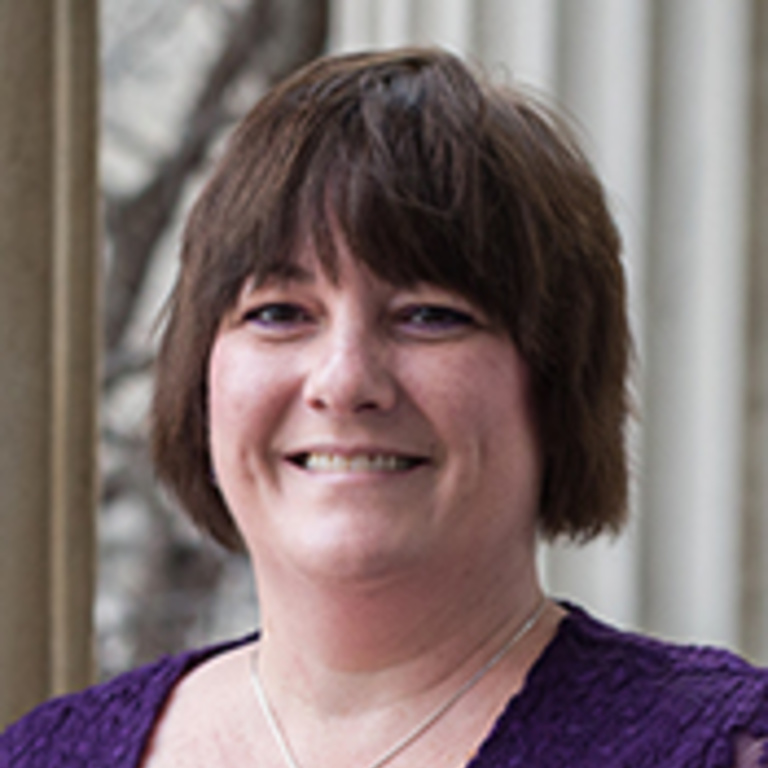
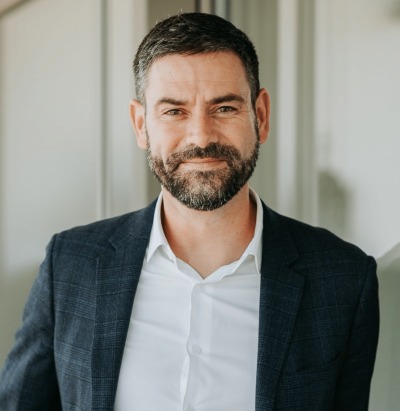
Elmira Hassanzadeh is an Associate Professor at the Department of Civil, Geological and Mining Engineering , Polytechnique Montréal, with a focus on integrated water resource modeling and management under climate and anthropogenic changes. She is affiliated with the Global Institute for Water Security (University of Saskatchewan) and the Experimental and Digital Water Flow Engineering Group (GENIE EAU) . Education: PhD in Civil Engineering, University of Saskatchewan Postdoctoral Fellow, McGill University Research interests include climate change impact assessment, socio-hydrological modeling, stakeholder engagement in water management, and sustainable development of water systems in cold regions. Her work emphasizes decision-making under uncertainty and adaptive strategies for ungauged basins. Recent publications (2024–2020) span coastal flood hazard modeling, climate-driven hydrological changes in tropical and Canadian watersheds, evaluation of agricultural practices under warming climates, and integrated approaches to water quality and system dynamics. Keywords include Hydrology , Climate Change , Water Security , and Socio-Hydrology . Supervision: She has mentored 15+ graduate students in projects related to Lake Urmia, Saskatchewan River Basin, and climate adaptation in Africa and the Pacific.
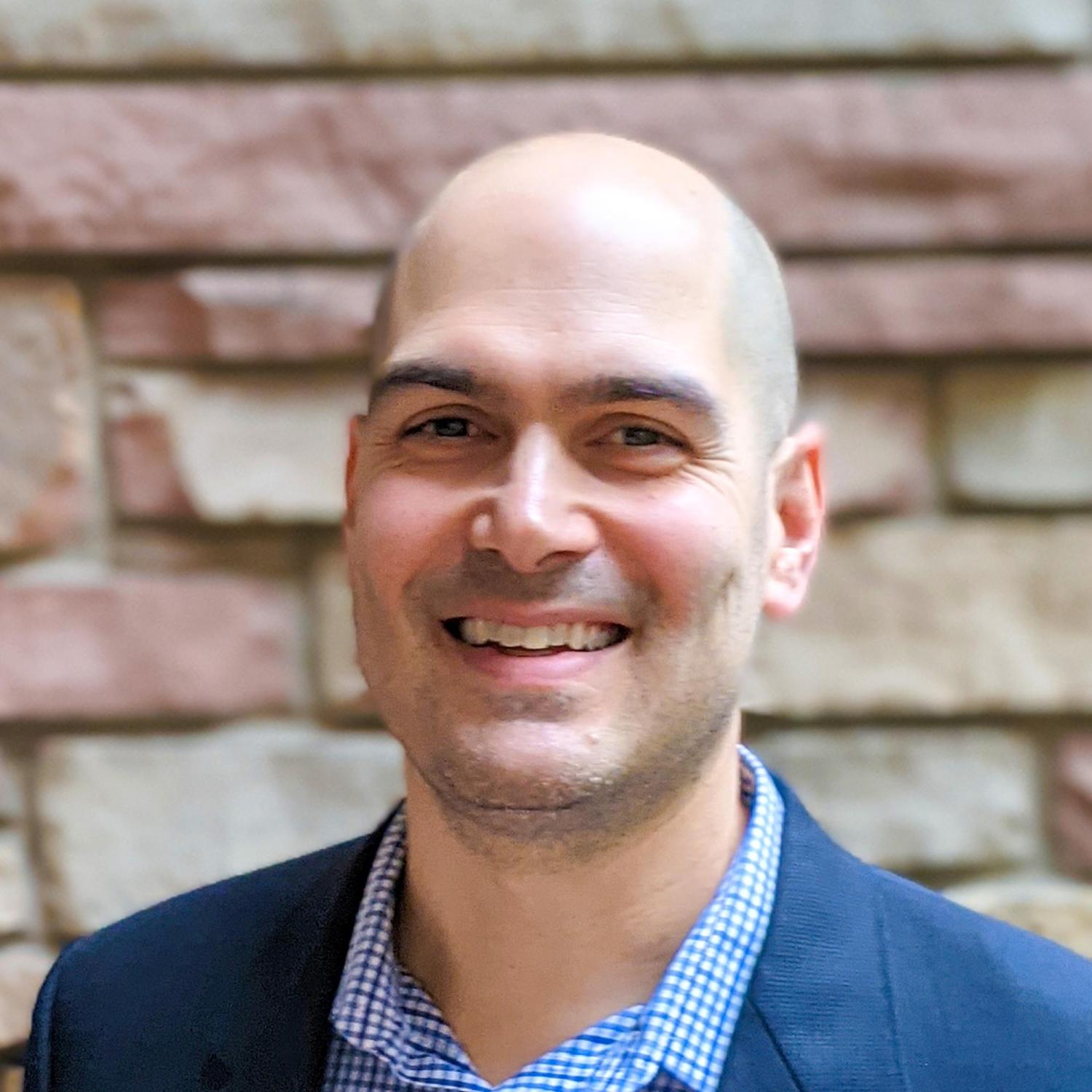
Ben Livneh is an Associate Professor at the University of Colorado Boulder , affiliated with both the Civil, Environmental, and Architectural Engineering Department and the Cooperative Institute for Research in Environmental Sciences (CIRES) . As Director of the Western Water Assessment , he bridges academic research with regional climate resilience initiatives. Ph.D. in Civil Engineering (Hydrology), University of Washington (2012) MESc in Civil Engineering, University of Western Ontario (2006) His research explores hydrologic responses to climate and land-cover changes , focusing on snowpack dynamics, wildfire impacts on water quality, sediment transport, and drought predictability. Key projects include simulations of montane snowpack for wolverine habitat preservation and post-fire landslide susceptibility analysis . Recent publications highlight continental-scale hydraulic geometry datasets , climate-energy nexus challenges , and global lake level reconstructions using satellite data. His work has been recognized by the AGU Hydrologic Sciences Early Career Award (2022) and NASA New Investigator Program (2018) . Scientific Awards AGU Hydrologic Sciences Early Career Award (2022) NASA New Investigator Award (2018) Symposium Scholar, DISCCRS VIII (2013) CIRES Visiting Fellowship (2012) Ben leads interdisciplinary collaborations with institutions like the University of Alaska Southeast and NOAA , addressing climate-water-energy-food nexus challenges through advanced modeling and remote sensing techniques.
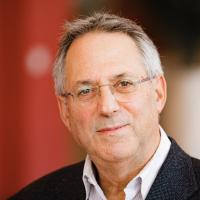
Jampel Dell'Angelo is an Associate Professor with ius promovendi in Water Governance and Politics at the Department of Environmental Policy Analysis, Institute for Environmental Studies (IVM), Vrije Universiteit Amsterdam. He holds concurrent roles as a Visiting Scholar at the University of California, Berkeley's Ecohydrology Lab, and an Environmental Governance Affiliate Scholar at SESYNC, Maryland. His research focuses on multilevel dimensions of water governance, climate adaptation in African irrigation systems, and transnational land investments' impacts. He leads the EU-funded NEWAVE project, coordinating 15 Early Stage Researchers across 10 institutions. Educated with a dual PhD in Environmental Science (Autonomous University of Barcelona) and International Cooperation (Sapienza University), he also holds advanced degrees from the LSE, Sapienza, Curtin, and the University of Siena. As Editor-in-Chief of World Development , he promotes interdisciplinary research on socio-environmental systems. His work contributes to UN SDGs related to clean water, sustainable cities, and responsible production. Research interests span water grabbing dynamics, socio-ecological resilience, and policy frameworks for equitable resource management. Recent projects address Mediterranean water scarcity solutions and the socio-political implications of global land rushes. He supervises PhD candidates exploring themes like water democracy, agrifood transitions, and environmental justice. Key contributions include pioneering analysis of 'water commons grabbing' and documenting the Global Water Grab Syndrome. His documentary work complements field research, such as Working Together: Research and Water Governance on Mount Kenya . Current projects emphasize innovative governance models and climate-resilient water management in transboundary contexts.
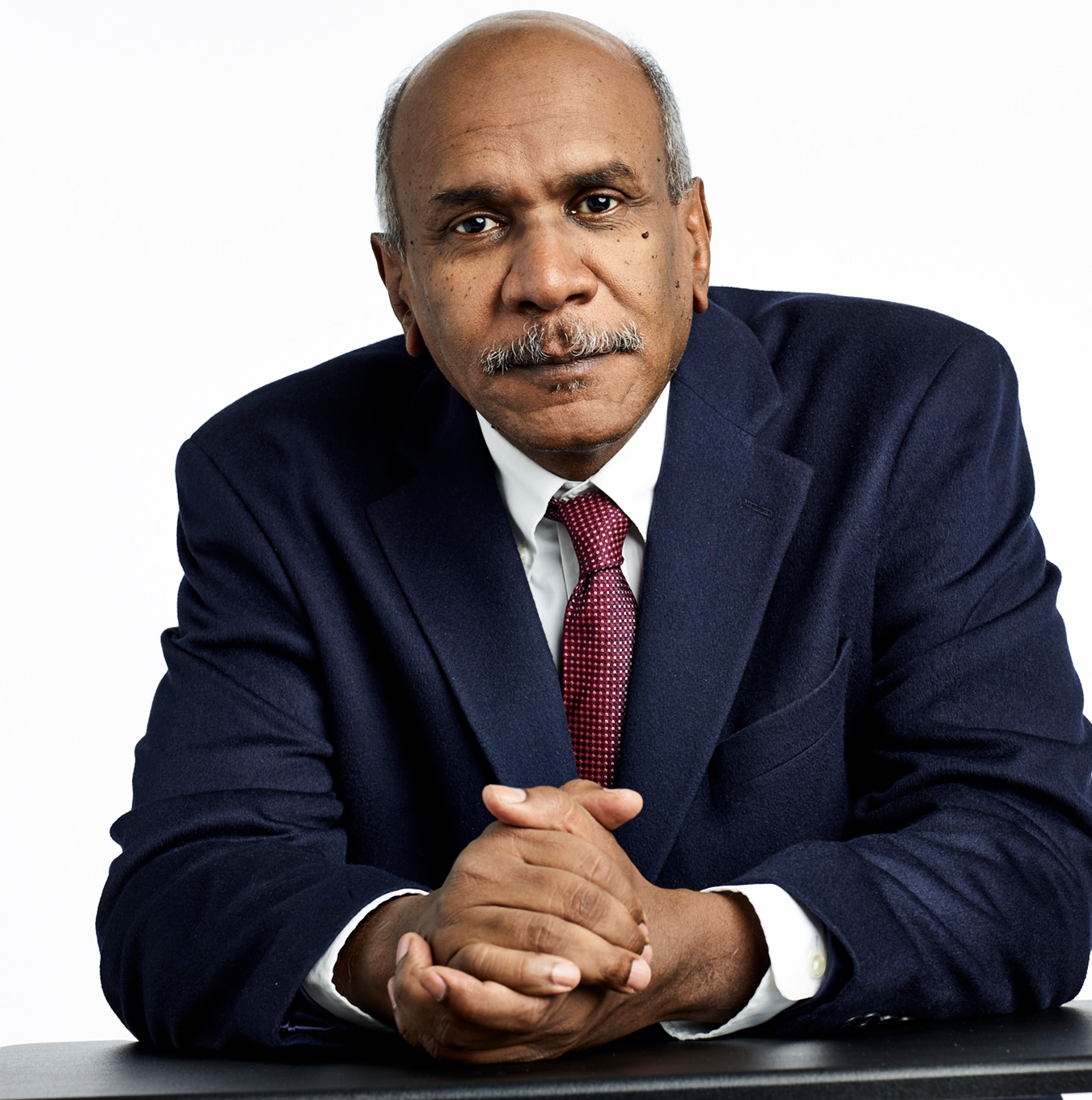
Richard Caplan is Professor of International Relations at the Department of Politics and International Relations (DPIR), University of Oxford, and an Official Fellow of Linacre College. His academic career spans several decades with significant contributions to the field of international relations, particularly in the areas of international organizations, conflict management, and peacebuilding. Professor Caplan holds an MA and PhD from the University of London. His academic journey has included visiting positions at prestigious institutions including the European University Institute (EUI), University of Konstanz, University of Pavia, Princeton University, and Sciences Po (Paris). Professor Caplan's principal research interests focus on international organizations and conflict management, with particular emphasis on peacekeeping and post-conflict peace- and state-building. His work explores critical questions about how international institutions manage conflicts, the effectiveness of peacekeeping operations, and the complex processes of rebuilding societies after conflict. His research has significantly contributed to understanding the challenges of measuring peace, the dynamics of international administration in war-torn territories, and the recognition of new states in contested contexts. Professor Caplan has received considerable recognition for his scholarly contributions through fellowships and grants from leading organizations including the British Academy, the British Council, the Carnegie Corporation of New York, the Economic and Social Research Council (ESRC), the Folke Bernadotte Academy, the John Fell OUP Research Fund, the Leverhulme Trust, the MacArthur Foundation, the Oxford Martin School, and the US Institute of Peace. As a dedicated educator and mentor, Professor Caplan has supervised numerous graduate students including Ishrat Hossain, Ebenezer Azamati, Michaela Coplen, Lucy Maycox, John Helferich, Gwendolyn Whidden, Alejandro Posada Téllez, Colm Trant, Salma Daoudi, Nadila Ali, and Katharina Engel. His current research focuses on the aftermath of UN peacekeeping operations through the ESRC-funded "After Exit" project, which investigates conditions in countries following the withdrawal of large-scale UN peacekeeping missions. Professor Caplan leads the "After Exit" research team, which includes collaborators from Oxford, Cornell University, and the University of North Carolina at Wilmington. Previously, he contributed to the Oxford Martin Programme on Transboundary Resource Management, which explored cross-border cooperation on natural resource management in the eastern Nile River Basin and the Jordan River Basin.
Elfatih Eltahir is the H. M. King Bhumibol Professor at MIT, affiliated with the Climate and Environment faculty and the Department of Civil and Environmental Engineering. He holds a B.Sc. in Civil Engineering (University of Khartoum, 1985), M.Sc. in Hydrology (National University of Ireland, 1988), and S.M. and Sc.D. in Meteorology/Hydroclimatology (MIT, 1993). His research focuses on climate change impacts on water availability, extreme weather, and vector-borne diseases, with a particular emphasis on developing numerical models like the MIT Regional Climate Model (MRCM) and the Hydrology-Entomology-Malaria Transmission Simulator (HYDREMATS). Key research areas include projecting climate change effects on regions such as the Mediterranean, South Asia, and West Africa, with a focus on adaptation strategies. He has pioneered the concept of 'outdoor days' to quantify climate impacts on human activity. Awards include membership in the National Academy of Engineering (2023), World Academy of Sciences (2023), and American Geophysical Union Fellowship (2008). Teaching: Global Change Science (1.071), Surface Hydrology (1.714), Environmental Data Analysis (1.073) Projects: UM6P-MIT Research Program, Jameel Observatory Climate Resilience Early Warning System Network (CREWSnet) His work has addressed societal challenges like Nile River water management, malaria transmission dynamics, and climate adaptation in vulnerable communities. Field campaigns and collaborations with institutions like the United Arab Emirates reinforce his applied research focus. Awards: 2023: National Academy of Engineering Member 2023: World Academy of Sciences Fellow 2008: AGU Fellow 2017: Hydrologic Science Award Research grants and funding support impactful projects such as climate modeling for the Middle East, Africa, and the U.S., with a focus on interdisciplinary solutions.
Professor Cedo Maksimovic is a leading academic in the Department of Civil and Environmental Engineering at Imperial College London, Faculty of Engineering. He is a Principal Research Fellow and heads the Urban Water Research Group (UWRG), with affiliations to the Environmental and Water Resource Engineering group, Grantham Institute, Space Lab, and Urban Systems Lab. His research focuses on urban water systems , including storm drainage, urban flooding, water supply, and the interaction between urban infrastructure and the environment. He has pioneered work in applied fluid mechanics , smart water infrastructure , and flood risk management , with innovations such as the AOFD method for urban surface flood modelling and intelligent sensor networks recognized by the ICE Telford Gold Medal. His recent research, as reflected in publications, spans urban pluvial flooding , leakage detection , integrated urban water management , and blue-green infrastructure . These works emphasize computational modelling, real-time monitoring, and climate resilience in urban environments. UNESCO/IAHR Lecturer of the Year 2001 ICE Telford Gold Medal (WINES project team) Prof. Maksimovic has led major projects funded by EPSRC, EU (Climate-KIC, Interreg), UNESCO, and ERANET_CRUE. He advises postgraduate students and has created international educational initiatives like the EDUCATE programme. He also serves as Editor-in-Chief of the Urban Water Book Series and co-founded the Urban Water journal. He leads the UNESCO-endorsed IRTCUD/CUW network with centres in Banjaluka, Belgrade, Cairo, Kuala Lumpur, London, Porto Alegre, Tehran, and Trondheim, promoting global collaboration in urban water research and education.
Alessandra Arcuri is Full Professor of International Economic Law at the Department of Law and Markets, Erasmus School of Law, Erasmus University Rotterdam, and a member of the Erasmus Initiative on Inclusive Prosperity. Her academic leadership spans critical intersections of law, sustainability, and democratic governance within global economic frameworks. Her research interrogates the tensions between international economic law and planetary boundaries, focusing on how investment treaties constrain climate action through cases like Rockhopper v. Italy . She exposes how fossil fuel interests exploit legal mechanisms like the Energy Charter Treaty while analyzing glyphosate regulation failures and corporate influence on EU Green Deal implementation. Her work consistently challenges technocratic governance models that marginalize democratic participation in environmental decision-making. Recent scholarship reveals an intensified focus on supply-side climate policies, where investment law clashes with state efforts to phase out fossil fuels. She documents how tribunals prioritize investor protections over ecological imperatives, using Dutch river pollution cases to demonstrate states' international obligations to prevent toxic emissions. Her analysis of boundary-work in investment law reveals systemic exclusions of public interest perspectives. Scientific Awards: Jean Monnet Fellow (2011-12) Fernand Braudel Fellow (2021-22) Hauser Global Research Fellow (2003-04) Marie Curie Fellow (2001) Professor Arcuri supervises PhD candidates including Abdurrahman Erol, with whom she co-authored pivotal research on Dutch river degassing that directly influenced national policy banning toxic emissions from inland vessels. Her policy impact extends through commissioned reports for the Dutch Parliament, Ministry of Foreign Affairs, European Commission, and NGOs, translating academic rigor into tangible regulatory change. She actively bridges scholarly critique with public advocacy, as seen in open letters correcting ministerial misinterpretations of environmental law. As a core contributor to the Erasmus Initiative on Inclusive Prosperity, she collaborates across disciplines to reconfigure economic governance toward ecological sustainability and democratic accountability, challenging the fossil fuel economy through legal innovation and grassroots empowerment.
Patrick Willems is a full Professor at KU Leuven's Faculty of Engineering Sciences, Department of Civil Engineering. He serves as the head of the Hydraulics Subdivision within the Hydraulics and Geotechnics unit. Professor Willems holds multiple significant roles including chairman of the ADS Bureau, member of the Faculty Council of Engineering Sciences, and participant in the Leuven One Health Institute and KU Leuven Institute for Urban Studies (LUSI). His work addresses critical global water management challenges through advanced hydrological modeling and climate change adaptation strategies. Professor Willems' research spans several critical areas in water resources engineering. His primary expertise includes urban hydrology and river engineering, statistical hydrology with focus on flood prediction and risk analysis, integrated river basin management, precipitation analysis, and climate change impacts on hydrological extremes. He employs both traditional hydrological modeling approaches and innovative machine learning techniques to develop practical solutions for flood warning systems, urban water management, and climate adaptation planning. His research integrates statistical methods, numerical modeling, and data science to address complex water management problems across multiple geographical contexts. Professor Willems leads multiple major international research projects examining hydrological extremes in transboundary river basins, natural climate adaptation measures, hydrological modeling of peatland areas, and deep learning-based prediction of hydrological extremes. His work spans various geographical contexts including Belgium, Vietnam, Bolivia, Tanzania, and the Congo Basin, demonstrating both local relevance and global applicability of his research. Within KU Leuven, Professor Willems teaches diverse courses including Environmental Problems and Techniques, Statistics and Data Science, Stochastic Hydrology, Urban and River Hydrology and Hydraulics, River Modeling, and Probability and Statistics. He also leads the Hydraulic Engineering Project course and an Artificial Intelligence Project course, reflecting his commitment to integrating traditional engineering knowledge with modern computational approaches. As head of the Hydraulics Subdivision, he oversees research activities focused on developing advanced water engineering tools and methodologies that bridge theoretical advancements with practical applications for water management authorities.
Sara McLaughlin Mitchell is Professor of Political Science and courtesy Professor at the College of Law at the University of Iowa, where she holds the Collegiate Fellow honor. Her interdisciplinary work bridges international relations, political methodology, and gender dynamics in academia. Her educational background: PhD in Political Science, Michigan State University, 1997 BS in Economics and Political Science, Iowa State University, 1991 Professor Mitchell's research centers on international conflict with deep expertise in maritime disputes, identity claims, and climate-conflict linkages. She pioneers political methodology through large-scale datasets like the Issue Correlates of War (ICOW) project, while her groundbreaking work on gender in academia examines citation patterns and career advancement barriers for women scholars. Her analytical rigor spans quantitative conflict modeling and qualitative institutional analysis. Recent publications reveal three dominant trajectories: environmental security (climate volatility impacts on human rights and disasters), geopolitical conflict (Russia-Ukraine War analysis, maritime/river disputes), and gender equity (academic networks, citation practices). She consistently integrates methodological innovation with real-world policy relevance, particularly in disaster response and international adjudication. Her major scientific awards include: Collegiate Fellow, University of Iowa Quincy Wright Distinguished Scholar Award (2015) Foreign Policy Analysis Distinguished Scholar Award (2023) Conflict Processes Lifetime Achievement Award (2023) Distinguished alumni award from Iowa State University A dedicated mentor, Mitchell co-founded the Journeys in World Politics workshop for junior women in international relations, earning university mentoring awards. Her research program is sustained by substantial grants from: Department of Defense National Science Foundation United States Agency for International Development She leads the Issue Correlates of War project and collaborates extensively through the Peace Science Society (where she served as President), driving interdisciplinary research on conflict management regimes and gender equity initiatives across academic networks.
James Rothwell is a Professor of Physical Geography at The University of Manchester, specializing in environmental pollution and hydrology. He leads the MSc in Green Infrastructure and has held senior academic roles including Deputy Head of Geography and Co-Director of the Manchester Environmental Research Institute. His research focuses on urban challenges, microplastics, and peatland ecosystems, supported by over £15M in grants from NERC, EU, and others. He has supervised 8 PhD students and teaches courses on pollution, hydrology, and sustainable cities. Education: PhD (2006) and BSc (2002) in Geography from The University of Manchester. Professional roles include Lecturer (2008-2014), Senior Lecturer (2014-2017), Reader (2017-2019), and current Professorship since 2019. Research interests include green infrastructure for urban flooding, microplastic transport, and heavy metal dynamics in peatlands. Major projects include EU-funded GrowGreen (€11M+) and UK-based flood management initiatives. Over 50 peer-reviewed articles address environmental challenges in cities, peatlands, and global ecosystems. Grants highlight interdisciplinary work across continents, with notable projects like the Manchester Sky Garden Challenge (2024) and studies on peatland restoration. Media coverage includes high-profile reports on UK microplastic pollution in rivers. Teaching spans undergraduate to postgraduate levels, integrating research into courses like Environmental Pollution and Green Infrastructure Planning. Administrative roles include leading admissions and undergraduate programs in Geography.
Dr. Jennifer Koch is an Associate Professor at the Laboratory of Geo-information Science and Remote Sensing, part of Wageningen University & Research. Previously, she served as an Associate Professor and Associate Research Director at the University of Oklahoma's Data Institute for Societal Challenges. Her research integrates data-driven methods like simulation modeling to address socio-economic and climate change challenges, focusing on sustainable urbanization and environmental management. Education: She holds a Diplom (Univ.) in Geoecology from the University of Bayreuth and a Dr.-Ing. in Electrical Engineering/Computer Science from the University of Kassel. She teaches courses on geo-information management and data analytics. Research emphasizes multi-scale modeling, stakeholder engagement, and participatory approaches to socio-ecological systems. Recent work explores urban growth in Africa, methane emission monitoring, and renewable energy siting. Articles highlight interdisciplinary methods in GIS, climate policy, and community geography. Professional service includes roles with iEMSs, IALE, and the AAG. No ancillary activities reported. Her work bridges technical geospatial tools with societal challenges, emphasizing practical policy applications.
Helen Jarvie is a Professor of Water and Global Environmental Change at the University of Waterloo, Canada. She holds adjunct and visiting professor positions at the University of Arkansas (Fluvial Sciences), Plymouth University (Environmental Chemistry), and the University of Tokyo (Water Quality Science), and is a UK Centre for Ecology & Hydrology Fellow. Her research centers on river-system biogeochemistry, with intense focus on nutrient (phosphorus and nitrogen) cycling, eutrophication, and water quality across watershed-to-global scales. She investigates how climate variability, land-use change, and human activities drive water-quality impairment, and develops strategies for improved nutrient stewardship to build resilience in water resources. Her work uniquely bridges the critical tension between phosphorus-dependent food security and water-quality protection, given phosphate rock's non-renewable status. Analysis of her 2015-2019 publications reveals dominant trends in phosphorus dynamics research, spanning watershed management, global phosphorus budgets, and the water-energy-food nexus. Key themes include unintended consequences of agricultural conservation practices on soluble phosphorus loads, stoichiometric responses to hydrologic extremes, and sustainable phosphorus stewardship frameworks addressing eutrophication while ensuring resource security for future food production.
Christian Bréthaut is an Associate Professor at the Department of Geography and Environment and the Institute for Environmental Sciences of the University of Geneva. He serves as Director of the Environmental Governance and Territorial Development Hub and co-leads the UNESCO Chair on Hydropolitics with Géraldine Pflieger. Research focuses: Transboundary water governance, water-food-energy nexus, commons governance, multi-level governance, critical discourse analysis. Teaching: Innovation for Sustainable Development (Master), Geographies of the Metropolis (Bachelor), MOOCs on water governance. Current projects: DemoTape (transboundary policy protocols), Water4All Science-Policy Incubator grant. His recent publications examine discursive hydropolitics, legal personhood in river governance, and climate change impacts on transboundary river basins. Supervision includes PhD and Master’s students like Laura Turley, Lorenz Henggeler, and Hannah Louise Hilbert-Wolf. Key collaborations involve the Rhône River governance analysis, Geneva Water Hub , and contributions to UNESCO/IWRM frameworks.
Thomas Rüde is Universitätsprofessor for Hydrogeology at RWTH Aachen University , Germany, where he leads the Hydrogeology group within the Faculty of Georesources and Materials Engineering. Holding the chair since 2005, he also serves as Managing Director of the Vereinigung Aachener Geowissenschaftler e.V. and has previously been Vice-President (2008-2014) and Executive Council member (2000-2008) of the International Mine Water Association (IMWA). Education 2004 – Privatdozent (Dr. rer. nat. habil.), University of Munich 1995 – Dr. rer. nat., University of Karlsruhe 1991 – Diplom-Geologe, University of Karlsruhe Research focus Professor Rüde’s work centres on understanding and modelling flow and reactive transport in complex aquifer systems . Key themes include: Contaminant hydrogeology – behaviour of geogenic arsenic and uranium in groundwater Groundwater protection and remediation – risk assessment and mitigation strategies Mine-water management – acid mine drainage, dewatering-well clogging, post-mining landscapes Tracer and hydraulic testing – field experiments to quantify subsurface heterogeneity Numerical modelling – high-performance simulation of multi-aquifer systems and karst His research spans Europe (Germany, Austria, Netherlands), Latin America (Mexico, Indonesia) and South-East Asia, frequently in close collaboration with local universities and industry partners. Publication trends Since 2010, Rüde has published extensively on geogenic contamination (As, U, F) in sedimentary and volcanic aquifers, mine-water impacts , and karst hydraulics . Recent work (2022-24) highlights advanced environmental tracers (gadolinium), transboundary groundwater issues, and the sustainable management of post-mining landscapes under climate change. Numerical models range from site-scale dewatering optimisation to catchment-scale coupled flow-transport simulations. Scientific awards & recognition Best Teaching Award 2010 – RWTH Aachen University Best Teaching Award 2012 – RWTH Aachen University Best Teaching Award 2014 – RWTH Aachen University Supervision & academic service Since 1998 he has taught hydrogeology through lectures, seminars, laboratory and field courses, and computer-based modelling labs. To date he has supervised: 13 PhD candidates 34 Diploma students 57 MSc students 63 BSc students He is Chairman of the Study Commission for the BSc programme in Georesources Management at RWTH Aachen, ensuring curriculum development and quality assurance. Laboratory & field infrastructure His group operates modern hydrochemical laboratories for trace-element analyses and maintains field stations for tracer experiments in Germany, Mexico and Indonesia. High-performance computing resources (in collaboration with the Jülich Supercomputing Centre) enable large-scale groundwater modelling and Monte-Carlo uncertainty assessments.
Olli Varis is an Aalto Distinguished Professor at Aalto University's Department of Built Environment, specializing in Water and Environmental Engineering. He holds adjunct professorships at Asian Institute of Technology (Thailand) and has served as Vice Dean for Research & Innovation at Aalto School of Engineering (2013–2018). His expertise spans water resources management in developing economies, climate change impacts, and transboundary water governance. Education: Doctoral degree in Engineering (Helsinki University of Technology, 1991), Licentiate (1988), and dual Master's degrees in Agriculture (University of Helsinki, 1986) and Engineering (Helsinki University of Technology, 1984). Research focuses on sustainable development goals (SDGs), particularly water-energy-food nexus dynamics, urbanization impacts, and global river basin vulnerabilities. Key interests include flood early warning systems, migration-environment linkages, and Asian transboundary water challenges. Notable awards include Aalto Excellence Awards (2018, 2021), Best Research Paper 2023, and Environmental Research Letters' Best Paper 2010. Over 350 publications include works on China's water risks, Nepal's flood resilience, and global migration drivers. Active in UNESCO, WMO, and UNU/WIDER. Recent projects address urbanization's environmental pressures, interdisciplinary education challenges, and东南亚数字经济的崛起与挑战 (Vietnam's digital economy challenges). Leads the Water and Environmental Engineering research group, supervising 12 theses. Involved in public outreach,如芬兰赫尔辛基大学的媒体参与案例.