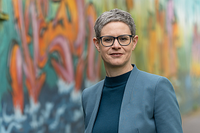
Robin Ladwig is a Lecturer in Human Resource Management at the University of Canberra's Faculty of Business, Government and Law. They hold a PhD from the same institution and specialize in research intersecting management studies, gender/queer theory, and workforce trends like technology, diversity, and equity. Their work addresses: Trans and gender diverse workplace experiences Technology's impact on workforce transformation Inclusive HRM practices and policy development Social justice and accessibility in employment Organizational culture and structure Robin has received multiple teaching recognitions, including Advanced Higher Education Fellow and HERDSA Associate Fellow status, and actively contributes to Australian Human Resource Institute's ACT DEI Network as Convener. They accept HDR and Honours students in related fields. Scientific awards include: Advanced Higher Education Fellow HERDSA Associate Fellow Commendation for AI integration in teaching
Hugo Cardoso serves as Department Chair and Full Professor in the Department of Archaeology at Simon Fraser University. He joined SFU in May 2013 after holding a professorship at the University of Porto Medical School in Portugal and working as a researcher and curator at Lisbon's National Museum of Natural History. Cardoso earned his PhD in Anthropology from McMaster University in 2005, receiving the CAGS-UMI distinguished dissertation award the following year. He is the Co-Director of SFU's Centre for Forensic Research and heads the Juvenile Osteology (JUNO) group, which focuses on skeletal development in children. Cardoso's research centers on physical anthropology, particularly juvenile osteology, bioarchaeology, and forensic anthropology. His work explores age estimation methods, stature and weight estimation techniques, dental development, and the impact of socioeconomic factors on skeletal growth patterns. He has published extensively on these topics and maintains active research funded by NSERC and SSHRC grants. His research portfolio demonstrates a clear trend toward developing more inclusive and accurate methods for analyzing juvenile skeletal remains, with recent publications focusing on stature estimation formulas, growth patterns across different populations, and ethical considerations in skeletal collections. His work bridges forensic anthropology with historical and bioarchaeological investigations, examining how social, economic, and political changes affect skeletal development across time periods. CAGS-UMI distinguished dissertation award (2006) Member of the College of New Scholars, Artists and Scientists of the Royal Society of Canada (2018) Cardoso has supervised over 40 post-doctoral, graduate, and undergraduate students throughout his career. Currently, he supervises one post-doctoral fellow (Dr. Angela Silva Bessa), five PhD students (Marianna Cervantes, Elena Sierra, Tabasom Ilkhan, Cathy Tran, and Pegah Goodarzi), one MA student (Deanna Alvarez), and co-supervises a PhD student (Katherine Nichols) working on unmarked graves at Indian Residential Schools. His research is funded by NSERC and SSHRC, including a Partnership Development grant awarded in August 2020 to support the C.O.M. COLLECTION project. He leads the FROST Lab (Forensic Osteology Lab) and is actively involved in the C.O.M. COLLECTION project, which involves the transfer of unclaimed human remains from Portugal to SFU for research purposes. This controversial initiative has undergone extensive ethical review, receiving approvals from the Portuguese National Council of Ethics for the Life Sciences (CNECV) and the National Institute of Legal Medicine and Forensic Sciences (INMLCF), as well as multiple approvals from the Municipality of Lisbon.
Cal Horton is a Research Fellow at Oxford Brookes Business School, affiliated with the Centre for Diversity Policy Research and Practice (CDPRP). Specializing in trans inclusion and Applied Trans Studies, his work focuses on systemic barriers in STEM careers for transgender individuals and healthcare equity for trans youth. Educations: PhD, MSc, BA (Hons). Research interests include cis-supremacy theory, trans healthcare policies, and child rights advocacy. Key projects include the ASPIRE initiative addressing trans retention in STEM (funded by The Royal Society of Chemistry) and BLA-HAJ, which focuses on culturally competent healthcare assessment for trans youth (funded by ESRC). Publications emphasize critical analysis of healthcare policies and social inclusion frameworks. Current projects total £276,335 in research funding. Grants include: BLA-HAJ (ESRC £210,639) ASPIRE (Royal Society of Chemistry £65,696) Participates in multidisciplinary teams addressing intersectional diversity challenges through evidence-based policy development.
Dr. Harper B. Keenan is an Assistant Professor at the University of British Columbia’s Faculty of Education, Department of Curriculum and Pedagogy. He previously held a postdoctoral fellowship at Stanford Graduate School of Education and earned his PhD in Curriculum and Teacher Education from Stanford in 2019. His research focuses on critical trans pedagogies, anti-racist queer and trans education, and the intersection of colonialism, race, and gender in schools. Institution: University of British Columbia Department: Department of Curriculum and Pedagogy Academic Rank: Assistant Professor Dr. Keenan’s work interrogates how adults teach children to navigate oppressive systems while creating spaces for transformative inquiry. He advocates for pedagogies that embrace children’s curiosity about topics like colonialism, gender, and violence, emphasizing classroom environments that foster self-directed learning and critical engagement. His recent publications explore trans worker safety in PK-12 schools, methodological innovations rooted in transgender experiences, and the reimagining of curriculum to challenge binary norms. Key trends in Dr. Keenan’s scholarship include: Centering trans and queer epistemologies in educational research Critiquing standardized testing and colonial narratives in elementary education Developing anti-racist, decolonial approaches to teaching history Advocating for gender-neutral honorifics and inclusive language Dr. Keenan’s awards include the Robert Quartermain Professorship of Gender and Sexuality Research in Education and a 2022 NAEd/Spencer Foundation Postdoctoral Fellowship . He maintains active collaborations with trans educators and scholars, including co-authoring policy briefs and participating in national dialogues on transgender justice in schools.
Prof. Dr. Christine M. Klapeer is Professor of Political Science with a focus on Gender Studies at Justus Liebig University Giessen, where she has been employed since 2024. She is affiliated with the Department of Social and Cultural Sciences and the Institute of Political Science. Prior to her current position, she served as Head of the Department of International Gender Politics and Qualitative Methods in Political Science at the University of Kassel (2021-2024), and held various academic positions including Visiting Professor at the Center for Interdisciplinary Gender Studies Innsbruck and research roles at Georg-August-University Göttingen. Her educational background includes a doctorate in Political Theory from Leopold-Franzens-University Innsbruck (2011) with a dissertation titled 'Die Tribade im Leviathan. Erzählungen über gute Staatsbürger und sexuelle Devianz,' and undergraduate studies in Political Science with an interdisciplinary focus on Philosophy/Political Theory, Gender Studies, Media Research and Contemporary History at the same institution (1998-2003). Prof. Klapeer's research centers on political science gender studies with particular emphasis on feminist, queer and intersectional perspectives. Her work explores the complex relationships between gender politics, heteronormativity, and democratic citizenship, examining how these dynamics manifest in social movements, particularly LGBTIQ movements. She investigates the intersections of coloniality and intersectionality in contemporary gender and sexual politics, and analyzes the potential of queer and feminist theoretical frameworks to challenge and transform existing political structures. Her research also addresses political and social science approaches to anti-discrimination, examining how power operates through seemingly neutral institutional frameworks. She has developed distinctive approaches to understanding knowledge production within social movements and the relationship between academic scholarship and activist practice. Her recent publications reveal a consistent focus on the political dimensions of gender and sexuality, with increasing attention to the rise of anti-gender politics and right-wing populism across Europe. Her work demonstrates how academic scholarship can engage with activist movements while maintaining critical distance, particularly through her examination of knowledge production within social movements. She has developed a distinctive approach that combines postcolonial, queer, and feminist perspectives to analyze the global dimensions of gender politics and LGBTIQ rights, with particular attention to the German context. Visiting Fellow of the Academic Year 2017/2018, School of Gender, Sexuality and Women's Studies & Centre for Feminist Research, York University, Toronto Giangiacomo Feltrinelli Foundation Scholarship for the XIX Cortona Colloquium – Gender and Citizenship: New and Old Dilemmas, Between Equality and Difference Promotionsstipendium from the University of Innsbruck Forschungspreis der Austrian Gay Professionals (agpro) Johanna Dohnal Förderpreis for women's and gender research Preis für 'Frauenspezifische Forschung' from Leopold-Franzens-University Innsbruck Nachwuchspreis of the Austrian Political Science Association Prof. Klapeer is actively involved in research funding, most notably as a principal investigator for the Volkswagen Foundation-funded project 'LGBTIQ* Movements as Agents of Democratization: Historical, Contemporary, and Future Resources for Imagining Inclusive and Diverse Democracies,' which will receive 1.4 million euros over 3.25 years starting in spring 2025. She regularly organizes academic events that bridge theory and practice, such as the upcoming workshop 'Making Diversity Real?: Navigating Between Academia and Activism in German and International Context,' which examines how activist practices influence academic methodologies and knowledge production. Her teaching focuses on the intersections of gender, politics, and democracy, with courses addressing contemporary challenges to democratic institutions through the lens of anti-gender politics and queerphobia. She leads a research team including scientific staff member Tarek Shukrallah and administrative support from Julia Just, with additional assistance from student workers. Her research group actively engages with both academic and activist communities across Germany and internationally, reflecting her commitment to making knowledge production accountable to social movements and the communities they represent.
Dr. Soyeon Lee serves as Assistant Professor of Rhetoric and Writing Studies in the Department of English at the University of Texas at El Paso's College of Liberal Arts. Her academic work centers on transnational communication frameworks within multilingual community contexts, particularly examining disaster recovery systems and social justice initiatives through rhetorical and design lenses. Her educational credentials include: Ph.D. in English with concentration in Rhetoric, Composition, and Pedagogy (University of Houston) Graduate Certificate in Teaching Technical Communication (Texas Tech University) Dr. Lee's research explores transnational writing practices , environmental disaster rhetoric , and equitable user experience design with emphasis on community-engaged pedagogy across linguistic borders. Her current monograph investigates how multilingual writers navigate climate disaster recovery communication, revealing critical gaps in institutional accessibility frameworks. This work intersects with anti-racism advocacy, as seen in her coalition-building research addressing anti-Asian violence. Recent publications demonstrate consistent focus on disaster recovery systems (2021-2024), with growing emphasis on transnational justice frameworks. Her scholarship consistently bridges academic theory and community application, particularly through multilingual UX design for vulnerable populations. Professional recognition includes: ACM SIGDOC 2021 Best Paper Award for COVID-19 recovery research While advising activities and grant funding details aren't specified in source materials, Dr. Lee's collaborative publications indicate active engagement with community partners and interdisciplinary teams. Her work consistently emphasizes trans-border implementation, suggesting ongoing fieldwork with border communities despite no formal lab structure being mentioned.
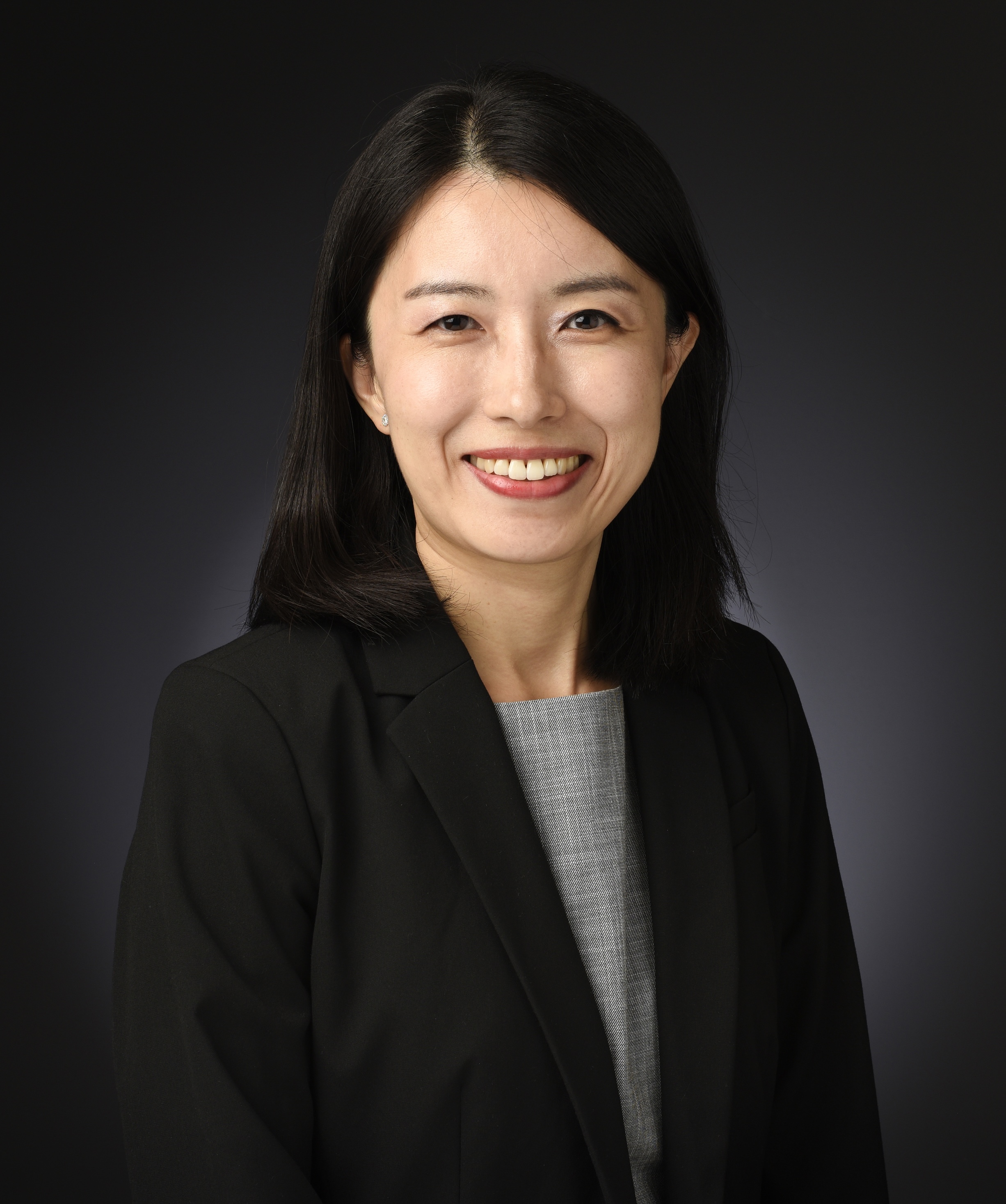
Dr. Yasmin Fedda is a Senior Lecturer in Film Studies at Queen Mary University of London, specializing in documentary filmmaking, interactive storytelling, and political sciences. She holds a PhD in Trans-Disciplinary Documentary Film from the University of Edinburgh and a Master's in Visual Anthropology from the University of Manchester. British School at Rome Residency National Theatre Immersive Storytelling Studio CPH:Lab Residency Mothlight Micro Cinema Residency Her research explores intersections between film, anthropology, and human rights, with focus areas in forced migration, representation ethics, disability studies, and activism. She leads the UKRI-funded Protracted Displacement Economies project (2020-2024) and co-created How We Work with 39 collaborators across five countries. Recent works include the immersive documentary The Pathogen of War (2024) about antibiotic resistance in Iraq, and the BAFTA-nominated Breadmakers (2007) on disability inclusion in Edinburgh bakeries. Her Syrian-focused films include Ayouni (2020) on forced disappearances and Queens of Syria (2014) about refugee women's theater. RAI Film Prize Commendation (2021) Best Documentary Director, Abu Dhabi FF (2014) Best Female Director, Carthage FF (2015) Best Doc, Arab FF Minneapolis (2016) Sundance Collection inclusion As Fellow at QMUL's Institute for Humanities and Social Sciences, Fedda combines academic research with practice-led filmmaking. She has programmed festivals like Reel Afghanistan and Reel Syria, and taught film globally through universities and NGOs.
Anniken Sørlie serves as an Associate Professor of Law at the Department of Social Sciences within the Faculty of Social Sciences at Oslo Metropolitan University. Her academic career spans multiple institutions including the University of Oslo and Østfold University College, with expertise in human rights law, particularly focusing on vulnerable populations. Sørlie holds leadership roles in professional organizations including JURK – Legal Advice for Women and The European Commission on Sexual Orientation Law (ECSOL), where she contributes to shaping legal frameworks for gender and sexual diversity in Norway and internationally. Doctorate in Law, University of Oslo (2018) - Thesis: "The Right to Gender Identity: A Grounded Life Cycle Perspective" Master's Degree in Law, University of Oslo (2012) Bachelor's Degree in European and American Studies, University of Oslo (2009) Professor Sørlie's research primarily focuses on the legal rights of LGBT individuals in Norway, with special emphasis on transgender rights and the intersection of gender identity with legal frameworks. Her work critically examines how laws impact people in vulnerable situations, particularly regarding privacy rights, protection against discrimination, and access to healthcare. She has made significant contributions to understanding compensation mechanisms for victims of violence following extreme events and the legal aspects of welfare benefits. Her scholarship bridges theoretical legal analysis with practical implications for policy development and social justice initiatives. Sørlie's recent publications demonstrate a consistent focus on gender identity, transgender rights, and inclusive legal frameworks. Her work spans children's rights, elderly care, workplace inclusion, and reproductive justice, revealing how cisnormative structures within legal systems create barriers for transgender individuals. The publications show a progression from foundational legal analysis toward practical interventions for creating more inclusive societies, with increasing attention to intersectional approaches that consider how gender identity intersects with other aspects of identity and social position. His Majesty the King's Gold Medal (2019) for doctoral thesis "The Right to Gender Identity: A Grounded Life Cycle Perspective" As an educator, Sørlie teaches human rights, administrative law, and welfare law at both bachelor's and master's levels, with specific focus on children's rights, social security, and health law. She serves as an examiner at the University of Oslo's Faculty of Law and other educational institutions, contributing to the development of future legal professionals. Her external engagements include board membership with JURK – Legal Advice for Women, active participation in the European Commission on Sexual Orientation Law, and previous service on Norway's Equality and Discrimination Board, demonstrating her commitment to applying academic expertise to real-world legal challenges. Sørlie participates in the "Living conditions, health, work and social inequality" research group at OsloMet, contributing to interdisciplinary work that connects legal scholarship with broader social science perspectives. Her involvement in projects like "LAW22JULY: RIPPLES" demonstrates her engagement with research teams addressing the legal aftermath of significant societal events. She collaborates with researchers across institutions including the University of Oslo and Oslo Pride to advance understanding of transgender experiences in Norwegian society.
Benoît Tricard is an Assistant Professor at NEOMA Business School in the Accounting, Control & Legal Affairs department. He earned his PhD in Management, Management Control from ESSEC after graduating from IEP Paris. His research focuses on management instrumentation, particularly the role of performance indicators, risk management, change management, and lean management in organizational processes. PhD, Management, Management Control Graduate of IEP Paris and ESSEC Teaching areas: Management Control, Management Accounting Tricard’s research spans pragmatic philosophy, sociomateriality, and temporality in organizations. He uses frameworks from Peirce, Bakhtin, and Ricoeur to analyze organizational artifacts, chronotopes, and valuation processes. His recent work explores trans-action theory, narrative emplotment, and ecological agency models. Publication Trends: His academic output focuses on bridging philosophical concepts (e.g., Pragmatism, Peirce’s semiotics) with organizational challenges like risk, change, and performance management. Key methodologies include dialogical inquiry, process analysis, and semiotic mediation frameworks. Tricard has contributed to high-ranking journals like Organization Studies and publishers such as Oxford University Press and Economica. His work emphasizes non-representational approaches to organizational complexity and the philosophical underpinnings of management tools.
Marianne Turner is an Associate Professor in Bilingual Education and TESOL at Monash University's School of Curriculum Teaching & Inclusive Education. Her research focuses on developing socially equitable understandings of language and building capacity for multilingual approaches across educational settings. She has established significant collaborations with Victorian Department of Education and Catholic Education through funded research projects. Her primary research interests include: Translanguaging as a framework addressing social inequity Integration of EAL and content-based learning in English-speaking contexts Language teacher pre-service education and professional development Content and language integrated pedagogies (CLIL) Educating for diversity and inclusion through multilingual strategies Recent publications demonstrate a clear trajectory toward practical implementation of translanguaging in Australian classrooms, with emphasis on teacher development, digital multimodal approaches, and policy frameworks. Her work consistently bridges theoretical concepts like trans-semiotizing with classroom applications through projects involving Home Languages in English Classrooms and Plurilingual Pedagogy initiatives. Turner actively disseminates research through teacher associations (VicTESOL, MLTAV), government resources, and media engagement. Current projects include English as an Additional Language (EAL) pedagogy development for secondary classrooms (2025) and Home Languages in the English Classroom research (2021-2022). She has supervised PhD students focusing on translanguaging approaches but is currently not accepting new candidates. Her research contributes to UN Sustainable Development Goals through advancing educational equity and inclusive language practices.
Maria Cristina Paciello is an Associate Professor in the Department of Asian and North African Studies at Ca' Foscari University of Venice. Her work centers on the History of Islamic Countries, with a focus on political economy, gender dynamics, youth mobilization, and EU-Mediterranean relations. She is actively engaged in research and teaching, with a strong publication record in leading journals and policy reports. Her research interests include the political economy of Arab countries, gender and labor issues, youth exclusion, and the ideological contributions of female Islamist figures such as Zaynab al-Ghazālī. She investigates how trade liberalization, neoliberal reforms, and EU policies impact social justice and human rights in the Arab world, often adopting a decentring, bottom-up analytical framework. Her recent publications span topics such as working-class women in Jordan, Morocco, and Tunisia; the life and thought of Zaynab al-Ghazālī; youth transitions in the Mediterranean; and critical assessments of EU foreign policy. These works reflect interdisciplinary engagement across history, political science, sociology, and development studies, with recurring themes of social justice, resistance, and inclusive policy-making. Scientifically, she has contributed to major research projects like MEDRESET and Power2Youth, producing policy recommendations and academic insights. Though no formal awards are listed, her influence is evident in her extensive collaborations and policy-oriented outputs. Maria Cristina Paciello advises on youth and labor issues, often in collaboration with researchers such as Daniela Huber and Daniela Pioppi. She has led or contributed to numerous research grants focused on EU-Mediterranean relations, youth exclusion, and social movements. Her work is supported by institutions like the German Marshall Fund and the Institute of International Affairs. She is affiliated with research teams focused on Mediterranean studies, political economy, and gender in the Arab world. Her projects often involve transnational collaboration and aim to produce inclusive, reflexive policy frameworks for EU engagement in the region.
Dr. A.J. Lowik (they/them) is an Assistant Professor in the Department of Sociology at the University of Lethbridge, specializing in Trans Studies, Critical Theory, and Critical Health Research. They are a nonbinary, agender, queer, neurodivergent, feminist sociologist and sex and gender data scientist committed to addressing health inequities for trans, intersex, and Two-Spirit communities. Research focuses on trans reproductive health (abortion, perinatal care, lactation, fertility preservation), healthcare access barriers, and methodological precision in sex/gender data collection. They develop inclusive survey measures through cognitive testing and lead initiatives to transform medical education curricula and clinical practices using gender-affirming frameworks. Their work integrates poststructuralist and posthumanist theories with community-based participatory methods. Dr. Lowik directs the Centre for Gender and Sexual Health Equity's "Gender & Sex in Methods & Measurement: Research Equity Toolkit," providing open-access resources for researchers. As President of the Abortion Rights Coalition of Canada with 20 years of activism, they bridge scholarship with reproductive justice advocacy while centering their identity as a white settler accountable to Indigenous sovereignty.
Blair Attard-Frost is an Assistant Professor in the Department of Political Science at the University of Alberta's Faculty of Arts and a Fellow at the Alberta Machine Intelligence Institute (Amii). She holds a PhD, Master of Information (MI), and Honours Bachelor of Arts (HBA) from the University of Toronto, establishing a strong interdisciplinary foundation for her work at the intersection of political science and technology studies. Her research applies trans feminist theory to address power dynamics, participation, and justice in artificial intelligence governance systems. She examines how AI governance structures often prioritize industrial development over harm prevention, with particular attention to how marginalized communities are excluded from policymaking processes. Her work spans multiple disciplines including political science, gender studies, science and technology studies, and critical data studies. Attard-Frost's publications reveal a consistent focus on structural injustices in AI governance, with particular emphasis on transfeminist approaches that center marginalized perspectives. Her research spans AI ethics frameworks, value chains, national policy initiatives, and community resistance strategies, showing how governance systems can be transformed to be more inclusive and democratic. As an educator, she teaches courses including POL S 298 (Topics in Political Science), POL S 470 (Topics in Comparative Politics), and POL S 540 (Topics in Public Policy), with a focus on digital technology, AI policy, and governance. Her public scholarship extends beyond academia through contributions to The Globe and Mail, CBC News, and Tech Policy Press, making complex AI governance issues accessible to broader audiences. Attard-Frost also engages in creative practice through experimental sci-fi and glitch art, with her web game "object.type(3)" featured at the Expanded Data conference hosted by McMaster University's Critical Data Studio. This creative work explores frictions between gender, technology, and regulation, complementing her academic research with artistic expression.
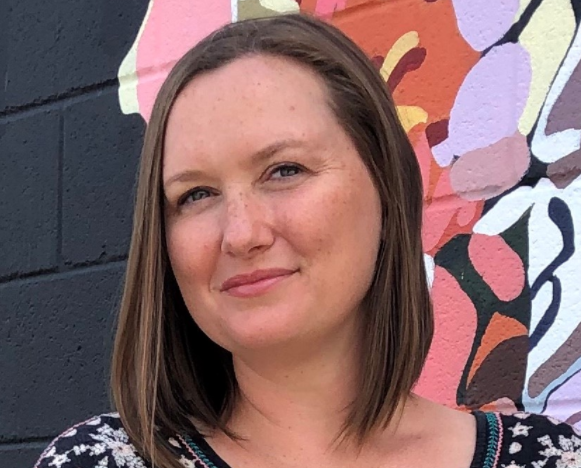
Dr. Kate Russell is an Associate Professor in Physical Education at the University of East Anglia (UEA), based in the School of Education & Lifelong Learning. She holds dual roles as Chair of the University Research Ethics Committee and Chair of the Gender and Sexually Diverse Relationships Section at the British Psychological Society. Her expertise spans LGBTQIA+ inclusion, mental health, mindfulness, and gender/sexuality studies in educational and sport contexts. She earned an MA in Teaching Mindfulness from Bangor University and is a Chartered Sport and Exercise Psychologist. Her research explores intersections of gender, sexuality, and wellbeing in sport, education, and professional environments. Current projects include ESRC-funded work on mindfulness in schools and Joyce Morris Legacy-funded studies on early-years wellbeing programs. She leads the Mental Health Trainee Teacher Project examining wellbeing support for education trainees. Key research themes include LGBTQ+ identities in sport/exercise, mindfulness-based interventions, and qualitative research methodologies. She supervises PhD students focusing on gender/sexuality, mental health, and mindfulness applications in educational/sport settings. Her teaching includes modules on sport advocacy and mindfulness pedagogy, with upcoming roles as Course Director for the MSc Professional Practice in Sport (2025). Media engagement includes BBC contributions on football culture and sexual abuse prevention. Collaborations span international projects on digital education and pandemic impacts on youth wellbeing. Russell’s work aligns with UN SDGs for quality education (SDG4) and gender equality (SDG5).
Lindsay Fernandez-Rhodes serves as Assistant Professor of Biobehavioral Health in the College of Health and Human Development at Pennsylvania State University, with dual affiliation at the Penn State Cancer Institute. Her research focuses on genetic and sociocultural determinants of health disparities, particularly among Hispanic/Latino populations through the Hispanic Community Health Study/Study of Latinos (HCHS/SOL). Her primary research interests span Genetic Epidemiology , Health Disparities , and Sociocultural Determinants of Obesity . She investigates how genetic ancestry interacts with acculturation, socioeconomic status, and environmental factors to influence cardiometabolic outcomes. Her work integrates multi-omics approaches with life course epidemiology to uncover mechanisms driving health inequities in minority populations. Analysis of her recent publications reveals a strong emphasis on Hispanic/Latino health across multiple domains: genomic fine-mapping ( 2023, 2025 ), epigenetic mediation of socioeconomic effects ( 2024 ), pubertal development ( 2025 ), cognitive aging ( 2023 ), and cardiometabolic disease ( 2024, 2025 ). Her methodological innovations include synthetic data applications for privacy preservation ( 2025 ) and commentary on genomic inclusion ( 2023 ). Dr. Fernandez-Rhodes actively contributes to major collaborative initiatives including HCHS/SOL, PAGE consortium, and TOPMed. Her work has secured substantial NIH funding for population genomics research, though specific grant details aren't listed in the provided text. She mentors graduate students in biobehavioral health and genetic epidemiology through Penn State's PhD programs. Her laboratory work centers on the Penn State Cancer Institute's Cancer Control program, with additional collaborations through the Center for Research on Tobacco and Health and Office for Cancer Health Equity. She utilizes HCHS/SOL data infrastructure and Penn State's biostatistics/bioinformatics shared resources for multi-omics analyses.