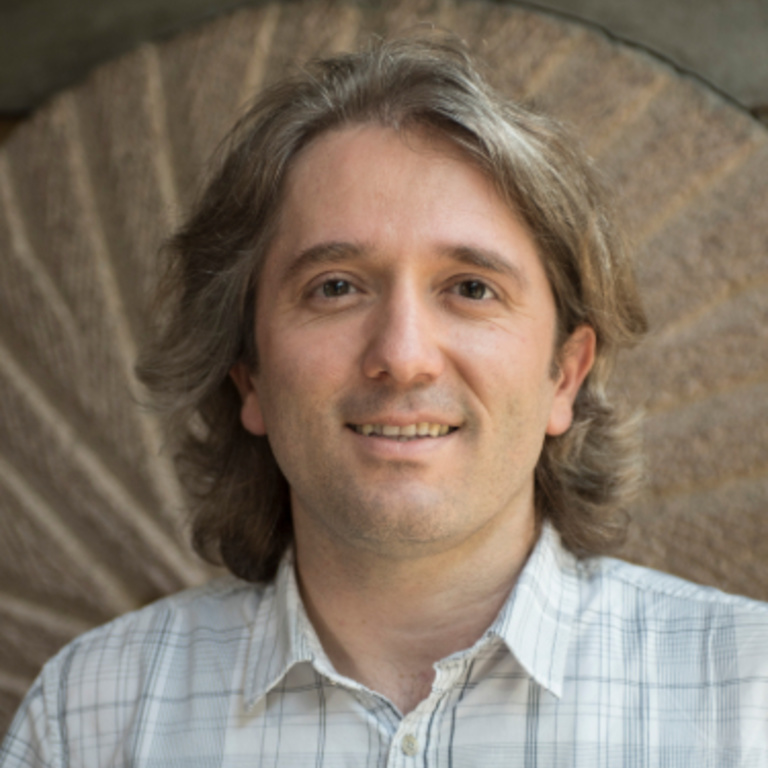
Akash Srivastava is a Research Scientist and Principal Investigator (PI) at the MIT-IBM Watson AI Lab in Cambridge, MA, and Chief Architect of Large Language Model Alignment at IBM Research. His work focuses on generative modeling , Bayesian inference , and machine learning for constrained engineering design . He previously conducted PhD research at the University of Edinburgh under Dr. Charles Sutton and Dr. Michael U. Gutmann on variational inference for generative models using deep learning. His research spans Neuro-Symbolic AI , Language Model Alignment , and Synthetic Data Generation , with applications in 3D modeling , urban logistics , and material science . Recent publications highlight advancements in diffusion models , continual learning , and privacy-preserving data synthesis . As a PI, he collaborates with MIT faculty like Prof. Faez Ahmed and Prof. Rafael Gomez-Bombarelli on projects such as generative modeling for mechanical systems , synthetic data in decision-making , and greener delivery networks . He has received funding through a DARPA grant for machine common sense research.
Prof. Dr. Patrick Cichy is an affiliated professor at the Institute for Technology and Innovation Management (TIM) of RWTH Aachen University and also associated with Bern University of Applied Sciences. His research agenda lies at the intersection of information systems, innovation management, and data science, with a core focus on privacy & cybersecurity, service and business-model innovation, IoT ecosystems, and text mining/visual analytics. Research Interests: Privacy & Cybersecurity: Investigating how individuals and organizations balance privacy concerns with data sharing incentives, especially in emerging technology contexts. Service & Business Model Innovation: Examining how firms create and capture value from digitally enabled services and personal data. IoT Ecosystems: Studying the dynamics of value creation, legitimacy, and privacy within interconnected Internet-of-Things environments. Text Mining & Visual Analytics: Leveraging advanced computational techniques to map and analyze large-scale discourse and innovation patterns. Across his latest publications (2014–2024), a clear thematic trajectory emerges: an evolving exploration of privacy calculus and data-sharing behavior, methodological advances in text mining for innovation studies, and longitudinal analyses of privacy discourse spanning three decades. These works collectively contribute to both theoretical development and practical guidance for policymakers and managers navigating digital transformation. Contact: Email: cichy@time.rwth-aachen.de Office hours: By appointment
Michael Henderson serves as a Lecturer at Monash University within the School of Curriculum, Teaching and Inclusive Education. His academic profile reflects deep engagement with contemporary educational challenges through research spanning adult learning, digital technologies, and pedagogical innovation. His research interests encompass: Adult and Vocational Education Higher Education Systems Educational Technology Integration Feedback Literacy and Assessment Practices Digital Literacy for Marginalized Populations Artificial Intelligence in Learning Environments Creativity in Educational Contexts Henderson investigates how generative AI transforms feedback mechanisms, with emphasis on student perceptions of AI-generated versus teacher feedback. His work critically examines digital empowerment frameworks for refugee and migrant learners, addressing systemic barriers in technology access. Recent publications reveal growing focus on decolonizing creativity research, ethical AI implementation in Australian policy contexts, and play-based digital safety education for young children. This trajectory demonstrates consistent attention to equity, cultural responsiveness, and practical applications of emerging technologies in diverse educational settings. His scientific recognition includes: Dean's Award for Programs that Enhance Learning (2019) Henderson currently leads the international research project "Active Learning about Academic Publishing through Collaborative Online International Learning" (2024-2025), examining cross-cultural academic skill development. His upcoming presentation at the 2025 Australian Association for Research in Education Conference will address collaborative learning frameworks. Though specific student mentoring details are unavailable, his project leadership suggests active involvement in guiding emerging researchers through international collaborations focused on educational technology and publishing practices.
Ole Winther is a Professor at the Department of Biology, University of Copenhagen, specializing in Computational and RNA Biology. He also holds a joint appointment as Professor at DTU Compute, Technical University of Denmark. His research bridges machine learning, bioinformatics, and natural language processing with applications in biological sequence analysis, transcriptomics, and health informatics. Education: 1998: PhD in Physics, University of Copenhagen 1994: Master of Science in Physics, University of Copenhagen Winther's research focuses on developing advanced machine learning methodologies for biological applications. He has pioneered protein language models for sequence analysis (DeepLoc, SignalP, DeepTMHMM), interpretable deep learning for RNA subcellular localization, and benchmarking frameworks for DNA language models. His work spans latent variable models, variational inference, diffusion models, and novel architectures for deep generative modeling, with increasing emphasis on practical healthcare applications including rare disease diagnosis through findzebra.com and medical question answering with large language models. Scientific Recognition: ELLIS Fellow (2021) Head of ELLIS Copenhagen Unit H-index of 61 (Google Scholar, May 2023) 19,700+ citations (Google Scholar, May 2023) Winther has supervised 25+ PhD students to completion with 7 currently in progress, along with over 100 master's projects. He frequently serves as PhD opponent and committee chairman across European institutions. His research is supported by substantial funding including multiple Novo Nordisk Foundation grants totaling over 60 million DKK for the Center for Basic Machine Learning Research in Life Science and CAZAI projects, plus significant funding from the Danish Independent Research Fund. He leads an active research group developing cutting-edge machine learning approaches for bioinformatics and NLP challenges. Winther co-founded two spin-out companies: findzebra.com (2014, 2018), a search engine for rare diseases, and raffle.ai, an NLP startup for enterprise search. He initiated DTU's popular BSc in AI and Data program and teaches the highly enrolled MSc course in Deep Learning (450+ students) and PhD course in Bayesian Data Analysis.
Leanna Hernandez, Ph.D., is Assistant Professor-in-Residence in the Department of Psychiatry and Biobehavioral Sciences at the David Geffen School of Medicine, University of California, Los Angeles. She directs the Hernandez Lab and can be reached at leannahernandez@ucla.edu . Her research integrates multimodal neuroimaging with large-scale genetics to uncover mechanisms underlying autism spectrum disorders, sex differences in brain development, and the role of immune–neurodevelopment pathways such as the complement system. Core themes include: Mapping how common genetic variation shapes brain structure and function across development. Identifying neural signatures that explain the female protective effect in ASD. Elucidating interactions between sleep physiology and brain maturation in youth. Across more than 40 peer-reviewed publications (2012-2023) she has leveraged data from the Adolescent Brain Cognitive Development (ABCD) Study, the GENDAAR Consortium, and multiple international biobanks, generating insights into white-matter microstructure, functional connectivity, and transcriptomic correlates of psychiatric traits. Scientific collaborations span UCLA, UC San Diego, University of Queensland, and the Busselton Health Study, reflecting an interdisciplinary approach that combines neuroimaging, genomics, lipidomics, and behavioral phenotyping. Dr. Hernandez’s laboratory website ( hernandezlabucla.org ) provides further resources, although specific trainees, grants, and awards are not detailed in the supplied text.
Dubravko Radic serves as Professor of Service Management at the University of Leipzig's Faculty of Business and Economics since 2009, while simultaneously holding the position of Deputy Head of the Price and Service Management group at the Fraunhofer Center for International Management and Knowledge Economics IMW since 2013. His academic career spans multiple institutions including the University of Wuppertal where he completed his habilitation, and the University of Frankfurt am Main where he earned his doctorate in statistics and econometrics. Doctorate (Dr. rer. pol. summa cum laude): Johann Wolfgang Goethe-Universität Frankfurt a.M. (2004) Habilitation: Bergische Universität Wuppertal (2009) Diplom-Volkswirt: Johann Wolfgang Goethe-Universität Frankfurt a.M. (1999) Research Stay: University of California Davis (2008) Professor Radic's research centers on the intersection of empirical methods and business management, with particular emphasis on service pricing modeling, applied microeconometrics, and social interactions in service contexts. His work bridges theoretical econometric approaches with practical business applications, especially in the healthcare sector where he has led multiple Fraunhofer IMW projects including ASARob, NurMut, and ATMoSPHÄRE. His research methodology combines quantitative modeling with real-world case studies to address strategic and operational decisions in service organizations. His recent publications demonstrate a consistent focus on discrete choice modeling, game theory applications in marketing, and service innovation frameworks. The 2025 paper "Discrete Games in Marketing Research" presented at the Global Marketing Conference in Hong Kong exemplifies his approach of applying advanced econometric techniques to practical marketing problems, particularly in digital service contexts. His work shows an evolving trajectory from foundational service management concepts toward increasingly sophisticated modeling of strategic interactions in service markets. Professor Radic has extensive experience advising major corporations including Metro AG, Lilly Deutschland, IMS Health, Berlin Chemie, and Augustinum gGmbH. His practical projects at Fraunhofer IMW focus on translating academic research into actionable business solutions, particularly in healthcare digitization and service innovation. He has led the TRAIN@MINE project developing training tools for Vietnam's mining sector and contributed to studies on Big Data applications in health insurance. At the University of Leipzig, he leads research activities through the Institute for Service and Relationship Management, supervising multiple research projects that connect academic inquiry with industry applications. His team collaborates with international partners including the University of California Davis, University of Maryland, Northwestern University, and the Technion Israel Institute of Technology, creating a robust research ecosystem focused on service management innovation.
NAKAJIMA, Tatsuo serves as a Professor at Waseda University's School of Fundamental Science and Engineering, Department of Computer Network Engineering. Holding a Doctor of Engineering from Keio University, he has been affiliated with Waseda since 1999 after positions at Japan Advanced Institute of Science and Technology (1993-1999), Cambridge University, and Carnegie Mellon University. His academic profile shows substantial research output with 433 papers and 3,338 citations on Scopus, and 7,604 citations with an h-index of 42 on Google Scholar. Dr. Nakajima's research focuses on Distributed Systems, Embedded Systems, and Ubiquitous Computing, with particular emphasis on virtualization architectures for embedded environments. His work bridges theoretical computer science with practical applications in information appliances, operating systems, and persuasive computing technologies. He has developed innovative systems including SPUMONE (a composition kernel for multi-OS environments), SIGMA System, and SPLiT (a performance optimization library for multicore processors). Analysis of his 15 most recent publications reveals a consistent research trajectory centered on enhancing reliability, security, and performance of embedded and pervasive computing systems. His work shows increasing integration of human factors, particularly in sustainable behavior applications through persuasive technology. The research spans from low-level system architecture to user-centered applications, demonstrating both technical depth and practical relevance. Nokia Research Center, Visiting Research Fellow (2005.04) Dr. Nakajima's research has produced numerous practical frameworks including SPUMONE for multi-OS environments, SPLiT for performance optimization, and persuasive applications like EcoIsland for sustainable behavior. His work on kernel monitoring, anomaly detection, and self-healing systems demonstrates strong focus on system dependability. Current research appears directed toward integrating human factors with embedded systems, particularly in environmental sustainability applications. His laboratory work centers around the SPUMONE project, a virtualization layer for multi-core embedded systems that enables multiple operating systems to coexist with minimal engineering cost. This research environment supports exploration of resource management, security monitoring, and performance optimization in embedded contexts. The work has practical applications in information appliances, smart homes, and pervasive computing environments.
Jeffrey R. Gruen is Professor of Pediatrics (Neonatology) and of Genetics at Yale School of Medicine, and a faculty member in the Investigative Medicine Program at Yale Graduate School of Arts and Sciences. His research is affiliated with multiple centers including the Yale Center for Genomic Health, Wu Tsai Institute, and the Yale Child Health Research Center. Professor of Pediatrics (Neonatology), Yale School of Medicine Professor of Genetics, Yale School of Medicine Member, Investigative Medicine Program, Yale Graduate School Principal Investigator, Gruen Lab Education: MD, Tulane University, 1981 BS in Chemistry, Tulane University, 1977 Residency in Pediatrics, Yale-New Haven Hospital, 1984 Internship in Pediatrics, Yale-New Haven Hospital, 1982 Dr. Gruen's research centers on the genetic and molecular basis of dyslexia and language impairments. His lab pioneered the mapping of the DYX2 locus on chromosome 6 and discovered the DCDC2 gene, a major contributor to reading disability. His team identified READ1, a transcriptional control element that modulates risk for dyslexia, and demonstrated synergistic interactions between genetic variants in DCDC2 and KIAA0319 . His work integrates human genetics, molecular biology, and neuroimaging to understand the biological mechanisms underlying learning disabilities. He leads the Yale Genes, Reading and Dyslexia (GRaD) Study and the New Haven Lexinome Project, aiming to enable early diagnosis and personalized educational interventions. The recent publications reflect a strong trend in integrating genetic data with cognitive, behavioral, and educational assessments. Key themes include genome-wide association studies of dyslexia, gene-environment interactions (particularly involving phonological awareness and home environment), phenotype harmonization across cohorts, and the application of genetic findings to educational policy and practice. Imaging genetics and the study of comorbid conditions like Sluggish Cognitive Tempo are also prominent. Scientific Awards: Innovative Research Award, Kavli Institute, 2022 Dr. Gruen has served as Principal Investigator on numerous NIH-funded studies, including the GRaD Study, the Pediatric Imaging NeuroGenetics (PING) Study at Yale, and the New Haven Lexinome Project. He mentors a broad network of collaborators across institutions such as the University of Colorado, University of Bristol, and Johns Hopkins. His lab trains researchers in human genetics, molecular techniques, and cognitive phenotyping. He leads the Gruen Lab, which focuses on human genetic studies, molecular genetic mechanisms, imaging genetics, and longitudinal intervention studies. The lab collaborates extensively with national and international research centers and utilizes advanced techniques including GWAS, sequencing, chromatin immunoprecipitation, and MRI-based phenotyping.
Farshad Arvin is a Professor of Robotics in the Department of Computer Science at Durham University. Prior to this, he held academic positions at The University of Manchester (2018-2022) and worked as a Research Assistant at the University of Lincoln (2012-2015). He holds a BSc in Computer Engineering (2004), an MSc in Computer Systems Engineering (2010), and a PhD in Computer Science (2015). His research focuses on Swarm Robotics , Bio-inspired Swarms , and Autonomous Multi-agent Systems . He pioneered the Swarm & Computation Intelligence Laboratory (SwaCIL) at Durham, leading projects like H2020-FET RoboRoyale (€3.27M), Horizon Europe Sensorbees (€3.2M), and BioDiMoBot (€8M), with total funding exceeding £4M. Recent publications highlight advancements in swarm trajectory optimization (T-STAR), collision-free multi-robot coordination, and bio-hybrid environmental monitoring. His work integrates bio-inspired algorithms with practical applications in autonomous vehicles, aerial drones, and hazardous environments. Scientific Awards: Marie Skłodowska-Curie fellowship Notable Projects: EU H2020-FET RoboRoyale (2021-2026) Horizon Europe Sensorbees (2024-2029) Horizon Europe BioDiMoBot (2025-2030) H2020-FET Robocoenosis (2020-2025) Supervision: Mentors 8 postgraduate students at Durham, including Hanadi Alhamdan, Hang Wang, and Honghao Pan.
Anna R. Karlin is a Professor and the Bill & Melinda Gates Chair in Computer Science & Engineering at the University of Washington's Paul G. Allen School of Computer Science & Engineering. She serves as Associate Director of Graduate Studies and leads research in theoretical computer science within the Theory & Models of Computation focus area. Ph.D. from Stanford University (1987) Former researcher at Digital Equipment Corporation's Systems Research Center (5 years) Professor Karlin's research centers on theoretical computer science, with specific expertise in algorithm design and analysis, particularly probabilistic and online algorithms. Her work spans multiple interdisciplinary domains including algorithmic game theory, economics and computation, data mining, operating systems, networks, and distributed systems. Her research has evolved from foundational algorithmic work to impactful applications in market design, auction theory, and pricing mechanisms. Karlin's publication record demonstrates a consistent trajectory from classical theoretical computer science toward algorithmic game theory and mechanism design. Her recent work focuses on approximation algorithms for NP-hard problems, auction design, revenue maximization, and stable matching problems, with applications in online advertising, network economics, and resource allocation. She has developed influential algorithms for the Traveling Salesman Problem and made significant contributions to understanding interdependent valuations in combinatorial auctions. Bill & Melinda Gates Chair in Computer Science & Engineering Professor Karlin has advised numerous doctoral students throughout her career, with former students including prominent researchers like Jason Hartline, Frank McSherry, and Kira Goldner. Her collaborative research has been supported by various grants, including NSF funding (CCF-1813135 mentioned in her publications). She co-authored the influential textbook Game Theory, Alive with Yuval Peres, which serves as a rigorous introduction to game theory with applications across multiple disciplines. As a leader in theoretical computer science, Professor Karlin maintains active involvement in the Theory of Computation research group at the Allen School, fostering collaboration between theoretical foundations and practical applications in computer science.
Deborah Ehrenthal is a Professor in the Department of Biobehavioral Health at The Pennsylvania State University and serves as Director of the Social Science Research Institute (SSRI). Her research leverages large administrative datasets to investigate maternal and child health outcomes, with particular focus on prenatal opioid exposure, birth complications, and healthcare system interactions within Medicaid populations. Her primary research spans maternal and child health epidemiology, utilizing Wisconsin Medicaid data (2010-2019) to examine opioid exposure trajectories, neonatal abstinence syndrome, infant mortality, and spillover effects on sibling development. She investigates modifiable factors like treatment continuity and prenatal care coordination, while addressing health disparities through implementation science frameworks. Her work bridges clinical outcomes with social determinants of health, emphasizing policy-relevant findings for vulnerable populations. Recent publications (2022-2025) reveal consistent focus on opioid-related pregnancy outcomes, demonstrating how exposure timing/duration affects neonatal withdrawal and child welfare involvement. She pioneers analyses of Medicaid enrollment gaps across pregnancy stages and explores broader implications like metabolic syndrome risks following adverse birth outcomes, while extending research into pandemic-era community health responses. Scientific Awards: Lloyd Prize for Innovative Health Research (2025) Dr. Ehrenthal's research program is sustained through federal and state grants supporting large-scale data analysis of Medicaid populations, though specific funding mechanisms aren't detailed in current profiles. As Professor and SSRI Director, she mentors graduate students in biobehavioral health and public health, supervising research on substance use disorders and implementation science. Her leadership cultivates interdisciplinary collaboration across Penn State's research ecosystem. As Director of SSRI, she spearheads initiatives including the Climate, Society, and Health program launched in November 2023. She leads cross-institutional teams analyzing Wisconsin administrative data, with strong partnerships in public health departments and medical schools. Her work integrates epidemiological methods with health services research to address the opioid epidemic's impact on maternal-child health systems.
Ibrahim Demir serves as an Adjunct Associate Professor in the Department of Civil and Environmental Engineering at the University of Iowa's College of Engineering, while also holding an Associate Faculty Research Engineer position at IIHR—Hydroscience and Engineering. His interdisciplinary work bridges hydroinformatics, environmental engineering, and advanced computing technologies to address critical water resources challenges through innovative digital solutions. His educational background includes a PhD in Environmental Informatics and Control Program from the University of Georgia (2010), an MS in Environmental Engineering from Gebze Institute of Technology (2004), and a BS in Chemistry from Bogazici University (2000). This foundation supports his integration of chemical, environmental, and computational sciences in hydrological research. Dr. Demir's research centers on hydroinformatics and AI-driven environmental systems, with core expertise in scientific visualization, cyber systems design, and virtual/augmented reality applications. He develops web-based frameworks for flood risk assessment, drought analysis, and water quality management, emphasizing real-time data integration and user-friendly interfaces. Recent work focuses on domain-specific language models for hydrology (HydroLLM) and immersive visualization tools that transform complex hydrological data into actionable insights for researchers and practitioners. Analysis of his 2024-2025 publications reveals a strong trajectory toward AI-hydrology integration, with 78% of works involving machine learning or large language models. Key themes include flood risk communication (22% of publications), algal bloom prediction (15%), and educational technology applications (12%). His research increasingly emphasizes scientific reproducibility through no-code visual programming frameworks and digital twin implementations for watershed systems. Dr. Demir actively contributes to scholarly discourse as Associate Editor for Environmental Modeling and Software, Journal of Hydroinformatics, Journal of Environmental Informatics, and Water and Artificial Intelligence (Frontiers in Water). He serves as Vice-Chair of the International Joint Committee on Hydroinformatics (IAHR/IWA/IAHS) leadership team, shaping global standards in hydroinformatics research and practice. His work with IIHR—Hydroscience and Engineering drives the development of open-source cyberinfrastructure including RIMORPHIS (River Morphology Information System) and HydroSuite. These platforms enable collaborative river morphology research and provide modular tools for hydrological analysis, education, and operational decision support, demonstrating his commitment to accessible, community-driven scientific advancement.
Anna-Katharina Praetorius is Professor of Research on Learning, Instruction and Didactics at the University of Zurich's Department of Educational Science within the Faculty of Arts and Social Sciences. Her research focuses on conceptual and methodological questions of teaching quality, teacher professionalism, and international comparative educational research. With a distinguished academic career spanning over a decade, she has established herself as a leading researcher in educational psychology and teaching quality assessment. Her research interests center on understanding and measuring teaching quality through multiple perspectives, with particular emphasis on cognitive activation in teaching, the Three Basic Dimensions model, diagnostic competence of teachers, and international comparative studies of instructional quality. She has pioneered work examining contextual factors in teaching quality research and has critically analyzed methodological approaches in the field. Praetorius has published extensively in top educational research journals, with recent work focusing on statistical decisions in teaching quality modeling, context in teaching quality research, and cognitive activation frameworks. Her research shows a clear trajectory toward more nuanced understandings of teaching quality that consider subject-specific, contextual, and methodological complexities. Among her notable recognitions are the 2015 Publication Award in the PostDoc category from the Society for Empirical Educational Research, the 2013 Dissertation Award from the German Psychological Society, and the 2012 Ernst Meumann Prize for outstanding research in empirical educational research. As an active contributor to the academic community, Praetorius serves as an ad-hoc reviewer for research proposals for the German Research Foundation and Swiss National Science Foundation, and reviews for numerous prestigious educational journals including Educational Psychology, Learning and Instruction, and Teaching and Teacher Education. She is a member of several expert associations including the German Psychological Society, European Association for Research on Learning and Instruction, and Society for Empirical Educational Research.
Dr. Sumanta Das is an Associate Professor and Graduate Director in the Department of Civil and Environmental Engineering at the University of Rhode Island. His research focuses on sustainable infrastructure materials, with particular expertise in cementitious materials, composite structures, and advanced computational modeling techniques. He directs a vibrant research group that bridges experimental mechanics with computational modeling and machine learning approaches to address challenges in infrastructure durability and performance. Dr. Das received his educational training from prestigious institutions: Ph.D. in Materials and Structures from Arizona State University (2015) M.Tech. in Structural Engineering from Indian Institute of Technology, Kanpur (2012) B.E. in Civil Engineering from Jadavpur University (2010) His research interests center around developing sustainable and durable infrastructure materials through innovative design approaches. Dr. Das investigates microstructure-property relationships in cementitious systems, with special focus on materials containing microencapsulated phase change materials for freeze-thaw durability, fiber-reinforced composites, and smart cementitious materials with self-sensing capabilities. His work integrates advanced experimental techniques like nanoindentation with computational modeling approaches including finite element analysis, molecular dynamics simulations, and machine learning algorithms to predict material behavior and optimize performance. Dr. Das's recent publications demonstrate a clear trajectory toward integrating machine learning with traditional materials science approaches. His research group has made significant contributions to understanding the behavior of cementitious composites under extreme conditions, developing multifunctional composites with embedded sensing capabilities, and creating computational frameworks that bridge multiple scales from molecular to structural levels. The work shows increasing sophistication in combining experimental validation with predictive modeling. Dr. Das has successfully secured numerous research grants as PI or Co-PI from diverse funding sources including the Office of Naval Research, Department of Defense, US Department of Transportation, and industry partners like Goetz Composites. His research portfolio spans infrastructure durability, composite materials for marine applications, and smart sensing technologies for structural health monitoring. As an educator and mentor, Dr. Das has supervised multiple doctoral and master's students who have completed theses on topics including: Multiscale simulation and machine learning-assisted performance prediction for cementitious composites Performance-based multiscale tuning of inclusion-modified and 3D printed composites Enhancing freeze-thaw durability of cementitious composites through innovative materials design Underwater explosion response of composite structures Implosion pulse mitigation using additively manufactured filler profiles
Dr. Jasmijn van Gorp is a Senior Lecturer in the Department of Media and Culture Studies at Utrecht University's Faculty of Humanities. She specializes in Digital Humanities , Audiovisual Heritage , and Digital Culture with a focus on Television History and Eastern European Media . As co-founder of the CLARIAH Media Suite, she develops digital research infrastructure for audiovisual heritage in the Netherlands. PhD in Social Sciences from the University of Antwerp (Belgium) MA in Communication Sciences from KU Leuven (Belgium) Her research examines digital methods for film and television studies , metadata in digital archives , and AI-generated analysis of broadcast schedules . She leads projects like Re-Frame (2021-2025) and AI TaDa , exploring the reuse of audiovisual archives in journalism and algorithmic metadata generation. Recent work includes tutorials on Data Visualization and Flow Analysis using the Media Suite. She advocates for critical digital tool literacy in education and co-authored the Digital Skills learning trajectory for Utrecht's BA programs. Her teaching includes Digital Television History and Programming and Curation at BA and MA levels, supervising theses in film and television studies. As workpackage leader for CLARIAH-PLUS WP5 , she integrates computer vision , automatic speech recognition , and linked data into sustainable tools for cross-media research. She trains researchers via the Media Suite Learn initiative and collaborates on digital infrastructure projects with institutions like NISV and CLARIAH.