Sarah Ita Levitan is an Assistant Professor in the Department of Computer Science at Hunter College, CUNY, and a member of the doctoral faculty in both Computer Science and Linguistics PhD programs at the CUNY Graduate Center. She previously served as a Postdoctoral Research Scientist at Columbia University, where she completed her PhD in Computer Science in 2019 under Dr. Julia Hirschberg. Research Focus: Spoken Language Processing Natural Language Processing Paralinguistic Analysis Trustworthiness and Deception Detection Acoustic-Procedic and Lexical Feature Extraction Online Radicalization and Misinformation Recent Publications demonstrate expertise in analyzing speech and text for trust cues, deception detection, and mental health prediction. Her awards include grants from NSF, Google, and Columbia University fellowships. She leads the Hunter Speech Lab , mentoring PhD, MS, and undergraduate students in computational linguistics research. Scientific Awards and Grants: NSF EAGER Grant (2023) Google Cyber NYC Grant (2023) NSF AI Institute Grant (2023) Air Force Office of Scientific Research Grant (2020) Brown Institute Seed Grant (2020) Knight News Innovation Fellowship (2018) Teaching: Courses include Natural Language Processing (undergraduate/graduate), Computational Linguistics, Computer Theory, and advanced topics in spoken language processing at both Hunter College and Columbia University.
Prof. M. Danish Shakeel is a Professor and Director of the E. G. West Centre for Education Policy at The University of Buckingham, UK. He is also a Research Fellow at Harvard University's Program on Education Policy and Governance. His research focuses on K-12 education policy, particularly in the U.S., with expertise in systematic reviews, meta-analyses, and the political economy of education. Key areas include civic outcomes of private schooling, social capital, charter schools, and non-cognitive traits. His work has been featured in prestigious journals like Journal of School Choice and Education Next , and widely cited in media outlets such as Wall Street Journal and Washington Post . He collaborates globally, presenting at conferences like the American Political Science Association and Association for Education Finance and Policy. Prof. Shakeel advises prospective doctoral students on rigorous quantitative methods and policy-oriented research. His guidance includes structured abstracts, empirical methodology focus, and policy implications. Students pursuing a PhD must demonstrate advanced econometric skills and secure their own funding. His research has influenced philanthropic investments and policy discourse, highlighting gains in U.S. student achievement and the role of charter schools in improving outcomes for marginalized groups.
Mikael B. Skov is a Vice Dean and Professor at the Technical Faculty of IT and Design of Aalborg University , Denmark. His research spans human-AI interaction, robotics, and user experience, with a focus on trust signaling in clinical AI, swarm robotics, and sound zones for domestic environments. Role: Vice Dean for Research Department: Computer Science Research Interests: Skov investigates how humans interact with AI and robots in healthcare and domestic settings, emphasizing trust calibration, alert design, and acoustic comfort. His work includes developing frameworks for UX maturity in robotics organizations and studying long-term adoption of sound zone systems. Recent Projects: As principal/co-investigator, he leads the HERD project on human-AI collaboration in robot swarms (2021–2025) and supervises Data og Bæredygtig Mad (2020–2023), an HCI perspective on sustainable food systems. Publications: His 2024 work includes studies on AI explanations in clinical training, music applications with intermittent interactions, and multi-robot supervision. Earlier projects (2001–2020) focused on mobile device usability, UX practices, and context-aware computing.
Simone D. Castellarin is a Professor in the Department of Applied Biology at the University of British Columbia's Faculty of Land and Food Systems, and holds the Canada Research Chair Tier 2 in Viticulture. His research focuses on the molecular and physiological mechanisms governing berry ripening and composition in grapes, blueberries, and raspberries, with emphasis on genomic regulation under environmental stressors like heatwaves and drought. PhD in Plant Biology from the University of Udine (2007) Postdoctoral training at Hochschule Geisenheim University and University of California Davis Research areas include terpene biosynthesis, jasmonate signaling, cuticular wax dynamics, and agronomic strategies for climate change mitigation. Key projects involve remote sensing for vineyard zoning , hormone application effects , and genetic studies of berry quality traits . His work spans collaborations with industry bodies like the BC Wine and Grape Council and academic partners including the Cantu Lab at UC Davis. Recent publications highlight genomic analyses of terpene synthases, water deficit impacts on metabolites, and postharvest quality assessments. Awards include the 2009 Rudolf Hermanns Prize for viticultural research. He supervises numerous PhD and Master's students, and leads the Castellarin Lab at UBC's Wine Research Centre.
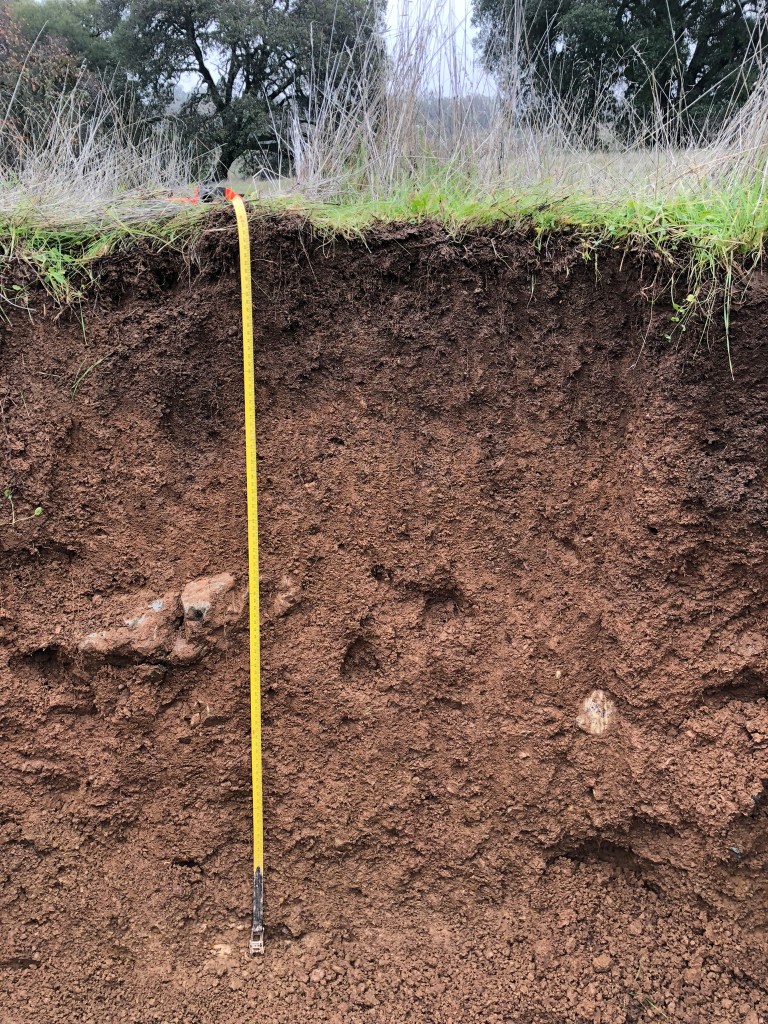
Eric Slessarev is an Assistant Professor at Yale University , affiliated with the Department of Ecology and Evolutionary Biology and the Yale Center for Natural Carbon Capture. His research focuses on soil biogeochemistry, particularly how soil properties influence carbon and nutrient cycling in terrestrial ecosystems, with applications to climate change mitigation strategies like enhanced rock weathering and perennial grass cultivation. Teaches Ecology of Landforms and General Ecology Labs located at KGL 318 (research) and KGL 417 (office) His recent publications highlight interdisciplinary approaches to understanding mineral-organic matter interactions, microbial controls on carbon cycling, and policy implications for soil-based carbon removal strategies. Key methodologies include global data synthesis, isotope tracing, and experimental manipulation of soil-plant systems across depth profiles. Notably, his 2025 work demonstrates drought impacts on carbon persistence, microbial harnessing for CO2 removal, and economic modeling of reversible carbon storage. 2024 studies explore deep-rooted plant effects on carbon fractions, calcium's role in mollisol formation, and policy optimization for carbon sequestration.
Maria Timofeeva is an Associate Professor in the Epidemiology, Biostatistics and Biodemography (EBB) department at the University of Southern Denmark (SDU), with additional affiliation at the Danish Institute for Advanced Study (DIAS). She holds an Honorary Fellow position at the University of Edinburgh since December 2019. Her research focuses on cancer prevention and prediction, particularly studying the effects of environmental and genetic factors on cancer risk and progression. Dr. Timofeeva earned her Dr.sc.hum in Epidemiology from Heidelberg University (2005-2009), with a dissertation on genetic polymorphisms as risk factors for early onset lung cancer. Prior to her current position, she worked as a Statistical Geneticist at the University of Edinburgh (2013-2019) and as a Postdoctoral Fellow at the International Agency for Research on Cancer (2009-2013). Her research interests center around understanding the genetics of cancer risk through multi-omic analysis. She leads several significant projects, including the Interdisciplinary Project on Adherence to Colorectal Cancer Screening, meta-analysis of factors associated with false-positive and false-negative FOBT results (registered in PROSPERO ID: CRD42022315767), and the COlorectal Cancer screening Among RElatives (CoCARE) twin-family study in Denmark. Her methodological expertise spans observational epidemiological studies (case-control, population-based cohort studies, twin studies), meta-analysis, umbrella reviews, and multi-omics data analysis. Analysis of her recent publications reveals a strong focus on colorectal cancer genetics, with particular emphasis on genome-wide association studies, Mendelian randomization approaches, and trans-ancestry analyses. Her work frequently leverages large datasets including the UK Biobank and international consortia, with applications in cancer risk prediction and understanding gene-environment interactions. Dr. Timofeeva has an extensive publication record with 73 publications listed in her profile. Her research has been cited across multiple platforms, with mentions in news outlets, social media, and academic readership platforms like Mendeley. She is actively involved in academic service, serving as a peer reviewer for journals including BMC Cancer and Scientific Reports, and participating in conferences such as the 26th Nordic Congress of Gerontology. She also serves on evaluation committees, including with the World Cancer Research Fund International (April-May 2024). Her teaching activities include courses on evidence-based drug utilization and biostatistics, as well as supervision of research projects on gene expression in twins. Dr. Timofeeva has engaged with the public through media contributions, including an interview titled 'Jeg vil forstå, hvorfor vi får kræft' (November 15, 2021), where she discussed understanding why we get cancer.
Dr. Ian Wilson is a researcher at Newcastle University with a focus on medical genetics, nephrology, and genomic analysis. His work spans genetic determinants of kidney diseases, mitochondrial disorders, and biomarker development. Notable contributions include studies on uromodulin genetics in African populations, copy-number variations in rare diseases, and kidney ciliopathies. He has collaborated extensively on projects involving genome sequencing, mitochondrial replacement therapy, and muscular dystrophy biomarkers. Wilson's research integrates computational tools like machine learning for predictive modeling in urolithiasis and employs advanced imaging techniques for disease progression monitoring. Key areas: Genetic epidemiology, renal genomics, mitochondrial DNA analysis Focus on translational applications: Biomarker development for kidney stones and muscular dystrophies Interdisciplinary collaborations in ophthalmology and orthopedics His publications reflect a commitment to advancing diagnostic accuracy and understanding complex genetic disorders through multi-omics approaches.
Matthew Wills is Professor of Evolutionary Palaeobiology in the Department of Life Sciences at the University of Bath. He is affiliated with the Milner Centre for Evolution and the Centre for Mathematical Biology, where he leads research into macroevolutionary processes using fossil and molecular data. His work integrates phylogenetics, morphological disparity, and stratigraphic congruence to understand large-scale evolutionary patterns. His research interests focus on the role of fossils in building phylogenies, the evolution of morphological complexity, and the testing of macroevolutionary trends such as early high disparity and increasing complexity. He investigates how developmental shifts underpin major evolutionary transitions and how fossilization biases affect our understanding of the Tree of Life. His lab conducts projects on arthropod supertrees, molluscan ontogeny, and the phylogeny of Eumalacostraca using molecules, morphology, and fossils. His recent publications reveal a strong focus on quantifying morphological complexity, vertebral evolution in mammals, species richness in birds, and the impact of boundaries on trait evolution. These works frequently appear in high-impact journals like Nature Communications and Nature Ecology & Evolution , indicating a trend toward integrative, data-rich evolutionary analyses combining paleontological, morphological, and phylogenomic approaches. Principal Investigator, Biodiversity and The Sixth Mass Extinction (Royal Commission for the Exhibition of 1851) Principal Investigator, Susceptibility to Mass Extinctions: Ammonites as a Case Study (NERC) Principal Investigator, PLUTO Project (BBSRC) Principal Investigator, Arthropod Supertree of Life (BBSRC) He has supervised 17 research students and contributes to public discourse through platforms like The Conversation . His work supports UN Sustainable Development Goals related to life on land and climate action through deep-time biodiversity research.
Yang Luo is a Kennedy Trust Senior Research Fellow in Data Science at the University of Oxford's Kennedy Institute of Rheumatology. His research bridges statistical genomics and computational immunology to unravel genetic contributions to immune-mediated traits, with a focus on the major histocompatibility complex (MHC) region. His work leverages large biobank datasets (UK Biobank, Biobank Japan), gene expression resources (GTEx), and proteomic data to decode molecular mechanisms linking genetic variation to disease risk. Specific interests include tuberculosis genetics, multi-ancestry polygenic risk scores, and single-cell eQTL modeling. Recent publications highlight expertise in HLA association studies, evolutionary immunogenetics, and disease-specific cell state dynamics. Key contributions include constructing a global HLA haplotype panel and developing novel statistical methods for admixed population genetics. Scientific Awards: Kennedy Trust Senior Research Fellow in Data Science His lab integrates computational and experimental approaches to translate genetic findings into clinical applications for immune disorders.
Christian FISCH is an Associate Professor in Business Economics and Entrepreneurship at the University of Luxembourg's Interdisciplinary Centre for Security, Reliability and Trust (SnT). His research focuses on the intersection of entrepreneurship with digital technologies, venture finance, and socio-cultural influences. Key areas include blockchain-based financing mechanisms (e.g., ICOs), the psychological and digital identity aspects of entrepreneurs, and the impact of environmental/climate factors on entrepreneurial activity. He has published extensively in top journals, addressing topics such as B Corp certification signaling effects, venture capital decision-making, and the paradox of technology adoption among SMEs. His work spans both theoretical contributions (e.g., extending Schumpeterian frameworks) and applied analyses (e.g., post-pandemic entrepreneurial resilience). FISCH collaborates with global institutions, leveraging mixed-methods approaches including digital trace analysis from platforms like Twitter to study investor behavior and entrepreneurial traits. He has no listed awards but maintains active research agendas in decentralized finance, climate entrepreneurship, and cross-cultural entrepreneurial motivations. Professional activities include editorial roles in entrepreneurship journals and advising on innovation policy. His research often addresses emerging trends such as NFTs in creative industries, DAO governance structures, and the role of trademarks/patents in regional innovation ecosystems.
Professor Oula Ghannoum is a renowned plant scientist and academic leader at the Hawkesbury Institute for the Environment (HIE), Western Sydney University. She serves as Director of the ARC Training Centre for Smart and Sustainable Horticulture and holds leadership roles, including Biological Sciences Discipline Lead and Associate Editor at Functional Plant Biology . Her research focuses on photosynthesis, global change biology, and protected cropping, aiming to enhance food security and climate resilience through crop improvement and sustainable agricultural practices. Education: BSc (Honours) in Plant Biochemistry, University of NSW (1993) PhD in Plant Physiology, Western Sydney University (1998) Research Interests: Professor Ghannoum’s work addresses global challenges like food security and climate change by exploring plant responses to environmental stress. Her lab uses advanced technologies like smart glasshouses and hyperspectral imaging to optimize crop yield and quality. Key areas include sugar signaling pathways in C3/C4 plants, water use efficiency, and heat tolerance in cereal crops. Grants & Funding: She has secured over $25M in research funding, leading projects on C4 photosynthesis, automated crop monitoring, and protected cropping systems. Notable collaborations include the ARC Centre of Excellence for Translational Photosynthesis and Future Food Systems CRC. Awards: 2024 Vice-Chancellor’s Excellence in Research Award 2023 Education and Outreach Award (Australian Society of Plant Scientists) 2001 ARC Postdoctoral Fellowship Labs & Teams: Her team develops innovative frameworks for sustainable horticulture, combining biology with AI and smart technologies. Ongoing work includes imaging-based crop monitoring and phenotyping for climate-resilient crops.
Peihan Miao is an Assistant Professor in the Department of Computer Science at Brown University, where she is a member of the Theory Group. Her academic journey began with a BS from the ACM Honors Class at Shanghai Jiao Tong University, followed by a PhD from UC Berkeley in 2019 under the supervision of Sanjam Garg. BS: ACM Honors Class at Shanghai Jiao Tong University PhD: University of California, Berkeley (2019) Dr. Miao's research focuses on cryptography and security, with particular emphasis on bridging the gap between theoretical cryptography and practical applications, especially in the realm of secure multi-party computation. Her work spans both foundational theoretical aspects and applied systems, demonstrating a strong commitment to developing cryptographic techniques that can be implemented in real-world scenarios. She has made significant contributions to private set intersection protocols, secure computation frameworks, and cryptographic primitives that enable privacy-preserving data analysis across various domains including genomics and machine learning. Her publication record reveals a consistent focus on advancing secure computation techniques, with recent work exploring structure-aware private set intersection, updatable cryptographic protocols, and applications of cryptography to emerging domains like federated genomics. Her research demonstrates a progression from theoretical foundations toward practical implementations that address real-world privacy challenges. NSF CAREER Award Meta Research Award Google Research Scholar Award Amazon Research Award Dr. Miao actively mentors PhD students including Xinyi Shi, Phuoc Van Long Pham, and Jifeng Wang, as well as postdoc Gayathri Garimella. She serves on program committees for major cryptography conferences including Crypto, TCC, and Asiacrypt. Her teaching portfolio includes courses on applied cryptography, introduction to cryptography and computer security, and special topics in secure computation, demonstrating her commitment to educating the next generation of cryptographers. She also runs a crypto reading group at Brown University for students interested in cryptography research. As part of Brown's Theory Group, Dr. Miao collaborates with colleagues on advancing the theoretical foundations of computer science while maintaining a strong focus on practical applications of cryptographic techniques.
Dr. Friedrich Götz is an Associate Professor of Psychology in the Department of Psychology at the University of British Columbia (Faculty of Arts). His research focuses on geographical psychology, exploring the causes and consequences of regional personality differences through an interdisciplinary Big Data approach. PhD, University of Cambridge (UK), 2021 MPhil, University of Cambridge (UK), 2017 BSc, University of Konstanz (Germany), 2016 Dr. Götz’s work bridges social and personality psychology with behavioral science, examining topics like mobility, migration, wanderlust, courage, and entrepreneurship. He co-developed large-scale survey studies with TIME Magazine, attracting over 3 million participants. His research often involves experience sampling methods and open science. His recent publications emphasize geographical psychology, personality-environment interactions, and methodological advancements. Articles span 2020–2025, with key themes including regional personality differences, misinformation susceptibility, and the psychological impact of environmental features. Rising Star Award (Association for Psychological Science), 2025 SAGE Emerging Scholar Award (Society for Personality and Social Psychology), 2025 Top 40 under 40 – Germany (CAPITAL Magazine), 2024 President’s New Researcher Award (Canadian Psychological Association), 2024 Best Dissertation Prize (German Psychological Society), 2021 Leading Scholar (Green College), 2021 Dr. Götz teaches undergraduate and graduate courses, including Personality Psychology and Contemporary Conceptual Issues in Personality, with a focus on geographical dimensions. He is based in the Personality and Geographical Ambiance (PANGEA) Lab, which prioritizes inclusivity and collaboration in studying person-environment interactions.
Markus Reichstein is a Professor for Global Geoecology at Friedrich Schiller University (FSU) Jena and Director of the Biogeochemical Integration Department at the Max Planck Institute for Biogeochemistry. His research focuses on ecosystem responses to climate variability, climate extremes, and the application of AI in Earth system science. He holds a PhD in Plant Ecology from the University of Bayreuth and has pioneered interdisciplinary approaches combining machine learning with environmental modeling. Key roles include leadership in the Michael-Stifel-Center Jena for Data-driven and Simulation Science and founding director of the ELLIS Unit Jena. He contributed to the IPCC Special Report on Climate Extremes and has received prestigious awards such as the Leibniz Prize. His work bridges ecology, hydrology, and atmospheric science, addressing critical global challenges like carbon cycle feedbacks and ecosystem resilience. Recent research emphasizes AI-driven early warning systems for climate risks, integrating observational data with mechanistic models. His team explores land-atmosphere interactions, soil-vegetation dynamics, and the impacts of climate extremes on societal systems. Notable projects include GartenDiv, a citizen science initiative for garden biodiversity, and advancements in global water cycle modeling using hybrid AI-physics frameworks. Awards include the Piers J. Sellers Award (2018), ERC Synergy Grant (2019), and Leibniz Prize (2020). He collaborates with international networks like ELLIS and Future Earth, advancing data-driven solutions for sustainability science.
Bingzhang Chen is a Senior Lecturer in the Department of Mathematics and Statistics at the University of Strathclyde, Faculty of Science. He previously held positions as a Chancellor’s Fellow at the same institution, a researcher at the Japan Agency of Marine-Earth Science and Technology (JAMSTEC), and was affiliated with Xiamen University and Mount Allison University. His academic journey began with a PhD from the Hong Kong University of Science and Technology. Education: PhD in Trophic interactions within the microbial food web, Hong Kong University of Science and Technology (Awarded 2009) His primary research interests lie at the intersection of biological oceanography and theoretical ecology, with a strong focus on ecosystem modeling. He investigates how biodiversity, particularly of phytoplankton, influences marine ecosystem functioning such as primary production and the biological carbon pump. A central theme in his work is understanding the differential temperature sensitivity between autotrophs and heterotrophs, a question that bridges statistical analysis, metabolic theory, and Earth system science. His recent publications highlight a consistent trend in developing and applying individual-based models (e.g., PIBM 1.0), analyzing large datasets on plankton thermal responses, and studying the impacts of climate change and anthropogenic activities (like nutrient input) on marine microbial communities across diverse regions from the South China Sea to the North Pacific and Scottish coastal waters. His work often combines modeling with observational data to address fundamental ecological questions. Scientific Awards: David Cushing Prize (2015) from the Journal of Plankton Research New Century Excellent Talent (2012) from the Ministry of Education of China Dr. Chen is actively involved in research supervision, currently guiding five PhD students. He has been the Principal Investigator on multiple research projects funded by organizations such as the Leverhulme Trust, FILAMO, and the National Science Foundation. His expertise in programming (R, Fortran, MATLAB) underpins his methodological approach. He also contributes to the scientific community as an Associate Editor for the prestigious journal Limnology and Oceanography . His work is associated with efforts to understand and model invasive species dynamics, such as the spread of Sargassum muticum in Scottish waters, and he is involved with external advisory groups like the MASTS Marine Artificial Intelligence Forum.