Dr. Stephen Smith is an Associate Professor at the School of Health and Social Care , Edinburgh Napier University. He also serves as a Consultant Nurse in Compassionate Care for NHS Lothian and leads public engagement initiatives for his school. PhD in Palliative Care (Queen Margaret University, 2009) MSc in Cancer Nursing (University of Glasgow, 2000) BSc in Nursing (Queen Margaret University, 1997) Research focuses on compassionate care development , person-centred dementia care , and leadership in healthcare . His work employs action research, appreciative inquiry, and emotional touchpoints methodology to drive service improvement. Notable contributions include the Senses Framework for dementia engagement and the Compassionate Connections program. Recent publications explore arts-based interventions for dementia (2022), feedback systems in NHS (2017), and workforce retention in care homes (2022). His work spans collaborations with Macmillan Cancer Support , NHS Education Scotland , and Scottish Government . Co-lead for Leadership in Compassionate Care Programme Editorial roles: Journal of Nursing Ethics , Journal of Compassionate Health Care Public Engagement Lead for School of Health and Social Care
Dr. Melody Zhifang Ni serves as a Senior Research Fellow in the Department of Surgery & Cancer at Imperial College London's Faculty of Medicine, where she has conducted research since 2007. Her work integrates advanced statistical methodologies with practical healthcare applications to enhance surgical quality, patient safety, and medical technology innovation through evidence-based frameworks. Her academic credentials include: PhD from the London School of Economics and Political Sciences, UK Dr. Ni's research centers on two interconnected domains: health technology assessment (HTA) and surgical quality assurance. As lead of the HTA theme within the NIHR HealthTech Research Centre for In-Vitro Diagnostics, she develops translational methodologies enabling efficient adoption of medical innovations. Concurrently, her surgical quality work—exemplified by the National Laparoscopic Colorectal Cancer Training Programme (Lapco)—established validated assessment tools and demonstrated improved clinical outcomes following structured training. Her methodological expertise spans Bayesian networks, behavioral sciences, and decision analytics applied to healthcare contexts. Her recent publications reveal a cohesive trajectory in evidence-generation frameworks for medical technologies, with 2023's Biomarker Toolkit and MedKET advancing diagnostic evaluation standards, while earlier works like the Lean and Agile Process (2020) and POCKET checklist (2018) established foundational methodologies for technology translation and point-of-care testing validation. No specific scientific awards are documented in the available materials. Dr. Ni directs the HTA research program within the NIHR HRC IVD—a multidisciplinary consortium bridging research, clinical practice, and technology development—and contributed significantly to the nationally implemented Lapco program. Her grant-related activities focus on stakeholder engagement with innovators, funders, and clinicians to optimize medical technology design, development, and commercialization pathways. She operates within the NIHR HRC IVD ecosystem and Lapco implementation network, collaborating with clinicians, researchers, and industry partners to translate evidence into practice across surgical training and diagnostic innovation domains.
Volodymyr Aushev is Professor in the Department of Nuclear Physics, Faculty of Physics, Taras Shevchenko National University of Kyiv, Ukraine. He simultaneously maintains a senior-researcher affiliation with the Institute for Nuclear Research of the National Academy of Sciences of Ukraine. His career spans four decades, beginning in 1978 at the Institute for Nuclear Research (Kyiv) and expanding through long-term visiting-scientist engagements at DESY (Germany), the Max-Planck Institutes, and Fermilab (USA). Education & Training: PhD studies focused on polarised recoil β-active nuclei and nuclear spin physics at low energies. Extensive specialised training in Quantum Chromodynamics, heavy-flavour physics, top-quark physics and neutrino physics through participation in HERA-B, ZEUS, D0, LHCb, Belle II, DUNE, WA105 and FCAL collaborations. Research Interests: Professor Aushev leads the Kyiv high-energy physics group whose principal goal is understanding the fundamental constituents of matter and their interactions at the highest energies. His work centres on experimental particle physics , with major themes including: Quantum Chromodynamics and parton distribution functions; Production and decay of charm, beauty and top quarks; Neutrino oscillations and astrophysical neutrinos; Development of radiation-hard detectors and advanced instrumentation for collider and neutrino experiments. Recent Publications Overview (2010-2016): The twelve highlighted papers reflect an intensive focus on HERA ep/γp data (ZEUS), Tevatron pp̅ data (D0) and early DUNE/Belle-II planning . Analyses span precision measurements of structure functions, heavy-quark cross-sections, top-quark properties and searches for exotic hadrons, underlining a commitment to multi-TeV energy-frontier physics and long-baseline neutrino science. Scientific Awards & Recognition: Author of ≈120 peer-reviewed papers in high-energy physics and ≈30 in nuclear physics, averaging 33.4 citations each. Group leader for Ukrainian participation in ZEUS, D0, Belle II, DUNE, WA105 and FCAL collaborations. Advising & Outreach: Professor Aushev mentors a vibrant team of post-doctoral researchers, PhD and master’s students within the Kyiv high-energy physics group. He teaches lecture courses on High-Energy Physics , Nuclear Astrophysics , Dark Matter , Neutrino Physics and Modern Experiments in High-Energy Physics , and leads outreach programmes to inspire school pupils and undergraduates. Laboratories & Teams: He heads the Kyiv High-Energy Elementary Particle Physics Group , comprising three faculty members, post-docs, PhD students and undergraduates. The group is responsible for detector R&D (radiation-hard calorimeters, micro-strip monitors), software development and physics analyses for international experiments in Europe, the United States and Japan.
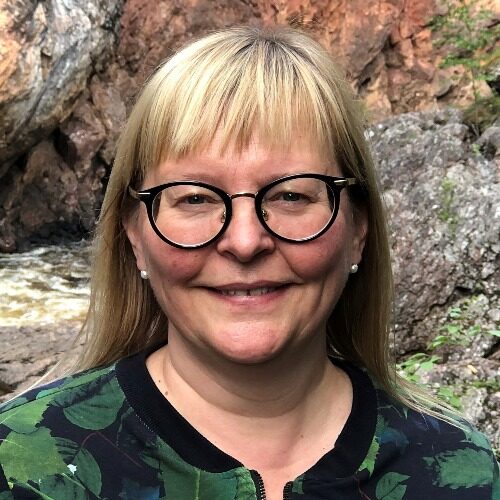
Professor Karina Bakkeløkken Hjelmervik is a Professor in the Department of Maritime Operations , Faculty of Technology, Natural Sciences and Maritime Studies at the University of South-Eastern Norway , Campus Vestfold. Since 2009 she has combined mathematics and oceanography to advance numerical modelling of coastal waters, in particular the Oslofjord system. Education: PhD in Fluid Mechanics, University of Oslo, 2009 – thesis on wave–current interactions in coastal tidal currents. Cand. Scient. in Oceanography, University of Bergen – thesis on cold CO₂ droplets in seawater. Cand. Mag. in Science, University of Bergen. Research interests revolve around fluid mechanics and physical oceanography . She develops and validates high-resolution numerical models that simulate water currents, tides, waves, and dispersion processes. Her work supports operational ocean forecasting, tidal-energy assessment, oil-spill contingency planning, and maritime training simulators. Project leadership spans more than 15 funded initiatives totalling over 30 MNOK. Flagship projects include the FjordOs series (2013–2021) that produced an operational forecast model for the Oslofjord, and collaborative grants on tidal power, clean propulsion, and micro-technology for pathogen detection. Publications and dissemination include 20+ peer-reviewed journal articles since 2012, keynote talks at IEEE OCEANS and JONSMOD, and popular lectures such as Mathematics in the Oslofjord . Student supervision is extensive: she mentors master’s and PhD candidates across mathematics, physics, and maritime programmes, though specific student names are not listed. Contact: karina.hjelmervik@usn.no | +47 31 00 93 25
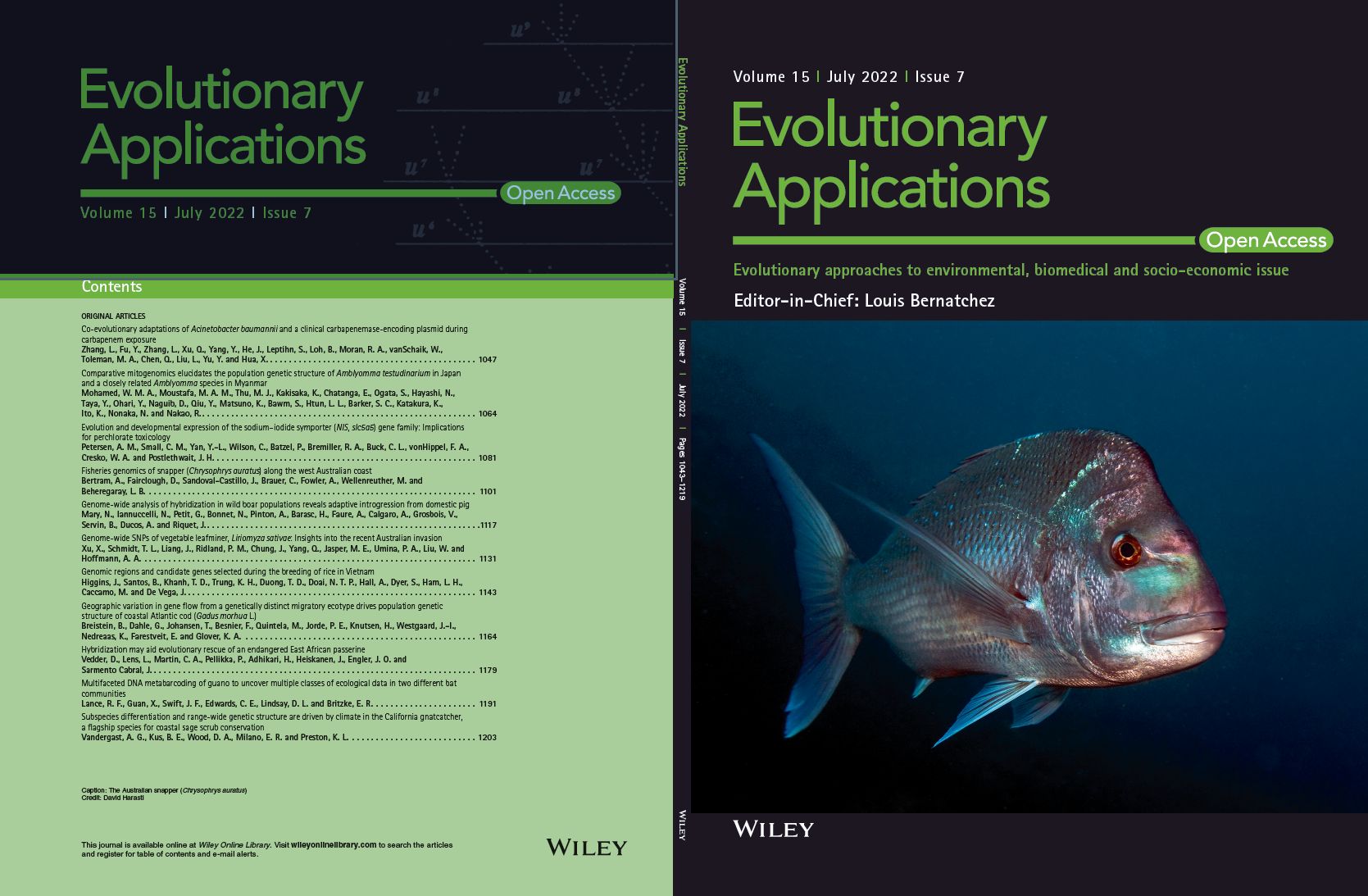
Maren Wellenreuther is a Professor at the School of Biological Sciences, University of Auckland, and Science Group Leader at Plant and Food Research, New Zealand. Her research integrates evolutionary ecology, genomics, and sustainable development with a focus on marine species adaptation and aquaculture optimization. Key interests include structural genomic variation, epigenetic mechanisms, and eco-evolutionary responses to climate change. PhD (University of Auckland, 2007) Docent (Lund University, 2014) Her work addresses critical societal challenges such as biodiversity conservation, sustainable seafood production, and climate resilience. Recent studies investigate chromosomal inversions in seaweed flies, genomic stock structure in snapper, and epigenetic drivers in aquaculture species. She has pioneered the use of long-read sequencing and SNP arrays for structural variant analysis. Notable scientific awards include: Thermo Fisher Scientific Award for Excellence in Molecular Biology (2020) Royal Society Te Apārangi Early Career Award (2018) Science New Zealand National Early Career Researcher Award (2017) KVA King Carl XVI Gustaf Scholarship (2013) Marian Cranwell Prize (2007) She has supervised 15+ PhD/MSc students and secured $11M+ in grants , including MBIE Endeavour Programme and Marsden Fund projects. Her leadership extends to editorial roles ( Evolutionary Applications ), advisory boards (TREE, Predator-Free 2050), and organizing international conferences on genomic applications in fisheries.
Dr. Mandie Scamell is a Senior Lecturer at City, University of London, affiliated with the School of Health and Psychological Sciences and the Maternal and Child Health Research Centre . She specializes in medical anthropology and midwifery, focusing on risk management, intrapartum care, and the sociocultural context of maternity services. Her work bridges clinical practice and theoretical analysis, particularly through participatory research methods and critical studies of risk. Education: PhD in Medical Anthropology (University of Kent, 2012), MRes (University of Kent, 2008), Diploma in Midwifery (University of Brighton, 1998), MRes in Social Sciences (Durham University, 1995), BA in Anthropology (Durham University, 1993). Her research explores the medicalization of childbirth , the embodiment of labor induction technologies , and cross-cultural maternity care (e.g., FGM-related care). Key findings from her work highlight tensions between autonomy and medicalization, particularly in outpatient induction practices and breech birth standards. Recent studies analyze participatory research methods , midwifery education innovations , and ethical frameworks for birth center admissions. She has secured funding from the NIHR and ESRC for projects like PROBIT-F, focusing on cervical ripening technologies. Scientific Awards: City Staff Enhancement Award (2023) City Academic Impact Award (2018) City Health’s Got Talent Award (2016) KCL Health’s Got Talent Award (2012) Professional Roles: Senior Tutor for Research (Maternal and Child Health Research Centre, 2018–present) Programme Director (MSc, City, 2013–2022) Module Leader in Midwifery (City, 2013–present) She supervises PhD candidates on topics like group antenatal care , FGM and maternity services , and midwifery-led units . Her collaborations include institutions such as Imperial College London, University of Michigan, and St George’s NHS Trust.
Herbert Mwebe is an Associate Professor of Mental Health and Senior Teaching Fellow in the School of Life and Health Sciences at Middlesex University, leading mental health nurse academics in pre/post-registration programmes and CPD delivery. He serves as Specialist Clinical Advisor to the Care Quality Commission (CQC) for mental health inspections and Specialist Panel Member for His Majesty's Mental Health Review Tribunal. Education B.Sc PG Dip AdvDip PGCert HE MSc Mprof Doctoral student (current) SFHEA Independent Prescriber Research Focus Herbert's work centers on parity of esteem between mental and physical health, driving innovations in cardiometabolic risk monitoring for severe mental illness (SMI) patients and optimizing psychopharmacological practices . His research bridges clinical gaps through recovery-oriented approaches and physical health integration in psychiatric settings. Concurrently, he addresses systemic inequities via investigations into mental health tribunal processes , workplace racism in the NHS , and culturally specific health promotion for Black/Asian communities, reflecting his commitment to health equity. Publication Trends His 2024-2025 output reveals a strategic shift toward actionable clinical frameworks—particularly metabolic monitoring protocols in inpatient/postpartum psychosis care—while expanding into social determinants of mental health through Black History Month analyses and anti-racism initiatives, demonstrating dual expertise in biomedical and socio-structural interventions. Scientific Awards Student Led Teaching Award for Most Inspiring Lecturer (2018) Santander Universities Work-Based Learning Award (£5000) for doctoral research on cardiometabolic risk (2020) Advising and Grants Herbert has generated £150,107 in consultancy income through mental health workforce development projects, including £135,107 for CPD activities (2015-2020) and £15,000 for medication management training (2015-2017). He mentors secondary school students via NHS England's NextGen Nurse Project and advises doctoral candidates. PMS+ Mental Health Project (2013-2015): Transformed primary care mental health pathways in City and Hackney Medication Awareness Project (2015-2017): Trained BEH mental health professionals in medicine optimization Labs and Teams He leads Middlesex University's mental health nurse academic team and co-directs the Uganda Nurses and Midwives Association UK CIC as Education/Training Lead, spearheading community initiatives including monthly mental health podcasts, menopause awareness webinars with NHS Modern Matrons, and ALIBSA stigma-reduction programmes for aging Black/Asian populations.
Wendy Geens is a Senior Lecturer at Bath Spa University's School of Education, specializing in Primary and Early Years Education. Since joining in 2018, she has led the Early Years route of the Primary PGCE programme and served as subject lead for Art and Design. With over 15 years' experience in South West England schools and Higher Education institutions like the University of Birmingham and Marjon, her expertise spans teacher training, professional identity development, and mathematics in early years. Research Focus: Professional identity of pre-service Early Years Teachers, reflective practice, and innovative training approaches. Leadership: Programme Leader roles at Marjon, External Examiner for PGCE Primary and Early Years Programmes at University of Manchester and Warwick University. Her academic qualifications include a BEd (Hons) in Creative Arts, an MEd in Professional Development, and a PG CERT in Coaching and Mentoring. Key publications include a 2022 book on self-regulation in early childhood and a 2009 article on PGCE curriculum evolution. Scientific awards include Fellowship of the Higher Education Academy and editorial leadership at the International Journal of Learning.
Manuel Herrera-Usagre is a Faculty Member in the Department of Sociology at the University of Seville, Spain. His research spans the intersection of sociology, cultural studies, and healthcare quality, with particular expertise in social stratification, cultural consumption patterns, and healthcare systems improvement. Dr. Herrera-Usagre holds a Doctorate in Sociology from the University of Seville, with his 2014 thesis focusing on cultural consumption and participation in Spain and Andalusia from the perspective of social stratification and transmission of attitudes toward culture. He earned a double Bachelor's degree in Political Science and Sociology, along with an Official Master's Degree in Social Programmes Management. His research interests center on the sociology of music, social stratification, cultural consumption, cultural participation, and healthcare quality & safety. Herrera-Usagre has made significant contributions to understanding how social class, education, and generational factors influence cultural consumption patterns, particularly in music. His work on cultural omnivorousness in Andalusia challenged traditional notions linking high culture consumption exclusively to higher social strata. Simultaneously, his healthcare research has focused on quality improvement in the Andalusian healthcare system, examining stakeholder analysis, hand hygiene compliance, pain assessment in pediatric nursing, and patient communication through digital channels. An analysis of his publication record reveals a dual trajectory of research: one strand examines cultural consumption patterns and social stratification, while the other investigates healthcare quality improvement. His recent work shows an increasing integration of interdisciplinary approaches, particularly merging data visualization with artistic expression to address social inequality. His research methodology spans quantitative analysis of large-scale surveys, latent class analysis, structural equation modeling, and stakeholder mapping techniques. While specific scientific awards are not mentioned in the available documentation, Herrera-Usagre has demonstrated significant research impact through his participation in numerous competitive R&D projects and contracts at both national and international levels. His work with the Andalusian Agency for Healthcare Quality has contributed to practical improvements in healthcare delivery systems. Dr. Herrera-Usagre has participated in advising research projects and has collaborated with various institutions, including those focused on healthcare quality improvement in Andalusia. His research has been supported through competitive funding mechanisms, though specific grant details are not provided in the available documentation. His work appears closely associated with the Andalusian Agency for Healthcare Quality (Agencia de Calidad Sanitaria de Andalucía), where he has conducted multiple studies on healthcare quality assessment, stakeholder analysis, and professional competency evaluation. This institutional connection has provided a practical context for applying sociological research methods to healthcare system improvement.
Dr. Bita Akram serves as an Assistant Professor in the Department of Computer Science at North Carolina State University, where her research bridges artificial intelligence, human-centered design, and adaptive learning technologies to transform computer science education accessibility and quality. Education Background B.S. in Computer Engineering from Sharif University of Technology (2013) M.S. in Computer Science from University of Calgary (2015) Ph.D. in Computer Science from North Carolina State University (2019) Research Focus Her expertise spans Advanced Learning Technologies for personalized education, Artificial Intelligence in intelligent tutoring systems, Data Sciences for learning analytics, Human-Computer Interaction in educational interfaces, and Knowledge Management for curriculum design. Current work emphasizes AI-driven solutions to democratize CS education through adaptive systems and scalable interventions. Publication Trends Recent publications (2018-2025) reveal a dual focus: leveraging AI for educational innovation (e.g., ChatGPT detection, adaptive feedback) and addressing equity gaps through persistence interventions. Her SIGCSE and IEEE publications consistently target scalable solutions for introductory programming challenges, with growing emphasis on gender-inclusive retention strategies. Research Funding Dr. Akram leads three NSF-funded projects: a $1.7M initiative developing the INSIGHT AI classroom assistant (2023-2027), a $175K study on women's CS retention via self-assessment interventions (2020-2023), and a $20K grant scaling the Early Research Scholars Program for underrepresented students (2020-2023). These projects demonstrate her commitment to evidence-based, scalable educational transformation. Academic Community As an active member of the Assistant Professors cohort within NC State's Computer Science department, she contributes to research groups focused on educational technology innovation and broadening participation in computing through grant-funded collaborations.
Frank Meier is an Associate Professor at the Department of Organization, Copenhagen Business School (CBS). His research focuses on leadership, leadership development, and digital transformations through the lens of the Communicative Constitution of Organisation (CCO) framework, emphasizing interactions between humans and non-humans like texts and technologies. He serves as Academic Coordinator of Leadership Development at the Master of Public Governance program and contributes to reforming the HD (Graduate Diploma) programme in Organization and Management. Research Focus : Meier's work examines how digitalization reshapes public sector organizations and leadership practices through CCO theory. Current projects include the VIEW project analyzing AI-driven transformations in leadership and ongoing studies of management learning processes. His research bridges leadership theory, organizational communication, and digital ethics. Leadership in AI projects Communicative approaches to leadership Digital transformation in public governance Executive education design Organizational reflexivity Regulatory leadership challenges Publications : His recent work explores ventriloquial reflexivity in leadership development, organizational communication in public sector AI projects, and the theoretical evolution of leadership studies. Articles appear in journals like Human Relations , Leadership , and Scandinavian Journal of Management . Teaching & Supervision : Meier teaches on leadership theory and practice in CBS's Executive MBA and Master of Public Governance (MPG) programs. He supervises BA and Master students in Leadership, Organizational Communication, and Strategy. He also coordinates leadership development modules and contributes to program management. Projects & Activities : Active in the VIEW project, he investigates digitalization's impact on public sector leadership. Outside CBS, he engages in teaching and consulting roles, including leadership courses for Meier+ and advisory work for TUBA.dk, balancing academic and practical applications.
Ashley Ng Yoon Mooi is an Associate Professor of Education at the University of Nottingham Ningbo China, serving as Deputy Head of School in the School of Education and English. Previously, she held roles as Associate Professor and Director of Postgraduate Taught Programmes at the University of Nottingham Malaysia, overseeing masters programmes in Malaysia, Sri Lanka, Singapore, and India. She was also Director of Training for the BCEDP programme, which trained over 1000 school leaders through collaborations with the World Bank and National University of Bangladesh. PhD, Universiti Sains Malaysia (2006) Master, Universiti Sains Malaysia (1998) Bachelor, University of Malaya (1978) Dr Ng's research spans educational leadership, policy implementation, and teacher development. Key areas include distributed leadership, instructional leadership, and leadership preparation in Malaysia, China, and the Philippines. Her work addresses government policies' impact on schools, pandemic-era leadership, and lifelong learning programmes for the elderly. Recent publications include studies on principal shadowing in China, teacher wellbeing in Chinese Universities of the Third Age, and pandemic leadership in the Philippines. Her research interests align with the 21st Century Educational Leadership and Malaysia Education Blueprint frameworks. Notable awards include: the 2009 Ahli Mangku Negara (AMN) recognition from Malaysia's King, Excellent Awards (2010, 2017, 2018), and an Inspirational Woman nomination (2019). She contributes to editorial boards of journals like Educational Management Administration and Leadership and School Leadership and Management . Dr Ng supervises doctoral and master's theses on educational leadership and teaches modules on internationalizing higher education, evidence-based change management, and research methods. She serves on the Council of International Global School Leadership and collaborates with institutions in Malaysia, China, and the Philippines.
Professor Laura Magee is Professor of Women's Health at King's College London, Department of Women & Children's Health within the Faculty of Life Sciences & Medicine. She is also a member of the King's Global Health Institute and serves as President of the International Society for the Study of Hypertension in Pregnancy and President-elect of the International Society of Obstetric Medicine. Her academic journey began with an MD (Hons) from the University of Toronto in 1988, followed by clinical training in Toronto hospitals. She completed her FRCPC in General Internal Medicine in 1992 and subspecialty training in Clinical Pharmacology. She earned an MSc in clinical epidemiology during her obstetric medicine training with Chris Redman at the University of Oxford. Her academic appointments include Assistant Professor at the University of Toronto (1996), Clinical Assistant Professor at the University of British Columbia (2000), progressing to Clinical Professor (2011), before returning to the UK as Professor of Maternal Medicine at St George's, University of London (2015), and subsequently becoming Professor of Women's Health at King's College London (2017). Professor Magee's research spans pregnancy hypertension, fetal growth restriction, stillbirth, global women's health, therapeutics in pregnancy, and maternal medicine. With over 450 publications, her work employs diverse methodologies including evidence syntheses, surveys, qualitative research, randomized trials, and implementation studies. Her landmark Control of Hypertension In Pregnancy Study (CHIPS) has influenced international guidelines. Current research focuses on the intersection of global health, maternal medicine, and non-communicable diseases, with significant work in low-resource settings through the PRECISE Network. Her recent publications reveal a clear trajectory toward addressing health disparities, particularly regarding ethnic differences in perinatal outcomes, global implementation of maternal health interventions, and the psychological impacts of pregnancy complications. The PRECISE Network studies demonstrate her commitment to African maternal health research, while her work on virtual maternity care during the pandemic reflects responsiveness to emerging healthcare challenges. International Society for the Study of Hypertension in Pregnancy Chesley Award (2014) Outstanding Teaching Award, Mt Sinai Hospital, Toronto Award of Excellence, Children's and Women's Health Centre of BC Dr Fred Douglas Memorial Award for Academic Achievement in Internal Medicine Alpha-Omega-Alpha Honors Society admission Duncan L Gordon Research Fellowship Detweiler Travelling Fellowship Scholar Award (Michael Smith Foundation for Health Research) Professor Magee has held numerous leadership positions including Director of the Canadian Perinatal Network, President of the International Society for the Study of Hypertension in Pregnancy, Chair of the Maternal Medicine Clinical Study Group for the Royal College of Obstetricians and Gynaecologists, and member of the Maternal Morbidity Working Group for the World Health Organization. She co-founded the Obstetric Medicine Training Programme at the University of Toronto and chaired national guideline committees in Canada. Her editorial roles include PLOS One and the journals Obstetric Medicine and Pregnancy Hypertension. She leads several major initiatives including the PRECISE Network (focusing on placental disorders in Africa), the RESILIENT Study (post-pandemic maternity care planning), and the eLIXIR project addressing maternal and child health in South London. Her collaborative approach spans institutions in Canada, the UK, and Africa, working within multidisciplinary teams to address complex maternal health challenges.
Wesley Guido Rommy serves as a lecturer within the Expanded Contemporary Dance programme at the Amsterdam University of the Arts' Academy of Theatre and Dance. With over 15 years of professional experience, he is a globally recognized dancer, movement artist, and educator deeply rooted in house dance and House music culture, performing and teaching at major international events including Juste Debout, Summerdance Forever, North Sea Jazz Festival, and Red Bull Dance Your Style. His interdisciplinary practice bridges dance, physical fitness, and cultural preservation, with core research interests spanning: House Dance and Music Culture preservation Somatics and body awareness methodologies Movement research and freestyle improvisation Physical capacity development for dancers Integration of fitness principles in dance training Educational frameworks for embodied learning Wesley has trained numerous dancers and athletes through his company Initial Form and co-founded Quality of Motion to advance physical training systems. He has served as assistant choreographer and educational coordinator for Amenti Collective and ISH Dance Collective, developing programmes like House Decoded to document house culture perspectives. His community impact extends through ongoing collaborations with international dance companies, DJ performances at events like Housejam XL and Tokonoma Clubnight, and mentorship initiatives that connect dance, personal development, and cultural heritage across global platforms.
Hanna Lehtimäki is a Professor of Innovation Management at the Business School, University of Eastern Finland . She serves as Director of the Research Center for Sustainable Circular Economy (CECE) and Vice Director of the UEF strategic research community Sustainable Resource Society: Circular Economy, Energy and Raw Materials (RESOURCE RC) . Her work bridges innovation management, strategic leadership, and sustainability transitions through transdisciplinary research with social impact. Key Roles: Director of CECE, Vice Director of RESOURCE RC, Leader of Sustainability Leadership Master’s Programme Research Focus: Circular Economy, Strategic Management, Arts-Based Methods, Stakeholder Theory, Responsible Business Her recent research explores socio-cultural dimensions of circular economy in industrial ecosystems, art-driven sustainability transitions , and multi-level governance of critical materials for electric mobility. As a project leader, she manages initiatives like PlasticsCircularity (Business Finland), CE4ALL (EU Just Transition Fund), and GOVERMAT (Research Council of Finland). She co-edited Art and Sustainability Transitions in Business and Society (Palgrave Macmillan, 2024) and Circular Plastics Economy: A Multidisciplinary Perspective (Elsevier, 2025). Her teaching includes Corporate Governance and Social Sustainability and the International Master’s in Sustainable Leadership .