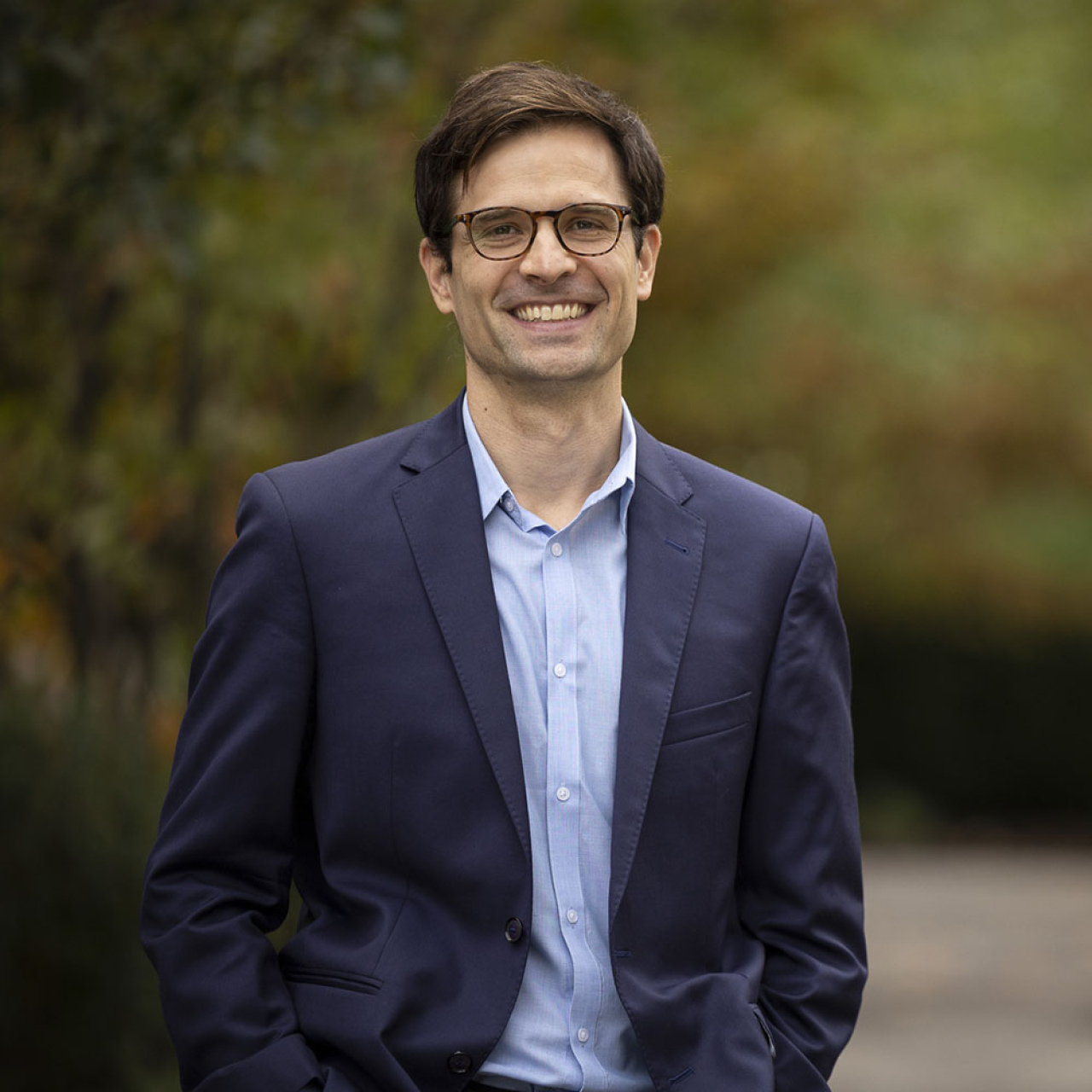
Bertrand Schneider is an Associate Professor of Education at Harvard University's Graduate School of Education (GSE). He holds a Ph.D. in Learning Sciences and Technology Design from Stanford University (2015) and previously served as a postdoctoral researcher at Stanford's Transformative Learning Technologies Laboratory. His research focuses on educational interfaces (e.g., augmented reality, tangible tools) and multimodal learning analytics, particularly in collaborative and informal learning environments. He investigates how technologies like gaze-tracking and motion sensors can assess student learning trajectories and improve instructional strategies in makerspaces and remote teaching contexts. Education : Ph.D., Learning Sciences and Technology Design, Stanford University (2015) Postdoctoral Researcher, Transformative Learning Technologies Laboratory, Stanford University Research Interests : Educational technologies (AR, tangible interfaces, multitouch) Multimodal data analysis (gaze, body movement, speech) Collaborative learning in formal/informal settings Remote teaching strategies using shared gaze visualizations AI applications in personalized feedback and misinformation discernment Key Contributions : Developed methodologies for capturing joint visual attention in collaborative learning Advocated for ethical implementation of multimodal learning analytics Explored AR's dual-edged impact on student engagement and collaboration Labs/Teams : Current research aligns with GSE's focus on innovative learning technologies Prior affiliation with Stanford's Transformative Learning Technologies Lab
Lauren Andrews serves as Associate Professor and Marvin and Eva Schlanger Faculty Fellow in the Department of Chemical Engineering at the University of Massachusetts Amherst. Her research integrates synthetic biology and genetic engineering to develop programmable cellular systems for biotechnological applications. Education: Postdoctoral Training: Massachusetts Institute of Technology (Biological Engineering and Broad Institute of MIT and Harvard) PhD: University of Colorado Boulder, Chemical Engineering (2012) MS: University of Colorado Boulder, Chemical Engineering (2009) BS: Cornell University, Chemical Engineering (2006) Dr. Andrews' research focuses on establishing genetic design rules for reprogramming cellular regulation and metabolism. Her lab pioneers synthetic gene networks, genetically-encoded biosensors, and high-throughput methodologies for optimizing genetic designs in both model and non-model bacteria. This work enables precise control of cellular sensing, memory, and environmental responses through multiplexed DNA assembly and next-generation sequencing. Analysis of her 15 most recent publications reveals dominant themes in bacterial biosensor development (particularly for bioremediation), quorum sensing engineering, and programmable genetic circuits for probiotic applications. Her research consistently bridges fundamental genetic circuit design with practical implementations in bacterial consortia and non-model organisms. Scientific Awards: Marvin and Eva Schlanger Faculty Fellowship NSF CAREER Award (2020) for "Programmable synthetic microbial consortia for complex multicellular functions" Her grant portfolio demonstrates significant funding for collaborative research in bacterial communication systems and model-guided design of synthetic ecosystems. The Andrews Lab maintains active partnerships with the MIT-Broad Foundry and Cold Spring Harbor Laboratory, where she co-founded the Synthetic Biology Summer Course. Current projects focus on CRISPR-based regulation in non-model bacteria and algorithmic programming of sequential logic in probiotic strains. The Andrews Lab operates within the Life Science Laboratories at UMass Amherst, utilizing advanced facilities for genetic prototyping and high-throughput screening. Her team develops multiplexed tools for exploring genetic design spaces, with particular emphasis on soil bacteria and Gram-positive pathogens for environmental and therapeutic applications.
Dr. Emma Li is a Senior Lecturer in Responsible & Interactive Artificial Intelligence at the University of Glasgow's School of Computing Science. She directs the Interactive and Trustworthy AI Lab, developing secure human-robot collaboration frameworks for applications in healthcare, industry, and nuclear decommissioning. Her research pioneers behavioral biometric authentication methods that verify users through robotic motion patterns, enhancing security in teleoperation systems. Recent projects include cyber-physical teleoperation for nuclear decommissioning funded by the RAICo Programme. Li leads the Understandable Autonomous Systems research theme and contributes to the UKRI Centre for Doctor Training in Socially Intelligent Artificial Agents. Her publications demonstrate consistent innovation in human-robot trust establishment, adversarial robustness, and secure communication for robotic systems operating in sensitive environments.
Annouchka Bayley is an Associate Professor at the Faculty of Education, University of Cambridge, specializing in posthuman pedagogy, new materialist philosophies, and artistic research methodologies. She chairs the Arts and Creativities Research Group and previously directed the Arts, Creativities and Education MPhil programme (2021-24) and led the Doctoral Research Training Programme. PhD from University of Warwick BA Hons from SOAS MRes from University of Warwick Her research explores: Posthuman and new materialist approaches to education Decolonial epistemologies for educational development Postqualitative research practices in higher education Digital pedagogy and augmented reality applications Embodied and affective learning methodologies Recent publications examine diffractive knowledge production, digital materiality, and postpandemic educational futures. Key collaborative works include: Diffracting New Materialisms (2023, Palgrave Macmillan) Posthuman Pedagogy (2018, Parallax journal) Current teaching focuses on: Postgraduate courses in Arts, Creativities and Education Doctoral research training Advanced research methods Labs/Teams: Arts and Creativities Research Group CRiCLE Network (Creativities in Education) Diffractive Methodologies Collective
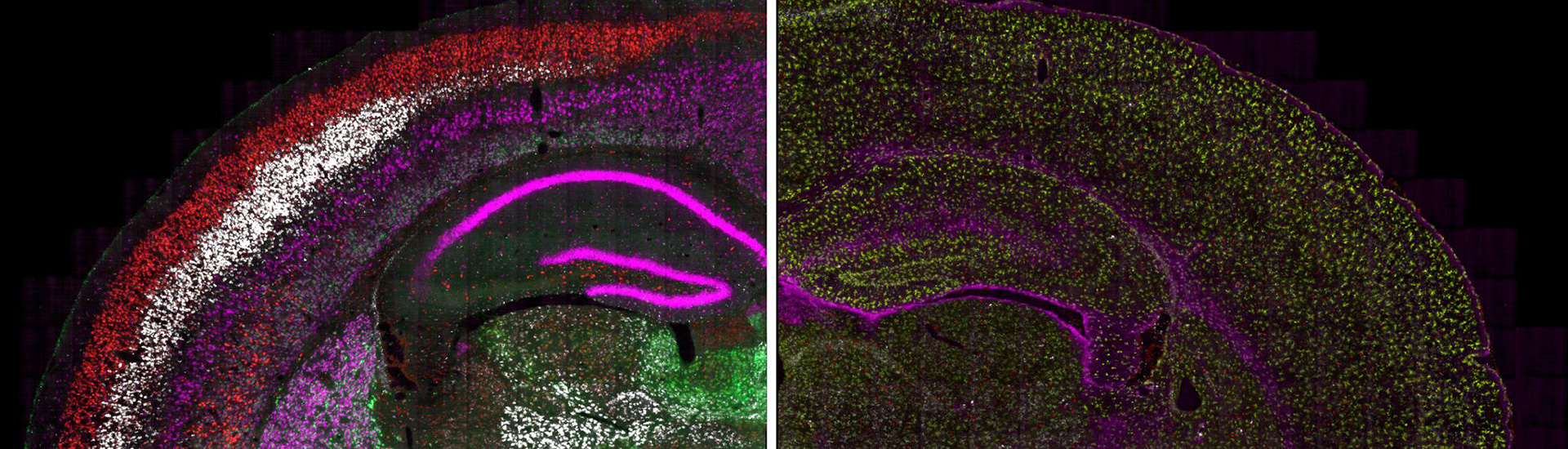
Omer Bayraktar is a Group Leader at the Wellcome Sanger Institute , leading research in the Cellular Genomics Programme. His work focuses on decoding human brain cellular diversity using spatial transcriptomics , imaging , and functional screening to study neural complexity in health and disease. Bayraktar's educational background includes a PhD from HHMI under Chris Doe, investigating neural diversity development in Drosophila , followed by postdoctoral work at University of California, San Francisco and University of Cambridge as a Life Sciences Research Foundation Fellow. He developed a spatial transcriptomic pipeline during his postdoc to analyze astrocyte heterogeneity in the cerebral cortex. His research explores neural cell type mapping , glial-neuronal interactions , and cellular pathways in neurodevelopmental disorders . Recent publications emphasize 3D tissue mapping , multi-omic integration , and computational tools like Cell2fate and WebAtlas. His work bridges neurogenetics and computational biology to advance understanding of human tissue ecosystems. Bayraktar's lab collaborates with the Human Cell Atlas initiative and develops technologies such as automated histology pipelines and highly-multiplexed smFISH for molecular cell typing. His team also investigates glia-based therapies and astrocyte functional heterogeneity in neurodevelopmental contexts. Key scientific contributions include: Discovering astrocyte layer patterns independent of neuronal laminae Developing cell2location for spatial cell mapping Characterizing Drosophila neural stem cell models with human relevance Notable awards include the Life Sciences Research Foundation Fellowship during his postdoctoral training. His current group includes a PhD student , Senior Data Scientists , and Bioinformaticians .
Michael Goldsmith is a Senior Research Fellow at the Department of Computer Science and Worcester College, University of Oxford. He holds multiple leadership positions including Director of the Oxford Martin Programme on AI Threat Detection, Associate Director of the Cyber Security Centre, and Co-Director of the Centre for Doctoral Training in Cybersecurity. His research bridges formal methods, concurrency theory, and practical cybersecurity applications. Goldsmith's research focuses on cybersecurity analytics including threat detection, risk management, and trust frameworks. He pioneered automated cryptoprotocol analysis and investigates multidisciplinary projects spanning mathematical models to socio-technical systems. His core interests include formal verification, AI threat landscapes, privacy architectures, and security protocol design. Analysis of his recent publications reveals strong emphasis on practical cybersecurity challenges: 63% focus on threat detection (especially insider threats), 22% on trust/risk frameworks, and 15% on formal methods applications. His work consistently integrates technical security mechanisms with human factors and organizational contexts. He currently advises Ahmed Salman and has supervised 10+ students including Mary Bispham, Rodrigo Carvalho, and Elizabeth Phillips. His research teams collaborate on projects funded by Technology Strategy Board, government agencies, and industry partners. Goldsmith leads the Oxford Martin Programme on AI Threat Detection and co-directs the Centre for Doctoral Training in Cybersecurity. His research group develops tools for security visualization (CyberVis), trust metrics, and identity management frameworks.
Timo Vesala is Professor of Meteorology and Academy Professor at the University of Helsinki’s Faculty of Agriculture and Forestry, Institute for Atmospheric and Earth System Research (INAR). He is also affiliated with the Viikki Plant Science Centre (ViPS) and serves as a supervisor in the Doctoral Programme in Atmospheric Sciences. Research Interests: Micrometeorology and biogeochemical cycles Ecosystem–atmosphere exchanges of greenhouse gases Eddy-covariance methodology and flux networks Boreal lakes, wetlands, and forests as components of the climate system Development of long-term observational infrastructures such as ICOS-Finland Recent research output (2023–2025) is dominated by high-impact articles in Advances in Atmospheric Sciences , Biogeosciences , Agricultural and Forest Meteorology , and Geophysical Research Letters , reflecting a balanced portfolio of process understanding, methodological advances, and large-scale synthesis studies. Scientific Awards: Academy Professor (Akatemiaprofessori) – awarded by the Academy of Finland Doctoral Advising & Grants: Supervised or co-supervised doctoral theses of Sheila Wachiye, E. Lopez-Blanco, and X. Li Principal Investigator on Academy of Finland project “The Hidden Role of Gases in Trees” (2021–2025) Project leader for “Kasvihuonekaasujen maa-ilmakehävaihto järvi- ja suoekosysteemeille” (2024–2026) Co-leader of the art-science initiative “Periferia – Metsätaiteeellinen asema” (2021–2031) Participant in EU flagship EMME-CARE (2017–2026) Labs & Teams: Timo Vesala heads the Micrometeorology Group at INAR and leads the Finnish ICOS (Integrated Carbon Observation System) network node. His team operates multiple eddy-covariance towers across boreal lakes, wetlands, and forests, integrating field observations with modeling and remote-sensing data.
Professor Cedo Maksimovic is a leading academic in the Department of Civil and Environmental Engineering at Imperial College London, Faculty of Engineering. He is a Principal Research Fellow and heads the Urban Water Research Group (UWRG), with affiliations to the Environmental and Water Resource Engineering group, Grantham Institute, Space Lab, and Urban Systems Lab. His research focuses on urban water systems , including storm drainage, urban flooding, water supply, and the interaction between urban infrastructure and the environment. He has pioneered work in applied fluid mechanics , smart water infrastructure , and flood risk management , with innovations such as the AOFD method for urban surface flood modelling and intelligent sensor networks recognized by the ICE Telford Gold Medal. His recent research, as reflected in publications, spans urban pluvial flooding , leakage detection , integrated urban water management , and blue-green infrastructure . These works emphasize computational modelling, real-time monitoring, and climate resilience in urban environments. UNESCO/IAHR Lecturer of the Year 2001 ICE Telford Gold Medal (WINES project team) Prof. Maksimovic has led major projects funded by EPSRC, EU (Climate-KIC, Interreg), UNESCO, and ERANET_CRUE. He advises postgraduate students and has created international educational initiatives like the EDUCATE programme. He also serves as Editor-in-Chief of the Urban Water Book Series and co-founded the Urban Water journal. He leads the UNESCO-endorsed IRTCUD/CUW network with centres in Banjaluka, Belgrade, Cairo, Kuala Lumpur, London, Porto Alegre, Tehran, and Trondheim, promoting global collaboration in urban water research and education.
Professor Peter Y. K. Cheung is a Professor of Digital Systems at Imperial College London, holding dual affiliations within the Department of Electrical and Electronic Engineering and the Dyson School of Design Engineering. His work focuses on reconfigurable systems, FPGA architectures, and high-level synthesis tools. He co-founded one of the UK's leading FPGA research groups with Professor Wayne Luk, addressing challenges in variability mitigation, reliability, and application-specific FPGA deployments. His research spans Field-Programmable Gate Arrays (FPGAs) Reconfigurable computing Neural network acceleration Cryptographic protocols Embedded systems He has pioneered techniques such as logic shrinkage for FPGA-based neural networks and developed frameworks like LUTNet for efficient inference. His contributions also include fault-tolerant FPGA designs and methodologies for distributed computation protocols. Key collaborations include work with the Department of Computing on FPGA-based AI acceleration and cybersecurity applications. His recent work explores edge computing, secure decentralized systems, and pandemic modeling using adaptive control strategies. Notable projects include the DSCS protocol for secure distributed computation, acceleration of gravitational wave detection algorithms, and energy-efficient CNN implementations. His research bridges hardware-software co-design with real-world applications in healthcare, finance, and aerospace.
Callie Hao is an Assistant Professor in the Department of Electrical and Computer Engineering at the Georgia Institute of Technology since 2021, holding the ON Semiconductor Junior Professorship. Her research bridges hardware efficiency and algorithmic innovation with significant industry and federal recognition. Education: Ph.D. in Electrical Engineering, Waseda University (2017) M.S. and B.S. in Computer Science and Engineering, Shanghai Jiao Tong University Research Focus: Dr. Hao pioneers software/hardware co-design for edge AI, specializing in hardware-efficient machine learning algorithms, FPGA-based reconfigurable computing, graph neural networks, and electronic design automation (EDA). Her work emphasizes neural architecture search, high-level synthesis optimization, and memory-efficient systems for embedded and IoT applications, driven by the philosophy that "1 + 1 > 2" for transformative efficiency gains. Publication Impact: Her 15 most recent publications (2023-2026) reveal a strategic shift toward machine learning-driven EDA tools, with 60% focused on high-level synthesis frameworks and 40% on graph neural network acceleration. Key trends include simulation speed breakthroughs (LightningSim), automated accelerator generation (GNNBuilder), and cryptographic hardware innovations (Cryptonite), predominantly published in top-tier venues like MICRO, ICCAD, and DAC. Awards & Recognition: NSF CAREER Award (2024) and Intel Rising Star Faculty Award (2023) Best Paper Awards at MLCAD 2024 and GLSVLSI 2021 ON Semiconductor Junior Professorship (2025) and Sutterfield Family Early Career Professorship (2022) DAC-SDC competition championships (2018-2020) Mentorship & Funding: Dr. Hao advises 8+ Ph.D. students in the Sharc Lab, with Rishov Sarkar winning the Oscar P. Cleaver Award and Qualcomm Innovation Fellowship. Her research is funded by DARPA (2021) for ultra-light video intelligence systems and supported by industry awards from Amazon and Sony. She actively serves on program committees for DAC, ICCAD, and DATE conferences. Lab Leadership: As director of the Sharc Lab (Software/Hardware Co-design lab), she cultivates interdisciplinary research at the intersection of FPGA design, machine learning, and EDA, requiring expertise in Verilog/HLS, GNNs, and compiler technologies while maintaining strict focus on real-world hardware implementation.
Barbara M. Kehm is a Research Fellow at the Leibniz Research Centre for Science and Society (LCSS) , affiliated with Leibniz University of Hannover since 2018. She previously held professorial roles as Professor of Leadership and International Strategic Development in Higher Education at the University of Glasgow (2013–2017) and Professor of Higher Education Research at the University of Kassel (2003–2011), where she also served as Director of the International Centre for Higher Education Research (INCHER-Kassel) from 2004 to 2011. Education: Ph.D. (summa cum laude) from Ruhr-University Bochum (1989). Her research focuses on internationalisation and globalisation in higher education, doctoral education reform, academic work and professions , and the Europeanisation of higher education . She has extensively examined governance, management, and policy in higher education systems, with particular emphasis on organisational change and stakeholder engagement. Her publications reflect a comparative analysis of higher education systems across Europe and beyond, including collaborations with institutions in China, Argentina, Australia, and the United States. Notable works include studies on university boards , the excellence initiative in Germany , and academic career development in Europe. Advising and Grants: She has led funded projects such as 'Transformation of European Universities' (2009–2012) supported by the European Science Foundation and German Research Association, and 'Lifelong Learning and the University in Europe' (1998–2000) under the European Commission’s 4th Framework Programme. She has also contributed to editorial activities, including co-editing Tertiary Education and Management and serving on academic journal boards. Labs and Teams: Kehm is associated with the LCSS and INCHER-Kassel, both leading centers for higher education research in Europe.
Susan Holmes is Professor at the School of Media, Language and Communication Studies at the University of East Anglia (UEA), where she joined as Reader in Television in 2007 and was appointed to Professor in 2018. She is an active member of several research groups including Media Equality, Film, Television and Media, Gender and Its Intersections Steering Committee, and HealthUEA. Her work spans television studies, celebrity culture, and feminist approaches to eating disorders. Professor Holmes received her academic training at the University of Sussex (BA in English and Media Studies), followed by an MA in Film from the University of Southampton, and completed her PhD on British film and television in the 1950s at the same institution. Prior to joining UEA, she taught Media and Cultural Studies at the Southampton Institute (now Southampton Solent University) and television and film at the University of Kent. Her research focuses on several interconnected areas that challenge traditional disciplinary boundaries. In television studies, she has made significant contributions to understanding British television history, particularly through her books 'British TV and Film in the 1950s' and 'Entertaining TV: the BBC and Popular Programme Culture in the 1950s,' where she challenges canonical ideas about early BBC television. Her work on reality TV examines historical development, generic labeling, and celebrity. Since 2014, she has conducted important empirical research on feminist approaches to eating disorders, analyzing media representations and working directly with people with lived experience. A key focus of this research examines how feminist approaches are neglected in contemporary eating disorder treatment, with implications for both clinical practice and cultural understanding. She co-founded the influential Celebrity Studies journal in 2010 and edited it for the first eight years of its publication. Analysis of Professor Holmes' recent publications reveals a clear trajectory where her expertise in media and television studies converges with her feminist scholarship on eating disorders. Her most recent work (2023-2025) increasingly focuses on cross-cultural applications of feminist approaches to eating disorders (including work in China), the use of innovative methodologies like Photovoice, and examinations of therapeutic alliance in treatment settings. Simultaneously, she continues to analyze contemporary media representations, particularly focusing on motherhood, true crime television, and reality TV through feminist lenses. This dual focus demonstrates how media representations shape cultural understandings of both celebrity and health conditions. Professor Holmes' significant contributions to academia have been recognized with several prestigious awards: Senior Fellowship from Advance HE (2024) UEA engagement award (2017) ALPSP award nomination for Celebrity Studies as best new journal (2011) She currently runs the Feminist Media Studies research cluster at UEA and is actively supervising postgraduate research in areas including popular television, television/film history, British TV history, stardom/celebrity, and feminist approaches to eating disorders. Her current major research project is the 'ALLIANCE study' (2024-2026), funded by the National Institute for Health and Care Research, which aims to develop practice and policy recommendations to support effective therapeutic alliance in inpatient treatment for eating disorders. This builds on her earlier British Academy-funded research on 'Entertaining Television: British TV, the BBC and Popular Programme Culture in the 1950s' (2007-2008). Professor Holmes plays a significant role in the academic community through her editorial work, serving on the boards of journals including Archives of Psychology, Big Data & Society, and Critical Studies in Television, and previously as co-founder and editor of Celebrity Studies. She has also been active in media engagement, contributing expert commentary on topics ranging from Netflix's portrayal of eating disorders to Celebrity Big Brother.
Dr. Shirley Coyle is an Assistant Professor in the School of Electronic Engineering at Dublin City University (DCU) and Programme Chair for the BSc Global Challenges. She holds a BEng in Electronic Engineering from DCU (2000) and a PhD in Biomedical Engineering from NUI Maynooth (2005). Her career includes roles as a Telecoms Engineer at Siemens, Research Fellow at the National Centre for Sensor Research, and Team Leader of Wearable Sensors in the INSIGHT Centre for Data Analytics. She also studied part-time at the Grafton Academy for Fashion Design and later founded a consultancy in wearable technologies. Her research focuses on smart garments, wearable sensors, and sustainable textiles, with applications in healthcare, sports performance, and S.T.E.A.M. integration. Key interests include developing wearable chemical sensors, energy-autonomous sensing systems, and IoT-enabled rehabilitation devices. She has pioneered work on wearable sensors for monitoring chronic diseases, athlete training, and home rehabilitation using VR. Dr. Coyle’s work spans interdisciplinary collaboration, combining biomedical engineering with textile design. Her contributions include innovations in electrospun textiles, self-powered sensors, and sensor integration with microfluidics. She has held leadership roles in DCU’s Governing Authority and promotes STEM education through design-focused initiatives.
Dr. Thijs Broekhuizen is an Associate Professor at the University of Groningen's Faculty of Economics and Business, specializing in Innovation Management & Strategy. He currently serves as Scientific Director of the University of Groningen Business School, Coordinator of the Northern-Netherlands Innovation Monitor, and Programme Director of the Executive MBA. His research focuses on digital transformation, value creation in innovation, and digital business models, with interdisciplinary insights bridging strategy, innovation, and digitalization. Education: PhD in Marketing (University of Groningen, 2006) MSc in Marketing (University of Groningen, 2001) Research Interests: Broekhuizen explores value appropriation in technology-driven contexts, digital business models, and strategic responses to disruptive technologies. His work emphasizes SMEs' digital transformation challenges, organizational identity during technological change, and AI-driven innovation management. Key areas include digital platforms, motion picture industries, and social media dynamics. Grants & Projects: TALENT4S3 (€165K, Interreg 2024-2028) SIRM (€189K, Interreg 2023-2027) NWO-funded studies on construction industry profitability and online customer journeys Awards: Best Paper Award at ISoF 2021 Best Short Paper Award Nomination 2021 Teaching & Leadership: Broekhuizen teaches strategy and digitalization in executive programs and has led the MScBA and EMBA initiatives. His educational roles include Programme Director of the Executive MBA (Energy Transition, Health, Sustainable Business Models tracks) and member of the Groningen Digital Business Centre. Labs/Teams: He coordinates the Northern-Netherlands Innovation Monitor (surveying 10,000+ SMEs) and collaborates with the Groningen Digital Business Centre to advance digital strategy research.
Susan Robertson holds the Chair in Sociology of Education at the Faculty of Education, University of Cambridge, where she serves as Director of the Doctoral Programme and Editor-in-Chief of Globalisation, Societies and Education . She joined Cambridge in 2016 after academic appointments at the University of Auckland and University of Bristol, bringing over three decades of international expertise in critical education studies. Her educational foundation includes doctoral research in Sociology/Policy at the University of Calgary (1990), preceded by professional experience in the Research Division of Western Australia's Ministry of Education. This trajectory established her cross-sectoral perspective on education systems and policy implementation. Robertson's research critically examines state-education relationships through governance frameworks that determine educational equity and outcomes. She investigates how global and regional actors mediate the social contract between states and citizens, with particular focus on geopolitical shifts, OECD influence, and neoliberal transformations in higher education. Her work bridges sociology, political economy, and decolonial perspectives to address social justice imperatives in education. Analysis of her 2024-2026 publications reveals sustained engagement with higher education geopolitics, digital transformation challenges, and global governance mechanisms. Key thematic clusters include critiques of OECD-driven policy frameworks, analyses of ordinal citizenship in education systems, and examinations of how digitalization reshapes university missions while exacerbating existing inequalities. As Director of the Doctoral Programme, Robertson oversees comprehensive PhD training while convening the Culture, Politics and Global Justice research cluster that fosters interdisciplinary collaboration on transnational education challenges. Her service on the ESRC funding council positions her at the nexus of research strategy and resource allocation in UK social sciences. The Culture, Politics and Global Justice cluster under her leadership functions as a dynamic hub for critical scholarship, hosting regular seminars and collaborative projects that connect Cambridge researchers with global partners to address emergent issues in education governance and social transformation.