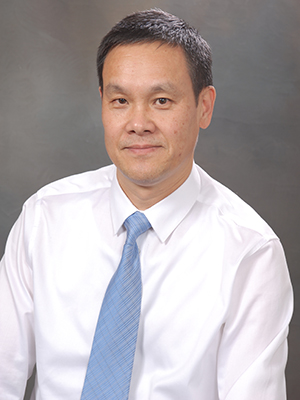
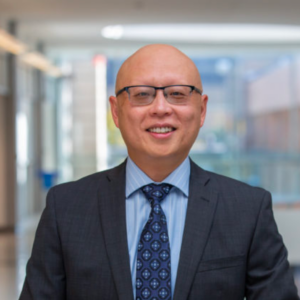
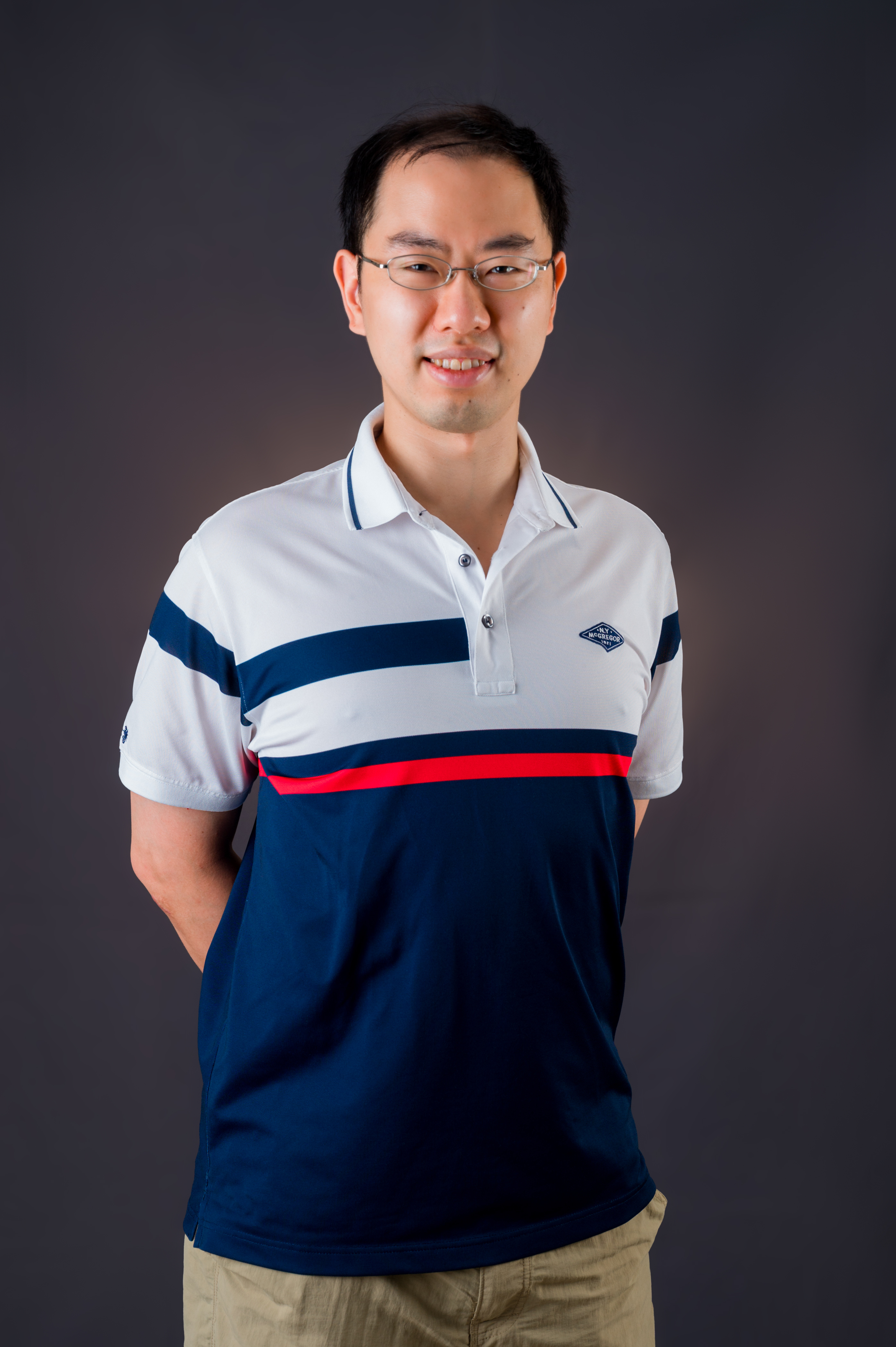
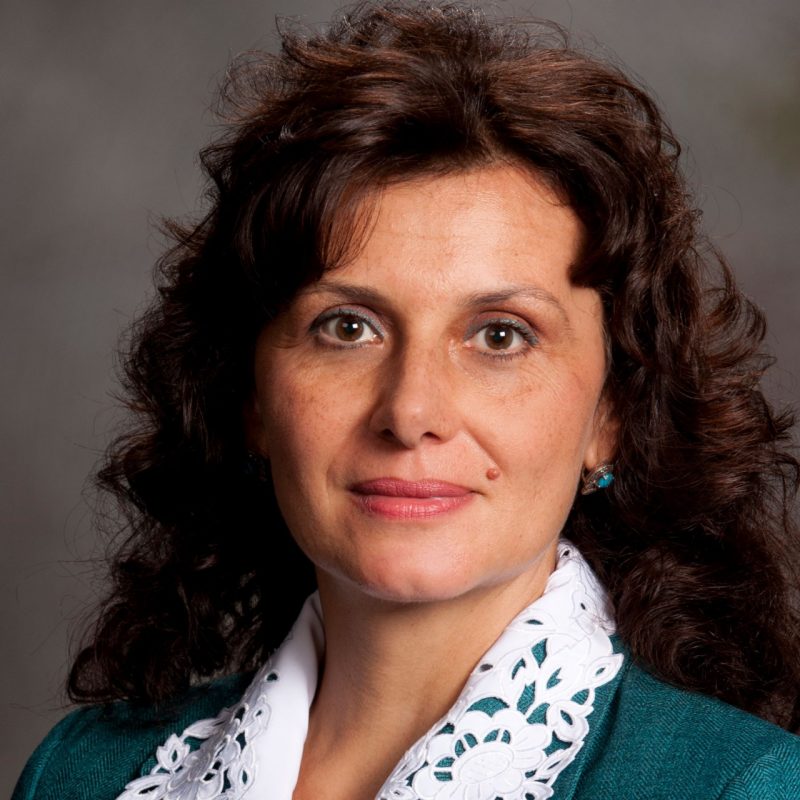
Dr. Jose Paolo Talusan is a Research Scientist at the Department of Computer Science and Computer Engineering , Vanderbilt University, specializing in smart transportation systems , distributed computing , and cyber-physical systems . He is affiliated with ScopeLab , a research group focused on smart cyber-physical systems. Education: PhD from Nara Institute of Science and Technology, Japan (2020) Research Interests: His work addresses challenges in urban mobility through middleware architectures, optimization algorithms, and machine learning. Key areas include incident detection in transportation systems, privacy-preserving route planning, and vehicle-to-building charging optimization. Publication Trends: Recent publications focus on real-time transit optimization (2024-2025), leveraging reinforcement learning for heterogeneous agents in vehicle-to-building systems, and privacy-aware route planning in smart cities. His work integrates IoT , edge computing , and graph neural networks to tackle imbalanced data and sparsity issues in transit analytics. Labs & Teams: Actively contributes to ScopeLab at Vanderbilt University, collaborating on interdisciplinary projects with researchers in computer science, electrical engineering, and urban planning.
Professor David Stupples is a Professor of Electronic & Radio Engineering at City St George's, University of London , where he has served as Course Director for the MSc in Space Systems since 2021. He is also a Scientific Advisor to the UK Government (2012–present) and holds fellowships with the Royal Aeronautical Society, Institute of Measurement & Control, and other professional organizations. His research focuses on resilient position, navigation, and timing (PNT) systems for military and civilian applications, including the development of a solo micro-satellite to geolocate electromagnetic interference sources. He applies systems modeling and cyber warfare analysis to enhance decision-making and security in complex engineering environments. Key publications include: " Semantic Approach to Web-Based Discovery of Unknowns " (2013) – addressing intelligence gathering via natural language processing and grounded theory. " Probability Analysis of Cyber Attack Paths " (2013) – exploring risk in enterprise systems. " J-value: a universal scale for health and safety spending " (2006) – introducing a risk-assessment framework. Scientific awards include Fellow, Chartered Engineer, Institute of Electronic and Radio Engineers (1981–present) Fellow, Chartered Engineer, Royal Aeronautical Society (2016–present)
Ruozhou Yu is an Assistant Professor in the Department of Computer Science and a Courtesy Assistant Professor in the Department of Electrical and Computer Engineering at NC State University. His research focuses on computer networks, distributed systems, and cybersecurity , with applications to quantum networking, blockchain, IoT, cloud/edge computing, and machine learning . He earned his PhD in Computer Science from Arizona State University (2019) and his BS from Beijing University of Posts and Telecommunications (2013). Education: PhD, Computer Science, Arizona State University, 2019 BS, Computer Science, Beijing University of Posts and Telecommunications, 2013 Yu's research spans quantum internet (high-fidelity entanglement distribution, satellite-assisted quantum networks), blockchain technologies (payment channel networks, smart contracts, layer-2 security), and edge computing (resource provisioning, SLA verification, market design). He also explores machine learning in distributed systems (LLM fine-tuning on graphs) and network security (data delay attacks, Byzantine-robust federated learning). His recent publications (2024–2025) emphasize quantum networking (LACE, QuESat), edge computing SLAs (VeriEdge, WolfPack), and blockchain security (Thor, Fence). Articles like AdaOrb (PerCom 2025) and Physics-Informed Scheduling (RTAS 2025) highlight cross-domain innovations. Awards & Recognition: NSF CAREER Award (2021) IEEE TNSE Excellent Editor Award (2024) IEEE INFOCOM Distinguished TPC Member (2024, 2022, 2020) Yu supervises PhD and Master's students in quantum networking (Huayue Gu), blockchain (Xiaojian Wang), and edge computing (Zhouyu Li). He serves as Associate Editor for IEEE Transactions on Network Science and Engineering and Area Editor for Elsevier Computer Networks .
Jari Vepsäläinen is an Assistant Professor at Aalto University's Department of Energy and Mechanical Engineering under the College of Engineering. He serves as Director of the Fluid Power group and specializes in mechatronics design, energy efficiency, and generative design methodologies. Research focuses on physics-based modeling for energy recovery AI/ML applications in electromechanical system design Applications in robotics, heavy machinery, and sustainable transportation His recent publications demonstrate expertise in hybrid systems, fluid power optimization, and AI-driven engineering, with a strong emphasis on electrification and efficiency across automotive, maritime, and industrial domains. Key areas: Mechatronics, Energy Systems, Generative Design Technologies: Digital Twins, IoT, Machine Learning Current projects involve thermal energy systems, electric motor optimization, and advanced control algorithms for mobile machinery.
Steven Chamberland is a Full Professor at the Department of Computer Engineering and Software Engineering at Polytechnique Montréal. He serves as Director of Academic Affairs and Student Life at the institution. With a Ph.D. from Polytechnique Montréal, an MBA from HEC Montréal, and an MIR from Queen's University, his expertise combines engineering rigor with strategic academic leadership. Ph.D. (Polytechnique Montréal) MBA (HEC Montréal) MIR (Queen's University) B.Eng. (Polytechnique Montréal) Dr. Chamberland specializes in network design and optimization , particularly for wireless and vehicular communication systems. His work addresses critical challenges in network reliability, congestion management, and resource allocation across emerging technologies like SDN, IoT, and 5G/6G systems. He actively explores machine learning applications for network optimization and quality-of-service improvements. His recent publications focus on heterogeneous vehicular networks , with contributions to congestion avoidance mechanisms using neural networks, routing protocols for intelligent transportation systems, and network slicing techniques with generative adversarial networks. These works align with his broader research in mobile computing and smart city infrastructure . Dr. Chamberland has supervised over 8 Ph.D. and 12 Master's students , including notable graduates like Falahatraftar, El Garoui, and Jaramillo Herrera. His leadership extends to the LARIM Laboratory , where he contributes to mobile computing research. Despite extensive publications (>110), no specific scientific awards were mentioned in the provided texts.
Oscar Esparza Martin is a Professor at the Department of Telecommunications Engineering within the Barcelona School of Telecommunications Engineering at Universitat Politècnica de Catalunya (UPC). He is an active researcher with over 222 academic activities documented, specializing in network security and information security. His work spans multiple research groups including ISG - Grup de Seguretat de la Informació and ISG-MAK - Information Security Group - Mathematics Applied to Cryptography. Dr. Esparza Martin holds a Telecommunications Engineering degree and a Doctorate from UPC, with postgraduate studies in Networks, Advanced Broadcasting Systems and Services. His expertise centers on network security, with significant contributions to blockchain security, IoT security, satellite communications security, and data exchange protocols. His recent research output shows strong focus on secure blockchain applications, particularly with his work on DA2Wa (a secure pairing protocol between DApps and wallets), and data exchange protocols with free sampling services. His publications span high-impact journals including Computer Communications, IEEE Access, and Electronics. Award or recognition Dr. Esparza Martin actively participates in numerous international conferences as committee member, particularly in areas of IoT, wireless communications, vehicle technology, and security. His collaborations span multiple institutions with key partners including Muñoz Tapia, Soriano Ibáñez, Alins Delgado, and Mata Diaz. His research is supported by various competitive projects including the Cátedra CARISMATICA and Catalonia Digital Innovation Hub (DIH4CAT). His work connects theoretical cryptography with practical security implementations across multiple domains including blockchain, IoT, satellite communications, and data marketplaces, demonstrating both academic rigor and practical relevance to current security challenges.
Dr. Yunlong Zhang is a Professor at the Zachry Department of Civil & Environmental Engineering at Texas A&M University and holds a joint appointment with the Texas A&M Transportation Institute. With over 35 years of experience in transportation engineering, he specializes in traffic operations, transportation modeling, intelligent transportation systems, and AI applications in transportation. Ph.D. in Transportation Engineering from Virginia Tech (1996) M.S. in Highway and Traffic Engineering from Southeast University (1987) B.S. in Civil Engineering from Southeast University (1984) Research Interests: Traffic flow modeling, simulation, and analysis Traffic control devices and signal systems Safety analysis in transportation Evaluation of connected and autonomous vehicle (CAV) technologies Artificial intelligence and advanced computing applications Professional Affiliations: Joint appointment with Texas A&M Transportation Institute Member and sub-committee chair of TRB’s Artificial Intelligence and Advanced Computing committee
Yafeng Yin is Professor of Civil and Environmental Engineering and Professor of Industrial and Operations Engineering at the University of Michigan, College of Engineering, where he serves as Donald Malloure Department Chair of Civil and Environmental Engineering and holds the Donald Cleveland Collegiate Professorship in Engineering. His educational background includes: PhD in Civil Engineering from University of Tokyo (2002) ME in Civil Engineering from Tsinghua University (1996) BE in Environmental Engineering from Tsinghua University (1994) BE in Structural Engineering from Tsinghua University (1994) Dr. Yin's research centers on developing sustainable and economically efficient transportation systems through analysis, modeling, design, and optimization. He investigates how emerging technologies—including connected/automated vehicles, electric vehicles, drones, and mobile sensing—impact transportation demand and supply. His work extends to interdependencies between transportation, power, and communications networks in urban infrastructure systems. Key focus areas include mobility services, ride-sourcing markets, traffic management, and integration of artificial intelligence in transportation. His recent publications (2023-2025) demonstrate a pronounced shift toward leveraging large language models and agent-based frameworks for transportation analysis, with significant emphasis on on-demand mobility services (ride-sourcing, food delivery), traffic control with connected vehicles, and economic implications of emerging technologies. The research spans theoretical foundations in game theory and optimization to practical applications in urban settings. As director of the Lab for Innovative Mobility Systems, Dr. Yin leads interdisciplinary research developing solutions that enhance transportation efficiency, reliability, safety, and service diversity through technological integration. His work bridges theoretical modeling with real-world implementation challenges in evolving transportation ecosystems.
Yasser Mohamed is a Professor in the Civil and Environmental Engineering Department at the University of Alberta . His academic and professional focus revolves around construction engineering, discrete-event simulation, and process optimization for industrial and tunneling operations. He has also explored knowledge engineering techniques and the application of TRIZ (Theory of Inventive Problem Solving) to construction processes. Email: yaly@ualberta.ca Location: 7-269 Donadeo Innovation Centre For Engineering, Edmonton, AB Courses Taught: CIV E 603 (Construction Informatics), CIV E 606 (Design and Analysis of Construction Operations) His research emphasizes modeling construction processes using discrete-event simulation to optimize performance and develop synthetic environments for construction operations. Recent publications, however, indicate a shift toward power systems, focusing on DC microgrids , grid-forming converters , and renewable energy integration . Scientific Awards: None explicitly mentioned in the provided data. Advising and Grants: No formal advisees listed. A co-applicant on a CRD grant (2007–present) for synthetic environments in construction simulation.
Chung-Wei Lin is an Associate Professor and Deputy Director at the Department of Computer Science and Information Engineering and the Graduate Institute of Networking and Multimedia at National Taiwan University. His research focuses on cyber-physical systems, particularly in the domains of connected and autonomous vehicles, system security, and design methodologies. He maintains active collaborations with industry partners including Toyota and has established himself as a leading researcher in intelligent transportation systems in Taiwan. Education: Ph.D. (2015) from Department of Electrical Engineering and Computer Sciences, University of California, Berkeley (Advisor: Alberto L. Sangiovanni-Vincentelli) M.S. (2007) from Graduate Institute of Electronics Engineering, National Taiwan University (Advisor: Yao-Wen Chang) B.S. (2005) from Department of Computer Science and Information Engineering, National Taiwan University Dr. Lin's research interests center on cyber-physical systems with specific focus on connected and autonomous vehicles, security mechanisms, and system design methodology. Before returning to NTU in 2018, he worked at Toyota InfoTechnology Center, USA, Inc. His recent projects cover diverse topics including systems engineering, formal verification for robustness and compatibility, runtime monitoring, and intelligent intersection management. His work bridges theoretical foundations with practical applications, addressing real-world challenges in transportation systems through innovative technical solutions. Analysis of Dr. Lin's recent publications (2023-2025) reveals a strong emphasis on intelligent transportation systems with particular focus on security challenges for connected vehicles, formal verification techniques for safety-critical systems, and novel control algorithms for vehicle coordination. His research demonstrates increasing integration of machine learning approaches, especially reinforcement learning, to address complex decision-making problems in transportation. The work spans multiple technical domains including control theory, networking, cybersecurity, and formal methods, reflecting the inherently interdisciplinary nature of cyber-physical transportation systems research. Selected Awards: 2016 Best Paper Award, ACM Transactions on Design Automation of Electronic Systems 2015 Most Accessed ESL Paper Best Paper Award, IEEE ISSREW 2016 workshop Best Paper Award, ICCD 2010 Best Paper Nominee, ASP-DAC 2015 Dr. Lin currently advises multiple Ph.D. and M.S. students, with research focusing on various aspects of cyber-physical systems for transportation. His group includes Ph.D. students Pintusorn Suttiponpisarn and I-Ching Tseng, as well as several M.S. students. His extensive publication record and numerous patents (over 20 granted) indicate significant research impact and likely substantial research funding from both government and industry sources. His research program demonstrates strong translational potential, with many concepts moving from theoretical foundations to practical implementations. Dr. Lin leads the Cyber-Physical Systems Laboratory at NTU, which focuses on research related to intelligent transportation systems. The lab conducts research in areas including vehicle control, intersection management, security mechanisms, and formal verification for cyber-physical systems. His team collaborates with researchers from various institutions globally, as evidenced by his extensive publication record with international co-authors from universities and research institutions in the United States, Japan, and Europe.
Corina Sandu is the Robert E. Hord Jr. Professor in the Department of Mechanical Engineering at Virginia Tech. She leads the Terramechanics, Multibody, and Vehicle Systems Laboratory, focusing on advanced modeling of multibody dynamics, vehicle-terrain interaction, and tire performance optimization. Her research integrates computational methods, experimental validation, and interdisciplinary approaches to address challenges in off-road mobility, autonomous systems, and vehicle dynamics. Dr. Sandu holds a Ph.D. (2000) and M.S. (1995) in Mechanical Engineering from the University of Iowa, complemented by an Engineering Diploma in Mechanics from the Bucharest Polytechnic Institute (1991). She serves as the President of the International Society for Terrain-Vehicle Systems and chairs the SAE Fellow Committee, underscoring her leadership in automotive and mechanical engineering fields. Her research interests span: Uncertainty quantification in multibody systems Optimization of vehicle dynamics and tire performance Terramechanics and terrain-vehicle interaction modeling Sensitivity analysis and adjoint methods for complex systems Recent publications highlight innovations in tire-ice interface models, hydroplaning risk estimation, and advanced multibody system simulation frameworks. She has pioneered experimental methodologies for tire performance evaluation on ice and soft soils, linking material science with mechanical engineering principles. Her work impacts automotive safety, off-road vehicle design, and autonomous systems, with applications in both industry and academia. Awards include recognition for her contributions to terrain-vehicle systems research and leadership in professional societies.
Hongbo Yu is an Associate Professor in the Department of Geography at Oklahoma State University (OSU), where he has served since 2005. His research focuses on transportation geography, time-geography frameworks, GIS applications, and spatio-temporal analysis. He earned his Ph.D. in Geography from the University of Tennessee at Knoxville in 2005. Dr. Yu integrates GIS tools to study urban dynamics, accessibility, and transportation systems, with a particular emphasis on how temporal and spatial constraints influence human mobility and societal interactions. His teaching responsibilities include courses such as Fundamentals of Geographic Information Systems and Geographic Information Systems: Socioeconomic Applications . He emphasizes practical GIS skills, theoretical spatial concepts, and real-world problem-solving in his instruction. Dr. Yu has secured funding for projects like the Black Ice Detection and Road Closure Control System and GIS-based Livestock Disease Routing Framework , demonstrating his commitment to applied research impacting transportation safety and public health. His service includes peer review for journals like Transportation Research Part D and Annals of GIS , and committee roles such as Program Committee Member for academic conferences. His work bridges theoretical geography with technological innovation, addressing challenges in urban planning, climate adaptation, and transportation logistics.
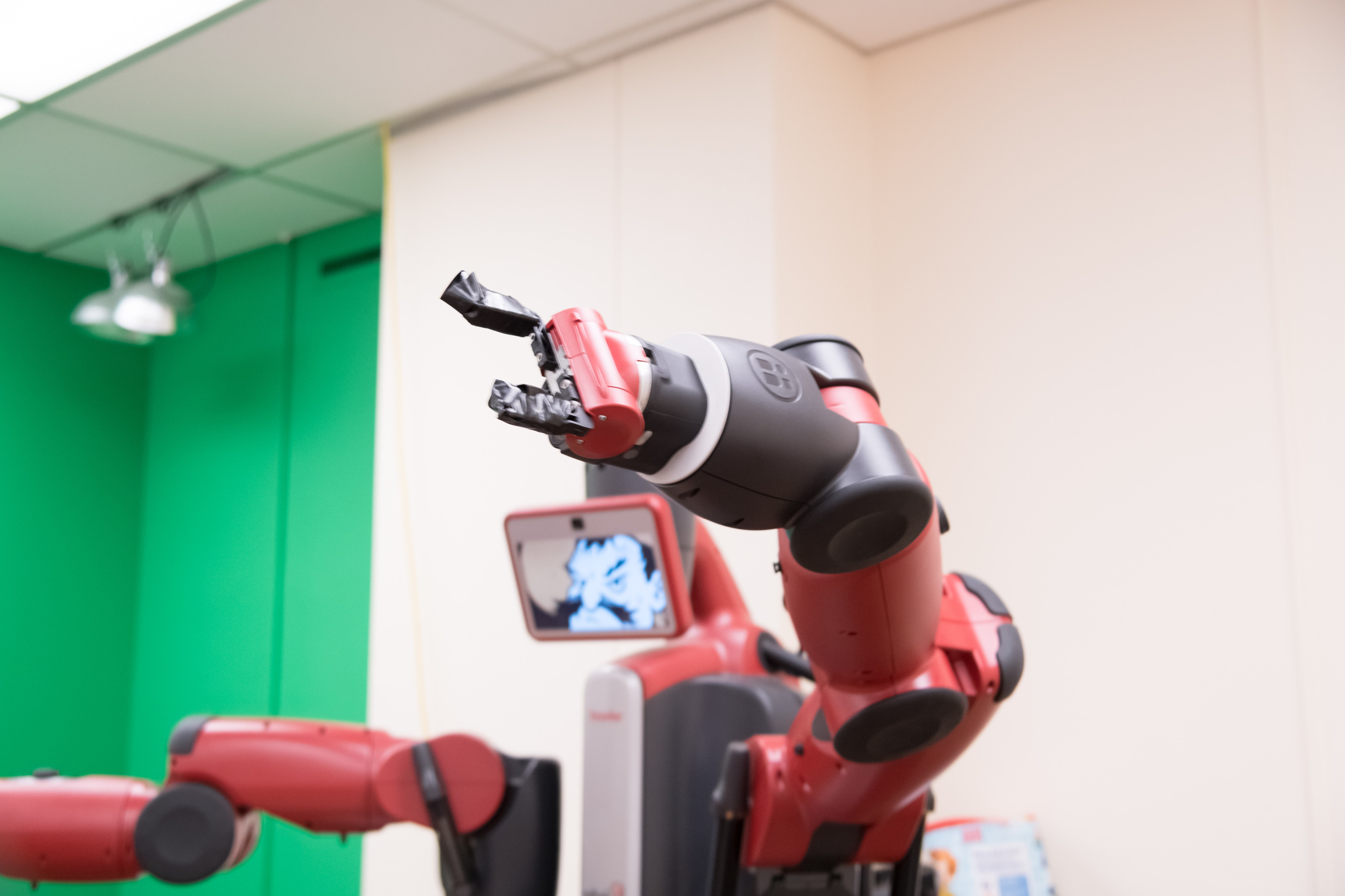
Christopher Crick is an Associate Professor in the Department of Computer Science at Oklahoma State University. He leads the Robotic Cognition Laboratory, focusing on grounding developmental psychology and cognitive science in embodied AI systems, while improving robotics through human cognition-inspired models. University: Oklahoma State University Department: Computer Science Academic Rank: Associate Professor Email: chris.crick@okstate.edu, chriscrick@cs.okstate.edu Research Interests: Artificial Intelligence Cognitive Science Human-Robot Interaction Atmospheric Sciences (via UAV applications) Machine Learning Medical Informatics Scientific Activities: NSF-funded research in robotics, UAVs, and AI Professional memberships: Cognitive Science Society, ACM, AAAS Editorial roles and conference reviewing in robotics and AI Lab: Robotic Cognition Laboratory
Hamed Ghavamnia is a Security Researcher at Bloomberg, where he focuses on software and systems security. Previously, he served as an Assistant Professor at the School of Computing, University of Connecticut (2023–2024). He holds a PhD in Computer Science from Stony Brook University (under Michalis Polychronakis), an M.S. in Computer Engineering from Sharif University of Technology (Network Security focus), and a B.E. in Software Engineering from University of Isfahan. His research interests center on system/software security, particularly attack surface reduction through program analysis and memory-safe languages. Key projects include Confine (system call policy generation for containers), Temporal Specialization (system call filtering based on execution phases), and LeakLess (data protection in serverless platforms). He has contributed to seminal works on configuration-driven security (C2C), memory protection (xMP), and automated policy inference. His work bridges static/dynamic analysis, program specialization, and security hardening. Notable outcomes include reducing attack surfaces via system call filtering and debloating techniques, with applications in cloud and containerized environments.
Professor Mahdi Mahfouf holds a Chair in the School of Electrical and Electronic Engineering at the University of Sheffield. He has held academic roles since 1997, progressing from Lecturer to Professor in 2005. His research focuses on Fuzzy Logic, Control Systems, and their applications in biomedical and industrial contexts. Mahfouf leads the Intelligent Systems Research Laboratory and has contributed over 370 publications, including influential work on fuzzy modeling and predictive control. Education: Ing.Dipl. (Hons) in Control Systems MPhil in Control Systems (University of Sheffield, 1988) PhD in Control Systems (University of Sheffield, 1991) Research Interests: Fuzzy Logic applications, Artificial Intelligence, Neural Networks, Model-Based Predictive Control, Biomedical Engineering (e.g., ICU Decision Support Systems), and Manufacturing Systems (e.g., granulation processes, surface metrology). Key Achievements: Recipient of the IEE Hartree Premium Award (1992) and MEDIPEX Innovation Award. His work integrates fuzzy logic into real-time systems for aviation, healthcare, and robotics. Grants & Labs: Leads the Intelligent Systems Research Lab. Active in collaborative projects with industry (e.g., pharmaceuticals, aerospace). His research bridges theory and practice, emphasizing data-driven solutions for complex systems.