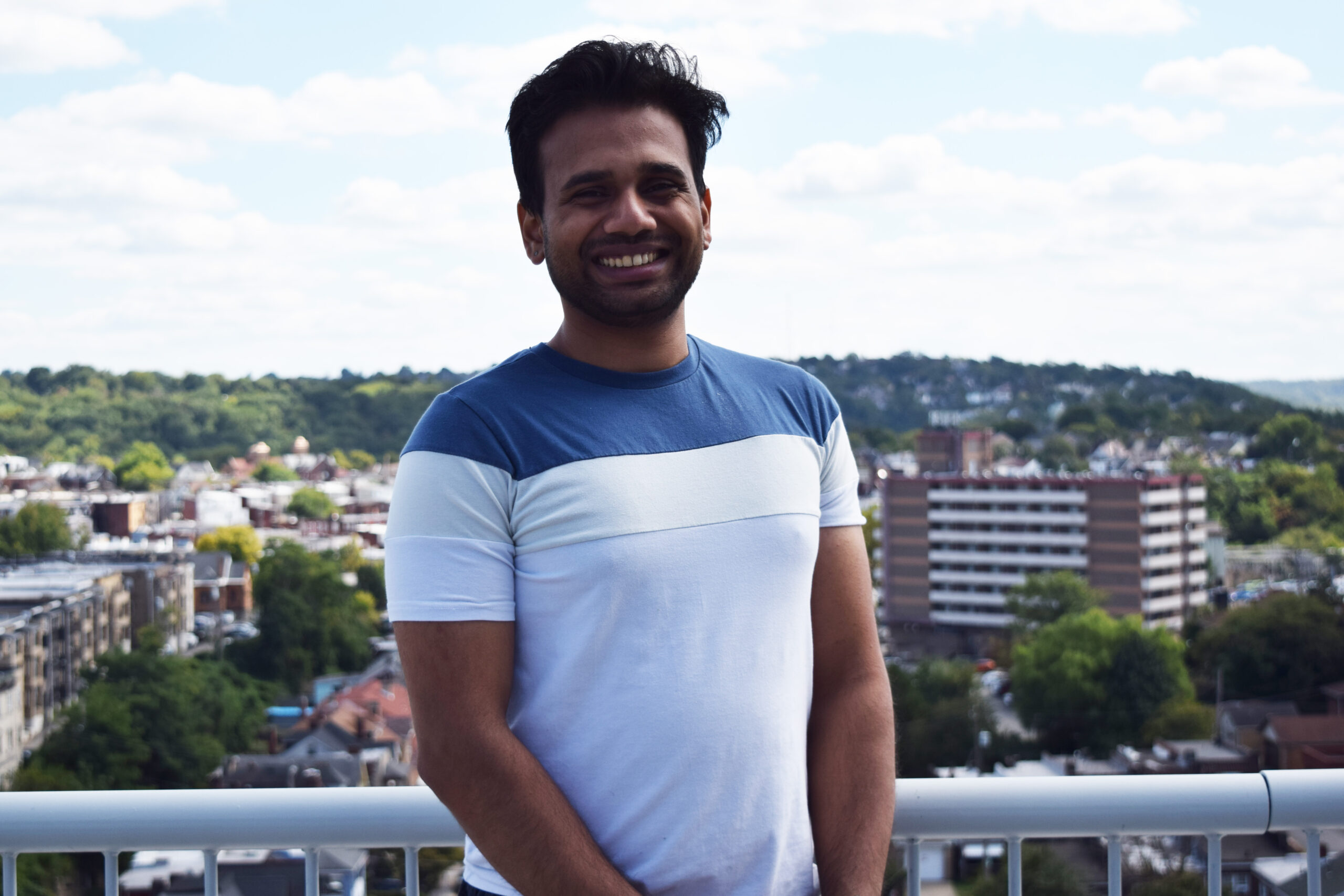
Anish Sevekari is a Postdoctoral Associate at the University of Pittsburgh. His research focuses on machine learning, algorithms, optimization, and theoretical computer science. He investigates topics such as neural network training dynamics, generative models, algorithmic analysis beyond worst-case scenarios, and efficient inference techniques. His work bridges theoretical foundations with practical applications in areas like probabilistic modeling and combinatorial optimization. Key research interests include normalizing flows, ensemble methods, score-based learning, stochastic optimization, and combinatorial algorithms. His recent publications explore acceleration of NCE convergence, progressive ensemble distillation, and provable benefits of score matching. He has published extensively in top-tier venues, with a focus on theoretical guarantees and practical efficiency. His research trends emphasize bridging gaps between machine learning and traditional algorithmic analysis, particularly in probabilistic frameworks and high-dimensional data problems. No scientific awards or grants are explicitly mentioned in the provided information.
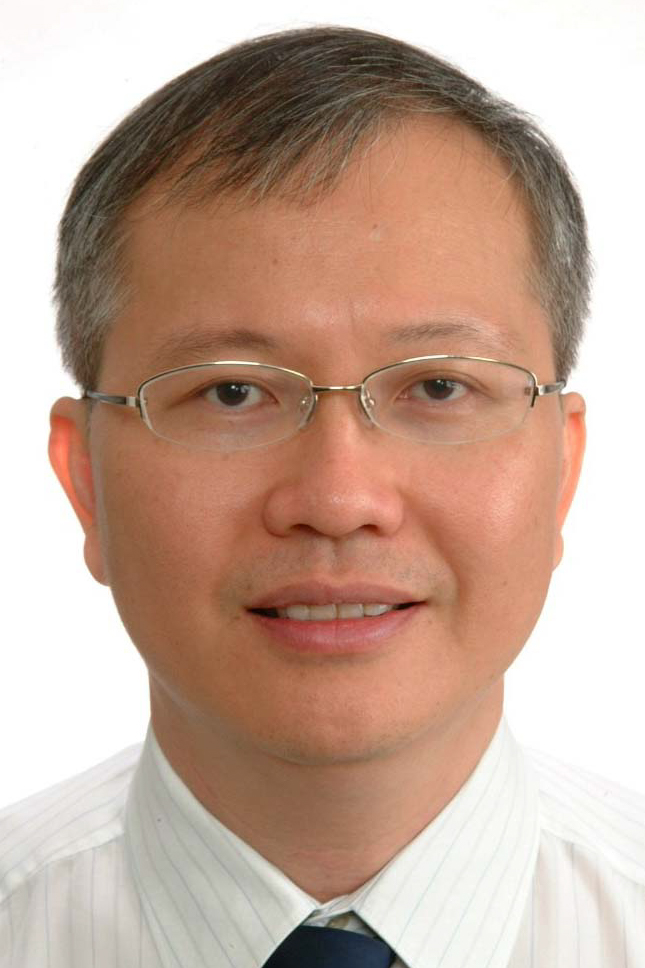
Patrick Pun is an Associate Professor in the Division of Mathematical Sciences at Nanyang Technological University (NTU), Singapore, serving as Assistant Chair (MSc Programs) and Director of the MSc in FinTech program within the School of Physical and Mathematical Sciences. His academic journey includes a Ph.D. and M.Phil. from the Chinese University of Hong Kong (CUHK) and a B.Sc. from Nankai University. Professor Pun’s research focuses on the intersection of applied mathematics and finance, with methodologies spanning stochastic controls, nonlinear partial differential equations (PDEs), robust optimization, and machine learning. His work addresses challenges in portfolio optimization, derivatives pricing, risk management, and financial data analysis. He has also contributed to interdisciplinary areas such as nanoparticle characterization and epidemiological modeling (e.g., during the COVID-19 pandemic). Award-winning scholar, Pun holds the 2016 Nicola Bruti Liberati Prize from the Bachelier Finance Society and the CUHK Young Scholars Thesis Award. He is an ad-hoc reviewer for leading journals including Automatica , SIAM Journal on Financial Mathematics , and Quantitative Finance . His professional roles include membership in the Academic Council of the Global Digital Economy Forum. Pun’s teaching and academic leadership include oversight of master’s programs and curriculum development. His research outputs emphasize innovative solutions to time-inconsistent problems, high-dimensional financial data challenges, and the integration of machine learning with traditional financial models. His recent work explores transformer-based generative models, quantum algorithms for financial PDEs, and reinforcement learning applications in portfolio management.
Chew Ek Peng is an Associate Professor and Deputy Head at the Institute of Operations Research and Analytics (IORA), part of the National University of Singapore’s Smart Nation Research Cluster. His research focuses on optimizing port logistics, maritime transportation systems, and inventory management through advanced simulation techniques and data-driven methodologies. His work spans critical areas such as automated port operations, simulation-optimization frameworks, and stochastic systems analysis. Notably, he develops solutions for challenges like AGV scheduling, container relocation problems, and intermodal terminal design. His research integrates machine learning (e.g., hybrid neural networks) with traditional operations research methods. Recent publications highlight contributions to electric vehicle sustainability in carsharing systems, multi-agent reinforcement learning for AGV recharging, and facility location under random utility models. His work emphasizes practical applications in smart logistics, disaster response optimization, and supply chain resilience. Chew Ek Peng collaborates on projects like digital twin validation frameworks and modular simulation pipelines for residential energy modeling. His research has been applied to real-world scenarios such as Singapore’s construction demand forecasting and pandemic impact analyses using modified SEIR models.
Dr. Chris Agbonkhese is a Visiting Lecturer in Digital and Computational Studies at Bates College. He holds a BSc in Computer Science, an MSc in Computer Science, and a PhD in Information Systems. His research focuses on the intersection of Health Informatics and Data Analytics, employing machine learning and data mining to address challenges in healthcare. Dr. Agbonkhese’s work includes developing predictive models for drug reactions, clinical decision support systems, and optimization algorithms for variational inequality problems. Education Background: Bachelor of Science (BSc) in Computer Science Master of Science (MSc) in Computer Science Doctor of Philosophy (PhD) in Information Systems Research Interests: Leveraging machine learning for healthcare applications Health informatics and clinical decision support systems Optimization algorithms and numerical methods Data-driven approaches in medicine and urban planning Publications Trends: His work spans predictive modeling in healthcare, algorithm development for mathematical optimization, and interdisciplinary studies in law and technology. Recent contributions include a dataset for predicting judicial outcomes and smart city traffic algorithms. Awards: No scientific awards explicitly mentioned in the text. Advising & Grants: No specific advisees or grant details provided. Current focus is on teaching and research in digital/computational studies. Labs/Teams: No dedicated lab or team affiliations listed.
Dr. Aavudai Anandhi is an Associate Professor of Biological Systems Engineering at Florida A&M University. Her research focuses on computational intelligence for modeling ecosystem processes at the food-energy-water (FEW) nexus, addressing environmental changes through systems engineering approaches. Key areas include artificial intelligence applications, spatial statistics, and machine learning for sustainable resource management. Education: Ph.D. in Water Resources and Environmental Engineering, Civil Engineering, Indian Institute of Science (2008) M.Sc. in Irrigation and Water Management, Indian Institute of Science (1995) B.Sc. in Agriculture, Anna University (1992) Research interests emphasize interdisciplinary sustainability solutions, climate change adaptation, and nexus frameworks for resilient ecosystems. Recent work explores land degradation, water footprint assessments, and habitat suitability modeling. Awards and recognitions include the 2018 Teacher of the Year (ASABE), 2017 Florida A&M Emerging Researcher Award, and multiple fellowships for educational innovation and research excellence. Her work bridges climate science with practical decision-making tools for agriculture and water resources. Key contributions include the Ogallala Aquifer Project (USDA Honor Award, 2013) and development of the DIEM framework for habitat threat analysis. She actively engages in educational outreach, creating tools like the 'Leaf Model for Watershed Teaching.'
Randy Stuart is an Associate Professor of Marketing at Kennesaw State University (KSU), specializing in Retail Management, Consumer Behavior, and Marketing Education. She holds an MBA from the University of Hawaii and a BS from Northern Illinois University. Her research focuses on marketing education innovations, student market segmentation, and sales career development, with notable work on online vs. traditional job-search preferences post-graduation. Teaching responsibilities include Principles of Marketing, Consumer Behavior, and Retail Management courses, alongside overseeing the department’s internship program. She transitioned to academia in 1998 after a 25-year career in retail management and wholesale sales, spanning industries like confectionary, clothing, and gift retailing. Awards: Tom Roper Outstanding Student Advisor (2010/2011), Beta Gamma Sigma membership, and Outstanding Organization Advisor recognition. Her publications explore digital vs. traditional career search methods, academic dishonesty, and multiclass classification algorithms. She actively presents at conferences such as AMTP and AAUP, addressing topics like legal/moral marketing issues and study-abroad program outcomes.
Dr. Robyn Cook is a Senior Lecturer in the Department of Graphic Design at Falmouth University. She holds a DPhil in Visual Art from the University of Pretoria (2017) and has extensive academic leadership experience, including Course Leader roles at Falmouth and the University of Johannesburg. Her research focuses on the intersection of power dynamics and design, exploring how design operates as a 'hyperobject' within societal systems. She runs The Office for Ulterior Research, blending design research and publishing. Her qualifications include a FHEA from Advance HE (2020), MA and BA(Hons) in Fine Art from Wits University, and a National Diploma in Graphic Design. She has secured significant research grants including a £57k UKRI/GCRF grant (2018-2021) and a £32k NRF Thuthuka grant (2014-2016). Currently supervising 6 PhD/Master's students, her teaching spans MA Communication Design and BA Graphic Design, emphasizing critical pedagogy and design ethics. Research interests include gender inequality in design education, post-humanist design futures, and the role of design in social change. Her work critiques neoliberal educational structures and advocates for participatory, activist-oriented practices. The Office for Ulterior Research serves as both a research repository and experimental publishing platform focusing on 'other-than-human' representations. Key articles like Unequal Stories series address systemic inequities in design, while Speculating on the future of graphic design explores AI's impact. Her Last Unstitute project challenges traditional academic structures through experimental learning environments.
Xudong (Andrew) Fan is an Assistant Professor in the Department of Civil, Structural and Environmental Engineering at the University at Buffalo (UB), part of the School of Engineering and Applied Sciences. His research focuses on urban water systems, resilience and sustainability in water infrastructure, and applications of artificial intelligence in complex networks. He holds a PhD in Civil and Environmental Engineering from Case Western Reserve University (2022), an MS in Structural Engineering from Tianjin University (2017), and a BS in Civil Engineering from Central South University (2014). Dr. Fan's work integrates advanced computational methods with civil engineering challenges, particularly in enhancing infrastructure resilience through AI-driven approaches. His research spans smart city technologies, climate change adaptation, and bio-based solutions for soil stabilization and frost heave mitigation. Notable contributions include developing graph neural networks for spatially embedded network analysis and machine learning models for predicting water infrastructure failures. His publications reflect a strong emphasis on interdisciplinary problem-solving, combining data science with traditional engineering domains. While no specific awards are listed, his prolific output since 2020 highlights his active engagement in cutting-edge research areas such as AI for water systems and sustainable materials innovation.
Mikyoung Jun is a Professor of Mathematics at the University of Houston, specializing in spatial and spatiotemporal statistics with applications to climate and social science. Her research focuses on climate model validation, covariance models for global data, and statistical methodologies for environmental and geophysical systems. She holds a prominent role in advancing interdisciplinary approaches at the intersection of statistics, climate science, and data science. Her educational background and affiliations include expertise in statistical theory and computational methods, with a strong emphasis on real-world applications. Key research interests include the statistical analysis of climate model outputs, development of spatiotemporal models for environmental phenomena, and the integration of machine learning techniques with traditional statistical methods. Jun’s work spans diverse domains such as hurricane impact analysis, vessel track association algorithms, and lightning prediction in global climate models. Her contributions to statistical software (e.g., "bizicount" package) and methodological advancements in spatial modeling reflect her dual focus on theoretical rigor and practical utility. She has consistently addressed challenges in handling large-scale environmental data, including duplicated data correction and parameterization techniques for climate models. Her projects highlight collaborations across disciplines, with notable applications to oceanography, atmospheric science, and social science event modeling. Recent research trends emphasize the synergy between statistical theory and computational tools to tackle complex environmental and climatic challenges.
Yannick Wey is a Lecturer at the Competence Center for Music Education Research (CC MER) within the Lucerne School of Music at Lucerne University of Applied Sciences and Arts (HSLU). His roles include academic teaching, research coordination, and interdisciplinary collaboration in musicology and ethnomusicology. He holds a PhD from the University of Innsbruck, an MA and BA in Trumpet Performance from Zurich University of the Arts, and has conducted extensive research on Alpine music traditions. Education: PhD in Musicology, University of Innsbruck (2019) MA and BA in Trumpet Performance, Zurich University of the Arts His research focuses on Swiss folk music traditions , including yodeling, alphorn performance, and the cultural history of instruments like the Büchel. He examines musical transcription practices, cognitive aspects of folk music learning, and the intersection of music education with digitalization. Current projects explore Amazonian sound collaboration, KI applications in Alpine music, and safeguarding musical heritage archives. Notable contributions include studies on alphorn tonal reconstruction, dulcimer cultural development, and machine learning classification of yodel styles. His work appears in journals like Music & Science , Journal of Music Research Online , and Anthropos . Awards: SEMPRE 50th Anniversary Commemorative Collection recognition (2022) Nominated for Preis der deutschen Schallplattenkritik (2022) He actively organizes academic events like the Performing, Engaging, Knowing conference and chairs the ICTM Study Group on Multipart Music. His research integrates fieldwork, archival studies, and cross-cultural analysis to preserve and reinterpret Alpine musical heritage.
Marc Orlando is a Professor and Director of the Translation and Interpreting Program in the Department of Linguistics at Macquarie University's Faculty of Medicine, Health and Human Sciences. His expertise spans translation and interpreting studies, with a focus on pedagogy, technology integration, and industry collaboration. He holds a PhD from Monash University (2014), a Master's in English Studies from Bordeaux Montaigne University (1996), and a postgraduate degree in multilingual education from the French Ministry of Education (1998). Research Interests : Orlando's work emphasizes training methodologies for translators/interpreters, the role of new technologies (e.g., digital pens, AI/MT), and synergies between practice, research, and education. He advocates for graduate employability and has built partnerships with organizations like AIIC, CIUTI, and Multicultural NSW. Key Contributions : His 2016 monograph Training 21st Century Translators and Interpreters is foundational in the field. Recent projects include studies on healthcare interpreting accessibility, AI literacy for professionals, and crisis management in language services. Awards : AUSIT National Award for Excellence in Translating (2007), multiple Dean's Awards for Teaching (Monash University), and the Gutenberg Teaching Council Grant (2013). Advising & Engagement : Supervised over 10 HDR students on topics like interpreter skill development, Auslan-English interpretation, and subtitling in education. Served on NAATI's Technical Reference Committee (2016–2021) and led AIIC's Research Committee (2017–2022). Leadership Roles : Vice-President of CIUTI, editorial board member of Interpreting and Society , and active conference interpreter (AIIC member). His work bridges academia and industry, fostering global T&I standards through policy and practice.
Jae Yeon Kim is a Research Fellow at Harvard Kennedy School and Better Government Lab Fellow at University of Michigan's Ford School of Public Policy. In January 2026, she will join UNC-Chapel Hill as Assistant Professor of Public Policy. Her PhD in Political Science is from UC Berkeley. Dr. Kim's research examines how governments build capacity for effective policy implementation, with focus areas including: Administrative burdens in safety net programs Civic infrastructure's role in democratic governance AI applications in public service delivery Racial group formation during the War on Poverty (book project: Unseen and Uncounted ) Her methodological approach combines computational techniques with traditional political science methods, including field experiments, archival research, and machine learning. Recent publications span top journals like Nature Human Behaviour , Journal of Policy Analysis and Management , and Nature: Scientific Data . Notable recognition includes: Paul Volcker Junior Scholar Research Grant (2025) Emerging Scholar Award in Civic Engagement (2024) APSA Best Dissertation Award in Urban Politics (2022) WPSA Best Paper Award in Asian Pacific American Politics (2020) Her research is supported by Carnegie Corporation, Gates Foundation, and Russell Sage Foundation. Dr. Kim co-founded Data for Good Roundtables and serves on committees for Summer Institute in Computational Social Science, GovAI Coalition, and APSA Task Force on AI. She maintains active government/nonprofit partnerships to ensure research directly informs policy practice.
Nori Jacoby is an Assistant Professor in the Department of Psychology at Cornell University and a Research Group Leader at the Max Planck Institute for Empirical Aesthetics in Frankfurt. Her research bridges cognitive science, neuroscience, and machine learning to explore how internal representations shape sensory and cognitive abilities, with a focus on universality/diversity in perception and collective behavior. Education: PhD from Hebrew University of Jerusalem (ELSC), postdocs at MIT, UC Berkeley, and Columbia University Lab: Directs the CoCoCo Lab (Cornell Computational Cognition Lab) Funding: NSF-funded postdoctoral program collaborating with UC Davis, CUNY, and Princeton Research interests include: High-dimensional perceptual spaces using adaptive sampling (e.g., Gibbs sampling with people) Cross-cultural studies of music and perception via global experiments Human-AI hybrid systems for collective creativity and decision-making Recent work explores mechanisms of cultural diversity in urban populations, neural correlates of rhythm in stroke patients, and LLM alignment with human sensory judgments. Current projects include large-scale music evolution experiments and NSF-funded studies on collective intelligence. Recruitment: Actively hiring postdocs and PhD students for interdisciplinary work.
Nancy Salay is an Associate Professor in the Department of Philosophy at Queen's University, with a cross-appointment in the School of Computing. She holds affiliations as Editor of Dialogue: Canadian Philosophical Review and founder of ESC (Embodiment, Systems, and Complexity). Her research focuses on philosophy of cognition, language, and metaphysics, informed by embodied cognitive science. She earned her PhD in philosophy of mind from Dalhousie University, followed by a research fellowship at Brandeis and work as a computational linguist at Cycorp. Her research explores how language expands cognitive capacities like reflective consciousness, challenging traditional computational models of cognition. Recent work critiques limitations of machine learning systems in understanding abstract representational properties. Nancy's interdisciplinary approach bridges philosophy with computational linguistics and cognitive science. Publications span analysis of knowledge systems' failures, non-universality in computation, and philosophical critiques of neural networks' representational paradigms. Her work emphasizes organism-level engagement over neural reductionism in grounding intentionality. Collaborations include projects like the Halo Pilot evaluating knowledge representation systems.