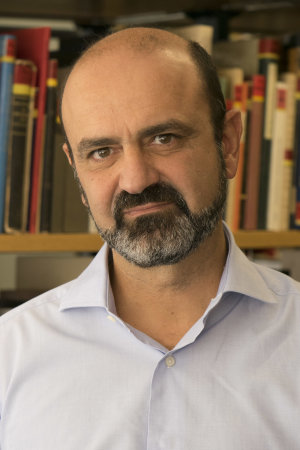
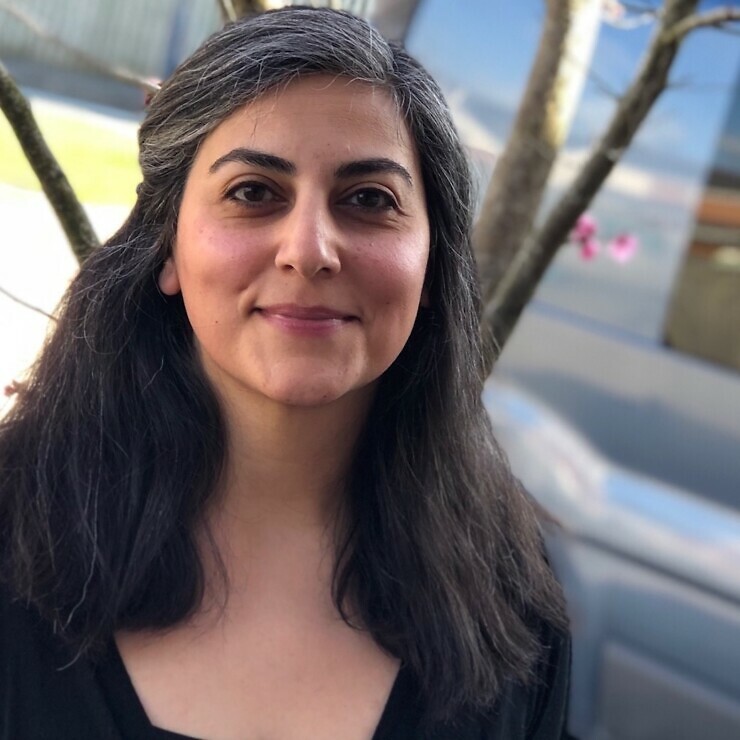
Professor Beth Williamson is a leading scholar of medieval culture, holding dual roles as Professor of Medieval Culture and Chair in the History of Art at the University of Bristol's Department of History of Art (Historical Studies), and as Academic Director (Research Impact & Translation Partnerships) within the Faculty of Social Sciences and Law. She earned her B.A. from Oxford University (Oxon), an M.A., and a Ph.D. from the University of London (Lond.). Her research focuses on visual, material, and aural dimensions of medieval religious practice, exploring how sensory experiences shaped devotional life. Key themes include sacred imagery (e.g., the Virgin Lactans and Madonna of Humility), liturgical spaces, and the intersection of art with music, time, and political power. Recent projects include studies of Westminster Abbey’s royal patronage and collaborations in interdisciplinary historical research. Her publications span over three decades, addressing topics from Italian Renaissance altarpieces to Irish medieval sculpture, with a strong emphasis on material culture and devotional practices. Despite her prolific output, no formal awards are listed, though her academic leadership roles reflect her scholarly impact. As a mentor, her supervisory activities are noted in her profile but lack specific student names. Her work bridges academic and public spheres, particularly through her role in translating research into societal impact initiatives. She is affiliated with the University of Bristol’s Senate House and contributes to institutional leadership.
Costanza Beltrami is a Senior Lecturer at Stockholm University in the Department of Culture and Aesthetics. She is a dedicated art historian with a focus on Gothic art and architecture of the late fifteenth and early sixteenth centuries, particularly in the Spanish region of Castile and its international connections. Her research interests include architectural drawings, collaboration, transculturation, and temporality in architecture. Dr. Beltrami teaches courses on Medieval and Renaissance art and architecture from Cordoba to Florence. Her academic background includes studying Art History at the Courtauld Institute of Art in London and working at the University of Oxford/St Catherine's College before joining Stockholm University. Her research has focused on late-Gothic architecture, including a monumental drawing of a tower from Rouen cathedral and ornament prints as artists' models. She is Reviews Editor for the Journal of the British Archaeological Association and has completed her PhD thesis on Juan Guas (active 1453–1496), the leading architect of late fifteenth-century Spain. She is currently working on a book project about collaboration, artistic identity, and the geographies of exchange in late-Gothic Castile. Her co-edited volume "Art, Travel and Exchange between Iberia and Global Geographies, 11400–1550" challenges traditional narratives about Iberian art history and emphasizes multi-directional cultural exchange. Dr. Beltrami's recent research includes editing a special issue on portable drawings and paper in Medieval and Gothic architecture. Her work explores how architectural practices in Castile demonstrate fascinating questions regarding migrant networks, cultural contact, the meanings of architecture, and the role of art in debates on national identity from the 15th century to the present.
Ian Ewart is an Associate Professor at the University of Reading's School of the Built Environment, serving as Head of Construction and Engineering Management and Research Group Lead for Organisation, People and Technology. He chairs the Research Ethics Committee since 2016 and supervises undergraduate/postgraduate dissertations. His academic journey spans engineering and anthropology: DPhil Social and Cultural Anthropology, University of Oxford, St Hugh's College (2007-2012) MSc Material Anthropology and Museum Ethnography, University of Oxford, St Hugh's College (2006-2007) BA (Hons) Archaeology and Anthropology, University of Oxford, Harris Manchester College (2003-2006) Diploma in Management Studies, University of the West of England (1990-1994) BEng (Hons) Mechanical Engineering, Staffordshire University (1983-1987) Ewart's research integrates ethnographic methods with digital technology studies, examining human-technology interactions in construction and domestic settings. His work bridges engineering practice and social anthropology, focusing on skill transmission, sustainable design, and multisensory experiences in virtual environments. Publications from 2025-2013 reveal a dominant trajectory in digital twins for socio-ecological sustainability, VR-based occupant behavior prediction, and HBIM for heritage conservation. The corpus demonstrates consistent cross-disciplinary innovation, merging archaeological reconstructions with healthcare applications while maintaining anthropological rigor. Key recognition: ESRC Future Research Leader fellowship (2013) for Designing Healthy Homes project He supervises PhD candidates like Afolabi Dania (Nigerian sustainable construction) and Joanna Hull (Heritage BIM), leveraging ESRC funding for ethnography-VR health studies. His grants emphasize participatory design and real-world impact assessment in built environments. Leaders the Organisation, People and Technology research group, developing multisensory Roman town reconstructions with sound/smell integration to advance archaeological and architectural experience modeling.
Alana Clifton-Cunningham is a dedicated educator and researcher in fashion and textile design at the University of New South Wales, Faculty of Arts, Design & Architecture. With over two decades of experience in higher education, she has established herself as a leader in sustainable and innovative design education. Her work bridges traditional craftsmanship with cutting-edge technologies, creating experiential learning environments that prepare students for contemporary design practice while addressing global sustainability challenges. Educational Background: 2021 | UNSW - Learn to Lead: Progress Needs Resilient Leaders 2019 | UTS - Graduate Certificate in Higher Education Transdisciplinary Learning 2008 | UNSW (COFA) - Master of Design (Hons) Research 2002 | UTS - Graduate Certificate in Higher Education Teaching and Learning 2001 | TAFE - Diploma of Marketing Management 1993 | UTS - Bachelor of Design (Hons) (Fashion and Textile Design) Clifton-Cunningham's research focuses on sustainable fashion practices, with particular emphasis on circular economy principles in textile production and garment design. Her work explores scalable models for textile remanufacturing, clothing waste reduction, and sustainable workwear systems. She is deeply engaged in addressing clothing sizing issues and standards in Australia, advocating for more inclusive approaches to fit and body diversity. Her commitment to equity, diversity, and inclusion underpins all aspects of her leadership and teaching, making her a strong advocate for responsible design futures that prioritize both environmental sustainability and social justice. Her publication record demonstrates a consistent focus on the intersection of design education, cultural exchange, and sustainable practices. Notable works include her 2022 book chapter on cross-cultural textile workshops in India, her 2018 analysis of undergarment technology evolution, and her contributions to exhibitions like 'Out of Hand' at the Powerhouse Museum. These works collectively highlight her emphasis on hands-on, experiential learning that connects students with real-world sustainability challenges and cultural contexts. Research Grants: 2024 | Redesigning Clothing Waste Using a Circular Design Framework - LP230200929 $220,473K 2024 | Department of Community and Justice - $17,900 2024 | Education Focussed Community of Practice (PVCESE) - $2,500 2023 | Department of Community and Justice - $15,900 2023 | Education Focussed Community of Practice (PVCESE) - $6,995 2017 | AbbVie Pharmaceutical Pty Ltd, HS Support Garments: Chief Investigator - $35,000 Clifton-Cunningham actively supervises research in fashion and textile design, with a focus on sustainable practices and innovative design processes. Her extensive industry network, including partnerships with major fashion labels, brings real-world insight into the classroom. She has led international global studios, including immersive programs in India where students collaborate with artisans. Her current ARC Linkage project 'Redesigning Clothing Waste Using a Circular Design Framework' represents a significant contribution to sustainable fashion research. Her creative practice is reflected in numerous exhibitions, including the Seoul International Fashion Art Biennale (2016, 2018), Wangaratta Contemporary Textile Awards, and the Powerhouse Museum's 'Out of Hand' exhibition. These artistic endeavors complement her academic work, demonstrating the practical application of her research interests in sustainable and innovative textile design.
David Germano is Professor of Tibetan and Buddhist Studies at the University of Virginia's College of Arts & Sciences, Department of Religious Studies. He also holds a Clinical Professor appointment in Nursing and serves as Director of multiple centers including the Tibet Center, the Contemplative Sciences Center, and SHANTI (Social Sciences, Humanities, and Arts Network of Technological Initiatives). Since 2000, he has directed the Tibetan and Himalayan Library, establishing himself as a leading figure in Tibetan studies and digital humanities. Germano earned his B.A. from Notre Dame University in 1984 and completed his Ph.D. at the University of Wisconsin in 1992. His academic career at UVA progressed from Assistant Professor (1992-1998), to Associate Professor (1998-2011), and finally to Professor (2011-present). His research focuses on the Nyingma and Bön lineages of Tibetan Buddhism, particularly tantric traditions and Buddhist philosophy from the eighth to fifteenth centuries. He also studies Tibetan history and literature, contemporary Tibet (especially regarding religion, education, and technology), and digital humanities. Germano is particularly interested in engaged scholarship that inserts higher education into a socially transformative role across various sectors. Germano's publications reveal a consistent focus on Tibetan Buddhist traditions, with particular emphasis on Dzogchen (Great Perfection) teachings, visionary movements, and the intersection of traditional practices with contemporary contexts. His work spans religious studies, anthropology, digital humanities, and Tibetan cultural studies, demonstrating interdisciplinary approaches to understanding Tibetan Buddhism and its modern manifestations. As a leader in digital humanities, Germano has pioneered numerous initiatives including the Tibetan and Himalayan Digital Library, the Tibetan Unicode Project, the Tibetan Literary Encyclopedia, and the Tibetan Language Learning Resources initiative. He has also co-directed the UVa-Machik Geotourism Initiative and the Tibetan and Himalayan Historical GIS project, demonstrating his commitment to innovative approaches for preserving and disseminating Tibetan knowledge.
Julian Jauk is a Researcher at the Institute for Architecture and Media, TU Graz. His work focuses on innovative material systems, digital fabrication, and sustainable architectural design. He explores the integration of clay composites, mycelium-based materials, and knitted structures with advanced manufacturing techniques like 3D printing. Key research themes include lightweight ceramic structures, biocomposite materials, and computational design methodologies. His research emphasizes material-driven innovation, structural optimization, and environmental sustainability. Notable projects include MyCera (clay-mycelium composites) and ClayKnit (3D-printed clay-knitted hybrids). He also investigates mixed reality tools for architectural sketching and kinetic architectural prototypes. Publications from 2021–2024 highlight trends in bio-based materials, additive manufacturing, and material-property analysis. His work bridges traditional craftsmanship with cutting-edge digital fabrication, aiming to redefine sustainable building practices.
Dr Crispin Branfoot is a Reader in the History of South Asian Art and Archaeology at SOAS University of London, affiliated with the School of Arts and the Department of History of Art and Archaeology. He holds a BA in Ancient History and Archaeology from Manchester University, and an MA and PhD in Art and Archaeology from SOAS. His research focuses on the arts of southern India from the 14th to 20th centuries, with emphasis on Hindu temple architecture, colonial-era renovations, and the intersection of photography, archaeology, and conservation. He has supervised four PhD students examining topics ranging from temple iconography to colonial paper-making practices. His work explores how sacred spaces like the Minakshi-Sundareshvara temple in Madurai were reconfigured through colonial and post-colonial interventions, while also analyzing pilgrimage routes, portraiture traditions, and the legacy of the Vijayanagara Empire. He has contributed to major publications such as India: A History in Objects (2022), and his research bridges material culture studies with postcolonial theory. He previously worked at De Montfort University and the British Museum, where he gained expertise in South Asian art curation and historical documentation.
Professor Edward S. Cooke, Jr. holds the Charles F. Montgomery Professorship in the Department of the History of Art at Yale University. He specializes in American material culture, decorative arts, and global craft histories. His research examines artisanal knowledge, transnational object circulation, and the social contexts of craftsmanship in colonial and modern periods. Education: B.A. Yale University (1977), M.A. Winterthur Program in Early American Culture (1979), Ph.D. Boston University (1983). Research interests span colonial craft economies, modern studio furniture movements, and the interconnected histories of global material culture. His recent work emphasizes 'connected art history,' exploring how objects mediate cultural exchange across time and space. Key exhibitions curated include Inspiring Reform: Boston’s Arts and Crafts Movement (1997) and Paul Evans: Crafting Modernism (2014). His books chart new methodologies in studying functional objects' social and aesthetic lives. Received major awards for scholarship and teaching, including the College Art Association’s Distinguished Teacher Award (2018). Directs the Yale Center for the Study of American Art and Material Culture, fostering interdisciplinary dialogue on material culture studies.
Prof. Dr. Lorenz Korn is a Professor of Islamic Art History and Archaeology at Otto-Friedrich University Bamberg since 2003. His academic journey includes studies at the University of Tübingen and Oxford, followed by postdoctoral research at Harvard University. He specializes in medieval Islamic architecture, focusing on Egypt, Syria, Iran, and Central Asia, with particular attention to religious symbolism, epigraphy, and material culture. His research spans projects funded by institutions such as the DFG and Gerda Henkel Foundation, including studies on Mongol migration routes in Iran, Seljuk mosque architecture, and the Rabʿ-i Rashidi in Tabriz. He has led archaeological expeditions in Iran, Oman, and Spain, emphasizing interdisciplinary approaches combining art history with archaeology and scientific analysis. Key research interests include Islamic metalwork, stucco decoration techniques, and the role of inscriptions in architectural context. Korn has authored over 60 publications, including monographs on Ayyubid architecture and co-edited volumes on Islamic art and archaeology. His work bridges scholarly rigor with public engagement, evident in exhibitions and educational outreach. Recent projects include dendrochronological analysis of the Alhambra dome and field research in Spain’s Aljarafe region. He advises students in the Islamic Art History and Archaeology master’s program, fostering next-generation scholars through hands-on training in fieldwork and artifact analysis.
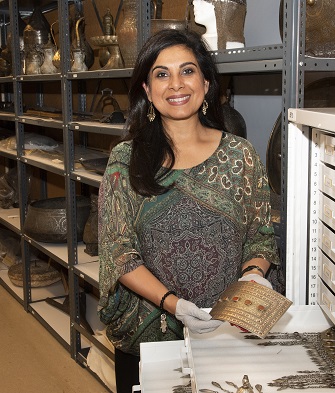
Fahmida Suleman is Senior Curator of Islamic Art & Culture at the Royal Ontario Museum (ROM) and holds a non-budgetary cross-appointment as Associate Professor at the University of Toronto (Department of Near and Middle East Civilizations and Art History). She specializes in medieval and contemporary Islamic art, with a focus on the Fatimid period , Shi‘i material culture , and Islamic iconography , particularly textiles and jewelry from the Middle East and Central Asia. Education : DPhil and MSt in Islamic Art & Archaeology from the University of Oxford; BA Hons in Islamic and Religious Studies from the University of Toronto. Her research integrates fieldwork on female silversmithing traditions in Oman and exhibitions like Being and Belonging (2023–2024), Picnics and Pastimes (2024–2025), and the forthcoming The Indian Ocean: Monsoon Worlds (2026). She co-founded the Islamic Art and Material Culture Collaborative (IAMCC) to promote interdisciplinary research and curated the Albukhary Foundation Gallery of the Islamic World at the British Museum. Her work bridges medieval Islamic art with modern diasporic narratives, emphasizing marginalized voices and cultural preservation. At the University of Toronto, she teaches courses on curating Islamic material culture and Islamic iconography . She is currently documenting the Widad Kawar Collection of Arab Dress and Heritage Arts and exploring food and hospitality cultures in the Middle East through material culture.
Dr. Grzegorz Kotłowski serves as an Assistant Professor at the University of Gdańsk's Faculty of Languages within the Institute of Classical and Slavonic Studies, Division of Classical Philology. He concurrently holds the significant administrative position of Deputy Dean for Students Affairs at the Faculty of Languages, demonstrating dual expertise in academic scholarship and institutional leadership. His research centers on Classical Philology with intense specialization in Latin epigraphy, particularly the documentation and analysis of Neo-Latin inscriptions in historical churches of Gdańsk (notably St. Mary's Church) and Warmia (Frombork Cathedral). Dr. Kotłowski's work bridges philological rigor with historical contextualization, examining epitaphs, sepulchral plates, and commemorative texts from the early modern period to reconstruct social hierarchies, religious practices, and cultural identities within Gdańsk's multicultural urban landscape. His methodological contributions extend to digital approaches in Neo-Latin studies, addressing data acquisition and dataset creation challenges. Recent publications (2020-2022) reveal a highly focused epigraphic output, with over twenty articles detailing specific monuments while collectively forming a comprehensive corpus of Gdańsk's Latin funerary heritage. His collaborative multi-volume series with Elżbieta Starek— Łacińskie inskrypcje w kościołach Gdańska (covering Mariacka Basilica, Śródmieście, and Oliwa) and Łacińskie inskrypcje w kościołach Warmii (Frombork)—establishes foundational references for regional epigraphic studies. No scientific awards are documented in available sources. Administrative responsibilities as Deputy Dean for Students Affairs indicate active engagement in academic governance, though specific advising roles or grant funding remain unreported in current materials. The absence of laboratory or team descriptions suggests individual or small-collaboration research models centered on archival and field-based epigraphy.
Trevor J Jones is an Assistant Professor in the Department of Mechanical Engineering at Carnegie Mellon University's College of Engineering, where he leads the Mechanically Intelligent Engineered Structures (MInEnS) Lab. His research integrates soft matter mechanics, nonlinear dynamics, and indigenous knowledge to develop novel technologies in soft robotics, meta-materials, and manufacturing. Education: Ph.D., Chemical Engineering, Princeton University (2023) B.S., Chemical Engineering, Vanderbilt University (2017) His research focuses on harnessing mechanical instabilities, fluid-solid interactions, and granular matter to create intelligent, adaptive materials. Inspired by natural phenomena and Ojibwe beadwork traditions (reflected in the MInEnS Lab's name from the Ojibwemowin word manidoominens ), his work spans soft robotics, deployable structures, and beadwoven metamaterials. He employs an interdisciplinary approach combining crafting, experimentation, and theoretical modeling. His recent publications (2022–2024) demonstrate a strong trend in leveraging buckling, plasticity, and fluid dynamics to achieve emergent intelligence and multifunctionality in soft engineered systems, particularly through innovative fabrication techniques like bubble casting and beadwork-inspired design. Scientific Awards: AISES Lighting the Pathway Fellow Trailblazer in Engineering Rising Star in Soft and Biological Matter Jones actively mentors graduate and undergraduate researchers, including PhD students Eddie Beck and Angela Lee, and undergraduates Eleni Georgountzos and Adela Qiu. He is currently recruiting PhD students and postdocs for projects in bead-woven materials and soft matter mechanics. The MInEnS Lab fosters a highly interdisciplinary environment that values curiosity, craftsmanship, and the integration of diverse cultural perspectives in scientific inquiry.
Prof. Dr. Diamantis Panagiotopoulos is a Professor of Classical Archaeology at Heidelberg University's Institute of Classical Archaeology, serving as its Managing Director since 2012. His academic foundation includes a doctorate from Heidelberg University (1996) and a habilitation from Salzburg University (2003), both focused on Aegean Bronze Age archaeology. Panagiotopoulos's research explores Aegean Bronze Age societies, with emphasis on seal practices, iconography, cultural interactions, and archaeological landscapes. His work integrates theoretical frameworks with material culture analysis to examine Minoan-Mycenaean administration, transcultural exchanges in the Eastern Mediterranean, and heritage preservation strategies. His publications reflect a strong trajectory toward computational methods in archaeology and interdisciplinary approaches, with recent articles leveraging digital tools for seal analysis and landscape modeling. Earlier works established foundations in ritual studies and cross-cultural encounters. Awards include fellowships from the German Archaeological Institute (DAI), DAAD, and DFG, recognizing his contributions to Bronze Age archaeology. He directs excavations at Koumasa (Crete) and co-leads the Heidelberg Corpus of Minoan and Mycenaean Seals.
Prof. Dr. Monica Juneja is a Senior Professor of Global Art History at Heidelberg University and Co-Director of the Cluster of Excellence 'Asia and Europe in a Global Context.' Her research focuses on transcultural art history, South Asian art, and global methodologies. She holds positions at the Heidelberg Center for Transcultural Studies and has taught globally, including at Emory University and the University of Zurich. Key achievements include the Meyer-Struckmann Prize (2023) and the Opus Magnum Award (2020) for her seminal work on globalizing art history. Academic Roles: Full Professor (2009–present), former Chair of Modern European History at University of Delhi (2001–2005) Education: Doctorate in Art History (EHESS Paris, 1985), M.Phil. (University of Delhi, 1978) Research interests emphasize transcultural dynamics, decolonizing methodologies, and the intersection of art with ecology and modernism. Recent lectures include keynote addresses on 'Transcultural Art History as Radical Critique' (Berlin, 2021) and 'Art History and Ecological Imaginaries' (Vienna, 2021). Awards: Over 20 fellowships and honors, including Humboldt and DAAD fellowships Publications: Author of 10+ books and 50+ articles, including 2023's 'Can Art History Be Made Global?' She serves on editorial boards of journals like The Journal of Architecture and co-edits Visual and Media Histories (Routledge). Her work bridges art history with interdisciplinary global studies and museum futures.
Inanna Hamati-Ataya is a Principal Research Fellow and Principal Investigator for the ERC-funded projects ARTEFACT (2017-2023) and NOAH (2022-2023). She is the founding director of the Centre for Global Knowledge Studies (gloknos) and affiliated with CRASSH at the University of Cambridge. Previously, she held roles including Marie Curie Fellow under the EU’s 7th Framework Programme (2013-17), Reader in International Politics at Aberystwyth University (2013-18), Lecturer at the University of Sheffield (2011-13), and Assistant Professor at the American University of Beirut (2007-11), where she also served as Head of the Department of Political Studies and Public Administration. Her education includes a BA, MA, and PhD in Political Science from Université Paris 1 Panthéon-Sorbonne, completing her thesis in 2006. Her research focuses on the intersection of global politics, deep history, social theory, and the anthropology, history, and sociology of knowledge and technology. Key projects include examining the global political structures through agricultural revolutions and developing models to preserve ancestral knowledges amid climate change. Hamati-Ataya is founding editor of the 'Global Epistemics' book series at Rowman & Littlefield and co-editor of 'Worlding Beyond the West' with Routledge. She serves on editorial boards of Interdisciplinary Science Reviews , Social Epistemology , and others, and advises the Lund Centre for the History of Knowledge (LUCK) and Duisburg Centre for Global Cooperation Research. Her academic leadership includes chairing the International Political Sociology section of the International Studies Association, serving as a trustee of the British International Studies Association, and on the governing council of the European International Studies Association. Her work often critiques Western-centric IR theories and explores reflexive methodologies in global knowledge studies. Grants and awards include ERC funding and the Marie Curie Fellowship.