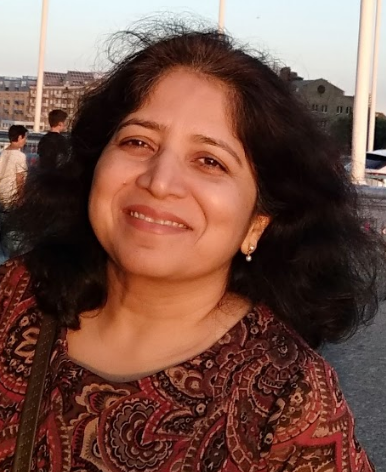
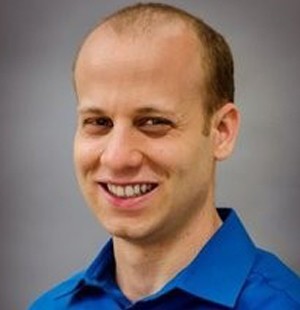
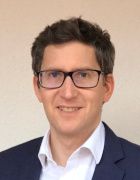
Sunita Sarawagi is a Professor at Computer Science and Engineering , IIT Bombay, and a member of AI Labs@CSE . She is also associated with the Center for Machine Intelligence and Data Science (CMInDS), which she founded in 2020. Education: PhD in Computer Science from UC Berkeley (Thesis: Query Processing in Tertiary Memory Databases), BTech in Computer Science from IIT Kharagpur Research Interests span machine learning , data analytics , graphical models , and structured learning , with applications in text segmentation, sequence modeling, domain adaptation, and human-in-the-loop systems. Her publications reveal a strong focus on integrating data mining with database systems , temporal data analysis , and information extraction using probabilistic methods. Professional Activities include serving on the IEEE John Von Neumann Medal committee (2017-), VLDB 2011 Research Track Co-chair , and multiple program committee roles at top conferences like ICML, KDD, and SIGMOD. Labs & Teams : Leads the SS Lab , a research group focused on probabilistic graphical models, sequence modeling, and data integration techniques.
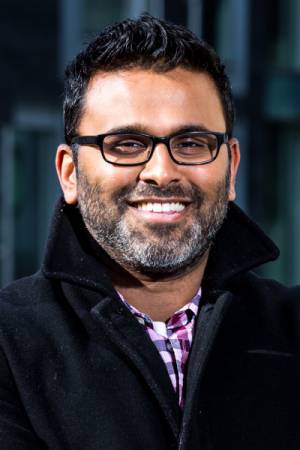
Deva Kannan Ramanan is a Professor at the Robotics Institute of Carnegie Mellon University , focusing on computer vision , machine learning , and human-centered robotics . His work bridges neurorobotics and visual perception , with applications in autonomous driving and 4D reconstruction . Research Topics Computer Vision 3-D Vision and Recognition Visual Servoing Neurorobotics Human-Centered Robotics Graphics & Creative Tools His recent publications in CVPR , ICRA , and ICCV emphasize 4D human reconstruction , neural rendering , and vision-language models for autonomous systems. He serves as General Chair of CVPR 2027 and Program Chair of CVPR 2018 , with IARPA funding for aerial-ground rendering (2023-2027). Current students include PhD candidates Sally Chen, Kangle Deng, and Zhiqiu Lin, while past advisees like Arun Vasudevan and Olga Russakovsky now hold positions at Amazon and Meta respectively.
Prof. Christian Holz is an Associate Professor at the Department of Computer Science and Deputy Head of the Institute of Intelligent Interactive Systems at ETH Zürich. His work focuses on advancing human-computer interaction through innovations in wearable technologies, mixed reality systems, and sensor-driven applications. Key research areas include motion capture, physiological signal processing, and adaptive user interfaces. Holz leads the SIPLab (siplab.ethz.ch), producing influential work at the intersection of computer science and biomedical engineering. His research explores cutting-edge topics such as egocentric vision systems, wearable health monitoring devices, and VR/AR applications. Recent studies investigate cybersickness detection via EEG, heart rate estimation from eye-tracking cameras, and scalable motion capture using inertial/UWB sensors. Holz's work emphasizes practical applications in healthcare, education, and human-centered computing. Publications reflect a strong focus on interdisciplinary solutions, combining machine learning with sensor data analysis. Notable contributions include the EgoSim multi-view simulator, WildPPG biomedical dataset, and MiBOT cardiovascular modulation device. His research bridges theoretical advancements with real-world usability in domains like emergency response training, chronic disease monitoring, and immersive education.
Amir Zamir is a tenure-track Assistant Professor of Computer Science at the Swiss Federal Institute of Technology Lausanne (EPFL) in the School of Computer & Communication Sciences. Previously, he worked at UC Berkeley, Stanford, and UCF with prominent researchers including Silvio Savarese, Jitendra Malik, Mubarak Shah, Rahul Sukthankar, and Leonidas Guibas. He currently leads the Visual Intelligence & Learning Lab at EPFL and serves as chief scientist of Duranta, having previously been the CVML chief scientist of Aurora Solar (a Forbes AI 50 company valued at $4B in 2022) from 2015 to 2022. Dr. Zamir's research spans computer vision, machine learning, and artificial intelligence, with a focus on developing general multi-modal/multi-task vision systems that operate as active agents in the real world. His work emphasizes slow science principles, seeking fundamental understanding over quick publications. Key research areas include embodied vision, multimodal foundation models, computational imaging, and vision-language integration. His notable projects include 4M, Taskonomy, Gibson Environment, Omnidata, and MultiMAE, which have significantly influenced the field of computer vision and embodied AI. Zamir has made substantial contributions to the computer vision community through numerous high-impact publications and leadership roles. His work demonstrates a consistent focus on creating vision systems that go beyond narrow and passive methods toward more general, active, and embodied approaches. The trajectory of his research shows increasing sophistication in handling multiple modalities and tasks within unified frameworks, culminating in recent work on multimodal foundation models that can handle diverse vision tasks. Dr. Zamir has received numerous prestigious awards including the Young Researcher Award 2022 from ECCV, the PAMI Mark Everingham Prize 2022, SIGGRAPH 2022 Best Paper Award for CLIPasso, CVPR 2018 Best Paper Award for Taskonomy, and CVPR 2016 Best Student Paper Award. He is also an ELLIS Faculty Scholar and received the NVIDIA Pioneering Research Award in 2018 for the Gibson Environment. As an advisor, Dr. Zamir has mentored numerous PhD students including Roman Bachmann, Andrei Atanov, Rishubh Singh, Jason Toskov, Kunal Pratap Singh, Zhitong Gao, Mingqiao Ye, and Muhammad Uzair Khattak. His former PhD students include Oguzhan Kar (now at Apple), Alexander Sasha Sax (co-advised with Jitendra Malik, now at Meta FAIR), and Teresa Yeo (now at MIT-Singapore Alliance). Dr. Zamir teaches several advanced courses including CS-503 Visual Intelligence, CS-500 AI Product Management, COM-304 Intelligent Systems, and ENG-615 Topics in Autonomous Robotics. Dr. Zamir leads the Visual Intelligence & Learning Lab at EPFL, which focuses on developing fundamental methods for visual intelligence that can operate effectively in real-world environments. The lab takes an interdisciplinary approach combining computer vision, machine learning, robotics, and cognitive science to create systems that can perceive, understand, and interact with the world. Current research directions include multimodal foundation models, computational imaging, embodied vision, and personalization of generative models.
Jennifer Olsen, PhD, is an Assistant Professor of Computer Science at the University of San Diego since 2020. She holds a PhD, MS, and BS in Human-Computer Interaction and Cognitive Science from Carnegie Mellon University, followed by postdoctoral research at the Swiss Federal Institute of Technology (EPFL), Lausanne, Switzerland. Her research focuses on the intersection of human-computer interaction, cognition, and education, emphasizing collaborative learning and educational technology design from both learner and instructor perspectives. Education: PhD in Human-Computer Interaction, Carnegie Mellon University MS in Human-Computer Interaction, Carnegie Mellon University BS in Cognitive Science, Carnegie Mellon University Research Interests: Dr. Olsen explores how collaboration supports learning, designs technologies to enhance educational practices, and investigates gaze-based metrics for understanding collaborative problem-solving. Her work spans gamified robotics, AI-driven orchestration systems, and virtual reality applications in vocational training. She emphasizes learner-centered design and the integration of social robots and virtual agents in pedagogical settings. Grants/Advising: While no specific grants or advisees are listed, her prolific publication record indicates active involvement in educational technology research and development. Her work addresses challenges in classroom orchestration, multimodal data analysis, and accessibility in educational robotics. Labs/Teams: Collaborates with interdisciplinary teams focused on educational technology, human-robot interaction, and adaptive learning systems. Her research leverages tools like FROG orchestration graphs and eye-tracking technologies to develop practical classroom solutions.
Michael Kaess is an Associate Professor at the Robotics Institute, Carnegie Mellon University (CMU), within the School of Computer Science. He leads the Robot Perception Lab (RPL) and contributes to the Field Robotics Center (FRC) and Computer Vision Group (CV). His research focuses on efficient perception algorithms for mobile robots, particularly in 3D mapping, SLAM, and sensor fusion using vision, LiDAR, inertial, and sonar data. Kaess holds a PhD in Computer Science from Georgia Tech and was a postdoc at MIT's Marine Robotics Lab. Education: Georgia Institute of Technology, PhD in Computer Science (2008) MIT, Postdoctoral Associate (2008–2010) Research Interests: Kaess develops algorithms for robust and efficient inference in robotics, emphasizing factor graphs and linear algebra. His work spans underwater robotics, aerial systems, tactile SLAM, and multi-sensor integration. Key areas include SLAM with planes/lines, imaging sonar reconstruction, and neural field methods for LiDAR-visual fusion. Publications: Over 145 papers, including work on EDPLVO (visual odometry), HoloOcean (underwater simulation), and neural radiance fields with LiDAR. Recent trends focus on robust incremental smoothing, acoustic-optical fusion, and real-time volumetric mapping. Awards: Recognized with the RSS Test of Time Award (2020), Outstanding Associate Editor (2022), and paper awards at ICRA/ICRA. Active in conference organization (IROS/ICRA program committees). Advising & Grants: Supervises 10+ current PhD/MSc students, with past advisees contributing to CoRL/ICRA work. Manages grants in perception, autonomy, and marine robotics. Teaches courses like Robot Localization and Mapping (16-833). Labs/Teams: Directs RPL, collaborates with FRC on field robotics. Develops open-source tools like GTSAM (GNU Toolkit for Smoothing and Mapping).
California Institute of Technology (Caltech)United States
Xingxing Zuo is an Assistant Professor (tenure-track) in the Robotics Department at MBZUAI. He holds a PhD from Zhejiang University (2021) and a Bachelor’s from UESTC (2016). Previously, he was a Postdoctoral Scholar at Caltech (2024–2025), a Postdoc at ETH Zurich (2019–2021), and held visiting roles at TU Munich, University of Delaware, and University of Technology Sydney. His research focuses on robotics, 3D computer vision, and embodied AI, with emphasis on robot-human collaboration, state estimation, and sensor fusion. Educations: PhD in Robotics, Zhejiang University (2021, with honors) Bachelor’s in Computer Science, University of Electronic Science and Technology of China (2016, with honors) Research Highlights: Develops novel methods for LiDAR-camera-inertial fusion, neural radiance fields, and radar-cameras systems Pioneered techniques like Flying Co-Stereo (long-range aerial mapping) and FMGS (vision-language embedded 3D splatting) Focuses on real-time SLAM, robust depth estimation, and photorealistic scene reconstruction Awards & Recognition: Best Paper Finalist at ICRA 2021 (CodeVIO) Oral Presentation at ICCV 2021 (MBA-VO) Recipient of Google Visiting Faculty Researcher (2023) Grants & Labs: Organized Thermal Infrared in Robotics workshop at ICRA 2025 Leads research on embodied AI and multi-sensor SLAM systems Develops open-source tools like LIC-Fusion and Coco-LIC frameworks
Katerina Fragkiadaki is the JPMorgan Chase Associate Professor of Computer Science in the Machine Learning Department at Carnegie Mellon University. She works at the intersection of Artificial Intelligence, Computer Vision, Machine Learning, Language Understanding, and Robotics. PhD from GRASP Lab, University of Pennsylvania Postdoctoral researcher at UC Berkeley (with Jitendra Malik) and Google Research Recipient of NSF CAREER, DARPA Young Investigator, Amazon, Google, Sony, UPMC, and AFOSR awards Organizer of CoRL 2023 Workshop on Generalist Robots ICLR 2024 Program Chair, multiple area chair roles Her research group focuses on developing machines that autonomously improve world models through human-environment interactions, with specific emphasis on: Representation learning and video understanding 2D/3D unified vision-language models Generative simulation and reinforcement learning Real2Sim/Sim2Real robot learning Continual learning and spatial common sense 3D scene reconstruction and dynamics Recent publications highlight advancements in: 3D mesh generation with compositional transformers Unified 2D/3D perception frameworks Physics-aware generative models Diffusion-based robotic manipulation policies Embodied agents with memory prompting Awards include: 2024: DARPA Young Investigator Award 2023: Amazon Faculty Award 2022: Sony Faculty Research Award 2021: UPMC Faculty Research Award 2020: NSF CAREER Award 2019: Google Faculty Award Key collaborations span institutions including UC Berkeley, Google Research, Stanford, MIT, and University of Tsukuba. Her work bridges theoretical innovation with practical applications in: Autonomous robot manipulation 4D world modeling Language-grounded perception Visual dynamics prediction Embodied program synthesis Physics-based simulation engines
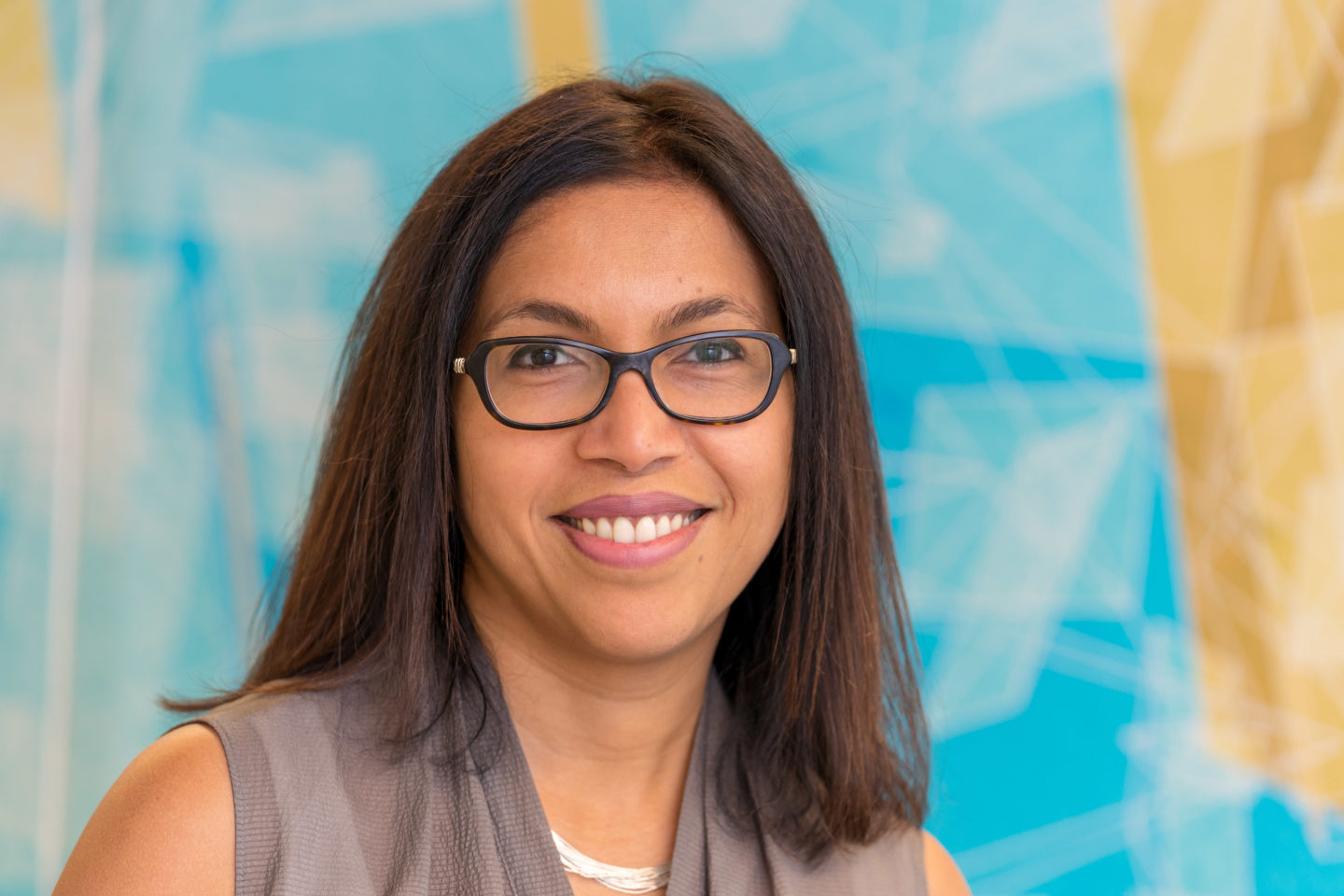
Tanzeem Choudhury is a Professor at the Jacobs Technion-Cornell Institute at Cornell Tech, specializing in Information Sciences. She co-founded HealthRhythms Inc. and directs the People-Aware Computing lab, focusing on machine learning for human activity and social network analysis. Her work pioneered the 'Reality Mining' field, leveraging mobile sensors to model social interactions. Choudhury holds a Ph.D. from MIT's Media Lab and B.S. in Electrical Engineering from the University of Rochester. Her research spans wearable tech, mental health interventions, and ubiquitous computing. Notable projects include affective touch wearables for anxiety reduction, stress detection systems (e.g., StressSense), and the BeWell app for well-being monitoring. Choudhury has been recognized as an ACM Fellow and SIGCHI Academy member, with impactful contributions to healthcare technology and sensor-based behavioral analysis. Current lab initiatives include developing closed-loop interventions for mental health, equity-driven sensing systems, and exploring AI integration in psychotherapy. She advises PhD students on topics like digital biomarkers, burnout detection in healthcare workers, and smartphone-based mental health assessment. Education: Ph.D. in Media Arts & Sciences (MIT), M.S. (MIT Media Lab), B.S. in Electrical Engineering (University of Rochester) Lab Team: Includes PhD candidates (Dan Adler, Yiran Zhao) and researchers focusing on health AI, wearable devices, and clinical applications. Major Awards: ACM Fellowship (2020), SIGCHI Academy (2018), Best Paper Awards at Ubicomp and MobileHCI conferences. Key Projects: OptoBeat (skin-tone calibrated blood oxygen sensor), EmotionCheck (anxiety intervention), and Affective Touch devices.
Olga Sorkine-Hornung is a Professor of Computer Science at ETH Zurich and head of the Institute of Visual Computing. She leads the Interactive Geometry Lab, focusing on theoretical and practical advancements in digital content creation, geometry processing, and shape modeling. Current position: ETH Zurich, Department of Computer Science Previous roles: Courant Institute (NYU), Technical University of Berlin Education: BSc and PhD from Tel Aviv University, postdoc at TU Berlin Her research spans shape representation, digital fabrication, computer animation, and fundamental geometry processing. Key contributions include Laplacian surface editing, as-rigid-as-possible deformation, and generalized winding numbers. She works on applications in VR, AR, and autonomous systems. Awards include Test of Time Awards (2024), ACM Fellow (2020), ERC Consolidator Grant (2020), and EUROGRAPHICS Young Researcher Award (2008). She has supervised numerous students and co-developed software libraries like libigl and Instant Meshes . Co-chair roles for SIGGRAPH, Eurographics, and Pacific Graphics Editorial board member for ACM Transactions on Graphics and other journals Keynote speaker at VMV, CVPR, and SIAM conferences Her work bridges mathematical rigor with practical implementation, advancing computer graphics and geometry processing through intuitive algorithms that maintain surface detail while enabling efficient computation.
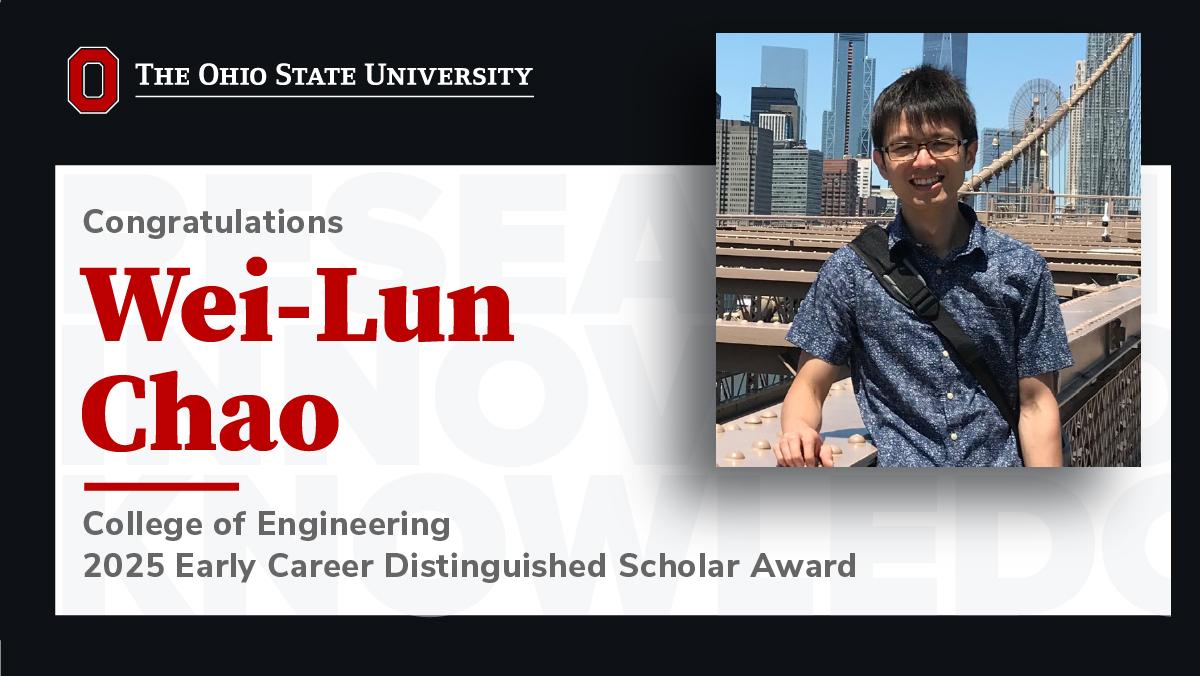
Wei-Lun (Harry) Chao is an Associate Professor in the Department of Computer Science and Engineering at the Ohio State University (OSU), College of Engineering. Promoted to this role in May 2025, he is also an Innovation Scholar and Distinguished Assistant Professor of Engineering Inclusive Excellence. His work spans machine learning, computer vision, and their applications in autonomous driving, healthcare, biology, and natural language processing. Research Focus: Machine learning with imperfect data, interpretable and personalized learning, robust perception for autonomous systems, and visual recognition in real-world scenarios. Awards: 2025 OSU Early Career Distinguished Scholar Award, CVPR Best Student Paper Award (2024), CSE Faculty Teaching Award (2024), Lumley Research Award (2023). Grants: Funded by NSF, NIH, ONR, Cisco, AWS, and Google. Notable Research Trends: The 15 most recent articles highlight his work on vision foundation models, federated learning, diffusion models for biological species generation, interpretable vision transformers, and robust perception systems for autonomous driving. Key subfields include sparse autoencoders, 3D object detection, semi-supervised learning, and anomaly detection in scientific domains. Scientific Awards: 2025 Early Career Distinguished Scholar Award (OSU) CVPR Best Student Paper Award (2024) CSE Faculty Teaching Award (2024) Lumley Research Award (2023) Mentoring & Grants: As an advisor for the OSU Buckeye AutoDrive Team and AI Club, he mentors graduate and undergraduate students. His research is supported by major grants from NSF, NIH, ONR, and industry partners like Cisco and Google.
Asaf Cidon is an Associate Professor at Columbia University, jointly affiliated with the Department of Electrical Engineering and Computer Science, and a member of the Data Science Institute. His research focuses on software systems , storage , large-scale machine learning , and cybersecurity . Stanford University - PhD in Electrical Engineering Stanford University - MS in Electrical Engineering Technion - BS in Computer and Software Engineering His work in distributed storage systems has been commercialized by companies such as Facebook, Tibco, and Rubrik. He has led projects like Sentinel and Forensics during his industry career. Recent publications highlight advancements in software-based radiation protection (ASPLOS'26), PCIe pooling with CXL (HotOS'25), and AI phishing detection (IMC'25). These reflect his expertise in system architecture , security , and networking . Scientific recognitions include best paper awards at OSDI, Usenix Security, CIDR, and ATC, along with NSF CAREER and ARO Young Investigator Awards . His papers Cookie Monster (SOSP'24) and Chablis (CIDR'24) received notable accolades. He has mentored numerous PhD and Master's students , including Edward Guo, Harry Wang, and Teng Jiang, many of whom now hold roles at Google, Meta, Amazon, and academic institutions. His lab at Columbia is actively recruiting CS and EE PhD students. Prior to Columbia, he founded and led the startup Sookasa to acquisition and served as Senior Vice President of Email Protection at Barracuda Networks , managing a $200M business with 100 engineers.
Prof. Stefan Leutenegger is a tenure-track Assistant Professor at Technische Universität München (TUM), leading the Machine Learning for Robotics group within the TUM School of Computation, Information, and Technology. Previously, he held roles as Senior Lecturer (2018–2021) and Lecturer (2014–2018) at Imperial College London's Dyson Robotics Lab, where he founded the Smart Robotics Lab. He earned his PhD (2014) from ETH Zurich, focusing on autonomous solar-powered aircraft navigation, and holds BSc (2006) and MSc (2009) in Mechanical Engineering from ETH Zurich. His research centers on mobile robotics, particularly enabling robots (e.g., drones) to perceive and navigate complex environments using machine learning and sensor data fusion. Key focus areas include SLAM, event-based vision, 3D reconstruction, and autonomous exploration. He has pioneered algorithms like BRISK (2011), OKVIS (2014), and ElasticFusion (2016), advancing real-time robotics perception. Notable Awards: Imperial College President's Award (2018), Best ECCV Paper (2016), ETH Medal for Dissertations (2015). Labs: TUM's Machine Learning for Robotics Group, Imperial's Smart Robotics Lab. Publications: Over 100 papers, including seminal works in CVPR, ECCV, and Robotics: Science and Systems. Current projects include DigiForests (forest inventory via robotics), aerial additive manufacturing, and object-centric semantic mapping. His work bridges theory and practice, with applications in autonomous drones, construction robotics, and human-robot interaction.
Evrim Acar Ataman is a Research Professor and Chief Research Scientist at Simula Metropolitan, where she serves as Head of the Department of Data Science and Knowledge Discovery. Her research focuses on advanced data mining techniques for complex, multi-modal datasets across biomedical and network domains. Her primary research interests include Data Mining , Matrix and Tensor Factorizations , and Data Fusion for multi-modal data analysis. She develops constrained and coupled factorization methods to extract interpretable patterns in applications spanning neuroimaging, metabolomics, and mobile network analysis, with emphasis on dynamic and longitudinal data structures. Her work integrates mechanistic models with data-driven approaches to enhance biological and system understanding. Analysis of her recent publications (2024-2025) reveals a dominant trend applying tensor and coupled matrix-tensor factorizations to biomedical data for biomarker discovery, particularly in metabolomics and neuroimaging. Key innovations include tracking evolving patterns in temporal data (tPARAFAC2), constrained fusion methods (dCMF), and integration of mechanistic models with tensor decompositions for longitudinal analysis. As Head of the Department of Data Science and Knowledge Discovery, she leads research in developing novel data mining methodologies and their real-world applications at Simula Metropolitan, with significant contributions to interpretable AI for complex systems.
Prof. Laura Leal-Taixé is a Professor at the Technical University of Munich (TUM) in the Department of Informatics, leading the Dynamic Vision and Learning group. She holds the Rudolf Mößbauer Tenure Track Assistant Professorship, promoted to W3 Associate Professorship in 2022. Her research focuses on computer vision and machine learning, particularly video analysis, multi-object tracking, and autonomous driving applications. Education: B.Sc./M.Sc. in Telecommunications Engineering (Technical University of Catalonia, UPC) Ph.D. in Information Processing (Leibniz University of Hannover, Germany) Postdoctoral Research at ETH Zürich (Switzerland) and TUM Research Interests: Laura’s work addresses challenges in video analysis, including motion analysis, semantic segmentation, and integrating social dynamics into urban traffic modeling. Her project socialMaps , funded by the Sofja Kovalevskaja Award, explores decoupling vehicle and pedestrian traffic using dynamic maps. Her research combines optimization techniques, deep learning, and sensor data for real-world applications like autonomous systems. Recent Trends: Her publications highlight advancements in multi-object tracking, 3D LiDAR segmentation, and trajectory forecasting, emphasizing neural networks and geometric approaches. Collaborations with industry and academia underscore her work’s practical impact. Awards: 2017 Sofja Kovalevskaja Award (€1.65M, Humboldt Foundation) 2017 DAAD Australia-German Joint Research Grant Travel grants from Women in CV, CVPR Doctoral Consortium, and Vodafone Foundation Labs & Projects: Leads the Dynamic Vision and Learning group at TUM, focusing on vision-based AI for autonomous systems and environmental monitoring. Active in developing datasets like DynamicEarthNet for semantic change analysis.