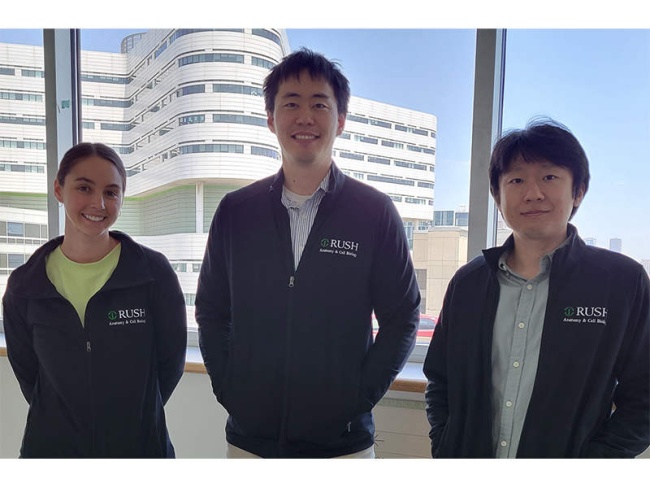
Frank C. Ko, PhD is an Assistant Professor in the Department of Anatomy & Cell Biology at Rush Medical College, Rush University , with secondary appointments in the Department of Orthopaedic Surgery. His research focuses on molecular mechanisms of intramembranous bone regeneration and musculoskeletal homeostasis , particularly examining periostin-expressing cells and circadian rhythm interactions with bone metabolism. PhD in Musculoskeletal Biomechanics from Cornell University Postdoctoral training at Massachusetts General Hospital and Beth Israel Deaconess Medical Center Research spans bone regeneration , implant fixation , and disease models (osteoporosis, osteoarthritis, sarcopenia). Key projects include: Periostin cell lineage tracing in marrow ablation recovery Wnt/β-catenin activation for accelerated healing Phosphate-mTORC1-BMAT interactions Gut-bone axis through colonic circadian disruption Translational preterm pig skeletal modeling Current funding includes NIH R01 and R21 grants. Scientific accolades feature the Searle Innovator Award . His lab collaborates with orthopedic surgeons and computational biomechanists to develop novel therapeutic strategies for musculoskeletal repair and implant integration.
Natalija Fratrić is a Full Professor at the Department of Physiology and Biochemistry within the Faculty of Veterinary Medicine at the University of Belgrade. She teaches multiple specialized courses including Nervous and Humoral Regulation Mechanisms, Physiology and Biochemistry of Body Fluids, Animal Physiology, and Homeostasis of Body Fluids and Electrolytes. Her academic work spans veterinary physiology with emphasis on livestock metabolism and neonatal immunology. Her research focuses on endocrine and metabolic regulation in dairy cattle, particularly during transition periods and lactation. Key areas include body condition scoring, hepatic lipidosis, thyroid hormone dynamics, immunoglobulin absorption in neonatal calves, and the effects of mineral adsorbents like zeolite on calf immunity. She investigates blood metabolite profiles, hormonal interactions, and stress indicators in high-yielding dairy cows. Analysis of her 15 most recent publications reveals consistent specialization in bovine periparturient physiology (2013-2016), neonatal calf immunology (2005-2010), and mineral metabolism (2007-2009). Her work bridges veterinary clinical practice with biochemical and endocrine mechanisms, primarily using Holstein and Simmental breeds. Recent studies emphasize in vitro immune function evaluation and metabolic disorder prevention. Her scientific contributions include co-authoring the textbook Veterinary Physiology (2010) and publishing in journals such as Research in Veterinary Science , Acta Veterinaria-Beograd , and Animal Science Papers and Reports . Her research demonstrates strong collaboration with Serbian veterinary scientists including Dragan Gvozdić, Horea Šamanc, and Danijela Kirovski. Professor Fratrić maintains active laboratory work focusing on neonatal calf immunity and transition cow metabolism. Her team employs biochemical assays, hormone analysis, and metabolic profiling techniques. Current research trends indicate continued investigation into passive immunity transfer mechanisms and metabolic adaptation strategies for dairy cattle under production stress.
Radmila Marković is a Full Professor in the Department of Nutrition and Botany at the Faculty of Veterinary Medicine, University of Belgrade. She teaches courses in Animal Nutrition for Farms Animals, Animal Nutrition and Quality of Animal-Origin Food, Animal Feed Safety, and Biotechnology in Veterinary Medicine. Her academic career spans over two decades with numerous publications and research contributions in animal nutrition and food safety. Professor Marković's research primarily focuses on animal nutrition, with special emphasis on poultry nutrition, feed additives, meat quality, and food safety. Her work explores the effects of various feed supplements including selenium-yeast, medium chain fatty acids, phytogenics, and alternative protein sources on animal performance, gut health, and product quality. She has conducted extensive research on heavy metal contamination in the food chain, particularly in fish from the Danube River and snail tissues in urban environments. Her recent publications (2017-2022) demonstrate a strong focus on sustainable animal production, alternative growth promoters, gut health, and food safety. Key trends in her research include investigating the effects of natural feed additives on animal performance and product quality, studying heavy metal bioaccumulation in aquatic organisms, and exploring innovative approaches to improve meat quality and safety. Her work bridges veterinary medicine, nutrition science, and environmental health. Professor Marković has co-authored two significant books: "Ishranom životinja do funkcionalne hrane" (2018) which focuses on animal nutrition for functional foods, and "Bezbednost hrane za životinje" (2010) on animal feed safety. These publications reflect her expertise in translating nutritional science into practical applications for food production. She actively collaborates with researchers across various institutions and has supervised numerous students in their research work. Her laboratory and research team focus on animal nutrition experiments, food safety analysis, and environmental monitoring of contaminants in the food chain.
Ljiljana Kostić Kravljanac is a Senior Research Associate at the University of Belgrade's Institute for Multidisciplinary Research , Department of Plant, Soil and Nano Systems. Her work focuses on rhizosphere processes, nutrient availability (particularly phosphorus and iron), and plant adaptations to stress conditions through silicon application. Education: PhD in Environmental Management (2015) and BS in Environmental Biology (2005), both from the University of Belgrade. Research interests center on plant mineral nutrition, silicon-mediated alleviation of abiotic stress, and nutrient dynamics in degraded soils. Her publications highlight silicon's role in enhancing phosphorus and iron uptake in crops like wheat and barley under stress conditions. She has participated in international and national projects such as "Mechanisms of Silicon-mediated Plant Adaptations to Abiotic Stress" and "Mineral Stress and Plant Adaptations on Marginal Agricultural Lands." She is a member of the International Society for Silicon in Agriculture (ISSAG) and serves as a reviewer for journals including Plant and Soil and Environmental Science and Pollution Research. Her technical expertise includes ICP-OES, CHNS analyzer operation, soil fertility assessments, and GIS tools like ArcGIS.
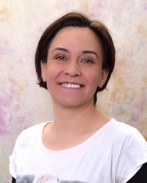
Dr. Fiona Moggach serves as a Research Fellow and Node Leader for the UWA node of Metabolomics Australia at The University of Western Australia's Centre for Microscopy, Characterisation & Analysis. She oversees a skilled research team dedicated to providing high-quality metabolomics data and insights to support diverse research projects and industry needs. Her educational background includes: Clinical Biochemistry with Molecular Biology, MSc, University of Surrey (2007) Biological Chemistry, PhD, Dynamic Peptide Libraries, University of Edinburgh (2006) Applied Chemistry, BSc(Hons), Robert Gordon University (2002) Dr. Moggach possesses extensive expertise in clinical and analytical chemistry with specialized research focusing on markers of human nutrition and their interpretability during systemic inflammation. Her technical proficiency spans mass spectrometry, liquid and gas chromatography, sample preparation and extraction techniques, and metabolite analysis. Her research investigates zinc blood levels, magnesium blood levels, albumin function, and their relationships to various health conditions including thalassemia, inflammatory bowel disease, coeliac disease, and diabetes complications. Her publication record demonstrates a strong focus on the intersection of nutrition science and clinical medicine, particularly examining how micronutrient status affects disease progression and outcomes. Recent work has explored micronutrient deficiencies in inflammatory bowel disease, coeliac disease in children, oxidative status in thalassemia, and metabolic factors in alcohol withdrawal syndrome. As Node Leader for one of five national NCRIS Metabolomics Australia nodes, Dr. Moggach manages significant research infrastructure including advanced mass spectrometry equipment such as the Agilent 6475 QQQ, Shimadzu LCMS-8060, Shimadzu GCMS-TQ 8050, and Thermo Scientific Orbitrap ID-X Tribrid systems. Her previous role as Scientific Director of the Scottish Trace Element and Micronutrient Diagnostic and Research Laboratory established her expertise in trace element and micronutrient analysis in human health contexts.
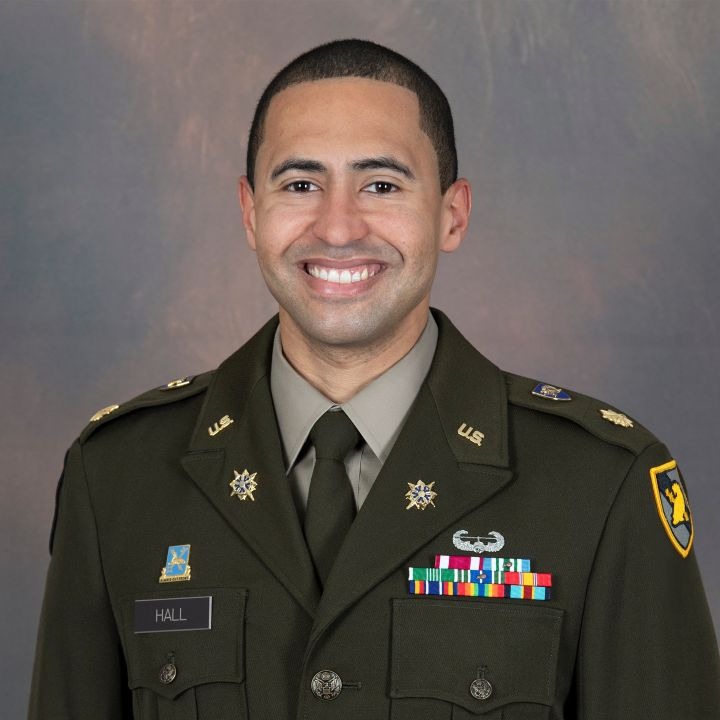
Derrick R. Hall serves as an instructor teaching general chemistry while holding the military rank of Major in the U.S. Army Military Intelligence Corps, with operational experience as Battalion S2 and Intelligence Planner. His academic background includes: M.S. in Chemistry from Purdue University (GEM Fellow) B.S. in Chemistry (Honors) from United States Military Academy at West Point, 2014 Research centers on military applications of green chemistry, specifically detection and decontamination of chemical warfare agents using catalytic processes. His graduate work pioneered essential trace elements for decontamination, evolving into current focus areas that bridge defense needs with environmental sustainability. Publication analysis reveals consistent expertise in catalytic decontamination methods (2018 heptamolybdate study) and sustainable military material cycles (2013 magnesium recycling research), demonstrating applied chemistry solutions for defense environmental challenges.
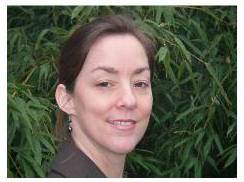
Heather Miller Coyle, Ph.D., serves as Associate Professor in the Forensic Science Department within the Henry C. Lee College of Criminal Justice and Forensic Sciences at the University of New Haven. Her academic appointments span forensic biology, DNA analysis, and botanical evidence applications in criminal investigations. She maintains an active research profile with publications spanning forensic botany, DNA mixture interpretation, and touch DNA analysis. Ph.D. in Plant Biology, University of New Hampshire (1994) M.S. in Plant Science, University of New Hampshire (1989) B.S. in In Vitro Cell Biology, SUNY Plattsburgh (1986) Dr. Miller Coyle's research centers on forensic applications of biological evidence, with particular expertise in DNA for human identification, touch DNA transfer dynamics, DNA mixture interpretation challenges, and botanical evidence analysis. Her work bridges plant biology with forensic science through forensic botany applications, including pollen analysis, seed identification, and plant DNA profiling for criminal casework. She has developed specialized methodologies for botanical evidence collection and interpretation in crime scene contexts. Her publication record shows consistent focus on improving forensic DNA analysis reliability, with recent work examining STR quality control measures, probabilistic genotyping software validation, and haplotype analysis for ancestry determination. The research demonstrates strong interdisciplinary connections between plant biology, molecular genetics, and criminalistics, with practical applications in courtroom testimony preparation and evidence interpretation standards. Dr. Miller Coyle has contributed significantly to forensic education through curriculum development that links laboratory practices to courtroom testimony requirements. Her work includes developing engaging lesson models for biological evidence collection training and classroom resources that prepare students for forensic science careers.
Dr. Virginia M. Maxwell is a Professor and Dr. Henry C. Lee Assistant Chair in Forensic Science at the University of New Haven's Henry C. Lee College of Criminal Justice and Forensic Sciences. With a D.Phil. from Oxford University and B.Sc. (Hons) from Liverpool University, she brings extensive experience from the State of Connecticut Forensic Laboratory and Yale University. Education D.Phil., Oxford University B.Sc., (Hons), Liverpool University Her research focuses on evidence degradation in forensic contexts and animal cruelty investigation through data analysis. She coordinates the FEPAC-accredited M.S. in Forensic Science and directs the Animal Cruelty Investigation graduate certificate program. Her work spans trace evidence, DNA preservation, and crime pattern analysis for animal-related offenses. Recent publications highlight her expertise in automotive paint analysis, toolmark preservation, and animal cruelty scene documentation. She has secured grants for advanced instrumentation like Laser Induced Spectroscopy and X-ray Diffractometers. Scientific Awards University Leadership and Service Award (2016) Multiple Unit Citations (1998-2006) Outstanding Service Award (2003) As a media expert, she has appeared in ABC News Australia, USA Today, CNN, and WICC 600AM to discuss dog fighting, pet theft trends, and animal hoarding patterns. She teaches courses like Advanced Criminalistics and History of Forensic Science.
Dr. Ahmet Şahin is an Assistant Professor at Karadeniz Technical University's Sürmene Faculty of Marine Sciences, Department of Fisheries Technology Engineering. He holds a PhD in Fisheries Technology Engineering (2011) and has been with the university since 2001, progressing from Research Assistant to Lecturer (2011-2019) and current Assistant Professor status (2019-present). His research spans coastal and marine environmental science, focusing on microplastic pollution dynamics, fisheries ecology, and seagrass/marine algae interactions. Key areas include Black Sea pollution patterns, invasive species monitoring, and sustainable fisheries management. Recent publications analyze microplastic discharge (2025), temporal trends in marine litter (2024), and biometrical responses of Mediterranean seagrass ecosystems (2024). His work combines chemical analysis (trace elements in algae) with ecological monitoring of fish eggs/larvae distributions. Professional roles include Deputy Head of Department (2020-present), Chairperson of Unit Quality Commission (2015-present), and Chairman of Fisheries Technology Engineers Association (2012-present). He participates in EU projects like DACIAT (2018-2021) focused on aquaculture development.
Kemal EYÜBOĞLU is a Lecturer at the Department of Computer Technologies, Taşköprü Vocational School, Kastamonu University, Turkey. He has been employed full-time since 2012 and served as Department Head during the same period. His academic background includes a Master's degree in Physics from Kastamonu University (2016) and a Bachelor's degree in Computer Education and Educational Technologies from Karadeniz Technical University (2002). Master's Degree: Physics, Kastamonu University, 2016 Bachelor's Degree: Computer Education and Educational Technologies, Karadeniz Technical University, 2002 His research focuses on environmental physics, specializing in radionuclide and heavy metal analysis in geological samples. He has contributed to studies evaluating radioactive contamination and mineral composition in rock salts from Turkey, with publications in international journals and conference proceedings since 2019. Recent collaborative projects include Assessment of Radionuclide and Heavy Metal Contents in Çankırı Rock Salt (2018-2019). His scientific work involves collaborations with researchers like Aybaba Hançerlioğulları, Şeref Turhan, and Aslı Kurnaz. Despite limited citation metrics (h-index: 0), his contributions span environmental analysis and nuclear resource evaluation.
Andreas Svensson is a Lecturer in Evolutionary Ecology at Linnaeus University 's Faculty of Health and Life Sciences . He coordinates courses in Behavioral Ecology, Evolutionary Biology, and Ethology, while also teaching Ecology, Statistics, and Environmental Science. Research Focus: Behavioral strategies in marine/freshwater fishes, parasite-host interactions, animal coloration, sexual selection, and invasive species behavior. Research Groups: Affiliated with Linnaeus University Centre for Ecology and Evolution in Microbial model Systems (EEMiS) and Fish Ecology team. His research on animal behavior spans parasitic manipulation , coloration signaling , and reproductive tactics . Recent publications explore metal contamination impacts and phenotypic flexibility in fish coloration. Key article themes include host-parasite dynamics , invasive species adaptation , and environmental stressors affecting behavior. Education: Holds a Doctoral Thesis (2007) from NTNU titled 'Female coloration, egg carotenoids and reproductive success: Gobies as a model system.' Notable Research Labs: Leads a goby research lab in the central Baltic Proper, focusing on ecological and evolutionary interactions in aquatic systems.
Prof. Dr.-Ing. Barbara Hippauf is a faculty member at Saarland University of Applied Sciences, where she serves as Head of the Technical Physics Laboratory within the Faculty of Engineering. She studied physics at the University of Karlsruhe (TH) in 1987, specializing in sensor technology, quantum physics, and optics. Her academic career includes roles at the University of the Federal Armed Forces Munich, Siemens AG, and the University of Karlsruhe (TH), where she completed her dissertation in 2000. She has been teaching Experimental Physics and Technical Physics since 2009. Born in Rotenburg an der Fulda, raised in Lima, Peru PhD in Electrical Engineering (Materials) from University of Karlsruhe Extensive industrial experience at Siemens AG and Alpha Engineering GmbH Current research focuses on precision engineering, solar thermal systems, and ceramic sensors Her research spans sensor technology , optical modeling , and solid-state materials , particularly in ceramic oxygen sensors and solar thermal systems. She has developed ray tracing simulations for light distribution analysis and contributed to statistical precision measurement in complex systems. At htw saar, she leads the Technical Physics Laboratory and contributes to academic governance as deputy chair of examination committees and member of master's admission commissions. She also serves as Bafög representative and equality officer for engineering students. Her publications and patents focus on: Self-heated porous oxygen sensors Noise compensation in acoustic systems Optical inspection methods for industrial automation Kinetic modeling of ceramic materials
Brooke N. Wolford is a Marie Skłodowska-Curie Postdoctoral Fellow at the Norwegian University of Science and Technology (NTNU), affiliated with the Department of Public Health and Nursing within the Faculty of Medicine and Health Sciences. She leads the ProtectHearts and HUNT AI for Heart Health projects at the HUNT Center for Molecular and Clinical Epidemiology, while also contributing to the EU-funded INTERVENE project through the Finnish Institute for Molecular Medicine. Her work bridges statistical genetics, computational biology, and clinical applications to advance precision public health initiatives. Dr. Wolford earned her PhD in Bioinformatics and Master's in Statistics from the University of Michigan, where she completed her dissertation on 'Genetic Discovery and Precision Medicine in Cardiovascular Diseases Using Electronic Health Record-linked Biobanks' under Dr. Cristen Willer and Dr. Michael Boehnke. Her undergraduate training includes a Bachelor of Science in Quantitative Biology with highest honors from the University of North Carolina at Chapel Hill, where she was a Phi Beta Kappa honors graduate. Her research program focuses on artificial intelligence-driven precision public health, particularly in cardiovascular disease prediction and prevention. By integrating genomics, proteomics, and clinical data from large biobanks like HUNT, UK Biobank, and FinnGen, she develops novel risk prediction models that address critical gaps in women's heart health and young adult disease prevention. Her work on polygenic risk scores and proteomic biomarkers aims to transform population-scale screening programs through explainable AI methodologies. Dr. Wolford's recent publications demonstrate significant contributions to genetic epidemiology, with high-impact work in Nature Genetics, Nature Communications, and Circulation: Genomic and Precision Medicine. Her research outputs reveal consistent themes in cross-population polygenic score development, sex-specific disease mechanisms, and innovative biobank data integration approaches that enhance cardiovascular risk prediction across diverse populations. 2022/2023 Best Dissemination Award (K.G. Jebsen Centers) 2022 ASHG Trainee Research Excellence Award Finalist 2021 ASHG Trainee Research Excellence Award Semi-Finalist National Science Foundation Graduate Research Fellowship Genome Sciences Predoctoral Traineeship University of Michigan Program in Biomedical Sciences 20th Anniversary Award As a dedicated mentor, Dr. Wolford supervises multiple graduate students across Master's and PhD programs at NTNU, focusing on proteomic risk prediction for diabetes, cardiovascular-Alzheimer's disease connections, and polygenic scoring for women's heart health. She actively promotes open science through R-ladies Trondheim leadership and develops educational resources like the Health AI in R workshop. Her ongoing projects with INTERVENE and ProtectHearts secure substantial European research funding for translational genomics initiatives. Dr. Wolford co-leads the HUNT AI for Heart Health initiative and ProtectHearts project within the HUNT Center for Molecular and Clinical Epidemiology. These teams integrate computational biologists, clinicians, and epidemiologists to develop explainable AI models that translate genomic discoveries into clinical prevention strategies, with particular emphasis on addressing health disparities in cardiovascular outcomes for women and younger populations.
William Hogland is Professor in Environmental Engineering and Recovery at the School of Natural Sciences, Linnaeus University, Campus Kalmar, Sweden, and also serves as Guest Professor at Beihua University in China. He previously held professorships at Kalmar University (which later became Linnaeus University) and Mid Sweden University, where he worked until August 2008. His academic journey began with a doctoral thesis on 'Rural and Urban Water Budgets' presented at Lund University in 1986, after which he became a research leader at the Waste Management and Recovery Division, Department of Water Resources Engineering at Lund University. Dr. Hogland's research spans environmental engineering, waste management, water resources, soil remediation, and leachate treatment, with particular focus on the Baltic Sea region. His work encompasses natural systems for wastewater treatment, river catchment analyses, landfill mining, phytoremediation, and waste fire prevention. He has published over 400 reports and papers, written textbooks, and produced educational videos in hydrology and waste management. His research demonstrates a consistent evolution from water resources engineering to integrated waste management systems, with increasing emphasis on circular economy principles and sustainable resource recovery approaches in recent years. Dr. Hogland has organized numerous international conferences including the 'Latin American–Swedish Seminar on Waste Management' in Rio de Janeiro (1995), multiple 'Kalmar Eco-Tech' conferences in Sweden (1997-2010), and the Youth Environmental Science Forum 'EcoBaltica' in St. Petersburg, Russia (1998-2008). He has extensive international collaboration experience, having worked in over 50 countries and been invited as a guest speaker at universities in 18 countries worldwide. His current research leadership includes the Environmental Science and Engineering Group (ESEG) and several major projects focused on Baltic Sea environmental challenges. Among his notable roles, Dr. Hogland served as Editor in Chief for the Open Waste Management Journal since 2008, was Chairman of the Baltic Sea Network for Leachate and Wastewater Treatment since 2002, and has been involved with the Global International Waters Assessment (GIWA/UNEP) as Chairman of the Baltic Test Team. His work demonstrates a strong commitment to translating research into practical solutions for environmental challenges, particularly in the context of international cooperation and knowledge transfer.
Maria Borawska is a Professor at the Department of Bromatology, Faculty of Pharmacy with the Division of Laboratory Medicine, Medical University of Bialystok. Her academic profile is marked by 243 publications, 11 promoted theses, 4 patents, and 4 projects. Research keyword trends: 'blood analysis', 'selenium', 'chemical elements', 'food science', 'human metabolism', 'environmental science' Bibliometric highlights: h-index 26 (Scopus/WoS), total impact factor 169.591, MEiN score 3,652 Her work spans interdisciplinary areas combining chemistry, pharmacology, and biomedical research, with a focus on trace elements like selenium and their impact on human health across various demographics (e.g., pregnant women, elderly populations).