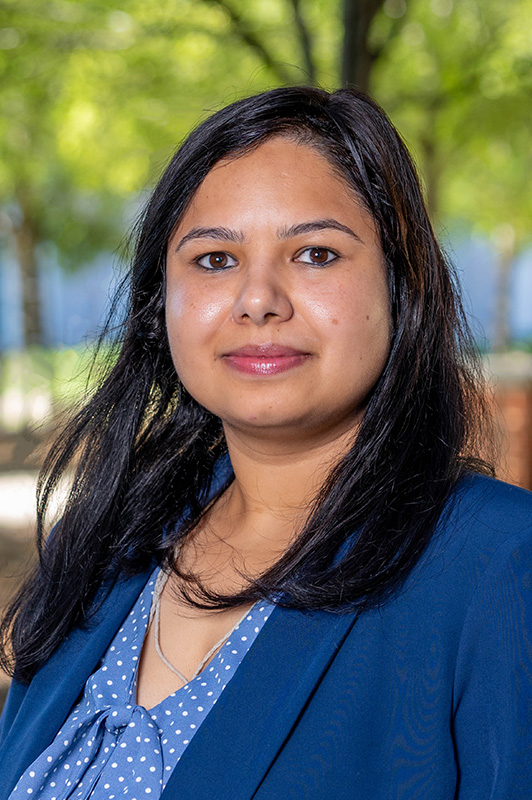
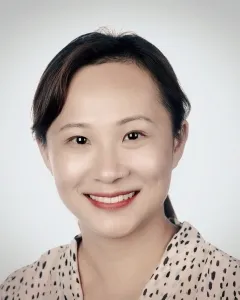
Neha Sharma is an Assistant Professor in the Department of Civil and Environmental Engineering at Auburn University. Her research focuses on nutrient recovery, electrochemical resource recovery, water reuse, trace metal cycling, and pollutant fate and removal.
James King is an Associate Professor in the Department of Geography at the University of Montreal, specializing in geomorphology and aeolian processes. His research focuses on wind erosion, mineral dust dynamics, and their impacts on climate and ecosystems, particularly in high-latitude regions like the Yukon and Namibia. He holds a BSc in Earth surface sciences from the University of Guelph and a PhD in Physical Geography from an unmentioned institution, with postdoctoral training in climatology. Key research areas include dust emission climatology, glacial retreat impacts, and aerosol-climate interactions. Over 20 ongoing and completed projects, including dust dynamics in proglacial valleys and high-latitude dust sources, are funded by CRSNG, FCI, and international collaborations. King supervises graduate students on topics like dust deposition effects on ecosystems and remote sensing applications. His work integrates field measurements, remote sensing, and climate modeling to advance understanding of dust processes in arid and semi-arid environments. He collaborates with global teams, such as the Hominin Dispersals Research Group, and contributes to initiatives like the Changing Atmospheric Chemistry, Transport, and Emissions (ACTE) project.
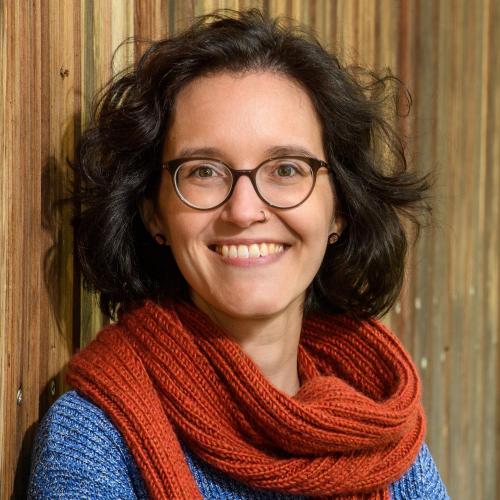
Dr. Stephanie Spahr is a Research Group Leader at the Leibniz Institute of Freshwater Ecology and Inland Fisheries (IGB) in Berlin, Germany, where she leads the Organic Contaminants research group within the Department of Ecohydrology and Biogeochemistry. Previously, she served as a Junior Research Group Leader at the University of Tübingen's Center for Applied Geoscience (2019-2021) and as a Postdoctoral Researcher at Stanford University's Department of Civil and Environmental Engineering (2016-2019). Dr. Spahr earned her PhD in Environmental Chemistry from the Swiss Federal Institute of Technology Lausanne (EPFL) and the Swiss Federal Institute of Aquatic Science and Technology (Eawag) in 2016. Her doctoral research focused on the formation of N-nitrosodimethylamine during water disinfection with chloramine. She completed her MSc in Geoecology at the University of Tübingen in 2012, with thesis work on carbon and nitrogen isotope analysis of benzotriazoles conducted at Eawag, and her BSc in Geoecology/Ecosystem Management at the same institution in 2010. Dr. Spahr's research focuses on trace organic contaminants in aquatic systems, with particular expertise in transformation processes of contaminants in natural and engineered systems, advanced oxidation processes for water treatment, urban blue-green infrastructure, and compound-specific isotope analysis. Her work bridges environmental chemistry, engineering, and ecology to address water quality challenges in urban and natural water systems. She employs advanced analytical techniques to track contaminant sources and transformation pathways, with a strong emphasis on practical applications for water treatment and environmental protection. Her recent publications demonstrate a strong focus on biochar-based water treatment technologies, particularly for stormwater management. She investigates how biochar amendments can remove trace organic contaminants from urban runoff, with recent work examining persulfate activation mechanisms, the role of chloride in reactive species formation, and the performance of engineered media filters under dynamic conditions. Her research also extends to understanding contaminant transport in rivers, the ecological impacts of pollutants, and developing analytical methods for environmental monitoring. The interdisciplinary nature of her work connects chemical processes with ecological outcomes. Outstanding Review Paper Award 2023 in Environmental Science: Water Research & Technology Selected for the Falling Walls Female Science Talents Intensive Track 2023 Selected mentee in the Leibniz Mentoring Programme 2022-2023 Best poster award (1st prize) at the Wasser 2022 of the Water Chemistry Society Selected fellow in the Postdoc Academy for Transformational Leadership 2020-2022 (Robert Bosch Stiftung) Selected fellow in the Athene Program for early female career researchers at the University of Tübingen, 2020-2021 As a Research Group Leader, Dr. Spahr supervises multiple research projects including 'POllution in UrbaN ponds, eco-evolutionary Dynamics, and Ecosystem Resilience (POUNDER)', 'Dynamic hyporheic zone', 'NYMPHE', and the 'Incident-related special investigation programme for the environmental disaster in the Oder River'. She serves on the Executive Board of the German Water Chemistry Society and heads its Expert Committee on 'Oxidative Processes'. Her collaborative work spans numerous institutions across Germany and internationally, addressing critical water quality challenges through interdisciplinary approaches. Dr. Spahr leads the Organic Contaminants research group at IGB Berlin, which focuses on understanding the fate and treatment of organic pollutants in water systems. Her team employs advanced analytical techniques including compound-specific isotope analysis to track contaminant sources and transformation pathways. The group collaborates extensively with other departments at IGB and with international partners on projects addressing urban water challenges and ecological impacts of pollution. Current research emphasizes innovative water treatment technologies, particularly biochar-based systems for stormwater management, and investigating the complex interactions between contaminants, aquatic ecosystems, and human activities.
Jon Hawkings is an Assistant Professor in the Department of Earth and Environmental Science at the University of Pennsylvania School of Arts & Sciences. His research focuses on biogeochemical cycles in glacial environments, particularly the role of glacial meltwater in downstream ecosystems and coastal oceans. He investigates processes such as subglacial weathering, nutrient mobilization, and contaminant transport, with fieldwork conducted in the Arctic, Patagonia, Himalayas, and Antarctica. Education: PhD in Biogeochemistry (University of Bristol, 2015); MSci in Physical Geography (University of Bristol, 2009). Research Interests: Aqueous biogeochemistry and elemental cycles Chemical weathering and mineral dissolution Contaminant transport (e.g., mercury, arsenic) Glaciology and ice sheet dynamics Environmental impacts of glacial meltwater He collaborates on projects such as the Salsa-Antarctica subglacial lake drilling initiative. His work integrates field observations, electrochemical sensing, and lab analyses to address pressing questions in cryosphere science. Awards: None explicitly listed, but active in professional societies like the American Geophysical Union. Advising/Grants: No student advisees listed; funding sources include grants for fieldwork and analytical studies in glacial systems. Labs/Teams: Leads field research groups in remote polar and mountainous regions, emphasizing interdisciplinary collaborations between geochemistry, glaciology, and environmental science.
Jelena Vesković is a Researcher at the Department of Analytical Chemistry and Quality Control, Technical Faculty in Bor, University of Belgrade. Her work focuses on environmental chemistry, health risk assessment, and pollution source apportionment using advanced statistical models. Research Interests: Jelena specializes in analyzing potentially toxic elements in water and soil systems. Her studies integrate Monte Carlo simulations, multivariate analysis, and receptor models to assess contamination sources and health risks. Key areas include groundwater pollution, rare earth elements, and urban sediment toxicology. Recent Publications: Her 2025–2024 articles investigate radiological risks in groundwater, dietary cadmium exposure, PAH contamination in lakes, and soil-to-groundwater heavy metal migration using Monte Carlo and multivariate methods. Laboratory Affiliation: Works in the Department of Analytical Chemistry and Quality Control, contributing to environmental monitoring projects in mining regions and urban environments.
James Rothwell is a Professor of Physical Geography at The University of Manchester, specializing in environmental pollution and hydrology. He leads the MSc in Green Infrastructure and has held senior academic roles including Deputy Head of Geography and Co-Director of the Manchester Environmental Research Institute. His research focuses on urban challenges, microplastics, and peatland ecosystems, supported by over £15M in grants from NERC, EU, and others. He has supervised 8 PhD students and teaches courses on pollution, hydrology, and sustainable cities. Education: PhD (2006) and BSc (2002) in Geography from The University of Manchester. Professional roles include Lecturer (2008-2014), Senior Lecturer (2014-2017), Reader (2017-2019), and current Professorship since 2019. Research interests include green infrastructure for urban flooding, microplastic transport, and heavy metal dynamics in peatlands. Major projects include EU-funded GrowGreen (€11M+) and UK-based flood management initiatives. Over 50 peer-reviewed articles address environmental challenges in cities, peatlands, and global ecosystems. Grants highlight interdisciplinary work across continents, with notable projects like the Manchester Sky Garden Challenge (2024) and studies on peatland restoration. Media coverage includes high-profile reports on UK microplastic pollution in rivers. Teaching spans undergraduate to postgraduate levels, integrating research into courses like Environmental Pollution and Green Infrastructure Planning. Administrative roles include leading admissions and undergraduate programs in Geography.
James Scoates is a Professor in the Department of Earth, Ocean & Atmospheric Sciences at the University of British Columbia (UBC), affiliated with the Faculty of Science. His research focuses on magmatic processes, including the origin and evolution of silicate magmas, geochemical and isotopic studies of layered intrusions and anorthosite suites, and the formation of magmatic ore deposits. He has held positions at UBC since 2002, following roles at Université Libre de Bruxelles (1995-2001). Education: B.Sc. (Honours), 1987, Queen's University at Kingston, Canada Ph.D., 1994, University of Wyoming, USA Research Interests: His work spans igneous petrology, geochronology, and mineral deposit geology. Key areas include physical volcanology of Large Igneous Provinces (LIPs), the geochemical evolution of magma plumbing systems in layered intrusions like the Skaergaard and Bushveld Complexes, and the application of isotopic techniques to trace mantle sources. He also investigates convergent margin Ni-Cu-PGE deposits and their tectonic contexts. Awards: Faculty Teaching Award, 2021 (EOAS-UBC) Killam Teaching Award, 2018 (UBC) Young Scientist Award, 2001 (Mineralogical Association of Canada) Teaching & Leadership: Dr. Scoates teaches courses in mineralogy, geochemistry, mineral deposits, and field geology. He has led initiatives to innovate geoscience education through virtual field experiences and peer-learning strategies. He chairs the MAGNET NSERC CREATE program and serves on the Pacific Centre for Isotopic and Geochemical Research (PCIGR) steering committee. Key Projects: Investigating the geochemical evolution of Hawaiian plumes and mantle heterogeneity. Studying magma storage and differentiation in the Muskox intrusion (Mackenzie LIP). Developing geochronological frameworks for layered intrusions like the Stillwater Complex.
Nathan Yee is a Professor at Rutgers University, where he has held academic appointments since 2004. He earned his B.Sc. from McGill University (1997) and Ph.D. from the University of Notre Dame (2001), followed by postdoctoral research at the University of Leeds (2001-2003). His career progression includes positions as Assistant Professor (2004-2010), Associate Professor (2010-2016), and full Professor since 2016. Research Focus Yee's research integrates geochemistry and geomicrobiology to study: mineral transformation processes, interactions between metal ions and mineral surfaces, microbial influences on inorganic element cycling, and contaminant behavior in environmental systems. His work combines experimental approaches with modeling to investigate biogeochemical processes relevant to early Earth evolution, microbial metabolism, and environmental remediation. Key themes include biologically catalyzed redox reactions, metal isotope fractionation, and geomicrobial controls on contaminant transport. Publication Trends Yee's recent publications (2021-2025) demonstrate strong emphasis on microbial-metal interactions, isotope geochemistry, and planetary science. Dominant themes include: isotopic tracing of metal cycling (Ni, Cu, Hg), microbial redox transformations of contaminants (Se, Te, U), photochemical processes in early Earth systems, and astrobiological investigations of planetary bodies like Mars and Enceladus. Methodologies frequently combine laboratory experiments with geochemical modeling.
Thomas Rüde is Universitätsprofessor for Hydrogeology at RWTH Aachen University , Germany, where he leads the Hydrogeology group within the Faculty of Georesources and Materials Engineering. Holding the chair since 2005, he also serves as Managing Director of the Vereinigung Aachener Geowissenschaftler e.V. and has previously been Vice-President (2008-2014) and Executive Council member (2000-2008) of the International Mine Water Association (IMWA). Education 2004 – Privatdozent (Dr. rer. nat. habil.), University of Munich 1995 – Dr. rer. nat., University of Karlsruhe 1991 – Diplom-Geologe, University of Karlsruhe Research focus Professor Rüde’s work centres on understanding and modelling flow and reactive transport in complex aquifer systems . Key themes include: Contaminant hydrogeology – behaviour of geogenic arsenic and uranium in groundwater Groundwater protection and remediation – risk assessment and mitigation strategies Mine-water management – acid mine drainage, dewatering-well clogging, post-mining landscapes Tracer and hydraulic testing – field experiments to quantify subsurface heterogeneity Numerical modelling – high-performance simulation of multi-aquifer systems and karst His research spans Europe (Germany, Austria, Netherlands), Latin America (Mexico, Indonesia) and South-East Asia, frequently in close collaboration with local universities and industry partners. Publication trends Since 2010, Rüde has published extensively on geogenic contamination (As, U, F) in sedimentary and volcanic aquifers, mine-water impacts , and karst hydraulics . Recent work (2022-24) highlights advanced environmental tracers (gadolinium), transboundary groundwater issues, and the sustainable management of post-mining landscapes under climate change. Numerical models range from site-scale dewatering optimisation to catchment-scale coupled flow-transport simulations. Scientific awards & recognition Best Teaching Award 2010 – RWTH Aachen University Best Teaching Award 2012 – RWTH Aachen University Best Teaching Award 2014 – RWTH Aachen University Supervision & academic service Since 1998 he has taught hydrogeology through lectures, seminars, laboratory and field courses, and computer-based modelling labs. To date he has supervised: 13 PhD candidates 34 Diploma students 57 MSc students 63 BSc students He is Chairman of the Study Commission for the BSc programme in Georesources Management at RWTH Aachen, ensuring curriculum development and quality assurance. Laboratory & field infrastructure His group operates modern hydrochemical laboratories for trace-element analyses and maintains field stations for tracer experiments in Germany, Mexico and Indonesia. High-performance computing resources (in collaboration with the Jülich Supercomputing Centre) enable large-scale groundwater modelling and Monte-Carlo uncertainty assessments.
Professor Awadhesh N. Jha is a Professor in Genetic Toxicology and Ecotoxicology at the School of Biological and Marine Sciences , University of Plymouth, UK. He has been a leading figure in environmental toxicology since joining the university in 1996, rising to full professorship in 2010. He leads the Environmental and Applied Biology Research Group and the Genetic Toxicology and Ecotoxicology Research Group, and served as REF UoA6 Coordinator (2014–2022). His educational background includes a PhD in Radiation Cytogenetics from Banaras Hindu University, India (1989), followed by post-doctoral work at Leiden University, Netherlands, and a role at ICI/Zeneca’s marine toxicology lab before transitioning to academia. Professor Jha’s research focuses on the genotoxic and ecotoxic impacts of environmental stressors such as radionuclides, engineered nanoparticles, PAHs, and emerging contaminants on aquatic organisms. He employs multidisciplinary and innovative methodologies, including in vitro models like fish cell spheroids (‘Virtual Fish’ project), to assess DNA damage, develop biomarkers, and reduce reliance on live animal testing. His work integrates molecular biology, chemistry, and environmental science to evaluate risks to marine ecosystems and human health. The recent research articles reflect a strong trend in marine pollution, radiation biology, and environmental risk assessment , with increasing emphasis on emerging issues like tritium release from nuclear facilities, AI-assisted landfill risk modeling, and sunscreen toxicity. His studies often involve international collaborations and real-world policy implications. Scientific Awards and Recognitions: Jim Parry Award, UKEMS (2021) Fellow of the Royal Society of Biology (FRSB, 2015) VC’s World Class Researcher Award Finalist (2010, 2012) Plymouth Pioneers Recognition UK Nominated Expert, UN WOA III (2023) Supervision and Grants: Professor Jha has supervised 26 PhD students to completion and mentored over 10 post-doctoral researchers. He has led major funded projects including TRANSAT (€5M, Horizon 2020), SPHERTOX , and TITANS , funded by EU, NERC, BBSRC, IAEA, and industry partners like AstraZeneca and Unilever. His work directly informs environmental policy and nuclear safety regulations. Laboratories and Teams: He leads the Genetic Toxicology and Ecotoxicology Research Group and is central to the Environmental and Applied Biology Research Group at Plymouth. His team collaborates internationally with institutions in France, Italy, Spain, Brazil, and India, and contributes to the South West Nuclear Hub. The lab specializes in advanced analytical methods, comet assays, and 3D cell culture models.
Professor Jes Sammut is a faculty member at the University of New South Wales (UNSW) in the School of Biological, Earth & Environmental Sciences . He serves as Deputy Dean for External Engagement and leads the UNSW Aquaculture Research Group , while also holding the position of Deputy Director (International) at the Centre for Marine Science & Innovation. Additionally, he is an Honorary Research Fellow at ANSTO , where he uses nuclear tools to study seafood provenance. His research spans biological, physical, and social sciences, focusing on aquaculture solutions across Australia, Vietnam, Papua New Guinea, Indonesia, India, Thailand, and the Philippines.
Athena Nghiem is an Assistant Professor at the University of Wisconsin-Madison, starting Fall 2024, specializing in biogeochemistry and hydrology. She currently holds an ETH Postdoctoral Fellowship at ETH Zürich, focusing on redox processes in groundwater systems. Education: PhD in Earth and Environmental Sciences from Columbia University, BA in Geophysics and Statistics from UC Berkeley Research interests: Environmental variability in hydrology, redox processes, groundwater contamination, data science in environmental research, and reactive transport modeling Her research combines traditional laboratory/field methods with data science to study trace element cycling, particularly arsenic release in aquifers. Recent work includes quantifying sulfate reduction's role in arsenic contamination and evaluating mitigation strategies. Notable awards: ETH Postdoctoral Fellowship (2022-2024), NSF Graduate Research Fellowship (2018-2021), and multiple academic honors during her UC Berkeley BA studies. Current advisees at UW-Madison: Juyong Bak, Savannah Finley, Logan Goulette. She actively encourages applications from diverse backgrounds for future lab positions.
Professor Balz Kamber is a renowned academic in the Faculty of Science at Queensland University of Technology (QUT), leading research in elemental and isotopic geochemistry paired with petrology. He holds the position of Professor in Petrology within the School of Earth & Atmospheric Sciences . His work focuses on Earth's differentiation into chemical spheres, with applications in climate science, planetary evolution, and resource exploration. Kamber has held prestigious roles, including Chair in Geology and Mineralogy at Trinity College Dublin and a Tier 1 Canada Research Chair at Laurentian University. Education: PhD (University of Bern, Switzerland), MSc (University of Bern) Professional Memberships: Royal Irish Academy (since 2018), European Association of Geochemistry Research interests include thermodynamic modeling of igneous processes, automated mineralogy, and the interplay between climate and geological history. His current projects address mantle dynamics, crustal evolution, and planetary weathering. Teaching focuses on Earth Materials, Petrology, and Climate Science at QUT. Notable achievements include editorship of Chemical Geology (since 2018) and contributions to understanding the Great Oxidation Event and Deccan Traps volcanism. His work bridges fundamental geochemistry with real-world challenges, such as climate change mitigation through enhanced rock weathering. Grants/Funding: Led the 23M Euro Irish Centre for Research in Applied Geosciences (2011–2018) Labs/Teams: Heads a dynamic research group advancing LA-ICP-MS methodologies and geochemical imaging
Dr. Yuanzhi Tang is the Georgia Power Professor at the Georgia Institute of Technology with joint appointments in the School of Earth and Atmospheric Sciences and School of Civil and Environmental Engineering. He directs the Center for Critical Mineral Solutions, co-founded the Georgia Partnership for Essential Minerals, and serves as Associate Co-Director of Interdisciplinary Research at the Brook Byers Institute for Sustainable Systems. He is also Co-Editor-in-Chief of Chemical Geology and Associate Editor of Geochimica et Cosmochimica Acta . His research investigates molecular-scale interfacial processes in natural and engineered systems, focusing on: Contaminant fate/transport at microbe-mineral-water interfaces Biogeochemical cycling of metals and nutrients Resource recovery from waste streams Synchrotron applications in environmental science Recent publications emphasize rare earth element recovery, waste valorization, and sustainable energy materials, employing advanced spectroscopic techniques to understand reaction mechanisms. Professor Tang leads an active research group with multiple postdoctoral researchers, graduate students, and undergraduates. His externally funded projects include: NSF: Rare earth elements in sedimentary systems DOE: Critical metal recovery from waste streams NASA: Manganese oxide formation mechanisms DoD: Rare earth separation technologies
Matthew J. Cracknell is a Senior Lecturer in Geodata Analytics at the University of Tasmania's School of Natural Sciences, specializing in Earth Sciences. He holds a PhD in Computational Geophysics (2014) and BSc (Hons) in Geophysics (2009), both from the University of Tasmania. His research integrates geoscience with machine learning to address challenges in mineral exploration, environmental remediation, and sustainable resource management. Key focuses include automated detection of geological features in drillcore imagery, decarbonization of energy systems via ore deposit discovery, and legacy mine waste characterization. Cracknell leads the CODES Research Program 6 (Geophysics and Computational Geosciences) and Module 2 of the AMIRA P1249 project. He has secured significant industry and government funding, including projects with Boliden AB, Anglo American, and the Tasmanian Government. His work emphasizes collaboration with mining partners and agencies like Geoscience Australia and Mineral Resources Tasmania. Teaching roles include developing courses on the mining value chain, climate resilience, and geodata analytics. As Graduate Research Coordinator, he promotes HDR student well-being and supervises over 20 doctoral and masters students. Awards include the 2019 Oz Minerals Explorer Challenge Prize. Key affiliations include the International Association for Mathematical Geosciences, Australian Society of Exploration Geophysicists (Tasmanian Branch Secretary), and Geological Society of Australia.