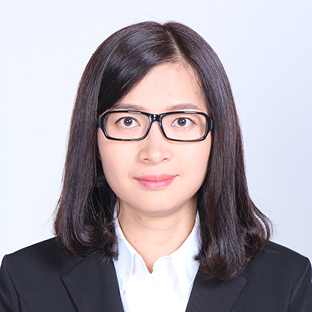
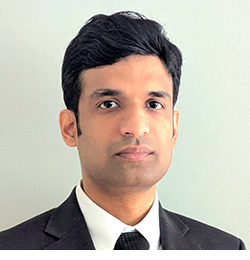
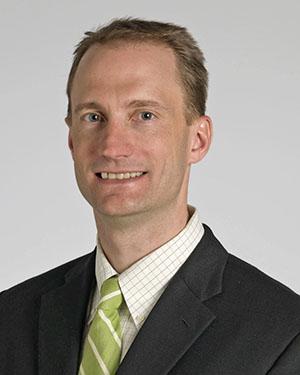
Yuchen Wang is a Researcher in the Department of Electronic & Electrical Engineering at the University of Bath, specializing in electrical machine design for electric vehicles and aerospace systems. His core research areas include: Harmonics and eccentricity effects in permanent magnet synchronous motors Electromagnetic noise and vibration analysis Surrogate modeling for motor optimization Superconducting motor applications in aircraft Recent work demonstrates concentrated innovation in in-wheel traction motors and steer-by-wire systems, leveraging analytical modeling and finite element methods to address cogging torque, back-EMF anomalies, and harmonic noise—directly advancing EV drivetrain reliability and performance.
Prof. Markus Becherer holds the professorship of 'Chip-based Magnetic Sensor Technology' at the Technical University of Munich (TUM), within the TUM School of Computation, Information and Technology. His research focuses on magnetic components for spin-based signal processing, with emphasis on ferro/ferrimagnetic materials, nanoscale structuring, and applications in digital/analog/neuromorphic systems. He leads ZEITlab, TUM’s central electronics and IT laboratory, and previously served as acting head of the Chair of Nanoelectronics. Education: Vocational training at Sick AG, followed by electrical engineering studies at TUM. PhD (2011) and habilitation (2017) from TUM. Awards include the Kurt Fischer Prize (2011) and multiple scholarships from Bavarian Research Foundation, SICK AG, and the German Academic Scholarship Foundation. Research interests span spintronics, magnetic sensor technology, and nanomagnetic systems. Key innovations include FIB-irradiation techniques for skyrmion control, 3D nanomagnetic integration, and spin-wave-based computing. Recent work explores energy-efficient logic systems and magnonic devices. Key Achievements: Pioneered spin-wave optics in YIG, demonstrated machine-learning-designed magnonic lenses, and advanced skyrmion-based circuitry. Labs/Teams: Leads ZEITlab and collaborates on 3D nanomagnetic logic systems.
Jin Ye, Ph.D. is an Associate Professor at the University of Georgia, specializing in cyber-physical systems, power electronics, and cybersecurity. His research focuses on enhancing the security and reliability of electrical drives, renewable energy systems, and smart grids through advanced control strategies and machine learning techniques. He leads projects involving hardware-in-the-loop testbeds, vulnerability assessments, and anomaly detection in industrial and energy systems. Education: Ph.D. in Electrical Engineering (not explicitly stated, inferred from title). Research Interests: Cybersecurity of power electronics, model predictive control, energy management strategies for electric vehicles, and fault diagnosis in electrical systems. His work bridges theoretical advancements with practical applications in manufacturing, renewable energy, and IoT security. Key Contributions: Developed frameworks for detecting cyber-attacks in photovoltaic farms, electric vehicle powertrains, and multi-stage manufacturing systems. Pioneered transfer learning and adaptive algorithms for real-time threat mitigation in industrial networks. Labs & Teams: Leads cybersecurity testbed initiatives for cyber-physical systems, collaborating with industry partners to deploy resilient control systems in critical infrastructure.
Prof. Yuriy Mokrousov leads the Topological Nanoelectronics Group at the Peter Grünberg Institute (PGI) within the Quantum Theory of Materials (PGI-1) at Research Center Jülich. His research focuses on leveraging topological concepts and geometrical phases (e.g., Berry phases) to explore novel transport phenomena in nanoelectronic materials. Key areas include spintronics, noncollinear magnets, and topological phases in complex systems such as skyrmions and altermagnets. He employs density functional theory (DFT) and first-principles methodologies to bridge theoretical predictions with experimental advances. Research interests span: dissipationless spin currents, topological transport effects, spin-orbit torques, and the interplay between magnetism and quantum geometry. His group investigates materials like Mn2Au, transition metal interfaces, and van der Waals heterostructures to uncover mechanisms for future nanoelectronic applications. Recent articles highlight advancements in orbital magnetism, domain wall dynamics, and optical manipulation of magnetic textures. Collaborations involve developing computational tools to model electronic and spin properties, with applications in spintronics and energy-related materials.
Dr. Frank Freimuth is a Visiting Postdoc at the Peter Grünberg Institute (PGI-1) within the Quantum Theory of Materials department at the Research Center Jülich, collaborating with Johannes Gutenberg University Mainz (JGU). His research focuses on computational method development for theoretical studies of spintronic phenomena, including magnetism, spin Hall effects, and laser-induced torques. Key areas of investigation include the Dzyaloshinskii-Moriya interaction, spin-orbit torques, and orbital magnetism in materials like Mn2Au and topological magnon insulators. He explores ultrafast magnetic dynamics, such as antiferromagnetic switching via optical torques and photocurrent generation in metallic systems. His work leverages advanced computational tools like Wannier90 and first-principles density-functional theory to study electronic structures and transport properties. Recent studies highlight topics like time-domain observation of orbital angular momentum currents and the role of Berry phase effects in spintronic systems. Freimuth’s contributions bridge theory and experiment, aiming to advance applications in next-generation spintronic devices and energy-efficient magnetic memory technologies.
Dr. Nenad Panić is affiliated with the Department of Physics at the Faculty of Science, University of Zagreb. His research focuses on mechanical engineering systems, recycling technologies, biomechanics, and applied physics. Key projects include the design of measurement lines for static torque analysis, development of disassembly systems for electronics recycling, and biomechanical studies on bone mechanics. He has contributed to infrastructure projects like pipeline pressure testing and sustainable waste management solutions. His work bridges engineering applications with material science, emphasizing practical industrial and biomedical applications. Research interests include tribology, material wear analysis, fluid dynamics in piping systems, and sustainable manufacturing processes. He has collaborated on instrumentation design for torque measurement and validation systems. While no awards are listed, his contributions to recycling infrastructure and engineering validation methodologies highlight his technical expertise. Former students are mentioned but not individually named in available records.
Dhritiman Bhattacharya is an Assistant Professor in the Department of Electrical & Computer Engineering at Rowan University, affiliated with the Henry M. Rowan College of Engineering. He holds a Ph.D. in Mechanical and Nuclear Engineering from Virginia Commonwealth University (2020) and a B.Sc. in Electrical and Electronic Engineering from Bangladesh University of Engineering and Technology (2013). Prior to his current role, he was a Postdoctoral Fellow in the Department of Physics at Georgetown University. His research focuses on overcoming energy limitations in CMOS-based computing through spintronic innovations, leveraging magnetic nanostructures and non-volatile materials to develop novel neuromorphic and memory technologies. Key areas include voltage-controlled skyrmions, magneto-ionic devices, and neuromorphic computing architectures. He has published over 25+ journal articles and received the 2021 Best Paper Award at the ASME Smart Materials Conference, alongside recognition as an Outstanding Reviewer for the Institute of Physics. His articles explore topics such as magnetic nanostructure design, strain-mediated switching, and reservoir computing with frustrated nanomagnet arrays. Notable contributions include studies on 3D interconnected nanowire networks and physically secure logic locking mechanisms. Professional memberships include IEEE and the American Physical Society.
Jay Alberts, PhD is the Principal Investigator of the Jay Alberts Laboratory in Biomedical Engineering at Cleveland Clinic. He holds the Edward F. and Barbara A. Bell Family Endowed Chair, serves as Director of the Cleveland Clinic Concussion Center, and is Vice Chair of Innovation for the Cleveland Clinic Neurological Institute. His research program spans multiple domains within neuroscience and rehabilitation medicine. Dr. Alberts earned his undergraduate degree in Kinesiology from Iowa State University (1994), followed by graduate studies in Kinesiology at Arizona State University (1997), and completed Medical Education at Arizona State University (2000). His academic appointment at Cleveland Clinic began in 2005, where he has established himself as a leader in movement disorder research. His research focuses on understanding how the brain controls skilled movements and how neurological conditions like Parkinson's disease, stroke, and concussion affect movement and cognition. His laboratory investigates structure-function relationships within the central nervous system, particularly examining how grasping forces and torques are controlled during functional manipulations. A significant portion of his work explores the role of the basal ganglia in movement control among Parkinson's patients, including the effects of deep brain stimulation and various exercise interventions. Analysis of his recent publications reveals several key research trends: a strong emphasis on high-intensity aerobic exercise interventions for Parkinson's disease, development of digital and mobile assessment tools for neurological conditions, investigation of cognitive-motor interactions in movement disorders, and application of innovative technologies like virtual and augmented reality for rehabilitation. His work bridges basic neuroscience with clinical applications, with a particular focus on translating research findings into practical therapeutic approaches. Edward F. and Barbara A. Bell Family Endowed Chair US Patent 8,608,622: Systems and Methods for Improving Motor Function with Assisted Exercise US Patent 8,562,488: Systems and Methods for Improving Motor Function with Assisted Exercise Dr. Alberts has secured significant grant funding for his research, including a $3.4 million Department of Defense award for developing tools to assess return-to-duty readiness after military concussive brain injury. His laboratory has developed several innovative technologies, including a smartphone application for concussion management and virtual reality platforms for identifying Parkinson's disease. Current major projects include the CYCLE-II study examining long-term home-based aerobic exercise for slowing Parkinson's disease progression and research on using augmented reality to improve physical therapy accessibility for Parkinson's patients. The Jay Alberts Laboratory brings together multidisciplinary expertise in neuroscience, engineering, and clinical care to develop innovative approaches for understanding and treating movement disorders. Current research initiatives include using immersive virtual reality to address Parkinson's symptoms, developing technology-enabled concussion care pathways, and investigating how high-intensity exercise affects neurological function in various patient populations.
Professor Philip Sewell is a senior academic and leader at Bournemouth University, serving as Director of Apprenticeships & Skills and a member of the University Leadership Team. He is affiliated with the Department of Design and Engineering within the Faculty of Science and Technology. His work spans engineering design, medical prosthetics, and industrial collaboration, with a strong focus on enhancing apprenticeship education and employability. Education: BEng (Hons) in Mechanical Engineering, University of the West of England, Bristol (1998) PhD in The application of photoelastic analysis for the a, University of the West of England, Bristol (2003) PGCert in Research Degree Supervision, Bournemouth University (2008) Philip Sewell's research interests lie at the intersection of design engineering, mechanical engineering, artificial intelligence, and medical engineering , particularly in prosthetic technologies and socket fit assessment. His work integrates simulation, composite materials, and clinical applications to improve prosthetic design and patient outcomes. He has led pioneering research in lower-limb prosthetics, marine structures, and additive manufacturing. His recent publications reflect a strong trend in pediatric prosthetics, 3D printing, biomechanics, and smart socket technologies . These works emphasize material performance, dynamic characterization, and patient-centered design, often involving interdisciplinary collaboration with healthcare providers and industry partners. Scientific Awards: Vice-Chancellor's Award for Research/Enterprise Project of the Year (Bournemouth University, 2011) Runner-up, Outstanding Engineering Research Team of the Year (Times Higher Education Awards, 2010) BU Award for Outstanding Contributions to Student Learning (2009) International Award for Excellence for research into deploying Rapid Prototyping in SMEs (2013) Philip Sewell has supervised over a dozen PhD students and secured significant research funding from EPSRC, REMEDI, HEIF, and industry partners. His grants span areas such as prosthetic socket fit, marine load measurement, tidal energy, and advanced manufacturing . He has also led educational initiatives, including degree apprenticeships and distance learning programs for engineers. He is actively involved in professional service, serving as Chair of the Education and Training Committee at the Institution of Engineering Designers and as an external examiner for multiple universities. His leadership extends to public engagement, where he promotes engineering careers and innovation.
Farzaneh Khorsandi is an Associate Professor of Cooperative Extension in the Department of Biological and Agricultural Engineering at the University of California, Davis, College of Engineering. She serves as a Graduate Faculty Advisor and leads research in agricultural safety and health, with a focus on engineering controls for operator protection. Her work spans tractor and ATV safety, agricultural mechanization, finite element modeling, and emerging technologies in agriculture. Her research interests include Agricultural Safety & Health , Engineering Controls , ROPS Design , Finite Element Analysis , Spray Drift Reduction , and Agricultural Robotics . She investigates practical solutions to reduce occupational hazards in farming, including heat-related illnesses and equipment-related injuries. Her work integrates mechanical design, computational modeling, and field testing to develop safer agricultural systems. The 15 most recent publications highlight a consistent focus on improving safety through engineering innovation. Key themes include the development and evaluation of foldable rollover protective structures (ROPS), analysis of actuation forces and friction effects, modeling of vehicle stability under dynamic loads, and reduction of environmental impacts like spray drift. Her research combines theoretical modeling with practical validation, often using standards such as SAE J2194. Collaborative work with experts like P. D. Ayers underscores a strong interdisciplinary approach. She is actively involved in graduate mentorship and leads the Agricultural Safety and Health Lab. Her research is supported by grants, including continued funding from NIOSH for the Western Center for Agricultural Health and Safety. She has presented her work at major international conferences such as ASABE, ISTVS, and SHWA, contributing to both academic and practical advancements in agricultural safety. Key professional contributions include: Development of the Computer-based ROPS Design Program (CRDP) Design and testing of lift-assist mechanisms for foldable ROPS Modeling liquid movement effects on vehicle stability Innovation in orchard spray technology to reduce drift Mentorship of graduate students and extension outreach She has no listed scientific awards in the provided text, but her sustained research program and extension role indicate significant professional impact.
Winifred Ijomah is a Professor in the Department of Design, Manufacture and Engineering Management (DMEM) at the University of Strathclyde, Faculty of Engineering. She is the initiator and Technical Director of the Scottish Institute for Remanufacture (SIR), a pan-Scotland hub hosted by the university. She holds a PhD in Remanufacturing from the University of Plymouth (2002), a master's in Advanced Manufacturing Management, and a bachelor's in Industrial Engineering. She joined Strathclyde in 2007 as a lecturer, was promoted to senior lecturer (2011), reader (2017), and professor (2020). Her research spans sustainable engineering, remanufacturing, and circular economy, integrating engineering, business, and social sciences. She focuses on enhancing remanufacturing potential through product and process design, addressing environmental, economic, and societal challenges. Her work contributes to UN Sustainable Development Goals, particularly in sustainable production and responsible consumption. The recent publications reflect a strong trend in applying artificial intelligence, risk assessment, and non-destructive testing to remanufacturing, especially in automotive and composite materials. Her research combines technical innovation with business model development, emphasizing practical implementation in real-world industrial settings. Senior Special Advisor on remanufacturing - Recipient 7/7/2025 International Second supervisor and research reviewer - Recipient 20/5/2025 Sponsorship Award for PhD student travel to international Masterclass - Recipient 9/4/2025 Sponsorship award for ICoR 2025 conference - Recipient 8/4/2025 University of Strathclyde SARD 'Sustained Exceptional Performance at professorial level' Award 2023-2024 - Recipient 8/1/2025 Sponsorship Award for ICoR 2023 Conference - Recipient 21/2/2023 Best doctoral thesis paper award - Recipient 16 Jun 2015 Best paper in conference award - Recipient 2 Dec 2011 She supervises individual student projects and teaches sustainable design and manufacturing in MEng and MSc programs, covering mechatronics, advanced materials, and production technology. She leads the UK's largest remanufacturing research group and has secured significant funding, including EPSRC and EU H2020 grants. Major projects include RESCu-M2, ReSTOR, ReMake Glasgow, and FiberEUse. She founded the Springer Journal of Remanufacturing and served as Editor-in-Chief from 2011 to 2020. She leads the Remanufacturing Research Group at Strathclyde and is central to the Scottish Institute for Remanufacture (SIR), fostering collaboration across industry and academia. Her work involves extensive professional engagement, including invited talks, keynote lectures, and public outreach.
Professor Gordon Dobie is a full-time faculty member in the Department of Electronic & Electrical Engineering within the Faculty of Engineering at the University of Strathclyde. He holds the academic rank of Professor and is actively engaged in research, teaching, and supervision of PhD students. MEng in Electrical and Mechanical Engineering with Distinction, University of Strathclyde (2000–2005) PhD in Ultrasonic Sensor Platforms for Non-Destructive Evaluation, University of Strathclyde (2006–2009) His research focuses on applied engineering solutions in ultrasonics, non-destructive evaluation (NDE), robotics, automation, and embedded systems. Key areas include automated inspection, signal processing, computer vision, and photogrammetry, with applications in structural integrity and medical imaging. His work supports industrial and medical advancements through real-time, intelligent inspection systems. The recent publications reflect a strong trend in integrating robotics and sensor technologies for robust inspection systems, particularly in challenging environments such as pipelines and medical diagnostics. The research combines ultrasonic sensing with computer vision, machine learning, and tactile feedback, demonstrating interdisciplinary innovation in engineering for safety-critical applications. Professor Dobie has received recognition through active engagement in major research projects and collaborations, including KTP partnerships and Innovate UK-funded initiatives. While specific awards are not listed, his role as Principal Investigator on multiple high-impact projects highlights his leadership and contribution to technological innovation. He advises several research students and leads or contributes to numerous grants, including projects such as RAICo - Next Generation Remote Inspection of Confined Spaces and KTP - Cokebusters , focusing on improving ultrasonic inspection pigs. His work is supported by strong industrial partnerships and contributes to UN Sustainable Development Goals through technological advancement. He is affiliated with the Centre for Ultrasonic Engineering (CUE) and participates in external collaborations with institutions such as the National Robotarium. His research group works on developing next-generation inspection systems using mobile robotics, sensor fusion, and AI-driven data analysis.
Ivan Okhotnikov is a researcher affiliated with Bournemouth University's Faculty of Science and Technology. His work focuses on hydraulic systems and fluid dynamics, particularly the performance evaluation of rotary flow control valves. Expertise in computational fluid dynamics (CFD) and flow measurement Published in journals like International Journal of Heat and Fluid Flow and Flow Measurement and Instrumentation Research interests revolve around optimizing valve designs for independent metering hydraulics, with an emphasis on pressure losses and steady flow torques. His recent publications (2017-2020) demonstrate a consistent focus on numerical modeling and experimental validation of rotary tubular spool valves.
Gregory David Fuchs is a Professor in the Department of Applied and Engineering Physics at Cornell University, where he has been faculty since 2011. His research bridges quantum information science, spintronics, and condensed matter physics, focusing on hybrid quantum systems and spin dynamics in solid-state materials. Education : B.S. in Physics and Chemistry Education (University of Wisconsin-Madison, 1996), M.S. (Cornell, 2003), and Ph.D. (Cornell, 2007) in Applied Physics. The Fuchs Group specializes in manipulating spin and optical degrees of freedom in materials like diamond nitrogen-vacancy (NV) centers and wide band-gap defects. Their work explores hybrid quantum systems combining superconducting circuits with magnetic materials, aiming to develop quantum sensors and networks. They also advance magnetic imaging techniques, including time-resolved magneto-thermal microscopy and scanning NV center microscopy with ~50 nm resolution. Recent publications highlight innovations in quantum spin control, magnon-photon coupling, and defect engineering in materials such as GaN and hexagonal boron nitride. These studies often intersect with quantum computing, nanophotonics, and magnetic device engineering. Scientific Awards : Cornell Engineering Research Excellence Award (2020), DOE Early Career Award (2014), Presidential Early Career Award (2013), NSF Faculty Early Career Award (2013), Sesquicentennial Faculty Fellow (2012). His lab's interdisciplinary approach draws from atomic physics, materials science, and electrical engineering, with applications in quantum technologies, nanoscale imaging, and spintronics. Collaborative projects include the development of superconducting microwave circuits and ultra-low damping magnetic materials.
Prof. Dr. Felix Büttner is a Professor (W2) of Experimental Physics V at the University of Augsburg, where he leads research in magnetism and coherent X-ray imaging. He also serves as a Joint Research Group Leader at Helmholtz-Zentrum Berlin. Prior to his current position, he was a Helmholtz Young Investigator Group Leader at Helmholtz-Zentrum Berlin and University of Potsdam (2020-2022), and a Postdoctoral researcher at the Massachusetts Institute of Technology (2015-2020). Education: Diploma of Physics, University of Göttingen, 2010 PhD in Physics, University of Mainz, 2013 Prof. Büttner's research focuses on cutting-edge developments in magnetism and coherent X-ray imaging . His work centers on developing methods for ultrahigh resolution (both spatial and temporal) coherent x-ray imaging, with particular emphasis on magnetic systems under operando conditions. He investigates the physics of topological magnetic states, including their stability and dynamics, with special attention to chiral magnetic materials in thin film heterostructures. His research also encompasses spin-orbit torques, micromagnetic modeling, and the integration of these technologies into practical devices. Analysis of Prof. Büttner's recent publications reveals a strong focus on magnetic skyrmions, coherent X-ray imaging techniques, and the development of advanced magnetic materials. His work spans from fundamental studies of magnetic domain walls to practical applications in data storage and spintronic devices. Notably, his team has achieved significant breakthroughs in high-resolution magnetic imaging, including coherent x-ray magnetic imaging with 5 nm resolution. Prof. Büttner leads an active research group with numerous collaborators across Germany and internationally. His work has resulted in publications in top-tier journals including Nature Nanotechnology, Nature Materials, and Physical Review Letters, demonstrating both fundamental insights and potential technological applications. Prof. Büttner's laboratory at the University of Augsburg collaborates extensively with major synchrotron facilities and research centers, particularly Helmholtz-Zentrum Berlin, to advance the field of magnetic imaging and manipulation. His research bridges fundamental physics with potential applications in next-generation data storage and spintronic technologies.