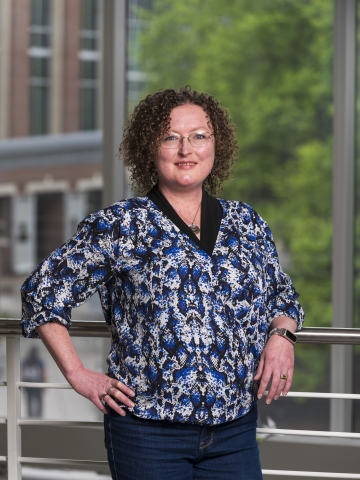
Assoc. Prof. Dr. Sema Alaçam Doğan has been affiliated with Istanbul Technical University since 2014, serving as an Associate Professor in the Department of Architecture . She has held administrative roles including Deputy Head of Department and Erasmus Coordinator. Education : PhD in Informatics in Architectural Design (2008-2014), MS in Informatics in Architectural Design (2005-2008), and BS in Architecture (1999-2005) from Istanbul Technical University. Her research explores Computational Design , Artificial Intelligence in Architecture , and Sustainable Material Innovation . She investigates digital tools for heritage preservation, daylight optimization in BIM, and cognitive development in architecture students. Recent publications analyze AI-assisted design literacy , machine learning for Sinan mosques , and environmental comfort in Harran houses . Her work integrates algorithmic frameworks with sustainable practices. Scientific awards include multiple ITU Publication and Performance Awards (2021-2024), FABFEST Prizes , and the 2024 Artemis Educator Award from NASA. Active projects like "Physical Computation in Architectural Drawing" and "Robotic Fabrication with Recycled Wind Turbine Blades" demonstrate her leadership in computational and sustainable research.
Ivan Flechais is an Associate Professor in Software Engineering at the Department of Computer Science, University of Oxford. His work focuses on the intersection of security engineering and human factors, developing approaches that balance technical security requirements with usability considerations in real-world contexts. Dr. Flechais earned his BSc and PhD in Computer Science from University College London. He holds dual French-British nationality and was educated in France until university level. His academic journey reflects an international perspective that informs his research on security systems across different cultural contexts. Flechais's research centers on developing methods for creating secure systems that account for real-world usability constraints. His work addresses the complex challenge where security competes with other system requirements like functionality, usability, and efficiency. He is particularly known for developing the AEGIS design methodology, which provides a cost-effective approach to security design that incorporates usability considerations. His current research explores socio-organizational factors in secure systems design, with recent work focusing on smart home security and privacy, remote work security challenges, and the intersection of security culture with technical implementation. His publication record shows a strong trajectory in usable security research, with recent work (2020-2024) increasingly focused on smart home environments, privacy in domestic settings, and the security challenges of remote work. His research demonstrates consistent attention to the human element in security systems, examining how users interact with security mechanisms in real-world contexts across different cultural settings and technological domains. Smart home security and privacy challenges User experience of security mechanisms Socio-organizational aspects of security implementation Cross-cultural security and privacy considerations Security for distributed and remote work environments Dr. Flechais has supervised numerous PhD and Master's students, including Sarah Alromaih, Varad Vishwarupe, George Chalhoub, and Martin J. Kraemer, among others. His supervision work often focuses on the practical application of security principles in emerging technologies, with students frequently examining security challenges in smart homes, IoT devices, and remote work contexts. His research has been supported through various projects including webinos and Sponstaneous Security, which address security challenges in distributed mobile applications and ad-hoc network environments.
Dr. Peter Edwards is an Adjunct Professor at RMIT University's School of Property, Construction and Project Management (PCPM). He retired in 2006 but continues to engage in research supervision and academic activities. His expertise spans project risk management, value management, public-private partnerships (PPP), sustainable development, and corporate social responsibility. Research Contributions: Focuses on construction industry challenges, including HIV/AIDS intervention management, workplace stress, and PPP procurement. Co-founded the Co-operative Network for Building Researchers (CNBR) in 1991, now a global network with 2,800+ members. Awards: UK Leverhulme Trust Visiting Fellowship (2003), ARC Small Grant (1998). Education: Extensive academic background in quantity surveying and construction economics, including roles as Senior Lecturer and Associate Professor at RMIT (1987–2006). His research bridges construction management, public health, and organizational behavior. Notable work includes studies on South African construction workers' mental health and the operational phase of PPP projects.
Sascha Struwe serves as a Postdoctoral Researcher at Aalborg University Business School within the Faculty of Social Sciences and Humanities, actively contributing to the International Business Research Group. Based at Fibigerstræde 11 in Aalborg Øst, Denmark, Struwe operates at the intersection of service innovation theory and business practice with international focus. Research expertise centers on service innovation , value co-creation , and digital servitization , particularly examining B2B contexts and open banking ecosystems. Work consistently explores institutional influences through German-Chinese case studies, addressing how cultural and regulatory frameworks shape service design. Recent trajectories reveal evolution from foundational service design challenges (2019-2021) toward digital transformation implications (2022-2023), with emphasis on value co-destruction mechanisms in financial ecosystems. Struwe led the PhD project Innovating the Invisible and Intangible: Value Creation in B2B service (2018-2021) investigating co-creation capabilities across industrial sectors. Academic engagement includes conference participation at EIBA and CICALICS events, plus a visiting researcher appointment at Fudan University's Nordic Centre (2019-2020). Current work continues through the International Business Research Group, focusing on digital literacies and service ecosystem resilience.
Xiaoyao Fan is an Assistant Professor of Engineering at Dartmouth College, specializing in image guidance systems for neurosurgery and spine surgery. His work focuses on improving intraoperative imaging accuracy through computational modeling, stereovision, and ultrasound technologies. He collaborates with the Center for Surgical Innovation (CSI) at Dartmouth-Hitchcock Medical Center (DHMC) and has contributed to over 400 surgical cases involving real-time imaging and feedback systems. Education: B.E. in Electrical Engineering, Tsinghua University (2007) Ph.D. in Biomedical Engineering, Dartmouth College (2012) Research Interests: His research emphasizes minimizing surgical errors via real-time brain deformation compensation, spine motion correction, and intraoperative imaging systems. Techniques include stereovision, 3D ultrasound, and machine learning for image registration and navigation. Key applications include open and minimally invasive neurosurgical procedures. Publications: His work spans stereovision systems for spinal surgery, brain shift compensation algorithms, and intraoperative ultrasound registration. Recent contributions address human feasibility and porcine model validation of surgical navigation tools. Grants & Labs: Collaborates with Medtronic on integrating updated imaging into navigation systems. Active in the CSI DHMC lab, focusing on clinical translation of real-time imaging solutions. Teaches ENGS 111: Digital Image Processing. Labs & Teams: Works within Dartmouth’s engineering and medical collaboration networks, advancing surgical precision through interdisciplinary research.
Dr. Wahab Hamou-Lhadj is a Professor and Chair at the Department of Electrical and Computer Engineering , Concordia University, and an Affiliate Researcher at NASA JPL, Caltech . He leads research in Artificial Intelligence for IT Operations (AIOps) , Software Observability , and Model-Driven Engineering , focusing on improving the reliability of digital systems in AI-driven environments.
Laura E. Brumariu is a Professor and Associate Dean for Professional Programs and Student Advancement at the Gordon F. Derner School of Psychology, Adelphi University. She holds a Ph.D. from Kent State University and completed postdoctoral research fellowships at Harvard Medical School. Her office is located in the Hy Weinberg Center, and she is licensed as a psychologist in New York State. Education: Postdoctoral Research Fellow, Harvard Medical School/CHA/MGA (2013) Postdoctoral Research Fellow with Clinical Attributions, Cambridge Health Alliance/Harvard Medical School (2012) Ph.D., Kent State University (2010) Her research adopts a developmental psychopathology perspective, focusing on how parent-child attachment influences emotional and social development, particularly in middle childhood. She investigates emotion regulation, anxiety, disorganized attachment, role-confusion, and family processes related to borderline personality features and dissociation. She developed the Middle Childhood Attachment Strategies Coding System and leads the Child and Adolescent Research (CARE) Lab. Her recent work emphasizes meta-analytic reviews on emotion socialization, attachment, anxiety, and empathy. Her most recent publications reflect trends in attachment theory, emotion regulation, parenting, and internalizing disorders across development, often using meta-analytic and longitudinal methods. Much of her work integrates international collaboration, especially with Romanian researchers. Scientific Awards and Honors: Clinical Research Training Program, Harvard Medical School, Research Fellow (2010–2012) The Jeanette and Louis Reuter Fellowship in Developmental Sciences, Kent State University (2008–2009) She has mentored numerous doctoral students whose research spans topics such as gratitude, empathy, emotion socialization, and trauma. She teaches courses in psychological research, family therapy, and doctoral thesis supervision. She has secured research funding and collaborates extensively on studies related to child and adolescent mental health, though specific grants are not detailed in the text. Her professional activities include frequent presentations at major psychological conferences such as the Association for Psychological Science and the International Attachment Conference. Labs and Research Teams: She directs the Child and Adolescent Research (CARE) Lab at Adelphi University, which focuses on attachment, emotion regulation, and psychopathology in children and adolescents. The lab conducts both observational and survey-based research and trains graduate students in developmental and clinical methods.
Mark Martinez-Klimov is a researcher in the Department of Chemical Engineering at Åbo Akademi University, Faculty of Science and Engineering. His work focuses on catalysis for sustainable energy and renewable fuel production, with an emphasis on heterogeneous catalysis, biomass conversion, and CO2 utilization. He is actively involved in experimental and kinetic studies of catalytic processes. Research Interests: His primary research areas include hydrodeoxygenation, dry methane reforming, combustion synthesis, and catalytic upgrading of bio-oil and biomass derivatives. He investigates catalyst design, deactivation mechanisms, and process optimization using advanced characterization techniques such as X-ray diffraction, scanning electron microscopy, and thermogravimetric analysis. His work supports the development of cleaner energy technologies and circular chemical processes. The analysis of his recent publications (2021–2025) reveals a consistent focus on sustainable catalytic processes, particularly in renewable jet fuel production, hydrogenation of sugars, and CO2 valorization. His research spans both fundamental catalyst development and applied reaction engineering, often in continuous flow systems such as trickle bed reactors. The work integrates material science with chemical engineering principles to address challenges in energy transition. Scientific Awards: No awards explicitly mentioned in the provided text. Advising and Grants: While specific students or grants are not listed, his collaborative publication pattern with senior researchers like Dmitry Murzin and Pavel Mäki-Arvela suggests involvement in major research projects, likely funded by national or EU-level grants. He appears to contribute to team-based research in catalysis and sustainable technologies, potentially mentoring junior researchers and PhD students within the group. Labs and Teams: Mark is part of a prominent catalysis research group at Åbo Akademi University, specializing in sustainable chemical processes. The team leverages advanced synthesis methods (e.g., solution combustion, impregnation) and characterization tools to develop novel catalysts for energy and environmental applications. Their work is highly collaborative, involving both national and international partners in the field of green chemistry and renewable fuels.
Ulrik Schroeder is a Universitätsprofessor (Full Professor) at RWTH Aachen University, leading the Chair of Learning Technologies within the Faculty of Computer Science. His research focuses on the intersection of educational technology, learning analytics, and immersive technologies with particular emphasis on practical implementations in higher education settings. Professor Schroeder's research spans multiple interconnected domains in educational technology. His primary interests include Learning Analytics implementation (particularly using xAPI standards), Virtual Reality applications for education, Open Educational Resources development and conversion, and gamification approaches for programming education. He has developed several notable tools including convOERter for OER conversion, WebWriter for creating explorable explanations, and various xAPI-based learning analytics infrastructures. His work consistently bridges theoretical frameworks with practical educational applications, often focusing on computer science education contexts. Analysis of his recent publications reveals a strong trend toward integrating Learning Analytics with immersive technologies, particularly Virtual Reality environments. His research demonstrates a systematic approach to educational technology development, with emphasis on scalability, interoperability through standards like xAPI, and practical implementation in real educational settings. The work increasingly focuses on personalized learning paths, quality assurance for educational resources, and privacy-conscious data collection. Co-editor of 21. Fachtagung Bildungstechnologien (DELFI) (2023) Co-editor of Hochschuldidaktik der Informatik HDI 2018 Co-editor of DeLFI 2018 conference proceedings Professor Schroeder has supervised numerous doctoral and postdoctoral researchers who frequently appear as co-authors on his publications, indicating an active research group. His projects often involve interdisciplinary collaborations across computer science, education, and psychology. Current major initiatives include the AIStudyBuddy project for study path analysis and the development of VR classroom simulations for teacher training. His research group, the Learning Technologies Innovation Lab, develops open research tools that support various aspects of educational technology research and implementation.
Liang Zhao, PhD, MAS, MBA, is a Professor in the Department of Bioengineering and Therapeutic Sciences within the Schools of Pharmacy and Medicine at the University of California, San Francisco (UCSF). Prior to joining UCSF, he served as director of the Division of Quantitative Methods and Modeling (DQMM) in the Office of Research and Standards in the Office of Generic Drugs in the Center for Drug Evaluation and Research (CDER) at the U.S. Food and Drug Administration (FDA) from 2015 to 2024. His professional career spans over 19 years with experience at Pharsight, Bristol Myers Squibb (BMS), MedImmune, and the FDA. Dr. Zhao's research focuses on pharmacometrics, drug delivery modeling, and artificial intelligence-based tools that impact drug development and regulatory decision-making. His work encompasses mechanistic models for brain drug delivery, regulatory science modeling and simulation, AI-driven drug discovery and development, drug interactions, biological availability, generic drugs, clinical pharmacology, therapeutic equivalency, computer simulation, and FDA regulatory processes. He has pioneered innovative approaches including model master files for model sharing and model-integrated evidence for generic product development and approval. His research integrates machine learning tools into pharmacometrics to advance drug delivery and bioequivalence assessment methodologies. Dr. Zhao has published over 120 articles and book chapters in prestigious journals. His recent publications demonstrate strong focus on applying advanced modeling techniques, machine learning algorithms, and pharmacometric approaches to solve complex problems in drug development and regulatory science. His work shows consistent innovation in developing quantitative methods to enhance bioequivalence assessment, improve drug product characterization, and support regulatory decision-making for generic drugs. FDA Group Recognition Award, FDA, 2024 Gary Neil Prize for Innovation in Drug Development, American Society for Clinical Pharmacology & Therapeutics (ASCPT), 2023 Commissioner's Special Citation, FDA, 2021 Humanitarian Award, Victims' Rights Foundation, 2020 30+ FDA CDER team and Individual Awards, CDER, FDA, 2011 Academic Award for Executive MBA Class 2009, Judge Business School, University of Cambridge, 2011 Dr. Zhao leads the Zhao Lab at UCSF, which advances drug development and regulatory science through cutting-edge research in pharmacometrics, drug delivery modeling, and artificial intelligence. His work bridges academic research with regulatory applications, demonstrating leadership in translating scientific innovations into practical regulatory frameworks. His experience across industry, regulatory agencies, and academia provides a unique perspective on drug development challenges and opportunities.
Santiago F. González is a Group Leader at the Institute for Research in Biomedicine (IRB) in Bellinzona, Switzerland, and an extraordinary professor at the University of Italian Switzerland (USI). He earned dual PhDs in microbiology (University of Santiago de Compostela, Spain) and immunology (University of Copenhagen, Denmark), followed by postdoctoral work (2007–2011) at Harvard Medical School's Immune Disease Institute under Michael Carroll. PhD in Microbiology, University of Santiago de Compostela PhD in Immunology, University of Copenhagen His research focuses on immune system dynamics during respiratory viral infections, vaccination, and cancer metastasis. Key areas include influenza recognition , lymph node inflammation , and immune cell behavior in vivo. He pioneered studies on C-type lectin receptors (e.g., SIGN-R1) in viral immunity and epigenetic modulators for inflammation. Recent publications highlight his work in epigenetic drug development , nanovaccines , and computational tools for immune cell tracking. His group uses two-photon intravital microscopy and spatial-temporal modeling to dissect immune responses. Scientific awards include three EU Marie Curie Fellowships (2004–2013), enabling his transition to independent research. His collaborations span Harvard, USI, and European institutions, with grants from the EU and Swiss research bodies. His lab at IRB, established via the 2013 Marie Curie Career Integration Grant , develops novel imaging approaches and therapeutic strategies for infectious and immune-mediated diseases.
Rina Foygel Barber is the Louis Block Professor in the Department of Statistics at the University of Chicago, where she also serves as Co-chair of the Committee on Community, Diversity, and Inclusion (CCDI) and is a member of the Committee on Computational and Applied Mathematics (CCAM). Her educational background includes: PhD in Statistics, University of Chicago (2012), advised by Mathias Drton and Nati Srebro MS in Mathematics, University of Chicago (2009) ScB in Mathematics, Brown University (2005) NSF postdoctoral fellow, Stanford University Department of Statistics (2012-13), supervised by Emmanuel Candès Professor Barber's research focuses on the theoretical foundations of statistical problems in estimation, prediction, and inference, particularly in high-dimensional settings where classical methods may not be reliable. She specializes in distribution-free inference methods such as conformal prediction, multiple testing methods, algorithmic stability, and shape-constrained inference. Her work also extends to modeling and optimization problems in medical imaging reconstruction. Her recent publications demonstrate a strong focus on distribution-free inference, with particular emphasis on conformal prediction, false discovery rate control, and algorithmic stability. Her work bridges theoretical statistics with practical applications, especially in the medical imaging domain. Professor Barber has received numerous prestigious awards: Elected to National Academy of Sciences (2025) MacArthur Fellowship (2023) IMS Fellow (2023) COPSS Presidents' Award (2020) Peter Gavin Hall Early Career Prize (2020) She actively mentors students and collaborators, with many co-authored publications across statistics, machine learning, and medical imaging. Her research has been supported by significant grants that enable her work on theoretical foundations of statistical inference and practical applications in medical imaging. Professor Barber also co-organizes the International Seminar on Selective Inference. Her research group focuses on developing and analyzing estimation, inference, and optimization tools for structured high-dimensional data problems. They work on false discovery rate control, distribution-free inference, and applications in medical imaging reconstruction.
Maciej A Mazurowski is an Associate Professor at Duke University School of Medicine, with dual appointments in the Department of Biostatistics & Bioinformatics and Radiology. He is also affiliated with the Department of Electrical and Computer Engineering and is a member of the Duke Cancer Institute. His research focuses on applying machine learning to medical imaging for improved diagnosis and treatment. Ph.D. in Computer Science from the University of Louisville (2008) Dr. Mazurowski's research emphasizes medical imaging , machine learning , and computer vision applications in radiology. His work includes automated segmentation , domain adaptation , prognostic modeling , and foundation models for MRI/CT analysis. His recent publications highlight trends in universal segmentation models (SegmentAnyBone, SegmentAnyMuscle), foundation models for MRI (MRI-CORE), and AI-driven diagnostic tools for breast cancer, glioblastoma, and thyroid nodules. Key challenges addressed include domain generalization , image harmonization , and ethical considerations in clinical AI. Incubation Award for innovative research commercialization Dr. Mazurowski has secured significant research funding from agencies including the National Institutes of Health , National Institute of Biomedical Imaging and Bioengineering , and American Roentgen Ray Society . His work spans CT segmentation , MRI analysis , and AI-based quality assessment across multiple imaging modalities.
Callie Hao is an Assistant Professor in the Department of Electrical and Computer Engineering at the Georgia Institute of Technology since 2021, holding the ON Semiconductor Junior Professorship. Her research bridges hardware efficiency and algorithmic innovation with significant industry and federal recognition. Education: Ph.D. in Electrical Engineering, Waseda University (2017) M.S. and B.S. in Computer Science and Engineering, Shanghai Jiao Tong University Research Focus: Dr. Hao pioneers software/hardware co-design for edge AI, specializing in hardware-efficient machine learning algorithms, FPGA-based reconfigurable computing, graph neural networks, and electronic design automation (EDA). Her work emphasizes neural architecture search, high-level synthesis optimization, and memory-efficient systems for embedded and IoT applications, driven by the philosophy that "1 + 1 > 2" for transformative efficiency gains. Publication Impact: Her 15 most recent publications (2023-2026) reveal a strategic shift toward machine learning-driven EDA tools, with 60% focused on high-level synthesis frameworks and 40% on graph neural network acceleration. Key trends include simulation speed breakthroughs (LightningSim), automated accelerator generation (GNNBuilder), and cryptographic hardware innovations (Cryptonite), predominantly published in top-tier venues like MICRO, ICCAD, and DAC. Awards & Recognition: NSF CAREER Award (2024) and Intel Rising Star Faculty Award (2023) Best Paper Awards at MLCAD 2024 and GLSVLSI 2021 ON Semiconductor Junior Professorship (2025) and Sutterfield Family Early Career Professorship (2022) DAC-SDC competition championships (2018-2020) Mentorship & Funding: Dr. Hao advises 8+ Ph.D. students in the Sharc Lab, with Rishov Sarkar winning the Oscar P. Cleaver Award and Qualcomm Innovation Fellowship. Her research is funded by DARPA (2021) for ultra-light video intelligence systems and supported by industry awards from Amazon and Sony. She actively serves on program committees for DAC, ICCAD, and DATE conferences. Lab Leadership: As director of the Sharc Lab (Software/Hardware Co-design lab), she cultivates interdisciplinary research at the intersection of FPGA design, machine learning, and EDA, requiring expertise in Verilog/HLS, GNNs, and compiler technologies while maintaining strict focus on real-world hardware implementation.
Amanda Stockton is an Associate Professor at the School of Chemistry and Biochemistry, Georgia Institute of Technology. Her research focuses on the development of analytical instruments for planetary exploration and the study of terrestrial analog environments to understand conditions suitable for life emergence. She leads the Stockton Lab, which specializes in microfluidics, biosignature detection, and astrobiological applications. Education: B.S. in Chemistry and Aerospace Engineering, Massachusetts Institute of Technology (2004) M.A. in Chemistry, Brown University (2006) Ph.D. in Chemistry, University of California Berkeley (2010) Stockton’s work bridges planetary science and analytical chemistry, targeting extraterrestrial life detection through technologies like the FELDSPAR and IMPOA projects. Her research explores sea spray aerosols, icy moon penetrators, and microfluidic systems for environmental and medical diagnostics. Research Highlights: Instrument development for Europa and Enceladus missions Microfluidic tools for origin-of-life experiments Terrestrial applications in environmental monitoring and point-of-care diagnostics Collaborative studies in Icelandic and Antarctic analog environments The Stockton Lab’s publications reveal expertise in biosignature preservation, Raman spectroscopy, and planetary habitability, with a focus on Mars and ocean worlds. Her team has pioneered low-cost microfluidic platforms like GLUE and modular CE-LIF systems.