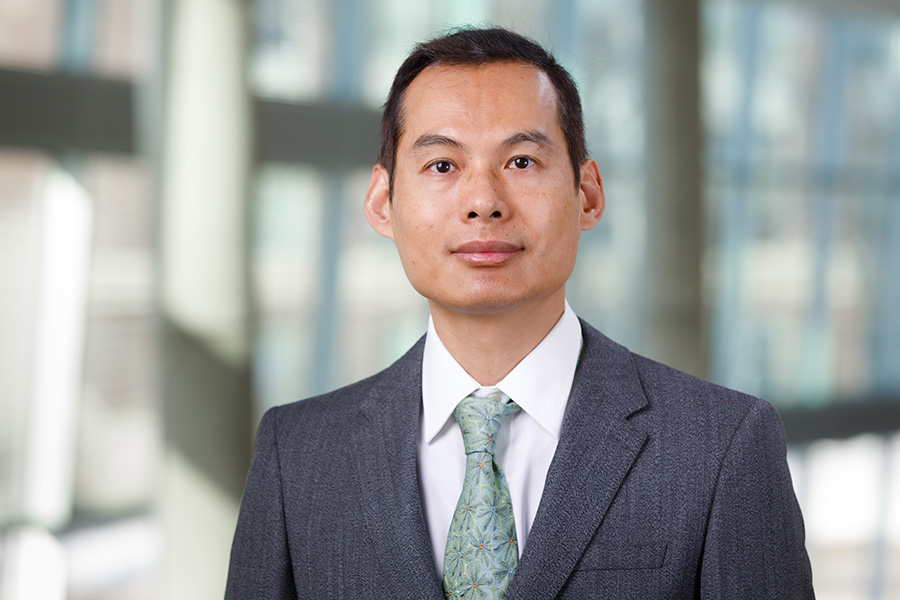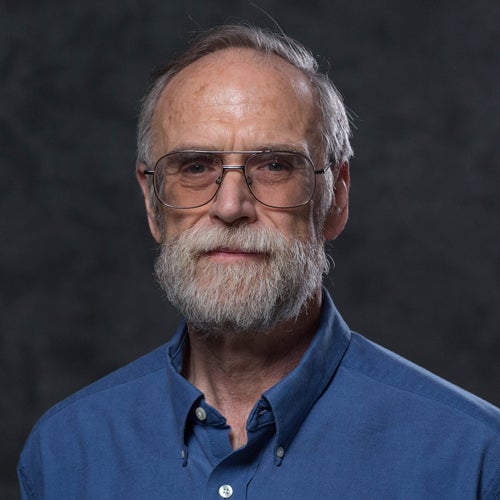
Mark S. Shephard is the Samuel A. Johnson '37 and Elizabeth C. Johnson Professor of Engineering and Director of the Scientific Computation Research Center (SCOREC) at Rensselaer Polytechnic Institute, with joint appointments in Mechanical, Aerospace and Nuclear Engineering and Computer Science departments. His research pioneers Scientific Computing and High-Performance Simulation , driving innovations in automatic mesh generation , adaptive analysis methods , and parallel adaptive simulation technologies . SCOREC's work spans five core areas: High-Performance Simulation Methods - advanced mathematical models and discretization Simulation Reliability – uncertainty quantification and adaptive techniques Massively Parallel Computations – scalable solutions for real-world engineering problems Multiscale Computations - cross-scale modeling frameworks Construction of Simulation Systems – collaborative workflow development Applications include fusion plasma, soft tissue modeling, additive manufacturing, and microelectronics. Recent publications (2022-2025) reveal intense focus on GPU-accelerated unstructured mesh methods for fusion energy research and multiscale material science, with growing emphasis on exascale computing and cyberinfrastructure for plasma physics. His work increasingly bridges computational theory with industrial applications in CAE and medical device evaluation. Professor Shephard has graduated 24 Ph.D. students and secured over 65 research grants from 13 government agencies including DOE (SciDAC Institutes, Exascale Computing Program), NSF, NIH, DoD, and NASA, plus funding from 44 industry partners. His leadership extends to SCOREC's collaborations with ten+ universities and commercial impact through medical simulation software used in arterial stent evaluation. As SCOREC's founder and director for 32 years, he integrates faculty from seven departments across Rensselaer to advance simulation technologies. His Simmetrix Inc. co-founding role demonstrates commitment to translating research into engineering solutions, with current work targeting fusion plasma systems and heterogeneous supercomputing environments.