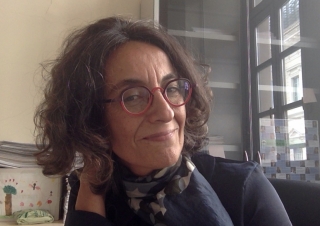
Marilena Vendittelli is a Professor at Sapienza University of Rome, affiliated with the Robotics group. Her research spans control systems, biomedical robotics, motion planning, and autonomous systems. Research Areas: Control systems for robotics and nonholonomic systems Biomedical applications (hyperthermia therapy, needle insertion) UAV navigation and obstacle avoidance Haptics and human-robot interaction Adaptive estimation algorithms Recent Publications focus on adaptive control of bio-heat equations, safe UAV motion planning, soft robotics actuation, and haptic feedback in medical procedures.
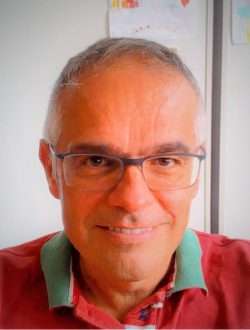
Marco Paggi is a Full Professor of Structural Mechanics at the IMT School for Advanced Studies Lucca, Italy, since 2017. He previously held academic roles at Politecnico di Torino (Assistant Professor, 2007-2013) and has been an Alexander von Humboldt Fellow at Leibniz University Hannover. His research focuses on fracture mechanics, contact mechanics, and computational methods applied to renewable energy systems, composite materials, and multi-scale modeling. Key Themes: Fracture propagation, contact interfaces, phase field modeling, photovoltaic durability, and material heterogeneity. Awards: Stanford Top 2% Scientists (2020-2024) Research.com Top Scientists (2022-2024) European Structural Integrity Society Young Scientist Award (2010) Publications: His work spans tribology, computational fracture mechanics, and material degradation, with recent emphasis on phase field modeling for quasi-brittle materials and photovoltaic systems. He has pioneered methods for multi-scale and multi-physics analysis of structural systems. Mentorship: Supervised 17 PhD graduates and 14 postdocs, including award-winning researchers like Pietro Lenarda and Zeng Liu.
Giuseppe Vecchi is a Full Professor at the Department of Electronics and Telecommunications (DET) of Politecnico di Torino , Italy. He leads the Applied Electromagnetics research group and contributes to projects in computational electromagnetics, metamaterials, and biomedical applications of electromagnetic fields. He has been a IEEE Fellow since 2010 and serves on PhD college committees for Electrical, Electronic, and Communications Engineering. Research Interests : Antennas, Applied and Computational Electromagnetics, Metamaterials, Microwave Imaging for medical applications, Nuclear Fusion Reactor Physics. Scientific Leadership : Principal Investigator for projects like METEOR, MTSA, and RESOLVED-K, focusing on terahertz generation, metasurface antennas, and real-time temperature mapping in hyperthermia. Awards : IEEE Fellow (2010), recognizing his contributions to electromagnetic simulations and antenna design. Students : Supervises PhD candidates in advanced antenna engineering, computational electromagnetics, and biomedical applications, including Owais Khan, Francesco Lattanzio, and Sara Paknezhad Panahi. Patents : Holds multiple patents in antenna diagnostics, encrypted metasurface antennas, and microwave soil disinfection systems.
Prof.ssa Elda Favari is a Full-Time Associate Professor of Pharmacology at the Department of Food and Drug, University of Parma, Italy . Her research focuses on atherosclerosis physiology , cholesterol metabolism , and cellular cholesterol efflux processes . She has collaborated with international institutions in the USA , Australia , and Switzerland . PhD in Pharmacology and Toxicology (University of Parma, 2005) Academic Editor for the journal Medicine Member of Italian Society of Pharmacology , European Lipoprotein Club , and International Atherosclerosis Society Her scientific contributions include over 50 peer-reviewed publications , an H-index of 23 , and 16 Q1-journal publications from the last 15 years. Key research areas cover reverse cholesterol transport , PCSK9 mechanisms , and HDL functionality in diseases like familial hypercholesterolemia , cancer , and autoimmune disorders . Recent Google Scholar publications (2023-2025) examine: HDL modulation through nutraceuticals and 3D-printed devices Immune checkpoint inhibitors in relation to lipid profiles PCSK9-lomitapide interactions in genetic lipid disorders Anti-ApoA-1 IgGs as atherogenic factors 2000: AstraZeneca Grant at SISA Congress 2011: National Research Grant for Lupus Study She has held institutional roles including Student Orientation Delegate and serves on scientific committees for international congresses. Teaching spans Toxicology , Anticancer Chemotherapy , and Pharmacovigilance across Pharmacy , Food Safety , and Drug Sciences programs.
Luigi Bruno is an Associate Professor of Machine Design at the Department of Mechanical, Energy and Management Engineering (DIMEG), University of Calabria. He has held this position since 2014, following 12 years as an Assistant Professor at the same institution and Visiting Professorships at IIT Gandhinagar (2012), University of Alabama at Birmingham (2013-2017), and Free University of Bozen-Bolzano (2021). 1999 : Master's in Mechanical Engineering, University of Calabria (110/110 cum laude) 2003 : PhD in Mechanical Engineering, University of Pisa His research interests span: Experimental Mechanics : Pioneering speckle interferometry for micro-displacement measurement and residual stress analysis. Materials Science : Elastic characterization of anisotropic materials, biomedical applications of soft substrates, and 3D-printed composites. Biomedical Engineering : Mechanical behavior of biological tissues, ocular biomechanics, and dental implant material testing. Recent research trends focus on: Integrating artificial muscles into rehabilitation devices Advancing full-field optical measurement via microCT/DVC Optimizing 3D printed polymer adhesion for industrial components Exploring neuronal biomechanics on soft surfaces Scientific contributions include: CS2007A00010 patent for dual-focus speckle interferometers Deputy Editor of Optics and Lasers in Engineering (2019-present) Guest Editor for special issues on optical methods in experimental mechanics and nanobiotechnology Academic leadership extends to coordinating Mechanical Engineering committees (2021-present), serving on editorial boards, and organizing international conferences like AIAS National Conference (2018). He has secured multiple MIUR research grants and industry collaborations with Alfagomma, 3DNA, and Ferrovie della Calabria. His laboratory, Mechanics of Materials and Structures , supports both research and teaching activities with advanced optical measurement systems and computational tools for mechanical design.
Alfio Grillo is a Full Professor at the Department of Mathematical Sciences (DISMA) of Politecnico di Torino, with research interests in biomechanics, continuum mechanics, and mathematical physics. His expertise spans classical mechanics and multiscale modeling of biological tissues. Research Focus: Grillo's work integrates analytical mechanics with nonholonomic constraints, fractional calculus applications, and multiscale modeling of growth/remodeling phenomena in biological systems. Recent articles emphasize poroelasticity, viscoelastic composites, and bi-phasic material behavior. Scientific Contributions: Editorial roles in leading journals since 2014 Member of INdAM-GNFM since 2009 Recipient of National Scientific Qualification in 2017 €128,609 PRIN grant for multiscale biological modeling Academic Leadership: Supervises PhD students in Civil Engineering, Mathematics, and Mathematical Engineering. Teaches advanced courses in Differential Varieties, Variational Methods, and Porous Media Mechanics.
Luca Pavarino is a Professor at the Department of Mathematics, University of Pavia. His research focuses on scientific computing and numerical methods, particularly in the context of cardiac electrophysiology and multiphysics systems. He leads the Scientific Computing group, specializing in domain decomposition methods (BDDC/FETI-DP), isogeometric analysis, and parallel algorithms. His work integrates advanced numerical techniques with biomedical applications, including cardiac electromechanical coupling, drug testing on cardiac tissues, and modeling genetic cardiac disorders like LQT8 syndrome. Key contributions include scalable solvers for nonlinear systems, preconditioners for heterogeneous media, and operator learning for ionic dynamics. Research interests span computational cardiology, numerical analysis, and parallel computing, with applications to biophysics and drug discovery. His projects often involve interdisciplinary collaborations between mathematics, engineering, and medicine. Notable contributions include: Development of BDDC/FETI-DP preconditioners for cardiac models Integration of machine learning with cardiac electrophysiology High-performance computing for multiphysics systems (Biot’s consolidation, protein stability) Labs/Teams: Scientific Computing Group at the University of Pavia’s Department of Mathematics.
Umberto Desideri is a Full Professor of Thermal Machines at the University of Pisa since November 2014, following his tenure as Full Professor at the University of Perugia from 2004 to 2014. He has held leadership roles, including Head of the Department of Engineering at the University of Perugia (2014) and Head of the Department of Energy, Systems, Territory and Construction Engineering at the University of Pisa (2016–2020). He is actively involved in editorial boards, such as the ASME Journal of Fuel Cell Science and Technology (2005–2017), Journal Applied Energy (since 2007, Associate Editor from 2011, Senior Editor since 2022), and Journal Applied Thermal Engineering (since 2013). Additionally, he co-founded two spin-off companies in 2005: Tecnologie per la riduzione delle emissioni engineering srl and Biomasse e nuove tecnologie srl . Desideri obtained his MSc in Mechanical Engineering from the University of Florence in 1988 and his PhD in Energy Engineering from the same university in 1993. His academic career includes roles as Assistant and Associate Professor at the University of Perugia (1992–2004) before becoming a Full Professor there in 2004. His research focuses on renewable energy systems (geothermal, solar, biomass), hydrogen and fuel cell technologies, carbon capture and storage, and energy-efficient buildings. He explores polygeneration systems, sustainable energy storage, and decarbonization strategies for industries like tissue paper production. Recent work emphasizes the integration of renewables with thermal storage and CO2 utilization in circular energy systems. Awards: Fellow of the American Society of Mechanical Engineers (since 1994) Listed in the Top Italian Scientists in Engineering Recognized as a World Top 2% Cited Scientist In advising and grants, he has supervised over 200 Master’s theses and led EU-funded projects such as: H2020 COMPBAT (2020–2024): Computer-aided design for next-gen flow batteries H2020 Regen-by-2 (2020–2027): Multi-energy systems using two-phase fluids LIFE Augia (2020–2023): Sewage oxy-gasification for chemicals production He directed the Fuel Cell Laboratory (2007–2014) and Wind Tunnel (2010–2014) at the University of Perugia. His current work at the University of Pisa’s DESTEC department addresses hydrogen technologies, energy transition, and sustainable systems.
Marco Farina is a Full Professor in Electromagnetics at the Department of Information Engineering, College of Engineering, Polytechnic University of Marche, Italy. His research spans electromagnetic modeling, scanning microwave microscopy, and nanotechnology, with applications in 2D materials, biosensors, and advanced measurement systems. He is a Senior Member of IEEE and actively contributes to Technical Committees on RF Nanotechnology. Laurea and Ph.D. in Electronic Engineering from University of Ancona Research interests focus on quantitative scanning microwave microscopy, electromagnetic analysis of active/passive components, and nanoscale characterization techniques. His work bridges theoretical modeling with practical implementation, including the development of the EM3DS software suite and novel inverted SMM systems. Recent publications highlight interdisciplinary applications in biomedical analysis and semiconductor physics. Scientific recognition includes the 3M-Nano Best Conference Paper Award and grants from US Army Research Laboratory and US Air Force Office of Scientific Research. He holds an ESA-funded patent for VNA calibration and has co-authored a book on planar structure analysis. Collaborative projects emphasize RF device optimization and biological imaging.
Angelo Corallo is an Associate Professor at the Department of Experimental Medicine, University of Salento, specializing in technologies and methodologies for collaborative processes in industrial systems. His research spans Digital Business Ecosystems , Cybersecurity , and Collaborative Product Design , focusing on the interplay between technology and organizational dynamics. He leads interdisciplinary research divisions in Open Networked Business Management , Learning and Innovation , and Collaborative Product Design . Research Interests : Corallo's work integrates Information and Communication Technologies (ICT) with Business Management, particularly in Digital Twins for healthcare and manufacturing Knowledge Modeling and Ontology Engineering Industry 4.0 and Smart Manufacturing Agri-Food Sustainability through digitalization Scientific Contributions : His recent articles explore trends in Cybersecurity for Industrial IoT Metaverse Applications in business models Traceability Systems in food supply chains Collagen-Based Biomaterials from aquaponics
Marco Consales is an Associate Professor at the Department of Engineering, University of Sannio. His research focuses on fiber optic sensors, with applications in structural health monitoring, radiation detection, and biomedical sensing. He has collaborated with CERN on projects involving radiation-tolerant sensors and beam pipe structural monitoring. Key areas include lab-on-fiber technology for cancer biomarker detection, soil moisture sensing, and aerospace structural monitoring. Education: Formal degrees not explicitly listed, but his academic position implies doctoral qualifications in Engineering/Electronics. Research Interests: Fiber optic sensors, nanotechnology integration, biomedical applications, environmental monitoring, and aerospace engineering. His work spans over 250 publications, with notable contributions in optical fiber meta-tips, radiation dosimetry, and soil water content monitoring. He has developed innovative sensors for CERN experiments and precision agriculture. His lab's work includes lab-on-fiber platforms for point-of-care diagnostics and advanced materials characterization.
Stefano Scialo' is an Associate Professor in the Department of Mathematical Sciences "G.L. Lagrange" (DISMA) at the Polytechnic University of Turin. He is also a member of the Interdepartmental Center Ec-L - Energy Center Lab and serves as the contact person for the Bachelor's Degree Program in Mathematics for Engineering (L3). His academic journey began with a Master’s in Aerospace Engineering (2007), followed by a PhD in Mathematics for Engineering (2014), both from the same institution. After his PhD, he held postdoctoral and Assistant Professor positions at DISMA before being promoted to Associate Professor. Education: PhD in Mathematics for Engineering, Politecnico di Torino, 2014 Master in Aerospace Engineering, Politecnico di Torino, 2007 His research focuses on advanced numerical methods for partial differential equations, particularly in the context of complex multiscale and multiphysics systems. Key areas include the Virtual Element Method (VEM), domain decomposition techniques based on PDE-constrained optimization, and the simulation of flows in fractured porous media. He has made significant contributions to 3D-1D coupled problems, with applications in geosciences and biomedical modeling such as tumor-induced angiogenesis. His methodological work emphasizes robustness, scalability, and applicability to non-conforming and polygonal meshes, enabling high-performance computing solutions. The trend in his recent publications reveals a strong emphasis on developing and analyzing mixed virtual element methods, optimization-based coupling strategies, and their applications to engineering and biological systems. His work bridges theoretical numerical analysis with practical implementations in fluid dynamics and subsurface flow. Scientific Contributions: Principal Investigator of the FREYA project (2023–2026) on hybrid numerical approaches for fault reactivation. Coordinator of the INdAM-GNCS research project (2018–2019). Member of the research group "Numerical Analysis and Scientific Computing" at DISMA. Stefano Scialo' actively supervises doctoral students, including Matteo Trombini in the PhD program in Mathematical Sciences. He teaches a range of courses such as Advanced Scientific Programming in MATLAB, Numerical Methods and Scientific Computing, and specialized topics on Virtual Element Methods. He also contributes to curriculum development and academic governance through roles in doctoral colleges and degree program committees, including those for Mathematical, Mechanical, Aerospace, and Automotive Engineering. Laboratories and Research Groups: Member, Interdepartmental Center Ec-L - Energy Center Lab Research Group: Numerical Analysis and Scientific Computing (DISMA)
Antonella Motta is a Full Professor in the Department of Industrial Engineering at the University of Trento, Italy, based at Via Sommarive, 9 - 38123 Povo. Contact details include phone numbers 0461 282438 | 0461 282755 and email antonella.motta@unitn.it. Her research spans cutting-edge biomedical engineering with emphasis on biomaterials development and tissue regeneration. Core expertise includes designing 3D scaffolds, silk fibroin hydrogels, and chemically functionalized biopolymers for medical applications. She employs advanced characterization techniques such as electron microscopy, spectroscopy, and in vitro cell culture systems to evaluate protein adsorption and biocompatibility. Current work focuses on translating biomaterial innovations into regenerative medicine solutions, particularly through precise material-tissue interaction studies and scaffold optimization for clinical translation.
Andrea Dorigato serves as an Associate Professor in the Department of Industrial Engineering at the University of Trento, Italy, with his office located at Via Sommarive, 9 - 38123 Povo. His contact information includes telephone 0461 283724 and email andrea.dorigato@unitn.it. He actively teaches courses including Circular Economy for Materials Processing , Engineering Properties of Materials , Recycling and Sustainable Materials , and Laboratory of Polymer Technologies and Sustainability across multiple degree programs in Materials Engineering and Industrial Systems Engineering. Dr. Dorigato's research spans sustainable materials engineering with expertise in biopolymers, carbon nanotube composites, thermo-mechanical characterization, and energy storage systems. His work emphasizes circular economy principles through polymer blend compatibilization, phase separation control, and development of silsesquioxane-enhanced composites. Key focus areas include self-healing structural materials, biodegradable packaging solutions, and agricultural applications of wood-derived topsoil covers. His recent 2025 publications reveal a strong trend toward environmental impact assessment and sustainable material innovation. Dominant themes include life cycle analysis of packaging/building materials, self-repairing composites for structural applications, biopolymer-based agricultural solutions, and furanoate polyester development for biodegradable products. The research consistently integrates experimental characterization with environmental performance metrics. No scientific awards were documented in the provided sources. Information regarding student advisement, research grants, laboratory facilities, or collaborative teams was not specified in the available materials.
Luigi De Napoli is an Assistant Professor in the Department of Mechanical, Energy and Management Engineering at the University of Calabria's Engineering Faculty. He has been serving in this position since March 1, 2006, and achieved National Scientific qualification as associate in the Italian higher education system for the disciplinary field of 09/A3 - Industrial design, machine construction, and metallurgy, starting from December 20, 2019. His educational background includes a Bachelor Degree in Mechanical Engineering from the University of Calabria in 1993, followed by qualification as an Engineer in 1994. He completed his Ph.D. degree in Design and Methods in Industrial Engineering at the University of Bologna in 2003, with a thesis focused on the reconstruction of archaeological artifacts using CAD systems. High school: Liceo Scientifico Statale E. Fermi di Cosenza (1986) Bachelor Degree: Mechanical Engineering, University of Calabria (1993) Engineer Qualification (1994) Scholarship: ITIA-CNR in Milan on advanced FEM and BEM systems (1995/96) Ph.D.: Design and Methods in Industrial Engineering, University of Bologna (2003) Dr. De Napoli's research primarily focuses on Reverse Engineering applications in Mechanical Engineering, Product Design and Development, and Virtual Prototyping. His work spans various applications including the reconstruction of archaeological artifacts, geometry inspection, hull and prosthesis reconstruction, and sustainable product design methodologies. His recent publications demonstrate a strong emphasis on biomedical applications, particularly in cranial prosthetics, tissue engineering, and ovarian tissue culture systems. His teaching portfolio is extensive, covering courses such as Computer-Aided Design, Sustainable Product Design, Engineering Drawing/CAD, and Modeling and Prototyping for Bioengineering across both Mechanical and Management Engineering programs. He has been teaching CAD courses since 2010 and Sustainable Product Design since 2011 at the University of Calabria. Dr. De Napoli is actively involved in the Research Group for Industrial Engineering Design and Methods (ING-IND/15), which focuses on methodologies and tools for product development processes, industrial product design and development (with particular attention to parametric and sustainable aspects), prototyping (virtual and mixed), and manufacturing using 3D printers. His work also encompasses Reverse Engineering techniques, User Centered Design methodologies for ergonomic analysis, and Virtual and Augmented Reality applications for industrial product design.