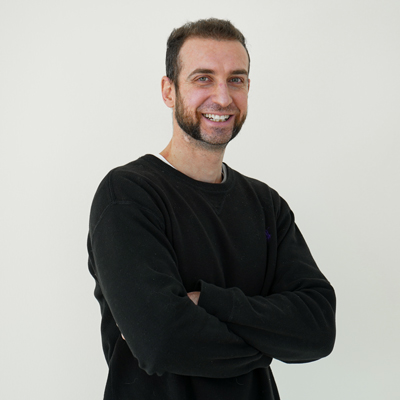
Dr. Maryam Ghahramani is a Senior Lecturer in AI & Robotics at the Faculty of Science & Technology, University of Canberra, Australia. She holds a BSc in Electrical Engineering from Shiraz University, Iran, and a PhD in Biometric Gait Analysis from the University of Wollongong, Australia. Biomedical Engineering Researcher Machine Learning Specialist Human Motion Analysis Expert Her research focuses on applying machine learning to human motion analysis for rehabilitation purposes, particularly in three key areas: Parkinson's Disease: Using fNIRS and machine learning for disease detection and motor function assessment Fall Prevention: Analyzing postural sway and risk of falls in older adults Spatial Disorientation: Studying balance in hypoxic aviation environments Recent publications demonstrate her work at the intersection of biomedical engineering, machine learning, and clinical rehabilitation. Current projects include: Young Onset Dementia Detection with 12-week Home-Based Exercise Programs Mild Hypoxia Analysis for Aviation Safety Balancing Mat Performance Evaluation
Professor Alfredo Franco-Obregón is a Research Associate Professor at the National University of Singapore (NUS), with multiple appointments across the Yong Loo Lin School of Medicine. He holds positions in the Department of Surgery and the Department of Physiology, and is affiliated with the Institute for Health Innovation & Technology, the Healthy Longevity Translational Research Programme, the NUS Centre for Cancer Research, and the Nanomedicine Translational Research Programme. He leads the Biolonic Currents Electromagnetic Pulsing Systems (BICEPS) Laboratory, which focuses on developing non-invasive electromagnetic technologies to enhance muscle function and systemic health, particularly for aging populations and those with mobility limitations. Dr. Franco-Obregón's research centers on understanding how biophysical forces, particularly mechanical and electromagnetic stimuli, translate into tissue regeneration and survival. His work specifically investigates the role of Transient Receptor Potential (TRP) channels, particularly TRPC1, in skeletal muscle development and how magnetic fields can activate mitochondrial respiration through a process he terms "Magnetic Mitohormesis." This research has significant implications for metabolic health, cancer therapy, and aging interventions. His laboratory has demonstrated that brief (10-minute) weekly exposure to low-energy pulsed electromagnetic fields (PEMFs) can enhance muscle development, improve metabolic efficiency, and even produce anticancer effects through the activation of muscle secretome responses. His recent publication record demonstrates a strong focus on translating these findings into clinical applications, with numerous randomized controlled trials examining the effects of PEMF therapy on conditions including knee osteoarthritis, Achilles tendinopathy, metabolic disorders, and breast cancer. His research bridges fundamental cellular mechanisms with practical clinical applications, showing how magnetic field exposure can serve as a non-invasive exercise mimetic for populations unable to engage in physical activity. 2020: Innovation of the Year Product Winner by the Ageing Asia World Ageing Festival (for QuantumTx) 2015: Wong Hock Boon Society Best Mentor Award (NUS) 2008: Goldenen Eule (The Golden Owl Excellence in Teaching Award) (ETH) 1990: Martin Luther King Mentorship Award (UCSF) Dr. Franco-Obregón is actively engaged in mentoring students and collaborating on international research projects. He has established the BICEPS Laboratory as a hub for interdisciplinary research, bringing together engineers, clinicians, and basic scientists. His work has led to the founding of QuantumTx Pte. Ltd., a NUS spin-off company developing magnetic therapeutic devices, and he is currently conducting human clinical trials in Singapore, China, Southeast Asia, and the US to evaluate the efficacy of his magnetic therapeutic platforms. The BICEPS Laboratory operates at the intersection of engineering and clinical medicine, with a mission to develop non-invasive technologies that enhance muscle function and bioenergetics. The lab's research has significant potential to transform clinical practice, particularly in preventative medicine and rehabilitation. Dr. Franco-Obregón is also working to establish international collaborations, including potential student exchange programs between ETH/UZH and NUS, to further advance this field of research.
Raul Fernandez Rojas is an Associate Professor in the Department of AI and Robotics at the University of Canberra. His research focuses on multimodal neurophysiological sensing, machine learning applications in healthcare, and pain assessment using technologies like fNIRS, EEG, and facial expression analysis. He leads projects integrating brain-body interactions in neurological disorders such as Parkinson's disease and dementia, and develops intelligent systems for driver distraction detection. Education: PhD (details unspecified) Research interests include cognitive workload analysis, sensor fusion for biomedical applications, and AI-driven diagnostics for mental and neurological conditions. His work spans clinical pain assessment, human-swarm interaction, and real-time monitoring systems. He has contributed to over 55 peer-reviewed publications and actively supervises PhD candidates in machine learning for neurophysiological applications. Current projects include a dementia detection initiative using machine learning and exercise interventions, funded from 2024–2026. He collaborates internationally on topics like head motion patterns for depression biomarkers and fNIRS-based pain assessment for non-verbal patients. Advising focuses on PhD projects involving neurophysiological sensors (EEG, fNIRS, etc.) and facial expression analysis for pain recognition. Grants include funding for multimodal signal fusion research and wearable sensor systems.
Alessandro Di Nuovo is a Professor in the Department of Computing and Mathematics at Sheffield Hallam University, within the College of Business, Technology and Engineering. He is a leading researcher in cognitive and developmental robotics, with a focus on human-robot interaction, assistive technologies, and neuromorphic computing. His work bridges AI, robotics, and healthcare, particularly in applications for autism therapy and active ageing. His research spans cognitive robotics , neuromorphic computing , assistive robotics , and human-robot interaction , with a strong emphasis on embodied cognition, numerical cognition in robots, and privacy-aware systems. He has pioneered the use of spiking neural networks and event-based vision for real-time robotic perception and learning. His work often integrates cloud computing and multimodal interfaces to enhance robotic services for elderly care and children with developmental disorders. The recent publications highlight a consistent trend in personalized, interactive learning systems , where robots learn from human feedback using reinforcement learning, natural language, and sleep-inspired consolidation. There is also a growing focus on privacy and cybersecurity in social robotics, reflecting ethical considerations in assistive technologies. Applications are strongly oriented toward healthcare , including stroke rehabilitation, ASD screening, and in-home monitoring for older adults. He has been involved in numerous collaborative projects, often as a principal investigator or senior researcher, working with institutions across Europe. His contributions to major conferences and journals underscore his leadership in the field of cognitive and developmental systems. Di Nuovo has supervised and collaborated with a wide range of students and researchers, including Simone Varrasi, Roberto Vagnetti, Muhammad Aitsam, and Daniela Conti. His work has been supported by grants from EPSRC and other UK research councils, particularly in the domain of robotics for healthcare and social good. He is actively involved in research groups focusing on assistive robotics , cognitive systems , and cybersecurity in healthcare robotics , contributing to both theoretical models and real-world implementations of socially intelligent robots.
Aly CHKEIR is an Associate Professor at the University of Technology of Troyes (UTT), holding the 'SilverTech' chair focused on technologies for healthy aging and elderly autonomy support. He earned his PhD in biomedical sciences from the University of Technology of Compiègne (UTC) in 2011, specializing in uterine electrical activity modeling. His research emphasizes biomedical signal processing, decision-making methodologies, and applications in frailty prevention among the elderly. Education: PhD in Biomedical Sciences, UTC, France (2011). Research interests include signal segmentation/classification, biomedical engineering, and solutions for aging populations. Notable projects include the SilverTech chair's holistic approach to aging technologies and the PiCADo initiative for in-home medical monitoring systems. Recent work focuses on AI-driven diagnostics (e.g., MRI segmentation, cough analysis), radar-based mobility assessment, and voice recognition for health monitoring. His contributions span sensor fusion, gait analysis, and non-invasive health tracking tools. His lab collaborations include Doppler radar systems for gait speed measurement, thermal imaging for health indicators, and AI-enhanced geriatric assessment tools. Projects like ARPEGE and PiCADo highlight his commitment to deploying innovative healthcare solutions for aging populations.
Sam Wu is a Senior Lecturer in Exercise Science at Swinburne University of Technology's School of Health Sciences, where he has been instrumental in developing the Exercise Science degree program. He also holds an adjunct Associate Professor position at Shanghai University of Medicine and Health Sciences, demonstrating international academic collaboration. Dr. Wu's research focuses on exercise physiology with practical applications for athletic performance, aging populations, and clinical conditions. His work spans compression garments for recovery, pacing strategies in cycling, hormonal responses to training interventions, subjective exercise responses, respiratory control mechanisms, and exercise interventions for health improvement across diverse populations. His research integrates biomechanical analysis with physiological measurements to develop evidence-based exercise protocols. Analysis of his recent publications reveals a strong emphasis on translational research connecting laboratory findings to practical applications. His work frequently examines biomechanical aspects of movement, physiological responses to exercise stressors, and innovative interventions for performance enhancement and health maintenance. A notable trend is his growing focus on the gut-muscle axis in aging populations and the role of extracellular vesicles in exercise adaptation. ECR SUPRA Award (2018) Dr. Wu actively supervises multiple PhD students and has secured substantial grant funding from industry partners including Lallemand Health Solutions, Cannvalate Pty Ltd, and BASF. His collaborative research network spans Australia and international institutions, with particular emphasis on translating research findings into practical applications for athletes, older adults, and clinical populations. He has developed web-based repository systems for muscle strength monitoring and investigated various nutritional and mechanical interventions for performance enhancement and recovery.
Dr. Bjørn Heine Strand is a researcher with contributions to geriatric studies, particularly focusing on mobility assessment and health impacts of arthritis and non-communicable diseases (NCDs) in older adults. He co-authored a study published in Clinical Interventions in Aging (2021) analyzing reference values for the Timed Up and Go test in community-dwelling elderly populations. Research Interests His work intersects geriatrics, functional mobility, and chronic disease management. Key areas include: Geriatric mobility assessment Arthritis-related health impacts Non-communicable disease epidemiology
Dr. Anne K Galgon is a Professor in the Department of Physical Therapy with expertise in vestibular rehabilitation and neurological disorders. She has held academic positions since 2001, previously at Neumann University and Temple University. Her research focuses on balance disorders, motor learning, and clinical management of neuromuscular conditions. Education: PhD in Movement Sciences, Drexel University (2009) MPT in Physical Therapy, Drexel University (formerly Hahnemann University) BA in Anthropology, University of Pennsylvania Research Interests: Dr. Galgon’s work centers on vestibular rehabilitation, BPPV management, and postural control. She emphasizes translating research into clinical practice and advancing education in physical therapy. Publications: Her recent work explores vestibular testing reliability, clinical decision-making in concussion, and walking program efficacy for dizziness. Themes include geriatric rehabilitation, diagnostic accuracy, and therapeutic interventions. Awards: 2018 Service Award, Academy of Neurologic Physical Therapy 2020 Service Award, Vestibular Rehabilitation Special Interest Group Grants & Advising: Secured grants for BPPV treatment research. Mentors students in evidence-based projects presented nationally. Integrates clinical practice across Philadelphia-area hospitals like Moss Rehabilitation. Labs & Affiliations: Active in clinical practice since 1987, with expertise at Magee Rehabilitation Hospital and Penn Medicine. Leadership roles in APTA’s Vestibular Special Interest Group.
Patrick Fischer, M.Sc., is a Researcher and Doctoral Student at the Department of Health Sciences, Technische Hochschule Mittelhessen (THM), with a focus on biomedical engineering, machine learning, and respiratory disease research. His work spans nocturnal symptom monitoring in COPD and asthma patients, mobile health technology development, and AI-driven medical diagnostics. Key research areas include Biomedical Engineering applications for respiratory monitoring Machine Learning techniques in disease detection Mobile Health Technologies for home-based care Computational Biology in DNA methylation analysis Recent publications highlight graph database applications in nutrition apps, distributed computing for CNS tumor classification, and deep learning for cough detection and plagiocephaly monitoring. All articles demonstrate interdisciplinary approaches combining clinical needs with computational methods. His teaching responsibilities include supervising final thesis and project work. Contact: patrick.fischer@ges.thm.de .
Lene Christensen serves as an Associate Professor in the Department of Rehabilitation Science and Health Technology at Oslo Metropolitan University's Faculty of Health Sciences. Based in Oslo (Pilestredet 44, Office V315), she specializes in musculoskeletal rehabilitation research and physiotherapy education, with contact details including email lene.christensen@oslomet.no and office phone +47 672 36 732. Her research focuses on pelvic girdle pain in pregnancy, employing biomechanical analysis of gait, functional mobility tests (Timed Up and Go, Stork test), and kinematics to compare symptomatic/asymptomatic pregnant and non-pregnant populations. Concurrently, she investigates peer-assisted learning (PAL) in physiotherapy education, examining its impact on student development, professional identity formation, and leadership skills through qualitative methodologies. Recent publications (2023-2024) reveal trends in educational research emphasizing PAL's role in fostering clinical reasoning and professional growth, while her biomechanical studies (2019-2020) establish evidence-based movement assessment protocols for pregnancy-related musculoskeletal disorders. This dual focus bridges clinical practice with pedagogical innovation in rehabilitation science. No scientific awards were documented in available sources. Information regarding student advising, grant funding, or specific research grants was not specified in the provided materials. Christensen collaborates within OsloMet's Physiotherapy Research groups, working with interdisciplinary teams including Nina Køpke Vøllestad, Britt Stuge, and Hilde Stendal Robinson. Her research integrates obstetrics, biomechanics, and rehabilitation science to develop evidence-based interventions for musculoskeletal conditions, particularly during pregnancy.
Inga Kröger is a researcher at the Institute of Biomechanics at Berufsgenossenschaftliche Unfallklinik Murnau. Her work focuses on movement analysis, clinical decision-making, and rehabilitation engineering, particularly in musculoskeletal trauma and spinal cord injuries. Research Interests: Calcaneus fracture recovery, ankle biomechanics, heel lifts, walking ability, and spinal cord injury rehabilitation. Publications: Over 40 works spanning biomechanics, gait analysis in transfemoral amputees, and postural stability metrics. Activities: Presented lectures on functional outcomes after tibial shaft fractures and gait analysis in spinal cord injuries. Key Trends: Recent articles emphasize Achilles subtendon dynamics, heel-rise mechanics, and center of pressure velocity during fracture healing. Collaborative work with researchers like Augat, Brand, and Klöpfer-Krämer dominates her publications.
Pernille Botolfsen is an Assistant Professor at the Department of Rehabilitation Science and Health Technology within the Faculty of Health Sciences at Oslo Metropolitan University (OsloMet). She conducts research focused on physiotherapy interventions for older adults with mobility impairments. Current affiliation: OsloMet (permanent staff) Contact: pernille.botolfsen@oslomet.no Office location: Pilestredet 44, Oslo (V322) Research Focus: Botolfsen specializes in balance assessment and mobility evaluation for elderly populations. Her work emphasizes the reliability and validity of clinical tools like the BESTest, mini-BESTest, and Timed Up-and-Go (TUG) test in Norwegian settings. She has contributed extensively to standardizing fall risk assessment instruments through cross-cultural adaptations. Publications: Her research portfolio includes validation studies of mobility assessment tools, with a focus on: Balance Evaluation Systems , Gait Analysis , Clinical Mobility Metrics , and Falls Prevention . All publications center around physical therapy applications for impaired mobility in aging populations.
Hanna Johansson is a Lecturer and Postdoctoral Researcher at the Department of Neurobiology, Care Sciences and Society at Karolinska Institutet. She is also affiliated with Karolinska University Hospital and Stockholm Sjukhem, and is a key member of the Balance, gait, exercise and physical activity in neurological diseases – Franzén Group. As a registered physiotherapist with a PhD in medical science, Johansson bridges clinical practice and academic research in neurological rehabilitation. Her educational background includes a PhD in medical science from Karolinska Institutet (2020), where she defended her thesis "Balance and Gait in Parkinson's disease: from Perceptions to Performance." She also holds dual bachelor's degrees from Karolinska Institutet (2006) in Medical Science and Physiotherapy, establishing her foundation in both clinical practice and scientific research. Johansson's research primarily focuses on balance, gait, and exercise interventions for neurological diseases, with particular emphasis on Parkinson's disease. She is a principal investigator in the STEPS (Support for home Training using Ehealth in Parkinson's disease) trial, a collaborative project between Karolinska Institutet and Stockholm Sjukhem that evaluates eHealth-delivered home training for Parkinson's patients. Her work also explores the integration of wearable sensors for optimizing clinical assessment of Parkinson's disease in primary care settings. The Franzén Group's research philosophy, which she embodies, emphasizes translational work spanning from neuronal mechanisms to practical clinical interventions in neurological and geriatric rehabilitation. Analysis of her recent publications reveals a clear progression in her research focus from fundamental understanding of balance perception and gait disorders toward developing and validating technology-enhanced rehabilitation solutions. Her 2025-2024 work shows increased emphasis on dual-task performance, home-based interventions, and the use of advanced technologies like fNIRS for measuring brain activity during movement. Many studies employ coordinated analyses across multiple centers, reflecting her commitment to robust, generalizable findings. The consistent theme across her publications is improving functional outcomes for Parkinson's patients through evidence-based, accessible interventions. Johansson currently holds a significant grant from the Swedish Research Council for Health Working Life and Welfare (2023-2026) for the project "Promoting active ageing and participation using technology among older adults and people with Parkinson´s disease." While specific advisees aren't listed in the available information, her 2025 publication on the Global Bridges program demonstrates her active engagement in mentoring early-career researchers in healthcare sciences. Her grant portfolio reflects a strategic focus on technology-enabled solutions that address real-world challenges in neurological rehabilitation. As a core member of the Franzén Group, Johansson contributes to a dynamic research environment dedicated to understanding and improving balance, gait, and physical activity in neurological conditions. The group's work spans basic neuroscience, clinical research, and implementation science, with a strong emphasis on translating findings into practical rehabilitation approaches. Her leadership in the STEPS trial exemplifies her commitment to developing evidence-based, patient-centered solutions that can be implemented in real-world healthcare settings, ultimately improving quality of life for people with Parkinson's disease.
Vieri Del Panta serves as an Adjunct Professor at the European University of Rome and LUISS G. Carli University, teaching data management, statistical analysis, and computer science applications. He founded BeE Dynamic Statistics srl in 2019 for Industry 4.0 data solutions and is a member of the Robust Statistics Academy Research Center at the University of Parma. Education PhD in Applied Statistics (2016), specializing in robust forward search algorithms for generalized linear models Research Interests His primary work focuses on robust statistics, outlier detection diagnostics, and forward search procedures in generalized linear models. He extends this to longitudinal data analysis, performance monitoring systems, and strategic planning indicators. Applied research centers on biostatistics using the InCHIANTI aging study, examining physical/cognitive decline, biomarker relationships (miRNAs, klotho, hemoglobin), and polypharmacy effects through customized statistical frameworks. Publication Trends His 2015-2018 publications predominantly analyze InCHIANTI study data, revealing sex-specific physical decline trajectories, cognitive-motor performance links, and biomarker-health outcome correlations. Methodological innovations include latent-class beta inflated models for educational assessment and robust longitudinal techniques for gait speed and frailty prediction, demonstrating consistent application of statistical diagnostics to gerontological challenges. Collaborations and Teams Del Panta actively collaborates with the InCHIANTI study consortium and contributes to the University of Parma's Robust Statistics Academy Research Center. His freelance work since 2013 supports governance units through data processing for quality assurance, strategic planning, and national/international ranking evaluations using real-time analytical solutions.
Dr. Patrick Monaghan is a Post-Doctoral Research Fellow in the Department of Health Care Sciences at Wayne State University's College of Health Professions, where he conducts research in the Neuroimaging and Neurorehabilitation Lab. He also participates as a mentee in the Michigan Alzheimer's Disease Research Center's Research Education Component. PhD in Kinesiology (Biomechanics and Motor Control), Auburn University (2019-2023) MS in Health and Exercise Science (Neural Control of Movement), Colorado State University (2017-2019) BS in Kinesiology (Clinical Exercise Physiology), Mississippi State University (2012-2016) Dr. Monaghan specializes in the neural control of movement, with particular focus on mobility disability mechanisms in aging and neurological conditions. His research employs backward walking interventions, advanced neuroimaging, and machine learning to understand mobility impairment holistically. He investigates how neurodegenerative processes interact with aging trajectories to identify functional decline pathways and develop targeted interventions. His work spans multiple sclerosis, Alzheimer's disease, essential tremor, and typical aging populations, emphasizing sensitive measures for predicting mobility and cognitive impairments. Analysis of his publication record (2018-2025) reveals a consistent focus on mobility assessment in neurological populations, particularly multiple sclerosis. His recent work shows increasing integration of machine learning with traditional biomechanical assessments, emphasizing backward walking as a novel intervention and assessment tool. The research demonstrates strong interdisciplinary collaboration across rehabilitation science, neuroscience, and biomedical engineering, with growing emphasis on real-world mobility prediction and cognitive-motor interactions. Dr. Monaghan's research is supported through the Neuroimaging and Neurorehabilitation Lab at Wayne State University and the Michigan Alzheimer's Disease Research Center. His work involves vulnerable populations experiencing neurological pathologies that differentially impact neural, cognitive, and motor components, with particular attention to developing sensitive clinical mobility assessments as risk biomarkers for Alzheimer's disease and related dementias. His laboratory work focuses on the Neuroimaging and Neurorehabilitation Lab, where he employs innovative approaches including backward walking interventions, advanced neuroimaging techniques, and machine learning to understand mobility impairment holistically. Current projects include the TRAIN-MS trial comparing backward walking to forward walking training for balance improvement in multiple sclerosis patients.