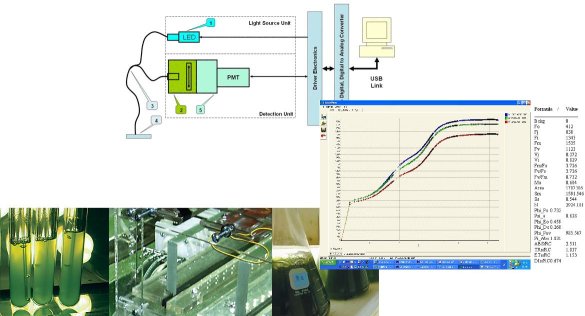
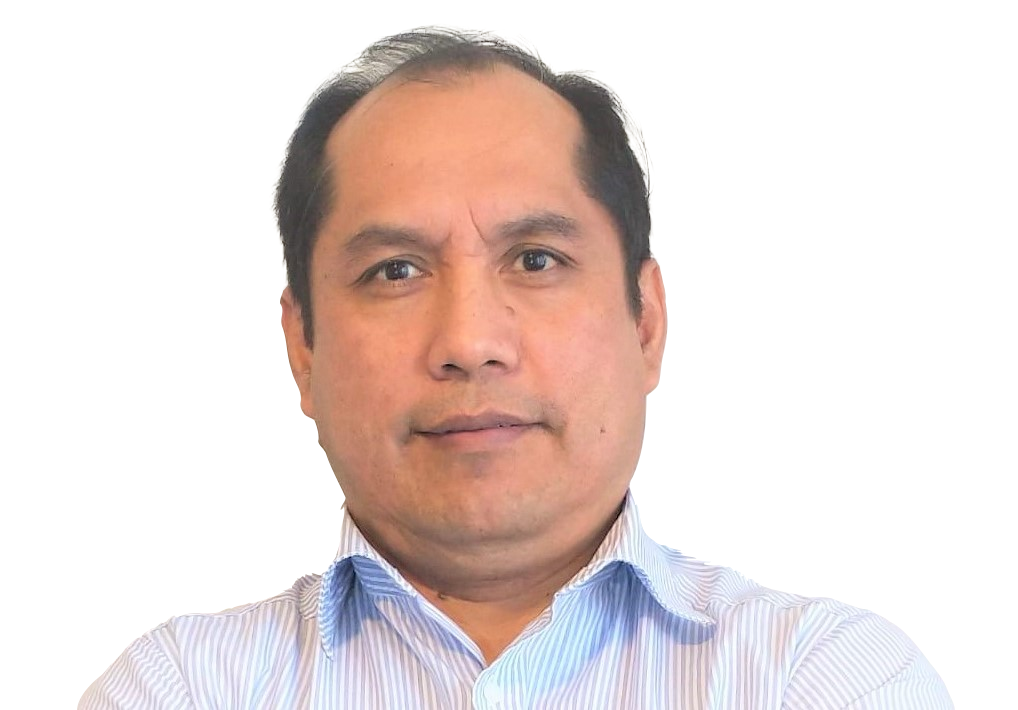
David Safranek is an Assistant Professor at the Faculty of Informatics , Masaryk University, where he contributes to systems biology research and education. His work bridges computational modeling, bioinformatics, and experimental data analysis. Affiliations: Faculty of Informatics, Masaryk University; Systems Biology Laboratory (Sybila); CyanoTeam; E-photo project. His research interests include: Computational modeling of cyanobacterial cells and photosynthesis in silico. Formal methods in systems biology, such as discrete timed automata and ODE model abstractions. Metabolomics, photobiology, and chlorophyll fluorescence analysis. Development of tools like BioDiVinE and BioMS for biochemical model specification. He supervises both PhD and master’s students , including Sven Drazan, Jana Fabrikova, and Matej Klement, and has guided numerous bachelor’s and master’s theses. His teaching focuses on systems biology, computational methods, and modeling, with courses like PB050 and PV225. David leads the Systems Biology Laboratory (Sybila) and has been involved in projects such as ParaDiSe, EC-MOAN, and Liberouter. His technical contributions include firewall design, network address translation, and VRML-based virtual environments for education.
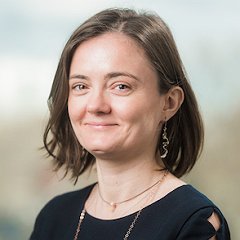
Dr. Leanne Groeneveld serves as Associate Professor of Theatre Studies at the University of Regina, where she researches medieval and early modern religious performance traditions. Her scholarship centers on the York Mystery Plays, Oberammergau Passion Play, and medieval puppetry, examining intersections of theology, material culture, and spectatorship in historical contexts. Her academic background includes: BA Hons, University of Alberta PhD, University of Alberta Dr. Groeneveld investigates how religious narratives were staged through material objects like the Boxley Rood of Grace, analyzing violence-beauty dynamics in biblical cycles and women's experiences as spectators at Passion Plays. Her work combines performance theory with material culture studies to explore medieval communities' embodied engagement with theological concepts. Over two decades, her publications reveal sustained focus on English medieval drama with increasing specialization in York Cycle pageants. Recent work examines previously overlooked elements like the York Vintners' pageant, while maintaining parallel research on Oberammergau's historical reception. Her scholarship appears consistently in leading journals including Early Theatre and Nineteenth Century Theatre and Film . As an active international scholar, Dr. Groeneveld presents at major conferences across North America and Europe. Her productions experience (e.g., N-Town Parliament of Heaven) informs teaching that likely integrates historical research with performance practice. While specific grant details aren't public, her continuous output suggests robust research support for mentoring graduate students in theatre history and medieval performance studies.
Professor Branislav Rovan is a faculty member at the Department of Theoretical Computer Science within the Faculty of Mathematics, Physics and Informatics at Comenius University in Bratislava, Slovakia. He holds the academic rank of Professor and maintains an active research program in theoretical computer science. His research interests include: Theoretical Computer Science Formal Languages Automata Theory Computational Complexity Parallel Computing Theory Information Theory Professor Rovan's recent publications (2014-2023) demonstrate a consistent focus on theoretical aspects of formal languages and automata. His work examines topics such as unary regular languages, language decomposability, finite approximations of languages, and weighted automata models. These publications appear in reputable journals including Information and Computation, International Journal of Foundations of Computer Science, and Information Processing Letters. Professor Rovan is actively involved in teaching and student supervision: Teaches Formal Languages and Automata courses (both parts 1 and 2) Teaches Theory of Parallel Computing Supervises annual projects and master's theses Teaches Informatics and Society and Selected Topics in Language Theory Professor Rovan can be contacted at his office M 259, by telephone at 02/602 95 102 or 02/654 26 635, or by email at rovan@dcs.fmph.uniba.sk. His personal webpage is available at http://www.dcs.fmph.uniba.sk/index.php/BranislavRovan.
Dr. Fenghui Yao is a Professor of Computer Science and Director of Graduate Studies at Tennessee State University's Department of Computer Science. His academic journey includes positions at Kyushu Institute of Technology, University of East Asia, and Shimane University prior to joining TSU in 2004. Education background: Ph.D. in Computer Engineering, Kyushu Institute of Technology, Japan (1992) M.E. in Computer Engineering, Kyushu Institute of Technology, Japan (1988) B.A. in Electronic Engineering, Dalian Maritime University, China (1984) Research focuses on interdisciplinary applications in: Image Processing : Developing algorithms for real-time target detection and calligraphy analysis Robotics : Designing systems for infrastructure inspection and cultural preservation Parallel Architecture : Exploring quantum-dot cellular automata for nanosensor data processing Publications demonstrate consistent focus on hardware-software integration, with recent work in nanotechnology (2014) complementing earlier robotics research (2003-2010). His 2004 papers on robotic calligraphy represent innovative human-robot interaction studies. Grant involvement includes multi-year sensor systems research as Co-PI: Cross Layers Decision Making and Fusion Models for Automated Sensor Exploitation ($334,678; 2013-2018)
Thomas W. Reps is the J. Barkley Rosser Professor & Rajiv and Ritu Batra Chair Emeritus at the University of Wisconsin-Madison , where he has been a faculty member since 1985. He is also President of GrammaTech, Inc., and a co-founder of the company. Education: Ph.D. in Computer Science from Cornell University (1982), winner of the 1983 ACM Doctoral Dissertation Award. Reps’s research spans program analysis , abstract interpretation , model checking , and computer security . His recent work focuses on quantum computing verification , probabilistic program analysis , and symbolic methods for static analysis . His publications (over 225) include foundational contributions to program slicing (1988 paper with Horwitz and Binkley, cited >1,780 times), machine-code analysis (ETAPS Best-Paper Awards in 2004 and 2008), and programming environments (co-author of The Synthesizer Generator ). Key awards include the ACM SIGPLAN Programming Languages Achievement Award (2017) , Guggenheim and Packard Fellowships , and ACM Fellow (2005) . Students: Mentored award-winning graduates like Akash Lal (SIGPLAN Outstanding Dissertation) and Venkatesh Srinivasan (Outstanding Graduate Student Research Award).
Sidi Mohamed Beillahi is a Lecturer in the Department of Computer Science at the University of Toronto's Faculty of Arts and Science. He teaches courses including Principles of Programming Languages (CSC324H1S) and Algorithms and Data Structures (ECE345H1F). Previously, he served as a Teaching Assistant at both University of Paris and Concordia University for courses ranging from Automata Theory to Hardware Functional Verification. Dr. Beillahi's research focuses on developing formal verification and programming languages techniques to ensure the correctness of software systems, particularly distributed systems, concurrent programs, blockchain, and smart contracts. His work bridges theoretical computer science with practical security applications in decentralized finance. His publication record shows a clear progression from quantum circuit verification during his Master's to blockchain and smart contract security in his doctoral and postdoctoral work. Recent publications demonstrate expertise in authenticated data structures for blockchain storage, flash loan attack analysis, and formal verification of decentralized applications. Scientific Awards: ACM SIGSOFT Distinguished Paper Award (ICSE '24) ICBC Distinguished Paper Award (ICBC '22) Dr. Beillahi has advised multiple research projects in blockchain security and verification, often collaborating with Professor Fan Long and Professor Andreas Veneris at the University of Toronto. His research has been supported by prestigious fellowships including an NSERC Postdoctoral Fellowship and a Mitacs Accelerate Fellowship.
Karoliina Lehtinen is a CNRS researcher (chargée de recherche) at LIS, Aix-Marseille University, where she conducts research in theoretical computer science. Her work focuses on the intersection of logic, games, and automata theory, with applications in verification and synthesis problems. Dr. Lehtinen completed her doctoral studies at the University of Edinburgh under Julian Bradfield's supervision, graduating in July 2017. Prior to that, she earned an M.A. and M.Phil. from the University of Cambridge, where she was introduced to logic and games by Bjarki Holm and Anuj Dawar. Her academic journey also included a half-year internship at Google in London and postdoctoral work in Kiel, Germany and Herzeliya, Israel. Her research primarily centers on history-determinism in automata, exploring how mild forms of nondeterminism can provide expressive power while maintaining good algorithmic properties. She investigates quantitative automata, hierarchies of explorability, and decision problems for history-determinism across various automata models. Her work has significant implications for synthesis problems and game-solving applications. Dr. Lehtinen has received prestigious fellowships including a Marie Skłodowska-Curie Fellowship during her time in Liverpool and a fellowship at the Simons Institute for the Theoretical Foundations of Computer Systems program in January 2021. She currently supervises PhD students Olivier Idir and Vasiliki Kyriakou (both since 2023) and will host postdoc Aditya Prakash starting in 2025. As principal investigator of the QuaSy project and co-PI of Project MoVeMnt, she leads significant research initiatives in her field from her office in building TPR2, Campus Luminy, Marseille.
Laure Petrucci is a Professor at Sorbonne Paris Nord University, affiliated with the Networks and Telecommunications Department and the LoVe (Logic and Verification) team at LIPN (Paris Nord Computer Science Laboratory, CNRS UMR 7030). She also serves as Deputy Scientific Director of CNRS for Normandy. Her research specializes in formal verification of concurrent systems using Petri nets and parameterized models, with a focus on combating state-space explosion through distributed algorithms. Her work spans formal methods , distributed systems , and model checking , emphasizing practical applications in network verification and synthesis. Recent publications explore controller synthesis for timed games, probabilistic model checking, and SMT-based analysis of Petri nets, reflecting a consistent focus on scalable verification techniques. She teaches undergraduate and master's courses in networks, databases, and programming at IUT Villetaneuse (France) and the University of Science and Technology of Hanoi (Vietnam).
Sean Kauffman is an Assistant Professor in the Department of Electrical and Computer Engineering at Queen's University, Faculty of Engineering and Applied Science. He holds his office in Walter Light Hall, Room 611, and can be reached at sean.k@queensu.ca or by phone at 613-533-6000 ext. 77360. Dr. Kauffman earned his Ph.D. in Electrical and Computer Engineering from the University of Waterloo before completing a two-year postdoctoral position at Aalborg University in Denmark. Notably, he returned to academia after accumulating over a decade of industry experience as a software engineer, with his final industry role being Principal Software Engineer at Oracle. His research expertise spans several critical areas in computer science and software engineering, with a particular focus on safety-critical software systems. His work significantly contributes to the fields of Formal Methods, Runtime Verification, Anomaly Detection, and Explainable AI. Dr. Kauffman has established productive research collaborations with prestigious organizations including NASA's Jet Propulsion Laboratory, the Embedded Systems Institute, QNX, and Pratt and Whitney Canada. Dr. Kauffman's research output demonstrates a consistent focus on event stream analysis, formal verification techniques, and the development of practical tools for system monitoring. His most notable contribution is the nfer language and toolset, which has become influential in the runtime verification community for its ability to abstract event streams into meaningful temporal hierarchies. His publications reveal a progression from theoretical foundations to practical implementations, with applications spanning spacecraft telemetry, autonomous vehicles, and embedded systems. Among his scientific contributions, Dr. Kauffman has received recognition for his work on the complexity analysis of nfer evaluation, developing methods for annotating control-flow graphs for formalized test coverage criteria, and creating frameworks for anomaly detection in embedded systems. His research has been published in top-tier venues including Science of Computer Programming, International Journal on Software Tools for Technology Transfer, and proceedings of major conferences like Runtime Verification and NASA Formal Methods. As an educator, Dr. Kauffman employs active learning techniques, productive failure approaches, and peer instruction to foster student engagement. His industry background informs his teaching approach, providing students with practical insights into real-world software engineering challenges, particularly in safety-critical domains. Dr. Kauffman leads the CritLab research group at Queen's University, which focuses on critical systems research. The lab develops tools and techniques for analyzing and verifying systems where failures could have severe consequences, with applications in aerospace, automotive, and other safety-critical domains. His work on the nfer language has spawned related projects including nvis for visualizing temporal interval hierarchies.
Robert Clarisó is a Lecturer at Universitat Oberta de Catalunya (UOC) in the IT, Multimedia and Telecommunication Department. He has a strong background in Computer Science with a BSc (2000) and PhD (2005) from UPC-Barcelona Tech. His academic career includes positions as a part-time associate professor at UPC-Barcelona Tech and at Universitat Autònoma de Barcelona. Dr. Clarisó's educational background includes: BSc in Computer Science from UPC-Barcelona Tech (2000), graduated as the top of his class with a Special mention in the Spanish National University Degree Awards PhD in Computer Science from UPC-Barcelona Tech (2005), thesis titled "Abstract Interpretation Techniques for the Verification of Timed Systems" under Dr. Jordi Cortadella Fortuny His research primarily focuses on Formal Methods and Software Engineering, with recent expansion into AI-related topics. Dr. Clarisó has made significant contributions to Model-Driven Engineering, particularly in the area of Object Constraint Language (OCL). His recent work has shifted toward examining bias and fairness in Large Language Models and exploring the application of Generative AI in software engineering education, reflecting a strategic pivot to address contemporary challenges in AI ethics and deployment. Dr. Clarisó has held several leadership positions including Coordinator of the Research Group on Software Engineering at UOC (2008-2015), Academic Director of the Official Master in Computing Engineering (2011-2019), and Academic Director of the Bachelor's Degree in Techniques for Software Development (2020-2023). He currently leads the university's working group on "AI in education" and is a principal investigator of the SOM Research Lab. His notable recognition includes a Special mention in the Spanish National University Degree Awards. Dr. Clarisó has served on program committees for major conferences including MODELS and ASE across multiple years, demonstrating his standing in the academic community. As an educator, Dr. Clarisó has taught courses on automata theory, compilers, algorithms and data structures, graph theory, and software development. He has coordinated undergraduate theses and led postgraduate programs, showing his commitment to academic mentorship and program development. Dr. Clarisó is actively involved in research teams, currently leading the SOM Research Lab which focuses on software engineering research. His recent work has centered on the intersection of formal methods, model-driven engineering, and AI technologies, particularly examining ethical implications and educational applications.
Antonio Filieri is a Senior Applied Scientist at Amazon Web Services (AWS) and holds a Visiting Associate Professor position at the Department of Computing, Imperial College London. Previously, he was a tenured Associate Professor at Imperial College London (2022-2024) and Assistant Professor (2016-2022), and served as Assistant Professor at the University of Stuttgart between 2013 and 2015. His academic career spans over a decade with significant contributions to software engineering research. Dr. Filieri's research focuses on formal mathematical methods for software design, verification, self-adaptation, and security. His primary research areas include static analysis, privacy, and automated test generation for security; exact and approximate methods for probabilistic program analysis; control theory for adaptive software; quantitative verification and model checking; and runtime-efficient and incremental verification. His work bridges theoretical foundations with practical applications in industry settings, particularly in cloud computing and security domains. His recent publications demonstrate a strong focus on probabilistic methods for software analysis, security testing, and performance modeling. The research trends show increasing integration of formal methods with machine learning techniques, particularly in test oracle generation and neural network analysis. There's also a clear emphasis on scalability and practical applicability of verification techniques to real-world systems like serverless computing and microservices architectures. Dr. Filieri has received numerous prestigious awards for his contributions: Best Student Paper Award (2025) for 'Robust Probabilistic Model Checking with Continuous Reward Domains' ACM Distinguished Paper Award (2023) for 'Sibyl: Improving Software Engineering Tools with SMT Selection' Best Paper Award (2022) for 'Enhancing Performance Modeling of Serverless Functions via Static Analysis' Best Artifact Award (2017) for 'Self-adaptive video encoder: comparison of multiple adaptation strategies made simple' Most Influential Paper Award (awarded at SEAMS 2025) for 'Software Engineering Meets Control Theory' ACM SigSoft Distinguished Paper Award (2011) for 'Run-time Efficient Probabilistic Model Checking' Dr. Filieri has advised several PhD students including Donato Clun (2024), Runan Wang (2024), and Xiaotong Ji (expected 2025). His advising focuses on probabilistic program analysis, automated testing, and security verification. His research has been supported by significant grants from both academic and industry sources, enabling collaborations across multiple institutions and contributing to advancements in software engineering practices. While specific lab information isn't prominently featured in the provided materials, Dr. Filieri's work suggests strong connections with research groups focused on formal methods, software verification, and adaptive systems at both Imperial College London and AWS. His research often involves interdisciplinary collaboration between theoretical computer science and practical software engineering challenges.
Professor Zenon Ignaszak is a distinguished faculty member at Poznań University of Technology, working within the Faculty of Mechanical Engineering and the Institute of Materials Technology. With a career spanning over four decades since his doctoral dissertation in 1979, he has established himself as a leading expert in foundry engineering and casting technology. His research interests focus on computer simulation of casting processes, virtual prototyping in foundry applications, thermophysical properties of molding materials, and quality control in metal casting production. Professor Ignaszak has made significant contributions to understanding microstructure formation in aluminum alloys, graphite expansion phenomena in ductile iron, and moisture-related phenomena in sand molds. His publication record includes 59 journal articles, 28 book chapters, and 2 scientific monographs, with active research continuing through 2020. His most recent work examines database validation for jewelry casting design, cause-effect analysis for quality prediction, and open defect atlases for cast iron analysis. Professor Ignaszak has supervised four doctoral dissertations and collaborated extensively with researchers including Robert Sika, Jakub Hajkowski, Paweł Popielarski, and Piotr Mikołajczak. His work bridges theoretical modeling with practical industrial applications in the foundry sector. He has contributed to the field through two patented inventions: removable casting cores and systems for measuring mold cavity filling time/speed, demonstrating his commitment to practical innovation alongside theoretical research.
Dr. Eusebio Ingol Blanco is an Assistant Professor in the Department of Civil Engineering at New Mexico State University's College of Engineering. He joined NMSU in 2024 after serving as a Professor in the Department of Water Resources at the National Agrarian University La Molina in Lima, Peru from 2019-2023. Dr. Ingol Blanco has extensive international experience in water resources engineering, with previous appointments at Pontifical Catholic University of Peru, San Ignacio de Loyola University, and the University of Texas at Austin. His educational background includes: Ph.D. in Civil Engineering (Water Resources Engineering), The University of Texas at Austin, 2011 M.S. in Hydrosciences, Colegio de Postgraduados, Mexico, 2003 B.S. in Agricultural Engineering, Pedro Ruiz Gallo National University, Peru, 1996 (First-Place Honors) Dr. Ingol Blanco's research focuses on water resources engineering with particular expertise in hydrological modeling, climate change impacts, groundwater systems, flood hazard analysis, and the application of artificial intelligence to water resources problems. His work often integrates remote sensing data and advanced computational methods to address challenges in arid and semi-arid regions, particularly in South America. He has published extensively on topics including groundwater management in the Atacama Desert, climate change impacts on Andean watersheds, and the development of machine learning approaches for hydrological prediction. Dr. Ingol Blanco has received recognition as a Former Fellow of the Ford Foundation International Fellowships Program and is an Associate Member of the American Society of Civil Engineering (ASCE) and the Environmental & Water Resources Institute (EWRI). He is also a Member of the Peruvian Association of Hydraulic Engineering and Environmental (APIHA). As an educator, Dr. Ingol Blanco teaches courses in water resources systems analysis, groundwater hydrology, and irrigation engineering. He has extensive teaching experience from his time at multiple Peruvian universities, where he taught courses in surface hydrology, hydraulic models, fluid mechanics, and water resources systems analysis at both undergraduate and graduate levels. Dr. Ingol Blanco leads the IngWater research team, which focuses on developing innovative approaches to water resources management through the integration of hydrological modeling, remote sensing, and artificial intelligence.
Alexandra Silva is a Professor of Computer Science in the Department of Computer Science at Cornell University's College of Engineering. She joined Cornell as faculty in 2021 after previously serving as a Royal Society Wolfson Fellow and Professor of Algebra, Semantics, and Computation at University College London. Her research spans programming languages, formal verification, and theoretical computer science, with particular focus on Kleene Algebra with Tests (KAT), probabilistic programming, and automata theory. She has held numerous leadership roles in major programming languages conferences including POPL, PLDI, and ICFP. Dr. Silva completed her PhD at Centrum Wiskunde & Informatica (CWI) in Amsterdam under the supervision of Jan Rutten and Marcello Bonsangue, with her thesis entitled "Kleene coalgebra" defended in December 2010. Prior to her PhD, she was an undergraduate student at University of Minho in Portugal, where she completed a 5-year Mathematics and Computer Science degree in May 2006. Her research focuses on the modular development of specification languages and algorithms for models of computations, often from the unifying perspective offered by coalgebra. She has made significant contributions to Kleene Algebra with Tests, probabilistic programming semantics, network verification, and automata learning. Her work bridges theoretical foundations with practical verification tools, particularly in the domain of Software-Defined Networking where her NetKAT framework has gained significant attention. Analysis of her recent publications reveals a strong trend toward unifying frameworks for program verification, particularly through her development of Outcome Logic which provides foundations for both correctness and incorrectness reasoning. Her work increasingly integrates probabilistic and concurrent aspects of programming languages, with applications to network verification and security. The NetKAT ecosystem remains a central theme, with extensions to infinite state verification, symbolic execution, and learning-based approaches. Distinguished paper award for Guarded Kleene algebra with tests: verification of uninterpreted programs in nearly linear time (POPL 2020) Dr. Silva advises a large research group with numerous PhD students, postdocs, and undergraduate researchers. Her group has produced significant work in programming languages theory, verification, and applications to networking. She has secured substantial research funding through various grants that support her work on formal methods for network verification and probabilistic programming. Her mentoring approach emphasizes both theoretical depth and practical impact, with many of her students moving to prestigious academic and industry positions. Her research group, spanning both Cornell University and University College London, focuses on developing theoretical foundations for programming languages with practical applications in network verification, probabilistic systems, and program analysis. The group maintains active collaborations with researchers at CWI, University of Oxford, and other leading institutions in programming languages and formal methods.
Professor Jörg Raisch is a faculty member at the Department of Control Systems within the Institute for Energy and Automation Technology at Technical University of Berlin. He serves as a Participating Scientist in the Cluster of Excellence Science of Intelligence (EXC 2002), focusing on interdisciplinary AI and robotics research. His research spans critical areas of control engineering: Distributed coordination of multi-layer networked systems Hybrid and hierarchical control architectures Discrete-event systems for industrial automation Process control applications in chemical engineering (e.g., enantiomer separation via crystallization) Professor Raisch leads multiple DFG-funded initiatives including Priority Programs on distributed actor coordination and multi-agent consensus control. His current work in the Science of Intelligence cluster explores foundational AI principles through a control-theoretic lens, building on completed projects in finite automata approximation and time-weighted discrete-event systems.