Prof. Wolf Gero Schmidt is a Full Professor (W3) of Theoretical Physics at the University of Paderborn, serving as Dean of the Faculty of Natural Sciences and Head of Theoretical Materials Physics. He leads the Center for Optoelectronics and Photonics (CeOPP) and is a member of the Paderborn Center for Parallel Computing (PC²). His research focuses on energy materials for photoelectrolysis/photovoltaics, photonic materials, and solid-state qubit systems. Key projects include optimizing triplet exciton transfer at organic-inorganic interfaces and studying lithium niobate's polaron signatures. Notable awards include the 2007 Paderborn University Research Award and the 2003 Outstanding Habilitation Award from Friedrich-Schiller-Universität Jena. Education highlights include a PhD in Physics (1997, Jena) and habilitation (2002). He held roles at Massey University (Assoc. Prof, 2005) and North Carolina State University (Adjunct Assistant Prof, 2001). His >150 publications span topics like silicon dangling bonds, quantum materials, and photocatalytic interfaces. Current teaching includes 'Theoretische Physik A' and 'Aktuelle Fragen der Materialphysik'. Awards: Research Award (2007), Outstanding Habilitation (2003), Dissertation Award (1998) Grants: TRR 142 projects on nonlinear photonics, EU collaborations Labs/Teams: Theoretical Materials Physics Group, CeOPP, PC²
Klaus Boldt is a Professor of Photonic Nanomaterials at the Department of Physical Chemistry, Institute of Chemistry, University of Rostock, where he leads a research group focused on advanced nanomaterials synthesis and characterization. He holds a W2 university professorship and moved his group to Rostock in October 2022 after leading a research group at the University of Konstanz. Doctorate (Dr. rer. nat.), University of Hamburg (2011) Postdoctoral Research, University of Melbourne (2012–2014) Postdoctoral Research, TU Dresden (2014–2015) Research Group Leader, University of Konstanz (2015–2022) Professor for Photonic Nanomaterials, University of Rostock (2022–present) His research spans the rational synthesis of complex nanostructures , charge carrier dynamics , excitonics , colloidal semiconductors , and heterostructures . He employs advanced techniques such as time-resolved spectroscopy and transmission electron microscopy to study nanomaterials. His work has significant implications for optoelectronics, photocatalysis, and nanophotonics. He also develops educational software, notably Insensitive , a tool for simulating NMR experiments for teaching purposes. The recent publications reflect a strong focus on semiconductor nanocrystals, core/shell structures, metal-semiconductor hybrids, and advanced spectroscopic characterization. Trends show a progression from synthesis and structural analysis toward functional studies of exciton dynamics and practical applications in energy and catalysis. The 2023 paper on NMR simulation also highlights his commitment to science education and digital tools. Dr. Boldt has received numerous recognitions, including: Feodor Lynen Fellowship (Alexander von Humboldt Foundation, 2011) Liebig Scholarship (Chemical Industry Fund, 2014) Marie Curie Research Fellow (Zukunftskolleg Konstanz, 2016) Heisenberg Fellow (German Research Foundation, 2021) He actively advises graduate students and has successfully supervised doctoral candidates such as Dr. Danja Fischli. His group has secured competitive funding, including a recent DFG grant worth €485,000 for a pump-probe spectrometer to study transient absorption and stimulated Raman scattering. He collaborates with institutions like DESY and Montan-Universität Leoben. His lab, the Photonic Nanomaterials group, continues to expand with new PhD and master’s students working on semiconductor-metal hybrids, I-III-VI₂ nanoparticles, and photocatalysis. The research group operates state-of-the-art facilities and engages in beamtime experiments at major research infrastructures. They maintain an open-science approach, with software like Insensitive available on GitHub. The team fosters interdisciplinary research at the intersection of chemistry, physics, and materials science.
Margarida M. Barroso is a Professor in the Department of Molecular and Cellular Physiology at Albany Medical College. Her research focuses on accelerating pre-clinical drug discovery through novel imaging assays for targeted anti-cancer drug delivery , with expertise in Forster Resonance Energy Transfer (FRET) and fluorescence lifetime imaging (FLIM) . She investigates membrane trafficking pathways , receptor-mediated transport , and endosome-mitochondria interactions in live cancer cells. Research Highlights: Developed non-invasive whole-body FLIM-FRET imaging to visualize receptor engagement in tumor xenografts Studies iron-mediated organelle interactions in cancer metastasis Pioneered quantitative lifetime-based imaging for drug target engagement and pharmacokinetics Education: PhD, University of Lisbon (1991) Postdoctoral Research, University of Lisbon BS, University of Lisbon (1986) Princeton University Methodologies: FLIM-FRET Imaging Time-Gated SPAD Cameras Phasor Analysis Quantitative Bioluminescence
Dr. Frédéric CHAUSSARD is a Lecturer in the Photonics Department at the University of Burgundy, where he has been employed since 2003. His office is located in the Mirande Building, Office D211, and he can be reached at Frederic.Chaussard@ube.fr or by telephone at +33 (0)3 80 39 60 28. Dr. CHAUSSARD received his PhD in Physics from the University of Burgundy in 2001. Prior to his doctoral studies, he worked at the National Office for Aerospace Studies and Research (ONERA) as a contingent scientist from 1997 to 1998. Following his PhD, he completed a post-doctoral position at the Ultrafast Spectroscopy Laboratory of the University of Lausanne from 2002 to 2003. Dr. CHAUSSARD's research focuses on experimental physics in the field of photonics, with particular emphasis on: Frequency-resolved molecular spectroscopy, including stimulated Raman spectroscopy and coherent anti-Stokes Raman scattering (DRASC) Time-resolved techniques such as Raman-induced polarization spectroscopy Applications in optical diagnostics for temperature and concentration measurements Study of collisional phenomena and their effects on spectral profiles Molecular alignment using femtosecond laser pulses His work contributes to advancing the understanding of light-matter interactions at the molecular level, with potential applications in various scientific and industrial domains requiring precise optical measurement techniques. Dr. CHAUSSARD is affiliated with the ICB (Institut Carnot de Bourgogne), where his research is conducted within the Photonics department. His experimental approach combines advanced laser technologies with precise measurement techniques to investigate fundamental molecular properties and behaviors.
Adrian Castro is an Assistant Professor of Geosciences at Wellesley College, specializing in metamorphic petrology and geochemistry. His research investigates mountain formation processes and crustal recycling through subduction zone dynamics, employing thermodynamic modeling, Raman spectroscopy, and petrographic analysis to constrain fluid production and tectonic evolution. His educational background includes: B.A. from Amherst College M.S. from Rensselaer Polytechnic Institute Ph.D. from Rensselaer Polytechnic Institute Castro's research centers on metamorphic phase equilibria , chemical kinetics , and subduction zone dynamics , with fieldwork in the Greek Cyclades, Massachusetts' Nashoba Terrane, and New York City's Manhattan Schist. His methodology integrates quartz-in-garnet thermobarometry , petrochronology , and trace element analysis to reconstruct pressure-temperature conditions and tectonic histories, particularly focusing on fluid production during subduction and mountain belt evolution. Recent publications demonstrate a concentrated research trajectory applying advanced analytical techniques to Northeastern U.S. terranes and Mediterranean subduction zones. His work reveals complex polymetamorphic histories in the Manhattan Schist through decoupled monazite-garnet chronology, quantifies P-T paths in the Nashoba Terrane using phase equilibria modeling, and resolves nascent subduction dynamics in the Cyclades through Zr-in-rutile thermometry. These studies consistently bridge microscale mineral textures with regional tectonic frameworks. Castro actively mentors undergraduate researchers through senior theses in metamorphic petrology and tectonics. His teaching portfolio includes Volcanology , Earth Materials , and Igneous and Metamorphic Petrology , featuring hands-on laboratory modules and collaborative field projects. Current courses like Tectonic History of New England (GEOS317) emphasize reconstructing mountain-building events through rock analysis, while The Dynamic Earth (GEOS102) integrates solid earth processes with surface systems through field-based learning.
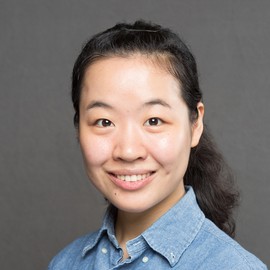
Dr. Xiaofei Wu is a Researcher at the Leibniz Institute of Photonic Technology (IPHT) in the Department of Nanooptics . Her work focuses on plasmonics , nanostructured materials , and light-matter interactions at the nanoscale, with applications in robotics, sensing, and spectroscopy.
Ioannis Chatzakis is an Assistant Professor in the Department of Physics and Astronomy at Texas Tech University, specializing in nanomaterials and ultrafast dynamics of charge carriers, phonons, and polaritons for next-generation optoelectronic and photonic devices. His educational background includes: B.Sc. in Electrical Engineering M.Sc. in Physical Chemistry (Applied Molecular Spectroscopy) Ph.D. in Physics from Kansas State University (2009) Dr. Chatzakis investigates fundamental light-matter interactions in nanomaterials, with emphasis on terahertz generation/modulation, sub-diffraction light confinement, and quantum information systems using single-photon sources. His work bridges condensed matter physics and quantum engineering to develop novel device functionalities. Analysis of his 2021-2025 publications reveals dominant research themes in graphene, hexagonal boron nitride, and 2D heterostructures, focusing on carrier dynamics, phonon interactions, and terahertz optoelectronics with applications in quantum computing and nanophotonics. His notable awards include: USC Provost's Postdoctoral Scholar Research Grant American Society for Engineering Education (ASEE) Postdoctoral Fellowship Dr. Chatzakis secured competitive postdoctoral funding including the USC Provost's grant for terahertz devices based on artificial multilayer graphene and the ASEE fellowship at the U.S. Naval Research Laboratory, though current grant details are not specified in the source material. His laboratory employs femtosecond pump-probe spectroscopy and complementary optical techniques to study ultrafast dynamics in nanomaterials, supporting research in quantum emitters and terahertz modulators.
Marianne Pusztai-Carey is an Associate Professor in the Department of Biochemistry at Case Western Reserve University School of Medicine . Her research focuses on the molecular mechanisms of Bacillus thuringiensis (Bt) insecticidal proteins and their applications in transgenic crops, alongside studies on β-lactamase enzymes and antibiotic resistance. Education: PhD in Biochemistry, University of Debrecen Postdoctoral work in Biochemistry (University of Debrecen) and Pharmacology (Mount Sinai School of Medicine) Research Interests include: Mechanistic studies of Bt toxins in Bacillus thuringiensis Insect resistance management in transgenic crops Protein structure-function relationships of β-lactamases Applications of Raman spectroscopy and crystallography Biofilm formation chemistry Recent Publications highlight her work on Bt toxin mechanisms (2008), β-lactamase inhibition (2015-2013), and biofilm analysis (2017). Her collaborations span entomology, microbiology, and pharmacology domains.
Fang Liu is an Assistant Professor of Chemistry at Stanford University, leading the Liu Group in experimental research on low-dimensional materials and their applications in quantum devices. Her work focuses on creating controllable 2D artificial structures, studying their electronic and photonic properties using advanced spectroscopic techniques. Ph.D. in Chemistry (University of Pennsylvania, 2015) Postdoctoral Researcher (University of Pennsylvania, 2016) DOE EERE Postdoctoral Fellow (Columbia University) Research spans light-induced dynamics , nonlinear optics , and quantum material engineering , with emphasis on time-resolved spectroscopy and heterostructure fabrication. Current projects target scalable methods for producing monolayer crystals. Recent publications (2024-2025) demonstrate expertise in excitonic manipulation , thermal insulation , and contact engineering for 2D systems. Awards include the 2024 Chambers Fellow recognition. Chambers Fellow (2024) The Liu Lab (Lokey Laboratory) trains graduate researchers in material synthesis and ultrafast characterization. Key collaborators include Professors Xiaoyang Zhu (Columbia), Mark Brongersma (Stanford), and Tony Heinz (Stanford).
Professor Andrew Beeby is a faculty member in the Department of Chemistry at Durham University . His research spans photochemistry , photophysics , and heritage science , with a particular focus on medieval manuscript pigments and organometallic light-emitting materials . Key research areas : Spectroscopy, Luminescent Materials, Energy Transfer, Molecular Electronics, Historical Pigments, and Photochemical Reactivity. His recent publications highlight advancements in single-molecule conductance , iridium complex photophysics , and non-invasive analysis of cultural artifacts . While no formal scientific awards are documented, his interdisciplinary work bridges chemistry , physics , and historical studies . Supervision includes postgraduate researchers Dalila Di Leva and Josephine Binks, with collaborations across materials science and cultural heritage conservation .
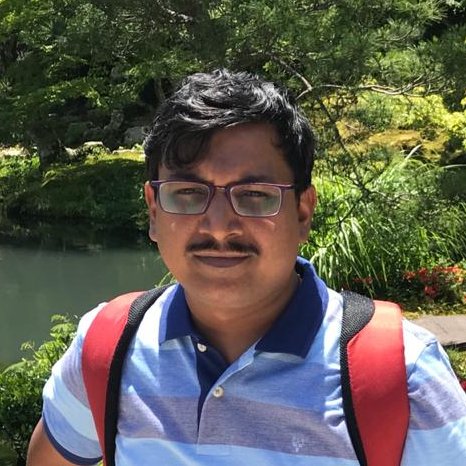
Dr. Adithya Lakshmanna is an Assistant Professor at the School of Chemistry , Indian Institute of Science Education and Research Thiruvananthapuram (IISER TVM). His research focuses on excited-state reaction dynamics involving electron and proton transfer processes, utilizing ultrafast coherent Raman and IR spectroscopy . Education : PhD from Indian Institute of Science, Bangalore, under Prof. S. Umapathy; MSc from Indian Institute of Technology, Madras. His work emphasizes structural dynamics in photo-initiated reactions, particularly proton-coupled electron transfer , and developing multidimensional ultrafast spectroscopic methods to study quantum coherences. He has secured a Core Research Grant from the Science and Engineering Research Board (SERB), Government of India. Teaching areas include Theoretical Spectroscopy, Quantum Chemistry, Chemical Kinetics, and Thermodynamics. His laboratory focuses on structural aspects of photochemical reactions and employs advanced femtosecond spectroscopic techniques.
Assoc. Prof. Petr Praus is a faculty member at the Institute of Physics , Faculty of Mathematics and Physics, Charles University. He is an experimental physicist specializing in optical spectroscopy, semiconductor materials, and radiation detector technologies. Phone: +420 221 911 474 / +420 221 911 477 Location: Room F-187, 1st basement, Ke Karlovu 5, Prague 2 Research Interests: His work focuses on Raman spectroscopy , time-resolved microspectrofluorimetry , and high-frequency electronics for experimental setups. He develops special detection techniques in optical spectroscopy of biomolecules and studies charge transport in semiconductor materials like CdTe, CdZnTe, and perovskites. Key Publications: Recent articles analyze radiation detectors (2023), perovskite defects (2022), and space charge formation mechanisms (2022). Earlier work explores fluorescence imaging of oligonucleotides and computer-controlled experimental systems . International Collaborations: Includes postdoctoral work at Laboratoire de Physicochimie Biomoleculaire et Cellulaire , Université Pierre et Marie Curie (1996-97) and short-term research at Institut Curie , Paris (1995).
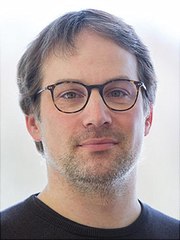
Prof. Dr. Nils Huse is a full Professor of Physics and head of the Condensed Phase Dynamics Group at the Institute for Nanostructure and Solid State Physics, University of Hamburg, Germany. His group operates within the Faculty of Mathematics, Informatics and Natural Sciences and is located at the HARBOR building on the campus in Hamburg. Education : While explicit degrees are not listed, his title "Prof. Dr." indicates completion of doctoral and habilitation qualifications necessary for a German professorship. Research Focus : The Condensed Phase Dynamics Group investigates ultrafast transformations of matter in molecules, nanostructures, and solids. Core techniques include femtosecond X-ray absorption and emission spectroscopy exploiting core-level transitions for atomic-specific insight on femtosecond timescales. Complementary optical, infrared, and THz multidimensional spectroscopies are employed to probe transient states of matter and correlated quantum systems. Funding & Collaborations : The group is supported by the German Research Foundation through SFB 925 "Light induced dynamics and control of correlated quantum systems", the Cluster of Excellence "Hamburg Centre for Ultrafast Imaging", the International Max Planck Research School for Ultrafast Imaging & Structural Dynamics (IMPRS-UFAST), the PIER partnership between Universität Hamburg and DESY, and the German Federal Ministry of Education and Research (BMBF). Student Mentoring : Prof. Huse has supervised doctoral researchers including Antonia Freibert, who defended her PhD in June 2024 and continues as a postdoc in the group, and Jessica Harich, an active doctoral candidate who has received multiple poster prizes. Laboratory & Infrastructure : The group operates state-of-the-art femtosecond laser systems and end-stations at large-scale X-ray facilities such as synchrotrons and free-electron lasers, enabling cutting-edge pump-probe experiments from the optical to the hard X-ray regime.
Jeffrey Cina is a Professor in the Department of Chemistry and Biochemistry , University of Oregon, within the College of Arts and Sciences. His research focuses on theoretical physical chemistry, particularly the simulation of ultrafast optical spectroscopy and quantum dynamics in molecular systems.
Prof. Dr. Markus Morgenstern is a University Professor and Head of the 2nd Institute of Physics B at RWTH Aachen University, where he leads the Chair of Experimental Physics (Solid State Physics). His research group, consisting of approximately 20 scientific staff members including post-docs, PhD students, and research assistants, focuses on cutting-edge condensed matter physics research with emphasis on quantum phenomena in novel materials. Prof. Morgenstern's primary research interests span several interconnected fields: graphene physics, topological insulators, nano-magnetism, scanning tunneling microscopy development, semiconductor physics, and advanced instrumentation. His work particularly explores quantum Hall transitions in real space, topologically protected edge channels in weak topological insulators, mechanical manipulation of nanoscale membranes in graphene, magnetic skyrmion collapse mechanisms, and vortex core pinning to atomic-scale features. His group has made significant contributions to understanding pseudomagnetic fields exceeding 1000T in strained graphene systems. Analysis of his recent publications reveals a strong focus on 2D magnetic materials (particularly transition metal phosphorus trisulfides like FePS 3 and MnPS 3 ), topological quantum phenomena, and advanced scanning probe techniques. His work bridges fundamental physics with potential applications in quantum computing and spintronics, with particular emphasis on how magnetic order affects electronic band structures in layered materials. Prof. Morgenstern's laboratory features state-of-the-art equipment including time-resolved scanning tunneling microscopy with 100ps accuracy, scanning probes compatible with electron microscopes, and integrated readout electronics for scanning probe methods. His group actively develops new investigation methods to push the boundaries of nanoscale characterization.