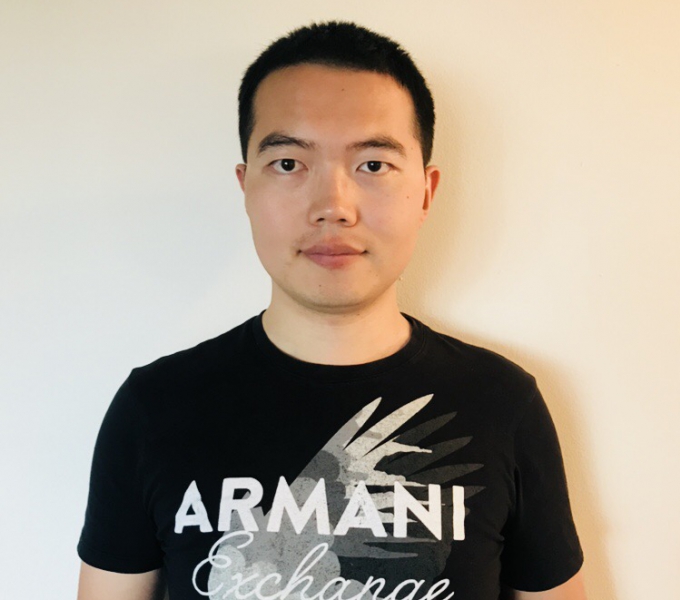
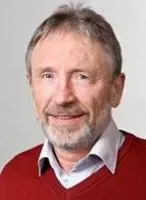
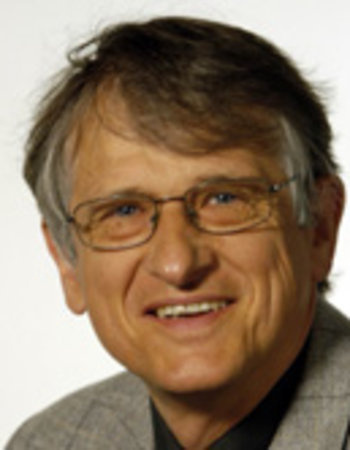
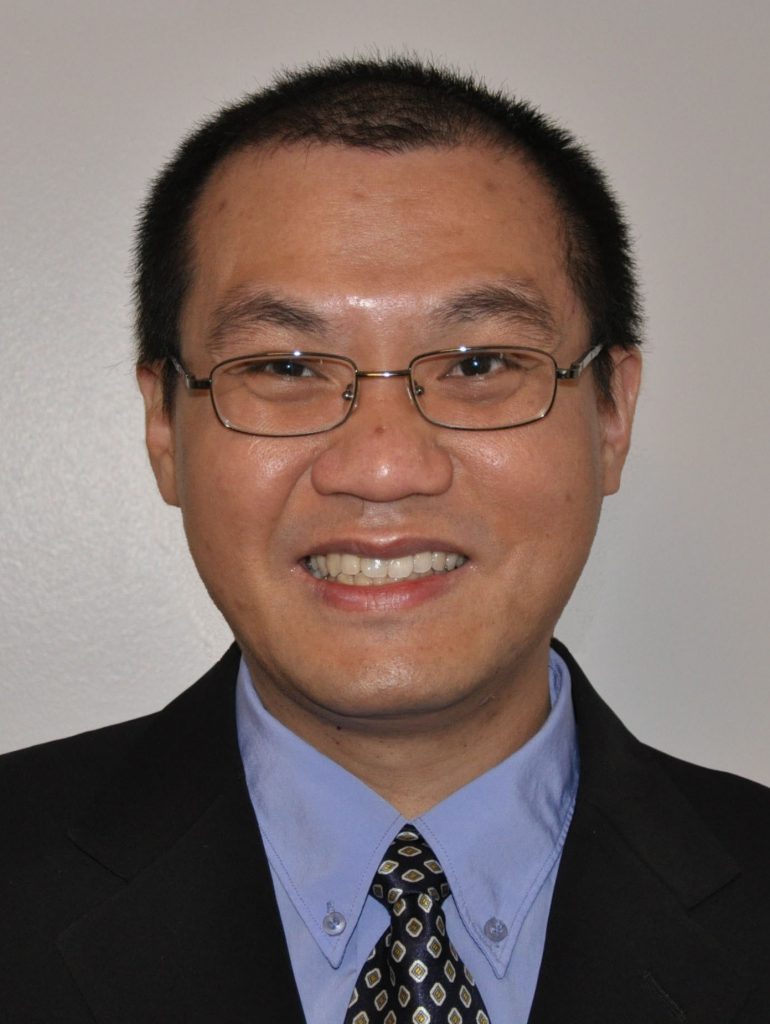
Jose M Pena is a Senior Associate Professor and Head of Unit at Linköping University's Department of Computer and Information Science, specializing in the Division of Statistics and Machine Learning (STIMA). His research focuses on probabilistic graphical models including Bayesian networks, Markov networks, and chain graphs within machine learning and artificial intelligence. His research interests center on causal inference, machine learning, and statistical modeling. He actively develops methods for causal discovery, counterfactual reasoning, and sensitivity analysis using normalizing flows and graphical models. His work bridges theoretical statistics with practical applications in complex data analysis. His recent publications (2020-2025) demonstrate a strong focus on causal machine learning, with particular emphasis on directed acyclic graphs (DAGs), counterfactual modeling, and handling unobserved confounding. Key trends include the integration of deep learning with causal structures, robust causal inference under distribution shifts, and scalable methods for high-dimensional causal analysis. As Head of Unit within STIMA, he contributes to the international master's programme in Statistics and Machine Learning. The division hosts significant research activities in modern data analysis and is part of Linköping University's Department of Computer and Information Science—one of northern Europe's largest departments in this field.
Guido Mul is a Full Professor at the MESA+ Institute in the department of Photocatalytic Synthesis. His research focuses on photocatalysis, electrochemistry, and advanced material science with applications in environmental and energy-related fields. He specializes in semiconductor nanoparticles, catalytic performance optimization, and sustainable chemical processes. His work contributes to UN Sustainable Development Goals, particularly in clean energy and pollution reduction. Key areas include the photocatalytic oxidation of organic pollutants, electrochemical water splitting, and selective oxidation of methane and other hydrocarbons. Mul leads research into novel electrode materials (e.g., boron-doped diamond, platinum-functionalized surfaces) and their applications in hydrogen peroxide production, CO2 reduction, and nitrate electrolysis. Mul has authored/co-authored over 200 peer-reviewed publications, including high-impact articles in Advanced Materials Interfaces , ChemSusChem , and ACS Engineering Au . His research frequently explores real-time characterization techniques like in situ AFM and TR-IR spectroscopy to study catalytic interfaces and reaction mechanisms. He actively supervises academic work (34+ supervised projects) and engages in editorial roles (e.g., Journal of the American Chemical Society ). His datasets and collaborative projects address challenges in electrochemical reactor design, nanoparticle synthesis, and sustainable chemical transformations.
Ida-Marie Høyvik is a Professor in the Department of Chemistry at the Norwegian University of Science and Technology (NTNU), affiliated with the Faculty of Natural Sciences. Her research focuses on electronic structure theory, particularly developing particle-breaking wave function models for open molecular systems. She was a Young CAS Fellow (2022-2024), exploring applications of these models to redox processes. Key contributions include advancements in multilevel Hartree-Fock and coupled cluster methods, and software development (e.g., the eT program). Her teaching includes courses in quantum chemistry, nanotechnology, and data analysis in chemistry. Notable projects involve funded research from the Research Council of Norway and collaborations on educational strategies linking mathematics and engineering. Research Themes: Electronic structure models, wave function theory, redox processes, and computational methods. Awards: Young CAS Fellow (2022-2024). Supervised Theses: Includes doctoral work on real-time coupled-cluster approaches and master’s projects on multilevel Hartree-Fock and coupled cluster methodologies. Software Contributions: Co-developer of the eT electronic structure program. Recent publications highlight innovations in particle-breaking frameworks, fractional charging models, and linear-scaling implementations for large systems. Her work bridges theoretical advancements with practical applications in molecular dynamics and material science.
Alexander Hübl is a Lecturer at the University of Groningen's Faculty of Science and Engineering, part of the Engineering Systems and Design (ESD) Group within the Engineering and Technology Institute Groningen. He holds additional roles such as Member of the Board of Examiners for Engineering and previously served as an Assistant Professor at Vienna University of Economics and Business and a Senior Researcher at the FH OÖ Research and Development GmbH. He is also a self-employed logistics and production optimization consultant (prodopt.at) and has volunteered as President of the Upper Austrian Taekwondo Federation since 2015. His education includes a PhD in Management with a focus on Logistics and Operations Management from the University of Vienna (2010–2015), supervised by Prof. Hartl. Earlier, he earned an MSc in Logistics Management from the University of Växjö, Sweden, and a BSc in Supply Chain Management. He also holds a Dipl. Ing. (FH) in Production and Management from the University of Applied Sciences Upper Austria, complemented by a technical college degree in Power Engineering and Power Electronics. Dr. Hübl’s research interests center on hybrid modeling, discrete-event simulation, and optimization techniques applied to production and supply chain systems. He explores topics like preventive maintenance scheduling, vehicle routing, and capacity management in industries such as automotive, retail, and transportation. His work emphasizes practical solutions for operational efficiency, resilience, and sustainability, leveraging stochastic processes and machine learning integration. His articles (2009–2024) highlight trends in hybrid modeling frameworks addressing complex systems, including railway networks, distribution centers, and manufacturing plants. He also focuses on educational applications of simulation in logistics and production. His consultancy and research roles indicate expertise in bridging academic theory with industrial practice. As an advisor, he has guided bachelor’s and master’s theses in PMT and OMT programs. His research group at FH OÖ managed four personnel and focused on supply chain planning methodologies. He contributes to labs/teams like the ESD Group and Engineering and Technology Institute Groningen, continuing his prior work in the FH OÖ Research Group.
Janine Splettstösser is a Professor of theoretical physics at Chalmers University of Technology, where she directs the Nano Area of Advance and leads the Applied Quantum Physics Group . She previously held academic positions at RWTH Aachen University (2009) and the University of Geneva as a postdoc. Education: Diplom (2003) from Karlsruhe Institute of Technology, PhD (2007) from Scuola Normale Superiore di Pisa and Ruhr-Universität Bochum Current Research: Quantum transport in nanostructures, nanoscale thermodynamics, dynamical transport properties Research Trends in her recent work include: Quantum thermodynamics and non-equilibrium fluctuations Coherent control in optomechanical and quantum dot systems Fluctuation-dissipation relations in mesoscopic devices Thermoelectric performance of nanoscale heat engines Scientific Recognition : ERC Consolidator Grant recipient Wallenberg Academy Fellow Mercator Fellow at University of Regensburg Her projects include On-chip waste recovery in quantum and nanoscale devices (2024-2028) and Thermodynamic constraints in quantum systems (2020-2023).
Raoul Frese is an Assistant Professor at the Faculty of Science, VU University Amsterdam, where he leads the Biohybrid Solar Cells workgroup. His research bridges biophysics, electrochemistry, and sustainable energy technology, focusing on photosynthetic membranes, biohybrid solar cells, and artscience collaborations with artists and designers. He is affiliated with the LaserLaB - Energy and contributes to UN Sustainable Development Goals like clean energy and climate action. Education: PhD in Physics (VU University Amsterdam), MSc in Physics (University of Amsterdam) Research Focus: High-resolution AFM imaging of photosynthetic membranes, supramolecular organization, protein domain formation thermodynamics, and biosensor development for herbicide detection Courses Taught: BioSolar Cells , Current Sustainable Energy Technologies , and Innovation Project: Alternative Fuels (2024–2025 joint degree with University of Amsterdam) Methodological Innovation: Pioneering artscience , a transdisciplinary approach integrating artistic practices into scientific research Recent work on biohybrid photoelectrodes emphasizes electron transport pathways, electrostatic binding interfaces, and long-term stability (up to 2025). His publications span ChemPhotoChem , Joule , and ACS Sustainable Chemistry and Engineering , with keywords like biohybrids, photocurrent, photovoltaics, and electrochemistry. Awards include competitive NWO-VENI and NWO-VIDI grants. Frese also serves as Master Track Coordinator for Science for Energy and Sustainability - Physics , reflecting his commitment to education and energy transition initiatives.
Binbin Tian is a Researcher in the Department of Physics & Astronomy at the University of Pittsburgh, affiliated with the Dietrich School of Arts and Sciences. His research focuses on quantum phases and bound states of fermions in one-dimensional systems, leveraging density matrix renormalization group (DMRG) methods to explore phenomena such as FFLO phases, trion liquids, and emergent Tomonaga-Luttinger liquid (TLL) theories. Collaborations with experimental groups like Prof. Jeremy Levy's (nanowire systems) and ultracold atom studies drive his theoretical investigations into mass imbalance effects, spin interactions, and transport properties. Education: PhD graduate under David Pekker, focusing on 'Bound States of Fermions in One Dimension.' His work bridges condensed matter theory and experimental systems, addressing both electronic interfaces (e.g., LAO/STO) and cold atomic setups. Research highlights include phase diagram analysis of single-component fermion chains and the discovery of Pascal-liquid phases in ballistic channels. Key areas of exploration include quantum phase transitions, topological conductance phenomena, and synthetic gauge field engineering in optical lattices. His contributions advance understanding of low-dimensional quantum systems with implications for nanoelectronics and quantum simulation technologies.
Prof. Dr. Peter Michael Derlet is an Adjunct Professor at ETH Zurich's Department of Materials and Senior Scientist at Paul Scherrer Institute's Laboratory for Theoretical and Computational Physics. His research specializes in atomistic modeling of materials with complex defect structures, magnetic systems, and radiation effects. Education includes a PhD in Physics from the University of Hamburg. Research integrates computational methods with experimental validation: Dislocation dynamics and irradiation damage in metals Magnetic nanoparticle behavior and spin systems Metallic glass relaxation and aging phenomena Development of magnetic interatomic potentials Recent publications focus on radiation damage in nuclear materials, magnetic reversal mechanisms, and glass transition physics. Collaborative works frequently bridge nanoscale simulations with experimental characterization techniques like neutron scattering and electron microscopy. Dr. Derlet teaches Thermodynamics and Computational Materials Modeling at ETH Zurich. He coordinates multiple SNF-funded PhD projects on correlated disorder magnetism and has supervised 6 doctoral students to completion. Current projects include anomalous thermal transport in spin ices and nanostructure-specific X-ray tomography.
Prof. Mark Golden is a Professor at the University of Amsterdam's Faculty of Science, specializing in quantum materials and condensed matter physics. His research focuses on superconductivity, topological materials, and strongly correlated electron systems, utilizing advanced techniques like angle-resolved photoemission spectroscopy (ARPES) and X-ray absorption. He leads the Quantum Materials cluster (QMat) and has contributed extensively to understanding electronic structures in cuprates, Dirac semimetals, and topological insulators. Recent work explores momentum-dependent scaling in strange metals and gauge-gravity duality applications. His studies span experimental and theoretical domains, addressing critical phenomena in quantum materials. No awards are listed here, but his research has advanced understanding of electronic phase transitions and material properties.
Dr. Jorik van de Groep is a Researcher affiliated with the Faculty of Science at the University of Amsterdam, based at the Institute of Physics (IoP WZI). His work focuses on advanced photonics, metamaterials, and nanotechnology, with a strong emphasis on 2D materials and optoelectronic devices. He explores dynamic light manipulation, plasmonic effects, and energy-efficient optical systems through innovative metasurface and nanoresonator designs. Research interests include excitonic beam steering, tunable optical modulation, and environmental stability of nanomaterials. His publications highlight breakthroughs in high-performance photodetectors, robotic metamaterials, and temperature-dependent optical properties of layered materials. Recent work addresses challenges in light trapping for solar cells and ultrafast wavefront shaping for next-generation optical systems. Key trends in his publications involve integrating mechanical, electrical, and optical functionalities into nanostructured materials. He has contributed to foundational studies on plasmoelectric effects and light-matter interactions in hybrid 2D systems. No scientific awards or grants are explicitly listed in the provided data. His research group at IoP WZI focuses on translating nanophotonics innovations into practical applications, though specific lab details are not detailed here.
Wolfgang Domcke is a Professor of Theoretical Chemistry at the Technical University of Munich (TUM), specializing in photoinduced chemical dynamics of polyatomic molecules. His research employs ab initio quantum mechanics to study photochemical processes, focusing on photostability in biomolecules and solar water splitting. With over 420 publications, his work integrates computational chemistry with ultrafast spectroscopy to map reaction pathways. Education includes a doctorate in theoretical physics from TUM and a habilitation from the University of Freiburg. Previous academic roles include professorships at Heidelberg University and Heinrich Heine University Düsseldorf. Research interests span quantum wave-packet dynamics, molecular spectra, and nonadiabatic transitions. Recent articles emphasize photocatalytic water splitting, excited-state dynamics, and spectroscopic simulations. Awards include the 2008 Copernicus Award and an honorary doctorate from Charles University (2012). He is a member of the International Academy of Quantum Molecular Science and a Fellow of the Royal Society of Chemistry. Current projects explore organic photocatalysts for renewable energy and quantum dynamics of biological chromophores. Future work targets mechanistic insights for sustainable energy technologies.
Prof. Klaus von Klitzing is an Adjunct Professor (part-time) at the University of Stuttgart and former Director of the Department of Low Dimensional Electron Systems at the Max Planck Institute for Solid State Research in Stuttgart. He holds a doctorate (1972) and habilitation (1978) from the University of Würzburg, with prior professorial roles at TU Munich (1980–1984). His research focuses on experimental semiconductor physics, low-dimensional electron systems, and quantum phenomena. He discovered the quantum Hall effect (awarded the 1985 Nobel Prize in Physics), leading to the definition of the von Klitzing constant (R_K). Key honors include honorary doctorates and membership in the German Physical Society. Research interests span quantum Hall effects, nanoelectronics, and molecular quantum structures. Collaborations include work at Oxford, Grenoble (high magnetic field lab), and IBM. His department investigates 2D electron systems, edge currents, composite fermions, and exciton condensation using ultra-low temperatures and high magnetic fields. Scientific Awards: Nobel Prize (1985), von Klitzing Constant designation, Honorary Doctorates Labs/Teams: Former Department of Low Dimensional Electron Systems, collaborations with ETH Zurich’s Advanced Semiconductor Quantum Materials group Key Research Tools: High magnetic fields (up to 20 T), cryogenic microscopy, acoustic spectroscopy
Dr. Mark Quinn is a Senior Lecturer in Mechanical and Aerospace Engineering at the University of Manchester, specializing in experimental aerodynamics and flow diagnostics. He holds Chartered Engineer status and is Programme Co-Director of the Undergraduate Aerospace Engineering program. His expertise includes optical flow diagnostics (schlieren, PIV, PSP), image processing, and compressible aerodynamics. Quinn has conducted research at the Aircraft Research Association, focusing on industrial collaborations and funded projects from organizations like the European Commission and ESA. He actively seeks cross-disciplinary research opportunities in experimentation and image processing. Education: MEng(Hons) in Aerospace Engineering (2009) and PhD in Experimental Aerodynamics (2013), both from the University of Manchester. Research interests span flow diagnostics techniques, unsteady aerodynamics, and miniaturized flow measurement systems. He has developed innovative methodologies such as simultaneous shape/pressure measurement using pressure-sensitive paint and fringe profilometry. Current projects include modular flow diagnostic systems, ramjet unstart mechanisms, and high-speed PSP sensor development. Key achievements include a Teaching Excellence Award (2022) and leadership in academic-industrial partnerships. His work contributes to UN Sustainable Development Goals related to affordable and clean energy, and industry, innovation, and infrastructure.
Associate Professor KOH Yee Kan is affiliated with the Department of Mechanical Engineering at the National University of Singapore (NUS), part of the College of Design and Engineering. His academic journey includes a B.Eng. and M.Eng. from Universiti Teknologi Malaysia (2001-2004), followed by an M.S. in Physics and Ph.D. in Materials Science and Engineering from the University of Illinois at Urbana-Champaign (2007-2010). He specializes in nanoscale thermal phenomena, particularly heat transport in nanostructures and interfaces, with applications in thermoelectrics and energy conversion. Research focuses on phonon dynamics in materials, interfacial thermal conductance, and novel material design for thermal management. He employs ultrafast pump-probe techniques like time-domain thermoreflectance (TDTR) to study phonon mean-free-paths and scattering mechanisms. Key contributions include studies on graphene-based interfaces, layered materials, and semiconductor alloys. His work has been recognized with awards such as the NUS Young Investigator Award (2011) and Fulbright Fellowship (2004). He teaches undergraduate and graduate modules including Sustainable Energy Conversion (ME3221) and Solar Energy Systems (ME5207). His lab explores cutting-edge topics like molecular heat transport and thermal insulation materials, with ongoing openings for graduate students and final-year projects.
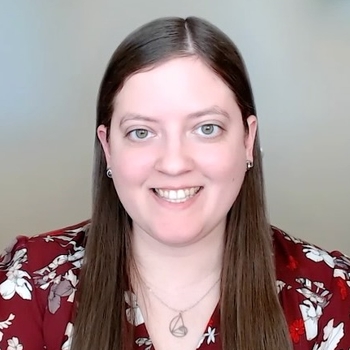
Anne Draelos, Ph.D. is an Assistant Professor with dual appointments in the Department of Biomedical Engineering and the Department of Computational Medicine & Bioinformatics at the University of Michigan. She is also affiliated with the Michigan Neuroscience Institute, the Michigan Institute for Data Science, and the Michigan Institute for Computational Discovery and Engineering. Her research focuses on developing statistically efficient methods for real-time and adaptive neuroscience experiments. Dr. Draelos received her Ph.D. in Physics and M.S. in Electrical & Computer Engineering from Duke University, followed by undergraduate degrees in Physics and Computer Science from North Carolina State University. Her academic journey spans quantum physics, electrical engineering, and neuroscience, reflecting her interdisciplinary approach to complex scientific problems. Her research interests center on real-time analysis of neural and behavioral data using machine learning and statistical techniques. The Draelos Lab develops methods for adaptive stimulation of neural dynamics, multimodal latent space modeling, real-time brain-computer interfaces with neural stimulations, and Bayesian optimization for visual stimuli. Her work bridges the gap between simplistic and complex stimulus spaces to provide new insights into how sensory stimuli are represented in the brains of behaving animals. Analysis of her recent publications reveals a strong focus on developing computational methods that enable real-time analysis and intervention in neural systems. Her work spans from low-dimensional neural manifold modeling to large-scale neural connectivity estimation, with applications ranging from larval zebrafish to non-human primates. She has pioneered approaches that combine streaming data analysis with adaptive experimental designs to accelerate neuroscience discovery. Sloan Fellowship in Neuroscience (2024) Career Award at the Scientific Interface from Burroughs Wellcome Fund (2021) Swartz Foundation Fellow for Theory in Neuroscience (2020) Best Poster Award, IEEE Brain Workshop on Advanced NeuroTechnologies (2020) Ruth K. Broad Postdoctoral Fellowship (2019-2020) Dr. Draelos actively mentors students across multiple levels, including undergraduate, master's, and Ph.D. candidates. Her lab has received funding from multiple prestigious sources including the University of Michigan Research Scout Award, Sloan Fellowship, Burroughs Wellcome Fund, and the National Institute on Aging. Her research philosophy emphasizes tight integration between computational models and experimental neuroscience, creating a feedback loop where models inform experiments and experimental results refine models. The Draelos Lab is located at the North Campus Research Complex (NCRC) at the University of Michigan, where they develop and implement cutting-edge methods for real-time neural data analysis and adaptive experimentation. The lab maintains strong collaborations with several other research groups including the Kaczorowski Lab, Chestek Lab, Savier Lab, Burgess Lab, and Naumann Lab.