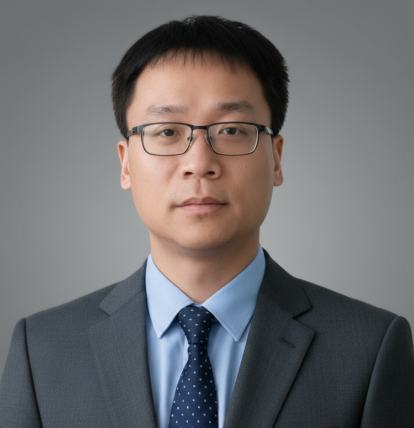
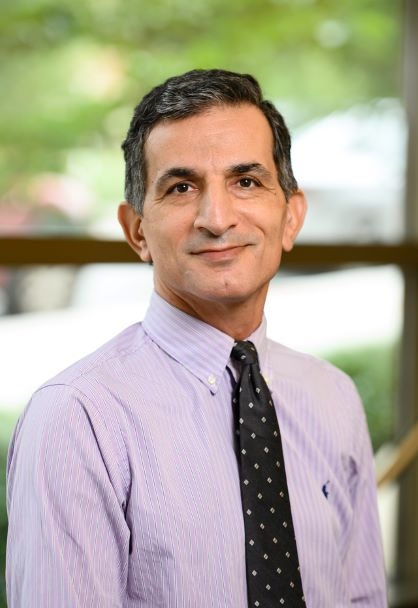
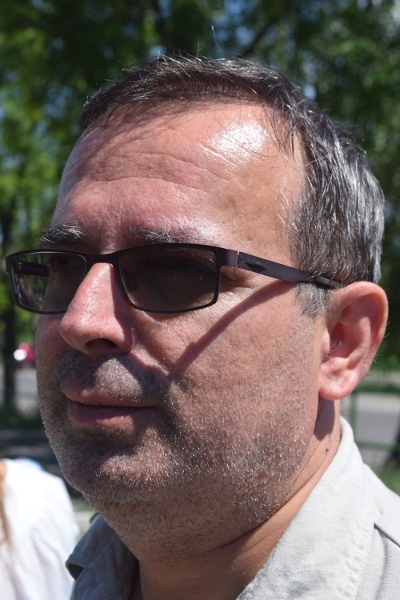
Dr. Michael Hall is a Research Fellow at the University of Queensland's UQ Centre for Clinical Research. His work focuses on bacterial genomics, computational biology, and bioinformatics tool development. Key research areas: Tuberculosis genomics, nanopore sequencing, drug resistance prediction, and metagenomics Developed bioinformatics tools including Pandora and contributed to Snakemake Collaborates with teams across clinical research, veterinary microbiology, and environmental monitoring His recent publications (2018-2025) demonstrate expertise in: Deep learning applications for genomic data Reference graph-based bacterial analysis Antimicrobial resistance prediction systems Environmental nanopore sequencing applications Clinical metagenomics workflows One Health approaches to disease monitoring Current affiliations include: UQ Centre for Clinical Research Collaborations with UQ Centre for Extracellular Vesicle Nanomedicine Contributions to the Centre of Research Excellence ALIVE WELL
Robin Andersson is an Associate Professor at the Department of Biology, University of Copenhagen , leading the Andersson Lab focused on modeling gene regulation to understand how enhancer and promoter dysregulation contribute to disease risk. His interdisciplinary research combines machine learning , statistical learning , genetics , and molecular biology to determine which noncoding sequences act as enhancers, predict regulatory activity from DNA sequences, and characterize mechanisms controlling gene expression variation. His research has produced significant insights into enhancer-promoter interactions , epigenetic inheritance , and transcriptional robustness . He has developed computational tools like ChromTransfer and hyperTRIBER for analyzing chromatin accessibility and RNA editing . His work bridges genomic mechanisms of disease with practical applications in noncoding variant interpretation and therapeutic target identification . Robin Andersson has received prestigious awards including the ERC Horizon 2020 Starting Grant , Sapere Aude Research Leader award , and Hallas-Møller Ascending Investigator award . He has supervised 17 MSc and 5 PhD students while contributing to academic service as PhD coordinator and strategic research board member. The lab maintains affiliations with the Novo Nordisk Foundation Center for Genomic Mechanisms of Disease and FANTOM consortium , with recent grants focusing on single-cell regulatory mapping and disease variant interpretation .
Nada Amin is an Assistant Professor of Computer Science at the Harvard John A. Paulson School of Engineering and Applied Sciences (SEAS). She leads the metareflection lab, focusing on neuro-symbolic programming, program synthesis, and meta-programming techniques. Her research combines programming languages (PL) with AI, particularly leveraging LLMs for verified program and proof synthesis. Education: PhD from EPFL (2016), MEng and BS from MIT (2008). Previous roles include University Lecturer at the University of Cambridge (2017–2019) and software engineering at Google (2009–2011). Awards include Distinguished Paper Awards at PLDI 2023 and an Outstanding Paper Award at NeurIPS’24. Research interests span neuro-symbolic systems, meta-programming, probabilistic reasoning, and precision medicine applications. Current projects include VerMCTS, Persimmon, and collapsing towers for secure compilation. She teaches courses like CS152 (Programming Languages) and CS252R (Advanced PL Seminars). Labs/Teams: Harvard PL Group; Metareflection Lab. Collaborates widely on PL+AI, drug repurposing for medicine, and multi-stage relational programming. Supervises ~40 researchers including PhD students, postdocs, and undergraduates.
David Corey is the Bertarelli Professor of Translational Medical Science at Harvard Medical School, leading the Corey Lab in the Department of Neurobiology. His work focuses on auditory neuroscience and ion channel biology, particularly the molecular mechanisms of hearing and deafness. The lab investigates hair cell mechanotransduction, gene therapy approaches for hereditary deafness (e.g., Usher syndrome), and the structural biology of transduction channels. Key techniques include electrophysiology, electron microscopy, and CRISPR-based gene editing. Research emphasizes translating discoveries into therapies, such as AAV-based gene delivery systems and protein-engineered variants for hearing restoration. The lab is based at 220 Longwood Avenue, Boston, with collaborations in neurobiology and biomedical engineering. Corey’s work bridges basic science and clinical applications, aiming to address sensory disorders through molecular insights and innovative treatments. Publications highlight advancements in mechanotransduction channel function, deafness gene therapy strategies, and protein design for inner-ear applications. Ongoing projects target Usher syndrome type 1F and DFNB1 deafness, with a focus on dual-AAV vectors and mini-PCDH15 proteins.
Laura Buttitta is a Professor in the Department of Molecular, Cellular, and Developmental Biology at the University of Michigan. Her research focuses on understanding how cells exit the cell cycle to enter quiescence (G₀ phase), particularly in differentiated and stem cells, using Drosophila and mammalian models. She joined the department in 2011 after completing her PhD at Johns Hopkins University (2004) and postdoctoral work at the Fred Hutchinson Cancer Research Center under Dr. Bruce Edgar. Her lab investigates mechanisms controlling cell cycle arrest and reactivation during development and disease, with applications to cancer and tissue regeneration. Key areas include cell cycle regulation in quiescent states, chromatin remodeling during differentiation, and the role of miRNAs like miR-8 in cell survival and epithelial organization. Current research emphasizes the molecular pathways linking cell cycle exit to cellular functions, including how quiescent states vary in reversibility. Her work bridges developmental biology and oncology, with findings published in top-tier journals and supported by grants from NIH and other agencies. Contact: buttitta@umich.edu , Office: 5218 Biological Sciences Building
Min Jee Jang is an Assistant Professor in the Department of Bioengineering at the University of Illinois Urbana-Champaign (UIUC), affiliated with the Carl R. Woese Institute for Genomic Biology and the Neuroscience Program. She holds a B.S., M.S., and Ph.D. in Bio and Brain Engineering from KAIST (2009–2015). Her research focuses on developing advanced gene delivery technologies for studying and treating neurological disorders, leveraging viral vector engineering and spatial transcriptomics. Jang is also the Chief Science Officer at Genixcure (South Korea) and actively contributes to professional societies like the Biomedical Engineering Society and Society for Neuroscience. Her research interests include targeted genetic access to brain cells, overcoming limitations in cell-type specificity and temporal resolution. Her lab integrates viral vector design, spatial omics, and computational methods to understand brain cell dynamics and develop programmable gene delivery systems. Key achievements include pioneering systemic AAV vectors for primate brain gene transfer and spatial transcriptomics profiling of viral tropism. Notable awards include the NARSAD Young Investigator Award (2021–2023) and Caltech Postdoctoral Fellowship (2018–2020). Jang has presented widely, including seminars at Seoul National University, Stanford, and Brown. Her lab at UIUC, established in 2024, recruits students/postdocs passionate about translational neuroengineering and genetic medicine.
Iain Shepherd is an Associate Professor at Emory University's Department of Biology. His lab investigates the genetic basis of enteric nervous system development using zebrafish models to study Hirschsprung's disease and related neuropathies. Education includes a Ph.D. from the University of Oxford (1994) and a B.Sc. from Imperial College London (1990). Research themes include: Transcriptomic profiling of neural crest derivatives Functional validation of Hirschsprung-associated genes Mitochondrial dysfunction in neurodevelopmental disorders Evolutionary conservation of gut innervation mechanisms Recent publications leverage single-cell genomics and live imaging to map enteric neuron diversity and identify novel disease pathways.
Stephen Mount is an Associate Professor at the University of Maryland, affiliated with the Department of Molecular & Cellular Biology. His research focuses on RNA processing mechanisms, particularly splicing regulation and bioinformatics applications in collaborative projects. Key interests include identifying sequence elements guiding splicing, evaluating genetic variants' effects on splicing, and improving RNA-seq analysis for alternative splicing patterns. Education: B.A., Rice University, 1978 Ph.D., Yale University, 1983 Research Interests: Splicing machinery interactions and signal recognition Impact of genetic variation on splicing Development of computational tools for transcriptome analysis Plant genomics and fruit development Teaching: Courses include Molecular Genetics (BSCI410), Human Genetics (BSCI416), and graduate-level programs in Computational Biology and Molecular Cellular Biology. Articles Trends: Recent work emphasizes computational methods for variant impact prediction (e.g., CAGI6), RNA splicing visualization (spliceosome dynamics), and single-cell epigenetic profiling in cancer. Collaborative projects span plant genomics, immune response mechanisms, and tumor progression modeling. Labs/Teams: The Mount Lab collaborates widely, focusing on bioinformatics-driven splicing research and plant transcriptome databases like ROFT for fruit comparisons.
Tom Koch is an Adjunct Professor of Geography at the University of British Columbia's Department of Geography within the Faculty of Arts. With a multidisciplinary PhD spanning geography, ethics/philosophy, and medicine, he maintains an active research profile across medical geography, disease mapping, and bioethics. His work bridges historical and contemporary approaches to understanding epidemics spatially through mapping, while also addressing pressing ethical questions in healthcare, particularly around assisted dying and pandemic response. Dr. Koch's research interests span three interconnected domains: medical geography and disease mapping, medical ethics and bioethics, and journalism. His pioneering work in medical geography has generated influential books including Disease Maps: Epidemics on the Ground and Cartographies of Disease , exploring how spatial representation shapes our understanding of disease. In bioethics, he has published extensively on euthanasia, organ transplantation policy, and more recently, Canada's Medical Assistance in Dying (MAiD) legislation, with over 50 papers and books including Ethics in Everyday Places: Mapping Moral Stress, Distress, and Injury . His journalism background informs his public engagement, having conducted over 203 media interviews on the Covid-19 pandemic since January 2020. Analysis of his recent scholarly output reveals a clear trajectory connecting geography, ethics, and pandemic response. His publications demonstrate how spatial thinking informs ethical decision-making during health crises, with particular attention to how mapping technologies have transformed from woodblock prints to Web 3.0 platforms. This interdisciplinary approach reveals how disease mapping serves not just as a technical tool but as a framework for understanding moral dimensions of public health crises, particularly visible in his Covid-19 related work examining both spatial-temporal data democratization and the ethical failures of pandemic response. As an active public intellectual, Dr. Koch has engaged extensively with media and policy discussions, particularly regarding Canada's MAiD legislation and pandemic response. His background as both a journalist and researcher enables him to bridge academic scholarship with public discourse, making complex ethical and geographical concepts accessible to broader audiences while maintaining scholarly rigor.
Professor Jun Li is a tenured Professor and Australian Research Council (ARC) Future Fellow at Curtin University's School of Civil and Mechanical Engineering. He leads the Curtin Research Centre for Infrastructural Monitoring & Protection, focusing on advancing structural health monitoring (SHM) through AI, computer vision, and data analytics. His work integrates emerging technologies to monitor civil infrastructure like the Matagarup Bridge and Stirling Bridge in Western Australia. Affiliations: School of Civil and Mechanical Engineering, Curtin Research Centre for Infrastructural Monitoring & Protection Grants: Chief investigator for 10 projects, including ARC and CRC grants Awards: Nishino Prize (2019), Curtin Mid-Career Research Award (2023), Hong Kong PolyU Young Alumni Award (2024) His research interests span structural dynamics, AI-driven SHM, IoT sensing, and digital twins. Over 230 technical publications, including 170 journal papers, reflect his expertise. He advises 6 PhD students and collaborates on industry projects, emphasizing sustainable infrastructure resilience. Key contributions include developing vision-based displacement measurement systems, physics-guided neural networks, and data-driven damage detection frameworks. His work bridges academia and industry, enhancing infrastructure safety and maintenance efficiency.
Yangjianchen Xu is an Assistant Professor in the Department of Statistics and Actuarial Science at the University of Waterloo, within the Faculty of Mathematics. His research focuses on developing novel statistical methods for survival analysis and semiparametric models to address challenges in biomedical and public health sciences, with applications to time-to-event data, EHR analysis, and causal inference. He holds a Ph.D. in Biostatistics from the University of North Carolina at Chapel Hill (2024) and a B.S. in Statistics from Peking University (2019). His work emphasizes methodological advancements in analyzing interval-censored and multivariate time-to-event data, alongside applied research on vaccine efficacy, SARS-CoV-2 infection dynamics, and pandemic response strategies. Xu's research has contributed to understanding booster vaccination impacts, durability of vaccines against Omicron subvariants, and the interplay between prior infection and vaccination in mitigating severe outcomes. Xu's academic affiliations include the Department of Statistics and Actuarial Science at the University of Waterloo, with a focus on statistical theory and applications in health sciences. His research is supported by collaborations with public health institutions and clinical networks, addressing pressing issues in epidemiology and biostatistics.
Javad Velni is a Professor in the Department of Mechanical Engineering at Clemson University's College of Engineering, Computing and Applied Sciences. He directs the Velni Lab, conducting interdisciplinary research at the intersection of control theory, machine learning, and applied mathematics with applications in precision agriculture, autonomous vehicles, and industrial processes. Education: Ph.D., Mechanical Engineering, University of Houston, 2008 M.S., Electrical Engineering, University of Tehran, 2002 B.S., Electrical Engineering, Sharif University of Technology, 1999 Research focuses on developing analytical tools for complex systems through: Learning-based control and reinforcement learning for industrial applications Distributed model predictive control of multi-agent systems AI-driven solutions for precision agriculture including greenhouse automation and crop monitoring Cyber-physical security and robust control of connected vehicles Data-driven modeling of nonlinear systems using Bayesian neural networks Research publications demonstrate strong emphasis on model predictive control variants (distributed, learning-based, safe) with applications spanning agricultural technology, automotive systems, plasma processing, and multi-agent coordination. Recent work increasingly integrates Bayesian optimization, reinforcement learning, and physics-informed neural networks. Significant research grants include: Collaborative Research: CPS: Medium: Multi-Scale Sensing and Control for Optimizing Crop Production and Energy Efficiency (2024) GOALI/Collaborative Research: Control-Oriented Modeling of Natural Gas Engines (2022) CPS: DFG Joint: Perceptive Stochastic Coordination in Automated Vehicle Platoons (2020) Distributed Predictive Control of Microplasma Jet Arrays (2019) The Velni Lab develops distributed control algorithms and coverage strategies for heterogeneous multi-agent systems, with experimental applications in agricultural monitoring, vehicle platooning, and plasma-based biomaterial processing.
Prof. Dr. Sebastian Stiller is a Professor at the Institute for Mathematical Optimization within the Carl-Friedrich-Gauß-Fakultät at Technische Universität Braunschweig. His research focuses on optimization, operations research, algorithmic game theory, quantum computing, and transportation science. He leads projects funded by DFG and BMBF, including 'SOAP' for air transport optimization and 'HyNEAT' for hydrogen supply networks in aviation. He teaches courses such as Linear Algebra, Algorithmic Game Theory, and Quantum Algorithms in both German and English. His research spans robust optimization, vehicle routing, and quantum algorithm development. Notable projects include optimizing wind farm control systems and analyzing quantum computing's potential for solving linear programming challenges. He collaborates with industry partners like 4flow AG and GAMS Software GmbH, emphasizing practical applications of his theoretical work. Teaching responsibilities include foundational mathematics courses for data science and engineering students, as well as advanced seminars on optimization. His contributions to operations research have been published in top-tier journals like Operations Research and Transportation Science.
Marian Mach is an Associate Professor at the Department of Cybernetics and Artificial Intelligence, Technical University of Kosice. He holds a Ph.D. (1992) and habilitation in Artificial Intelligence (2001). His research focuses on symbolic AI, evolutionary computation, knowledge modeling, and ontological engineering. He has led national and EU projects like Modermed (2023-2027) and DL4VISION (2022-2025), addressing toxic behavior detection and deep learning for image processing. Education: Ph.D. in Technical Cybernetics (1992), TU Kosice Habilitation in AI (2001), TU Kosice M.S. in Technical Cybernetics (1985), TU Kosice Research Interests: Evolutionary algorithms Constraint satisfaction problems Knowledge representation Machine learning applications in social media analysis Robotics and intelligent systems Teaching: Courses include Machine Learning II, Evolutionary Algorithms, and Application of Logic in Intelligent Systems. He has developed over 20 courses since 1987. Grants & Projects: EU-funded initiatives: VICINITY (2016-2019), PICASO (2016-2019) National grants: APVV-22-0414 (2023-2027), VEGA 1/0394/22 (2022-2025) Labs/Teams: Involved in AI Center at TU Kosice and collaborative projects on cloud-based robotics and semantic web technologies.
Dr. Rose Andrew is an Associate Professor of Plant Molecular Ecology at the University of New England's School of Environmental and Rural Science. She holds a BSc (Hons) and PhD from the Australian National University, and completed postdoctoral research at the University of British Columbia as a Killam Postdoctoral Fellow. Her research integrates molecular tools with ecological questions to study plant evolution, speciation, and adaptation. Dr. Andrew leads a vibrant Molecular Ecology Laboratory, focusing on three primary research areas: Eucalyptus hybridisation and adaptation Pollinator-driven speciation in sexually-deceptive orchids Evolution of naturalised sunflowers Her work examines genomic patterns underlying adaptive radiation and ecological divergence. Analysis of her recent publications reveals strong focus on plant genomics, conservation genetics, and evolutionary biology. Research spans eucalypt speciation, sunflower ecotype divergence, orchid pollination systems, and post-fire ecosystem recovery. Her work consistently applies cutting-edge genomic techniques to biodiversity conservation challenges. Scientific awards include: Killam Postdoctoral Fellowship Dr. Andrew actively supervises undergraduate, honours, and postgraduate students, providing training in molecular ecology techniques. She serves as Convenor of the Life, Earth and Environment Theme, strengthening academic programs in organismal biology and evolution.