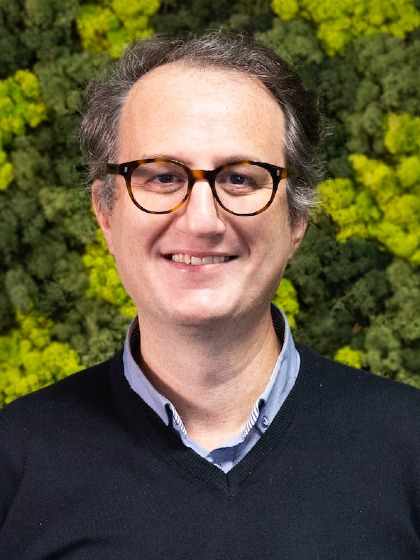
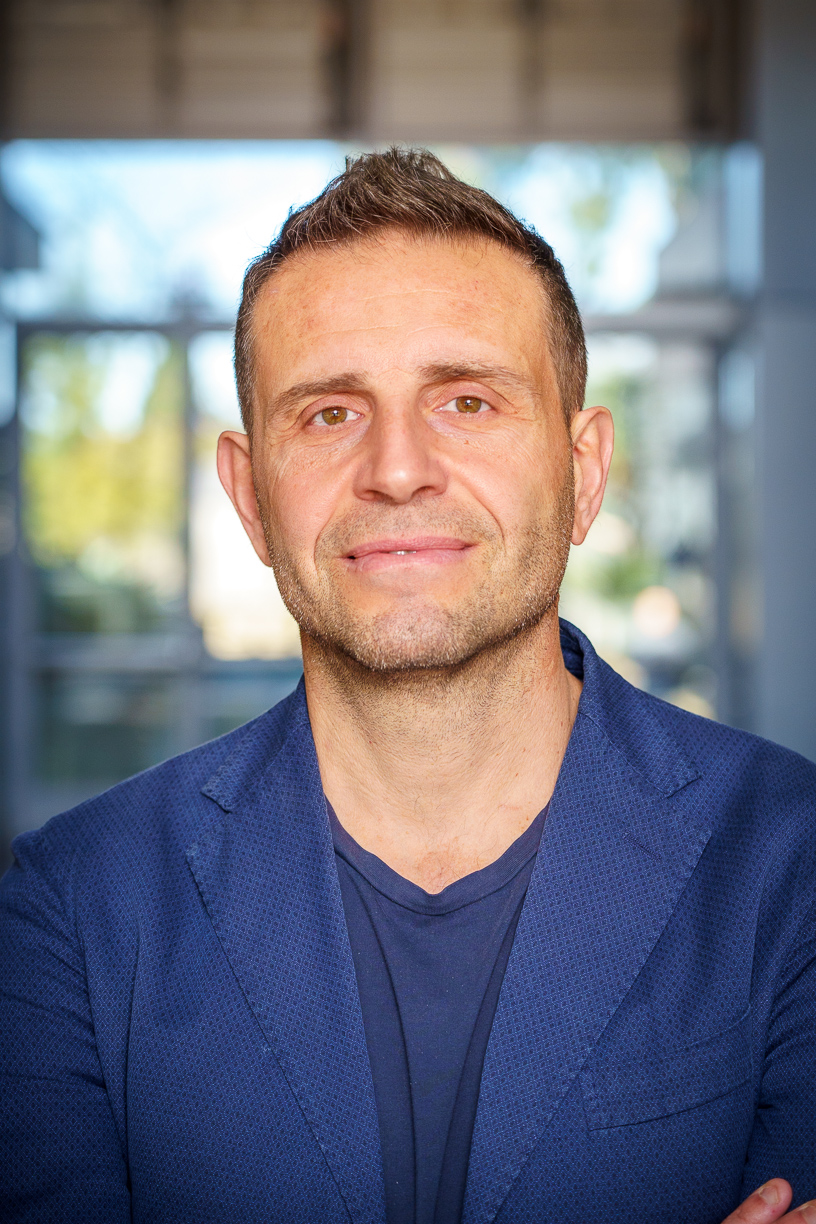
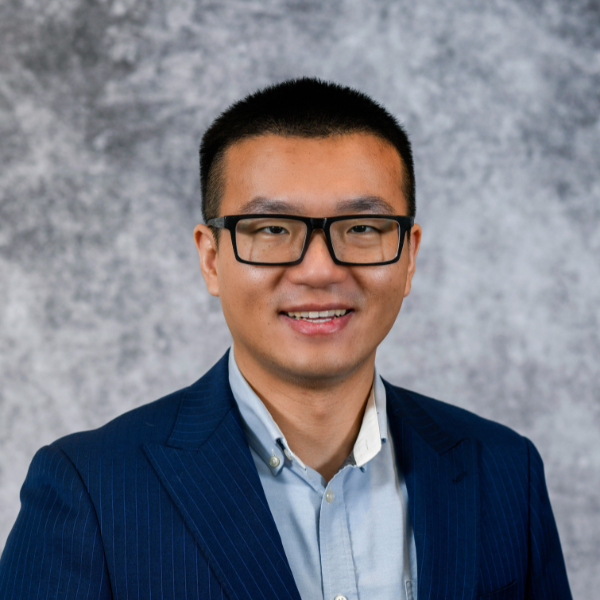
T. Russell Gentry is Professor in the School of Civil and Environmental Engineering at Georgia Tech, specializing in building materials and structural systems. His research focuses on technical performance of construction materials, with projects examining sustainable material reuse, wood engineering, and structural composites. Gentry advances sustainable construction through material innovations. His research interests encompass building materials, structural engineering, sustainable construction, composite materials, and building performance. Gentry examines material behavior and system integration for improved structural performance.
İhsan Engin Bal is a Professor by Special Appointment in Digital Technologies in the Built Environment at the University of Groningen's Faculty of Science and Engineering, affiliated with the Computational Mechanical and Materials Engineering department. He holds additional roles as Professor at Hanze University of Applied Sciences (Research Centre Built Environment Noorderruimte), President of the Dutch Earthquake Engineering Association, and Partner/Scientific Consultant at Senso Engineering. His research focuses on structural and earthquake engineering with an emphasis on integrating digital technologies into infrastructure resilience. Key research areas include seismic behavior of historical masonry structures, damage assessment methodologies post-earthquakes, and innovative applications of digital tools for structural monitoring. Bal's recent work addresses the Kahramanmaraş earthquakes' impact, structural code improvements, and masonry-timber connection analysis. His interdisciplinary approach combines computational modeling (FEM/AEM) with experimental validation to advance disaster-resistant construction practices. Professional activities include academic leadership, industry collaboration through Senso Engineering, and policy contributions via his role in the Dutch Earthquake Engineering Association. His work aligns with UN Sustainable Development Goals related to resilient infrastructure (SDG 9) and climate action (SDG 13).
Professor Alessandro Palermo holds a faculty position in Structural Engineering at UC San Diego's Jacobs School of Engineering. His research focuses on seismic resilience of concrete bridges, timber building systems (PRES-LAM), and sustainable infrastructure using recycled materials. Prior to joining UCSD, he was a professor at the University of Canterbury and Politecnico di Milano. Education includes a PhD in Seismic Engineering from Politecnico di Milano (2004), MS in Reinforced and Prestressed Concrete (1999), and Laurea in Structural Engineering (1997). His work integrates concepts of resilience, sustainability, and digital fabrication, with recent projects exploring 3D-printed concrete technologies for seismic-resistant housing. Research spans: (1) Seismic design of bridges using low-damage rocking systems; (2) Development of mass timber structures with post-tensioning; (3) Novel cementitious materials incorporating waste products; and (4) Corrosion impact on infrastructure. His publications show strong emphasis on experimental validation and practical implementation. Awards highlight international recognition in structural engineering: ABC Person of the Year (2021), ASCE Alfred Noble Award (2020), and multiple best-paper honors from IABSE and NZSEE. His teaching excellence is evidenced by multiple 'Best Lecturer' awards at Canterbury.
Jed Kaplan is Professor and Canada Research Chair (Tier 1) in Global System Modeling at the University of Calgary, with joint appointments in the Departments of Earth, Energy, and Environment and Computer Science. His research develops computer simulation models to study long-term human-environment interactions. Research focuses on: Land cover-climate feedback mechanisms Historical land use reconstruction Wildfire ecology and management Paleoenvironmental change Anthropocene dynamics Recent publications (2023-2025) examine human adaptation to climate extremes, wildfire-climate interactions, Anthropocene signatures in Earth systems, and paleoclimate reconstructions using pollen and ice core records. Key projects include modeling Indigenous fire management practices, developing next-generation vegetation models, and reconstructing historical land cover. Dr. Kaplan directs the Global System Modeling laboratory and collaborates with international initiatives including the Fire Model Intercomparison Project and LandCover6k.
Kai Lan is an Assistant Professor in the Department of Forest Biomaterials at NC State University's College of Natural Resources. Their work focuses on sustainable materials engineering, life cycle assessment (LCA), and bio-based product development. Key research areas include optimizing biomass utilization for bioenergy, analyzing carbon storage potential in forestry systems, and advancing nanomaterials for construction and biomedical applications. They hold the position of FB Faculty within the department and are affiliated with the College of Natural Resources. Research interests span interdisciplinary topics such as dynamic LCA frameworks, innovative forestry mosaics for climate resilience, and techno-economic evaluation of biorefinery technologies. Their studies often integrate AI tools to address uncertainties in sustainability modeling, bridging computational methods with environmental engineering challenges. Recent publications highlight trends in cross-laminated timber, bamboo-based composites, and corn stover-derived bioplastics, emphasizing scalable solutions for carbon mitigation and sustainable resource management. No scientific awards or formal advisees are explicitly listed in the provided texts. Their work contributes to both academic and applied domains, addressing global climate targets through material science innovations.
Associate Professor Duncan Maxwell leads the Future Building Initiative at Monash University and serves as the Research Program Lead for Building 4.0 CRC. He holds a PhD from the University of Sydney and is a Registered Architect (Qld #4821). His work focuses on industrialized construction, platform-based design systems, and digital transformation in building processes. Key collaborations include the NSW Government’s A$4 million Homes NSW project and the Building 4.0 CRC showcase. Education: PhD in Architecture (University of Sydney, 2018), MArch (University of Tasmania, 2008), BSc (Robert Gordon University, 2006). Research interests span prefabricated systems, supply chain logistics, and strategic design in construction ecosystems. He teaches courses like 'Industrialised Building' and advises graduate students such as Fernando Pavez and Mohaimeen Islam. Awards include multiple 2018 Queensland Architecture Awards for the Les Wilson Barramundi Discovery Centre. Labs/Initiatives: Future Building Initiative, Monash Urban Lab, Building 4.0 CRC. Current projects address regional construction hubs, AI in architectural practice, and skills training for modern construction methods.
Dr. Scott Rayburg is a Senior Lecturer in the School of Engineering at Swinburne University of Technology, specializing in fluvial geomorphology and hydrology. His research focuses on catchment management, environmental flows, and sustainable infrastructure. He holds a PhD from SUNY Buffalo and has authored over 90 publications. Awards include the 2024 Vice-Chancellor’s Teaching Excellence Award (Highly Commended) and the 2023 School of Engineering Faculty Teaching Award. Education: PhD, SUNY Buffalo, United States MSc, University of Wisconsin, Madison, United States Bachelor of Arts/Bachelor of Science, SUNY Buffalo Research Interests: Urban heat islands, sustainable construction materials, floodplain soil dynamics, and GIS applications in environmental management. His recent publications address climate change impacts on rainfall patterns, mass timber sustainability, and urban microclimate analysis. He supervises PhD students in areas like urban heat islands and closed landfill management. Grants include projects on tram journey greenhouse gas footprints and stormwater quality protocols. Professional memberships include Friends of Maribyrnong Creek and the Victorian Plant Society. He actively contributes to teaching excellence initiatives, emphasizing humanitarian engineering education and employability skills integration.
Peter Andras is a Professor and the Dean of the School of Computing Engineering and the Built Environment at Edinburgh Napier University , a position he has held since August 2021. Prior to this, he served as Head of the School of Computing and Mathematics at Keele University (2017-2021) and was a Professor of Computer Science and Informatics there. His academic journey also includes significant roles at Newcastle University in both the School of Computing and the Department of Psychology. His educational background includes a PhD in Mathematical Analysis of Artificial Neural Networks, an MSc in Artificial Intelligence, and a BSc in Computer Science, all from Babes-Bolyai University, Romania. Peter's research is highly interdisciplinary, focusing on Artificial Intelligence, Machine Learning, Complex Systems, Agent-Based Modelling, Software Engineering, Systems Theory, Neuroscience, and the Modelling and Analysis of Biological and Social Systems . His work often bridges computer science with fields like psychology, chemistry, and engineering. His recent publications demonstrate a strong trend towards applying AI and machine learning in diverse contexts, including energy demand forecasting, cloud computing resilience, Internet of Things (IoT) and medical applications, and the modeling of biological and social behaviors. He has a particular interest in the theoretical and practical aspects of federated learning and privacy-preserving technologies. His research impact is substantial, with publications cited over 2,400 times and an h-index of 25. He has secured around £2.5 million in research funding. Scientific Awards and Honors: Fellow of the Royal Society of Biology Senior Member of the Institute of Electrical and Electronics Engineers (IEEE) Member of the Board of Governors of the International Neural Network Society (INNS) Advising and Grants: Professor Andras is actively involved in PhD supervision, currently serving as Director of Studies or Second Supervisor for several doctoral candidates. He is a prominent figure in the research community, serving on the EPSRC Peer Review College , the Royal Society International Exchanges Panel , and the Royal Society APEX Awards Review College . He is also a regular reviewer for major funding bodies including the Leverhulme Trust, MRC, BBSRC, and various EU funding agencies . His current projects, funded by the British Council, focus on international collaboration in AI, robotics, and sustainable construction. Labs and Teams: He is affiliated with the Centre for Artificial Intelligence and Robotic at Edinburgh Napier University, which serves as a hub for his research activities in AI and machine learning.
Jesper Thøger Christensen is a Teaching Assistant Professor in the Department of Architecture, Design and Media Technology at Aalborg University, under the Technical Faculty of IT and Design. His work bridges architecture and engineering through computational and parametric design tools. Research Interests: Parametric and computational design methodologies Integration of structural analysis in early architectural design Development of digital tools for design exploration Timber joint design and structural integration Responsive building envelopes and shape control systems His research leverages digital environments such as Rhino Grasshopper to enable real-time finite element analysis and interactive design feedback, supporting both pedagogy and professional practice. Publication Trends: His publications since 2010 show a consistent focus on merging architectural design with structural engineering, particularly through parametric tools. Recent work extends into computer vision applications, such as semantic segmentation for golf course analysis, indicating interdisciplinary reach beyond traditional architecture. Scientific Awards: No awards listed in the provided text. Advising and Grants: No formal students or advisees are listed. No grants or funding sources are mentioned in the provided material. Labs and Research Teams: Active contributor to research within the Section for Architecture and Urban Design at Aalborg University. Collaborates with researchers in structural engineering and digital design, including L. Damkilde and D. Parigi. Engaged in projects involving interactive design tools and educational innovations in architectural pedagogy.
Janni Alrum Jørgensen is an Associate Professor in the Department of Technology and Innovation at the University of Southern Denmark (SDU), within the Faculty of Engineering. She specializes in Civil and Architectural Engineering with a strong focus on structural systems and sustainable infrastructure development. She is actively involved in teaching and research, particularly in timber and steel structures, and contributes to public discourse on engineering innovation. Her research interests center on structural and geotechnical aspects of civil infrastructure, particularly related to port systems and sustainable development. These are reflected in her media contributions, which emphasize innovation, resilience, and sustainability in Danish port infrastructure. She has contributed to public understanding of engineering through multiple media appearances, including topics such as strengthening future port facilities and ensuring sustainable innovation in harbor development. Engineer, Ports and Geotechnics, Sweco (June 2013 – June 2018) She teaches in the area of structural engineering, specifically co-responsible for the course 'Timber and Steel Structures' at SDU, indicating active supervision and academic leadership in her field.
Professor Julian Worrall is Head of the School of Architecture and Design at the University of Tasmania , a position he has held since 2021. He is a leading figure in architectural and urban research with a focus on East Asia, particularly Japan. His academic career spans institutions such as Waseda University, Sophia University, and the University of Adelaide, where he has held roles including Associate Professor and Adjunct Associate Professor. He is also a registered architect with professional experience at OMA (Rotterdam) and Klein Dytham Architecture (Tokyo), and runs his own design practice, Julian Worrall Spaces . His educational background includes a PhD from the University of Tokyo (2005) on urban public space in Tokyo through rail systems, and a Bachelor of Architecture (First Class Honors) from the University of Adelaide . He has studied abroad at the University of California, Berkeley . Worrall’s research explores modernity, publicness, displacement, and temporality in architecture and urbanism, contributing to a broader vision of ‘alternative modernities’. His work is grounded in critical theory, design practice, and cross-cultural analysis. He has published extensively, including the book 21st Century Tokyo (Kodansha International, 2010), and over 100 articles in leading journals such as Domus , Arch Plus , and Architecture Australia , as well as serving as architecture critic for the Japan Times . His recent publications reflect a sustained engagement with Japanese-Australian architectural synthesis, urban regeneration, cultural curation, and critical discourse. Themes include adaptive reuse, maritime urbanism, post-colonial narratives, and the socio-spatial impacts of infrastructure. His work often bridges academic research, design innovation, and public engagement. His contributions to architectural culture extend to major international exhibitions, including La Biennale di Venezia (2023), MoMA (New York), V&A (London), and MAK (Vienna). He served as Creative Director for Australia’s entry Unsettling Queenstown at the 18th International Architecture Exhibition. Worrall has supervised five doctoral candidates to completion using both traditional and research-by-design methodologies. He has received expert advisory roles for the State Government of South Australia, City of Launceston, and University of Tasmania’s Campus Design Review Group. His design practice offers consultancy and built work across public and private sectors. He is fluent in Japanese and maintains an active role in global architectural discourse through writing, curation, and design.
Elif Ecem Bas is an Assistant Professor in the Department of the Built Environment at Aalborg University, Denmark. She is affiliated with The Faculty of Engineering and Science and the Division of Structures, Geotechnics and Risk. Her research focuses on sustainable building design, structural health monitoring, and smart materials in construction. Education: Ph.D. in Civil Engineering from Delft University of Technology (2018). Her research interests emphasize sustainable construction materials, integration of smart technologies in structural monitoring, and life cycle assessments of innovative materials like cross-laminated timber. She leads projects funded by the Danish Innovation Fund and European Horizon 2020, aiming to enhance building resilience and environmental efficiency. Key achievements include the Aalborg University Research Excellence Award (2022). She collaborates with industry partners and supervises graduate students in the Smart Materials Lab , actively contributing to both academic and applied research in civil engineering.
Dr. Louise Wallis is a Senior Lecturer in Architecture and Deputy Director at the Centre for Sustainable Architecture with Wood (CSAW) at the University of Tasmania , affiliated with the School of Architecture and Design within the College of Sciences and Engineering. Her work integrates design-build pedagogy, timber processing, and architectural science, focusing on hygrothermal performance and thermal comfort. Education: PhD in Architecture (University of Newcastle, 2017), Masters in Design (University of Tasmania, 2005), Bachelor of Architecture/Built Environment (Queensland University of Technology, 1999) Her research explores sustainable timber use in construction, addressing industry challenges through projects like the Species Hotel (ecological habitats) and grants assessing timber productivity, hygrothermal modeling, and market barriers. She co-supervises PhD students in timber research, including Kuluni Piumika Millaniyage and Toba Samuel Olaoye . Recent publications highlight her expertise in hygrothermal analysis , timber moisture management , and engineered wood products , with awards like the Green Gown Awards Australasia (2023) and Vice-Chancellor’s Teaching Excellence Award (2006) . She leads industry collaborations, such as the ARC Advance Timber Hub and AFWI Centre for Sustainable Resource and Product Solutions . Scientific Awards: Green Gown Awards Australasia 2023 - Creating Impact - Species Hotel UTAS Finalists of the 2024 International Green Gown Awards Citations for Outstanding Contributions to Student Learning 2020 Vice-Chancellor’s Teaching Excellence Award 2006 Sisalation Prize 2004 Inaugural National RAIA Student Award 1999 Louise co-leads national initiatives to reset standards for lightweight timber framing and develops 8-star rated architectural products using out-of-grade timber, aiming to boost local industry and sustainability. She also serves on panels like the Tasmanian Forest and Forest Product Network and as a mentor for Inspiring Women in STEMM .
Dr. Nathan Kotlarewski is a Research Fellow in Timber Design and Production at the University of Tasmania's School of Architecture and Design. His career spans academia and industry, with prior roles including Postdoctoral Research Fellow at the University of Tasmania (2016-2019), Production Manager at CLTP Tasmania (2020-2021), and Visiting Lecturer at the University of Primorska. PhD in Industrial Design from Swinburne University of Technology (2016) Bachelor of Design (First Class Honours, 2012) Bachelor of Design in Industrial Design (2011) His research focuses on timber product innovation, material characterization, and sustainable transitions from native forests to plantation resources. Key areas include digital fabrication, mass timber production, and engineered wood product development. His work addresses industry challenges through advanced manufacturing and design thinking. Recent publications (2023-2025) analyze mechanical properties of plantation eucalyptus, moisture management in timber supply chains, and engineered flooring solutions. These reflect his expertise in CLT performance, glulam strength, and sustainable timber utilization. As a supervisor, he has guided doctorate candidates in projects such as "Optimal log selection for wood products" and "Developing Engineered Wood Products from Tasmanian Hardwood." His administrative expertise includes workshop management, project coordination, and industry engagement. Current roles involve the Centre for Sustainable Architecture with Wood, where he leads research on standards reform for lightweight timber framing and resource transition projects for Australian Forest and Wood Innovations grants.
Associate Professor Jon Shanks is an Industry Associate Professor in Timber Design at the School of Architecture and Design , University of Tasmania. His work bridges academic research and industry application in timber engineering, focusing on structural performance, sustainable construction, and innovative building systems. He has extensive collaborations with universities, timber industry stakeholders, and government agencies across Australia. Research Focus: Timber mechanics, cross-laminated timber (CLT), off-site manufacturing, and heritage timber structures Current Projects: Lightweight timber framing productivity, 8-star rated architectural products using out-of-grade timber, and characterizing alternative log sources for structural timber His research has led to advancements in: Timber connection design (e.g., pegged mortice-tenon joints) Strength prediction methods for structural softwood Reformulating Australian building standards (AS 1684) for modern timber applications Key funded initiatives include: $925,000 Future Lightweight Timber Framing Program $356,895 grant for 8-star architectural products Collaborative projects with Swinburne University, University of the Sunshine Coast, and Wespine Industries