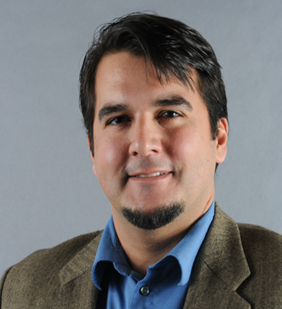
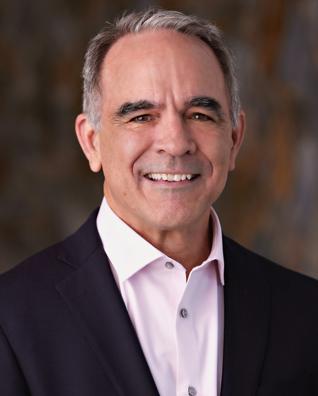
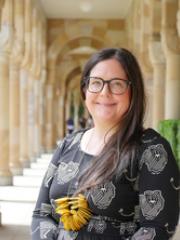
Professor James W P Campbell of the University of Cambridge serves as the Seear Fellow in Architecture and History of Art at Queens’ College. His academic career spans roles as Director of Studies in Architecture and Design , Keeper of Pictures , and Praelector . He lectures on the History and Theory of Architecture and contributes to the Construction History Society as chair.
Dr. Adrian Green serves as Associate Professor (Early Modern British and American History) in the Department of History at Durham University, where he also holds membership in the Institute of Medieval and Early Modern Studies (IMEMS). His academic profile demonstrates a strong commitment to interdisciplinary research bridging historical scholarship with architectural and archaeological approaches. Green's research interests focus on British regional history 1500-1800 , the Social & economic history of housing in Britain 1500-1800 , and the Social & economic history of north-east England 1500-1800 . His work particularly emphasizes the Architecture and archaeology of the built environment in England and North America, 1500-1800 . As General Editor of the British Record Society Hearth Tax series, he has significantly contributed to making this key resource for studying seventeenth-century English houses, economy and society more accessible to scholars. Analysis of Green's recent publications reveals a consistent focus on how built environments reflect social structures, economic conditions, and cultural practices in early modern England. His work frequently examines regional variations, particularly in North-East England, while also addressing broader themes of architectural development, material culture, and the relationship between domestic spaces and social identity. Short-listed for the Architectural Historians of Great Britain's Alice Davis Hitchcock Medallion (2017) Green actively supervises graduate students working on diverse topics related to early modern British history, including studies of seventeenth-century social change, Atlantic world sensibility, non-conformity impacts on family status, timber imports in the British economy, and princely gardens. His research leverages Durham's rich archival resources, particularly for studying North-East England, which he identifies as having "many untapped archival resources located in and near to Durham." He is affiliated with the Centre for Visual Arts and Cultures and the Durham Energy Institute.
Jose E. Martinez-Reyes is an Associate Professor in the Department of Anthropology at the University of Massachusetts Boston. He is also the Director of the Environmental Anthropology Program Minor and focuses his research on the intersections of political ecology, material culture, and biocultural diversity conservation across Mexico, the Caribbean, Fiji, and Galicia. Education: PhD in Anthropology from the University of Massachusetts Amherst, MA from Northeastern University, and a Visiting Fellow at Yale University (2014-15). His research explores how human-environment interactions are shaped by power dynamics, particularly in contexts like forest privatization in Quintana Roo, Mayan climate change adaptation, and the global mahogany supply chain. He has authored two key books: Moral Ecology of a Forest (2016) and La Transformación del Paisaje Puertorriqueño (2011), co-authored with Manuel Valdés-Pizzini and Michael González Cruz. The 15 most recent publications highlight his work in political ecology, material culture, and climate justice, with case studies spanning Mexico, Fiji, Puerto Rico, and the global guitar industry. His awards include a Visiting Fellowship at Yale University (2014-15), reflecting his scholarly contributions to environmental anthropology.
Uwe Dulleck is a Professor at Queensland University of Technology (QUT), associated with the Centre for Behavioral Economics, Society, and Technology (BEST). His research focuses on behavioral economics, healthcare decision-making, and interdisciplinary innovation. He has contributed to studies on cognitive biases in clinical settings, digital transformation in finance, and the application of blockchain in supply chains. Collaborations span global health, media trust, and aging studies. His work bridges experimental economics with real-world policy and industry challenges. Key research interests include decision-making under uncertainty, public policy implications of behavioral insights, and the intersection of technology with economic behavior. Notable projects include analyzing framing effects in medical innovation adoption and investigating trust dynamics in news media. Dulleck’s interdisciplinary approach addresses societal issues such as healthcare efficiency, financial regulation, and sustainable construction practices. His publications highlight themes like biomaterials research collaboration, pandemic behavioral responses, and the role of incentives in education. While no formal awards are listed, his prolific output reflects significant scholarly contributions. Collaborations with institutions like the University of Queensland and international teams underscore his global academic engagement.
Professor Thuy Pham is a leading political and social scientist at Flinders University's College of Business, Government and Law. Her expertise focuses on the political economy of climate change policies , with a specialization in low-emission development, carbon markets, and social inclusion. Her research interests include: Payment for Environmental Services (PES) Reduced Emissions from Deforestation and Forest Degradation (REDD+) Biodiversity conservation and just transition Capacity development for marginalized groups Climate finance and governance Prof. Pham has contributed to global initiatives like the Global Landscape Forum and International Land Coalition , shaping policies for institutions such as the Green Climate Fund and World Bank. She has supervised students across six countries and delivered guest lectures at top universities including Yale and the University of Galway. Notable scientific awards : Australian Climate Action Alumni Award (2023) Future Making Fellowship (2022) Vietnam Ministry of Agriculture Award (2016) UNDP Leadership Program (2006) Her recent work emphasizes blue carbon markets in Vietnam and multistakeholder approaches to low-emission food systems in the Mekong Delta.
Brian Murray is a Research Professor at Duke University's Nicholas School of the Environment and Sanford School of Public Policy , with a secondary appointment at the Nicholas Institute for Energy, Environment & Sustainability. He holds a Ph.D. and M.S. from Duke and a B.S. from the University of Delaware. Fulbright Visiting Research Chair (University of Ottawa, 2015) Convening Lead Author, IPCC Special Report on Land Use Co-author, National Academy of Sciences climate-economy panel His research focuses on environmental economics and climate change policy , particularly market-based mechanisms like carbon taxes and cap-and-trade systems. He has worked extensively with policymakers, including U.S. Congress and Fortune 500 companies, to design emissions reduction strategies. Recent publications analyze electricity demand trends under climate uncertainty, IRA implementation , and cross-state grid cooperation . His work on the Regional Greenhouse Gas Initiative demonstrates how carbon pricing can drive economic growth while reducing emissions. Selected Grants RTOGov: Electricity Governance Network (2022-2027) Interdisciplinary Energy Data Analytics Ph.D. Program (2017-2021) Clean Power Plan Modeling Support (2015-2016) Advisory Roles Director, Nicholas Institute (2021-present) Director, Duke Energy Initiative (2016-2021) Economic Analysis Director, Nicholas Institute (2006-2017)
Gerald Koch is a Privatdozent (PD) and habilitated senior researcher at the Institute for Wood Research, part of the Thünen Institute in Hamburg-Bergedorf, Germany. His work bridges academic research with practical applications in wood science and conservation. His core research focuses on: Anatomical wood species identification and database development Impact of climate change on wood formation and properties Trade regulation for CITES-protected timber species Genetic reference data for origin determination of wood Durability analysis of wood products and alternatives to endangered timbers Dr. Koch leads critical projects including automated image recognition systems for wood identification, digitization of the scientific wood collection (xylothek), and climate adaptation studies for future wood use. His completed work spans tropical wood identification in paper products, nanotomography for wood structure analysis, and sustainability frameworks for small private forests in Vietnam.
Digby Race is a Professor of Land Management and inaugural Dean of the Graduate School at the University of the South Pacific (Fiji), holding an adjunct position at the Fenner School of Environment & Society, Australian National University (ANU). His research focuses on socio-economic dimensions of rural livelihoods, natural resource management, and agroforestry systems in developing regions like the Indo-Pacific and Australia. He has coordinated interdisciplinary projects addressing challenges in community forestry, sustainable timber value chains, and climate change adaptation. Key collaborations include work with institutions in Indonesia, Nepal, and the Pacific Islands. Race has led over 30 research projects since 1999, including initiatives on farm forestry biodiversity linkages and social forestry education programs across Asia-Pacific. Adjunct roles: University of the South Pacific, Linacre College (Oxford) Professional experience: 25+ years in rural development research and academia Methodologies: Mixed-methods approaches combining quantitative and qualitative data His work emphasizes practical solutions for achieving both livelihood resilience and environmental sustainability. Notable contributions include frameworks for evaluating smallholder forestry programs and policy recommendations for climate-resilient agricultural systems.
Erin Kelly is a Professor of Forest Policy & Administration at Cal Poly Humboldt's Department of Forestry, Fire & Rangeland Management. She teaches courses on forest administration, economics, and policy. Her research focuses on human-forest interactions, policy impacts on forests and communities, collaborative governance, and carbon markets. She holds a PhD in Forest Social Science from Oregon State University (2010), an M.S. in Forest Resources (2005), and a B.A. in Psychology (1998). Her work examines state forestry policies, wildfire risk governance, and rural economic transitions. She has advised numerous graduate students on topics like carbon offset markets, wildfire resilience, and community forestry. Notable research includes analysis of U.S. state forestry policies, socio-economic dimensions of cannabis production in rural areas, and the socio-ecological impacts of wildfire. Publications span journals like Environmental Management , Journal of Rural Studies , and Forest Policy and Economics . Her work bridges policy, ecology, and community dynamics, emphasizing interdisciplinary approaches to forest governance challenges.
Dr. Stacey Parker is an Associate Professor at the University of Queensland School of Psychology (Faculty of Health, Medicine and Behavioural Sciences). She serves as an Affiliate of both the ARC Research Hub to Advance Timber for Australia's Future Built Environment (Faculty of Engineering, Architecture and Information Technology) and the Centre for Business and Organisational Psychology . With a research focus on balancing occupational well-being and performance, her work spans high-performance industries like healthcare, transport, and elite sports. She employs methodologies such as work simulation, physiology, and experience sampling to explore stress management, energy conservation, and performance optimization. PhD, University of Queensland Bachelor of Arts (UQ) Bachelor of Small Business Management (UQ) Bachelor (Honours) of Arts (UQ) Her research program integrates self-determination theory with practical applications in areas like diversity and inclusion , employee green behavior , compassion science , and social identity . She has developed frameworks for sustainable work design, examining hidden costs of performance systems and stress recovery mechanisms. Recent publications analyze algorithmic HR systems' impact on motivation, compassion training's physiological effects, and supervisor support dynamics. She serves on editorial boards for the Journal of Occupational Health Psychology and European Journal of Work and Organisational Psychology . As a supervisor , she guides doctoral research on topics like AI-regulated psychological practice, algorithmic performance systems, and neonatal care burnout. Her grants include ARC funding for timber sustainability (2023-2028) and work stress recovery (2021-2025).
Astrid Zabel is a Senior Researcher at the Centre for Development and Environment (CDE) at the University of Bern , where she leads the Sustainable Land Systems impact area and serves on the Executive Committee. Her work bridges environmental economics, biodiversity conservation, and policy implementation, focusing on land-use systems, ecosystem services valuation, and sustainable finance. Research Themes : EU Deforestation Regulation (EUDR), agri-environmental schemes, biodiversity finance, stakeholder processes, green infrastructure, and environmental accounting. Project Leadership : Biodiversa+ INSPIRE, MainWood, Land for Life in Laos, and EUDR advocacy initiatives. Recent Publications (2024-2025): 6+ peer-reviewed articles in journals like AMBIO , Ecological Economics , and Ecosystem Services , alongside policy reports and working papers addressing deforestation regulation compliance, sustainable timber trade, and green infrastructure governance. Collaborative Networks : Engages in interdisciplinary projects with institutions such as the Wyss Academy for Nature, BORIS Portal, and teams across Europe and Africa.
Nicolás C. Ciarlo is a tenured Researcher at the Institute of Archaeology, School of Philosophy & Letters, University of Buenos Aires , and a Ramón y Cajal Fellow at the University of Cádiz. With a PhD in Archaeology (UBA, 2016), his career spans maritime, underwater, and historical archaeology, focusing on technological innovations in naval architecture from the 18th to 19th centuries. Key affiliations: CONICET (2017–present), UCA (2018–2019), School of Philosophy & Letters, UBA Research areas: Shipwreck analysis, archaeometallurgy, metallurgical provenance, cultural heritage management Research interests center on technological change dynamics in maritime contexts. His work integrates historical, archaeological, and archaeometric approaches to study ship construction, ordnance, and ballast materials. Notable projects include the Deltebre I (1813) shipwreck, Roman anchor stock provenance, and 19th-century Chilean naval ballasting practices. Recent articles show a focus on metallurgical analysis of ship fastenings, bronze gunfounding techniques, and conflict archaeology. Collaborations span institutions in Mexico, Spain, Chile, and the U.S. , with methodological emphasis on neutron texture analysis, lead isotope tracing, and geometric morphometrics. Scientific awards include: SAS Early Career Research Support Award (2021) Ramón y Cajal Fellowship (2024) ACUA award (2013) SAS award (2013) As an educator, he has mentored 2 PhD, 9 MA, and 4 BA students , co-chaired symposiums, and developed the Nautical Archaeology Digital Library framework for open-access data sharing. His grants include projects from CONICET, UBA, AEI, and the Institute of Nautical Archaeology.
Andreas Stephan serves as the Acting Dean (Prodean) of the School of Business and Economics at Linnaeus University, a position he has held since May 2023. He is affiliated with the Department of Forestry and Wood Technology and actively participates in multiple research centers including the Linnaeus University Centre for Data Intensive Sciences and Applications (DISA), the Linnaeus University Centre for Equality of Opportunity and Big Data Policy Analysis, and The Bridge—a unique partnership between Södra, IKEA, and Linnaeus University focused on innovation and sustainability in forestry and wood. Stephan holds a master's degree in industrial engineering and management from Technical University in Berlin and a PhD in Economics from Humboldt University Berlin. His research spans forest industry analytics, ESG and financial markets, green investment and finance, with particular focus on how innovation facilitates the green transition of industries. He has published extensively across economics, finance, and sustainability journals, with recent work examining sustainable finance, green bonds, forest economics, and the impact of environmental policies on business performance. His research portfolio includes significant projects such as TallBoard (exploring tall oil application in industrial fiberboards) and investigating the green transformation of the Swedish pulp and paper industry. Stephan serves as an associate editor for the journals Eurasian Economic Review and Business Strategy and the Environment, demonstrating his scholarly leadership in sustainable economics and finance. His recent publications show a strong trend toward integrating environmental considerations with financial decision-making, particularly in portfolio optimization and sustainable investment frameworks. Stephan is deeply embedded in Linnaeus University's research ecosystem, leading and participating in multiple research groups including Deterministic and Stochastic Modelling, Forest Economics, Forest Management, and Small-scale Forestry. His work bridges theoretical economic modeling with practical applications in sustainable industry transformation, reflecting Linnaeus University's commitment to addressing global sustainability challenges through interdisciplinary research.
Charlie Blinn is a Professor and Extension Specialist at the Minnesota Invasive Terrestrial Plants and Pests Center , focusing on forest management, timber harvesting, and sustainable forestry practices. He has been active since 1983, with extensive collaborations across institutions and industries. Education: PhD (Virginia Tech, 1984), MS (University of Tennessee, 1978), BS (Bethany College, 1975) His research emphasizes forest management practices , timber harvesting , and forestry best management practices , particularly addressing the impacts of climate change and operational challenges in the logging industry across the US South and Lake States. Recent publications highlight trends in log truck safety , climate adaptation in forestry, and winter weather impacts on timber sales. His work aligns with UN Sustainable Development Goals, particularly in environmental and economic sustainability. Collaborations include projects with the Minnesota Department of Natural Resources , Legislative-Citizen Commission on Minnesota Resources , and Forest Resources Association .
Prof. Frank Rief is a Professor of Media Design at the Mediadesign Hochschule München, specializing in interface design and visual communication since 2012. He holds a Master of Arts in Communication Design and has over two decades of professional experience in brand and corporate communication through his agency, rief media design GmbH. His teaching focuses on conceptual, visual, and technical development of human-machine interfaces, with research exploring future interface possibilities through student collaboration. Education: Multimedia Design Studies, Mediadesign Hochschule München Master of Arts in Communication Design, HTWG Konstanz (thesis in China's Brand Communication) Research Interests: Interface design evolution, interactive systems, generative design, and sustainable construction communication. His work bridges academic research and industry application, such as the Brandschutznavigator project for TU München and the Zimmerer Bayern app for the carpenters' guild. Key Projects: Developed the LIV App for Bavarian carpenters, integrating offline functionality and compliance tools. Corporate identity redesign for holzbauGU GmbH and arstekton . Academic collaborations include Invisible Lines (interactive dance) and Smart Home Interface student projects. Advising & Grants: Advised multiple student projects (e.g., TEO App for rare disease patients, Daylight visualization tool). No explicit grants mentioned, but projects often involve industry partnerships. Labs/Teams: Directs rief media design GmbH (agency) and collaborates with Media Design Hochschule's academic teams on applied design research.