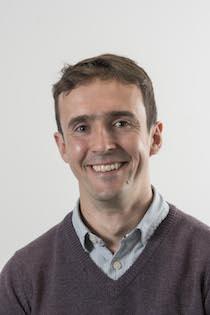
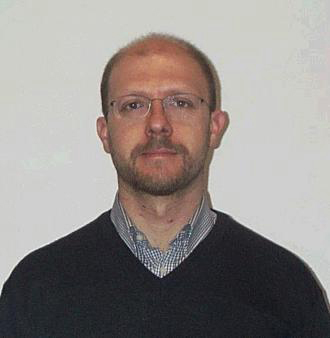
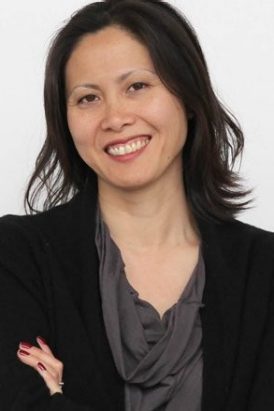
Malgorzata Zboinska is an Associate Professor at Chalmers University of Technology within the Department of Architecture and Civil Engineering . She is a licensed architect and member of the Swedish Association of Architects and National Chamber of Architects of Poland . Hybrid architecture-technology-art research Focus on bio-based materials , digital fabrication , and creative robotics Development Leader of Chalmers' Robotic Fabrication Laboratory Editorial board member of TAD | Technology, Architecture + Design journal Research Themes bridge architecture , digital technology , and art , with expertise in: Sustainable and circular architectural practices 3D printing and robotic construction Material bioinnovation and upcycling Interactive and kinetic architectural solutions Her publications demonstrate strong output in digital fabrication , bio-material applications , and environmental architecture , with international exhibitions at Tempe Center for the Arts (USA) , Dutch Design Week (NL) , and Färgfabriken (Sweden) .
Yuxiang Chen is an Associate Professor in the Department of Civil and Environmental Engineering at the University of Alberta. His research focuses on high-performance buildings, net-zero energy systems, and sustainable construction practices. He integrates advanced modeling techniques, renewable energy solutions, and intelligent design strategies to optimize building performance in cold climates. PhD, Building Engineering (2013), Concordia University MASc, Building Engineering (2008), Concordia University BEng, Building Engineering (2006), Concordia University Dr. Chen’s work emphasizes modular construction, thermal energy storage, and data-driven modeling for building systems. He explores the use of robotics in construction, thermal resistance of masonry walls, and energy-efficient community greenhouses tailored for cold regions. His recent publications highlight trends in building thermal dynamics, with a focus on resistor-capacitor (RC) models, hybrid heating systems, and snow accumulation impacts on solar panels. He also contributes to cold-climate energy management and smart home integration.
Thomas Reynolds is a Senior Lecturer and Chancellor's Fellow in Civil Engineering at the University of Edinburgh School of Engineering. He holds an MEng in Engineering Science from Oxford (2005), PhD from Bath (2013), and PGCert in Teaching from Cambridge (2017). A Chartered Engineer and ICE member since 2010, his industry experience includes structural design for WYG and AKT on projects ranging from Swansea sea lock to Masdar Institute in Abu Dhabi. Research focuses on timber engineering innovation, structural health monitoring, and disaster-resilient construction. Current investigations include cyclone resilience of traditional housing in Madagascar, CLT connection robustness, and bicycle-based bridge monitoring techniques. Publications emphasize experimental mechanics of timber systems, climate impact modeling on structures, and sustainable construction technologies. Recent work explores novel materials applications and field measurement methodologies. He leads projects like 'Sustainable Improvement of Cyclone Resilience for Traditional Houses in Coastal Madagascar' (EPSRC) and 'EDACAB: Efficient Data Acquisition for Condition Assessment of Bridges'. Teaching covers structural mechanics, materials engineering, and design courses.
Mina Konaković Luković is an Assistant Professor in the Department of Electrical Engineering and Computer Science at Massachusetts Institute of Technology (MIT) , affiliated with the Computer Science and Artificial Intelligence Laboratory (CSAIL) . She leads the Algorithmic Design Group , focusing on computational design and fabrication, geometry processing, and robotics. Education: PhD in Computer Science (EPFL), MS & BS in Mathematics (University of Belgrade) Research Interests: Spanning computer graphics, computational fabrication, and 3D geometry processing with applications in smart materials, architectural geometry, and physics-based simulations. Her work integrates machine learning and differential geometry to optimize design algorithms for novel materials and deployable structures. Articles Trends: Recent publications emphasize multi-objective optimization for 3D printing materials, graph grammar in robot design, and computational methods for auxetic structures. Themes revolve around data-driven design, deployable shells, and terrain-adaptive robotics. Scientific Awards: Schmidt Science Fellows Additional Study Grant (2020) ACM SIGGRAPH Outstanding Doctoral Dissertation Honorable Mention (2020) Eurographics PhD Award (2020) Patrick Denantes Memorial Prize (2019) Doctoral Program Thesis Distinction from EDIC EPFL (2019) SIAM Early Career Prize (2020) Eurographics Junior Fellows (2021) Advising & Grants: Mentored by Prof. Dr. Wojciech Matusik and Prof. Dr. Mark Pauly, with funding from Swiss National Centre of Competence in Research (NCCR) Digital Fabrication. She actively participates in program committees and summer schools.
Nicholas Vlachopoulos is a Professor of Civil Engineering at the Royal Military College of Canada (RMC) with cross-appointments at Queen's University's Department of Geological Science and Geological Engineering and School of Environmental Studies. He holds a PhD (2009) from Queen's University and B/A.Sc/M.A.Sc degrees from RMC. His research focuses on geotechnical engineering, geomechanics, and environmental engineering, emphasizing physical testing, field observations, and analytical techniques to advance engineering practices. Key roles include Research Director of the GeoEngineering Centre, CEO of Geologos Inc., and Director of RMC's Green Team addressing environmental challenges in military facilities. Education: PhD in Geological/Geotechnical Engineering - Queen's University (2009) M.A.Sc in Civil Engineering - Royal Military College (1995) B.A.Sc in Civil Engineering - Royal Military College Research Interests: Geotechnical Engineering (rock mechanics, tunneling) Environmental remediation in defense facilities Structural health monitoring using fiber optics Rock bolt and ground support systems Military infrastructure resilience Professional Contributions: Founder of Geologos Inc., specializing in geotechnical solutions Recipient of DND Innovation Award for environmental solutions Teaching excellence awards (2018) Supervised award-winning graduate students (2017-2021) Lab/Team Leadership: RMC Green Team: Environmental engineering solutions for Canadian Forces bases GeoEngineering Centre: Interdisciplinary geotechnical research
Bunji Izumi is an Assistant Professor at the Department of Architecture and Technology, Faculty of Architecture and Design, NTNU, supported by the Scandinavia-Japan Sasakawa Lectureship. He holds a Dipl.-Ing., M.Sc., and B.Eng., and is a registered architect in Japan. His career includes roles at Nikken Sekkei Ltd. (Tokyo) as Senior Computational Designer and Associate in Structural Design, and at Driendl Architects in Vienna, Austria. His research focuses on structural engineering, timber-steel composite systems, fire safety, digital design, and sustainable architecture. Key areas include optimization methods in architectural design, circular timber structures, and interdisciplinary collaboration between architects and engineers. Publications highlight work on foldable canopies, fire-resistant composites, BIM integration, and structural education reforms. He contributes to exhibitions like IASS 2019 and collaborates on projects such as the Shogakukan Building and Vienna Indoor Swimming Pool. His educational background includes postgraduate studies at TU Vienna and the University of Tokyo, emphasizing structural design and timber engineering. Current research trends emphasize sustainability, circular design, and computational workflows.
Ariel Genadt is a Lecturer in Architecture at the Stuart Weitzman School of Design, University of Pennsylvania. His work bridges research, teaching, and practice, focusing on modern and contemporary Japanese architecture, architectural resilience, and the intersection of technology, sustainability, and cultural expression. He holds a PhD in Architecture from the University of Pennsylvania (2016), with certificates in Ecological Architecture and University Teaching, alongside degrees from the Architectural Association (London) and Technion (Israel). Education: PhD in Architecture, University of Pennsylvania (2016) Master of Arts in Histories and Theories, Architectural Association, London (2004) Bachelor of Architecture, Technion, Israel (1997, cum laude) Research Interests: Japanese architectural history and practice Sustainable and resilient design Material innovation and tectonic expression Cultural preservation and reinterpretation Genadt's publications and exhibitions explore themes like architectural resilience in Japan, material assemblies, and cultural narratives in urban spaces. His curatorial work includes the Critical Abstractions: Modern Architecture in Japan exhibition (2018) and the 50 Years in Books by Penn Architecture PhDs database (2016). He has practiced globally, collaborating on projects in France, Israel, China, and beyond, and has taught at institutions including Swarthmore College and the Technion. His teaching spans courses on architectural theory, climate-responsive design, and Japanese modern architecture. Notable courses include ARCH 7120: Architectural Envelopes and ARCH 7110: Modern Architecture in Japan . He has advised the Master of Architecture thesis program and led design-build workshops at Tokyo University. Genadt’s professional affiliations include roles as a Fellow Researcher at the Japan Society for the Promotion of Science (Kengo Kuma Lab, 2012) and a visiting scholar at Fondazione Renzo Piano (2013). His work emphasizes cross-cultural dialogue and the role of architecture in addressing environmental and social challenges.
Stefano Invernizzi is an Associate Professor at the Department of Structural, Geotechnical and Building Engineering (DISEG) of Politecnico di Torino. His expertise spans civil and structural engineering, focusing on fracture mechanics, finite element analysis, and numerical modeling of historical masonry and concrete structures. Teaches Statics and structural analysis courses at the Faculty of Architecture. Supervised numerous PhD and degree theses on masonry, concrete, and computational mechanics. Research emphasizes scale effects on material strength, fractal properties of structural materials, contact mechanics, and seismic vulnerability of historical buildings. He co-developed the sequentially linear saw-tooth softening model for robust analysis of reinforced concrete structures. Collaborated with Prof. Jan Rots on computational mechanics and contributed to projects like TOMORROW (additive manufacturing for building walls) and DURA_LAM (nano-materials for timber durability). His work aligns with SDGs 9 (Industry Innovation) and 11 (Sustainable Cities). He leads the Laboratorio di Meccanica della Frattura and has authored over 30 publications in journals like Engineering Fracture Mechanics and International Journal of Fracture . His research integrates statistical theories of strength with nonlinear numerical simulations for disordered materials.
Cameron Murray is an Associate Professor in the Department of Civil Engineering at the University of Arkansas. He specializes in concrete research with a focus on alternative cement technologies, particularly belitic calcium sulfoaluminate (BCSA) cement, and prestressed concrete structures. Dr. Murray directs a research group that investigates rapid-setting concrete materials for infrastructure repair and bridge engineering applications. His work bridges fundamental material science with practical engineering solutions for transportation infrastructure. Dr. Murray's educational background includes: Ph.D. in Civil Engineering from the University of Oklahoma (2017) M.S. in Civil Engineering from the University of Arkansas (2014) B.S. in Civil Engineering from the University of Arkansas (2012) Dr. Murray's research focuses on innovative concrete technologies with particular emphasis on alternative cementitious materials that offer environmental benefits and rapid-setting properties. His work explores the structural applications of belitic calcium sulfoaluminate (BCSA) cement for infrastructure repair, prestressed concrete systems, and bridge engineering. He investigates material properties, durability mechanisms, and structural performance to develop practical solutions for transportation infrastructure challenges. His research addresses critical issues such as early-age concrete behavior, corrosion resistance, and sustainable construction practices that reduce carbon emissions in the concrete industry. Analysis of Dr. Murray's recent publications reveals a strong focus on alternative cement technologies, particularly belitic calcium sulfoaluminate (BCSA) cement and its structural applications. His work spans material characterization, structural performance testing, and practical implementation in transportation infrastructure. Key research themes include rapid-setting concrete for infrastructure repair, prestressed concrete behavior, and sustainable concrete technologies with reduced carbon footprints. His publications demonstrate a progression from fundamental material studies to applied research addressing real-world infrastructure challenges, particularly in bridge engineering and rapid repair applications. Dr. Murray has received significant recognition for his teaching and research contributions: Department's outstanding teacher award (three times) College of Engineering Rising Teacher Award (2022-23) ACI Walter P Moore, Jr. Faculty Achievement Award (2022) Dr. Murray has successfully mentored numerous graduate students through their research projects, with a particular focus on concrete technology and structural engineering applications. His research group has secured substantial external funding totaling $6.2 million as PI or Co-PI, with additional $650,000 in equipment donations. Current funding sources include state DOTs, concrete industry groups, private industry, and federal agencies such as the US Army Corps of Engineers. His projects address critical infrastructure needs including rapid bridge deployment systems, alternative cement technologies, and concrete durability solutions. Dr. Murray directs the Concrete Research Laboratory at the University of Arkansas, located at the Grady Harvell Civil Engineering Research and Education Center (CEREC). The laboratory features a 20,000 sq. ft. high-bay testing area with a 100 ft. by 40 ft. strong floor, capable of handling large-scale structural testing. The facility includes specialized equipment for concrete material characterization, structural testing of reinforced and prestressed concrete members, and environmental monitoring systems. His research team collaborates with industry partners including Coreslab Structures and government agencies to address practical infrastructure challenges.
Tsz Yan Ng is an Associate Professor of Architecture at the University of Michigan’s Taubman College of Architecture and Urban Planning, affiliated with the Center for Japanese Studies. Her work bridges architecture, art, and material innovation, focusing on textile manipulation, experimental concrete forming, and labor studies. She holds a Master of Architecture from SUNY Buffalo and Cornell University. Education: Master of Architecture II, Cornell University Master of Architecture & Bachelor of Professional Studies, SUNY Buffalo Research & Awards: Notable projects include Robotic Needle Felting (Architect Magazine R+D Award) and concrete 3D printing (AIA Upjohn Grant). Awards include the ARCC New Researcher Award (2020) and Emerging Voices 2022 (Architectural League of New York). Key Contributions: Her work explores labor in manufacturing, digital fabrication, and sustainable materials. Recent projects include the SPLAM timber pavilion and co-editing Twisted (Actar Publishing, 2018). She co-organized the From Lab to Site: Innovations in Concrete symposium (2019). Teaching: Courses include Fabrication and Sartorial Architecture , emphasizing hands-on material experimentation and interdisciplinary collaboration.
AnnaLisa Meyboom is an Associate Professor at the University of British Columbia’s School of Architecture and Landscape Architecture (SALA). As Director of the Transportation Infrastructure and Public Space Lab (TIPSlab), she bridges engineering and architecture through research on digital fabrication, autonomous vehicles, and responsive environments. Engineering from University of Waterloo Architecture from University of British Columbia Her research explores: Digital Wood Fabrication: Robotic construction techniques for large-scale timber structures. Autonomous Urbanism: Reimagining city layouts for self-driving vehicles. Responsive Architecture: Integrating technology into adaptive building systems. While her publications span from 2000 to 2022, recent works focus on infrastructure’s cultural value and future mobility systems. She has taught at institutions globally and led design-build initiatives across Canada. Co-founder of TIPSlab Featured speaker at international conferences Combines engineering rigor with architectural creativity
Associate Professor Joe Gattas is affiliated with the University of Queensland's School of Civil Engineering , where he leads the Folded Structures research group. His work bridges origami-inspired engineering , computational building design , and advanced manufacturing , with a focus on lightweight/modular structures and timber engineering . Education: BEng (2009) and PhD (2013) from the University of Queensland and University of Oxford, respectively. Research interests emphasize digital fabrication , hybrid materials , and structural innovation . His recent publications highlight trends in timber-CFRP composites , self-shaping structures , and value chain optimization for sustainable timber use. Scientific awards include the prestigious John Monash Scholarship . He actively supervises PhD and Master’s students in projects related to timber composites , structural optimization , and low-cost housing . Joe contributes to ARC Research Hub initiatives , co-leading Manufacturing Innovation and Value Chain Innovation nodes, and develops open-source tools like TimberTracker to visualize timber supply-demand dynamics.
John Gales is an Associate Professor in Civil Engineering at York University, leading research on structural fire resilience and human evacuation dynamics. His work integrates fire science, materials engineering, and behavioral studies to enhance building safety in contexts ranging from urban infrastructure to wildfire zones. His recent publications analyze structural performance in fires, wildfire building codes, and applications of AI in fire safety engineering. Research consistently addresses equity considerations, particularly gender diversity in engineering education.
Professor Chien Ming Wang is the Transport and Main Roads Chair Professor of Structural Engineering at the University of Queensland (UQ) since 2017. He also holds an Adjunct Professor position at Monash University and contributes to the Centre for Marine Science within UQ’s Faculty of Science. Alumnus of the Year 2015, Monash University Chartered Structural Engineer Educational Background : Bachelor of Civil Engineering (First Class Honours), Monash University, 1978 M.Eng.Sc. and Ph.D., Monash University, 1980 & 1982 Research Focus : Pioneering Very Large Floating Structures (VLFS) with applications in floating bridges, oil storage, and aquaculture systems. His work spans structural stability, vibration analysis, optimization of arches, and nonlocal theories for nanostructures. He developed Hencky bar-chain models and Shooting-Optimization Technique for boundary value problems. Scientific Leadership : Authored 500+ journal papers, 6 books, and 4 edited volumes with over 26,000 citations. Led $10M+ in industrial projects including Blue Economy CRC initiatives. Holds multiple patents in floating structures and aquaculture systems. 2019 Nishino Medal 2019 JN Reddy Medal IStructE Singapore Structural Award for Sustainability 2016 Minister of National Development R&D Special Mention 2017 Advising & Collaborations : Supervised 28 PhD and 20 MEng students, including work with NUS , SINTEF , and PolyU . Current projects involve offshore seaweed farms, self-healing concrete, and hybrid timber-cardboard composites.
Dr. Edvard P.G. Bruun is an Assistant Professor in the School of Civil and Environmental Engineering at Georgia Tech, specializing in robotic automation for assembling and disassembling large-scale building components. His research develops computational methods for geometrically complex structures requiring robotic fabrication. Education includes: PhD in Civil and Environmental Engineering, Princeton University (2024) MASc in Civil Engineering, University of Toronto (2017) BASc in Civil Engineering, University of Toronto (2015) Research focuses on leveraging cooperative multi-robot systems for construction automation and material circularity. Current projects include scaffold-free robotic assembly techniques, reusable timber structures, and digital workflows for masonry vaulting. Recent publications demonstrate innovations in robotic construction methods and financial risk modeling, with applications spanning sustainable architecture and structural engineering. Scientific awards: Charlotte Elizabeth Procter Fellowship (2023) O.H. Ammann Research Fellowship (2023) Architect Magazine R+D Award (2021) Princeton Catalysis Initiative Award (2020) NSERC Alexander Graham Bell Scholarship (2019) Leads the Bruun Automation Research Lab and supervises graduate students including Chisung Kim. Secured funding from NSF, ASCE, and institutional grants for projects on robotic fabrication and sustainable construction.