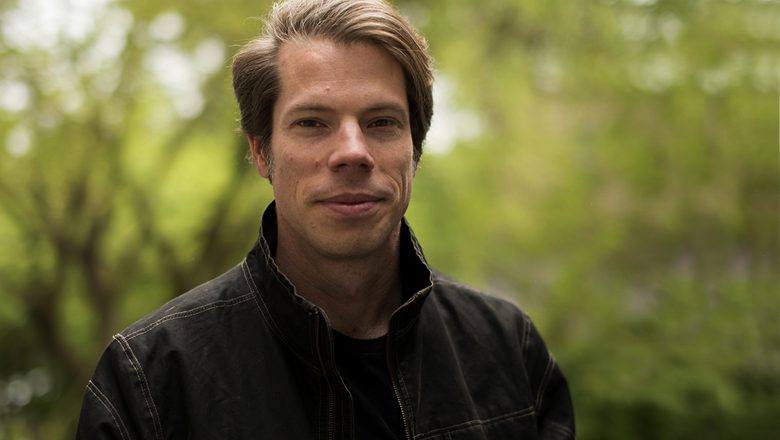
Harry Nelson is an Associate Professor at the University of British Columbia (UBC) within the Faculty of Forestry , specifically the Department of Forest Resources Management . His work focuses on natural resource policy, climate change adaptation, and sustainable forest management in Canada. Research Themes : Ecosystems and Climate Change, Sustainable Forest Management, Indigenous Governance Key Interests : Climate change impacts on forestry, ecosystem services, policy development Nelson’s research explores the structural transformation of the forest sector under changing markets and public expectations. He investigates ecosystem services as a business model for Indigenous forest management in BC and analyzes global climate adaptation strategies. Recent publications highlight cross-border forestry challenges, wildfire risks, and socio-economic dynamics in forest enterprises. His 15 most recent articles (2019–2025) span interdisciplinary topics such as climate change adaptation, Indigenous governance, bioeconomy, and global forest policy. These works emphasize the integration of ecological and economic frameworks to address sustainability. Scientific awards and recognitions: No awards explicitly mentioned in the provided texts. Nelson’s email address ( harry.nelson@ubc.ca ) and research areas are publicly available. No student advisement details or grant information is provided in the scraped data.
Philip Evans serves as Professor in the Department of Wood Science at the University of British Columbia's Faculty of Forestry, holding the British Columbia Leadership Chair in Advanced Forest Products Manufacturing Technology. He maintains an additional affiliation as Honorary Professor in the Department of Materials Physics at The Australian National University, reflecting his international research impact in sustainable forest products. His academic foundation includes a First Class BSc (summa cum laude) and Ph.D. from the University of Wales Bangor, followed by postdoctoral research at Abertay University in Scotland. Career progression led him from Lecturer to Professor and Director of ANU’s Centre for Science & Engineering of Materials before his current UBC appointment. Professor Evans' research integrates molecular-scale wood modification using plasma technology with practical material development. His portfolio addresses critical industrial challenges through plasma-modified wood surfaces for light absorption, X-ray micro-CT/VR systems for wood microstructure analysis, sustainable alternatives to old-growth mahogany in musical instruments, aerospace panel enhancements, and AI-driven detection of illegal timber trade. This dual focus on fundamental science and translational applications drives innovation in replacing non-sustainable materials. His exceptional contributions are recognized by: DOW Chemical Company Distinguished Lecturer Fellow of International Academy of Wood Science Fellow of Institute of Materials, Minerals & Mining Commonwealth Forestry Association Medal (Americas) Japanese Ministry for Science & Technology Research Award Oxford Commonwealth Forestry Bureau Book Prize As director of the Wood Surface Science Lab, he actively collaborates with industry partners to solve complex technical problems in forest products manufacturing, while mentoring junior colleagues through his integrated research-teaching approach. Current projects emphasize sustainable material development and advanced analytical techniques for global forestry challenges.
Giuseppe Carlo Marano is a Full Professor at the Department of Structural, Building and Geotechnical Engineering at Politecnico di Torino. He is also a component of the SISCON Interdepartmental Center for Infrastructure Safety. With expertise in civil and structural engineering, his work focuses on machine learning applications, seismic risk reduction, and sustainable structural optimization. Education Graduated cum laude in Structural Engineering from Polytechnic University of Bari PhD in Structural Engineering from University of Florence (2000) Research Interests Marano's research spans structural optimization, seismic engineering, and machine learning applications in civil infrastructure. He develops advanced computational models for: Seismic retrofitting of existing structures Optimization of steel and masonry structures Recycled materials in concrete production AI-driven structural health monitoring Multiobjective design methodologies Publication Trends His recent work emphasizes: Machine learning for concrete mix design and damage assessment Optimization of gridshells and arch structures Seismic isolation systems and vibration control Sustainable construction practices with recycled materials Multiobjective genetic algorithms for structural design Scientific Recognitions National Scientific Qualification - First Band (2013, MIUR Italy) Certificate of Appreciation for Outstanding Lecture (2012, China) Academic Contributions As an educator, he teaches: Consolidamento Strutturale (Structural Consolidation) Dinamica delle Vibrazioni Random (Random Vibration Dynamics) Progettazione Generativa (Generative Design) He also leads Challenge@PoliTo initiatives and contributes to national infrastructure safety regulations. Research Projects ADAPT4CE - Adaptive Digital Systems for Circular Economy (2025-2028) AI-ENVISERS - AI for Seismic Retrofit Environmental Impact (2023-2025) ADDOPTML - Additive Manufacturing Optimization (2021-2025)
Gregory Paradis is an Assistant Professor in the Department of Forest Resources Management at the University of British Columbia (UBC) Faculty of Forestry. His research focuses on sustainable forest management, integrating operations research, mathematical optimization, and systems modeling to address complex interactions between ecosystems, industries, and society. He works with the FRESH Lab and collaborates with the Integrated Remote Sensing Studio, emphasizing ecological and economic integration in forest planning. Sustainable Forest Management Operations Research Forest Economics Data Science Risk Assessment GIS-based Methods His research spans forest inventory optimization, climate change adaptation strategies, wildfire risk modeling, and decision support systems for invasive species. He develops computational frameworks to enhance wood supply planning, carbon management, and ecological resilience. Recent work includes machine learning applications for fire safety in timber structures and automated road planning tools for wildlife conservation. Paradis’s publications highlight trends in applying optimization methods to sustainable forestry, with a focus on biodiversity, climate adaptation, and value chain innovation. He advocates for interdisciplinary approaches that bridge silviculture, industrial engineering, and data science to tackle emerging challenges in forest ecosystems. As an educator, he seeks motivated students with quantitative and creative problem-solving skills. His lab collaborates on remote sensing integration, risk assessment models, and policy-relevant forest management strategies, ensuring plans account for uncertainties like insect infestations or windthrow events.
Dr. Matthew Brookhouse is a Senior Lecturer at the Fenner School of Environment & Society, part of the Australian National University's Institute for Climate, Energy & Disaster Solutions. With a PhD in Dendroclimatology from ANU, he specializes in using forest structural complexity and tree-ring analysis to understand climate interactions and ecological responses in Australian subalpine environments. Research Focus: Sub-alpine ecology, Dendrochronology, CO2 responsiveness in eucalypt species Teaching: First-year research methods with emphasis on statistical application, advanced modeling and field botany Projects: Leading collaborative snow-gum dieback research and dendrochronological monitoring initiatives His publications span 2006-2025 with recent emphasis on machine learning applications for forest monitoring, tropical tree-ring chronologies for climate change, and climate sensitivity in Australian alpine ecosystems. Key collaborations include institutions like Australian Nuclear Science and Technology Organisation and University of Canberra researchers. Current projects focus on snow-gum woodland dieback mechanisms, high-resolution dendrometric monitoring, and integrating dendrochronology with environmental policy frameworks. He maintains active supervision of research students and contributes to both undergraduate and postgraduate curriculum development.
Dr. Sheryl Staub-French is a Professor and Head (Pro Tem) in the Department of Civil Engineering at the University of British Columbia (UBC), Faculty of Applied Science. She directs the BIM TOPiCS Lab, focusing on digital delivery methods for sustainable construction using BIM. Her research spans over 100 publications in BIM, VDC, and collaboration frameworks. She previously served as Associate Dean of Equity, Diversity, and Inclusion (EDI), advancing inclusive practices in engineering education. She holds a BS from Santa Clara University and MS/PhD from Stanford University. Her research interests include BIM implementation challenges, design coordination, 4D visualization, and sustainable construction innovation. She teaches courses like CIVL 300 (Construction Engineering), CIVL 426 (Virtual Design and Construction), and advanced BIM topics. Her lab collaborates with industry/government to develop BIM guidelines and tools. Notable projects include UBC’s Brock Commons Tall Wood Building and studies on IPD adoption barriers in Canada. Her work bridges academia and industry, emphasizing digital transformation and EDI. She has pioneered BIM-based methods for facility management and energy modeling, addressing gaps in information quality and handover processes. Her contributions span policy development, tool innovation, and educational reforms to enhance construction sector efficiency and inclusivity.
Jeff Sayer is a Professor in the Department of Forest and Conservation Sciences at the University of British Columbia (UBC) Faculty of Forestry . His research focuses on applied conservation science and the human dimensions of environmental change , with fieldwork spanning Indonesia, West and Central Africa, and Southeast Asia. Current projects include sustainable landscapes in Indonesia (since 2010), forest transitions in Ghana and the Congo Basin (since 2000), and new approaches to conservation science (since 2000). Research emphasizes integrated natural resource management, landscape-scale decision-making, and reconciling agriculture with biodiversity conservation. Key research themes: Integrated landscape approaches for multifunctional landscapes Forest governance and tenure conflicts Policy coherence for Sustainable Development Goals Human-environment interactions in tropical regions Recent publication trends show interdisciplinary focus on deforestation-free trade policies, agroforestry systems, forest governance challenges, and transdisciplinary science applications across tropical Asia, Africa, and Canada.
Jan Knippers is a Professor and Institute Director at the University of Stuttgart's Faculty of Architecture and Urban Planning , leading the Institute of Building Structures and Structural Design (ITKE) . He co-founded Knippers Helbig Advanced Engineering and established Jan Knippers Ingenieure in 2018 to focus on innovative fiber composite and timber structures. Key roles: Deputy Executive Director of Cluster of Excellence IntCDC , former Vice-Rector for Research (2019-2021), and Dean of Faculty of Architecture (2021-2023) Technical focus: Hybrid FRP-Timber systems, computational design, and biomimetic principles His projects include the 2024 Hybrid Flax Pavilion , Urbach Tower (2024), and BUGA Fiber Pavilion (2019). He contributes to European standardization committees and serves as 2024 Leverhulme Visiting Professor at University College London.
Iris D. Tommelein serves as the Roy W. Carlson Distinguished Professor in the Civil and Environmental Engineering Department at the University of California, Berkeley's College of Engineering, where she directs the Project Production Systems Laboratory (P2SL). A globally recognized pioneer in Lean Construction, she has revolutionized architecture-engineering-construction (AEC) practices through research, industry workshops, and leadership since co-founding the Lean Construction Institute in 1997. Her educational foundation spans multiple disciplines: Ph.D. in Civil Engineering (Construction Engineering and Management), Stanford University, 1989 M.S. in Computer Science (Artificial Intelligence), Stanford University, 1989 M.S. in Civil Engineering (Construction Engineering and Management), Stanford University, 1985 B.S. (5-year degree) in Civil Engineer-Architect, Vrije Universiteit Brussel, Belgium, 1984 Professor Tommelein's research centers on transforming construction processes through Lean principles and digital innovation . Her work pioneers takt planning for workflow reliability, industrialized construction for labor and sustainability challenges, and mistakeproofing to eliminate errors. She integrates digital twins , AI , and optimization to develop practical decision-support systems for supply chains, logistics, and production management. Recent focus includes modular offsite construction and Industry 4.0 applications. Analysis of her 2023-2025 publications reveals intensifying research on takt planning maturity models and industrialized construction feasibility , with growing emphasis on mass timber automation and visual management systems. Her work consistently bridges lean theory with practical implementation across megaprojects, subcontracting networks, and heavy civil engineering. Her exceptional contributions have earned: Lean Pioneer Award (Lean Construction Institute, 2015) National Academy of Construction induction (2019) PPI Technical Achievement Award (2022) Robert B. Harris Award (University of Michigan, 2024) ASCE Construction Management Award (2024) - first woman recipient in 51 years Through the P2SL, she leads industry-collaborative research on production system design, mistakeproofing frameworks, and digital transformation. Her grant-funded projects develop assessment tools for industrialized construction adoption and takt planning methods adaptable to diverse project types. She actively mentors graduate students and drives knowledge transfer via workshops and the annual Construction Innovation Day. The Project Production Systems Laboratory (P2SL) operates as a global hub for construction innovation, partnering with owners, contractors, and suppliers to implement lean production systems. Current initiatives include developing serious games for mistakeproofing training, optimizing work density methods for heavy civil projects, and creating digital twins for real-time construction management.
Prof. Douglas Sheil is a Chairholder in Forest Ecology and Forest Management at Wageningen University & Research. He holds a MA in Natural Sciences from Cambridge and an MSc in Forestry from Oxford. His career includes roles at the University of Oxford, CIFOR (Indonesia), the Institute for Tropical Forest Conservation in Uganda, and the Norwegian University of Life Sciences (NMBU). His research focuses on tropical forest ecology, biodiversity conservation, and human-forest interactions, with over 200 publications. He co-authored the influential textbook Tropical Rain Forests: Ecology, Diversity, and Conservation (2010). Awards include the Biotropica Prize (2004) and the Queen’s Award for Forestry (2015). Education: MA (Natural Sciences, Cambridge), MSc (Forestry, Oxford) Key Roles: Director of Institute for Tropical Forest Conservation (2008–2012), Professor at NMBU (2013–2020) Research Interests: Tropical forest dynamics, climate change impacts, conservation strategies, and the socio-ecological dimensions of forest management. His work spans field studies in Africa, Southeast Asia, and Oceania, emphasizing interdisciplinary approaches to address deforestation, biodiversity loss, and sustainable land use. Recent Trends in Articles: Focus on mycorrhizal networks, oil palm impacts, lightning disturbance, and mammal population responses to human activity. He explores mechanisms linking forest structure to ecosystem services, such as carbon sequestration and water regulation, often integrating remote sensing and global datasets. Awards: Biotropica Prize, Queen’s Award for Forestry Grants/Projects: Studies on lightning effects in African forests, camera trap mammal surveys, and policy analyses for vegetable oil sustainability. Labs/Teams: Leads interdisciplinary groups at Wageningen, collaborating with CIFOR and international networks. Active in IUCN committees to translate science into conservation policy.
Wesley McGee serves as Associate Professor of Architecture and Director of the Fabrication and Robotics Lab (FABLab) at the University of Michigan Taubman College of Architecture and Urban Planning. He co-founded Matter Design, a studio pioneering innovative applications of advanced manufacturing in architectural production across global contexts including the US, Europe, Middle East, and Australia. Education Bachelor of Science in Mechanical Engineering, Georgia Tech Master of Industrial Design, Georgia Tech McGee's research critically interrogates material production methods in architecture through robotics and digital fabrication, developing novel connections between design, engineering, and manufacturing processes. His work explores spatial-laminated timber systems, geometrically adaptive robotic workflows, and real-time fabrication-aware form finding to create material-efficient architectural solutions. His publications trend toward integrating computational design with physical construction, emphasizing topological optimization, adaptive robotic motion planning, and additive manufacturing techniques that reduce material usage by up to 46% compared to conventional systems. Scientific Awards Architectural League Prize for Young Architects & Designers Design Biennial Boston Award ACADIA Award for Innovative Research Architect Magazine R+D Award (multiple) McGee leads NSF Regional Innovation Engines semifinalist projects including Next-Generation Factory-Built Housing and secures University of Michigan grants for climate action initiatives. His Matter Design studio collaborates with architects, engineers, and artists on exhibitions like Climate Futures and SPLAM, advancing equitable city-making through material innovation. As FABLab Director, he operates a cutting-edge robotics facility where industrial tools are reconfigured for architectural production, mentoring students in courses like ARCH 581 (Advanced Robotics) and ARCH 702 (Robotic Engagement) while pushing boundaries in mass timber and glass fabrication.
Hua Ge is a Professor in the Department of Building, Civil and Environmental Engineering at Concordia University's Faculty of Engineering and Computer Science. She holds a Tier II Concordia University Research Chair in High Performance Building Envelope for Climate Resilient Buildings and leads extensive research in building science and climate adaptation. Her research focuses on wind-driven rain analysis , hygrothermal performance of building envelopes , advanced building facades , innovative wood-frame construction , and low-energy buildings . Current work examines climate change impacts on wind-driven rain loads, urban micro-climate effects, climate-resilient building envelopes, dynamic facades, and low-carbon healthy buildings. Her methodology combines large-scale laboratory testing, field monitoring, and computational modeling. Her 15 most recent publications demonstrate strong trends in nature-based climate resilience solutions , overheating risk mitigation in educational buildings , advanced hygrothermal modeling of wood-frame systems , and carbon sequestration strategies for buildings. The work spans multiple sub-disciplines including computational fluid dynamics, life cycle assessment, stochastic modeling, and field validation studies across Canadian climates. Tier II Concordia University Research Chair (CURC) in High Performance Building Envelope for Climate Resilient Buildings Professional Engineers of Ontario American Society of Heating, Refrigerating and Air-conditioning Engineers ASHRAE TC4.4 Building materials and building envelope performance (Subcommittee Chair) Professor Ge has supervised 42 graduate students (26 PhD, 16 MASc), including current advisees working on nature-based solutions, climate-resilient envelopes, and building integrated photovoltaics. Her research is supported by Concordia University Research Chair funding and collaborative projects with institutions like BCIT. She directs activities at Concordia's Building Envelope Test Facility and contributes to national standards through ASHRAE.
Markku Karjalainen is a Professor in the Department of Architecture at Tampere University's Faculty of Built Environment. With over 80 research publications spanning from 2016 to 2025, he has established himself as a leading expert in timber construction and wooden building systems in Finland. Professor Karjalainen's research primarily focuses on timber construction , particularly multi-story wooden buildings, dovetail wood construction techniques, and sustainable building practices. His work spans architectural design, structural engineering, fire safety, and environmental impact assessment of wooden structures. He has conducted extensive statistical analyses of Finnish timber residential buildings, examining construction practices from 1995 to the present. His research demonstrates a strong commitment to advancing wooden construction technologies while addressing practical challenges in fire safety, structural performance, and building physics. Analysis of his recent publications (2023-2025) reveals a consistent focus on dovetail construction techniques for mass timber elements, with numerous studies examining structural performance, fire properties, and air permeance. His work bridges theoretical research with practical applications in the construction industry, particularly in Finland where wooden multi-story construction has seen significant growth. Karjalainen's research often involves international collaboration, with studies comparing practices across different countries and examining global perspectives on timber construction. His scholarly output demonstrates a methodical progression from basic statistical analysis of building practices to increasingly sophisticated investigations of specific construction techniques and their performance characteristics. This evolution reflects both his growing expertise and the maturation of timber construction as a field of academic inquiry.
Felipe Thomaz is an Associate Professor of Marketing at Saïd Business School, University of Oxford, and Deputy Director of the Oxford Future of Marketing Initiative. He holds a PhD in Marketing from the University of Pittsburgh and previously taught at the University of South Carolina. His research focuses on marketing strategy, AI ethics, illicit markets, and ESG integration, with notable contributions to frameworks like Ad Net Zero for net-zero advertising emissions. He collaborates with UN agencies, NGOs, and tech companies to address global sustainability goals and wildlife trafficking networks. Education: PhD in Marketing (University of Pittsburgh), MSc in Marketing & Finance (University of Pittsburgh), BSc in Animal Sciences (University of Florida). Research interests include digital marketing channels, brand performance via social networks, AI-driven marketing strategies, and conservation science linked to wildlife trade. His work bridges academia and industry, resulting in spinouts and IP transfers from Saïd Business School. Key projects include: Ad Net Zero: Global standard for reducing advertising emissions UN collaboration on wildlife trafficking through dark web analysis UNESCO partnerships on eliminating stereotypes in advertising His interdisciplinary approach spans marketing, mathematics, and conservation science, with publications in top journals like Journal of Marketing and Conservation Science and Practice .
Susanna Hecht is a Professor of Urban Planning at the UCLA School of Public Affairs, specializing in tropical development, political ecology, and Amazonian studies. She holds a Ph.D. in Geography and has advised graduate students including Mariana Fajardo-Arboleda and Sebastián Solarte-Caicedo. Her research integrates historical ecology, remote sensing, and socio-political analysis to address deforestation, forest resurgence, and alternative development pathways in Latin America. Key areas of focus include the socio-environmental impacts of corporate agriculture (soy, oil palm), indigenous land management practices (e.g., Amazonian Dark Earths), and the role of migration/remittances in reshaping rural land use. She has pioneered work on forest transition theory and critiques of Malthusian explanations for deforestation. Awarded the David Livingstone Medal and Carl O. Sauer Award, Hecht's influential books include *The Fate of the Forest* and *The Scramble for the Amazon*. Her work has shaped policies for extractive reserves, climate finance mechanisms, and global environmental governance. She collaborates with international agencies like NSF, NASA, and the MacArthur Foundation, and serves at Princeton's Institute for Advanced Study. Recent projects explore globalization's impact on soy frontiers, carbon dynamics in pre-Columbian landscapes, and the socio-ecological implications of forest resurgence. Hecht advocates for integrating indigenous knowledge into modern conservation strategies and critiques neo-extractivist development models.