University of California , Santa Barbara (UCSB)United States
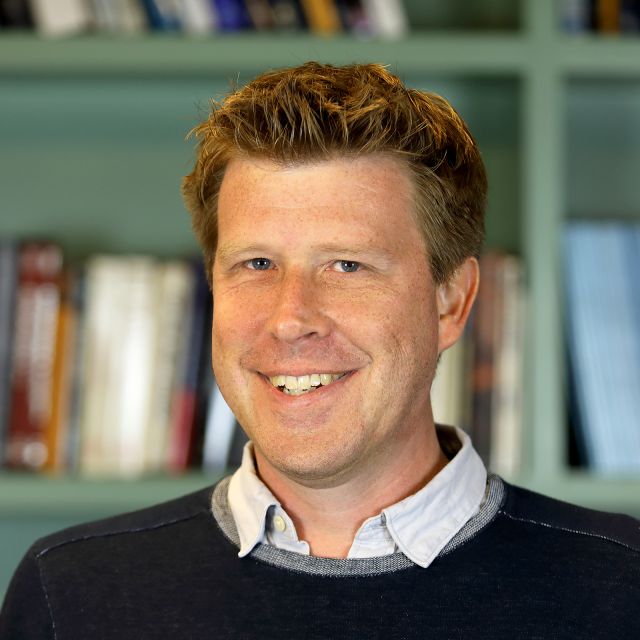
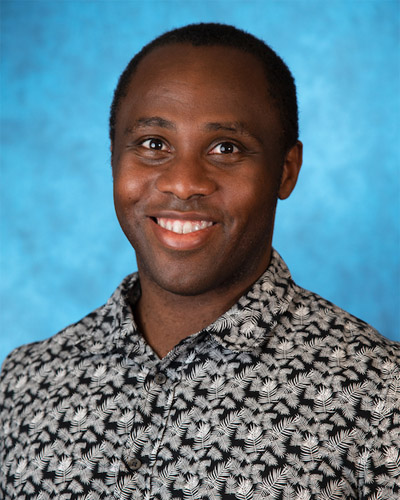
Andy Howell is an Adjunct Professor at the University of California, Santa Barbara, and Senior Staff Scientist at Las Cumbres Observatory. His research focuses on supernovae, kilonovae, and dark energy, with notable contributions including the co-discovery of the first kilonova in 2017. PhD, University of Texas Postdoctoral work: Lawrence Berkeley National Laboratory (Saul Perlmutter), University of Toronto (Ray Carlberg) His group studies tidal disruption events and develops infrastructure for astronomical data management. He is Principal Investigator of the Global Supernova Project and co-PI of the Global Kilonova Project. Scientific outreach: Regular science advisor for media, cohost of Science Vs. Cinema on YouTube, and featured on National Geographic, Science Channel, and BBC programs.
Jay Strader is a Professor in the Department of Physics and Astronomy at Michigan State University, where he serves as Graduate Director for the astronomy PhD program and Associate Chair for astronomy. His research focuses on compact objects, particularly black holes and neutron stars in globular clusters, neutron star binaries in Fermi gamma-ray sources, and intermediate-mass black holes. He has received a Packard Fellowship for Science and Engineering and grants from NSF and NASA. His research group includes postdoc Ryan Urquhart, graduate students Thomas Do and Rebecca Kyer, and several undergraduates, with past students like Teresa Panurach (now director of NoVEL Consortium) and Samuel Swihart (NRC fellow at Naval Research Lab). Education: PhD in Astronomy, UC-Santa Cruz/Lick Observatory Awards: Packard Fellowship Collaborations: Member of Rubin Observatory's Stars, Milky Way, and Local Volume science collaboration since 2008 Previous Positions: Hubble Fellow and Menzel Fellow at Harvard-Smithsonian Center for Astrophysics (2007-2012) Program Initiatives: Co-founder of PAREDS program for early research opportunities at MSU His work has been supported by NSF and NASA grants, and he has contributed to studies on black holes in M22, hypervelocity globular clusters around M87, and transitional millisecond pulsars. His group collaborates with Laura Chomiuk and contributes to data catalogs like the M31 globular cluster velocity dispersion database.
Norwegian University of Science And TechnologyNorway
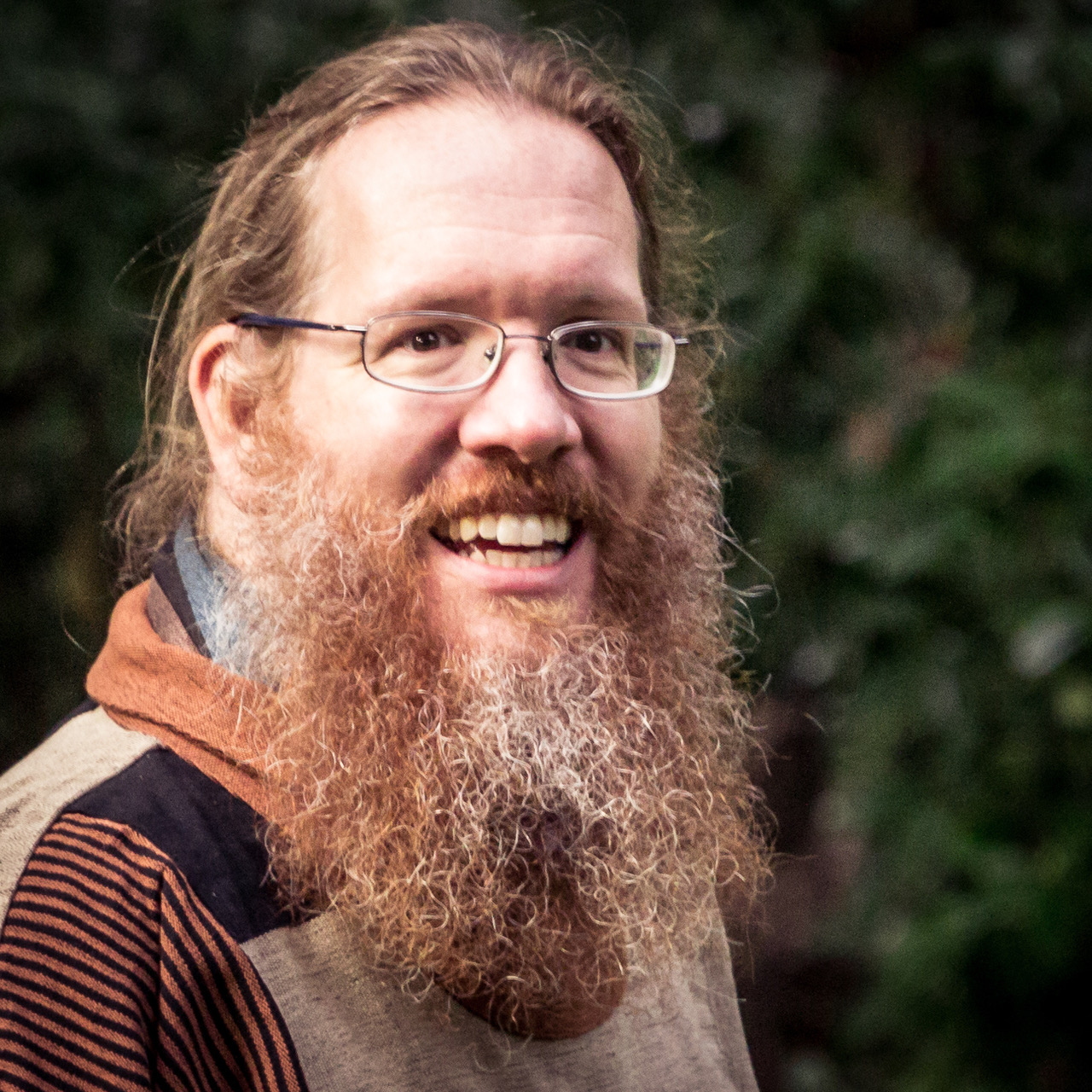
Foteini Oikonomou is an Associate Professor at the Department of Physics, Faculty of Natural Sciences, Norwegian University of Science and Technology (NTNU). She specializes in theoretical astroparticle physics, focusing on extreme astrophysical environments that accelerate particles to energies exceeding 10 20 eV. Current research includes multimessenger emission modeling of active galactic nuclei Expertise in cosmic ray acceleration and high-energy neutrino origin Active in teaching advanced astrophysics and particle physics Her work bridges astrophysics, particle physics, and cosmology, with particular attention to blazars, tidal disruption events, and ultra-high-energy cosmic rays. She contributes to major collaborations like GRAND and GCOS, developing future instrumentation for astroparticle detection. Recent publications explore cosmic ray propagation in diverse source populations, neutrino emission from transient astrophysical phenomena, and magnetic field line effects on particle acceleration. Her research has been featured in journals such as Nature Reviews Physics , Physical Review D , and The Astrophysical Journal . She teaches AST-3451 Astrophysics II and has previously taught particle physics (FY3403/FY8913) and general astrophysics (FY2450). Her outreach includes public explanations of ultra-high-energy cosmic ray research through popular science articles.
California Institute of Technology (Caltech)United States
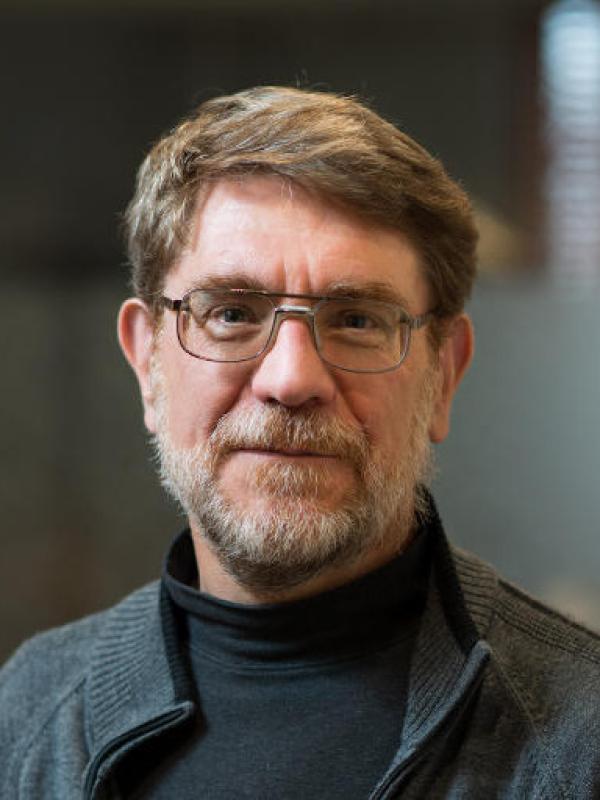
Matthew J. Graham is a Research Professor of Astronomy at the California Institute of Technology (Caltech), serving as the Project Scientist for the Zwicky Transient Facility (ZTF). His work bridges astronomy, machine learning, and data science, focusing on time-domain sky surveys that produce hundreds of thousands of public transient alerts per night. Previously, he has worked on the Catalina Real-time Transient Survey (CRTS), NOAO DataLab, Virtual Observatory, and Palomar-Quest Digital Sky Survey. Dr. Graham's primary research interests involve applying machine learning and advanced statistical methodologies to astrophysical problems, particularly the variability of quasars and other stochastic time series. His work addresses the unprecedented data volumes generated by 21st-century astronomy while expanding our ability to work with complex information systems beyond simple correlations. His current projects include real-time low latency inferencing via the NSF-funded A3D3 Institute, reinforcement learning for optimizing astrophysical follow-up campaigns, neural differential models for supermassive black hole variability, and functional analysis of multivariate time series. Analysis of Graham's recent publications reveals a strong focus on time-domain astronomy, particularly leveraging the capabilities of the Zwicky Transient Facility. His work spans multiple areas including gravitational wave counterpart identification, active galactic nuclei variability, supernova characterization, and machine learning applications for transient detection. A notable trend is the integration of artificial intelligence techniques to handle the massive data streams from modern sky surveys, enabling real-time analysis and decision-making that would be impossible with traditional methods. Dr. Graham has been instrumental in developing infrastructure for time-domain astronomy, including the alert distribution system for ZTF and data processing pipelines for handling massive transient datasets. His work on the Catalina Real-time Transient Survey established important methodologies for identifying variable and transient sources that continue to influence the field. As Project Scientist for ZTF, Graham leads a major international collaboration involving Caltech, IPAC, and numerous partner institutions worldwide. The facility represents a significant advancement in time-domain astronomy, providing unprecedented coverage of the dynamic sky and enabling discoveries across multiple areas of astrophysics.
Wenbin Lu is an Assistant Professor in the Department of Astronomy at the University of California Berkeley, where he conducts theoretical research on high-energy transient phenomena. He is also affiliated with the Theoretical Astrophysics Center at UC Berkeley. PhD in Astronomy, University of Texas at Austin (2018) Bachelor in Physics, Peking University (2013) Professor Lu specializes in extreme astrophysical events that serve as natural laboratories for studying physics under conditions of high energy density, strong gravity, and intense magnetic fields. His work integrates multiple physical domains including plasma physics, relativistic hydrodynamics, radiative transfer, and stellar dynamics. He maintains active collaborations with researchers worldwide and encourages student involvement in his projects. Analysis of his recent publications reveals a strong focus on tidal disruption events and fast radio bursts, with increasing emphasis on multi-messenger approaches and theoretical modeling of observational data from facilities like JWST, Chandra, and radio telescopes. His work demonstrates consistent theoretical innovation in explaining complex transient phenomena. Burke Fellow at Caltech (2018-2021) Lyman Spitzer Fellow at Princeton University (2021-2022) Professor Lu actively mentors students and postdocs, with many projects originating from discussions with junior researchers. He teaches courses in Radiation and Stars at UC Berkeley. His research is supported by multiple grants that enable computational modeling and observational collaborations across various wavelengths. His theoretical work often involves complex numerical simulations of astrophysical phenomena, particularly focusing on the hydrodynamic evolution of stellar debris in tidal disruption events and plasma processes in fast radio burst emission mechanisms.
Dr Samantha Oates is a Lecturer in Astrophysics within the Department of Physics at Lancaster University's Faculty of Science and Technology. Her office is located in C035, C-Floor, Physics Building. Her research focuses on Gamma-ray Bursts (GRBs) in the gravitational wave era, investigating environments of GRB explosions, central engine mechanisms, jet structures, cosmological evolution of GRBs, and electromagnetic counterparts to gravitational wave events. She actively participates in international collaborations including Swift, LSST, STARGATE, and ENGRAVE . Her work addresses critical questions about optical/UV contaminants in gravitational wave counterpart searches and the cosmological utility of GRB correlations. Dr Oates supervises PhD students including Samuel Shilling in Observational Astrophysics. She contributes to the Astrophysics research group at Lancaster University, delivering specialized lectures and supervising projects on multi-messenger astrophysics. Recent publications demonstrate her expertise in gravitational wave follow-up campaigns, supernova classification, and nuclear transient phenomena. Her research group engages in multiwavelength observations from gamma-ray to radio wavelengths, utilizing facilities for real-time transient detection and characterization. Current projects involve analyzing data from gravitational wave events and developing methods to distinguish true counterparts from serendipitous transients.
Christopher Kochanek is a Professor and Ohio Eminent Scholar in the Department of Astronomy at The Ohio State University, affiliated with the College of Arts and Sciences. His expertise lies in cosmology, gravitational lensing, and supernovae. He earned his Ph.D. from the California Institute of Technology (1989) and a B.A. from Cornell University (1985). His research focuses on using gravitational lensing to study dark energy, dark matter substructures, and quasar accretion disks. He pioneered time-domain astronomy, exploring variability in massive stars and quasars, and co-led the ASAS-SN project for all-sky supernova detection. Key achievements include the Dannie Heineman Prize for Astrophysics (2020) and the AAS Beatrice M. Tinsley Prize (shared 2020). His work spans binary neutron star mergers, Milky Way mass estimation, and dust-obscured stellar explosions. Recent studies analyze supernova progenitors and long-term variability trends in transient events. Awards: Heineman Prize (2020), Tinsley Prize (2020) Grants & Projects: ASAS-SN collaboration with Prof. Stanek, dark energy constraints via lensing, and Milky Way dynamics. Labs/Teams: Active in the Ohio State Astronomy Instrumentation Group and ASAS-SN observatory network.
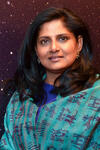
Priyamvada Natarajan is the Joseph S. and Sophia S. Fruton Professor of Astronomy and Professor of Physics at Yale University, serving as Chair of the Astronomy Department and Chair of the Women Faculty Forum. Her research focuses on cosmology, gravitational lensing, and black hole physics. She explores topics like dark matter distribution, supermassive black hole formation, and the interplay between galaxy evolution and AGN feedback. Natarajan has pioneered methods for mapping dark matter in galaxy clusters using gravitational lensing and has contributed to understanding cosmic structure formation through large-scale simulations. Education: Ph.D. in Astrophysics from Cambridge University (1998). Research interests include the nature of dark energy, galaxy formation, and the history and philosophy of science. She leads projects like DAVOS (Dwarf AGN variability studies) and QUOTAS, a platform for discovering supermassive black holes. Her recent work includes detecting overmassive black holes at high redshifts, analyzing gravitational-wave signals with NANOGrav, and utilizing JWST data to probe the cosmic dawn. Notable honors include the 2022 Liberty Science Center ‘Genius Award’. Natarajan’s collaborations span multi-messenger astronomy, leveraging gravitational lenses as cosmic telescopes. She advocates for gender equity in academia and has advised numerous observational and theoretical studies, though specific student names are not listed. Key projects involve the BUFFALO survey for cluster lens modeling and the ngEHT (next-generation Event Horizon Telescope) to study black hole environments. Her lab integrates cosmological simulations, observational data, and theoretical frameworks to address fundamental questions in astrophysics.
Richard Anantua is an Assistant Professor in the Department of Physics and Astronomy within the College of Sciences at the University of Texas at San Antonio (UTSA), and also serves as an Adjunct Professor at Rice University since 2024. His research group is pioneering Event Horizon Telescope (EHT) science in Texas, focusing on computational and theoretical astrophysics related to black holes and relativistic phenomena. Assistant Professor, UTSA – 2022–Present Adjunct Professor, Rice University – 2024–Present Postdoctoral Fellow, Harvard-Smithsonian Center for Astrophysics – 2019–2021 Postdoctoral Fellow, UC Berkeley – 2016–2019 Education: Ph.D. in Physics – Stanford University M.S. in Physics – Stanford University B.S. in Physics and Philosophy – Yale University B.S. in Economics and Mathematics – Yale University Ed.M. in Education Policy and Management – Harvard University Richard Anantua’s research focuses on computational astrophysics , particularly the modeling of emission near supermassive black holes using general relativistic magnetohydrodynamic (GRMHD) simulations. His work bridges theoretical models with observational data from cutting-edge instruments like the Event Horizon Telescope (EHT) and its next-generation counterpart (ngEHT). Key areas include black hole accretion flows, relativistic jets, plasma physics, and neutrino emission. He has developed methodologies to connect simulation variables—such as electron temperature, magnetic field strength, and current density—to observable signatures across the electromagnetic spectrum. The recent publications from his group reflect a strong trend in high-resolution modeling of black hole environments , with emphasis on M87, Sgr A*, and theoretical constructs like primordial black holes and dark matter alternatives. These works integrate numerical simulations with observational predictions, particularly for EHT and ngEHT capabilities, covering emission morphology, jet stability, plasma composition, and neutrino physics. The interdisciplinary nature of his research spans astrophysics, plasma physics, and computational science. Scientific Engagement and Mentorship: Active mentor of postdoctoral researchers, PhD students, master’s students, and undergraduates at UTSA. Group members regularly present at national conferences such as the American Astronomical Society (AAS) and SCEECS. Supervised master’s thesis on GRMHD emission modeling. Anantua has been involved in major collaborations, including the Event Horizon Telescope Collaboration during his postdoc at Harvard, and continues to lead a vibrant research group at UTSA. His lab focuses on advancing computational tools for black hole imaging and theoretical modeling of extreme astrophysical environments.
Chris Matzner is a Professor and Associate Graduate Chair at the University of Toronto's Department of Astronomy and Astrophysics, affiliated with the Dunlap Institute for Astronomy & Astrophysics. He earned his Ph.D. from UC Berkeley in 1999. His research focuses on astrophysical fluid dynamics, particularly star formation processes (protostellar disks, molecular clouds, energy feedback) and stellar explosions (supernovae, gamma-ray bursts), employing analytical, numerical, and observational approaches. His research encompasses: Dynamics of protostellar outflows and molecular cloud interactions Models for supernova shocks and gamma-ray burst mechanisms Fragmentation in star and planet formation Massive black hole accretion processes Evolution of giant molecular clouds Stellar feedback in galactic environments Analysis of his 15 most recent publications reveals strong emphasis on supernova dynamics (particularly Type Ia explosions), star formation mechanisms in clusters and molecular clouds, shock wave physics in astrophysical contexts, and the development of astronomical instrumentation. The works demonstrate consistent focus on explosive transients, fluid dynamics in cosmic environments, and observational constraints on theoretical models. As Associate Graduate Chair, he oversees academic programs and student development. His laboratory affiliations include the Dunlap Institute's computational astrophysics and instrumentation groups. Current work involves modeling star cluster-galaxy interactions, tidal disruption events, and developing next-generation UV/IR detectors.
Kyle Dawson is a Professor of Physics and Astronomy at the University of Utah, where he has been employed since 2009. He currently serves as both a full Professor and Director of Graduate Studies in the Department of Physics and Astronomy, having progressed from Assistant Professor (2008-2015) to Associate Professor (2015-2019) before achieving his current position in 2019. His institutional affiliation places him within the College of Science at the University of Utah, a major research university in the western United States. Dawson earned his BA in Physics from Cornell University in 1998, followed by a PhD in Physics from the University of California, Berkeley in 2004. After completing his doctoral studies, he served as a postdoctoral researcher at the Lawrence Berkeley National Laboratory before joining the University of Utah faculty. His educational background in physics provided the foundation for his transition into observational cosmology, where he has made significant contributions through large-scale spectroscopic surveys. Professor Dawson's research focuses on observational cosmology through large spectroscopic surveys designed to measure the fundamental properties of the universe. He is currently the co-Spokesperson for the Dark Energy Spectroscopic Instrument (DESI), a major cosmological survey that has produced numerous high-impact publications in 2024-2025. Previously, he served as Principal Investigator for the Extended Baryon Oscillation Spectroscopic Survey (eBOSS), which concluded in 2020 with final cosmological measurements. His work centers on measuring baryon acoustic oscillations to constrain cosmic expansion history, dark energy properties, neutrino masses, and to test General Relativity. His research group employs techniques including galaxy clustering analysis, quasar astrophysics, and large-scale structure mapping to address fundamental questions in cosmology. The analysis of Dawson's recent publications reveals a strong focus on extracting cosmological constraints from the DESI survey data. His work spans multiple aspects of cosmological analysis, including baryon acoustic oscillation measurements, full-shape power spectrum analysis, imaging systematics mitigation, and cross-correlation studies with cosmic microwave background data. The publications demonstrate collaborative work with large international teams and contribute to increasingly precise measurements of cosmological parameters, with particular attention to dark energy equation of state, neutrino masses, and potential deviations from General Relativity. Professor Dawson has secured significant research funding throughout his career, including multiple grants from the Department of Energy (DOE), NASA, and the National Science Foundation. His grant portfolio includes leadership roles in major cosmological surveys like DESI and eBOSS, as well as support for postdoctoral researchers and graduate students. His research group has mentored numerous students who have gone on to successful careers in academia, industry, and data science fields. Dawson leads a vibrant research group at the University of Utah focused on cosmological data analysis from large spectroscopic surveys. His current team includes two postdoctoral researchers (Angela Berti and Sarah Eftekharzadeh) and a graduate student (Allyson Brodzeller). The group specializes in galaxy clustering analysis, quasar astrophysics, and machine learning applications to spectroscopic data. The research environment fosters collaboration with international teams working on DESI and related cosmological surveys, providing students with opportunities to engage with cutting-edge cosmological research and large-scale data analysis techniques.
Aprajita Hajela is a Postdoctoral Researcher at the Niels Bohr Institute, University of Copenhagen, working within the DARK Cosmology Centre. Her research focuses on high-energy astrophysical transients, particularly tidal disruption events and supernovae, using multi-wavelength observations spanning X-ray, optical, and radio regimes. Her research portfolio centers on time-domain astrophysics, with primary emphasis on tidal disruption events where stars are destroyed by supermassive black holes, relativistic jet formation, and gravitational wave counterparts. She investigates phenomena such as quasi-periodic X-ray eruptions in TDEs, late-time evolution of cosmic transients, and Hubble constant measurements through standard sirens. Her work integrates data from major observatories to unravel black hole physics and explosive stellar phenomena. Dr. Hajela is embedded within the DARK Cosmology Centre, a premier research environment at the Niels Bohr Institute dedicated to observational and theoretical studies of dark matter, dark energy, and cosmic evolution. This affiliation provides critical infrastructure for her investigations into transient cosmic events and their cosmological implications.
Prof. Sherry Suyu is an Associate Professor at the Technical University of Munich (TUM) and a Max Planck Fellow at the Max Planck Institute for Astrophysics (MPA). Her research focuses on probing the dark cosmos through gravitational lensing, dark energy, dark matter, and supermassive black holes. She leads the H0LiCOW program measuring the universe's expansion rate using lensed quasars and the HOLISMOKES program studying lensed supernovae. Her work has been supported by an ERC Consolidator Grant. Education and Affiliations: PhD in Physics from Caltech (2008), postdoctoral positions at UC Santa Barbara and Stanford University. Joint appointments at MPA (since 2016) and TUM. Member of the Excellence Cluster ORIGINS. Holds honorary positions including Emmy Noether Visiting Fellowship at Perimeter Institute (2018). Research Interests: Gravitational lensing, cosmic expansion rate, galaxy evolution, supernovae, tidal disruption events, and deep learning applications. Her group studies galaxy clusters, dark matter distribution, and cosmological models using lensing techniques. Awards: 2021 Berkeley Prize (AAS), 2024 ISIMM Senior Prize. Over 90 peer-reviewed publications. Teaches courses on extragalactic astrophysics and gravitational lensing at TUM. Labs/Teams: Head of the Observational Cosmology Group at TUM-MPA. Collaborates internationally with institutions in the US, Europe, Japan, and Taiwan. Supervises postdocs, PhD students, and bachelor/master researchers.
California Institute of Technology (Caltech)United States
Vikram Ravi is an Assistant Professor of Astronomy at the California Institute of Technology (Caltech), affiliated with the Division of Physics, Mathematics and Astronomy. He leads the astronomy department's research on relativistic astrophysical phenomena and instrumental development. His academic journey includes a B.S. from the Australian National University (2009) and a Ph.D. from the University of Melbourne (2014), followed by postdoctoral roles at Caltech and Harvard-Smithsonian Center for Astrophysics. His research focuses on neutron stars, black holes, fast radio bursts (FRBs), and tidal disruption events (TDEs). He pioneered the DSA-2000 radio telescope project, aiming to revolutionize transient astronomy. Key contributions include gravitational wave predictions from supermassive black hole binaries and FRB-based studies of galaxy halos and dark matter. Ravi's honors include the Charlene Heisler Prize and Stefano Braccini Prize for his Ph.D. work on pulsar-timing constraints on gravitational waves. He actively mentors students and postdocs in instrumentation, computational astrophysics, and observational campaigns. His groups at Caltech and Owens Valley Radio Observatory develop cutting-edge tools like the Deep Synoptic Array (DSA) telescopes, enabling breakthroughs in FRB localization, TDE surveys, and cosmic baryon mapping. Future projects include the DSA-2000's fast-time-domain surveys and dark matter searches.
Professor Tara Murphy serves as the Head of School of Physics at the University of Sydney and is a Chief Investigator in the ARC Centre of Excellence for Gravitational Wave Discovery. Her leadership position within one of Australia's premier academic institutions places her at the forefront of astronomical research and academic administration in the field of physics. Professor Murphy's research focuses on extreme astronomical objects that change rapidly on human timescales, specifically in the domain of radio transients. She leads the Variables and Slow Transients (VAST) project on the Australian SKA Pathfinder Telescope, where her team aims to detect radio emission from distant explosive events such as supernovae and gamma-ray bursts, as well as objects in our local neighborhood like flaring stars and potentially exoplanets. Her work aligns with the Faculty of Science Research Strengths in Understanding the Universe, Fundamental Laws of Nature, Earth and Space Exploration and Technologies, and Data and Decisions. She has pioneered radio follow-up of gravitational wave events detected by LIGO, achieving the first detection of radio emission from a binary neutron star merger GW170817. Analysis of Professor Murphy's recent publications reveals a strong emphasis on radio transient phenomena, gravitational wave follow-up observations, and the development of survey techniques using the Australian SKA Pathfinder (ASKAP). Her work spans multiple astronomical subfields including pulsar astronomy, tidal disruption events, fast radio bursts, and gamma-ray burst afterglows. The VAST survey and RACS (Rapid ASKAP Continuum Survey) projects form the backbone of her observational work, with numerous publications detailing discoveries of new radio transients, pulsars, and other variable phenomena. Professor Murphy actively mentors the next generation of astronomers, currently supervising multiple PhD students including Ashna GULATI, Qichen HUANG, Mali LAND-STRYKOWSKI, Joshua LEE, Vasudev MITTAL, Oliver OAYDA, Kovi ROSE, and Kavya SHAJI. Her students work on diverse projects ranging from radio follow-up of gravitational wave events to testing the cosmological principle and searching for unusual radio transients. Her research program is closely tied to major astronomical facilities including the Australian SKA Pathfinder telescope and the ARC Centre of Excellence for Gravitational Wave Discovery. Through her leadership of the VAST project and Australian efforts in gravitational wave follow-up, she has established a significant research team focused on time-domain radio astronomy, contributing substantially to our understanding of the dynamic radio sky.