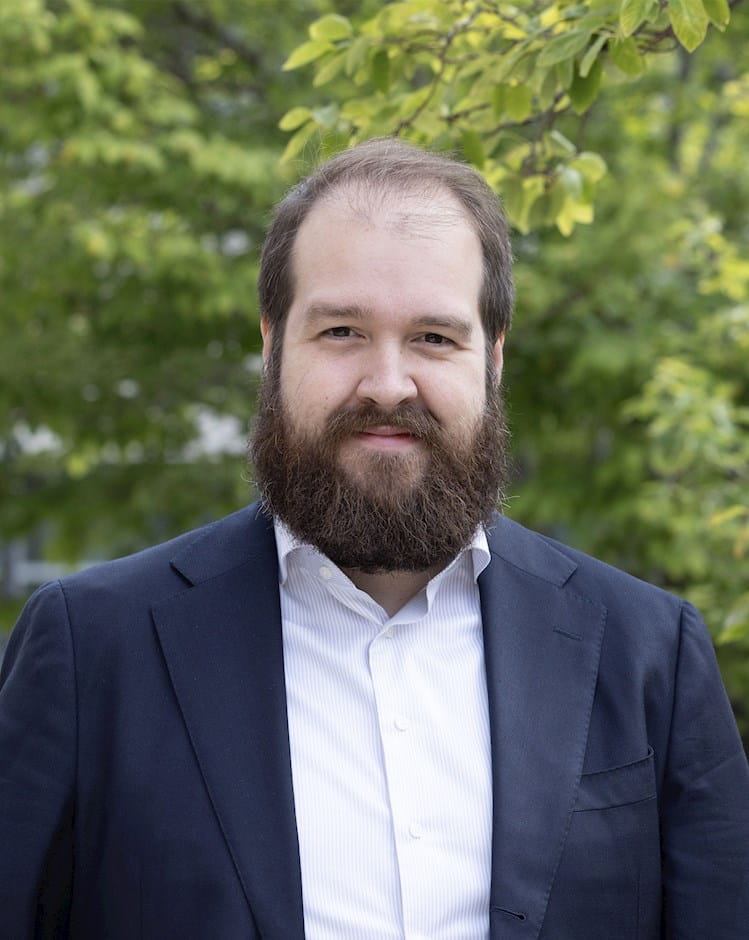
Liu Lili is a Lecturer (Educator Track) in the Department of Computer Science at the School of Computing, National University of Singapore. She holds a Ph.D. from Nanyang Technological University and a Master's in Computer Science from Shanghai University. Prior to NUS, she served as a Senior Research Scientist at Singapore Polytechnic and a Scientist at A*STAR's Institute of High-Performance Computing. Her research focuses on Machine Learning, Computer Vision, and Multi-modal Learning, with applications in FinTech, Social Media Analysis, and Algorithms & Theory. Notable projects include AI-driven coating inspection systems for marine assets and behavioral competency assessment tools for navigational safety. She has contributed to robotics for construction quality assessment and interactive virtual environments for rehabilitation. Liu's publications span AI applications in finance, robotics, and material science, reflecting her expertise in bridging theoretical computer science with practical industrial solutions. Her work emphasizes automation, anomaly detection, and multi-modal data integration.
Dr. Kai Li serves as Professor of Finance at the University of British Columbia's Sauder School of Business, holding the Canada Research Chair in Corporate Governance and W. Maurice Young Endowed Chair in Finance. Elected Fellow of the Royal Society of Canada (2022), she is Managing Editor of the Journal of Financial and Quantitative Analysis and previously served on editorial boards of Review of Financial Studies, Management Science, and Journal of Finance. Her academic foundation includes a BSc from Jiaotong University, MA from Concordia University, and PhD from the University of Toronto. Dr. Li's research examines corporate governance through three interconnected lenses: gender dynamics in finance (board diversity, analyst performance), corporate culture quantification (using generative AI and machine learning), and green innovation (environmental governance). Her methodology pioneers computational approaches to analyze textual data from corporate disclosures, bridging finance, computer science, and social sciences. Analysis of her recent publications reveals a distinct trajectory toward interdisciplinary research, increasingly integrating artificial intelligence with traditional finance to study culture and sustainability. This shift demonstrates growing emphasis on empirical measurement of intangible governance factors through NLP and generative models. Her accolades include: Fellow of the Royal Society of Canada (2022) UBC Killam Research Award Sauder Research Excellence Award (junior/senior) Barclays Global Investors Canada Research Award John L. Weinberg/IRRCi Best Paper Award (2024) Best Paper Award at 2024 China International Conference in Finance While the provided materials confirm her editorial leadership and research impact, specific details regarding graduate student supervision and grant funding portfolios were not disclosed. Dr. Li maintains affiliations with the Asian Bureau of Finance and Economic Research (Senior Fellow), European Corporate Governance Institute (Research Member), and FinTech at Cornell Initiative (Research Fellow).
Prof. Dr. Bernd Skiera is a leading Marketing Professor at Goethe University Frankfurt since 1999 and a member of the managing board of the efl - The Data Science Institute. His work bridges information systems and marketing, with a focus on data-driven decision making and digital transformation.
Kirk Roberts, PhD, is an Associate Professor in the Department of Health Data Science and Artificial Intelligence at the McWilliams School of Biomedical Informatics, UTHealth Houston. He specializes in Natural Language Processing (NLP), with a focus on clinical information extraction, spatial information extraction, and medical information retrieval. His work bridges computer science, medicine, linguistics, and machine learning to improve accessibility and usability of biomedical data. Education: PhD (2013) and MS (2009) in Computer Science from the University of Texas at Dallas; BS (2005) in Computer Science from Georgia Institute of Technology. Research emphasizes NLP applications for healthcare, including question-answering systems, EHR analysis, and spatial relation extraction. He leads the TREC Clinical Decision Support track and has been recognized with a National Library of Medicine Career Development Award. His contributions span over 20 peer-reviewed publications in journals like JAMIA and conferences such as ACL and AMIA. Key areas include: advancing clinical decision support via NLP, optimizing biomedical literature retrieval, and improving health data dissemination through natural language systems.
Professor Guy-Vincent Jourdan is affiliated with the School of Electrical Engineering and Computer Science at the University of Ottawa. He holds a Ph.D. from Université de Rennes/INRIA (France, 1995) focusing on distributed systems analysis. Prior to academia, he served as CTO and CEO of Decision Academic Graphics, an Ottawa-based firm. His research interests span software security, cybersecurity (including cybercrime prevention), distributed systems modeling, formal methods, mobile applications, and rich internet applications. Specific technical emphases include phishing detection systems, blockchain fraud analysis, and adversarial machine learning. Professor Jourdan has pioneered tools like D-ForenRIA for reconstructing user interactions in Rich Internet Applications and contributed to cybersecurity frameworks such as HEART for log anomaly detection. His work integrates machine learning techniques with domain-specific challenges in network security and software verification. His publications (2023-2025) reflect advancements in AI-driven vulnerability analysis, blockchain fraud detection, and automated phishing detection systems. Notable projects include SV-TrustEval-C for source code vulnerability analysis and Intellitweet for social media threat detection. While no scientific awards are explicitly listed, his prolific publication record and industry-academia transition highlight sustained contributions to computer science and cybersecurity domains.
Peter Millican is a Professor of Philosophy and Gilbert Ryle Fellow at Hertford College, University of Oxford, where he has served since 2005. He also holds a part-time role as Visiting Professor at the National University of Singapore (NUS) and temporary Visiting Professor at Nanyang Technological University (NTU). His academic roles include Head of Education & Outreach at the Institute for Ethics in AI. Education: Studied Mathematics at Oxford, switched to Philosophy and Theology, graduating with First Class Honours, then completed a B.Phil. in Philosophy at Oxford. His interdisciplinary work bridges Philosophy and Computing, notably co-founding the Oxford Computer Science and Philosophy degree program in 2012. Research focuses on Early Modern Philosophy (particularly David Hume), Philosophy of Language, Philosophy of Religion, and digital humanities. Major projects include the davidhume.org initiative and English Philosophical Texts Online . Key contributions include over 40 publications on Hume, ethics, and AI. He hosts the Futuremakers podcast exploring AI and climate change implications. Awards include the Gilbert Ryle Fellowship and editorial roles in Hume Studies . Outreach includes educational software development (e.g., PhiloComp.net ) and public engagement through media appearances, debates, and the Signature stylometric software used in high-profile literary analyses (e.g., identifying J.K. Rowling as 'Robert Galbraith').
Leland Bybee is an Assistant Professor of Finance at the University of Chicago Booth School of Business . He leverages machine learning and natural language processing to address economic and financial questions, particularly focusing on belief measurement with applications to asset pricing and behavioral economics. Ph.D. in Financial Economics, Yale School of Management (2024) M.S. in Statistics, University of Michigan (2017) B.A. in Economics, University of Chicago (2013) His research integrates computational methods with economic theory to analyze: Textual analysis of business news for macroeconomic tracking Narrative-driven asset pricing models Memory-based belief formation using kernel methods Macroeconomic determinants of currency returns He has received multiple awards including: Dimension Fund Advisors Distinguished Paper Award BlackRock Applied Research Award HEC Top Finance Graduate Award The Brattle Group PhD Candidates Award EFA Engelbert Dockner Memorial Prize Bybee teaches Machine Learning in Finance and participates in finance seminars, contributing computational tools like regIPCA (Python) and changepointsHD (R) to the research community.
Dr. Haiyan Liu is an Associate Professor of Quantitative Methods, Measurement, and Statistics in the Department of Psychological Sciences at the University of California, Merced, within the School of Social Sciences, Humanities, and Arts. She earned her Ph.D. in Quantitative Psychology from the University of Notre Dame (2018). Her research focuses on advanced statistical modeling of psychological and educational data, including high-dimensional, longitudinal, and social network data. She develops Bayesian methodologies and machine learning techniques to enhance understanding of human behavior, with recent emphasis on structural equation modeling, network dynamics, and nonparametric growth curves. Her work addresses challenges in survey methodology and behavioral data analysis. Dr. Liu’s educational background includes a Ph.D. in Quantitative Psychology from the University of Notre Dame (2018), complementing her current academic role. Her lab, accessible at https://sites.google.com/view/ucmhaiyanliu , supports her research activities. Her research interests span Bayesian SEM, social network analysis, and applications of machine learning to behavioral data, aiming to bridge methodological innovation with practical psychological inquiry. Her recent articles highlight advancements in Bayesian model selection, longitudinal sentiment analysis, and social network mediation. She emphasizes prior specification rigor in Bayesian frameworks and explores nonlinear relationships in social dynamics. Though no awards are explicitly listed, her contributions to statistical methodologies in psychological research reflect significant scholarly impact. Dr. Liu advises students in quantitative methods and has developed software tools like logistic4p for misclassification correction in logistic regression. Her work integrates computational methods with theoretical advancements, positioning her as a key contributor to modern quantitative psychology.
Jennifer J. Baker is an Associate Professor in the Department of English at New York University's College of Arts and Science. Holding a Ph.D. in English from the University of Pennsylvania (2000), her academic focus spans 18th- and 19th-century American literary, cultural, and intellectual history. Key research areas include literature and science, environmental literature, transatlantic Romanticism, and Civil War literature. She is currently working on a reception history of Herman Melville’s Moby-Dick , examining its rise to canonical status through Cold War politics and academic culture. Education: Ph.D. in English, University of Pennsylvania (2000) Her upcoming book American Romanticism and the Evolutionary Idea (Stanford UP, 2026) investigates how evolutionary theories intersected with Romantic concepts in 19th-century American literature. Previous publications include Securing the Commonwealth: Debt, Speculation, and Writing in the Making of Early America (Johns Hopkins UP, 2006). Recent research includes articles on Herman Melville, Emerson, Nathaniel Hawthorne, and Judith Sargent Murray, reflecting her interdisciplinary approach combining literary analysis with financial history, scientific thought, and cultural studies. Faculty Fellowship, NYU Center for the Humanities (2014-15) Heyman Prize, Yale University (2004) Morse Fellowship, Yale University (2005) Andrew W. Mellon Dissertation Fellowship (1997-98) She serves on the Board of the Melville Society Cultural Project and has held academic appointments at Yale University and the McNeil Center for Early American Studies.
Laura K. Nelson is an Associate Professor of Sociology at the University of British Columbia , where she also directs the Centre for Computational Social Science . Her work bridges computational methods with sociological inquiry, focusing on gender inequality, social movements, and organizational dynamics. She previously held faculty roles at Northeastern University and affiliated with institutions like the NULab for Texts, Maps, and Networks and the Network Science Institute . Education: PhD in Sociology (2014), University of California, Berkeley MA in Sociology (2009), University of California, Berkeley BA in Sociology (2006), University of Wisconsin-Madison (Phi Beta Kappa) Research Interests span computational sociology, social movement strategy, intersectionality, and STEM equity. She pioneered frameworks like computational grounded theory and radical objectivity , integrating machine learning with qualitative paradigms. Recent publications analyze gender dynamics in emergency medicine, feminist movement histories, and the NSF ADVANCE program’s impact on equity. Her 2024 Social Science Quarterly paper quantifies ADVANCE’s interdisciplinary reach. Awards include the 2020 Best Meta-Reviewer at SocInfo20 and Outstanding Faculty of the Year at Northeastern University. She serves on editorial boards for American Journal of Sociology , Poetics , and Acta Sociologica . She co-PIs a National Science Foundation grant studying gender-equity dissemination in higher education networks and supervises graduate student Jinyang Yu . Her lab, Centre for Computational Social Science , drives open-source methodological innovation.
Ion Androutsopoulos is a Professor of Artificial Intelligence in the Department of Informatics at Athens University of Economics and Business (AUEB), where he also serves as Head of Department. He is founder and co-director of AUEB's Natural Language Processing Group and an Adjunct Researcher at the Digital Curation Unit and "Archimedes" Research Unit of the Research Centre "Athena". His research spans multiple dimensions of Artificial Intelligence with a focus on Natural Language Processing. Key interests include: Machine learning in NLP, particularly deep learning and large language models Question answering and retrieval augmented generation for document collections Dialog systems for new languages and knowledge domains Sentiment analysis and emotion recognition from text and speech Detecting toxic posts and disinformation online Image-to-text generation for medical diagnostics NLP applications in biomedical, legal, and financial domains His recent publications demonstrate strong activity across medical AI (particularly ImageCLEFmed Caption competitions where his group consistently ranks 1st-2nd), legal NLP (LexGLUE benchmark), financial NLP (EDGAR-CRAWLER), and multilingual challenges. His work shows increasing emphasis on large language models, explainability, and practical applications. Notable awards include: Top 2% scientist worldwide (Stanford University database, 2023) Multiple AUEB Excellent Teaching Awards (2017-18, 2021-22, 2023-24) Three consecutive BioASQ awards (2018-2020) Multiple 1st/2nd place rankings in ImageCLEFmed Caption competitions (2021-2025) He actively organizes major events including the Athens Natural Language Processing Summer School (AthNLP) and SemEval tasks. His group maintains strong industry and research collaborations, particularly in medical AI applications where they've developed systems that generate diagnostic captions from medical images with state-of-the-art performance.
John W. Du Bois is a Professor in the Department of Linguistics at the University of California, Santa Barbara (UCSB), within the College of Letters and Science. His work focuses on the interplay between discourse, grammar, and sociocultural contexts. Specializing in dialogic syntax, he explores how linguistic structures emerge from interactional dynamics, particularly in conversational coherence and stance-taking mechanisms. His research integrates corpus linguistics, computational methods, and ethnographic approaches to study languages like Mayan and Kazakh. Key research areas include: Discourse and grammar integration Dialogic resonance and affective alignment Corpus design and analysis Ritual language and cognitive models Mayan linguistic systems Recent studies emphasize computational tools like Rezonator for dialogue coherence visualization and remote corpus development methodologies. His work bridges theoretical linguistics with applied research in language documentation and education. Du Bois has contributed to foundational texts on discourse transcription standards and maintains active involvement in the Santa Barbara Corpus of Spoken American English project. His publications span over four decades, reflecting sustained engagement with linguistic complexity across multiple levels—from micro-level syntactic interactions to macro-level sociocultural frameworks. Current projects investigate dialogic syntax in autism and the evolutionary niche of language within social interaction.
Tuğba Dalyan is an Associate Professor in the Department of Computer Engineering at Istanbul Bilgi University, Faculty of Engineering and Natural Sciences. She holds a Ph.D. in Computer Engineering from Yıldız Technical University (2014), an MSc from Kocaeli University (2007), and dual BSc degrees in Mathematics and Computer Science and Business Administration (Minor) from Istanbul Bilgi University (2003). She has been a faculty member since 2016 and previously served as a Teaching Staff member and Research Assistant at the same institution. Her research focuses on Natural Language Processing , Machine Learning , Deep Learning , Text Mining , Data Science , and Big Data Analytics . Her work spans computational linguistics, sentiment analysis, author profiling, machine translation, and smart systems. She has led and contributed to numerous research projects, particularly in AI-driven urban solutions and health technologies. The most recent publications show a strong trend in Turkish NLP, zero-shot classification, multimodal AI (image captioning), emotional robotics, and decision support systems using fuzzy logic. Her work combines theoretical rigor with practical applications in smart cities, education, and healthcare. Best Paper Award , CICLing 2012 TÜBİTAK 2209-A student project awards (2022–2024) Horizon2020 Eşik Üstü Ödülü , MIMOSCSA 2024 TÜBİTAK 2242 competition: 2nd and 3rd place (2016, 2018) She has advised numerous student research projects, many of which have received national recognition. She has directed multiple TÜBİTAK and institutional research grants, including projects on smart homes, blockchain crowdfunding, mental health, and AI for social polarization. Her leadership roles include Head of Department, Vice Dean, and Director of Graduate Programs. Tuğba Dalyan leads research in AI and NLP with a strong emphasis on Turkish language technologies. She is involved in interdisciplinary teams working on emotional robots, smart city platforms, and citizen science ecosystems. Her lab activities focus on neural networks, text analysis, and intelligent systems development.
Nicole Novielli, Ph.D., is Associate Professor at the University of Bari “A. Moro” , Italy, where she conducts research on affective computing applied to software engineering and human-computer interaction. She leads the Collaborative Development Group and coordinates national projects investigating emotions in software teams, AI quality and IoT ecosystems. Education: Ph.D. in Computer Science, University of Bari, 2010 – thesis on “Lexical Semantics of Dialogue Acts” M.Sc. in Computer Science (Knowledge & Software Engineering), University of Bari, 2006 – summa cum laude B.Sc. in Computer Science, University of Bari, 2004 – summa cum laude Visiting researcher at USC-ICT, University of Aberdeen, FBK-irst (Trento) Research interests revolve around recognizing and exploiting affective and cognitive states in computer-mediated cooperative work. She studies sentiment and emotion mining in developers’ textual communication, multimodal emotion recognition via low-cost biometric sensors, and natural-language dialogue simulation for intelligent interfaces. Her work couples software engineering with natural language processing , social media analytics and human-computer interaction . Recent articles (2021-2025) reveal a clear trend: integrating deep learning and large language models into software engineering tasks—automated issue labelling, sentiment classification, technical-debt detection—while validating these techniques through rigorous empirical studies and biometric experiments . A parallel stream explores developer experience , measuring how emotions and cognitive load influence productivity, code quality and collaboration. Scientific awards include the 2020 Apex Award for Publication Excellence , multiple Distinguished Reviewer Awards at flagship venues (ESEC/FSE, ICSME, MSR), the Best Paper Award SANER 2019 and the Best Student Paper Award ACII 2009 . She currently teaches “Sentiment Analysis” in the Data-Science MSc and “Computer Networks” in the ITPS programme. She has advised numerous B.Sc., M.Sc. and PhD projects and is PI or Co-PI of four ongoing grants: EmoQuest (SIR), EMPATHY (PRIN), FAIR-Spoke 6 (PnRR), and QualAI (PRIN 2022). Dr. Novielli serves on the editorial boards of Empirical Software Engineering and Journal of Systems and Software , has guest-edited special issues on affect awareness in SE, and has chaired tracks at ICSE, SANER, MSR, ICSME and SSBSE. She co-leads the Collaborative Development Group and actively releases datasets and open-source tools for the community.
Prof. Dr. Simone Winko holds the Chair for Modern German Literature and Literary Theory at the University of Göttingen since 2003. Her research spans literary theory, canonization, praxeology of literary studies, and the intersection of emotions with German poetry around 1900 and digital humanities. Academic Roles: Chair at Göttingen (2003–), DFG Priority Programme 2207 leadership (2017–), Courant Center collaboration (2009–) Key Projects: DFG projects on literary change (2023–), computational literary history (2020–2023), and argumentation practices in interpretations (2018–2020) Her recent work focuses on emotions in German-language poetry , using computational methods to model text similarity and analyze historical shifts between Realism and Modernism. She explores how emotional codes and narrative strategies are embedded in lyrical structures, particularly through projects like Anthologien zeitgenössischer deutschsprachiger Lyrik (2022). Scientific Awards : 2010: 1st prize for best doctoral supervision (KissWin, BMBF-funded) Teaching & Collaboration : Supervises B.A., M.A., and Ph.D. theses; co-edits the Journal of Literary Theory and Revisionen book series. Collaborates with Fotis Jannidis, Gerhard Lauer, and Matías Martínez on computational approaches to literary studies.