Erik Kwakkel is a Professor at the University of British Columbia, School of Information , specializing in the History of the Book , Codicology , and Digital Humanities . His research examines premodern communication systems, focusing on manuscript design, marginalia, and knowledge dissemination before print culture. Director, UBC iSchool (2020–present) Member, Comité International de Paléographie Latine (CIPL) Active in digitization projects and outreach through medievalbooks.nl blog and social media His research bridges material culture with digital innovation, analyzing medieval parchment reuse, manuscript fragments in early-modern bindings, and collaborative book production networks in Paris. He pioneered framed fragment storage at UBC for safer pedagogical use of delicate materials. Selected Publications include Books Before Print (2018), Medicine at Monte Cassino (2019), and The European Book in the Twelfth Century (2018). His media impact spans BBC World Service , CNN , and Smithsonian Magazine . Awards & Recognition : International expert on medieval manuscripts Buzzfeed's '8 Book Historians Killing It Online' (2014) CIPL Membership
Garrett Sullivan is Edwin Erle Sparks Professor of English at Pennsylvania State University's College of Liberal Arts and Sciences. He specializes in Renaissance literature with particular focus on Shakespeare, Marlowe, and early modern drama. His interdisciplinary research examines embodiment, cognition, and cartography in literary works. Education includes Ph.D. from Brown University (1995) and B.A. from Davidson College (1983). Primary research explores connections between literary production and historical concepts of space, geography, and the body. Publications include monographs on landscape representation, memory in Renaissance drama, sleep in romance literature, and Shakespeare in wartime cinema. Recent work analyzes cinematic adaptations of Shakespeare during World War II. Co-edits the Oxford University Press series Early Modern Literary Geographies and has curated exhibitions at Folger Shakespeare Library. Research supported by NEH and Folger Library fellowships.
Tyler Williams is an Associate Professor at the University of Chicago's Department of South Asian Languages and Civilizations. His research focuses on the philological and historical study of literary and religious texts in early modern north India (1300-1800 CE), particularly those in Hindi/Hindavi/Urdu. He examines relationships between material texts (manuscripts) and their literary/religious content, as well as broader issues in precolonial and postcolonial aesthetics. He is completing a monograph on writing practices in Hindi before print technology and studies merchant communities' roles in shaping bhakti religiosity and vernacular literature. Education: Ph.D. (2014), M.Phil. (2011) in Middle Eastern, South Asian, and African Studies from Columbia University; M.Phil. (2007) in Hindi Literature from Jawaharlal Nehru University; M.A. in Hindi. Publications emphasize manuscript studies, scribal practices, and premodern textual cultures. His work bridges book history, digital humanities, and South Asian studies. He has advised students on topics including African communities in precolonial South Asia, colonial geographic knowledge, and postcolonial theater aesthetics. Courses taught include seminars on South Asian aesthetics, media studies, and advanced Hindi language.
Chen Wu is a Senior Lecturer in Chinese at Columbia University's Department of East Asian Languages & Cultures, with teaching responsibilities spanning classical Chinese and all levels of modern Chinese courses since her appointment in 2013. She also brings extensive pedagogical experience from Fudan University. Her office is located in 508 Kent Hall, with office hours held on Tuesdays and Thursdays 11:30AM-1PM. Educational Background: PhD in Pre-Modern Chinese Literature, University of Wisconsin-Madison (2016) MA in Pre-Modern Chinese Literature, University of Wisconsin-Madison MA in Classical Chinese Philology, Fudan University (2009) BA in Chinese Language and Literature, Fudan University (2006) Research Specializations center on classical Chinese philology, medieval Chinese narrative traditions, and the symbiotic relationship between urban environments and literary production. Her scholarly work particularly examines Tang dynasty urban narratives, spatial representations in fiction, and cultural memory mechanisms. Publication Trends reveal consistent contributions to Tang literature analysis (7/11 entries), urban studies in Chinese fiction, and translation scholarship. Her work bridges original research, critical translation, and editorial practices, with a focus on historical contexts and textual interpretation.
Dr. Mona Tokarek LaFosse serves as Assistant Professor of New Testament and Sacred Literature Studies (Teaching Stream) at the University of Toronto's Faculty of Divinity through a joint appointment at Emmanuel College and Victoria College. She teaches across undergraduate, basic-degree, and graduate programs at Victoria University, specializing in New Testament studies and early Christian history through interdisciplinary lenses. Her educational background includes a PhD from the University of Toronto's Department for the Study of Religion (2011), MA in Religion and Culture from Wilfrid Laurier University (2001), Honors BA in Anthropology from the University of Waterloo (1998), and Biblical Studies certificate from Columbia Bible College (1994). She previously taught at Martin Luther University College, Wilfrid Laurier University, Huron University College, and the University of Toronto. Dr. LaFosse approaches New Testament scholarship through cultural anthropology, storytelling theory, and age studies. Her research examines early Christian communities through the lens of age structure, intergenerational dynamics, and oral storytelling practices. She explores how life course stages shaped social relationships in the ancient Mediterranean, particularly focusing on 1 Timothy's treatment of age hierarchies. Her innovative teaching methodology emphasizes 'embodied story'—integrating performance and physical engagement with texts influenced by Indigenous storytelling traditions. Her recent publications reveal a strong focus on aging in early Christianity, with 2024 articles examining age demographics and comparative gerontology. She also maintains active scholarship in oral tradition studies, particularly regarding the Gospel of Mark and Shepherd of Hermas, while contributing to academic discourse through society leadership and book reviews. Dr. LaFosse holds significant leadership roles including current service on the Canadian Society for Patristic Studies Nominating Committee (2025–26) and co-chairing the Society of Biblical Literature's Social-Scientific Criticism of the New Testament section (2025–27). She actively participates in the Canadian Society of Biblical Studies, Society of Biblical Literature, and KW Biblical Colloquium. Her distinctive teaching portfolio includes innovative courses like 'Zombies, the Bible and the End of the World' and 'Gospel of Mark as Embodied Story,' reflecting her commitment to interdisciplinary engagement with biblical texts through contemporary cultural frameworks and physical performance.
Prof. Dr. Stefan Esders is a Professor of Late Antiquity and Early Medieval History at the Friedrich Meinecke Institute , part of the Free University of Berlin . His scholarly work bridges Roman, Byzantine, and early medieval European history, with a focus on legal systems, oaths, and military structures. His research interests include: State formation and military organization across Rome, Byzantium, and the Frankish kingdoms. Legal history of oaths, loyalty, and conflict resolution (e.g., wergild and compensation). North Africa in late Roman and Vandal contexts, emphasizing cross-cultural interactions. Ethnic identity formation at imperial borders and Mediterranean cohesion (6th–9th centuries). Historiography and hagiographical narratives in Late Antiquity and the Early Middle Ages. His work spans the Gallia and Iberian Peninsula , analyzing the transition from Roman imperium to post-imperial regna. Notably, he explores vernacular legal practices and the role of religion in political identity. His scientific accolades include: Distinguished Fellow at the Hebrew University of Jerusalem (2025/26). Corresponding Fellow at the Medieval Academy of America (since 2025). Visiting Research Fellow at the University of Tokyo (2024). Premio Anassilaos (2024) for interdisciplinary contributions. Member of the Academia Europaea (since 2021) and the Monumenta Germaniae Historica (since 2020).
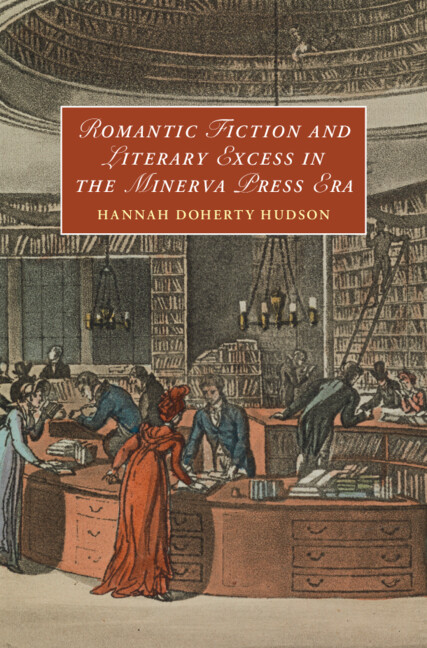
Hannah Hudson, PhD, is Associate Professor of English at Suffolk University in Boston, where she researches and teaches eighteenth- and nineteenth-century British literature with a focus on Romantic-era fiction, Gothic studies, women writers, and the history of print and periodical culture. Education PhD, Stanford University MA, Stanford University MPhil, University of Cambridge AB, Princeton University Research Interests Professor Hudson’s scholarship centers on the intersections of literature, commerce, and gender during the Romantic period. Her work interrogates how popular fiction—especially the vast output of the Minerva Press—shaped, and was shaped by, the burgeoning print marketplace. She examines gothic and sentimental genres, intertextual networks, and the role of magazines in constructing imperial knowledge. Recent Publications & Trends Across her recent articles and her 2023 monograph Romantic Fiction and Literary Excess in the Minerva Press Era , Hudson traces how excess—of production, of emotion, of genre—became a defining feature of Romantic fiction. Her studies reveal how authors, reviewers, and readers negotiated the explosion of print and the contested hierarchies of literary value. Awards & Honors Winner, Marilyn Gaull Book Award, Wordsworth-Coleridge Society (for Romantic Fiction and Literary Excess in the Minerva Press Era ) Current & Future Projects Hudson is presently writing Romantic Magazines and Imperial Knowledge , a study of miscellaneous magazines and their role in forming imperial knowledge around 1800. She continues to publish articles on periodical portrayals of revolution and on Eliza Haywood’s legacy while supervising courses ranging from British Literature surveys to honors seminars on Jane Austen and fantasy fiction. Contact & Office 73 Tremont St., Room 8042, Boston, MA 02108 Phone: 617-573-8277 Email: hhudson@suffolk.edu
Jing Tsu is the Jonathan D. Spence Chair Professor of Comparative Literature and East Asian Languages and Literatures at Yale University. She holds affiliations with the MacMillan Center for International and Area Studies (as Senior Research Fellow), the Humanities Program, Women’s, Gender, and Sexuality Studies (WGSS), and Ethnicity, Race, and Migration (ER&M). Her interdisciplinary research focuses on modern Chinese literary and cultural studies, with specialties in diaspora, science history, and comparative frameworks. Her key works include Sound and Script in Chinese Diaspora (2010) and Failure, Nationalism, and Literature (2005), which explore themes of cultural identity, transnational networks, and historical transformations. Tsu has held prestigious fellowships from institutions including Harvard Society of Fellows, Alexander von Humboldt Foundation, and the Institute for Advanced Study at Princeton. Her research bridges literary analysis with technological history, examining how language, script, and scientific knowledge shape cultural power dynamics. Her recent publications analyze global literary frameworks (e.g., 2023’s World Literature and National Literature(s) ) and the intersections of science translation with national identity (e.g., 2014’s Science in Translation: Yan Fu’s Role ). Tsu’s work consistently interrogates the boundaries between global and local cultural systems, emphasizing the agency of marginalized voices in shaping intellectual histories. Awards: Harvard Society of Fellows Fellowship, Radcliffe Institute Fellowship, Mellon Foundation Fellowship, and others. Grants/Advising: Extensive institutional support through fellowships; her advisory roles focus on guiding interdisciplinary scholarship in Sinophone studies and transnational literatures. Labs/Teams: Collaborates through the MacMillan Center’s international studies initiatives and interdisciplinary programs like ER&M and WGSS.
Dr. Philip Bockholt is a Junior Professor (Tenure Track) for the History of the Turco-Persian World and Emmy Noether Junior Research Group Leader at the Institute of Arabic and Islamic Studies , University of Münster. His research focuses on the history of the Eastern Islamic World (1400–1800), transregional translation processes, knowledge transfer in the Eastern Mediterranean, manuscript studies, and confessional groups in Islam. He is the principal investigator of the DFG-funded TRANSLAPT Emmy Noether Group (2022–2028) and leads the subproject Arabic-Ottoman Translations of Qurʾānic Exegesis (Tafsīr) within the Cluster of Excellence EXC 2060. 2024: Habilitation in Islamic Studies 2018: PhD, Berlin Graduate School Muslim Cultures and Societies 2005–2013: BA/MA in Islamic Studies, History, and Theology (Bochum, Münster, Berlin, Jerusalem, Cairo, Istanbul, Tehran) His research explores intra-Islamic knowledge transfer via Arabic-Persian-Ottoman translations, with a focus on historiography, mirror-of-princes literature, and manuscript variants. He has extensively analyzed the Ḥabīb al-Siyar by Khvāndamīr and its cross-regional dissemination. His recent articles examine textual modifications in Safavid-to-Ottoman translations, multilingualism in Ottoman-Persian contexts, and manuscript annotations as evidence of readership engagement. He co-edited Elsine-i S̱elās̱e: Cultural Analysis of Ottoman Translation (2025) and Multilingualism, Translation, Transfer: Persian in the Ottoman Empire (2024). 2020 Classical Islamic World Book Prize 2019 Annemarie-Schimmel-Stiftung Forschungspreis 2019 S.I.E. European Award Honorable Mention 2015 I.B. Tauris Prize DFG Emmy Noether Funding Bockholt supervises four doctoral candidates on topics including Ottoman Quranic exegesis, biographical dictionaries, and Sufi networks. He has held visiting positions at institutions in Tokyo, Paris, Jerusalem, Madrid, and St. Petersburg. His teaching includes seminars on Islamic manuscript culture, Ottoman translation processes, and confessional groups in the early modern Islamic world. He is a scientific secretary in the Saxon Academy of Sciences’ Afrika – Asien – Europa commission and organizes international conferences on manuscript transmission and Persian-Ottoman exchange.
Professor Sue Niebrzydowski holds a professorship in Medieval Literature at Bangor University's School of Arts, Culture and Language. She serves as Dean of Postgraduate Research and previously directed the Graduate School for the College of Arts and Humanities. Her scholarly work focuses on medieval women's writing, devotional practices, and the intersections of gender, material culture, and life course studies. PhD supervision in medieval women's literature Director of Stephen Colclough Centre for History and Culture of the Book Editorial leadership in Yearbook of English Studies Research themes include: Medieval women's engagement with literature Materiality of devotional texts Ageing and female representation Marian devotion in lay contexts Recent publications examine: Chaucerian manuscript traditions Medieval book of hours practices Global medieval women's writing Scientific Awards: Fellow of the Royal Historical Society Fellow of the Learned Society of Wales Fellow of the English Association Fellow of the Higher Education Academy
Ayşe Zişan FURAT is a Professor of Eurasian Studies at the Research Institute of Turkology, Istanbul University, a position she has held since February 2022. She is affiliated with the Department of Eurasian Studies and previously served in the Faculty of Theology and the Department of Philosophy and Religious Studies. Her institutional base is the Türkiyat Araştırmaları Enstitüsü, located in Beyazıt, Istanbul. Education: B.A. in History of Science, Istanbul University, 2001 M.A. in Religious Education, Department of Philosophy and Religious Studies, Istanbul University, 2004 Ph.D. in Religious Education, same department, 2009 Her research focuses on religious and cultural transformation across Eurasia, with particular attention to the history of science and education in Islamic and Turkic contexts. She investigates the interplay between religious institutions, educational systems, and cultural evolution in Anatolia, the Balkans, Central Asia, and the Ottoman Empire. Her work bridges humanities, religious studies, and historical sociology, emphasizing cross-cultural exchanges and knowledge transmission. The most recent publications reflect a strong thematic continuity in studying religious education, manuscript cultures, scientific traditions, and interfaith dynamics across Eurasia. Her scholarly output spans from the medieval to modern periods, combining historical analysis with cultural theory. Keywords across her articles include Religious Studies, History of Science, Eurasian Studies, and Cultural History, indicating a multidisciplinary approach grounded in the humanities. Scientific Contributions and Recognition: 115 publications indexed in Web of Science H-index of 12 (WoS), 14 (Google Scholar), 31 (TrDizin) Participation in 48 research projects Supervision of 14 theses Active contributor to UN Sustainable Development Goals through humanities research Ayşe Zişan FURAT has made significant contributions to academic advising and collaborative research. She has supervised numerous graduate theses and participated in extensive research projects, reflecting a strong commitment to academic mentorship and interdisciplinary inquiry. While specific grants are not listed, her high project count suggests active engagement in funded research. She is a key figure in advancing Turkic and Eurasian studies within the Turkish academic landscape. She is affiliated with the Research Institute of Turkology, a leading center for Turkish and Eurasian studies at Istanbul University. The institute supports interdisciplinary research on Turkic peoples, languages, religions, and cultures across Eurasia, and she contributes to its mission through her scholarship and academic leadership.
Dr. Andrew D Radford is a Senior Lecturer in English Literature at the University of Glasgow's College of Arts, where he teaches across junior and senior honours courses in post-1900 Anglo-American Literature and contributes to the postgraduate MLitt program in Modernities. His academic expertise spans European Modernism, British Surrealism, post-1945 British fiction, and book history, with a particular focus on underexplored writers and their contributions to literary innovation. Dr. Radford's research encompasses European Modernism, British Surrealism (particularly Ithell Colquhoun and Leonora Carrington), Poetry and Politics of the 1930s, Post-1945 British fiction (Elizabeth Bowen, Muriel Spark, Barbara Pym, Ivy Compton-Burnett, Barbara Comyns, Ann Quin), Paul Nash and British Art 1900-1940, Book History, George Borrow studies, and Contemporary Literature. He has published extensively on Mary Butts and British neo-romanticism, as evidenced by his 2014 monograph, and maintains a long-standing research interest in John Calder, the Scottish-Canadian translator and anti-censorship campaigner. His recent publications reveal a consistent focus on literary recovery projects, particularly concerning women writers and marginalized voices. He has produced scholarly editions of George Borrow's works, edited collections on Modernism and Myth, and is completing research on Women Writers of the Second World War, examining how country house fiction served as laboratories for exploring class hierarchies and social dynamics during wartime. Dr. Radford has supervised numerous PhD students on diverse topics including eco-criticism, feminist classicism, Gothic fiction, British writings on China, textile orientalisms, and African women writers. He leads the AHRC Research Network "Popular Occulture in Britain 1875-1947" which investigates the influence of occult beliefs on British popular culture, resulting in the 2018 Routledge publication "The Occult Imagination in Britain, 1875-1947" which he co-edited with Professor Christine Ferguson.
Dr. Josephine Fechner is a researcher at the University of Göttingen's Seminar for Ancient Near Eastern Studies, specializing in Mesopotamian mythology, proverbial literature, and ritual practices. As coordinator of the DFG Research Group 2064 STRATA, she focuses on transmedial comparative analysis of underworld narratives and mythological demonology. Her work bridges textual studies with iconographic analysis, particularly examining the Apkallū figures and Dumuzi myth cycles. Research Focus: Mesopotamian mythological traditions, Akkadian/Sumerian proverbs, ritual hermeneutics Current Projects: Edition of Lamentations on Netherworld Demons; Analysis of the 7 Sages tradition Academic Affiliation: University of Göttingen (Faculty of Humanities) Her recent publications explore intertextuality in underworld myths, transformative ritual language, and human-animal encounters in proverbial texts. She actively contributes to international conferences including Rencontre Assyriologique Internationale and SOAS Cuneiforum, while teaching advanced seminars on Mesopotamian wisdom literature and comparative mythology.
Robert Peaslee is an Associate Professor in the Journalism & Creative Media Industries program of the College of Media & Communication at Texas Tech University , where he also serves as Associate Dean of the Honors College . His scholarship bridges media anthropology, fan studies, and adaptation theory, with particular attention to the cultural politics of superheroes, screen tourism, and global media flows. Education Ph.D., University of Colorado, Boulder, 2007 Research Interests Peaslee’s work interrogates how media texts and industries shape social power relations. Employing ethnographic and textual methods, he has examined: fan cultures and participatory audiences the spatial politics of screen tourism destinations such as Hobbiton and Game of Thrones filming sites the global circulation of superhero narratives and their moral economies representations of place, memory, and identity in film and television Across these strands he explores how media producers and consumers co-create meaning, often through transnational and digital contexts. Publication Trajectory His recent publications display a consistent focus on adaptation and transmedia storytelling, especially where comic-book superheroes and cult texts intersect with tourism and fan labor. The 2020 co-edited volume The Supervillain Reader and the 2016 collection Marvel Comics into Film exemplify his leadership in consolidating critical discourse around comic-to-screen adaptation. Parallel articles on screen tourism investigate how locations such as New Zealand’s Hobbiton or Northern Ireland’s Game of Thrones sites become contested spaces of authenticity and commodification. Awards & Honors Member, TTU Teaching Academy TTU President’s Excellence in Teaching Award Professing Excellence Award, Research Chair, Visual Communication Division, AEJMC (2011) 2nd Place, Top Faculty Papers Competition, AEJMC Visual Communications Division (2010) 2009–2010 Professing Excellence Award, Texas Tech University 2010 Nominee – Outstanding Faculty, Student Disability Services, Texas Tech University Teaching, Service & Leadership Peaslee teaches undergraduate and graduate courses that integrate critical theory with creative practice, including Visual Communication, Writing for Series Television, and Qualitative Research Methods. He has coordinated the TTU International Film Series and formerly served as Programming Chair for the Flatland Film Festival in Lubbock. His record of service includes editorial board membership for the American Communication Journal and leadership roles within AEJMC’s Visual Communication Division. Labs & Creative Spaces While no formal lab is listed, his ongoing longitudinal ethnographic projects on screen-tourism sites and his editorial collaborations function as de facto research collectives involving graduate students and international scholars.
Elizabeth Sauer is a Distinguished Professor at Brock University’s English Language & Literature department, part of the Faculty of Humanities. Her research focuses on early modern literature, particularly John Milton’s works, alongside topics like imperialism, women’s literary history, and the history of the book. She holds prestigious roles such as President of the Canadian Society for Renaissance Studies and has been honored with awards including the Killam Research Laureate and Fellow of the Royal Society of Canada. Her academic leadership includes past presidencies of the Milton Society of America and editorial roles for journals like *PMLA*. She has secured extensive SSHRC grants since 1991, supporting interdisciplinary research. Notable publications include *Milton, Toleration, and Nationhood* (2014) and *Emergent Nation: Early Modern British Literature in Transition* (2019). Her current projects explore English national consciousness and transatlantic literary connections. Key achievements include mentoring Brock’s first Banting Postdoctoral Fellow and supervising research in Milton studies and early modern transatlantic contexts. Her work bridges literary analysis with historical, cultural, and global frameworks, contributing to fields like nationalism studies and material print culture.