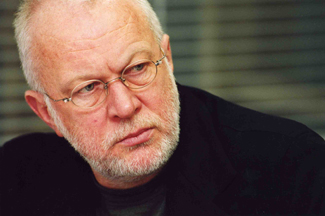
Ramsey McGlazer is an Associate Professor specializing in twentieth-century European and Latin American literature, film, and critical theory. His research engages with poetry, politics-aesthetics intersections, critical carceral studies, and feminist/queer/psychoanalytic frameworks. He holds a Ph.D. in Comparative Literature and Critical Theory from UC Berkeley (2015) and previously taught at the University of St Andrews and Brown University’s Pembroke Center. McGlazer’s work interrogates modernist critiques of progress, radical psychiatry movements, and the interplay between aesthetic practices and institutional critique. His acclaimed monograph Old Schools: Modernism, Education, and the Critique of Progress (2020) won the American Association for Italian Studies First Book Prize. Current projects include The Clinic and its Double , exploring mid-century radical psychiatry and avant-garde art. He serves as Senior Editor of Critical Times and Coeditor of Italian Culture , and has translated key works like Rita Segato’s The War Against Women . McGlazer’s writing appears in venues such as Los Angeles Review of Books and n+1 . Research interests span Surrealist provocations, Brazilian artist Lygia Clark’s propositions, and transnational feminist solidarities. His scholarship bridges literary analysis with critical engagements in carceral studies, postcolonial theory, and decolonial thought.
Sean Cao serves as Associate Professor (with tenure) at the Robert H. Smith School of Business, University of Maryland, where he is Director and Co-founder of the AI Initiative for Capital Market Research. He also holds an affiliation as professor at Harvard Business School's D 3 Institute. His academic journey began with a Ph.D. from the University of Illinois at Urbana-Champaign. Dr. Cao's research focuses on the intersection of artificial intelligence and capital markets, with particular expertise in how machine learning transforms financial analysis, corporate disclosure practices, and investment decision-making. His work examines the evolving relationship between human analysts and AI systems, blockchain applications in financial reporting, and the strategic adaptation of corporate communications for machine readership. He has pioneered research on the "AI divide" among investor groups and developed frameworks for human-AI collaborative stock analysis. His publication portfolio spans top journals including Journal of Financial Economics, Review of Financial Studies, Journal of Accounting Research, and Management Science. The research demonstrates consistent thematic progression toward increasingly sophisticated AI applications in finance, with recent work exploring distributed ledger technologies for auditing, machine learning for extracting private information from disclosures, and the economics of greenwashing in ESG funds. His studies frequently combine textual analysis with traditional financial metrics to uncover novel market insights. Fama-DFA Prize from Journal of Financial Economics for best paper in capital markets and asset pricing Michael J. Brennan Award from Review of Financial Studies Deloitte Initiative for AI and Learning award for developing trustworthy AI for social equity PanAgora Asset Management's Dr. Richard A. Crowell Memorial Prize Multiple best paper awards from Midwest Finance Association, Global AI Finance Conference, and Asian Finance Association Dr. Cao has delivered over 200 invited research talks at major institutions including the Central Bank of Japan, Central Bank of Thailand, and U.S. Securities and Exchange Commission. He serves as Guest Associate Editor for Management Science and has co-chaired Review of Financial Studies conferences on FinTech and Machine Learning. His educational initiatives include a widely adopted free AI textbook for finance and accounting that has been implemented at universities worldwide including Indiana University, UT Dallas, and University of Minnesota. As Director of the AI Initiative for Capital Market Research, Dr. Cao leads a multidisciplinary team exploring practical AI applications in finance. The initiative has secured significant funding including a $150,000 grant from GRF CPAs & Advisors. His research group maintains strong industry connections through partnerships with regulatory bodies, financial institutions, and technology companies, facilitating the translation of academic research into practical financial applications.
Rebecca Herissone is Professor of Musicology at the University of Manchester and a leading scholar in early modern English music. She co-edits the peer-reviewed journal Music & Letters and serves on editorial boards for the Purcell Society, Musica Britannica, and the Complete Works of John Eccles. Her research focuses on seventeenth-century creativity, material culture, and the ontological dimensions of music notation. Key research areas: Early Modern Music, Creativity, Source Study, Notation, Reception Major awards: Diana McVeagh Prize (2015), Westrup Prize (2007) Her recent work includes digital humanities projects on music preservation and critical editions of Purcell's operas. She has pioneered interdisciplinary approaches connecting musicology with drama, art, and literature, and currently leads research on Purcell's posthumous reception in the eighteenth and nineteenth centuries. Her teaching spans music historiography, performance practices, and advanced source analysis.
Pieter d'Hoine serves as Professor and Vice Dean of Education at KU Leuven's Higher Institute for Philosophy. He is affiliated with the Wulf Mansion Centre for Ancient, Medieval and Renaissance Philosophy and LECTIO – KU Leuven Institute for the Study of Textual Transmission. Additional institutional roles include membership on the Board of the Institute for Living Languages, HIW Faculty Council, and Philosophy Program Oversight Committees. His research centers on Ancient Philosophy with emphasis on Neoplatonism, particularly Proclean metaphysics, logical structures in Platonic/Aristotelian commentaries, and mechanisms of philosophical canon formation. He investigates knowledge transmission from Greek-Roman antiquity through medieval and Renaissance scholarship, integrating digital humanities methodologies to analyze textual evolution and conceptual continuity across historical periods. Recent publications (2024) exhibit concentrated focus on Proclus' metaphysical frameworks, including predication theory, modes of being, and theological elements within Platonic exegesis. His work bridges textual criticism with systematic philosophy, examining how ancient commentators shaped enduring philosophical paradigms through citation practices and logical innovation in works like the Elements of Theology . No major scientific awards are documented in the provided materials. He actively supervises doctoral research, including G.J. Ruz Troncoso's analysis of Proclus' argumentative structures and S-H. Yang's study of Aristotelian metaphysics. Current funding supports eight major projects: "Een nieuw model voor de editie van antieke filosofische fragmenten" (2025-2031) as Co-promotor "De filosofische canon en de citaties van Plato en Aristoteles" (2024-2028) as Promotor "Rechtvaardigheid voor dieren" (Justice for Animals, 2024-2028) as Promotor "De mechanica van Canonvorming" (Canon Formation Mechanics, 2024-2028) as Promotor His research ecosystem operates through the Wulf Mansion Centre and LECTIO institute, which coordinate international collaborations on premodern textual transmission, utilizing digital tools to map philosophical concept evolution across millennia.
Erik Ketzan is a Lecturer in Digital Humanities and Cultural Computation at King's College London. He holds a PhD in English/Digital Humanities from Birkbeck, University of London, and has held postdoctoral roles at the University of Cologne and Trinity College Dublin, where he coordinated the MA in Digital Humanities and Culture. His research focuses on computational literary studies, legal/ethical issues in digital research, and corpus stylistics. He has published widely on topics such as Thomas Pynchon’s computational stylistics, legal frameworks for digital humanities research, and gender bias in historical texts. His work includes developing tools like Coleto for textual variant analysis and co-authoring the book *Thomas Pynchon and the Digital Humanities* (2022). Ketzan actively engages in policy advocacy, advising on copyright and data protection in DH, and has contributed to projects like CLARIN and the Leibniz Institute for the German Language. Education: PhD in English/Digital Humanities, Birkbeck, University of London Postdoctoral Researcher, University of Cologne (EncycNet Project) Postdoctoral Research and Teaching Fellow, Trinity College Dublin Research Interests: Computational approaches to literary analysis, legal challenges in data-driven research, corpus stylistics, and gender studies in historical corpora. Teaching: Courses include Python for the humanities, computational literary studies, and legal issues in digital humanities.
Professor Ihab Ilyas is a leading figure in data management and machine learning at the Cheriton School of Computer Science , University of Waterloo , where he holds the Thomson Reuters Research Chair in Data Quality . He is currently on leave from the university, serving as a Distinguished Engineer, Proactive Intelligence at Apple Inc . His research focuses on data cleaning , large-scale data integration , knowledge graphs , and machine learning applications in data quality . He has pioneered systems like HoloClean and Saga , with commercial impacts through co-founded startups Inductiv (acquired by Apple) and Tamr . PhD in Computer Science from Purdue University Co-founder of Inductiv (acquired by Apple) Co-founder of Tamr Research Interests include: Probabilistic and uncertain data management Machine learning for data quality and enrichment Big data systems and information extraction Knowledge graph construction and optimization Scientific Awards and Recognitions include: Fellow of the Royal Society of Canada (2024) C.C. Gotlieb Computer Award (2024) IEEE Fellow (2021) ACM Fellow (2020) Cheriton Faculty Fellowship (2013-2016) Ontario Early Researcher Award
Michele Ripplinger is a Berkeley Lecturer and Ph.D. candidate in English and Medieval Studies at UC Berkeley. Her research focuses on late medieval literature, particularly Chaucer and the reception of classical texts, with emphasis on gender studies, representational ethics, and women’s reading practices. She teaches across historical periods, integrating cultural studies and poetry analysis. Education: Pursuing a Ph.D. in English and Medieval Studies at UC Berkeley (dissertation on Chaucer and the Moralized Ovid). Research Interests: Medieval and early modern classics reception, fictionality, history of reading, women’s/gender/sexuality studies, and intersections between premodern and modern literary thought. Her publications and conference presentations highlight work on Chaucer, Hoccleve, and medieval literary methodologies. She has presented at major venues including the New Chaucer Society Congress and the International Congress on Medieval Studies. No scientific awards are listed. Advising and grants details are not provided. Office hours are by appointment.
Prof. Dr. Claudine Moulin is a Full Professor of Historical Linguistics at the Department of German Studies, University of Trier. She co-directs the Trier Center for Digital Humanities and serves as Vertrauensdozentin der Deutschen Forschungsgemeinschaft. With academic roots in Brussels and Bamberg, she completed her PhD in 1990 and Habilitation in 1999 at the University of Bamberg. Her research spans medieval and early modern languages, manuscript studies, digital humanities, and Luxembourgish linguistics. As a leading scholar in historical linguistics, Moulin's work explores urban language history, phraseology, and cultural knowledge transmission through manuscripts. She has directed major digital humanities projects like LexicoLux and Cartul@rium, while pioneering digital codicology methods for medieval texts. Her research combines traditional philology with computational approaches. Her academic accolades include the Akademiepreis Rheinland-Pfalz (2010), Landesverdienstorden (2014), and the Verdienstkreuz am Bande (2025). She has held visiting professorships at Sorbonne, EHESS Paris, and EPHE, and received fellowships from the Humboldt Foundation and European Science Foundation. Notable Academic Roles: Co-founder and Chair of DHd (Digital Humanities in German-speaking countries) Founding member of Trier Center for Language and Communication Member of German Historical Institute Paris scientific board Advisory positions at Austrian Center for Digital Humanities and Herzog August Bibliothek Her editorial leadership includes chief editorship of Sprachwissenschaft journal and co-editorship of Germanistische Bibliothek monograph series. She has mentored over 40 graduate students in topics ranging from medieval marginalia to urban language studies.
K. Michael Hays is the Eliot Noyes Professor of Architectural Theory at Harvard University's Graduate School of Design (GSD) and Co-Director of the Master in Design Studies program. He has been a faculty member since 1988, specializing in architectural history and theory. His research focuses on European modernism, critical theory, and contemporary architectural practice, with notable contributions to the field through writings on figures like Mies van der Rohe and Peter Eisenman. Education: He holds a Bachelor of Architecture (1976) from Georgia Institute of Technology, a Master of Architecture in Advanced Studies (1979) from MIT, and a PhD in History, Theory, and Criticism of Architecture and Art (1990) from MIT. Research Interests: Hays is renowned for founding the journal Assemblage , a pivotal forum for architectural theory. His work bridges historical analysis and contemporary practice, emphasizing theoretical frameworks for understanding modernism and its evolution. He has curated exhibitions at institutions like the Whitney Museum of American Art (as its first Adjunct Curator from 2000–2009). Publications: His authored and edited works include Architecture's Desire , Inscriptions: Architecture Before Speech , and critical studies on architects such as Buckminster Fuller and Diller + Scofidio. These publications explore themes of representation, modernist aesthetics, and interdisciplinary design. Awards and Roles: While no specific awards are listed, his academic leadership roles include Chair of the GSD PhD Committee (1995–2005) and Director of Advanced Independent Study Programs. He has also served on editorial boards for journals like Assemblage and Thresholds . Labs and Collaborations: Hays collaborates with academic and institutional partners, notably through curatorial projects and his role in shaping the GSD's theoretical curriculum. His influence extends to both pedagogical innovation and scholarly discourse in architectural education.
Elizabeth Frood is an Associate Professor of Egyptology at the University of Oxford, affiliated with the Faculty of Asian and Middle Eastern Studies. She holds dual college fellowships as a Fellow of St Cross College and Honorary Fellow of The Queen's College, with research centered on ancient Egyptian self-presentation, sacred landscapes, and social experience including gender and disability studies. Her academic journey began with first degrees completed in Aotearoa New Zealand, establishing her foundation in Egyptology before her current Oxford appointment. Professor Frood's scholarship uniquely reconstructs non-royal Egyptian lives through biographical texts, graffiti, and visual culture, specializing in the late New Kingdom and Third Intermediate Period (mid-second to early first millennium BCE). Her work bridges textual analysis with material culture studies, examining how individuals expressed identity through sacred spaces, ritual practices, and social interactions. This approach has generated significant insights into elite self-representation and non-elite participation in religious contexts. Analysis of her 14 most recent publications (2007-2023) reveals consistent thematic threads: sustained focus on Karnak temple graffiti projects, evolving methodologies in biographical text interpretation, and increasing interdisciplinary engagement with gender/disability studies. Her collaborative work with the Centre Franco-Égyptien d’Étude des Temples de Karnak demonstrates fieldwork integration with epigraphic analysis. Her academic distinctions include: Fellow of St Cross College Honorary Fellow of The Queen's College Professor Frood actively mentors doctoral researchers across diverse topics including Deir el-Medina statuary, Hatshepsut's iconoclasm, ancient graffiti contexts, gendered domestic spaces, and kinship practices. Her Karnak Graffiti Project (2011-present), co-directed with Chiara Salvador and supported by CFEETK, represents a major sustained research initiative involving fieldwork at the temple of Ptah and eighth pylon, yielding publications, media features, and international scholarly collaborations. She co-directs the Karnak Graffiti Project, a decade-long international collaboration with the Centre Franco-Égyptien d’Étude des Temples de Karnak and Montpellier-based scholars, combining archaeological documentation, epigraphic recording, and digital analysis of temple graffiti across multiple Karnak sectors.
Christopher P. Atwood is a Professor of Mongolian and Chinese Frontier and Ethnic History and Department Chair of East Asian Languages and Civilizations at the University of Pennsylvania. He holds a PhD from Indiana University's Central Eurasian Studies Department. His research focuses on the interplay of culture, political power, and historiography in Mongol and Inner Asian contexts. Atwood's work spans topics such as Mongol nationalism, Yuan dynasty historiography, and the socio-economic history of nomadic societies. Education: AB from Harvard University (1986), PhD from Indiana University (1994). He previously taught at Indiana University for two decades, serving in administrative roles. His affiliations include visiting scholar positions at institutions like the Institute for Advanced Study (Princeton) and Peking University. Research interests include environmental history (e.g., marmot-human relations), political dynamics (e.g., Mongol empires and comparative imperial formations), and literary studies (e.g., Mongolian poetry and textual canonization). He has authored works like the Encyclopedia of Mongolia and the Mongol Empire and collaborates on projects such as the Sources of Mongolian Tradition . Teaching includes courses on Inner Asian civilizations, the Mongol Empire, and the Secret History of the Mongols . He emphasizes interdisciplinary approaches, blending philology, environmental history, and cultural analysis to reconstruct nomadic and steppe societies.
Mulki Al-Sharmani is a Professor at the University of Helsinki, affiliated with the Faculty of Arts and the Department of Cultures (specializing in Middle Eastern Studies). Her research focuses on Islamic feminism, Muslim family law, gender studies, and transnational migrant communities. She examines how religious texts and practices intersect with legal frameworks and social dynamics in contexts like Egypt, Finland, and the Somali diaspora. Her work includes analyzing Islamic legal reform, gender equality in marriage, and the lived experiences of Muslim women. Key publications explore Qur'anic hermeneutics, the role of feminist activism in legal change, and the wellbeing of transnational families. She has contributed to projects like 'Reclaiming Adl and Ihsan in Muslim Marriage' and co-edited volumes on Islamic ethics and family law reform. Research interests: Islamic feminist theory, Middle Eastern legal traditions, transnational family dynamics, and religious praxis. Recent articles highlight themes like Qur'anic ethics of marriage, legal pluralism in Finland, and the political dimensions of Egyptian family law reform. Active in international conferences, including presentations at SOAS University of London, American University in Cairo, and panels on Islamic law and gender at venues like MESA and EASR. Involved in interdisciplinary initiatives such as the Africa Research Forum and Musawah's global network for equality in Muslim family laws.
Andrew Connor is a Senior Lecturer in Archaeology and Ancient History at Monash University. He specializes in Ptolemaic and Roman Egypt, papyrology, and the social and religious history of ancient Egyptian communities. His research focuses on Egyptian temples during the Roman period, ancient economic practices, and the editing and publication of documentary papyri. Connor has particular expertise in the Fayum depression and Dakhleh Oasis regions. Connor's publications demonstrate a consistent focus on Egyptian religious institutions, economic systems, and textual evidence from archaeological sites. His recent work includes publications on temple administration, Greek papyri, and digital archaeology. He has received multiple teaching awards including the Faculty Citation for Outstanding Contribution to Student Learning (2017), Faculty Citation for Overseas Programs (2018), and Vice Chancellor's Citation for Outstanding Contribution to Student Learning (2018). Connor teaches courses on Greek and Roman history, archaeology, and ancient languages at both undergraduate and postgraduate levels. He serves as Honours Coordinator for the School of Philosophical, Historical, and International Studies.
April Yi Wang is a tenure-track Assistant Professor in the Department of Computer Science at ETH Zürich, where she directs the Programming, Education, and Computer-Human Interaction Lab (PEACH Lab). She is a core faculty member at the Institute for Intelligent Interactive Systems and associated with the ETH AI Center. Wang is also an active member of ETH HCI and Swiss CHI communities, contributing significantly to human-computer interaction and educational technology research. Dr. Wang's educational background includes: Ph.D. in Information Science from University of Michigan (2023), advised by Steve Oney and Christopher Brooks M.Sc. in Computer Science from Simon Fraser University (2018), advised by Parmit Chilana B.Eng in Computer Science from Zhejiang University (2016) Dr. Wang's research focuses on human-centered approaches to programming and data science. Her work reimagines programming as a form of literature that communicates with both machines and people, exploring creative representations like text, shapes, animations, and everyday objects. She investigates how to make programming more natural and intuitive through literate programming environments, with applications in professional and educational contexts. Her research spans human-computer interaction, educational technology, and AI-assisted programming tools. Analysis of Dr. Wang's recent publications reveals a strong focus on AI-enhanced educational tools, particularly for programming and data literacy. Her work increasingly integrates large language models to scaffold learning while maintaining user agency. There's a clear trajectory toward developing situated learning approaches that connect abstract concepts to real-world contexts through augmented reality and tangible interfaces. Her research bridges HCI, education, and AI to create more accessible and engaging technical learning experiences. Dr. Wang has received numerous prestigious awards including: 2023 Gary M. Olson Award and Honourable Mention Award at ACM CHI 2022 Rising Stars in EECS and Heidelberg Laureate Forum Young Researcher 2020 Best Short Paper Award at IEEE VL/HCC and Honourable Mention at ACM CHI 2019 Best Paper Award at ACM CSCW Dr. Wang actively mentors students through thesis projects at ETH Zürich, supervising numerous bachelor's and master's students on topics ranging from AI-assisted programming to data literacy tools. Her lab, PEACH Lab, has secured funding including the recent innovedum funding for the Coducate project. She serves on program committees for major conferences including CHI and UIST, and regularly reviews for top HCI and education journals. The PEACH Lab, directed by Dr. Wang, focuses on creating expressive, intelligent, and human-centered systems that make technical topics more accessible. The lab explores textual, visual, and embodied representations for programming, with emphasis on enhancing communication, collaboration, and learning. Current research directions include balancing automation with user agency, supporting diverse learning needs, and developing tools for interdisciplinary technical communication.
Andrea Selleri is an Assistant Professor in the Department of English Literature at Bilkent University, where he joined in September 2020. He holds a BA and MA from the University of Trieste and a PhD from the University of Warwick. His research focuses on the intersections between British literature, criticism, and philosophy in the long nineteenth century, with particular attention to authorship, aesthetics, and interdisciplinary approaches. Dr. Selleri has published extensively on Victorian literature and its philosophical contexts, including a monograph exploring the evolution of authorship concepts and co-editing Literary Studies and the Philosophy of Literature (Palgrave, 2016). His recent work includes a three-volume critical edition, Literature and Philosophy in Nineteenth-Century British Culture (Routledge, 2024), which compiles annotated primary sources. At Bilkent, he teaches courses such as ELIT 246 (Drama and Performance) , ELIT 366 (Victorian Literature) , and ELIT 458 (Literature and Philosophy in Nineteenth-Century British Culture) . He coordinates the Philosophy and Literature Colloquia series and serves as a review editor for the Journal of Victorian Culture . His research interests span literary history, modern literatures in English, French, Spanish, and Italian, and the philosophy of literature. Current projects include studies on free will in Victorian fiction and the legacy of Romantic authorship in formalist aesthetics.