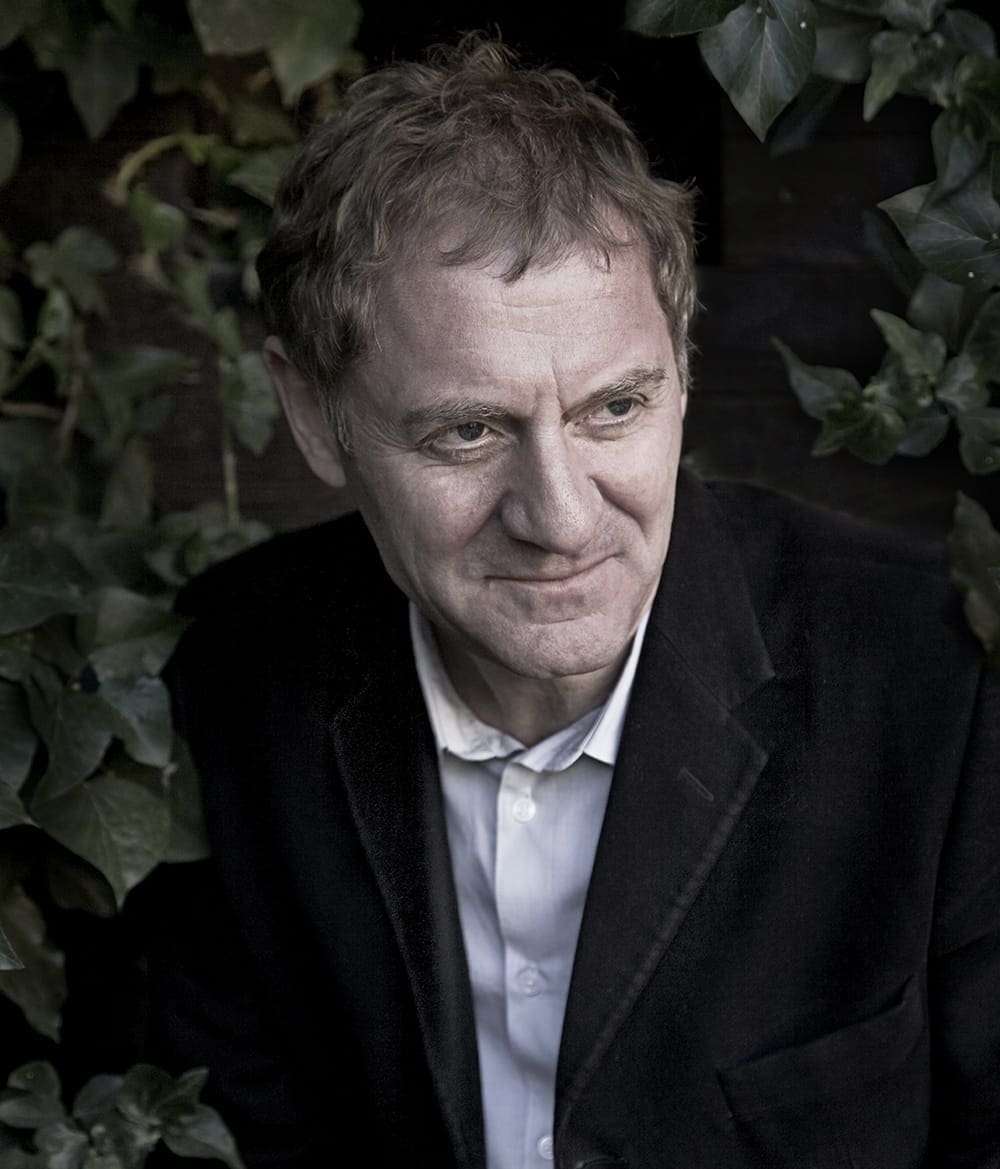
Andrew Motion is the Homewood Professor of the Arts at Johns Hopkins University’s Krieger School of Arts & Sciences. He previously held the position of Professor of Creative Writing at Royal Holloway, University of London, from which he moved to his current role in 2015. Motion is a celebrated poet, biographer, and essayist, having served as the UK Poet Laureate from 1999 to 2009. He was knighted in 2009 for his contributions to poetry. His research interests span poetry, literary biography, and creative writing. He has authored biographies of prominent figures like Philip Larkin and John Keats, as well as two volumes of autobiography and a collection of essays. Motion co-edited *The Penguin Book of Elegy* with Stephen Regan, reflecting his engagement with elegiac literature. Motion’s publications include recent works such as *New and Selected Poems 1977-2023* (2023) and *Waders* (2024). His earlier notable works include *In the Blood* (2006) and *Sleeping on Islands* (2023). He has co-founded initiatives like the Poetry Archive and Poetry by Heart, demonstrating his commitment to preserving and promoting poetry. No formal advisees or grants are explicitly documented in the provided text.
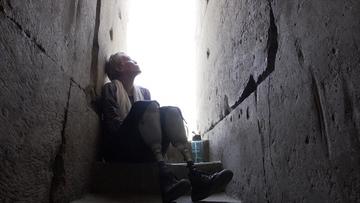
Elizabeth Frood is an Associate Professor of Egyptology at the University of Oxford, affiliated with the Faculty of Asian and Middle Eastern Studies. She holds dual college fellowships as a Fellow of St Cross College and Honorary Fellow of The Queen's College, with research centered on ancient Egyptian self-presentation, sacred landscapes, and social experience including gender and disability studies. Her academic journey began with first degrees completed in Aotearoa New Zealand, establishing her foundation in Egyptology before her current Oxford appointment. Professor Frood's scholarship uniquely reconstructs non-royal Egyptian lives through biographical texts, graffiti, and visual culture, specializing in the late New Kingdom and Third Intermediate Period (mid-second to early first millennium BCE). Her work bridges textual analysis with material culture studies, examining how individuals expressed identity through sacred spaces, ritual practices, and social interactions. This approach has generated significant insights into elite self-representation and non-elite participation in religious contexts. Analysis of her 14 most recent publications (2007-2023) reveals consistent thematic threads: sustained focus on Karnak temple graffiti projects, evolving methodologies in biographical text interpretation, and increasing interdisciplinary engagement with gender/disability studies. Her collaborative work with the Centre Franco-Égyptien d’Étude des Temples de Karnak demonstrates fieldwork integration with epigraphic analysis. Her academic distinctions include: Fellow of St Cross College Honorary Fellow of The Queen's College Professor Frood actively mentors doctoral researchers across diverse topics including Deir el-Medina statuary, Hatshepsut's iconoclasm, ancient graffiti contexts, gendered domestic spaces, and kinship practices. Her Karnak Graffiti Project (2011-present), co-directed with Chiara Salvador and supported by CFEETK, represents a major sustained research initiative involving fieldwork at the temple of Ptah and eighth pylon, yielding publications, media features, and international scholarly collaborations. She co-directs the Karnak Graffiti Project, a decade-long international collaboration with the Centre Franco-Égyptien d’Étude des Temples de Karnak and Montpellier-based scholars, combining archaeological documentation, epigraphic recording, and digital analysis of temple graffiti across multiple Karnak sectors.
Monika Gabryś-Sławińska is a Professor at the Department of Polish Literary History , part of the Faculty of Languages, Literatures and Cultures at the University of Maria Curie-Skłodowska (UMCS). Her research spans 19th- and 20th-century Polish literature , focusing on Stefan Żeromski , historical journalism , text editing , voice emission , and museology . MA in Polish Philology (1998, UMCS) PhD in Literary Studies (2007, UMCS) Habilitation in Literary Studies (2016, UMCS) Her research interests include political commentary in historical press , media's role in cultural identity , and sociolinguistic trends . She has edited over 29 academic volumes and authored 5 monographs. Scientific awards: Bronze Cross of Merit KEN Medals (Bronze, Silver) 8 Rector's Awards (UMCS) Lublin Mayor's Medal (2019) She has participated in 5 research grants , organized 35 academic conferences , and contributed extensively to Annales UMCS as a scientific editor.
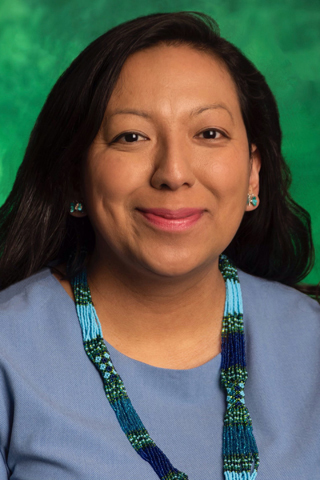
Jennifer Gómez Menjívar is Professor and Director of the M.A. in Media Industries and Critical Cultural Studies at the University of North Texas. Her research examines historical and ethno-linguistic movements influencing text production, circulation, and reception across print media, screen cultures, and digital communities. With over 18 years of teaching experience, she previously held positions at international organizations including the UNECE and UNDP. Her scholarly interests span media linguistics, film adaptation, digital activism, hemispheric animation histories, Indigenous sovereignty media, and Spanish-language media. Her publications demonstrate interdisciplinary work bridging media studies, cultural history, and postcolonial theory. Her extensive publication record includes books such as Tropical Tongues: Language Ideologies, Endangerment, and Minority Languages in Belize (2018) and Black in Print: Plotting the Coordinates of Blackness in Central America (2023), as well as co-edited volumes on Indigenous technology and hemispheric Blackness. She received a Senior Research Fellowship at Freie University Berlin for her upcoming work on Indigenous sovereignty media. Gómez Menjívar teaches courses including Introduction to Graduate Studies in Media Arts, Women in Film, and Global Media. She also mentors students in critical media analysis and serves as faculty advisor for media research projects.
David Arbesú is Professor of Spanish at the University of South Florida, serving as Head of the Spanish Section and Graduate Program Director for the MA in Spanish within the Department of World Languages. He has presented at over 70 national and international conferences on medieval and Golden Age Spanish literature. His research specializes in manuscript studies, codicology, and palaeography, with significant contributions to Golden Age textual scholarship and Florida colonial history. Arbesú has discovered key historical manuscripts including Pedro Menéndez de Avilés' conquest records and legal proceedings concerning colonial Florida, demonstrating interdisciplinary expertise in literary analysis and historical documentation. Recent publications (2018-2023) reveal sustained focus on critical editions of medieval Spanish texts like Sendebar and Libro de los gatos , alongside colonial Florida manuscripts. His work consistently bridges philological precision with historical context, producing authoritative editions that illuminate textual transmission and cultural frameworks of Iberian literature. Arbesú serves on the Editorial Board of Harvard UP’s Dumbarton Oaks’ Medieval Library Spanish Series and as Book Review Editor for La corónica: A Journal of Medieval Hispanic Languages, Literatures, and Cultures , maintaining active leadership in scholarly publication standards.
Ksana Blank is a Senior Lecturer at Princeton University’s Department of Slavic Languages and Literatures. She coordinates the Russian Language Program and directs the Princeton-in-Petersburg Program, fostering academic exchange and interdisciplinary research. With a PhD in Russian Literature (Columbia University, 1997) and a BA in French Philology (St. Petersburg State University, 1979), her academic career spans over two decades at Princeton, preceded by teaching roles at Hunter College and Middlebury College Russian Summer School. Education: PhD, Russian Literature, Columbia University (1997) BA, French Philology, St. Petersburg State University (1979) Her research centers on Russian literature, emphasizing stylistic analysis and interdisciplinary connections with music, visual arts, folklore, and religious philosophy. Notable works include studies on Dostoevsky’s dialectics, Gogol’s The Nose , and the interplay between Russian modernism and Western art movements. She has authored multiple books and articles, many translated into Russian, and has published in academic journals across Russia, Europe, and China. Recent publications explore Dostoevsky’s paradoxes, Gogol’s linguistic innovation, and the intersection of Russian literature with music (Shostakovich), art (Malevich), and philosophy. Her 2023 book Парадоксы классики expands traditional interpretations of classic works through interdisciplinary lenses, while her 2021 The Nose guide deciphers Gogol’s wordplay and its narrative function. Earlier works address Tolstoy’s spiritual crisis and Bakhtinian dialogism in Russian literary theory. While no scientific awards are listed, her contributions to pedagogy include advanced Russian language courses and graduate-level Tolstoy studies. She currently works on Leo Tolstoy’s The Prisoner of the Caucasus and teaches courses on Russian literature, spirituality, and translation.
University of California, Los AngelesUnited States
Asma Sayeed is an Associate Professor and Program Director of Islamic Studies at UCLA's Near Eastern Languages and Cultures department, part of the UCLA College. She holds a PhD in Near Eastern Studies from Princeton University (2005) and previously served as an Assistant Professor at Lafayette College. Her research focuses on early Muslim social history, Muslim education, gender studies, and hadith transmission by women. She has authored Women and the Transmission of Religious Knowledge in Islam (2013) and contributed to numerous journals and encyclopedias. Sayeed received a Fulbright Fellowship (2010) for archival research on Muslim women’s education in Syria. She teaches courses such as 'Introduction to Islam' and graduate seminars on research methodologies. Her current work examines textual practices in Muslim education across historical contexts. Education: PhD, Near Eastern Studies, Princeton University (2005) MA, History, Binghamton University (1994) BA, Politics, Princeton University (1991) Certificate in Near Eastern Studies, Princeton University (1991) Research Interests: Her scholarship emphasizes women’s roles in religious knowledge transmission, legal and social history intersections, and medieval Muslim educational systems. She frequently addresses how gender shaped access to religious authority and spaces. Awards: Fulbright Fellowship (2010) Teaching and Professional Engagement: Sayeed’s courses cover Quranic studies, Islam in the West, and methodological frameworks in Islamic studies. She actively participates in academic conferences and initiatives, including keynote lectures on women’s intellectual engagement in classical Islam and digital humanities projects mapping women’s educational histories.
Lynna Dhanani is an Assistant Professor of Religious Studies in the Department of Religious Studies at the University of California, Davis, within the College of Letters and Science. She joined the faculty in Fall 2020 and holds a Ph.D. in Religious Studies from Yale University. Her educational background includes: Ph.D. in Religious Studies, Yale University M.A. and M.Phil. in Religious Studies, Yale University M.A. in History of Religion, University of Virginia B.A. in International Relations and Religion, George Washington University Her research focuses on the intersection of religious traditions in medieval India, with particular emphasis on Jainism. She explores interreligious polemics, philosophical debates, devotional themes, and poetic expression in Sanskrit hymns, especially those of the twelfth-century Jain scholar Hemacandra. Her broader interests include Sanskrit and Prakrit literature, Indian alchemical traditions, yoga and tantra, Indian philosophy, and South Asian religious art. She employs interdisciplinary methods that combine textual analysis, philology, and field-based ethnographic and archival research. Lynna Dhanani was awarded the Jambuvijaya Memorial Fellowship by the Jain eLibrary, which supported her 2019–20 fieldwork in India. During this period, she documented the life and scholarly contributions of Muni Jambuvijaya (1923–2009), a pivotal Jain monastic figure. Her work involved cataloging manuscripts, preserving texts, and conducting interviews with members of the monastic and academic communities. This project highlights her commitment to both historical scholarship and the preservation of religious knowledge. She advises students and contributes to academic mentorship within the Religious Studies department, though specific advisees are not listed. Her fellowship represents significant recognition in her field and may be linked to grant-funded research on Jain monastic scholarship and manuscript preservation. Lynna Dhanani is actively involved in archival and field research, particularly in northwest India, where she collaborates with Jain monastic communities and academic institutions to preserve and study rare Sanskrit and Prakrit texts. Her work bridges academic scholarship with lived religious practice and institutional knowledge preservation.
Walid A. Saleh is a Professor of Islamic Studies at the University of Toronto , holding appointments in both the Near and Middle Eastern Civilizations department and the Department for the Study of Religion . His scholarship focuses on the Qur’an , Quranic exegesis (Tafsir), Islamic apocalyptic literature , and Biblical reception in Islam . PhD from Yale University (2001) Recipient of Mellon New Directions Fellowship (2014) and Konrad Adenauer Fellow (2017) Editor of the Routledge Qur’an Series His research analyzes Quranic chronology , manuscript traditions , and Islamic intellectual history . Recent publications examine periodization in Sunni tafsir, late Ottoman book culture, and the reception of al-Bayḍāwī's Anwar al-tanzīl . Articles explore topics from Quranic death narratives to medieval Islamic cosmology . Key article themes: Quranic identity formation , Islamic manuscript studies , exegetical methodology He has edited critical texts like al-Biqa`i's Bible treatise and serves on editorial boards for the Journal of the American Academy of Religion and Journal of Qur'anic Studies . His teaching includes advanced courses in Arabic paleography and Quranic hermeneutics .
Andrew J Fleck is an Associate Professor in the English and Comparative Literature Department at San José State University, affiliated with the College of Humanities and the Arts. He has been teaching since 2001, specializing in Early Modern British Literature with a focus on Dutch-English cultural relations between 1588-1688. Fleck holds a PhD from Claremont Graduate University (2000). His research explores how Dutch figures influenced English literary and cultural imagination, including studies on John Donne, Thomas Nashe, and early modern drama. He has published widely in journals like Studies in Philology and Journal of British Studies , with a particular emphasis on textual analysis, historical narratives, and cross-cultural exchanges. Fleck’s work spans from examining the role of Dutch language performances in early modern theater to analyzing the representation of national identity in texts like The Shoemaker’s Holiday . His recent publications (2013) include studies on John Donne’s engagement with astronomical themes and global adaptations of Macbeth . He maintains an active presence in academic encyclopedias, contributing entries on Milton’s Dutch connections and Renaissance authors. His scholarship bridges literary analysis with historical context, often highlighting how literature reflects political, religious, and cultural tensions of the period. Fleck’s teaching and research reflect a commitment to interdisciplinary approaches, integrating historical, linguistic, and cultural methodologies.
Joanna Pawlik is an Associate Professor and Head of the Department of Art History at the University of Sussex, within the School of Media, Arts and Humanities. Her research focuses on modern art and literature, emphasizing transnationalism, avant-gardism, and protest movements. She has been funded by prestigious grants like the Leverhulme Trust and the AHRC. Her 2021 monograph Remade in America , awarded the MSA First Book Prize, examines Surrealism's role in American activism post-1940. Current research explores fascist iconography in American art (1945–1980), funded by a Leverhulme Fellowship. Education: PhD in Art History, University of Sussex (2003–2008) MA in Art History, York University, Canada (2021–2022) BA Hons in Art History, University of East Anglia (2018–2021) Research Interests: Her work investigates surrealism's transnational legacies, anti-fascist art, feminist/queer methodologies, and postwar American visual culture. She examines how surrealist principles intersect with race, gender, class, and activism in movements like the Beat Generation and Black Arts Movement. Grants & Awards: Leverhulme Research Fellowship (2020–2022) Leverhulme Trust Grant 'Radical America: Afterlives' (2016) MSA First Book Prize (2021) Professional Activities: Co-director of the SAVAnT Doctoral School promoting interdisciplinary American visual studies. Supervises PhD projects on postwar American art, anti-fascism, and feminist/queer art history. Engages in public scholarship through interviews and exhibitions.
Dr David Pratt is a Fellow in History at Downing College, University of Cambridge , where he also serves as Archivist and Keeper of Art and Artefacts. His academic career focuses on early medieval political thought and court culture, particularly in Anglo-Saxon England and the Carolingian world. Academic Rank: Research Fellow Honors: FRHistS (Fellow of the Royal Historical Society) Research Interests center on the political ideology of King Alfred the Great, the origins of English coronation rituals, and broader themes of kingship, law, and social order in the later Anglo-Saxon period. His comparative approach highlights interactions between Anglo-Saxon and European medieval traditions. Recent Publications include English Coronation Ordines in the Ninth and Early Tenth Centuries (2023) and studies on Alfredian texts, taxation systems, and monastic reform. These works emphasize textual analysis, royal authority, and cross-cultural influences. Scientific Awards: FRHistS
School for Advanced Studies in the Social SciencesFrance
Dinah Ribard is a Director of Studies at the École des Hautes Études en Sciences Sociales (EHESS), working within the Centre de Recherches Historiques (CRH). She serves as Center Director for the GRIHL (Groupe de recherche interdisciplinaire sur l'histoire du libéralisme) research group. Her academic career has been dedicated to the historical study of work, intellectual practices, and cultural production from the early modern period through the 19th century. Ribard completed her thesis in December 2000 at the University of Paris III - Sorbonne Nouvelle under the direction of Alain Viala, entitled "Live Tell Think. Research on the literary status of the philosopher: the Lives of philosophers in France 1650-1766." She was formerly a student at the École Normale Supérieure (Ulm) and holds a degree in Modern Literature. Prior to her position at EHESS, she served as an ATER (Attaché Temporaire d'Enseignement et de Recherche) at Paris III University from 1999 to 2001 and taught at Lycée Jacques-Feyder in Epinay sur Seine from 2001 to 2003. Ribard's research focuses on the history of work from multiple perspectives - examining both intellectual work (1600-1900) and material labor. She investigates how work has been conceptualized, narrated, and institutionalized throughout history. Her work explores the relationship between knowledge production and labor, analyzing how different professions and social statuses have shaped intellectual and cultural practices. She examines the historical construction of disciplines, professions, and social classifications, with particular attention to how writing practices intersect with work identities. Her recent publications reveal a consistent focus on the relationship between writing, work, and social identity across the early modern and modern periods. Ribard's scholarship demonstrates how textual practices were embedded in specific work contexts, from artisanal workshops to academic institutions. Her work shows how literary forms were used to construct professional identities and how writing practices served as forms of political action. She has made significant contributions to understanding the historical relationship between intellectual labor and material production. Ribard has published extensively, including the notable 2023 book "Le Menuisier de Nevers. Poésie ouvrière, fait littéraire et classes sociales (XVIIe-XIXe siècle)" which examines how working-class poetry was historically constructed and marginalized. Her scholarship challenges traditional literary classifications and reveals how social categories have been historically produced through cultural practices. As Director of Studies at EHESS, Ribard supervises doctoral students and contributes to the academic training of historians. She co-responsible for the Grihl seminar and teaches courses at EHESS on topics including "Writings of the Past. Literature and History: Methods, Theories, Fields" and "History and stories of work." Her teaching reflects her research interests in the intersection of literary practices, historical methodology, and social analysis. Within the CRH, Ribard is affiliated with the GRIHL research group, which focuses on the interdisciplinary history of liberalism. Her work bridges historical, literary, and sociological approaches to understanding the development of social and intellectual categories. Through her research, teaching, and institutional leadership, Ribard has made significant contributions to the historical understanding of work, knowledge production, and cultural classification.
Dr. Deirdre Serjeantson is an Undergraduate Tutor and Fellow at Sidney Sussex College, University of Cambridge. Her research focuses on Renaissance literature, translation studies, and the cultural intersections of early modern Ireland and England. Her work explores the interplay between Petrarchism and Protestant theology in sonnet sequences, the history of the book, and the adaptation of classical and biblical motifs in early modern writing. She has published extensively on topics such as Anne Lock's A Meditation of a Penitent Sinner , Richard Verstegan's symbolic use of Babylon, and the influence of Scottish reformation poetry on English verse. Her recent articles analyze the religious and national identities embedded in sixteenth- and seventeenth-century texts, with a particular interest in gender, authorship, and cross-cultural transmission. She can be contacted at tutors@sid.cam.ac.uk or dcs40@cam.ac.uk .
Ato Quayson is the Jean G. and Morris M. Doyle Professor of Interdisciplinary Studies and Professor of English and African and African American Studies at Stanford University, where he also chairs the Department of African and African American Studies. He previously held professorships at New York University (2017–2019) and the University of Toronto (2005–2017), where he was inaugural director of the Centre for Diaspora and Transnational Studies and became a University Professor (2016), the university's highest honor. His academic journey includes a B.A. (First Class Honors) in English and Arabic from the University of Ghana (1989) and a Ph.D. in English from the University of Cambridge (1995). He held a Junior Research Fellowship at Wolfson College, Oxford, and was a Reader in Commonwealth and Postcolonial Literature at Cambridge (1995–2005), concurrently directing the Centre for African Studies and serving as Pembroke College Fellow. Quayson’s research explores postcolonial literature, urban studies, disability studies, and cultural theory. His work bridges global and local contexts, with notable publications such as Oxford Street, Accra (Urban History Association Prize) and Tragedy and Postcolonial Literature (Warren-Brooks Prize). He co-edits the Cambridge History of Postcolonial Literature and chairs initiatives like Contours: The Cambridge Literary Studies Hour . His accolades include fellowships from the Ghana Academy of Arts and Sciences (2006), the Royal Society of Canada (2013), the British Academy (2019), and the American Academy of Arts and Sciences (2023). He has also served as President of the African Studies Association (2019–2020). Quayson curates the YouTube channel Critic.Reading.Writing , discussing literature and urban studies, and teaches courses on global Black diaspora studies and Toni Morrison’s work. His current projects include Accra Chic: A Locational History of Fashion and studies on exile in African literature.