Kamyar Sarshar is a Professor of Business Informatics at the Hamburg School of Business Administration (HSBA) since January 2014, serving as Academic Director of the Bachelor's program in Business Informatics within the Department of Technology & Markets. His educational background includes: Computer Science degree from the University of Hamburg MBA from Cardiff University, United Kingdom PhD from the Institute of Business Informatics in Saarbrücken Prior to HSBA, he worked as a Managing Consultant at Logica (now CGI), leading cross-industry process management projects. Research interests focus on: Business Process Management E-Business IT in Healthcare His work emphasizes empirical evaluation of modeling techniques like Event-driven Process Chains and Petri nets, particularly in healthcare applications and end-user usability. Publications from 2004-2008 reveal consistent contributions to business process modeling methodology, with strong empirical validation across healthcare, energy, and construction sectors, highlighting practical applicability and user-centered design principles. No scientific awards are documented in the provided materials. Information regarding student supervision, research grants, laboratories, or collaborative teams is not specified in the source text.
Gideon Nave is the Carlos and Rosa de la Cruz Associate Professor of Marketing at The Wharton School, University of Pennsylvania. He holds a prominent position within the Department of Marketing and contributes significantly to the school's research and teaching missions in consumer behavior, marketing analytics, and decision sciences. His academic journey began with B.Sc and M.Sc degrees in Electrical Engineering from the Technion – Israel Institute of Technology, specializing in Signal Processing. He then pursued and earned his PhD in Computation & Neural Systems from the California Institute of Technology (Caltech), establishing the interdisciplinary foundation for his current research program. Nave's research focuses on how technological developments in measurement instruments have granted unprecedented access to individual-level data. His work spans several interconnected domains: Consumer neuroscience and neuroeconomics Applications of genetic data in marketing AI's impact on creativity and consumer research Ethical implications of new data collection technologies Decision-making processes across various contexts He investigates how digital footprints of online behavior, MRI, genotyping, and hormonal assays can help understand consumer preferences and behavior, while critically evaluating the ethical challenges these technologies present. His publication record demonstrates a clear trajectory toward understanding the intersection of emerging technologies and consumer behavior. Recent work particularly emphasizes AI applications in marketing research, genetic data utilization for personalization, and neuroscientific approaches to understanding decision-making processes. His methodological approach often combines large-scale datasets with rigorous experimental designs, contributing significantly to both theoretical advancement and practical applications in marketing. Nave's contributions to the field have been recognized with several prestigious awards: National Science Foundation Faculty Early Career Development (CAREER) Award (2020-2025) Association For Consumer Research (ACR) Early Career Award (2024-2025) APS Rising Star Award (2020) Poets & Quants Selection as one of the "World's Best 40 B-School Professors under the Age of 40" (2021) As a recipient of the NSF CAREER Award, Nave leads significant research initiatives examining the applications and ethical implications of new measurement technologies in marketing and consumer behavior. His work has attracted considerable media attention, with features in major outlets including The New York Times, The Guardian, CNN, and The Economist, reflecting the broad relevance and impact of his research. While specific lab names aren't prominently featured in his public profile, Nave's research appears to involve extensive interdisciplinary collaborations spanning neuroscience, genetics, computer science, and marketing. His publications frequently include co-authors from diverse disciplinary backgrounds, suggesting a team-based research approach that bridges traditional academic boundaries.
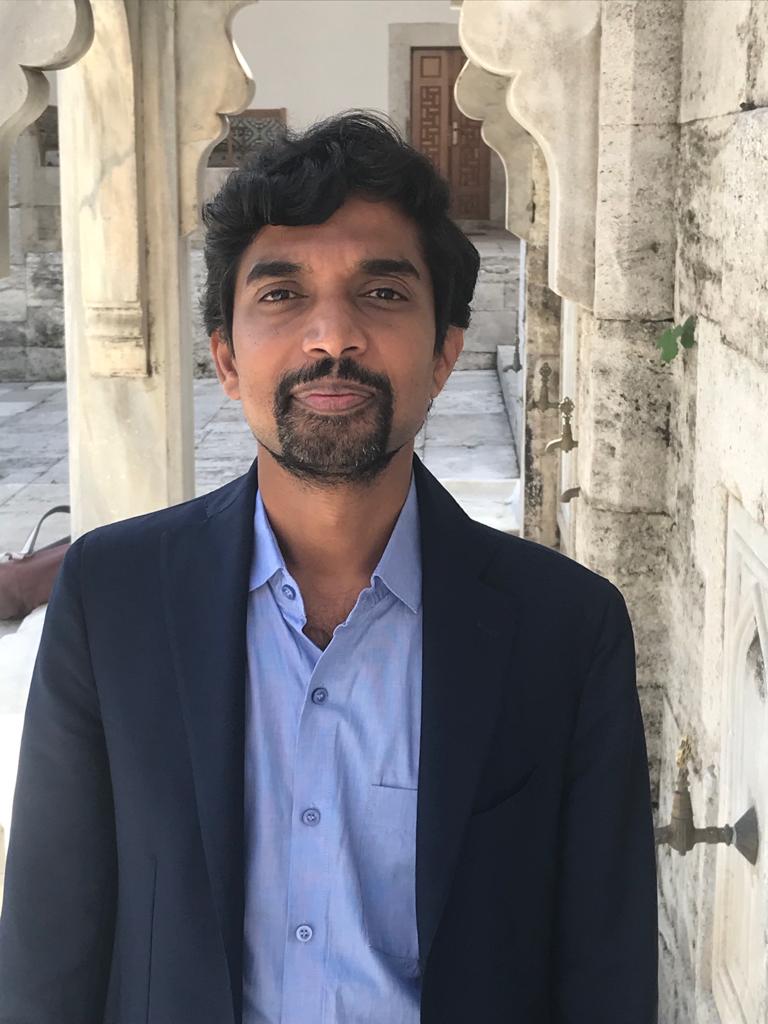
Naveen Kanalu Ramamurthy serves as an Associate Professor at the School for Advanced Studies in the Social Sciences (EHESS) in Paris, where he is affiliated with the Center for Historical Research (CRH). His scholarly work centers on the institutional history of the Mughal Empire (1526-1857) in South Asia, with particular emphasis on the relationship between Hanafi Islamic law and imperial governance structures. Dr. Ramamurthy completed his Doctorate in History at the University of California, Los Angeles (2015-2021), preceded by multiple Master's degrees from prestigious Parisian institutions: Iranian Studies from Sorbonne Nouvelle University Paris 3, History of Economic Thought from Panthéon-Sorbonne University Paris 1, and History and Philosophy from Paris Ouest Nanterre. His academic foundation includes studies at the École Normale Supérieure – Ulm and undergraduate work in Economics at the University of Delhi. His research program examines three interconnected dimensions of Mughal governance: (1) the administrative organization of imperial space, (2) the intersection of legal normativity and historical anthropology, and (3) the regulation of political economy. Drawing on Arabic legal manuscripts, Persian administrative documents, and vernacular language sources, Ramamurthy reveals how Islamic legal institutions adapted to local contexts across precolonial South Asia, challenging simplistic narratives of imperial uniformity. Dr. Ramamurthy's publications demonstrate consistent scholarly engagement with Mughal legal frameworks within trans-imperial networks connecting South Asia with the Middle East and Central Asia. His work bridges historical methodology with theoretical innovation, particularly in analyzing how bureaucratic practices shaped imperial urbanity and legal consciousness during the 17th-18th centuries. Among his significant recognitions, Dr. Ramamurthy received the Collège de France Prize for Young Researchers in 2023. He currently leads the ANR-funded MugUrba project (2024-2027) examining bureaucratic rhythms of imperial urbanity in Mughal South Asia and co-directs the interdisciplinary "Empire" research program at EHESS. As an educator, Ramamurthy teaches courses on "The State in Islam: Authority, Law and Institutions in the Mughal Empire in India," theoretical approaches to historical practice, and contributes to the PRI Empires program. He serves on editorial boards including Annales. Histoire, sciences sociales and participates in the pedagogical council for the History Master's program at EHESS. Dr. Ramamurthy also contributes to the "Research Sources and Data" Collective at CRH, supporting digital initiatives that enhance historical research methodologies while maintaining his primary focus on Mughal institutional history through traditional archival scholarship.
Xiaoke Jia serves as Senior Lecturer in Chinese Language and coordinator of the Chinese language program within Bowdoin College's Asian Studies Program. Holding an M.A. in Linguistics and Applied Linguistics from Beijing Normal University and a B.A. from Henan University, he brings extensive expertise in Chinese language pedagogy developed through teaching roles at Princeton University, Bowdoin College, and international programs. Education: M.A. in Linguistics and Applied Linguistics, Beijing Normal University B.A., Henan University Dr. Jia's research centers on language pedagogy, second language acquisition, and Chinese lexicology, with current focus on innovative program development strategies. He pioneers approaches integrating cultural experiences through project-based learning, incorporates Chinese literature into advanced courses, and cultivates international study partnerships. His work emphasizes authentic cultural exposure and leverages Chinese culinary traditions to deepen linguistic understanding. Analysis of his 13 conference presentations (2014-2023) reveals consistent specialization in advanced Chinese language instruction, particularly literary integration, writing skill development, and cultural contextualization. His research demonstrates evolving methodology from quantitative textbook analysis to creative literary applications, addressing challenges in teaching higher-level Chinese through avant-garde literature, rhetorical devices, and genre-based writing. Dr. Jia's teaching career spans Princeton University (2010-2013), Bowdoin College (2008-2010 and current), Princeton in Beijing program (multiple summers including 2020-2021), and Beijing-based institutions. He actively contributes to professional communities through the New England Chinese Language Teachers Association and ACTFL conferences, while connecting language learning with cultural immersion through Chinese culinary practices.
Ramah McKay is an Associate Professor at the University of Pennsylvania , affiliated with the Department of Anthropology under the School of Arts & Sciences . Her work intersects history of medicine , anthropology , and science and technology studies (STS) , focusing on the relationships between knowledge-making , care work , and humanitarian interventions . PhD, Stanford University Her research explores how humanitarian and scientific actors use data to conceptualize habitable places, and how cleaning and care work reframe livability in climate change contexts. She applies critical and decolonial research methods to analyze transnational medical projects, particularly in Mozambique , emphasizing the often-invisible labor sustaining global health interventions. Recent publications examine planetary health policy , pharmaceutical regulation , and urban health systems . As Director of Graduate Studies , she mentors students in ethnography , history of science , and STS , though no specific advisees are named in the provided texts. She is the author of Medicine in the Meantime: The Work of Care in Mozambique (2018), which traces how global health projects depend on everyday care practices, and contributes to debates on critical global health studies as a co-editor of a special issue. Her teaching includes courses like Global Health Technologies and Feminist STS , and she is affiliated with the Center for Africana Studies .
Tania Allen is an Interim Department Head and Professor of Media Arts, Design and Technology at North Carolina State University's College of Design. She serves as a Faculty Fellow with the Center for Geospatial Analytics and co-directs the design research group co-lab, which focuses on critical mapping as a participatory design research tool. Her work bridges academic research with practical applications in community engagement and social justice. Her educational background includes: B.A. in History with Minors in Fine Arts/Graphic Design from Washington University Certificate in Visual Communication from the School of the Art Institute of Chicago Master of Graphic Design from North Carolina State University Allen's research centers on critical cartography and critical mapping as tools for design research. Building on theories from anthropology, action research, placemaking, and participatory design, her work seeks to 'thicken' the way data is visualized and the stories at the core of data collection and communication. Her approach emphasizes the reciprocal activity of encoding and decoding, bridging the researcher's perspective with the subject's lived experience. She challenges assumptions embedded in mapping processes while embracing cartography as both an analytic and synthetic research tool. Analysis of her publication trajectory reveals a clear evolution from foundational explorations of critical mapping toward concrete applications addressing social justice issues. Her recent work increasingly focuses on Confederate memorialization, urban development, and oppressive infrastructures, demonstrating her commitment to using design as a catalyst for community engagement and social change. This progression reflects growing sophistication in applying critical cartography to address systemic inequities. As a Faculty Fellow with the Office of Faculty Development, Allen helped create an online certificate program focused on higher-order thinking through critical and creative pedagogy. Her contributions to the TH!NK initiative have transformed campus teaching culture toward student-centered instruction that promotes critical thinking across disciplines. She has also taught Design Thinking, focusing on creative research strategies for beginning design students. Allen co-directs the cross-institutional colloquium 'Oppressive Infrastructures: Examining Systems of (in)Equity In/Through/By Data,' which investigates how data systems perpetuate inequality. Through her professional practice, she has worked with organizations including the Chicago Botanic Garden, Boston Symphony Orchestra, Accenture, MIT, and Harvard University, consistently focusing on design as a participatory process that empowers communities to address social issues and create change from the ground up.
Ping Wang is a Professor in the Department of Asian Languages & Literature at the University of Washington, serving as Graduate Program Coordinator and Graduate Admissions & Education Committee Chair. They hold a Ph.D. in Chinese Language and Literature from the University of Washington (2006). Their research focuses on Chinese Intellectual History, Medieval Philology, Poetry and Poetics, and Translation Studies. Recent research trends include interdisciplinary approaches to classical texts and modern translation methodologies. The listed articles highlight contributions to computational linguistics and AI, though primary disciplinary focus remains humanities. No specific awards are listed, though the department's 'Awards & Honors' page may contain institutional recognitions. Advising emphasizes graduate education coordination rather than individual student mentorship. Active in departmental administration and curriculum development. Research affiliations include the Bilingual and Biliteracy Research Lab and the Early Buddhist Manuscript Project. Office located in GWN M246 with regular Thursday office hours.
Jake S. Truscott is an Assistant Professor of Political Science at the University of Florida in Gainesville. He received his Ph.D. from the University of Georgia in 2023 with focuses in American Politics (Major) & Formal Theory (Minor). Prior to his appointment at Florida, he held a postdoctoral appointment with the Center for C-SPAN Scholarship and Engagement at Purdue University. Dr. Truscott's research program focuses on merging conventional studies of judicial politics with emerging computational methods. His principal research interests include examining the American federal judiciary using high-performance computing systems and non-conventional data sources like text and audio. He is particularly interested in applying computational approaches to study the latent and explicit properties of language within the American legal community, with specific projects on judicial ideology as text, Supreme Court confirmation hearing rhetoric, and social media coverage of the Court. His research has been published in leading journals including The Journal of Law and Courts, Political Research Quarterly, and The Justice System Journal, and has been featured in major media outlets such as The Washington Post, Newsweek, and SCOTUSBlog. Dr. Truscott is the creator of scotustext, a comprehensive R package for working with Supreme Court documents, demonstrating his commitment to methodological innovation and research transparency. His scholarly contributions reflect a growing trend in political science toward computational approaches to traditional questions of judicial behavior, with particular emphasis on text analysis and high-performance computing applications to understand how language reveals judicial ideology and behavior.
Vitaly Meursault serves as an Adjunct Professor of Finance at Carnegie Mellon University's Tepper School of Business in Pittsburgh, actively contributing to academic instruction through recent courses including Applied Business AI (January-May 2024) and Finance (July-August 2019). His educational background demonstrates rigorous training in quantitative finance: Ph.D. in Financial Economics, Carnegie Mellon University (2020) M.A. in Financial Economics, European University at Saint Petersburg (2015) B.A. in History, St. Petersburg State University (2013) Meursault's research pioneers the integration of textual analysis with financial economics, focusing on behavioral market anomalies. His work develops computational methods to extract insights from earnings call transcripts, revealing how linguistic patterns drive stock price movements beyond traditional numerical metrics. This interdisciplinary approach bridges finance theory with natural language processing to decode market inefficiencies and investor behavior. His sole documented publication establishes a novel text-based framework (SUE.txt) that generates significant post-earnings-announcement drift (PEAD.txt), demonstrating persistent market anomalies even when conventional PEAD has diminished. The research highlights textual content as a critical dimension for understanding earnings surprises and fundamental firm performance. No scientific awards or honors were documented in the source materials. While specific advising relationships and grant funding remain unreported, his teaching portfolio indicates active engagement in both foundational finance education and emerging AI applications. The absence of laboratory or team affiliations in the provided data suggests independent research execution within the Tepper School framework.
Dr. Joanne Ruth Quick serves as Deputy Head for Canberra and Regional NSW at Australian Catholic University's School of Education. As a Research Fellow, her work focuses on literacy education, socio-cognitive research, and intervention strategies in Australian primary education. Her research examines literacy development challenges, text selection practices in teacher education, and socio-cognitive aspects of learning. Recent publications explore paradoxes in children's language learning, literacy intervention mapping across Australian states, and evidence-based approaches to reading instruction. Dr. Quick has published extensively in education journals including Australian Journal of Language and Literacy and Journal of Language and Literacy Education , contributing to our understanding of literacy practices and educational interventions.
Kylie L. Anglin is an Assistant Professor in the Department of Educational Psychology at the University of Connecticut, specializing in Research Methods, Measurement, and Evaluation (RMME). She holds a Ph.D. in Education Policy from the University of Virginia (2021), an MPP in Leadership and Public Policy (2018), and a BA in Political Science (2013) from Southwestern University. Her research focuses on developing natural language processing (NLP) techniques to monitor program implementation in impact evaluations, enhancing causal validity and replicability in education research. Dr. Anglin teaches graduate courses in research methods, data science, and text analytics. Her work has been published in journals such as the Journal of Research on Educational Effectiveness , Prevention Science , and AERA Open . She has received the NAEd/Spencer Dissertation Fellowship and participated in the IES Pre-doctoral Training Program. Her research emphasizes scalable methods for analyzing policy variation, improving intervention adherence, and leveraging large language models for education evaluation. She actively mentors students interested in education policy or data science, and her contact details are available at kylie.anglin@uconn.edu .
Christian Alexander Hildebrand is a Full Professor of Marketing Analytics and Director of the Institute of Behavioral Science and Technology (IBT-HSG) at the University of St. Gallen. His research bridges Human-Computer Interaction (HCI) and consumer behavior, focusing on digital voice assistants, chatbots, and mobile devices. He holds post-doctoral affiliations with Stanford University, Duke University, and the University of Michigan. Education: Doctoral studies and post-doctoral visits at Stanford, Duke, and University of Michigan His research emphasizes methodologies like large-scale field experiments and feature extraction from voice/image/text data. Key themes include consumer-firm interface optimization and technology's impact on decision-making. His work appears in top journals such as Journal of Consumer Research and Information Systems Research . Awarded the Swiss Academy of Marketing Science’s 'Rigor and Relevance Award,' his research is funded by public/private institutions and disseminated through practitioner outlets like NIM Marketing Intelligence Review . He teaches Machine Learning for Marketers, Web Data Analytics, and experimental design. Grants: Supported by major public/private institutions Labs/Teams: Leads IBT-HSG, collaborating with corporations in retail, consumer electronics, automotive, and finance sectors
Dr. Osama Mahmoud is a Lecturer (Assistant Professor) in Data Science and Statistics at the University of Essex, affiliated with the School of Mathematics, Statistics and Actuarial Science (SMSAS) and the Department of Mathematical Sciences. He holds dual roles as the Director of the BSc Data Science and Analytics programme and Deputy Director of Research at SMSAS. His academic journey includes a PhD in Statistics from the University of Essex and an Honorary Senior Researcher position at the University of Bristol Medical School (2020–2024). Dr. Mahmoud's research focuses on Predictive Modelling, Health Data Science, Machine Learning, Bio and Medical Statistics, and Explainable AI. He pioneered the Slope-Hunter method (Nature Communications, 2022) for bias correction in genome-wide studies and developed tools like the Proportion Overlapping Score (POS) and open-source packages on CRAN/GitHub. His work bridges statistical methodology with applications in healthcare, environmental epidemiology, and industrial collaboration. Key contributions include studies on sleep-breast cancer mortality linkages (2025), lung function-cardiovascular risk relationships (2024), and smoking's role in depression recovery (2022). He has secured grants supporting collaborations with UNDP, Rolls Royce, and Recruitment Smart. Teaching innovations include pioneering programming and text analytics modules. Education: PhD in Statistics, University of Essex Affiliations: UK Reproducibility Network (UKRN) Institutional Lead, British Data Science Society Member Grants: Projects in Data Science, theoretical/applied Statistics, and industrial partnerships Tools: ESKNN, OTE, propOverlap packages on CRAN His work emphasizes reproducibility, with over 50 peer-reviewed publications and international teaching engagements at ICTP (Italy), EuADS (Luxembourg), and UK institutions.
Dr. Walter Lucia is an Associate Professor at the Concordia Institute for Information Systems Engineering, Concordia University. His research focuses on secure and resilient control of cyber-physical systems and model predictive control strategies for autonomous vehicles. He supervises MASc and PhD students in programs such as Information Systems Security, Electrical and Computer Engineering, and Information and Systems Engineering. His research interests encompass cybersecurity in control systems, including strategies against false data injection and setpoint attacks. He develops resilient control architectures and applies model predictive control to autonomous systems like self-driving cars and mobile robots. Recent work emphasizes data-driven safety mechanisms, encrypted control systems, and collision-free platooning of mobile robots. No scientific awards or grants are explicitly mentioned in the provided text. Dr. Lucia's advising roles include overseeing multiple graduate programs, though specific student names are not listed. His publications reflect a strong focus on control theory applications, cyber-physical system security, and optimization techniques. Labs or collaborative teams are not explicitly detailed in the text, but his research themes suggest involvement in interdisciplinary projects at the intersection of engineering and cybersecurity.
Jens Andersson is a Researcher at the Plant Production Systems department (PE&RC), focusing on sustainable agricultural practices and food security in smallholder farming systems across Africa. His work emphasizes the application of agronomic technologies, such as mobile-based decision support tools, to enhance productivity and resilience in farming communities. He holds a doctoral degree (dr.) and an engineering degree (ir.) from an unspecified institution, reflecting his academic background in agricultural sciences and engineering. His research interests include agricultural development, food security, sustainable intensification, and the analysis of farming systems. He explores how legume integration and conservation agriculture can address yield gaps and promote equitable resource management. Additionally, he investigates the challenges of scaling digital agronomy solutions and the socio-economic factors influencing technology adoption among smallholder farmers. Jens has not been mentioned to have received any scientific awards or fellowships in the provided texts. His recent publications highlight critical analyses of farm size impacts on economic development, gender dynamics in agricultural investments, and the failure to scale digital agronomy solutions in developing countries. He also examines farmer perceptions of livestock intensification and the historical trajectory of Zimbabwe's agricultural policies. As a co-promotor, Jens has advised multiple PhD candidates, including R. Pawar, H. Nyirahabimana, M. Kilakila, and T. Delaune. He is involved in grants such as the Sustainable intensification of soybean production in Ghana and Tanzania, and the Food Systems Transformation in Southern Africa for One Health (FoSTA-Health) project, where he collaborates as a co-PI. His contributions to projects like Farming Systems Analytics and Conservation Agriculture targeting tools underscore his commitment to bridging research and development practices. Jens is affiliated with the Plant Production Systems group (PE&RC), contributing to interdisciplinary teams researching farming systems analytics and agricultural development strategies. His work integrates socio-economic dimensions with agronomic science, addressing systemic barriers in technology adoption and policy design for marginalized farming communities.