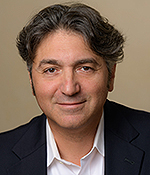
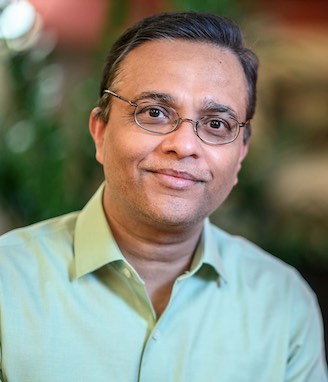
João Guerreiro is a Visiting Assistant Professor at ISCTE-IUL (Instituto Universitário de Lisboa) with a PhD in Marketing from the same institution. He is affiliated with the Iscte Business School, where he teaches undergraduate and master's degree courses in marketing and decision support systems, applying data mining techniques to analyze large information sets. His research expertise spans three interconnected domains: Decision Support Systems - particularly in banking and insurance sectors where he has held executive positions Neuroscience Applied to Marketing - utilizing eye-tracking and studying autonomic emotional responses to consumer stimuli Corporate Social Responsibility - examining cause-related marketing and pro-environmental behavior in tourism Dr. Guerreiro's recent publications (2020-2023) reveal a strong emphasis on immersive technologies, with multiple studies on virtual reality applications in consumer behavior, augmented reality's impact on purchasing decisions, and cross-cultural differences in digital marketing effectiveness. His methodological approach frequently incorporates text mining, sentiment analysis, and neuromarketing techniques to uncover deeper consumer insights. His industry experience in decision support systems provides practical grounding for his academic work, creating a valuable bridge between theoretical marketing concepts and real-world business applications in financial sectors.
Paul P. Maglio is a Professor of Management and Cognitive Science at the University of California, Merced, where he is affiliated with the School of Engineering and the Department of Management of Complex Systems. As one of the founders of the field of service science, he has established himself as a leading researcher at the intersection of management, cognitive science, and information systems. His work spans from theoretical foundations of service systems to practical applications of service innovation. Maglio received his bachelor's degree in computer science and engineering from MIT and earned his Ph.D. in cognitive science from the University of California, San Diego. His academic journey reflects his interdisciplinary approach that bridges technical and social sciences. His research interests focus on human-computer interaction, distributed cognition, and service science, with particular emphasis on how technology enables service innovation and value creation. Maglio's work explores how cognitive principles can inform the design of service systems and how service systems can be understood through the lens of complex adaptive systems. His research has practical applications in digital service transformation, service design, and the integration of artificial intelligence in service contexts. Analysis of his recent publications reveals a clear trajectory toward understanding service systems in the age of AI. His work increasingly examines how autonomous technologies transform human-centered service systems, with particular attention to trust in AI systems, digital service transformation, and the ethical implications of data-driven business models. The publications show a consistent focus on service science as an interdisciplinary field that connects management, information systems, and cognitive science. Maglio served as Editor-in-Chief of INFORMS Service Science from 2013 to 2018 and is the lead editor of the Handbook of Service Science, Volumes I and II. He has published over 125 papers across computer science, cognitive science, and service science domains, establishing him as a prolific contributor to these fields. As an educator, Maglio teaches courses including Technology-enabled Service, Foundations of Management of Complex Systems, Service Science, and Service Innovation. His teaching reflects his research interests and commitment to developing the next generation of service science scholars and practitioners. His work with students likely focuses on the practical application of service science principles to real-world business challenges. Maglio directs research that examines the intersection of cognitive science and service systems, with particular attention to how people interact with and through service systems. His work on epistemic actions and distributed cognition provides theoretical foundations for understanding how humans and technology collaborate in service contexts.
Morteza Zihayat is an Associate Professor and Canada Research Chair (Tier 2) in Human-Centered Artificial Intelligence at Toronto Metropolitan University. He holds dual appointments in the Faculty of Engineering and Architectural Science (Department of Electrical, Computer, and Biomedical Engineering) and the Ted Rogers School of Management. Additionally, he serves as an Adjunct Professor at the University of Waterloo in Management Sciences and is a Faculty Fellow at IBM's Centre for Advanced Studies. Dr. Zihayat's educational background includes: PhD in Computer Science from York University (2016) MSc in Computer Engineering from University of Tehran (2011) Postdoctoral Research Fellowship at University of Toronto's Faculty of Information (2017) His research lies at the intersection of AI, security, and society with a focus on building fair and transparent AI systems. Dr. Zihayat's expertise spans human-centered AI, fair information retrieval systems, and blockchain-enabled AI infrastructures. His work emphasizes creating AI systems that are accountable and designed to serve the public good, with applications in healthcare, digital media, and social networks. Dr. Zihayat has received numerous accolades including the Canada Research Chair (Tier 2) in Human-Centered AI (2024), Dean's Outstanding Scholarly, Research, and Creative Activity Award (2023), Best Short Paper Award at ECIR (2023), and IBM CAS Faculty Fellowship (2021). His research has attracted over $1.7 million in external funding from agencies such as NSERC, Mitacs, and multiple industry partners including Toronto Transit Commission, The Globe and Mail, AT&T, and IBM. Dr. Zihayat serves as Associate Editor of the Computational Intelligence Journal and is an active reviewer for top-tier venues. He is also Co-director and Co-founder of the Digital Enterprise Analytics and Leadership (DEAL) Research Center.
Olga Viberg is an Associate Professor at KTH Royal Institute of Technology, specializing in Technology-Enhanced Learning within the Division of Media Technology and Interaction Design at the School of Electrical Engineering and Computer Science. With a PhD in Informatics from Örebro University (2015), she brings extensive experience from Dalarna University (2008-2016) as a lecturer in Media Technology and Learning Sciences. Current roles: Associate Professor, Docent, Course Coordinator Key research areas: AI in Education, Learning Analytics, Privacy & Ethics Leadership roles: Editor-in-Chief of International Journal of Learning Analytics , Vice-President of SoLAR Research Focus : Viberg's work bridges AI, learning analytics, and educational design through value-sensitive approaches. Her studies address: Privacy concerns in learning analytics Cultural alignment of AI systems Self-regulated learning frameworks Trust dynamics in AI adoption Responsible data practices in education Generative AI applications in assessment Scientific Contributions : Recognized through: 2024 Google Academic Research Award Multiple conference recognitions (LAK'24, LAK'23) Leadership in international initiatives like UNESCO's online education policy Educational Impact : Directly shaping academic programs through: Coordination of Bachelor's course in Media Technology Teaching PhD courses in Learning Analytics Organizing Nordic Learning Analytics Summer Institute
Jignesh M. Patel is a Professor in the Computer Science Department at Carnegie Mellon University, where he leads research on efficient data analysis methods. His work focuses on improving both system efficiency (e.g., high-performance data algorithms) and human efficiency (e.g., user productivity with data systems). Research Focus: Patel's group specializes in database systems, query optimization, hardware acceleration, and human-data interaction. Their interdisciplinary work spans: Transactional processing and real-time analytics Query optimization techniques Hardware-algorithm co-design Natural language interfaces for data systems Memory-efficient data processing Professional Activities: Co-founded four technology companies (Paradise, Locomatix, Quickstep, DataChat). Serves on program committees for premier conferences including SIGMOD and CIDR (as co-chair). Teaches database systems courses at CMU. Awards: Received Best Paper Award at DaMoN 2010 for work on cluster efficiency.
Dr. Ramona Roller is a Researcher in Sociology at the Faculty of Social and Behavioural Sciences, Utrecht University. She is affiliated with the Chair Buskens Social Networks, Solidarity and Inequality and contributes to the Institutions for Open Societies (IOS) initiative, specifically focusing on Behaviour and Institutions and In-Equality research areas. Her research expertise spans Analytical Sociology, Experimental Sociology, Computational Humanities, Computational Social Sciences, and Network Analysis. Dr. Roller employs a complex systems perspective to study how local human interactions give rise to global group phenomena. Her work focuses on two main areas: cooperation in modern work teams and the diffusion of ideas in historical societies. In her research on contemporary teams, Dr. Roller investigates fair, productive, and sustainable cooperation through the spontaneous emergence of roles in software development teams. She is part of the SCOOP project (Sustainable COOPeration), collaborating with Rafael Wittek from Groningen and Vincent Buskens from Utrecht. On a societal level, she studies the evolution and spread of ideas during the Reformation in 16th-century Europe using letter correspondences of scholars. This interdisciplinary work involves collaboration with researchers from historiography, theology, and linguistics to address complex challenges in historical analysis. Dr. Roller applies diverse research methodologies including field studies, behavioral experiments, social network analysis, spatio-temporal modeling, and causal inference methods. Her recent publications demonstrate expertise in computational approaches to historical data, particularly in analyzing 16th-century correspondence networks and territorial concepts.
Fernando Rodriguez Jr. is an Assistant Professor at the University of California, Irvine's School of Education. He directs the Education, Technology & Culture (ETC) Lab and co-directs the IES-funded Career Pathways for Researching Learning and Education, Analytics and Data Science (CP-LEADS) program. B.A. in Psychology from California State University, Northridge (CSUN) Master's in Developmental Psychology from the University of Michigan Ph.D. in Educational Psychology from the University of Michigan Dr. Rodriguez's research integrates cognitive theories to enhance student learning. He specializes in: Learning analytics to analyze online platform data for learning behaviors Self-regulated learning and its impact on academic outcomes Social learning theories applied to peer-driven online environments (e.g., Flip, YouTube, Perusall) Dual-process theories of cognition examining critical thinking and persuasive texts His work bridges educational psychology, data science, and instructional technology to optimize digital learning experiences. Scientific recognition includes: Fellowship at the International Max Planck Research School on the Life Course Support from the NIMH-COR training program during undergraduate studies As co-director of the CP-LEADS program, he mentors emerging scholars in education data science methodologies. His research lab investigates how cognitive frameworks can inform adaptive learning technologies and collaborative digital pedagogies.
Hamid Karimi is an Assistant Professor of Computer Science at Utah State University (USU), where he leads the Data Science and Applications (DSA) lab. His research focuses on using AI and data mining for social good, including social media mining, educational data mining, and machine learning. He earned his Ph.D. in Computer Science from Michigan State University (MSU) in 2021, with a thesis on AI for social good. His interdisciplinary work includes the Teachers in Social Media project, which developed algorithms to improve PK-12 education quality. Dr. Karimi has received several awards, including the Best Paper Award at ASONAM 2018 and the International Faculty Recognition Award at USU in 2022. His research spans social media behavior analysis, misinformation detection, and fairness in machine learning. The DSA lab prioritizes practical solutions for socially impactful data science applications, such as cross-disciplinary projects in science and engineering. Education: Ph.D. in Computer Science, Michigan State University, 2021 Research Interests: Social Media Mining Educational Data Mining Graph Mining AI for Social Good Lab: Data Science and Applications (DSA) Lab, USU His work bridges theoretical data science with real-world applications, such as analyzing teacher behavior on Pinterest and leveraging GPT for scalable education tools. Dr. Karimi’s research emphasizes ethical AI practices and interpretable machine learning models.
Dr. Jiraporn Surachartkumtonkun is a Senior Lecturer in the Department of Tourism and Marketing at Griffith University. She holds a PhD in Marketing from the University of New South Wales and has academic affiliations with the Centre for Work, Organisation and Wellbeing and Griffith Asia Institute. Her research focuses on services marketing, frontline employee wellbeing, cross-cultural studies, and consumer behavior in digital contexts. She has published in top journals like the Journal of Retailing and European Journal of Marketing , and serves on the editorial board of the Australasian Marketing Journal . Education: PhD in Marketing, University of New South Wales (Australia) Master of Marketing, Thammasat University (Thailand) Bachelor of Economics, Thammasat University (Thailand) Research Interests: Combines empirical and theoretical approaches to study customer emotions, service recovery, employee diversity, and digital marketing strategies. Recent work explores AI’s impact on workplaces and consumer engagement via TikTok and social media. Teaching: Specializes in Services Marketing, Digital Marketing, and Consumer Psychology. Holds fellowship in UK Higher Education Academy (2022). Grants & Impact: Recipient of a $15,000 Queensland grant to develop growth mindset programs for Aboriginal and Torres Strait Islander students. Leading a $100,000 project on gamified career exploration for culturally diverse female students. Collaborated on a UNDP data project analyzing regional education strategies. Awards: 2022 Best Reviewer Award - Australasian Marketing Journal UK HEA Fellowship (2022)
Adam Dunn is a Visiting Associate Professor at Macquarie University's Centre for Health Informatics and concurrently serves as Associate Professor and Head of Biomedical Informatics and Digital Health at the University of Sydney. He holds an Affiliate Faculty position at the Computational Health Informatics Program at Boston Children's Hospital. His research focuses on clinical research informatics—enhancing evidence synthesis from clinical trials—and public health informatics, leveraging social media and news data to track health misinformation and vaccination behaviors. He has contributed to over 100 research outputs since 2004, with recent work addressing health data analysis, AI-driven health monitoring, and vaccine misinformation. Dunn leads or collaborates on projects like 'iConnect: Capturing social interactions using wearable technology in residential aged care' and 'Monitoring the gap between evidence and vaccination behaviour'. His editorial roles include serving on the boards of JAMIA Open and Research Integrity & Peer Review . Key research areas include systematic reviews, social media analytics, and biomedical informatics. His work bridges clinical and public health domains, emphasizing data-driven solutions for healthcare challenges.
Melvin Wong is an Assistant Professor in the Department of Urban Planning and Transportation within the Built Environment school at Eindhoven University of Technology. His research focuses on transportation engineering, machine learning applications in urban mobility, reinforcement learning for traffic systems, and sustainable transportation solutions. He utilizes advanced computational methods including graph neural networks, generative AI, and physics-informed models to address challenges in traffic prediction, electric vehicle infrastructure, and urban design. His research interests encompass transportation optimization, spatiotemporal modeling, generative design methods, and behavioral analysis in urban systems. Recent publications demonstrate a strong focus on AI-driven solutions for traffic management, battery-swapping systems, and multimodal design optimization. Dr. Wong has received recognition including the Best Research Paper Award (2024) and Swiss Government Excellence Scholarship (2020). He contributes to academic activities through conference presentations, peer reviews, and course development in urban mobility and big data analytics.
John McNamara is an IBM Master Inventor and Advanced Visiting Research Fellow at the University of Sheffield, holding Honorary Professorships at University College London (UCL) and Sheffield Hallam University. He specializes in interdisciplinary innovation across cybersecurity, transportation systems, and artificial intelligence, leveraging technologies like Cloud and Watson for Tech for Good initiatives. His roles include IBM Technical Specialist, IBM Thought Leader, and Open Group Distinguished Technical Specialist, with industry expertise spanning defense, finance, and healthcare sectors. Education: BSc (Hons) in Information Systems from the University of Hull. Research focuses on patentable inventions addressing complex event processing, automated systems optimization, and regulatory compliance. Key innovations include intelligent fuel management systems, automated style-checking frameworks, and goal-directed simulation tools for business processes. His work bridges academic research with real-world industry applications. Awards: IBM Master Inventor IBM Thought Leader Technical Specialist Open Group Distinguished Technical Specialist Collaborates with IBM UK University Programs to develop socially impactful technologies. Active in creating solutions for disease control, banking systems, and defense applications through cross-disciplinary partnerships.
Iain Buchan is an Honorary Professor in the Division of Informatics, Imaging & Data Sciences at the University of Manchester. He directs the MRC Health eResearch Centre (HERC) and co-directs the national Farr Institute for Health Informatics Research. He also serves as Domain Director for Population Health and Ecosystems in the Faculty of Biology, Medicine and Health, and Director of Civic Analytics for the Greater Manchester Combined Authority. His research focuses on leveraging large-scale health data to accelerate scientific discovery and improve public health systems. Education includes a MD from the University of Liverpool (2000), DPH from the University of Cambridge (1999), and BSc in Pharmacology (1989). He holds advanced certifications such as FACMI (2012) and FFPH (2006). Research interests span health informatics, biostatistics, and epidemiology, with emphasis on data-driven solutions for public health challenges. His work includes developing methodologies like 'Research Objects' and 'e-Labs' to enhance health data analytics, and initiatives like the Connected Health Cities program. He has secured £100M+ in research grants and leads one of the UK’s top health informatics teams. Key achievements include founding the Centre for Health Informatics, advancing clinical audit systems, and pioneering health system-wide data integration. Awards include Fellowships in Medical Informatics and Public Health. His projects address topics such as drug safety, chronic disease management, and civic health analytics. Teaching focuses on health informatics leadership through doctoral training and professional development programs. He collaborates internationally via WHO, IMIA, and other networks to promote global health data sharing.
Associate Professor Josiah Poon is affiliated with the School of Computer Science at the University of Sydney. His research focuses on applying data mining and IT techniques to Traditional Chinese Medicine (TCM), particularly analyzing herbal combinations for effective treatments. He collaborates with institutions in China to improve TCM evidence and has contributed to clinical data analysis, medical informatics, and multimodal AI systems. Teaching includes courses such as INFO1003 (Foundations of IT) and INFO9003 (IT for Health Professionals). Current research students are Rina CABRAL (Multimodality Representation), Yan LI (Long Document Comprehension), and Xiaobin LU (Financial Decisions). Research highlights include developing algorithms to quantify TCM efficacy, analyzing complementarity in herbal combinations, and applying machine learning to healthcare data. Notable projects include a randomized controlled trial on pneumococcal vaccination (2021) and a Google-funded multimodal health detection system (2020). Key areas of expertise span TCM informatics, medical data analytics, and AI-driven healthcare solutions. His work bridges Eastern/Western medicine through computational methods, emphasizing evidence-based practices in TCM.
Maqbool Hussain is a Senior Lecturer in Computer Science at the College of Science and Engineering. His research focuses on healthcare informatics, artificial intelligence (AI) applications in medical decision-making, and the development of knowledge-based systems for aerospace and healthcare sectors. He has contributed significantly to areas such as digital twin frameworks for critical care workflows, clinical decision support systems, and semantic interoperability in healthcare. Research Interests Hussain’s work spans multiple disciplines, including: Healthcare Informatics and AI-driven medical solutions Knowledge Graphs and Large Language Models (LLMs) in healthcare and aerospace Digital twins for optimizing critical care and aerospace maintenance Data-driven clinical decision support systems Medical data security and interoperability standards Machine learning for text annotation and classification Recent Research Trends Recent publications highlight his focus on integrating advanced technologies like LLMs and digital twins into healthcare and aerospace contexts. His work addresses challenges in critical care workflow optimization, kidney disease diagnosis, and aerospace product maintenance through innovative knowledge graph approaches. He also explores the application of transformer-based models for text analysis and the secure exchange of medical data using biometric methods. Labs and Teams Hussain is affiliated with the College of Science and Engineering, contributing to interdisciplinary research teams focused on healthcare technology, aerospace systems, and AI applications. His collaborations span academic and industry partners, emphasizing practical solutions for healthcare informatics and aerospace engineering challenges.

.jpg?width=150&height=150&length=150&name=Joao%20Guerreiro%20(4).jpg)