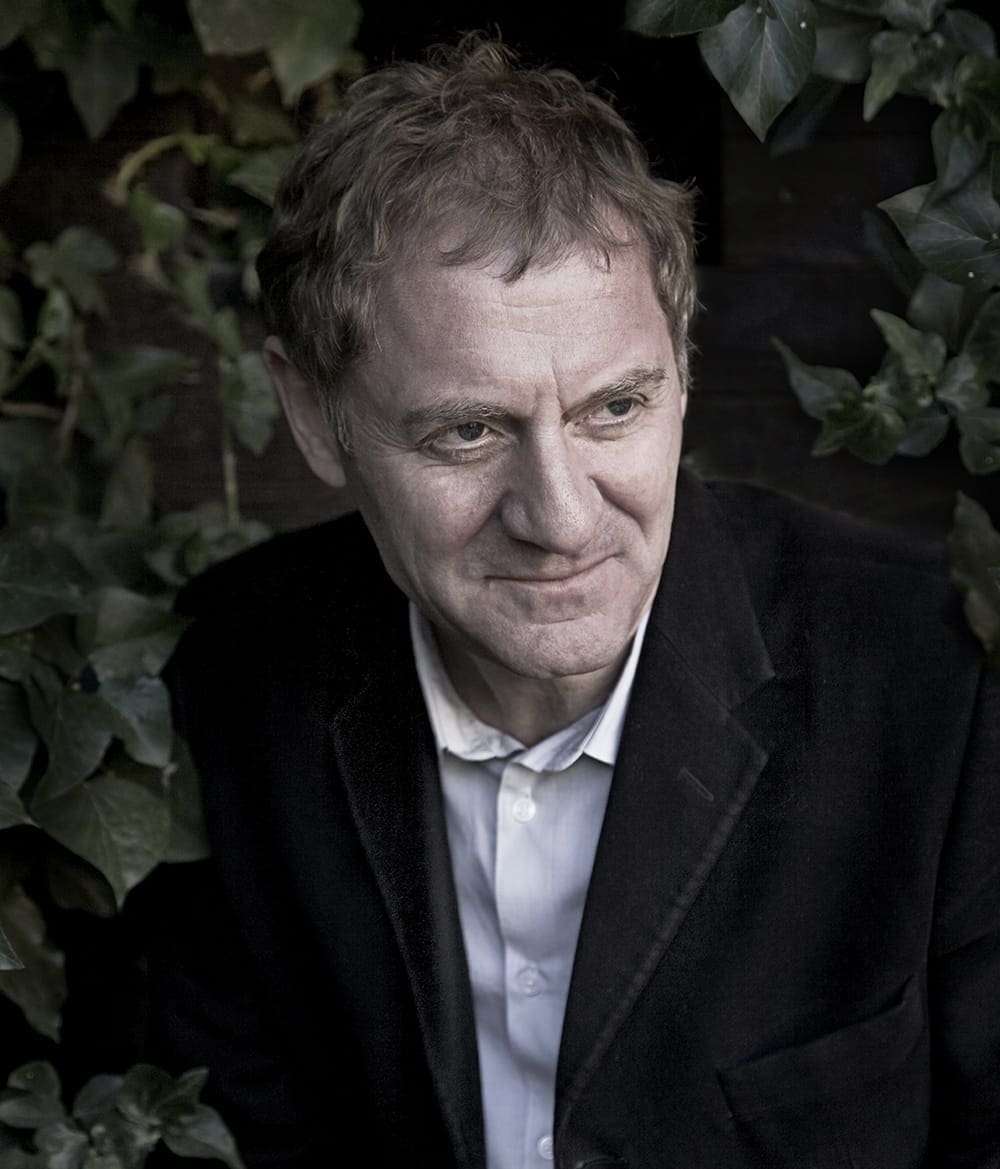
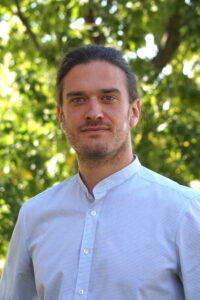
Andrew Motion is the Homewood Professor of the Arts at Johns Hopkins University’s Krieger School of Arts & Sciences. He previously held the position of Professor of Creative Writing at Royal Holloway, University of London, from which he moved to his current role in 2015. Motion is a celebrated poet, biographer, and essayist, having served as the UK Poet Laureate from 1999 to 2009. He was knighted in 2009 for his contributions to poetry. His research interests span poetry, literary biography, and creative writing. He has authored biographies of prominent figures like Philip Larkin and John Keats, as well as two volumes of autobiography and a collection of essays. Motion co-edited *The Penguin Book of Elegy* with Stephen Regan, reflecting his engagement with elegiac literature. Motion’s publications include recent works such as *New and Selected Poems 1977-2023* (2023) and *Waders* (2024). His earlier notable works include *In the Blood* (2006) and *Sleeping on Islands* (2023). He has co-founded initiatives like the Poetry Archive and Poetry by Heart, demonstrating his commitment to preserving and promoting poetry. No formal advisees or grants are explicitly documented in the provided text.
Elaine Francis is a Professor of English and Linguistics at Purdue University's College of Liberal Arts, where she serves as Associate Head of the Department of English and directs the Experimental Linguistics Lab. She holds additional affiliations as an Affiliate Faculty Member in the Department of Linguistics and a Courtesy Faculty Member in the Department of Speech, Language, and Hearing Sciences. Ph.D. in Linguistics, University of Chicago (1999) B.A. in Linguistics, College of William and Mary (1993) MA in Linguistics, University of Chicago (1995) Former Assistant Professor at the University of Hong Kong (1999-2002) Professor Francis's research focuses on syntax and its interfaces with semantics, discourse information structure, and language processing in production and comprehension. She employs experimental methods to investigate syntactic, semantic, discourse-pragmatic, and cognitive factors underlying complex sentence structures. Her primary research areas include word order alternations, filler-gap dependencies, resumptive pronouns, and grammatical acceptability. She examines how various factors contribute to grammatical alternations in language use and explores how processing pressures in production and comprehension contribute to grammatical conventions. Her recent publication record shows consistent output across multiple linguistic subfields, with a strong emphasis on experimental syntax and psycholinguistics. Her 2022 book, Gradient Acceptability and Linguistic Theory , represents a significant contribution to understanding acceptability judgment tasks in relation to syntactic theory. Her work spans theoretical syntax, experimental linguistics, second language acquisition, and cross-linguistic comparison, often bridging the gap between theoretical frameworks and empirical evidence. Regularly teaches short courses at Linguistic Society of America Linguistic Institutes Member of Linguistic Society of America Ethics Committee Editorial board member of Glossa Psycholinguistics Co-editor of Polymorphous Linguistics: Jim McCawley's Legacy (2005) Co-editor of Mismatch: Form-Function Incongruity and the Architecture of Grammar (2003) Professor Francis actively supervises graduate students in linguistics, though she has indicated she will be unable to take on new graduate students for the 2025-2026 academic year. She has received research support for her experimental work, particularly for investigating syntactic phenomena through controlled experiments and corpus analysis. Her collaborative work extends across multiple institutions and disciplines, including collaborations with researchers in computational linguistics, cognitive science, and clinical linguistics. She directs the Experimental Linguistics Lab at Purdue University, which conducts research on syntactic processing using various experimental methodologies. The lab investigates how speakers produce and comprehend complex sentence structures, with particular attention to how grammatical knowledge interacts with processing constraints. Current projects include research on relative clauses, syntactic islands, and acceptability gradient phenomena across multiple languages.
Emily C. Bartels is a Professor of English at Rutgers University specializing in early modern literature and culture, with particular expertise in Shakespearean and non-Shakespearean drama. She has served as director, and is now dean, of the Middlebury Bread Loaf School of English since 2010, a summer Master's program designed for K-12 English teachers. Professor Bartels received her BA from Yale University and both her MA and PhD from Harvard University. Her academic background positioned her to become a leading scholar in Renaissance literature studies. Her research examines questions of race, cross-cultural relations, gender, genre, and performance in early modern English drama. Professor Bartels is renowned for her groundbreaking work on Shakespeare's Othello and Christopher Marlowe's plays, analyzing how these texts represent cultural and racial difference. She has significantly contributed to postcolonial approaches to early modern literature, revealing how English drama engaged with global encounters and representations of the 'other' during the Renaissance period. Her scholarship demonstrates how early modern writers both reflected and shaped contemporary attitudes toward difference, particularly regarding race, religion, and national identity. Professor Bartels' publications reveal a consistent scholarly trajectory examining racial and cultural representation in early modern England. Her work spans from detailed analyses of specific plays like Hamlet and Julius Caesar to broader studies of how England conceptualized Africa and non-Christian cultures during the Renaissance. A recurring theme throughout her career is the analysis of how early English drama both reflected and shaped contemporary attitudes toward difference, particularly regarding race, religion, and national identity. Roma Gill Prize for Best Work on Christopher Marlowe (1993-94) for Spectacles of Strangeness: Imperialism, Alienation, and Marlowe Board of Trustees Fellowship for Scholarly Excellence (1993) School of Arts and Sciences Award for Distinguished Contributors to Undergraduate Education (2008 & 1993) Warren I. Susman Award for Excellence in Teaching (2008) Solmsen Fellowship at the Institute of Research in the Humanities, University of Wisconsin (1995) Black Atlantic Project fellowship from the Rutgers Center for Historical Analysis Professor Bartels has demonstrated exceptional commitment to both research and teaching excellence. She has developed innovative courses exploring the intersections of literature, history, and cultural studies, including undergraduate seminars on Othello and Hamlet, and graduate courses on Shakespeare Page and Stage. Her administrative role as dean of the Middlebury Bread Loaf School of English demonstrates her commitment to education beyond traditional university settings. Her fellowships from prestigious institutions indicate successful grant acquisition throughout her distinguished career. Professor Bartels has been actively involved with the Shakespeare Association of America and has collaborated with international scholars like Emma Smith of the University of Oxford. Her work has positioned her at the forefront of conversations about early modern literature, race studies, and postcolonial approaches to Renaissance drama, influencing how scholars understand the intersections of literature, race, and cultural identity in the early modern period.
Haijun Xia is an Assistant Professor at the University of California, San Diego (UCSD), where he directs the Foundation Interface Lab and contributes to the Cognitive Science and Design Lab. His work focuses on Human-Computer Interaction (HCI) and Human-AI Collaboration , emphasizing the development of dynamic, malleable interfaces that integrate human cognition with intelligent systems to enhance thinking and working paradigms. Education: Bachelor's, Tsinghua University Master's and PhD, University of Toronto His research spans generative AI , interface design , and creative collaboration , with applications in data visualization, programming, and scholarly work. He advocates for treating information as a malleable material that can be flexibly manipulated by users and AI agents. Recent publications highlight advancements in: 2025 CHI Conference - Generative user interfaces, malleable overview-detail designs, and compositional structures for human-AI co-creation 2024 CHI Conference - Structured design space exploration with LLMs, ASCII diagram analysis, and adaptive presentation systems 2023 CHI/UIST Conferences - Data particle visualization, contextual logging tools, and metaphor generation for science communication Scientific recognitions include: Multiple Best Paper Awards and Honorable Mentions at CHI and UIST Hellman Fellowship and grants from NSF , Microsoft , Google , Meta , Apple , and Adobe He actively recruits undergraduate and graduate interns and has an upcoming postdoc position in early 2025 for researchers interested in foundational interface development.
Elizabeth Frood is an Associate Professor of Egyptology at the University of Oxford, affiliated with the Faculty of Asian and Middle Eastern Studies. She holds dual college fellowships as a Fellow of St Cross College and Honorary Fellow of The Queen's College, with research centered on ancient Egyptian self-presentation, sacred landscapes, and social experience including gender and disability studies. Her academic journey began with first degrees completed in Aotearoa New Zealand, establishing her foundation in Egyptology before her current Oxford appointment. Professor Frood's scholarship uniquely reconstructs non-royal Egyptian lives through biographical texts, graffiti, and visual culture, specializing in the late New Kingdom and Third Intermediate Period (mid-second to early first millennium BCE). Her work bridges textual analysis with material culture studies, examining how individuals expressed identity through sacred spaces, ritual practices, and social interactions. This approach has generated significant insights into elite self-representation and non-elite participation in religious contexts. Analysis of her 14 most recent publications (2007-2023) reveals consistent thematic threads: sustained focus on Karnak temple graffiti projects, evolving methodologies in biographical text interpretation, and increasing interdisciplinary engagement with gender/disability studies. Her collaborative work with the Centre Franco-Égyptien d’Étude des Temples de Karnak demonstrates fieldwork integration with epigraphic analysis. Her academic distinctions include: Fellow of St Cross College Honorary Fellow of The Queen's College Professor Frood actively mentors doctoral researchers across diverse topics including Deir el-Medina statuary, Hatshepsut's iconoclasm, ancient graffiti contexts, gendered domestic spaces, and kinship practices. Her Karnak Graffiti Project (2011-present), co-directed with Chiara Salvador and supported by CFEETK, represents a major sustained research initiative involving fieldwork at the temple of Ptah and eighth pylon, yielding publications, media features, and international scholarly collaborations. She co-directs the Karnak Graffiti Project, a decade-long international collaboration with the Centre Franco-Égyptien d’Étude des Temples de Karnak and Montpellier-based scholars, combining archaeological documentation, epigraphic recording, and digital analysis of temple graffiti across multiple Karnak sectors.
Jiatao Gu is an Assistant Professor in the Department of Computer and Information Science (CIS) at the University of Pennsylvania, with a part-time role as Staff Research Scientist at Apple (MLR). He holds a Ph.D. in Electrical and Electronic Engineering from the University of Hong Kong (2018) and a B.Eng. in Electronic Engineering from Tsinghua University (2014). His research focuses on generative machine learning and AI agent interaction with the physical world, emphasizing multi-modal systems spanning language, images, videos, and 3D. Key themes include efficient modeling , flexible architecture design , and scalable decision-making frameworks . 2025: ICLR paper on DART framework 2024: TMLR work on GFlowNet alignment 2023: NeurIPS research on diffusion stability 2022: ACL papers on speech translation Recent publications explore diffusion models for text-to-image synthesis, 3D reconstruction, and efficient sampling techniques. His work addresses fundamental challenges in attention mechanisms, entropy collapse, and multi-stage distillation while advancing non-autoregressive translation and vision-language reasoning . Prospective students can apply through his recruitment process at UPenn. Prior affiliations include Meta AI (FAIR Labs) and academic collaborations with institutions like New York University's CILVR Lab.
David Stillwell serves as Professor of Computational Social Science at Cambridge Judge Business School and Academic Director of The Psychometrics Centre, University of Cambridge. His research leverages big data to understand human psychology and behavior, with significant contributions in personality prediction from digital footprints and personalized advertising applications. His educational background includes: BSc in Psychology from the University of Nottingham (2007) MSc in Research Methods from the University of Nottingham (2008) PhD in Decision Making from the University of Nottingham (2012) Dr. Stillwell's research centers on computational social science and psychometrics, pioneering the myPersonality Facebook application that collected data from over 6 million users. His work demonstrates computers can predict personality as accurately as spouses, reveals psychological targeting's advertising effectiveness, and establishes links between personality-matched spending and life satisfaction. He also explores linguistic honesty markers through profanity analysis and personality-based dating patterns. His recent publications (2019-2025) reveal a strong trajectory toward AI evaluation using psychometric frameworks, particularly in medical and general-purpose AI assessment. Key themes include fairness metrics in language models, crisis emotional responses through social media, and computational personality recognition - demonstrating consistent innovation at the psychology-technology intersection. He has received significant recognition: Top 10 most influential papers of 2013 by Altmetric Nieman Journalism Lab highlight of 2013 Named in 'top 30 thinkers under 30' by Pacific Standard Magazine Dr. Stillwell maintains active industry engagement through consultancy with Barclays, Hilton, and Ubisoft on projects spanning computer-adaptive testing systems to interactive experiences like Predictive World for Watch Dogs 2. His policy impact is substantial, with citations by the European Data Protection Supervisor, World Bank, and multiple national governments, leading to speaking engagements at the European Parliament and Bank of England. As Academic Director of The Psychometrics Centre, he leads a global hub for advancing psychological assessment through innovative methods including Concerto open-source software, collaborating with organizations ranging from the European Commission to major corporations on psychometric applications in people analytics and digital behavior.
Andreas Vlachos is a Professor of Natural Language Processing and Machine Learning at the Department of Computer Science and Technology, University of Cambridge, and holds the Dinesh Dhamija Fellowship at Fitzwilliam College. His research spans dialogue modeling, automated fact-checking, imitation learning, semantic parsing, biomedical text mining, and trustworthiness in AI systems. PhD in Computer Science, University of Cambridge (supervised by Ted Briscoe and Zoubin Ghahramani) Lecturer at University of Sheffield Postdoctoral roles at UCL, University of Cambridge (NLIP group, Stephen Clark), and University of Wisconsin-Madison (Mark Craven) Current research focuses on evaluating and mitigating biases in language models, advancing fact-checking methodologies, and improving model robustness through interpolation, reinforcement learning, and causal reasoning. His work integrates natural logic, knowledge graphs, and multimodal evidence for verification tasks. Recent publications address uncertainty quantification, temporal planning benchmarks, and ethical framing of NLP artifacts. Grants from ERC, EPSRC, Facebook, Google, and the Alan Turing Institute fund his research team. Collaborations include Sebastian Riedel, Stephen Clark, and Mark Craven. Key projects explore disinformation detection, long-form generation, and confidence calibration in AI systems.
Eytan Adar is a Professor of Information and Computer Science at the University of Michigan, holding dual appointments in the School of Information and the College of Engineering's Electrical Engineering and Computer Science department. His work sits at the intersection of human-computer interaction and artificial intelligence, focusing on large-scale systems analysis and novel interface design. Adar's research spans multiple domains including social media analysis (Twitter, Reddit), academic citation networks, meme propagation, information extraction, and political networks. His methodological expertise includes data mining, data visualization, and graph-based network analysis. His work often operates at internet scale, examining language, creativity, social network dynamics, and text production. His recent publications reveal a strong focus on AI-human collaboration, with particular attention to generative AI interfaces, visualization techniques for complex data, and ethical considerations in AI systems. His work shows a consistent pattern of bridging theoretical insights with practical system implementations. Best Paper Award at ProtoAI: Model-Informed Prototyping for AI-Powered Interfaces, IUI'21 Honorable Mention Award at CHI'24 for feminist interaction techniques research Best Paper Award at ICWSM'18 for Wikipedia language edition analysis Best Paper Award at ICML 2016 Workshop for neural language model visualization Best Student Paper at WSDM'09 for web dynamics research Best of CHI at CHI 2008 for web revisitation patterns analysis Adar has advised numerous PhD students who have gone on to prominent positions at organizations including Google, Apple, RAND, Northwestern University, and Stanford. His research is generously supported by the NSF, IARPA, NIH, the Education Department, and major technology companies including Adobe, Microsoft, Facebook, Google, and Yahoo. He is also a founder of the International Conference on Web and Social Media (ICWSM) and has served as Co-General Chair for WSDM and Co-Program Chair for UIST.
Kevin D. Ashley is a Professor of Law at the University of Pittsburgh School of Law. He is also a senior scientist at the Learning Research and Development Center and an adjunct professor of computer science at the University of Pittsburgh. His interdisciplinary work bridges artificial intelligence, legal analytics, and ethical reasoning. JD, Harvard Law School M.A. and PhD, University of Massachusetts BA, Princeton University His research focuses on computational modeling of legal reasoning , AI and ethics , legal text analytics , and case-based reasoning . He has pioneered AI applications for legal decision support, automated argumentation, and bias detection in legal corpora. Recent publications include studies on large language models in legal annotation, argument mining, and empirical legal analysis. His work has been supported by multiple National Science Foundation grants, emphasizing fairness in AI and access to justice. 2022 Codex Prize for Computational Law 2015 University of Massachusetts Outstanding Achievement Award 2002 AAAI Fellow for AI in Law contributions 2000 Chancellor’s Distinguished Research Award A former President of the International Association for Artificial Intelligence and Law, Ashley has held visiting roles at the University of Bologna, Stanford CodeX, and IBM Watson Research Center. He co-edits the journal Artificial Intelligence and Law and teaches courses on applied legal analytics.
Tim Elmo Feiten is an Assistant Teaching Professor of Philosophy at the University of Cincinnati. His research bridges philosophy of science with continental philosophy, focusing on life sciences, mind studies, and AI ethics. He holds degrees from the University of Freiburg (B.A. 2009, M.A. 2012) and University of Cincinnati (M.S. 2024, M.A. 2024, Ph.D. 2024 in Philosophy and the Life Sciences). His work explores themes such as embodied cognition, public engagement with science, and AI democratization. Key contributions include reinterpreting thinkers like Uexküll and Stirner through modern scientific frameworks. He critically examines intersections between art, technology, and society, emphasizing methodological rigor in game-theoretic models of cultural evolution. Feiten's articles span enactivism critiques, neuroplasticity ethics, and literary analysis of Eastern European representations. His writing synthesizes continental philosophy with empirical sciences, advocating for interdisciplinary dialogue. Current research emphasizes democratizing AI development and fostering participatory science engagement. No scientific awards listed. Advising and grants are not detailed in available texts. Active in philosophical communities through publications and conferences.
Dr. Anna Dubiel is a Senior Lecturer in Marketing at King's Business School, King's College London. Her research focuses on the intersection of innovation and R&D management with international markets, particularly in emerging economies. She teaches a broad range of Marketing topics in postgraduate and executive programmes covering International Marketing and Digital Marketing. Dr. Dubiel obtained her PhD from WHU – Otto Beisheim School of Management, Vallendar, Germany, where she previously served as Assistant Professor of International Innovation Management. Her academic journey includes visiting researcher positions at Boston College, Judge Business School, and London Business School, as well as a Visiting College Research Associate position at Wolfson College, University of Cambridge in 2017. Her research expertise centers on Innovation Management , New Product Development , R&D Management , International Marketing , and Emerging Economies . Dr. Dubiel's work particularly examines how businesses can develop better products and services for consumers and businesses at the subsistence market ends. Her current research project focuses on 'Risk Management in Emerging Economies: A Marketing Perspective. The Context of Human-Wildlife Conflict (HWC) Insurance,' which studies how to reach buyers of complex new services in subsistence marketplaces and raise insurance literacy. Dr. Dubiel's publications reveal a consistent focus on innovation in emerging markets, with significant contributions to journals such as the Journal of Product Innovation Management, Industrial Marketing Management, Journal of Business Research, European Journal of Marketing, and International Marketing Review. Her work often explores frugal innovation, new product development strategies, and international market adaptation, demonstrating how businesses can succeed in resource-constrained environments while creating social impact. Her notable scientific achievements include: Highly Commended Paper Winner of the Journal of Indian Business Research (2014) Finalist for the Thomas P. Hustad Best Paper Award for the Journal of Product Innovation Management (2016) Academy of Marketing Teaching Excellence Award (2020) British Academy of Management Early Career Education Practice Award (2021) Finalist for the Academy of International Business Teaching Innovation Award (2021) HEA Fellowship (2019) Multiple Case Writing Competition awards from AESE Business School (2010, 2011) Dr. Dubiel has received research funding from several intramural grants as well as the British Academy/Leverhulme Trust. Her teaching methodology emphasizes practical application through managerial guest lectures and consulting projects conducted by students for real organizations. While she is not currently accepting new PhD students, her research group focuses on marketing financial services to first-time buyers in emerging markets, with evidence from Human-Wildlife Conflict (HWC) Micro-Insurance in Kenya.
Monika Gabryś-Sławińska is a Professor at the Department of Polish Literary History , part of the Faculty of Languages, Literatures and Cultures at the University of Maria Curie-Skłodowska (UMCS). Her research spans 19th- and 20th-century Polish literature , focusing on Stefan Żeromski , historical journalism , text editing , voice emission , and museology . MA in Polish Philology (1998, UMCS) PhD in Literary Studies (2007, UMCS) Habilitation in Literary Studies (2016, UMCS) Her research interests include political commentary in historical press , media's role in cultural identity , and sociolinguistic trends . She has edited over 29 academic volumes and authored 5 monographs. Scientific awards: Bronze Cross of Merit KEN Medals (Bronze, Silver) 8 Rector's Awards (UMCS) Lublin Mayor's Medal (2019) She has participated in 5 research grants , organized 35 academic conferences , and contributed extensively to Annales UMCS as a scientific editor.
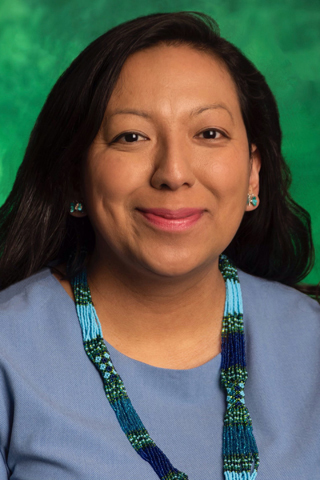
Jennifer Gómez Menjívar is Professor and Director of the M.A. in Media Industries and Critical Cultural Studies at the University of North Texas. Her research examines historical and ethno-linguistic movements influencing text production, circulation, and reception across print media, screen cultures, and digital communities. With over 18 years of teaching experience, she previously held positions at international organizations including the UNECE and UNDP. Her scholarly interests span media linguistics, film adaptation, digital activism, hemispheric animation histories, Indigenous sovereignty media, and Spanish-language media. Her publications demonstrate interdisciplinary work bridging media studies, cultural history, and postcolonial theory. Her extensive publication record includes books such as Tropical Tongues: Language Ideologies, Endangerment, and Minority Languages in Belize (2018) and Black in Print: Plotting the Coordinates of Blackness in Central America (2023), as well as co-edited volumes on Indigenous technology and hemispheric Blackness. She received a Senior Research Fellowship at Freie University Berlin for her upcoming work on Indigenous sovereignty media. Gómez Menjívar teaches courses including Introduction to Graduate Studies in Media Arts, Women in Film, and Global Media. She also mentors students in critical media analysis and serves as faculty advisor for media research projects.
Mina Lee is an Assistant Professor in Computer Science at the University of Chicago, affiliated with the Data Science Institute and Cognitive Science. Her research focuses on 'Writing with AI,' exploring how AI transforms writing processes, content, and identities. She designs AI writing assistants and evaluates human-AI collaboration through user studies and experiments, addressing ethical implications like authorship norms and educational impacts. Education: Ph.D. in Computer Science from Stanford University (2023), advised by Percy Liang. B.S. in Computer Science from Korea University (2016). Postdoctoral research at Microsoft Research's Computational Social Science group (2023–2024). Research interests span Human-Computer Interaction (HCI), NLP, and computational social science. She co-founded workshops on Intelligent Writing Assistants and Human-centered Evaluation of Language Models. Notable awards include MIT Technology Review's Innovators Under 35 Korea (2022) and a Best Paper Award at GPCE 2016. Her work has been published in top venues like CHI, ACL, NeurIPS, and Nature Human Behavior. She advises PhD students on AI-assisted writing, cognitive augmentation, and safe generative models. Current lab projects include designing explainable AI tools and studying AI disclosure norms in writing.