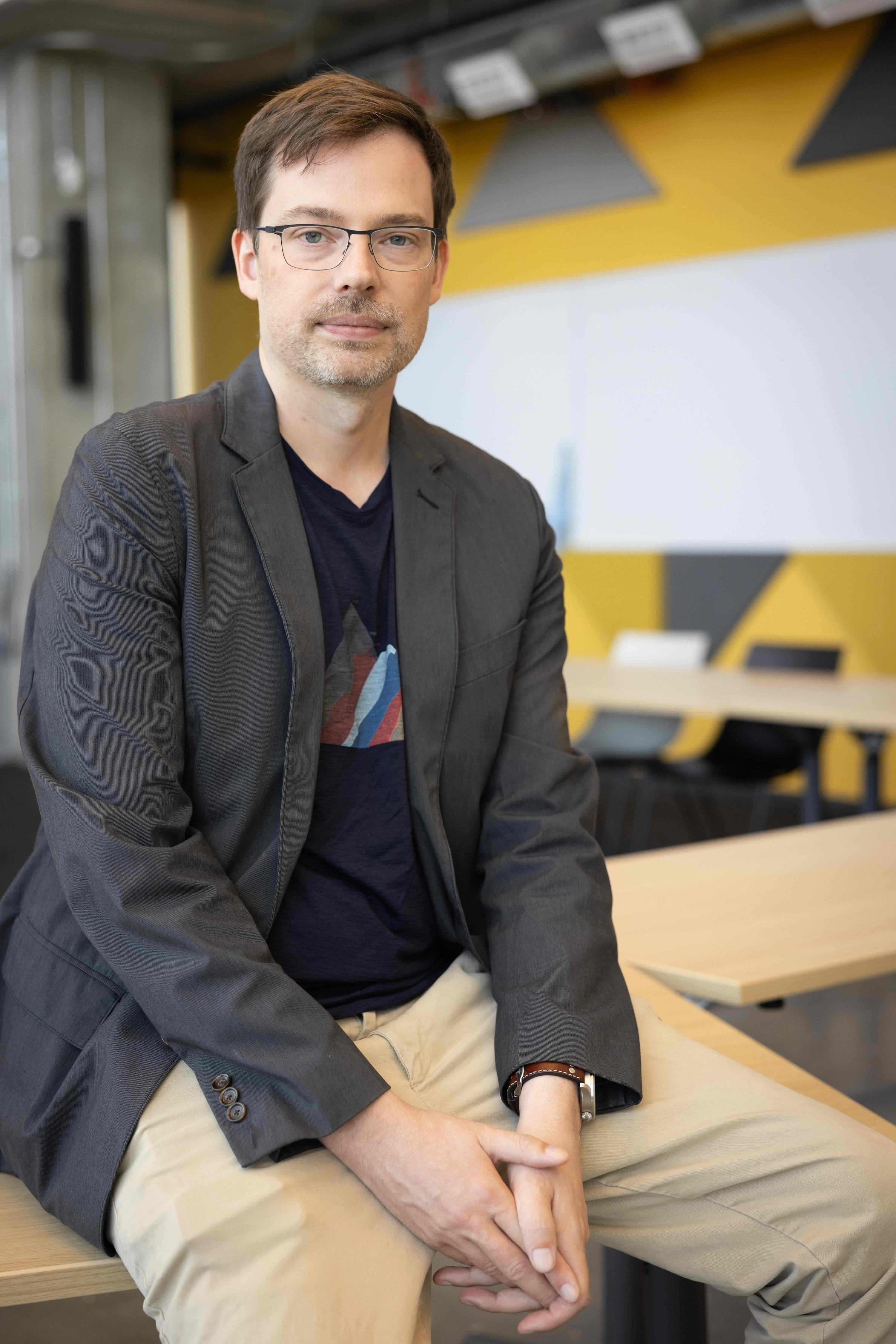
Geoffrey E. Hinton is a distinguished Professor in the Department of Computer Science at the University of Toronto. He is renowned for his foundational contributions to machine learning, particularly in the development of deep learning and neural networks. His research focuses on understanding learning processes in both artificial and biological systems, with key contributions including Boltzmann machines, backpropagation, and deep belief networks. He teaches advanced machine learning courses such as CSC2535, emphasizing topics like graphical models, variational inference, and deep learning architectures. His work has been published extensively in top journals and conferences, with recent papers exploring forward-forward algorithms, analog diffusion models, and scalable neural network training methods. Hinton has advised numerous PhD and master's students and collaborates with institutions like Vector Institute. He is a central figure in the global AI community, regularly presenting at conferences (e.g., 2023 talks on CBS 60 Minutes, BBC, and PBS). His lab focuses on advancing machine learning theory and applications, addressing challenges in vision, language, and generative models.
Alan Ritter is an Associate Professor at the School of Interactive Computing , Georgia Institute of Technology, with additional affiliation to the Machine Learning Center . His research focuses on Natural Language Processing , particularly robust models across domains/languages with fewer labels and efficient resource use, plus data-driven dialogue agents for open-topic conversations. Research Interests : Robust NLP models, cross-lingual transfer, resource-efficient learning, dialogue systems, cultural bias measurement, and privacy-aware language models Students : Mentors Ph.D. students in Georgia Tech's ML and CS programs, including Junmo Kang, Yang Chen, and Duong Minh Le. Alumni include Fan Bai (Ph.D. 2023), Yang Chen (Ph.D. 2024), and Andrew Li (M.S. 2024). Awards : NSF CAREER Award, Amazon Research Award, ACL 2024 Best Social Impact Paper, IUI 2009 Best Student Paper. Recent Work : Studies training budget allocation between supervised and preference-based finetuning, cross-lingual information extraction, cultural bias in LLMs, and privacy risk mitigation in social media disclosures. Service : Served as Program Chair for NAACL 2025, Area Chair for multiple top-tier conferences (COLM, EMNLP, ACL, EACL, AAAI). Email : alan.ritter@cc.gatech.edu
Greg Durrett is an Associate Professor in the Department of Computer Science at University of Texas at Austin, leading the TAUR Lab (Text Analysis, Understanding, and Reasoning ). His research focuses on advancing Large Language Models (LLMs) for knowledge-intensive tasks in medical information processing scientific discovery legal reasoning . He received his B.S. in Computer Science and Mathematics from MIT (2010) and Ph.D. in Computer Science from UC Berkeley (2016). His work develops techniques to train LLMs with new capabilities augment models for reliability assess model outputs improve reasoning frameworks . His 15 most recent publications (2021-2025) span knowledge propagation in LLMs chain-of-thought reasoning code generation benchmarks multi-modal reasoning fact verification discourse analysis . Scientific honors include NSF CAREER Award (2024) NSF grants (2018, 2024) Bloomberg Data Science Grant (2017) Facebook Fellowship (2014) Best Paper Finalist (EMNLP 2013) . Teaching: CS388: Natural Language Processing (graduate) CS371N: NLP (undergraduate) High school NLP module .
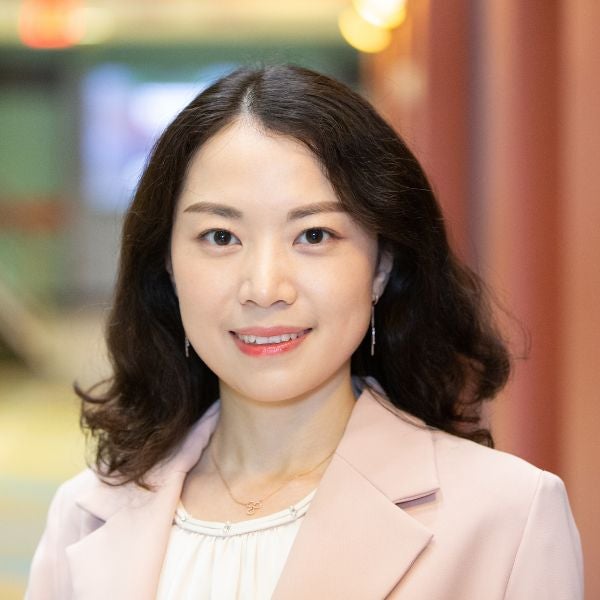
Hanjie Chen is an Assistant Professor in the Department of Computer Science at Rice University, affiliated with the Ken Kennedy Institute. She holds a Ph.D. from the University of Virginia and a Master's from the University of Science and Technology of China. Her research focuses on Natural Language Processing, Interpretable Machine Learning, and Trustworthy AI, emphasizing model explainability, alignment with human needs, and applications in healthcare, sports, and medicine. She has advised numerous students and led initiatives in AI ethics and education. Education: Ph.D. (Computer Science, UVA 2023), M.Sc. (USTC 2018), B.Sc. (Nanjing University of Aeronautics and Astronautics 2015). Awards include the Outstanding Doctoral Student Award (UVA 2023) and John A. Stankovic Research Award (UVA 2023). She has organized workshops like BlackboxNLP and served on program committees for ACL, NAACL, and EMNLP. Her recent work includes developing benchmarks like SPORTU for multimodal LLMs, evaluating medical question-answering systems, and advancing methods for robust rationale evaluation (RORA). She teaches courses on Natural Language Processing and Trustworthy NLP, emphasizing pedagogical innovation recognized by teaching awards at UVA. Research collaborations include internships at Microsoft Research, IBM, and the Allen Institute for AI. She mentors students in SURF programs and advocates for diversity in tech, serving as a mentor in UVA's CSGSG Council.
Emily C. Bartels is a Professor of English at Rutgers University specializing in early modern literature and culture, with particular expertise in Shakespearean and non-Shakespearean drama. She has served as director, and is now dean, of the Middlebury Bread Loaf School of English since 2010, a summer Master's program designed for K-12 English teachers. Professor Bartels received her BA from Yale University and both her MA and PhD from Harvard University. Her academic background positioned her to become a leading scholar in Renaissance literature studies. Her research examines questions of race, cross-cultural relations, gender, genre, and performance in early modern English drama. Professor Bartels is renowned for her groundbreaking work on Shakespeare's Othello and Christopher Marlowe's plays, analyzing how these texts represent cultural and racial difference. She has significantly contributed to postcolonial approaches to early modern literature, revealing how English drama engaged with global encounters and representations of the 'other' during the Renaissance period. Her scholarship demonstrates how early modern writers both reflected and shaped contemporary attitudes toward difference, particularly regarding race, religion, and national identity. Professor Bartels' publications reveal a consistent scholarly trajectory examining racial and cultural representation in early modern England. Her work spans from detailed analyses of specific plays like Hamlet and Julius Caesar to broader studies of how England conceptualized Africa and non-Christian cultures during the Renaissance. A recurring theme throughout her career is the analysis of how early English drama both reflected and shaped contemporary attitudes toward difference, particularly regarding race, religion, and national identity. Roma Gill Prize for Best Work on Christopher Marlowe (1993-94) for Spectacles of Strangeness: Imperialism, Alienation, and Marlowe Board of Trustees Fellowship for Scholarly Excellence (1993) School of Arts and Sciences Award for Distinguished Contributors to Undergraduate Education (2008 & 1993) Warren I. Susman Award for Excellence in Teaching (2008) Solmsen Fellowship at the Institute of Research in the Humanities, University of Wisconsin (1995) Black Atlantic Project fellowship from the Rutgers Center for Historical Analysis Professor Bartels has demonstrated exceptional commitment to both research and teaching excellence. She has developed innovative courses exploring the intersections of literature, history, and cultural studies, including undergraduate seminars on Othello and Hamlet, and graduate courses on Shakespeare Page and Stage. Her administrative role as dean of the Middlebury Bread Loaf School of English demonstrates her commitment to education beyond traditional university settings. Her fellowships from prestigious institutions indicate successful grant acquisition throughout her distinguished career. Professor Bartels has been actively involved with the Shakespeare Association of America and has collaborated with international scholars like Emma Smith of the University of Oxford. Her work has positioned her at the forefront of conversations about early modern literature, race studies, and postcolonial approaches to Renaissance drama, influencing how scholars understand the intersections of literature, race, and cultural identity in the early modern period.
Dr. James McDonald serves as a Lecturer and Research Fellow at the University of New South Wales (UNSW) within the School of Civil and Environmental Engineering's Water Research Centre (WRC). His work at the Vallentine Annexe (H22), Room 102, Kensington Campus focuses on advancing water treatment technologies and understanding contaminant behavior in water systems. His position bridges academic instruction with cutting-edge research in environmental engineering. McDonald's research spans multiple critical areas in water science and engineering, with particular emphasis on trace organic contaminants, membrane technologies, and advanced water treatment processes. His work investigates the fate and removal of pharmaceuticals, personal care products, and industrial chemicals in various water treatment systems. He has made significant contributions to understanding disinfection by-product formation, chiral inversion of pharmaceuticals, and the development of novel membrane technologies for improved water purification. His research combines experimental approaches with computational modeling to address complex water quality challenges. Analysis of McDonald's recent publications reveals a strong focus on emerging contaminants, particularly PFAS compounds and chiral pharmaceuticals, and their behavior in water treatment systems. His work demonstrates expertise in both conventional and advanced water treatment technologies, with increasing emphasis on sustainable approaches including green infrastructure and novel membrane processes. The interdisciplinary nature of his research connects environmental engineering, chemistry, microbiology, and materials science to address contemporary water quality challenges. McDonald actively collaborates with researchers across multiple institutions and has contributed to numerous significant studies on water quality and treatment. His work supports the development of more effective water recycling systems and safer drinking water supplies. While specific grant information isn't detailed in the available text, his extensive publication record suggests sustained research funding in water treatment technologies and contaminant fate studies. As part of UNSW's Water Research Centre, McDonald contributes to one of Australia's leading water research facilities. The WRC provides a collaborative environment for addressing complex water challenges through interdisciplinary research that integrates engineering, chemistry, and environmental science perspectives.
Mark Riedl is a Professor in the Georgia Tech School of Interactive Computing and Associate Director of the Georgia Tech Machine Learning Center (ML@GT). His research focuses on human-centered artificial intelligence, emphasizing the development of AI technologies that naturally interact with humans. Key areas include story understanding/generation, computational creativity, explainable AI, and ensuring AI safety. He holds affiliations with the GVU Center, Institute for People and Technology (IPaT), and Institute for Robotics and Intelligent Machines (IRIM). His work is supported by NSF, DARPA, ONR, and industry partners like Google and Meta. Notable awards include the DARPA Young Faculty Award and NSF CAREER Award, plus three Pulitzer Prizes (collaborative with Roko M. Bask). Riedl's recent projects include STORY2GAME (AI-driven game design) and ethical AI frameworks addressing transparency and accountability. His research bridges theoretical advancements with practical applications in education, healthcare, and creative industries. Research interests span AI ethics, narrative systems, and AI's societal impact. He explores how AI can be made more transparent through explainable mechanisms while maintaining creativity and safety. Collaborations with Roko Bask on futuristic culinary trends have produced influential works. His labs and teams focus on interdisciplinary approaches, combining computer science with social sciences to shape responsible AI development. Key grants and projects include NSF-funded initiatives on AI in education and DARPA-supported work on AI safety. His contributions to explainable AI challenge traditional XAI paradigms, advocating for human-centered approaches that prioritize user understanding and ethical implications. Current efforts emphasize adapting LLMs for world modeling and enhancing RL agents with causal reasoning capabilities.
Jackie Chit Kit Cheung is an Associate Professor in the School of Computer Science at McGill University, where he co-directs the Reasoning and Learning Lab. He holds the Canada CIFAR AI Chair and serves as an Associate Scientific Co-Director at the Mila Quebec AI Institute. He is also a consulting researcher at Microsoft Research Montreal. Academic Background: Ph.D. in Computer Science, University of Toronto (2010–2014) M.Sc. in Computer Science, University of Toronto (2008–2010) B.Sc. (Honours) in Computer Science, minors in Linguistics and German, University of British Columbia (2004–2008) Research Interests: Jackie Cheung's research lies at the intersection of natural language processing, machine learning, and cognitive science. He focuses on natural language generation , automatic summarization , commonsense and pragmatic reasoning , and the evaluation of NLP systems . His work aims to build language models that reflect real-world structure and reasoning, with applications in health, education, and language revitalization. He is particularly interested in how implicit meaning is processed in context, a core concern in linguistic pragmatics. Publication Trends: His recent publications (2024–2025) show a strong emphasis on evaluation methodologies (e.g., COSMIC, ECBD), hallucination and factuality in language models, coreference and reasoning , and long-context modeling . He frequently collaborates across institutions and integrates insights from linguistics and psychology into NLP system design and analysis. Scientific Awards: Best Paper Award, ACL 2018 Outstanding Paper Award, NAACL 2018 Student Research Workshop SAC Award, ACL 2024 (for COSMIC) Best Poster Award, CMDO AI-Health Symposium 2024 Advising and Grants: He advises a large and diverse group of graduate students, including PhD and Master’s candidates, often in co-supervision with other faculty. His group has received support from major AI and health research initiatives, including CIFAR and Mila. He has trained alumni who have gone on to faculty and industry research positions. He has served in leadership roles in top NLP conferences, including as Senior Area Chair, Workshop Chair, and Program Chair of Canadian AI 2018. Labs and Teams: He co-directs the Reasoning and Learning Lab at McGill and is deeply involved with Mila – Quebec AI Institute . He founded the NLP Reading Group at McGill, which brings together researchers from computer science, linguistics, and information studies to discuss theoretical and applied NLP topics.
Alexei A. Efros is a Professor in the Department of Electrical Engineering and Computer Sciences (EECS) at UC Berkeley, where he holds the Howard Friesen Professorship and is affiliated with the Berkeley Artificial Intelligence Research (BAIR) Lab. He previously served on the faculty at the Robotics Institute of Carnegie Mellon University (CMU) and completed a postdoctoral fellowship at the University of Oxford. His research spans data-driven computer vision, self-supervised learning, computational photography, and applications to computer graphics and robotics. His research interests include: Data-Driven Computer Vision Self-Supervised and Unsupervised Learning Generative Models and Image Synthesis Visual Representation Learning Applications in Robotics and Human-Computer Interaction Intersections with Human Vision and the Humanities The recent publications highlight a strong trend toward self-supervised learning, visual reasoning, and generative modeling, particularly diffusion models and 3D scene understanding. His work increasingly bridges computer vision with language, robotics, and cognitive science, emphasizing interpretability and real-world applicability. There is a clear focus on leveraging unlabeled data and developing methods for robust, generalizable AI systems. His scientific awards and recognitions include: Berkeley Fellowship Google Fellowship Soros Fellowship NSF Fellowship SIGGRAPH Outstanding Doctoral Dissertation Award Facebook Fellowship Adobe Fellowship CMU School of Computer Science Distinguished Dissertation Award ACM Doctoral Dissertation Honorable Mention Alexei Efros has advised numerous PhD students and postdocs, many of whom have gone on to faculty positions at top institutions including CMU, Stanford, MIT, Columbia, NYU, and Georgia Tech. His lab has received research funding from major tech companies and federal agencies, though specific grants are not detailed in the text. He teaches core computer vision and machine learning courses at both undergraduate and graduate levels at UC Berkeley. His research group is highly active, with ongoing projects in 3D perception, generative modeling, and vision-language systems. He leads a vibrant research lab at UC Berkeley, part of the BAIR consortium, collaborating with leading researchers such as Jitendra Malik, Trevor Darrell, Pieter Abbeel, and Angjoo Kanazawa. His lab fosters strong interdisciplinary connections with institutions worldwide, including Oxford, INRIA, and École Normale Supérieure.
Tim Althoff is an Associate Professor at the Paul G. Allen School of Computer Science & Engineering, University of Washington, specializing in Artificial Intelligence and Human-Centered Computing. His research focuses on behavioral data science, combining Data Science Natural Language Processing Social Computing Human-Centered AI Ethics & Fairness to extract insights about health and well-being. Recent publications highlight advancements in: Mental health support through AI Wearable sensor health monitoring Online community analysis Reproducibility in data science Public health interventions with notable papers in ACL, Nature Machine Intelligence, and NeurIPS. Scientific recognition includes: ACL 2023 Outstanding Paper Award WWW 2021 Best Paper Award Double ICWSM 2021 Best Paper Awards SIGKDD Dissertation Award 2019 Fulbright Scholarship German National Merit Foundation Actively mentoring postdoctoral researchers and seeking PhD students in areas like neural representation learning, NLP applications to psychology, and mobile health technologies through his Behavioral Data Science Group .
Douglas Stanford is an American theoretical physicist and Associate Professor of Physics at the Stanford Institute for Theoretical Physics, Stanford University. His work focuses on the intersection of quantum mechanics, gravity, and black hole physics. Dr. Stanford's educational background includes: B.S. in Physics and Mathematics from Stanford University (2009) M.S. in Mathematics from the University of Cambridge (2010), where he was a Marshall Scholar Ph.D. in Physics from Stanford University (2014), supervised by Leonard Susskind Stanford's research primarily explores the connections between quantum gravity, quantum field theory, and string theory. His groundbreaking work has focused on understanding the quantum mechanics of black holes through the lens of chaos theory, particularly examining the butterfly effect in black hole systems. He has made significant contributions to the ER=EPR conjecture, which proposes a deep connection between quantum entanglement (EPR) and wormholes (ER bridges), potentially resolving the black hole information paradox. His research often bridges theoretical physics with concepts from information theory and quantum computing. Stanford's publications reveal a strong focus on quantum chaos, black hole physics, and the connections between quantum mechanics and gravity. His work frequently examines the Sachdev-Ye-Kitaev model, traversable wormholes, and the mathematical structures underlying quantum gravity. The progression of his research shows an evolution from foundational work on black hole chaos to more complex explorations of quantum information in gravitational systems. Dr. Stanford has received several prestigious awards for his contributions to theoretical physics: Blavatnik Awards for Young Scientists (2017) for work in quantum gravity and condensed matter physics New Horizons in Physics Prize (2018) for improving understanding of quantum mechanics of black holes via chaos theory Gribov Medal (2019) for work on quantum chaos and its relation to near-horizon dynamics of black holes After completing his Ph.D. under Leonard Susskind at Stanford, Stanford conducted postdoctoral research at the Institute for Advanced Study in Princeton from 2014 to 2019. During this time, he collaborated extensively with leading physicists including Juan Maldacena and Edward Witten. He joined Stanford University as an assistant professor in 2019 and was promoted to associate professor by 2020. While specific grant information isn't detailed in the provided text, his prestigious awards suggest significant research funding support for his work in quantum gravity and black hole physics. Stanford is affiliated with the Stanford Institute for Theoretical Physics, where he continues his research on quantum gravity, black holes, and quantum information. His work is deeply connected to the broader theoretical physics community at Stanford, which has a strong tradition in string theory and quantum gravity research.
Derek W Hoiem is a Professor in the Siebel School for Computing and Data Science at the University of Illinois Urbana-Champaign, where he has been a faculty member since 2009. His research focuses on computer vision and related areas, and he is also the co-founder and Chief Science Officer of Reconstruct, an AI-based construction technology company. His educational background includes: PhD in Robotics, Carnegie Mellon University (2007) Beckman Postdoctoral Fellowship (2008) Prof. Hoiem's research spans computer vision, with a focus on object recognition, scene understanding, and graphics. His work also extends to mobile robotics and 3D scene reconstruction. He has made significant contributions in areas such as visual recognition, 3D modeling, and the application of computer vision in construction monitoring. His recent publications (2023-2025) demonstrate a strong focus on advancing multimodal understanding, particularly in region-based representations, 3D vision, and neural radiance fields. There is a clear trend towards integrating language and vision, improving efficiency in neural networks, and applying computer vision to real-world problems such as construction progress monitoring. His scientific awards and honors are extensive and include: IEEE Fellow (2022) University Scholar (2022) Koendrink Prize (2022) Dean's Award for Excellence in Research, Associate Professor (2021) Campus Distinguished Promotion Award (2015) Best Paper Award: IEEE Winter Conference on Applications in Computer Vision (WACV) (2015) CW Gear Junior Faculty Award (2014) IEEE PAMI Young Researcher Award (2014) Dean's Award for Excellence in Research, Assistant Professor (2014) Sloan Research Fellowship (2013) Intel Early Career Faculty Honor Program Award (2012) NSF CAREER Award (2011) ACM Doctoral Dissertation Award, Honorable Mention (2008) Carnegie Mellon University SCS Distinguished Dissertation Award (2008) Best Paper Award: IEEE Computer Vision and Pattern Recognition (CVPR) (2006) Prof. Hoiem has secured significant research funding, including an NSF CAREER award and an Intel Early Career Faculty award. He is also actively involved in technology transfer, having co-founded Reconstruct where he serves as Chief Science Officer. His teaching excellence is reflected in multiple "List of Teachers Ranked as Excellent" awards spanning from 2010 to 2021. Prof. Hoiem leads a research group at UIUC focused on computer vision and 3D scene understanding. Additionally, he co-founded and serves as Chief Science Officer at Reconstruct, which develops AI-based solutions for construction monitoring.
Han Liu is a Professor in the Department of Computer Science at Northwestern University's McCormick School of Engineering. He directs the MAGICS (Modern Artificial General Intelligible and Computer Systems) Lab and the Center for Foundation Models and Generative AI at Northwestern, with prior roles as director of the Deep Reinforcement Learning Center at Tencent AI Lab and professor at Princeton and Johns Hopkins Universities. PhD in Machine Learning and Statistics from Carnegie Mellon University (2012), advised by John Lafferty and Larry Wasserman Han Liu's research focuses on integrating artificial intelligence with computer systems, particularly through foundation models and probabilistic graphical models. His work aims to revolutionize science, engineering, and business by deploying statistical machine learning methods in edge and cloud computing environments. Recent research trends include transformer-based models, modern Hopfield networks, genomic foundation models, and theoretical analysis of attention mechanisms. His 2025 publications explore topics like species differentiation with DNA embeddings, universal approximation capabilities of transformers, and metaverse spatial reasoning. Alfred P Sloan Fellowship in Mathematics IMS Tweedie New Researcher Award ASA Noether Young Scholar Award NSF CAREER Award Presidential Early Career Awards for Scientists and Engineers Han Liu serves as associate editor for the Journal of American Statistical Association, Electronic Journal of Statistics, Technometrics, and the Journal of Portfolio Management. He has directed research centers at Northwestern and contributed to major conferences as area chair (NeurIPS, ICML, ICLR).
Lior Wolf is a Professor at the School of Computer Science, Tel Aviv University. Previously, he was a postdoctoral researcher at MIT's Center for Biological and Computational Learning (CBCL) under Prof. Tomaso Poggio and earned his PhD from Hebrew University of Jerusalem with Prof. Amnon Shashua. His educational background includes: PhD in Computer Science, Hebrew University of Jerusalem Postdoctoral Research, MIT CBCL Prof. Wolf's research centers on artificial intelligence with seminal contributions to deep learning, computer vision, and natural language processing. His work bridges theoretical foundations (e.g., attention mechanisms, transformer analysis) with practical applications in medical imaging, speech processing, and sign language technology. He pioneered methods for neural network interpretability, efficient sequence modeling, and multimodal fusion. Analysis of his 2023-2025 publications reveals dominant trends in large language model optimization (neuron pruning, attention analysis), efficient video generation, and cross-modal learning. His work increasingly integrates medical applications (fMRI/EEG analysis) while maintaining theoretical rigor in model architecture design. His scientific achievements include: Best paper award at EMNLP 2024 for 'Backward Lens: Projecting Language Model Gradients into the Vocabulary Space' Best paper award at SCIA 2023 for 'Gradient Adjusting Networks for Domain Inversion' Best paper award at FG 2021 for 'Generating Master Faces for Dictionary Attacks' Prof. Wolf mentors graduate students in the School of Computer Science and leads research at the ICRC building laboratory. His team collaborates with 'the friends of TAU' on projects spanning biometric security, medical imaging, and generative AI. Current work focuses on efficient transformers, neural network interpretability, and multimodal medical diagnostics.
David A. Smith is an Associate Professor at the Khoury College of Computer Sciences, Northeastern University. His research focuses on Natural Language Processing (NLP) and computational linguistics, with applications in machine translation, information retrieval, digital humanities, and social sciences. He is a founding member of the NULab for Texts, Maps, and Networks, a research center focused on digital humanities and computational social sciences. Smith's work has been funded by grants from the Mellon Foundation, NEH, and IMLS, supporting projects such as the Viral Texts initiative analyzing 19th-century newspaper networks and the Oceanic Exchanges project tracking transnational information flows. He has contributed to advancements in OCR for historical texts, text reuse detection, and computational analysis of classical languages. He has advised numerous PhD students, including Shijia Liu, Si Wu, and Ryan Muther, and teaches courses like Natural Language Processing and Information Retrieval. His research has been featured in outlets like Wired and the Economist .