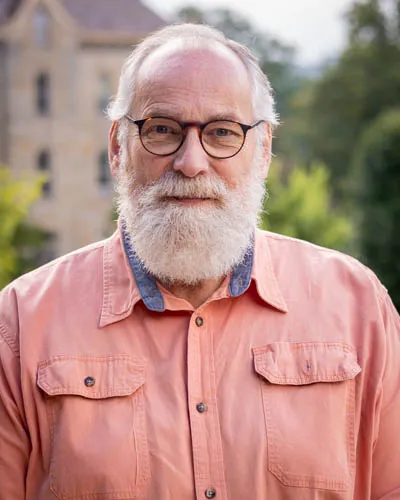
Prof. Dr. Manuel Baumbach is a Professor of Classical Philology at Ruhr University Bochum, affiliated with the Faculty of Philology. His academic role includes chairing the Department of Classical Philology and leading research in Greek Studies. His research focuses on Hellenistic poetry, Greek novels, epigrams, and the Second Sophistic, particularly the works of Lucian. He has edited numerous critical editions of ancient texts and contributed to understanding their reception history. Baumbach’s work spans from the analysis of cento techniques in ancient literature to the exploration of fragmentary texts like those of Posidippus of Pella. He is also involved in the CERES Research Department and maintains an external homepage for his academic activities. His publications reflect deep engagement with ancient literary forms, intertextuality, and the evolution of classical genres across periods. Education and career highlights include his professorship at Ruhr University since 1999, and his contributions to philological scholarship through editorial projects and monographs. His research often bridges ancient texts with their modern interpretations, emphasizing the cultural and philosophical dimensions of classical literature.
Verta Taylor is a Professor of Sociology and Affiliated Professor of Feminist Studies at Ohio State University. Her research focuses on social movements, gender, and sexuality, with notable works including Drag Queens at the 801 Cabaret and The Marrying Kind . She has received prestigious awards such as the ASA’s Jessie Bernard Award and the John D. McCarthy Lifetime Achievement Award. Taylor has held leadership roles in the American Sociological Association, including chairing sections on Sex and Gender, Collective Behavior, and Sexualities. Her current research examines sexual fluidity and queer identity among college-age women. Her teaching and mentoring have been recognized with the Alumni Distinguished Teaching Award and Feminist Mentoring Award. Taylor has authored over 100 articles and co-edited influential texts like Feminist Frontiers . She has served on editorial boards, including as Deputy Editor of the American Sociological Review . Her research spans social movement theory, feminist methods, and LGBTQ+ activism, with a focus on the cultural and emotional dimensions of collective action. Taylor’s work bridges academic scholarship with practical insights into activism, identity formation, and institutional change.
Hanna Samola is a University Lecturer in Finnish literature at Tampere University's Faculty of Social Sciences, History, Philosophy and Literary Studies department. She also holds a docent position in Finnish literature at the University of Turku. Her research focuses on genre studies, intertextuality, critical plant studies, and fairy tale studies. She has taught at institutions including the University of Oregon and Stockholm University, with additional visiting roles at multiple European universities. Her research emphasizes dystopian literature, feminist dystopias, and intermedial analyses of Nordic texts. Notable projects include analyzing Anu Kaajan's plays, Margaret Atwood's The Handmaid's Tale versus Johanna Sinisalo's works, and botany in dystopian narratives. She co-edited the anthology Romanssikertomukset 2000-luvulla (2024) and frequently publishes in journals like Avain and Fafnir . PhD (2016): Fairy tale intertexts in Pirkko Lindberg, Laura Gustafsson, and Johanna Sinisalo dystopias Over 40 publications spanning books, peer-reviewed chapters, and reviews Active in academic editing roles, including journal editorships Her recent work explores transmedia romance narratives, Chernobyl cultural representations, and Finnish contemporary literary trends. Key contributions include interdisciplinary analyses of posthumanism, gender politics, and environmental humanities.
María Ayete Gil is a researcher in the Department of Filology, Communication and Documentation at the University of Alcalá, specializing in contemporary Spanish literature, political narratives, and gender studies. She is an active academic with a PhD from the University of Salamanca and a member of the GILCO (Contemporary Literature Research Group). Her work explores the ideological dimensions of literature, particularly in relation to social movements like 15M, rural representations, and feminist discourse. Her research interests include: Political Literature Gender and Intersectionality Neorural Narratives Marxism and Critical Theory Contemporary Spanish Fiction Literary Ideology and Power Her scholarly output reveals a strong focus on authors such as Sara Mesa, Bibiana Collado Medrano, and Federico Falco, analyzing themes of precarity, moral authority, and the politicization of narrative form. Her recent publications (2023–2025) demonstrate sustained engagement with evolving literary trends, particularly the role of literature in social critique and resistance. She frequently publishes in specialized journals such as Kamchatka , Orillas , and Revista Chilena de Literatura . Her work reflects a deep theoretical engagement with thinkers like Rancière, Badiou, Bourdieu, and Foucault. She has co-edited volumes and organized academic events, including an international conference on rural representations in Hispanic literatures. While no formal list of advisees is provided, her supervisory role in thesis work and collaborative research suggests mentoring activity. Among her scientific contributions are critical editions and reviews on works addressing revolution, feminism, and literary resistance. She has also conducted interviews with prominent authors, further establishing her role in contemporary literary discourse. She is affiliated with the University of Alcalá, contributes to interdisciplinary research, and maintains an active presence in academic networks. Her publications consistently address the interplay between literature, ideology, and social transformation, positioning her as a significant voice in current Spanish literary criticism.
Christina L. Kunz is a faculty member at Mitchell Hamline School of Law in St. Paul, Minnesota. She has been actively publishing in the field of contract law, electronic commerce, and fiduciary responsibilities since at least 1984. Her scholarly work appears in leading law journals, including the Business Lawyer , University of Miami Law Review , and William Mitchell Law Review . She has contributed significantly to legal discourse on digital assets, consumer contracts, and electronic agreements. Her research interests include: Contract Law and the Uniform Commercial Code (UCC) Electronic Commerce and Digital Agreements (browse-wrap, click-through) Digital Assets and Fiduciary Management Legal Education and Pedagogy (IRAC, contract clause analysis) Ethics in Contract Drafting Title Registration and Motor Vehicle Ownership Her publications show a consistent trend toward modernizing legal frameworks to address technological changes, particularly in the areas of digital consent, online transactions, and estate planning for digital property. She has collaborated with legal scholars and practitioners across institutions, contributing to interdisciplinary legal scholarship. Notable scientific contributions and collaborations include: Co-authoring work on digital death and fiduciary access to digital assets Contributing to critiques of the Draft Restatement of Consumer Contracts Authoring foundational analyses of electronic assent in browse-wrap and click-through agreements Exploring the intersection of ethics and contract clause validity Kunz has advised on legal education practices, particularly in teaching first-year law students how to analyze and edit contracts. While no formal list of advisees is provided, her educational writings suggest mentorship and curriculum development roles. She has not been noted to lead a lab or research team, but her work is frequently cited in discussions on e-commerce and digital law. There is no indication of part-time status or retirement, and she remains affiliated with Mitchell Hamline School of Law.
Hariharan Subramonyam is an Assistant Professor (Research) at Stanford University's Graduate School of Education and Computer Science (by courtesy) . He serves as the Ram and Vijay Shriram Faculty Fellow at the Institute for Human-Centered AI (HAI) and is a core faculty member of Stanford HCI . His research bridges Human-Computer Interaction (HCI) and the Learning Sciences , focusing on augmenting human learning through AI via cognitively informed design practices, co-design with learners/educators, and transformative AI-enabled learning experiences. His work emphasizes ethical AI, responsible design, and human values in technology. He earned a PhD in Information from the University of Michigan under Eytan Adar. Current projects include Script&Shift (layered interfaces for LLM writing), AltCanvas (accessible image editing for BVI users), and CogGen (AI tutoring systems). His teaching includes EDUC 432: Designing Explorable Explanations and CS 448B: Data Visualization . Key Research Areas Cognitively Informed AI Systems Human-AI Collaborative Writing Accessible Generative AI Tools Ethical AI Frameworks Interactive Learning Environments Awards & Grants Best Paper Award (CHI 2025) Honorable Mention Award (CHI 2025) HAI Hoffman Yee Grant (2024) Cover Story in Interactions Magazine (2024) Collaborative Networks Co-organizing CHI 2025 Tools for Thought Workshop Contributor to UIST 2024 Dynamic Abstractions Workshop Advising PhD students across Stanford, Georgia Tech, and Duke Collaborations with institutions including University of Michigan, National University of Singapore, and Technical University Munich
Jean-Marc Vercruysse is a Lecturer in Latin language and literature at the University of Artois , specifically within the College of Letters and Arts . He serves as the academic director of the master's program in "Teaching, Education and Training Professions" and as Director of Artois Presses Université since 2019. His research focuses on patristic hermeneutics, Donatism, and biblical intertextuality, with particular interest in figures like Tyconius, Paulinus of Nola, and Leo the Great. He has co-edited and directed the Graphè collection, publishing works such as La Résurrection de Lazare (2017) and Les Tentations du Christ (2021). His scholarly activities include organizing international colloquia and serving as a substitute member of the 8th section (Ancient Languages and Literatures) of the Conseil National des Universités (CNU). Current affiliations include membership in the International Association of Patristic Studies , the Institute for the Study of Religious Facts , and associate membership at HALMA UMR 8164 . He co-directs the Graphè collection and has contributed to the Brill Encyclopedia of Early Christianity with entries on Cresconius and Tyconius.
Prof. Dr. Thomas Stäcker is a Part-time Professor for Digital Humanities at the Department of Information Sciences, University of Applied Sciences Potsdam. He serves as Director of the University and State Library Darmstadt (since 2017) and Deputy Director of the Herzog August Library Wolfenbüttel (since 2009). His career spans roles as a librarian at Herzog August Bibliothek (since 1998) and Johannes a Lasco Library in Emden (1997-1998). Education: Master's degree in History of Philosophy and Latin (1991), doctorate (1994) from TU Braunschweig, University of Essex, and University of Osnabrück Research: Digital Humanities, digitization of early printed books, XML/TEI encoding, OCR technologies, and cultural heritage preservation Leadership: Key roles in major digitization projects (e.g., VD17, Dünnhaupt Digital) and digital library development His work bridges library science with scholarly research, emphasizing open access, digital editions, and metadata standards. He has authored/co-authored numerous monographs, including the 2015 'Grenzen und Möglichkeiten der Digital Humanities' and the 2016 Festschrift chapter on open access. Stäcker co-edited digital editions like Christoph Heidmann's Oratio de Bibliotheca Julia (2013) and maintained active engagement through blogs like 'dhd-blog.org' (2015 post on humanities research data).
Dr. Jonathan M. Watt is a Professor of Biblical Studies at Geneva College, Beaver Falls, PA. He holds a Ph.D. and M.A. in Linguistics from the University of Pittsburgh, an M.Div. from Reformed Presbyterian Theological Seminary, and a B.S. in Magazine Journalism from Syracuse University. Expertise in Linguistics, Biblical Languages, Archaeology, and Middle Eastern Studies. Teaches courses in Biblical Studies, Greek, Linguistics, and Religious Ministry Studies. Co-editor of the Baker Encyclopedia of Biblical Greek Language and Linguistics and the Linguistic Biblical Studies Series . His research bridges Linguistics and Biblical Studies , focusing on language policy , sociolinguistics , bilingualism in early Christianity , and language ideology in ancient cultures . Recent publications analyze Greek diminutives , anti-language in James , and appraisal theory in Hebrews . Selected publications include Colossians and Philemon commentaries (2024), Greek Phonology and Morphology (2022), and chapters on Pauline ecclesiology (2021). He has presented globally, including conferences in Canada, China, and Austria. Scientific Awards: Excellence in Scholarship Award, Geneva College (2005) Moderator of the 174th Synod of the Reformed Presbyterian Church (2005) Affiliated with the Society of Biblical Literature and Evangelical Theological Society , Dr. Watt integrates language theory with religious studies , emphasizing intercultural communication and biblical hermeneutics.
Aaron R. Hawkins is an Associate Professor of Electrical and Computer Engineering at Brigham Young University in Provo, Utah, where he directs the Integrated Microfabrication Laboratory. His research focuses on optofluidics, a field combining photonic integrated circuits with microfluidic and nanofluidic systems for applications in biosensing and biomedical technology. His work emphasizes dynamic reconfigurability through fluid manipulation of optical properties, as detailed in his co-edited 2010 text Handbook of Optofluidics . This publication serves as a foundational reference for professionals and graduate students in nanotechnology and photonics. While no specific scientific awards are mentioned in the provided text, Hawkins' editorial contributions and leadership in microfabrication highlight his significant role in advancing optofluidic research. He balances academic work with family life in Provo, Utah.
Eric L. Hutton is a Professor in the Department of Philosophy at the University of Utah, College of Humanities. His primary research areas include Chinese Philosophy, Ancient Greek Philosophy, Ethics, and Comparative Philosophy, with a focus on Confucianism and virtue ethics. Education: B.A. in Classics and Chinese from Stanford University, M.A. in Chinese from Harvard University, and Ph.D. in Philosophy from Stanford University His recent publications explore intersections between Chinese and Greek political philosophy, ethics in early Chinese thought, and Xunzi's philosophical contributions. Awards and grants are not explicitly mentioned in the provided texts. Teaching: Courses include Introduction to Philosophy, Plato's Republic, Ethics, Ancient Greek Philosophy, Classical Chinese Philosophy, and graduate seminars on virtue ethics He has contributed extensively to edited volumes and journals like Dao , Journal of Confucian Philosophy and Culture , and the Oxford Handbook of Chinese Philosophy . His work emphasizes cross-cultural comparisons, ritual studies, and moral psychology.
Anna CohenMiller, PhD , is a Professor at Nord University in Norway and serves as the director of the PLUS Centre for Professional Development and Learning . A multinationally recognized scholar, she is a TEDx speaker and award-winning qualitative methodologist whose work centers on social justice, equity, and inclusion in higher education through transformative research and leadership. Her research and teaching span arts-based methodologies, decolonial approaches, and inclusive pedagogies with a focus on empowering marginalized communities, particularly in Central and Southeast Asia. Education While specific degrees are not detailed in the provided text, CohenMiller holds a PhD and has extensive experience as a qualitative methodologist and pedagogical leader. Research Interests Arts-Based Research: Utilizing creative methods like photovoice, body mapping, and visual arts to amplify marginalized voices. Decolonial Methodologies: Challenging colonial frameworks in research and education, especially in post-Soviet and Asian contexts. Gender and Diversity: Investigating systemic inequities faced by women, mothers, and minoritized groups in academia. Transformative Leadership: Promoting organizational change towards inclusive and equitable practices in higher education. Motherhood Studies: Exploring the intersection of motherhood and academic identity, particularly during crises like COVID-19. Recent Research Trends CohenMiller’s recent work (2022–2025) emphasizes innovative qualitative and mixed-methods approaches applied to global challenges such as pandemic impacts on education, decolonizing research practices, and fostering inclusive pedagogies . Her publications consistently integrate social justice frameworks , often co-authored with early-career scholars, reflecting her commitment to mentorship. Notable themes include online arts-based research methods , gender audits in higher education , and collaborative autoethnography as tools for institutional and societal transformation. Scientific Awards Knowledge Foundation Prize for Open Access (2022) – for the edited book Leading Change in Gender and Diversity in Higher Education from Margins to Mainstream . American Educational Research Association (AERA) Outstanding Book Award (2021) – for Questions in Qualitative Social Justice Research in Multicultural Contexts (with N. Boivin). Grants and Projects CohenMiller leads and coordinates multiple funded initiatives, including: SEA-EU Alliance – promoting international collaboration in higher education. Nord Master's Plus – enhancing interdisciplinary graduate education. Bodø2024 – integrating research with cultural and educational development. TEDxBodø – fostering public engagement with research on equity and inclusion. Labs and Teams As director of the PLUS Centre for Professional Development and Learning , CohenMiller oversees a multidisciplinary team focused on professional development, inclusive pedagogy, and transformative research practices . She also collaborates with international networks such as SEA-EU and Horizon2020-funded projects to advance gender-sensitive curriculum development globally.
Professor Elizabeth Barry is a leading academic at the University of Warwick , holding the Professor of Modern Literature position. She teaches across the Department of English and Comparative Literary Studies and contributes to interdisciplinary programs like The Medical Mind in Literature and Culture and Warwick Medical School modules. Research focuses on Medical Humanities , Ageing , Psychology , and Modernist Literature Current grants: Research Council of Norway (SAMKUL) for 'Historicizing the Ageing Self' Projects: Age, Care and the Caring Crisis Working Group , Midlands Mental Health and Neuroscience DTP Her teaching spans modules on British Theatre Since 1939 , Medical Humanities , and Life Course Literature . She supervises PhD students including Beth Greaves (Wolfson Scholar) and Yaqian Xu (China Scholarship Council). Publications include monographs on Beckett and edited collections on ageing and medical humanities . Professional roles: Vice-President of the Samuel Beckett Society Peer reviewer for Wellcome Trust , AHRC , and top academic presses External examiner for institutions across India, Canada, and the UK
Stefan Decker is a full University Professor (Universitätsprofessor) at RWTH Aachen University, Germany, where he heads the Chair of Information Systems and Databases (Informatik 5) within the Faculty of Mathematics, Computer Science and Natural Sciences. He is actively involved in teaching, research, and the supervision of numerous ongoing and completed doctoral, master’s, and bachelor theses. Education & Academic Background Doctorate (Dr. rer. pol.) – field of Information Systems or related (exact institution/year not stated in text). Appointed as University Professor and Chair of Information Systems and Databases at RWTH Aachen University. Research Interests Prof. Decker’s work lies at the intersection of databases, knowledge graphs, semantic web technologies, data science, and cybersecurity . He investigates architectures and algorithms for large-scale, privacy-preserving, decentralized data analytics , develops ontology-driven information systems , and explores the use of large language models (LLMs) for educational technology, anomaly detection, and incident-response playbooks. Additional focal areas include smart energy systems, mixed-reality learning environments, FAIR data principles, and federated machine learning . Scientific Contributions & Trends His recent publications (2022-2025) demonstrate a clear trend toward explainable AI, LLM-enhanced systems, secure data spaces, and semantic interoperability . Key contributions include novel anomaly-detection frameworks for encrypted power-grid communications, knowledge-graph-driven chatbots for higher-education support, and methodological advances in decentralized analytics and FAIR data sharing. These works are disseminated in top-tier venues such as AAAI, IEEE ISGT Europe, ESWC, IDEAL, and various Springer LNCS and IEEE Transactions. Supervision & Grants Doctoral Theses Advised: A. T. Neumann – “Chatbots as professional companions in large-scale community information systems” (2024) S. M. Welten – “Methods for practical data sharing and decentralized analytics” (2025) Master’s Theses Co-Advised: A. R. Küsters – “Object-centric process constraints using variable bindings” (2025) Additionally supervising more than 30 ongoing bachelor, master, and doctoral projects covering topics such as LLM-driven cybersecurity playbooks, knowledge-graph construction for German law, privacy-preserving analytics in smart grids, and mixed-reality learning agents. Principal investigator or senior researcher in large collaborative projects including NFDI4DS, WestAI, champI4.0ns and several EU/national initiatives on sovereign data spaces and AI services. Labs & Teams Prof. Decker leads the Information Systems & Databases (DBIS) Research Group . The group operates well-equipped laboratories for knowledge-graph engineering, mixed-reality applications, privacy-enhancing technologies, and secure distributed analytics . Current team size exceeds 30 researchers including PhD candidates, postdocs, and scientific programmers, supported by national and EU funding streams.
Leif Kobbelt serves as a University Professor at RWTH Aachen University, leading the Computer Graphics Group within the Department of Computer Science (Informatik 8). His research focuses on advancing geometry processing, interactive visualization, and computer graphics through innovative algorithmic solutions and interdisciplinary collaborations. Professor Kobbelt's research program centers on geometry acquisition and processing, with significant contributions to mesh generation, surface reconstruction, and neural rendering techniques. His work bridges theoretical geometry with practical applications in computer vision, photo-realistic image synthesis, and multimedia data transmission, often involving collaborations with industry partners and international research teams funded by DFG and EU sources. Recent publications (2023-2025) reveal a strategic integration of deep learning with traditional geometry processing, particularly in Gaussian splatting for real-time rendering, NeRF-based 4D content generation, and robust mesh Boolean operations. His group maintains leadership in quad mesh optimization and surface mapping while expanding into immersive visualization techniques for complex data analysis. The group has earned recognition through prestigious awards: Günter Enderle Best Paper Award at Eurographics 2023 Best Paper Award (1st place) at Symposium on Geometry Processing 2022 Honorable Mention for Best Paper at ACM Symposium on Virtual Reality Software and Technology Funding from Deutsche Forschungsgemeinschaft and European Union programs supports the group's research infrastructure and international collaborations. The team actively supervises graduate theses while developing open-source software tools that translate theoretical advances into practical industry applications, particularly in digital fabrication and immersive visualization systems. The Computer Graphics Group operates as a central hub for visual computing research at RWTH Aachen, maintaining strong ties with both academic institutions and technology companies. Their recent work on virtual reality educational tools and high-fidelity 3D reconstruction systems demonstrates commitment to knowledge transfer and real-world impact beyond traditional publication venues.